Look Beyond The Box

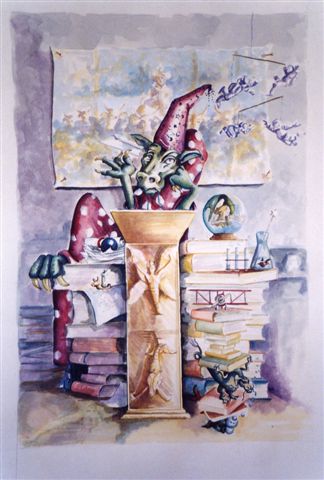
one of my paintings (untitled) from the Yoga series

one of my paintings (untitled) from the Yoga series

[continued from SEE THE BOX]

Craig’s question is bigger than a single post can accommodate. He’s both reflecting and asking several questions about the boxes people construct around themselves, about building personal “stages” and what becomes visible to us when we open ourselves to life without editor or inhibition. He’s asking deep river questions about the assumptions we make when we look at others through the lens of our own experience. He asked about what I see from my stage and when did I know to create my stage. And, here’s the kicker question, “When was the last time you stepped up and saw something you didn’t know was there?”

I want to start with the last question first because I believe it colors all of the other questions. At this point in my life, there isn’t a day that passes that I don’t see something surprising or new. I know that sounds like a superficial dodge until you consider that it wasn’t always the case. Like everyone else, I was schooled in a long series of mistaken notions: 1) that people need to know where they are going before they go there, 2) people need to know what they are doing before they do it, 3) knowing is something that happens in the head, and 4) that truth is singular and knowable; believers in right/wrong paradigms are especially fond of this point.

It took a few years (okay, decades) to realize that “knowing” is a process and not an arrival platform and, therefore, no body knows. People build boxes around themselves because they think they must know what is unknowable. People build boxes around themselves because they think they must look a certain way or think what others want them to think. People build boxes around themselves in an attempt to control what they can never control. No one really knows where they are going (well, everyone knows where they are going but dying is an existential question – a topic for another post). No one knows what tomorrow will bring. As Marshall McLuhan wrote, people step into the future with their eyes in the rearview mirror. We make sense of today through yesterday’s eyes so we can only “know” what happened, not what will happen. The day before September 11, 2001 people walked into airports to greet their friends and relatives at the gate. And then, the very next day, like millions of people, I sat in front of a television and watched a plane fly into the World Trade Center. That day I understood that what I thought I knew was basically useless.

Each of us has, at one time or another, had a personal September 11th. People learn. They grow. They have experiences and then make meaning of their experiences. People change. Life is a moving target. At one point in my life I started my own school within a school. It was experiential and filled with filmmaking and theatre and performance art. At the beginning of that era of my life I thought I would run that school until I the day I died. Three years later, I was done with my exploration in education and I surrendered my cushy tenured position and ran for the air of uncertainty. People story themselves according to inner imperatives through lenses of past experiences. The idea that we are primarily rational and reasonable is…not rational or reasonable.

At some point, when you cease thinking you know stuff, your eyes open. You see beyond what you think. Everything is surprising beyond the dull-wit of thinking. Thinking (a language-based activity) will always be an abstraction. Put a word on something and you delude yourself into thinking that you “know” what it is. This is especially heinous when applied to other people. People build boxes around themselves because of the words placed on them or the words they place on themselves.

Mostly, people build stages for the exact same reason. Saying, “I’m not going to be influenced by others; I’m going to act independent of others” is also a delusion constructed from notions of “knowing” or trying to determine how others will see you. Most stages are constructed from the desire to control. Sometimes the biggest box looks like a stage.

When you no longer need to know anything, you see surprising things everywhere you look.

[to be continued]

Go here to get my latest book, The Seer: The Mind of the Entrepreneur, Artist, Visionary, title_pageSeeker, Learner, Leader, Creator…You.

Go here for hard copies (it’s Amazon, don’t be afraid;-)


Stalk The Story

title_pageLast year I wrote a book and only recently got around to publishing it. One of the many benefits of waiting several months to publish is that I forgot what I wrote so, in preparing to publish, I got to read my book as if someone else wrote it. I got to discover my own book!

Now that the book is out in the world I’m receiving lots of requests to talk about it or coach to it. The requests are driving me to read it again and again – only through a different set of eyes each time. The question I’m asking myself is this: What is teachable beyond the obvious? I end each chapter with exercises and ideas but the real teachable moments happen within the story (just like life!). Here’s a “for instance” tidbit from the book:

When a story stalks you through your lifetime you inevitably learn some things about stories; you unwittingly stalk them, too. One of the first things I learned was that the word “beginning” is arbitrary. An end is always a beginning. A beginning is always an end. What we call a beginning or the middle or an end is really a simple matter of our point of view. It depends on what we see.

We rarely recognize the teachable moments in our lives. They seem so distant or have become so wrapped in justification that we don’t recognize them as opportunities for learning. A teachable moment is often embedded in the story that stalks you. In the book I weave the story of Parcival through the main narrative because Parcival gives his voice away. The main character of my book gives his voice away. He invests in the idea of what he should be and, so, loses sight of who he really is. He betrays himself. I’ve yet to meet a person who hasn’t given their voice away or lived from an image (a “should-do”) instead of honoring their “I-want-to-do.”  A moment of self-betrayal is a story that will stalk you all of your life. It will follow you until you reclaim your voice. And, the capacity to reclaim voice comes from a lifetime spent stalking the moment of self-betrayal. It’s a life story loop.

What are the stories that stalk you? The answer to this might not seem immediately apparent but if you take a moment and reflect you’ll likely come up with a moment (or several) that has shaped or continues to shape your life.

A moment of betrayal and a moment of reclamation might make a tight little beginning-middle-end story or might represent two beginnings or two ends, depending on how you decide to see it. Wounds are often opportunities for growth. Triumphs are often the beginning of a new chapter. We grow. We learn. We story and re-story ourselves. We give pieces away and reclaim them later. What’s important is that we learn to see our dance, capture the moment, and grow.

Go here to get my latest book, The Seer: The Mind of the Entrepreneur, Artist, Visionary, title_pageSeeker, Learner, Leader, Creator…You.

Go here to get hard copies


Update Your Model

InfinityI laughed when I read this phrase on Skip’s Power Point presentation:

“All models are false. However, some are useful.” Alan Kay

I spent years of my life reading books built upon the thought models of thinkers, consultants, physicists, mathematicians, artists, business people and spiritual thinkers. None of the models was true. Many contradicted other models. Models are only useful if they help us make sense of our days on this planet.

Culture is a thought model. Travel to another culture and you’ll spend some time being disoriented because you will have entered a different model for sense making. For instance, some cultures/models place the accent on the individual and others place it on the group. I come from a culture that celebrates the individual and my world was rocked in a culture that celebrates the group; the model was so different that I could not sense make anything and fell head long into “not knowing.” While stumbling about unable to make sense of the world, I saw my own cultural model for what it is: a useful model – not truth.

Art, in most of Western culture, is considered important if it breaks or disturbs the model. In most Eastern cultures art is considered important if it supports the model.  Neither is truth. Neither is right. Both are useful for sense making if you understand the model.

Language is a model. It is very useful model, wouldn’t you agree? Wade Davis is sounding an important alarm that is going mostly unnoticed: we are losing languages faster than species are going extinct. Each language lost is more than a lost collection of words; a language lost is an entire world lost. It is a mythology lost. A language lost is a way of seeing and engaging with the mystery that is lost. What is useful and unknowable (un-see-able) to other languages/models is lost forever.

Religion is a model. Science creates and constantly revises its models. Religion could learn a thing or two from science (and vice versa). Maps are models. For a terrific book on mind models, get Charles Hampden-Turner’s, Maps Of The Mind.

A study of history is a study of models that served as sense makers for a time but collapsed under the weight of updates. For instance, no explorer ever sailed off the edge of the world despite the unassailable model of the day. It turns out that the sun does not rotate around the earth though many people were hushed and crushed for going against the model of their day. Newton showed us that space and time were fixed and Einstein showed us that space and time are not only fluid but connected.

We get into trouble when we confuse our models with truth. No model is true. No model is right. This applies especially to the models that we carry within us: the mind models that lead us to believe that, “I can’t do it…” are false. My favorite model that is mistaken for truth shows up like this: “I’m not creative.” That is a model that is both false and not very useful. What might you need to do to reconsider your model and accept an update?

Go here to get my latest book, The Seer: The Mind of the Entrepreneur, Artist, Visionary, title_pageSeeker, Learner, Leader, Creator…You.

Go here for hard copies

Take The Time

Marc Chagall  'America Windows'

Marc Chagall ‘America Windows’

I finally saw Marc Chagall’s ‘America Window.’ It’s at the Art Institute of Chicago and has long been on my must-experience list. It’s a long list! Unlike most bucket lists, my list cannot be contained in a bucket and I have no illusion that I will experience everything on the list before I die. It’s not possible to experience everything on my list in a single lifetime. I keep my list to remind myself that my life is both finite and that this life holds more miracles than any single life-bucket can contain. Finite lifespan nests within the infinite awe.

The Window provided me with an extraordinary perspective flip. When first approaching it I thought, “How spare!” It was breathtaking in color but seemed narratively sparse, like a Mark Rothko instead of a Marc Chagall. And then I stepped closer and the story of the Window began to emerge. An entire world opened for me. The longer I looked the more I saw. The more I saw the more I wanted to look. It was as if I was at first hypnotized and then drawn into the world of the Window. When I finally decided to leave, I walked several paces away and turned back for one more look. The world that had at first seemed spare was now too full to comprehend. I was seeing beyond my thinking.

What a great metaphor for the process of stepping into presence! It’s a process of moving from the conceptual to an experience. Our thinking, our relationship with language, requires us to generalize and a generality is always an abstraction. It is made up. For instance, right now, looking out my window, I see many “trees” and, in truth, I’m not seeing them at all. I’m seeing the abstract concept “tree” that I attach to many, many unique forms. I’m seeing what I expect to see. If I take the time to go outside and touch, smell and feel them, I see that each “tree” is vastly different than all the others. No two forms are ever the same. They are vastly different than my expectation. It is not until we take the time to move beyond our words that we regain our capacity to see.

Chagall, like all great artists, knew this. He knew that people need help seeing and that seeing is vastly different than looking. Vital life, dare I say the rich meaning of life, is available when we learn to see beyond our abstractions. Vital life (the infinite) dances in front of us all of the time. It is the role of the artist to help us move beyond our expectation and engage with the dance. The Window reminded me that sometimes we need only take the time to open our eyes and see.

Go here to get my latest book, The Seer: The Mind of the Entrepreneur, Artist, Visionary, title_pageSeeker, Learner, Leader, Creator…You.

For hard copies, go here

Choose. Tell.

Shadows Of Imagination by Maggie's World

Shadows Of Imagination by Maggie’s World

I went to the doctor this morning to have my yearly physical. This year I am in a new town with a new doctor so the first thing we did was discuss my medical history. A medical history is an interesting lens through which to see your life. Each health event defined an era just like certain songs call up a specific time period, “Ah, that was my favorite song in my junior year!” The only difference, of course, is that the health history locator is less likely to call up pleasant memories. I had the frozen shoulder era and I winced when I told my new doctor about it. He said, “Those are painful.” No kidding.

I can look at my life through the lens of relationship. I might see my life through the lens of achievement. I can certainly see my life through the foible lens. There are specific experiences that define a complete shift of perspective. 9/11 is one of those; I remember sitting in front of my television that bright September morning watching the towers fall and thinking, “The world will never be the same.”

In my life, there is the pre-Bali and post-Bali line. I went to Bali with one understanding of reality and came back with an entirely different set of assumptions. In my life story, 2013 will serve as one of those lines. I went on an unintentional pilgrimage and on the road I found angels and demons, I found the depth of my ugliness and the enormity of my joy. I dropped a lot of weight, literally and metaphorically. There is not much I fear anymore.

There is a lot that I love and am grateful for. Those are lenses, too: Love, Fear, Gratitude, Joy, Anger, Need,… And, not to labor a point, but they are lenses; they do not exist separate from the seer. I am capable of understanding my life through the lens of anger. I am capable of making sense of my life through the lens of fear. I am equally capable of making sense and defining my life through the lens of Love. I choose the lens. I tell the story.

Go here to get my latest book, The Seer: The Mind of the Entrepreneur, Artist, Visionary, title_pageSeeker, Learner, Leader, Creator…You.

Get hard copies here

Look. See.

LOOKToday I heard this phrase: There’s nothing to be done about it. It’s just the way that it is.

Sometimes I carry a pocket camera with me, not to capture the events of the day or landscapes, but because it helps me “see.” I go into the world looking for small things, the stuff I take for granted or pass without really noticing.

For a while I was interested in the symbols and markings on the street. They are everywhere. The next time you take a city stroll, look down. You’ll find a world of marks and symbols, children’s drawings, construction tags, and unintentional Jackson Pollock-esque scuffle. It’s gorgeous. It seems both random and by design – and it is. Our minds look at the random and compose. We can’t help it. We are artist’s all!

We live in an environment that is designed. Look in any direction and you’ll see a constructed environment. Even in farm country the tree lines that define the space are by design (necessity is always at the heart of good design). The buildings, the trees, the streets, the signs, the roads, the dams, the waterways, the constraints, the wide open spaces populated by fence posts and wire; a human with a need to communicate or create or control or delineate was involved.

We walk in a world of our own making. It is the way that it is because that is what we make it. Things are not happening to us. We make them happen and there’s plenty to be done. The first step is always to open our eyes and see just how capable we are at shaping things.

Go here to get digital copies of my latest book, The Seer: The Mind of the Entrepreneur, Artist, Visionary, title_pageSeeker, Learner, Leader, Creator…You.

 Go here for hard copies of The Seer

See The Majesty

Pidgeon Pier (Alan and David on the Sound) by David Robinson

Pidgeon Pier (Alan and David on the Sound) by David Robinson

This is a portion of the text I wrote Alan’s newsletter. He’s always been my champion and is helping spread the word for my book (hard copies available later this week! Stay tuned). I reread the rough text this morning and thought this chunk would also make a good post. 

Many years ago, during the first minute of my first class on the very first day of art school, a musty old professor stepped to the center of the studio and taught the class to see. The lesson took less than 5 minutes. As he stepped away from the center of the room he quietly said, “Learning to see is the only thing of value I will ever be able to teach you. The rest is nothing more than technique.”

He was right. Artistry is about how you see. Innovation is about how you see. Leadership is about how you see.  Transformation begins with how you see. Everything else is execution.

His lesson that day was simple. It was powerful. It was transformational. And, like all things simple and transformational, I didn’t recognize it at the time. I discounted it because it was so basic. He planted a seed that day that took me many years to understand. It took me a few more years to embody. It was with great delight that many years later I recognized his lesson as a threshold to my soul mission. I am on this planet to help people see.

The core of his lesson was this: most people merely look; they do not see. Their thinking gets in the way. In other words, we see what we think – which means we do not see at all. We miss the majesty of what is right in front of us. More importantly, it means we do not see the majesty of what is within us. I am on this planet to help people see the majesty within themselves. The Seer is a guide to seeing the majesty within so we might fulfill our extraordinary capacity.

Go here to get my latest book, The Seer: The Mind of the Entrepreneur, Artist, Visionary, title_pageSeeker, Learner, Leader, Creator…You.

Make Sense

title_pageThe Seer is built upon 9 Recognitions. Much of the book is an email conversation between the protagonist and his mysterious guide, named Virgil. Virgil coaches the protagonist through his discovery and encounters with the 9 Recognitions. Here is a small excerpt from an email exchange between the protagonist and Virgil:

Me: I realized that I think in patterns. I think the same stuff over and over. This is a puzzle: the act of looking for patterns opened my eyes. So, patterns reveal. And yet, later, when I became aware of the patterns of my thinking, I recognized that those patterns were like ruts or grooves. It’s as if I am playing the same song over and over again so no other music can come in. My thinking pattern, my rut, prevents me from seeing. So patterns also obscure. Make sense?

Virgil: Yes. It must seem like a paradox to you. Think of the song or rut as a story that you tell yourself. Your thoughts, literally, are a story that you tell yourself about yourself and the world; the more you tell this story the deeper the rut you create. So, a good question to ask is: what is the story that you want to tell? Are you creating the pattern that you desire to create? We will return to this many times. This is important: the story is not happening to you; you are telling it. The story can only control you if you are not aware that you are telling it.

Me: Can you say more?

 Virgil: We literally ‘story’ ourselves. We are hard-wired for story. What we think is a narrative; this pattern (song) that rolls through your mind everyday is a story that you tell. You tell it. It defines what you see and what you do not see. What you think is literally what you see.

There was a pause. That was a lot for me to take in. When I didn’t respond, he continued:

Virgil: So, what you think is nothing more than a story; it’s an interpretation. You move through your day seeing what you think – instead of what is there. You are not seeing the world you are seeing your interpretation of the world. You are seeing from your rut and your rut is a pattern. So, your patterns of thinking, your rut, can obscure what you see. Make sense?

Go here to get my latest book, The Seer: The Mind of the Entrepreneur, Artist, Visionary, Seeker, Learner, Leader, Creator…You.
Wake Up

ELDERS

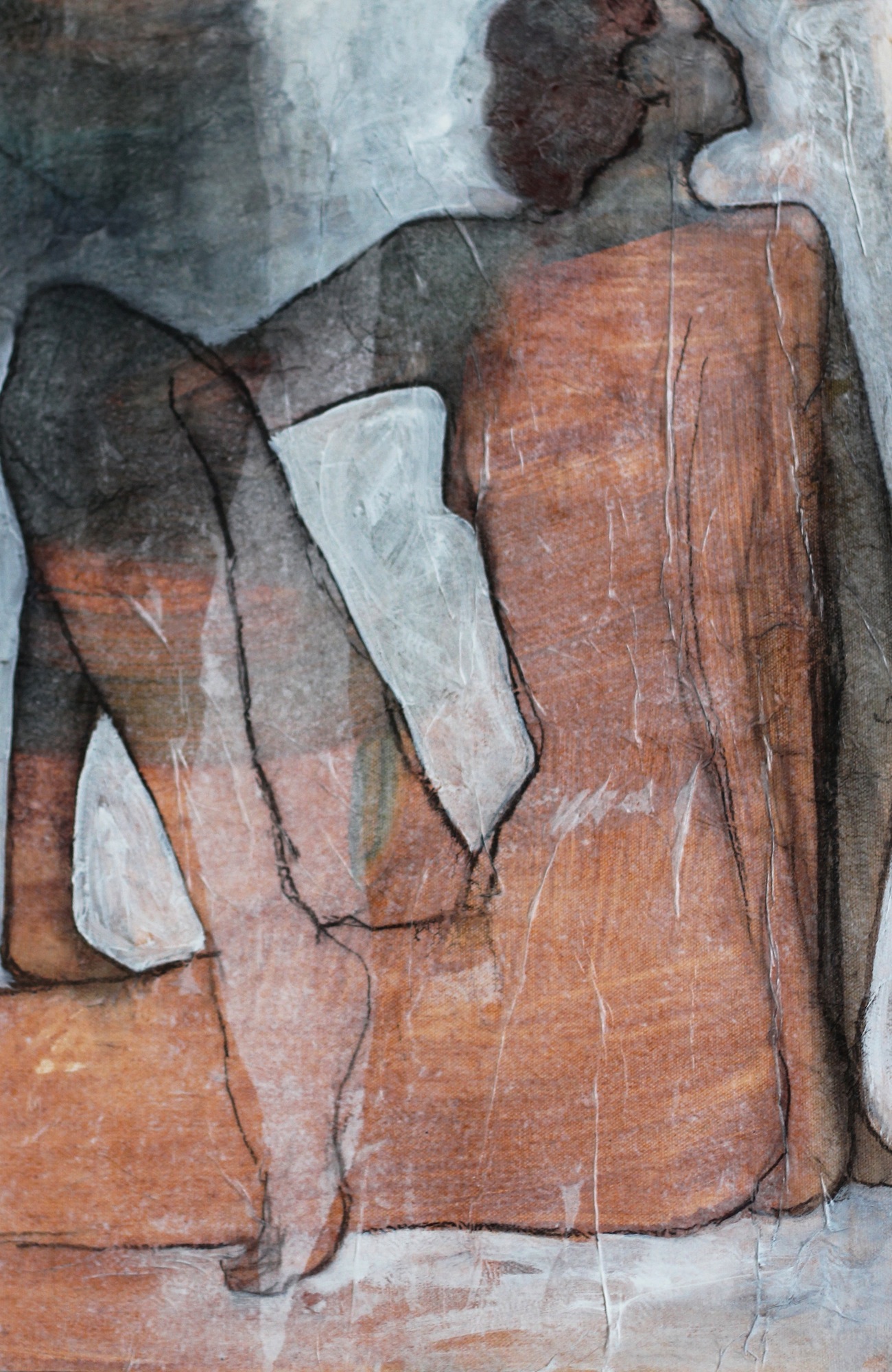
The Elders by David Robinson

Many years ago I took a class called Art and Transformation. Over several months we studied the art of different culturals, specifically cultures that understand art as central to their health and wellbeing. It is not correct to say we studied: we made art. We drummed our way into trance and drew what came to us in the trance. We participated in a sweatlodge to find the symbols necessary to make medicine shields. We meditated and made sandpaintings. We sat still in nature, drew with our nondominant hand, gathered dream symbols, made mandalas and explored what it means to be connected through art to “something bigger.”

In the weeks following a class session, we painted work inspired by the class experience and then gathered to share our new work. It was amazing to see the change in my own work when I was rooted in the deeper rivers of life. When I was working from the actual experience of connectivity – and not a mental abstraction or a concept – my paintings startled me.

We worked for months – consciously –  with transformation as the central impulse driving our visual forms. I learned through the class that “transformation” and “connection” were the same thing. Growing in consciousness is almost always a recognition of unity. As Joe said, “The universe tends toward wholeness.” Becoming more aware, opening the doors to greater consciousness, is how that tendency toward wholeness shows up. We see.

I also realized during the course that “story” was central to transformation. Art in its purest form is meant to be the keeper and transformer of the identity of a community. Identity is a story based on certain agreements a community makes about nature and time and god. Story needs context to make sense. I know this sounds like a loop and it is. Transformation is usually a movement toward wholeness (unity) and the movement is made visible through a change of story. I used to say, “Change your story, change your world,” but stopped because the phrase generally invoked wrinkled brows, protests and confusion. Most folks see their story as “reality” and will do anything to defend their reality. Initally a change of story can feel like an assault on reality.

I was once called on the carpet by a superintendent because a play I did with students challenged the reality of the teachers and parents. The superintendent shouted, “Art is supposed to entertain.” Well, yes. Art can entertain. Art is supposed to challenge, to shake the tree of assumptions, to help the community see itself. Art is supposed to help a community ask, “Is this who we are? Is this who we want to be? Is this what we believe?” I sighed and asked  the red-faced superintendent, “Why are you so upset?” Her response: “The play made me uncomfortable.” Yes. Powerful art will always make us uncomfortable. Growth is always in the direction of discomfort. When the universe within us tends toward wholeness we will inevitably walk into vast fields of discomfort. It is how we wake up and see.

Go here to get my latest book, The Seer: The Mind of the Entrepreneur, Artist, title_pageVisionary, Seeker, Learner, Leader, Creator…You.
Exit The Grey

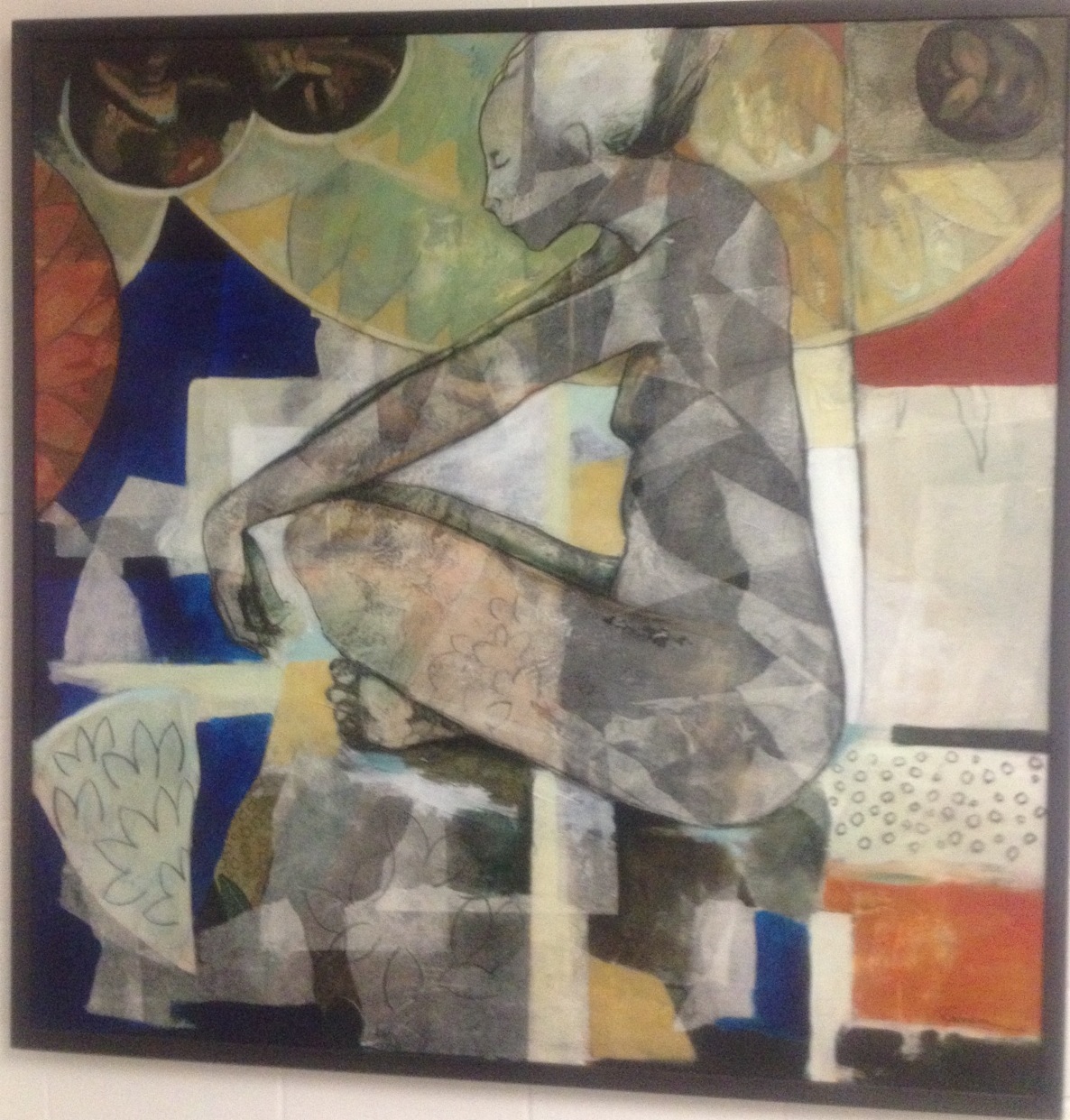
Pieta with Paparazzi_David RobinsonThe universe delivered a hammer-on-the-head-message to me this past year. It showed up in the books I read, the films I saw, and the conversations I had. It hammered me for months before I decided to pay attention. The message is simple: get out of the debate.

The debate ignites inside whenever there is a grey zone: the places where we ignore a decision or abdicate a responsibility. It’s the conversation inside when we’ve not made a choice and/or are waiting for circumstance to decide for us. The debate happens where we have yet to draw a boundary when we need to draw a boundary. It splits the inner monologue into two voices. “Stop. Go. No, stop. Go. Ahhhhhhh!!!”

Getting out of the debate means to be clear. It means to choose to be clear. Make a choice. Walk the path with eyes wide open. If you don’t like the current path of choice you can turn around or cut across the field. You can always choose to stomp through the tall grasses and make your own path or fake a crop circle. And, there is always available the choice to stand still and do nothing. Standing still never requires justification so no debate is necessary. Choose to stand still and see the stars. Feel your heart beating. Smell the hint of fireplace smoke in the air. Listen to your beating heart for a clue about your next choice. The choice to stand still will always lead to a yearning. It will inevitably lead to a step.

I’ve learned that clarity does not mean “being right.” In fact, “being right” is usually a sign of the absence of clarity. The need to “be right” is a blossom of fear. Inner clarity means to walk with your head up, eyes and heart open. It means to embrace the moment and the mess. It means to be available to learning.

You never lose time when you are clear; you gain perspective. You gain experiences. You embrace your moment. You no longer believe in illusions like “mistakes” or “failure.” You walk strong. You practice grace. You see.

Go here to get my latest book, The Seer: The Mind of the Entrepreneur, Artist, Visionary, Seeker, Learner, Leader, Creator…You.title_page