Make Belief [on Two Artists Tuesday]

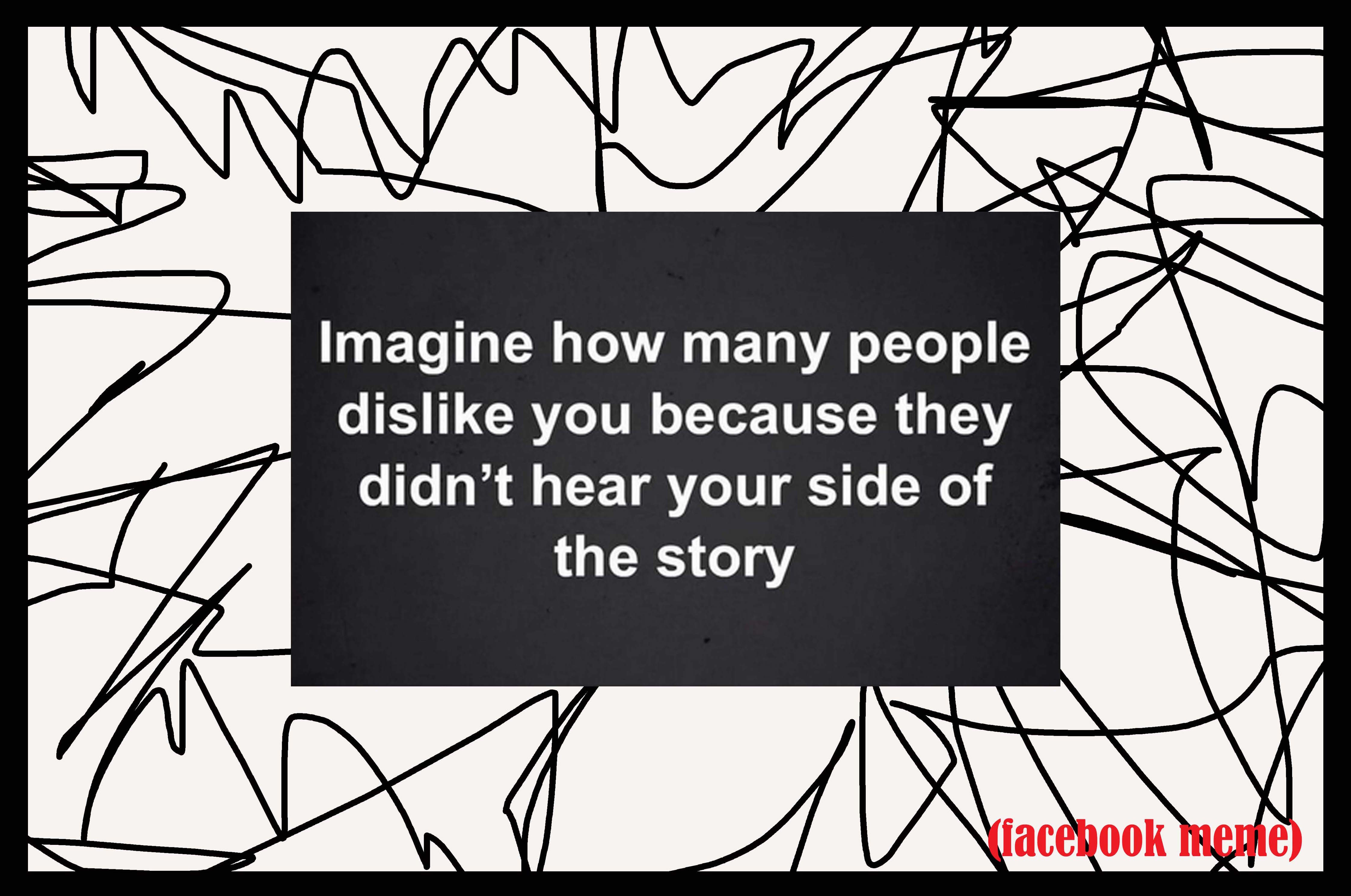
“A great deal of intelligence can be invested in ignorance when the need for illusion is deep.” ~ Saul Bellow

In addition to meaning uneducated, it occurred to me that the word ‘ignorant’ also means to ignore. It’s an adjective, a descriptor. Someone who ignores is ignorant, is an ignorant. I looked up the root of the word to be sure. To disregard.

Early in the pandemic, we placed a table in our sunroom. We call it our pandemic table. In our isolation it helped us to end the day, looking out at the back yard, and watching the light wane. Through the spring, summer, and into the fall, we’d sit at the table and talk about the news of the day. We’d ramble on and on about our disbelief in the angry wave of intentional misinformation rolling over the country, the big things and small things people have to ignore in order to make belief. To support an angry illusion.

One evening, we shook our heads in utter incredulity as a member of our community re-posted a QAnon assertion that the CDC was exaggerating the numbers of COVID deaths just to make the then-president look bad. As proof, the post included a morbidity chart extracted from the official CDC website. We pulled up the website – it took less than 15 seconds – to see the extracted chart nestled on a page with multiple charts detailing comorbidity data; the many many ways that COVID kills. We felt compelled to write a note. It was too easy to debunk the assertion. We asked him to take a moment and go to the site, to look at all of the data. He was being fed a chart cherry-picked from a veritable mountain of information. Nothing was being hidden. No evil plot was in play. His reply was angry, defensive. He unfriended us. We’d done the unthinkable and revealed what he was ignoring.

We learned a lesson about the power of invested ignorance.

Over the year our pandemic table has changed. It’s been populated with sparkling lights and plants. A bonsai gardenia, a birthday present from Kirsten to Kerri sits next to the ponytail palm, both surrounded by succulents. It’s become a sanctuary. We’ve changed, too. We rarely give our time to shaking our heads in disbelief or pushing back against the non-sense things people-in-our-world believe. I’ve stopped exclaiming, “Check Your Sources!”

We occasionally comment about the big things and small things – the mountains – being ignored in order to sustain the modern bubbles of make-belief. The big lie. We are no longer shocked by the dreck that people swallow without question or thought. We’ve moved beyond our own naive illusion and admitted that many people simply do not want to know anything that might challenge their make-believe.

We sit at our pandemic table. We listen to the mourning doves. We eat our lunches looking out at the vibrant green returning to the backyard. We laugh at Dogga running circles in delight. We talk about replacing the very-worn rug beneath our feet. We appreciate the bonsai gardenia, checking the moisture of the soil. We celebrate when our friends and family are vaccinated. We know more than ever it is important to hold dear the baseline, to not disregard our responsibility to check our sources, to carry a healthy doubt about what we are hearing on the news, the story we are being told.

read Kerri’s blog post about BONSAI GARDENIA

Turn To See [on Merely A Thought Monday]

Joseph Campbell said, “None of us lives the life that he/she imagined.” We have an idea, perhaps a plan, a good map, and then, well, life happens. As anyone who’s ever done home repair knows, things rarely go according to the plan. A good life, a life well lived, allows for both the well-laid-plan and the home-repair-rule. Things happen. Plans change. Visions grow. Pipes burst. Pieces don’t fit. Good angels arrive.

Dreams are fluid things. Despite expectations, very few life paths are straight lines.

One of the tenets we taught in The Circle Project was to plan for surprise. Expect the unexpected. There is nothing worse than an inflexible plan. There’s nothing better than a happy accident that alters the course of an idea, the direction of a life.

That we have penicillin in our world is the result of a famous happy accident. Intention met mishap met serendipity. A surprise discovery in a Petri dish in 1928 took years, many more Petri dishes, publications and happy discovery by other scientists who held a similar intention, followed by additional happy accidents to at last become a useful antibiotic available to the public in 1942.

Though I rarely include it in my list of gratitude, I would not be alive today were it not for that accidental mold in the dish and the subsequent scientists who included in their plan time to read journals and follow up on the research they found there. I’ve never come across a life plan that included a bout with life-threatening infection but I’ve heard countless tales of relief when the antibiotic – no longer a surprise – arrived. Surprise meets plan. Plan meets surprise. They are dance partners, not adversaries.

A team can practice, practice, practice, but they cannot know or predict the outcome of the game. It must first be played. And, as any athlete will tell you, the game is only worth playing – or watching – because the outcome is unknown.

Plan for the unknown. Welcome the surprise.

The long view is what we desire before life is lived. Pick a point on the horizon and walk that way.

The long view is something we can only truly see after the fact, when we arrive at a point, and turn to see the surprising path we have traveled.

read Kerri’s blog post about THE LONG VIEW

Look To 3 [on Not So Flawed Wednesday]

My long-ago-business-partner used to tell groups that every human being wears an umbrella hat called “normal.” That is, we try to maintain and make sense of the world according to our personal (and cultural) criteria. We carry the criteria around with us – it does not exist beyond us. We are comfortable when wearing our umbrella hats. We get really uncomfortable when something comes along that knocks our hats off of our heads.

When we lose our hats, we’ll do anything to regain our comfortable “normal.” The fear of losing our hats is what makes change – personal and cultural – so difficult. Despite what they say, no one wants to lose their hat. Organizations have a nifty phrase, change-management, to shield against the reality that change – real change- requires discomfort. How to prevent discomfort? Manage it! No worries! Everything is under control!

The other strategy – also not very effective in the long run – is to pretend that the hat is still on your head. No worries! It’s all made-up! Everything is normal!

The pandemic blew our collective hats off of our heads. We’ve had a front row seat to the realities and responses of a disrupted normal. The recent photos from Miami Beach, the aggressive non-mask-wearers, the absurd and deadly politicization of a pandemic…all in the name of hat retention and recovery.

In our circle of life, we’ve had the ubiquitous conversation about the return of normal. “When can we get together again?” Prior to the pandemic, our week was patterned on, our lives were grounded in, our Sunday and Thursday night dinners with 20. In a fluid artistic life, dinner with 20 was the shape-giver to our otherwise formless weeks. One day last March, we tossed our hats to the wind. It wasn’t safe to gather.

Over the year we left groceries at his door. He dropped goodies at our door. We waved from the car. We had regular phone calls. A few times, when the weather was nice, we sat in the back yard at great distance and discussed how weird life had become.

We looked for our new-normal-hats but they were nowhere to be found. It’s what happens when change cannot be denied: the management of discomfort is the best that you can do. Keep stepping. Chop wood/carry water. One day at a time. A new normal will surface sometime. A new pattern will be established. Pattern making is what we homo sapiens do.

In the past few months we three were vaccinated. We waited for a few weeks. We diligently read our CDC guidelines. And then, as if a year had not passed in the interim, we gathered to share a meal and drink a bottle of wine. Nothing had changed and everything had changed.

2 at the table is once again 3. We are slowly reestablishing what we once knew as normal. Our laughter is easy as it has always been. But the nation we inhabit, the community we see and experience, is transformed. There are stores we will never again support. There are relationships that will always be superficial. There is a bald ugliness exposed as never before in the nation. Ruthlessness. So many dead amidst such fatuous games of denial. The hot wind that blew our normal-hats away exposed the geography – the actual geography – beneath our nation that espouses equality but has deep division and favoritism woven into its DNA. Control by division. It is a mechanism: black gain is seen as white loss. White gain is built upon black loss. It is a seesaw, an angel/devil game. It’s a system doing – brutally – what it was designed to do.

Disruption is an opportunity for change. With so many lost hats, with so much ugliness exposed, a good look in the national mirror is possible. As we struggle to find our new normal hats, it occurs to me that angel/devil games, deep divisions, are never “solved” in twos. Movement is created by two points. Insight is a three-legged stool. Complexity is addressed through triangles, through a focus on relationship. Opposition-in-twos will keep us forever on the systemic seesaw.

Laughter is restored, possibility uncovered, through the lens of three.

read Kerri’s blog post about 3

Look To The Hand [on KS Friday]

This is the year of the hand. Not ox or rat or snake or dragon. Hand. Not merely as a symbol but as an overriding metaphor for our latest circle around the sun. And, like all good metaphors, “hand” is complex and signals more than one level of meaning.

You’d be amazed what you cannot do when both your hands are immobilized, when both your wrists are broken, when your thumbs are bound in plaster. So, the first level of meaning in our metaphor of “hand” points to all the things we take for granted. Try and wash your hair without your wrists. Try and cut a piece of bread without the use of your hands. Try to open a door without your thumbs. The failure of proper appreciation for simple function. There’s nothing like a good hard tumble, complete with casts, to revivify genuine indebtedness to the temple of the hand.

I’ve read that an opposable thumb is a physical adaptation that helped humans survive – and thrive – in our many habitats. In addition to all the things we take for granted (and now fully appreciate), our “hand” metaphor-of-the-year also reaches into the wonders of adaptation. I watched with utter amazement, two weeks after her fall and with no time off extended to her, my wife played the piano. Standing across the room you’d never know that she was in casts. This woman, who could not button a shirt, somehow, managed to play. To make music. To open hearts. Standing behind her, I was slack-jawed at the contortions required, the adaptations necessary, to reach the keys. Spread a thick layer of pandemic on top of lost jobs and injury, and the year of the hand is a miracle of rolling adaptation. An affirmation of the possible.

And, while considering miracles, I would be remiss if I did not mention the mittens. Gloves are not made for hands-in-casts. To keep hands warm while walking-through-winter we tried a succession of thick socks, borrowed mittens, and other inventions that included sacks, wraps and duct tape (I’ll leave it up to your imagination to fill in the gory details) – none of which did the simple job of keeping fingers warm. We visited multiple sporting good and camping supply stores and found possible solutions but they were not in the budget. Not even close. The year of the hand is, above all, a year of tenacity. One step at a time. Keep walking. Keep looking. Keep trying. And then, one day, an after Christmas sale brought to us, as Kerri likes to call them, her miracle mittens. They are easy to slide onto injured hands and over splints. On sale they were within our reach. “My hands are warm,” Kerri purrs as we crunch through the snow. “It’s a miracle.”

The year of the hand. Filled with appreciation for all that what was once taken for granted. Adaptation in circumstances that we might once have called impossible. Tenacity. There’s always a way. And, if we forget that we can do almost anything regardless of the fury that surrounds us – and we sometimes forget – all we need do is take a breath and look at our hands.

read Kerri’s blog post about MIRACLE MITTENS

Stroll The Esoteric Garden [on Not So Flawed Wednesday]

Lately, I am strolling the esoteric gardens and have picked for you these wild blossoms.

First, my favorite quotes of the week:

  1. “Life is mysterious and transcends logic, so the living thing can never be fully analysed, taught or learned…The doctor may explain why the patient is dead, but never why the patient is alive.” [Declan Donnellan].

2. “Samuel Beckett is a wonderful writer who has meditated deeply on the mystery of death…All of Beckett’s works, especially Waiting For Godot, are about death. In other words, because death exists, time is radically relativized. All we do here is invent games to pass the time.” [John O’Donohue]

DogDog and BabyCat are food-driven. The levels of excitement in our house escalate when the food bowls are filled. DogDog performs his vertical-jump-and-counter-clockwise-spin dance. BabyCat uncorks an excited verbal symphony that sounds a lot like “now, now, now, now, now…” The anticipation of the bowl, it seems, is far more satisfying than eating of the food from the bowl. The anticipation lasts longer and I am certain that, in the gobbling, neither DogDog or BabyCat actually taste their food.

3. “After a time, you may find that having is not so pleasing a thing after all as wanting. It is not logical, but it is often true.” ~ Mr. Spock. I laughed the first time I heard this in an episode of Star Trek. Capitalism reduced to a simple, single phrase. The economics of desire, wanting and having en route to wanting.

I have crossed paths with many a seeker. Mostly, they talk of presence or mindfulness or being as a noun. A thing to achieve or possess or gobble. Food in a bowl. The anticipation of unity in a path devoted to separation, thus, we are seekers. The Buddhist’s remedy to the dedication of separation is to chop wood and carry water. In other words, being is a verb.

With the notable exception of how-to-go-on-a-walk-without-pulling-our arms-out-of-the-socket, using the promise of a treat, Kerri can teach DogDog anything. There is no end to the tricks he will perform, the indignities he will suffer, en route to a treat. He sneezes on cue. He counts, high-fives, sits, jumps up, jumps down, wears paper plates on his head…his little Aussie body quakes with excitement, his eyes firmly locked on the promised treat.

We wrinkle our brows daily and ask, “How can they possibly believe that?” Horatio would respond, “It’s game theory. What are the incentives, the promised pay off?” Anticipation. Treat. We might as well ask, “How did hate, division and lie become food in the human bowl?’ There is no end to the tricks people will perform, the lies they will embrace, the funny hats they will wear, the indignities they will suffer or inflict, eyes firmly locked on a promised treat. Superiority. Or mattering?

I have crossed paths with many a power player. Mostly, they talk of winning, and owning, and being-on-the-top. There is never enough food for the bowl. The anticipation of achieving abundance through eyes that only perceive a pie with limited pieces. Owning this piece and then the next and the next and the next…

“Life is mysterious and transcends logic.”

Yearning meets obstacle.* The strange alchemy necessary to invent a story.

Dogs and cats living together, oh my!

“All we do here is invent games to pass the time.” I wonder, as I wander through my esoteric garden, what might it take for us to invent more inclusive, life-giving games, a more generous story?

*this definition of story courtesy of Robert Olen Butler

read Kerri’s less esoteric blog post on ANTICIPATION

Listen To The Lake [on KS Friday]

The sun poured in the window this morning. We sat in it. No, we basked in it, ate breakfast, sipped coffee. Simple pleasures. Endless appreciation. We reminisced about our childhood homes. Kerri recalled the layout of the den. I described the kitchen in my growing-up house. We remembered cooking smells and Formica table tops.

Our story zones expanded to include the many chapters of our lives. Multiple eras. Times that seemed as if they would never end. Times that passed too quickly. We imagined a day when we would reminisce about these times, pandemic times, both the hardships and the appreciations. For instance, in our isolation, we’ve created an end-of-the-work-day-ritual called ‘snack time.’ A glass of wine, french fries hot from the oven or a pear and cheese. Olives. We sit at the table we placed by the window, watch the day wane, and savor. I suspect snack time, borne of the pandemic, will be with us for the rest of our lives.

When in my old age I tell the story of the pandemic times, when the hardships fade in importance (as they always do), I will tell the tale of life slowed down. I will remember how limits made movement less frenetic and much more mindful. Rather than doing more, we pared down. We did less and experienced more. We placed increased importance on the simple things. In fact, we placed importance on the important things. Connecting with friends and family, not out of obligation or unconscious pattern, but out of necessity and intention.

I will talk about our walks, already central to our daily happiness, how they took on a wholly new significance. Getting out and walking became an exercise in paying attention, in absolute appreciation of the simple miracles. Affirmations of life. The magic appearance of the robins on a frigid day. The sunset bringing fire to the ice in the harbor.

I will tell the story of the day we were stopped in our tracks by the song of the ice on the lake. It sounded like whale song. I will tell the story of standing still in blistering cold, listening in utter amazement until ours eyes watered and our fingertips burned, until we looked at each other and in unison said, “Snack time!”

read Kerri’s blog post about LAKE SONG

Make Noise [on Merely A Thought Monday]

I am conflicted. I wrote a version of this post and then tossed it away. I’m trying to be less argumentative in my daily writing. And then, Toni Morrison collided with Albert Einstein:

“In times of dread, artists must never choose to remain silent… This is precisely the time when artists go to work. There is no time for despair, no place for self-pity, no need for silence, no room for fear. We speak, we write, we do language. That is how civilizations heal.” ~ Toni Morrison, No Place for Self-Pity, No Room for Fear

I am an artist. Is it argumentative, is it confrontational, to write what I see? Yes. Sometimes. Once, I saw a park service truck, on a trail, quickly backing up. The driver did not see the man in the wheelchair right behind his truck. I screamed and ran and banged on the side of truck until the driver stopped, a few inches from hitting the man in the wheelchair. Sometimes it is necessary to shout and make noise.

All of my life I’ve understood the first rule of being educated, namely, to check your sources, as simple sage advice. It’s a good idea, if you are going to anchor your identity in a narrative, to make sure that your narrative-of-choice is solidly anchored in verifiable substance. Doubt and questioning, used properly, are necessary tools of an engaged mind.

Years ago, Robert Cialdini wrote, “The world abounds with cults populated by dependent people who are led by a charismatic figure.” In other words, people are easily led and – as we have recently witnessed – with disastrous results. All that people ever need do to avoid a nasty drink of purple Kool-Aid is to check their sources. In our day and age it is almost easier to check the veracity of the story-we-are-being-fed than it is to be misled. Almost. One must first desire to be fed the truth, even if the truth challenges rabidly-held belief.

Checking takes less than a minute.

Just ask the now-jailed-and-soon-to-be-tried capitol insurrectionists claiming that they were led astray by a flimflam-president-man. The Big Lie was easy to check. It remains easy to check. Yet, none cared to check it or perhaps refused to believe what they found. Checking the lie, listening to the data, would undermine the tightly held power-narrative of an entire political party. A pathological lies requires more and more effort, more and more outrageous lies, to sustain itself. It should have been easier to check the story than it was to storm the capitol.

Now I see the first rule of being educated, the necessity of checking sources to verify fact, as a dire necessity. It is the flashing red warning signal to these de-united-united-states that there is a cliff ahead. It is no longer a sweet bit of sage advice; it is a survival imperative. Respect for the line – truth or fiction – will determine whether we as a nation unite and grow or divide and collapse.

Many years ago, Robert Cialdini also wrote,“Audiences have been successfully manipulated by those who use social evidence, even when that evidence has been openly falsified.” Openly falsified. He wrote those words decades before tweets, Fox News, and the mega-amplification of all the openly falsified big lies. His words might now serve as the sad single credo of the Republican party.

It is not shocking that a political party lies. It is most shocking how little the followers of the party care to check the sources of the enraged hype it daily swallows like so much anger-candy. Dependent people. Easily led. Believe wholeheartedly. Ever expanding lie. No facts necessary. It is far beyond Einstein’s observation of people doing nothing in the face of evil; our nation is in peril because the evil we face is an openly falsified narrative. So many of our people, so many of our leaders, know it is a lie, feed the division, and actively look the other way.

read Kerri’s blog post about DOING NOTHING

Check Your Attribution [on KS Friday]

I have just had a front row seat to a full-blown, hyper-antagonistic, years-long, classic case of attribution-bias-escalation. It was [and is] ugly. The ripples are rocking boats, eroding foundations, ending friendships. The damage is thorough and, as is always true, infinitely avoidable.

Attribution bias. Making the assumption that you KNOW why someone did or said something. Assigning your reason to their behavior.

Years ago, a red faced executive called me, the consultant, in and fumed, “She said THAT to demean me!” I paused and asked, “Do you really know why she said it? Have you asked her what was going on from her point of view?” His blank stare told me all I needed to know. He would rather demonize her, be offended by her, than communicate with her. We sat down, drank a cup of coffee and decided that, rather than fume and escalate, rather than simmer in a victim-stew, he had at his disposal a better path. Communicate rather than assume, ask questions rather than blame, poison the well, and indulge in being offended.

It always amazes me how unconscious and/or resistant folks are to challenging their attributions. How eager they are to spin hard narratives and create vicious persecutors. How invested they become at being offended or otherwise insulted en route to being ‘right.’ It is monster-creation. It provides nothing more than a reason to draw a sword.

We do it so fast. Assume we know. And, once the attribution is made, we hold onto it as if it were gospel. It is easier to believe we know-all-things than it is to step out of the yummy-victim-archetype and ask a few simple questions, confess a few honest vulnerabilities. It is easier, more tasty, to take offense than it is to give consideration. Blame provides a great reason to never ask a question. Being ‘right’ is a hard stop to all inquiry.

In the canon of unconscious bias, attribution is one of the most-oft-used routes to really effective miscommunication. It makes mountains out of molehills. It makes muck from otherwise good working relationships. It savages careers. It makes vice presidents run to the phone and call consultants. It makes councils meet in secret and vote without investigation. It makes revenge a serious pursuit of otherwise grown-up adults. It makes weak leaders run for the basement and hide. It makes new-contract-creation and other tit-for-tat flexing a less-than-fun game of control. No one wins. No questions asked. It makes a hammer the only tool in the tool kit.

A few breaths to simmer down, the suspension of a snap-assumption, an honest “can I talk to you” conversation that comes with no blame and a wee-bit of vulnerability…could make a minor miscommunication remain minor. It could save all manner of hurt feelings, ill intention, relationship destruction, HR costs, separation agreements, litigation…all unnecessary wreckage that might have been avoided with an assumption-made-conscious, an attribution challenged. A simple word or phrase can usually be explained, “You took a bullet meant for someone else, I’m sorry.” Mountains return to molehills when we are willing to turn from our hyper-active-attribution-bias (“I’m right and I know it!”) and ask, “I’m not sure what just happened here. Will you help me understand?”

read Kerri’s blog post about ESCALATION

Anticipate The Cake [on DR Thursday]

While I was shoveling snow, Kerri got to work creating a birthday surprise for me. I came around the corner of the house and howled with laughter. She told me her sculpture was me, with my tiara, waiting for my birthday cake. She captured my likeness exactly (this is how I look on the inside when cake is in my future).

On my 30th birthday my pals threw me a party. I lived in Los Angeles and the weather was gorgeous. I’ve never really liked being the center of attention so I remember that day, although fun and filled with love and kindness, as being hard work. On this, my 60th birthday, the weather was frigid. The snow powdery with the cold. We attended to the quiet. We lingered with coffee. We laughed. DogDog ran circles through the house as he always does when he gets a new bone. BabyCat snored in multiple spots around the house. For a few minutes I painted. I shoveled since more snow is on the way. Kerri sculpted. We opened a special bottle of wine, ate snacks, responded to texts and emails from dear friends. A package of unimaginable chocolates and treats appeared at the front door. We made dinner together. Talked to 20 and my mom. We wiled away the evening lost in a jigsaw puzzle. It could not have been a better start to a new decade. I crawled into bed feeling warm and rejuvenated.

Birthdays that end in zero naturally come with some life review. A look back at the road traveled. This zero came with some extra review. My father’s move to memory care has given me an added appreciation for memory. Moving Duke’s paintings after his death has given me a curious perspective on my paintings – and, for a while, a wrestling match with the final destination of my work. There was a moment of sweet release and circling back to long lost purity: in the road ahead I will paint for the simple pleasure of doing it, for the soul-dive that I experience when I’m dancing with a canvas.

At 80, I will look back at 60 and along with the simple celebration and enormous snow cake, I will remember the moment I opened my eyes on the new day. My first thought, my very first thought coming out of my dream was: this will be my favorite age. This marks the beginning of my favorite time of life. From here on, it is all cake.

read Kerri’s blog post about SNOWCAKE!

See The Action. See The Motivation. [on Merely A Thought Monday]

“It’s discouraging to think how many people are shocked by honesty and how few by deceit.” ~ Noel Coward

Lately, I’ve been rereading books on playwriting. Put them on the stove, boil them down and you will have a fine reduction of action and motivation. The actions a character takes. The reason a character takes them. A playwright’s tool box is filled with words but a playwright’s creation is a sequence of motivated actions.

Tom McK told me that plays are about one moment. A moment of choice. A moment of revelation. A moment of truth. A moment of reckoning. All of the actions of the play lead to the moment. And the world will never be the same.

I began rereading my dusty old playwriting books because of the impeachment trial. I feel as if I am witness to an ancient Greek drama. Power falls. Courage fails. Morals collapse. Act One: the temple is sacked. The actions and motivations for the assault could not be more clear. Naked sedition. Act Two: the trial. The ideals of the temple are gutted. Blind justice is made a mockery as nearly half of the jurists fail in their courage, choosing personal gain over public good. They defend sedition. They kneel to it. Their actions and motivations could not be more clear.

Like every Hallmark movie, the end of this play was known before the actors took the stage. We watched the play to confirm what we already knew.

Doug had a saying: health was a measure of the distance between who-you-say-you-are and who-you-know-yourself-to-be. The shorter the distance, the healthier the person. By Doug’s account, the actions and motivations of the 43 jurors who protected sedition could not be more clear. Despite what they say. Despite what they proclaim. The distance between who-they-say-they-are and who-they-know-themselves-to-be is vast. They are unhealthy. Shiny suits that are rotten to their core.

The climax of the play. The one moment. The realization. Just as in a horror movie, the recognition that the person in the passenger seat is the murderer. All of the actions of the play lead to this one moment, this single recognition: their defense of sedition is not aberrant to this jury’s character. It is their norm. Their fall from grace, their collapse of principle, happened long before their vote to acquit.

Action. Motivation. Expressed through character.

“Character,” Tom McK taught, “is how you do what you do.” This is who they are. It is a matter of character. Their actions and motivations could not be more clear. And the world will never be the same.

read Kerri’s blog post about WORDS & DEEDS