Stop Your Rant In Its Track

TODAY’S FEATURED THOUGHT FOR HUMANS

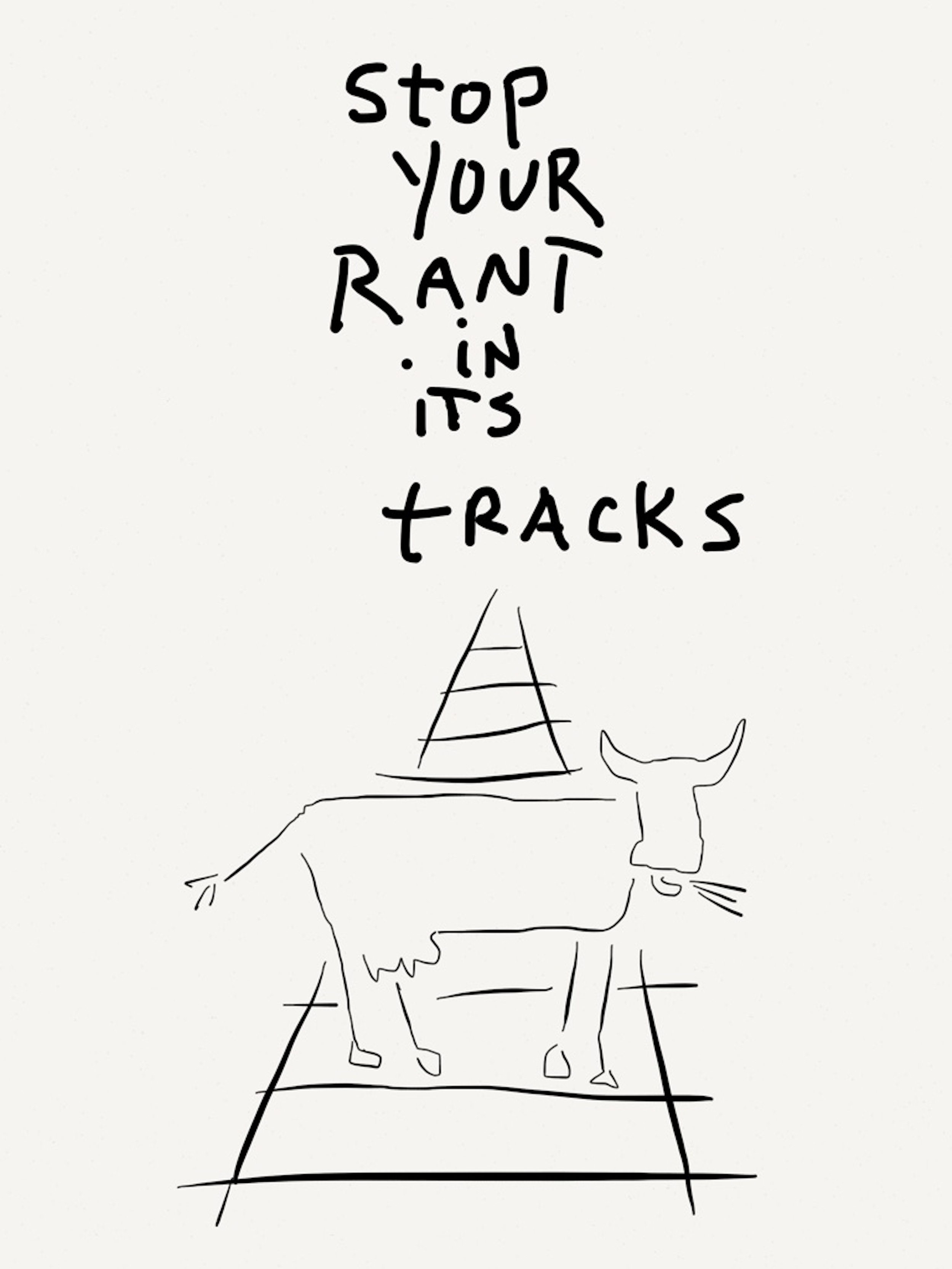
Stop your rant in its track

I come from a long line of ranters and am famous for ranting. Through a life of ranting I’ve learned that rants are mostly a useless exercise. They serve as a pressure release, which is say, energy that is misdirected. Miracles happen when misdirected energy is focused and released toward an intention. Rants are essentially an admission of helplessness, a scream of, “Why is this happening to me?” Redirected, the energy becomes a focused stream of, “I am going to make this happen.”

FOR TODAY’S FEATURED ENCOURAGEMENT FOR HUMANS, GO HERE.

Step Through Life

TODAY’S FEATURED PRINT FOR HUMANS

step thru life

FOR TODAY’S FEATURED PRINT FOR HUMANS, GO HERE.

Study Your Practice

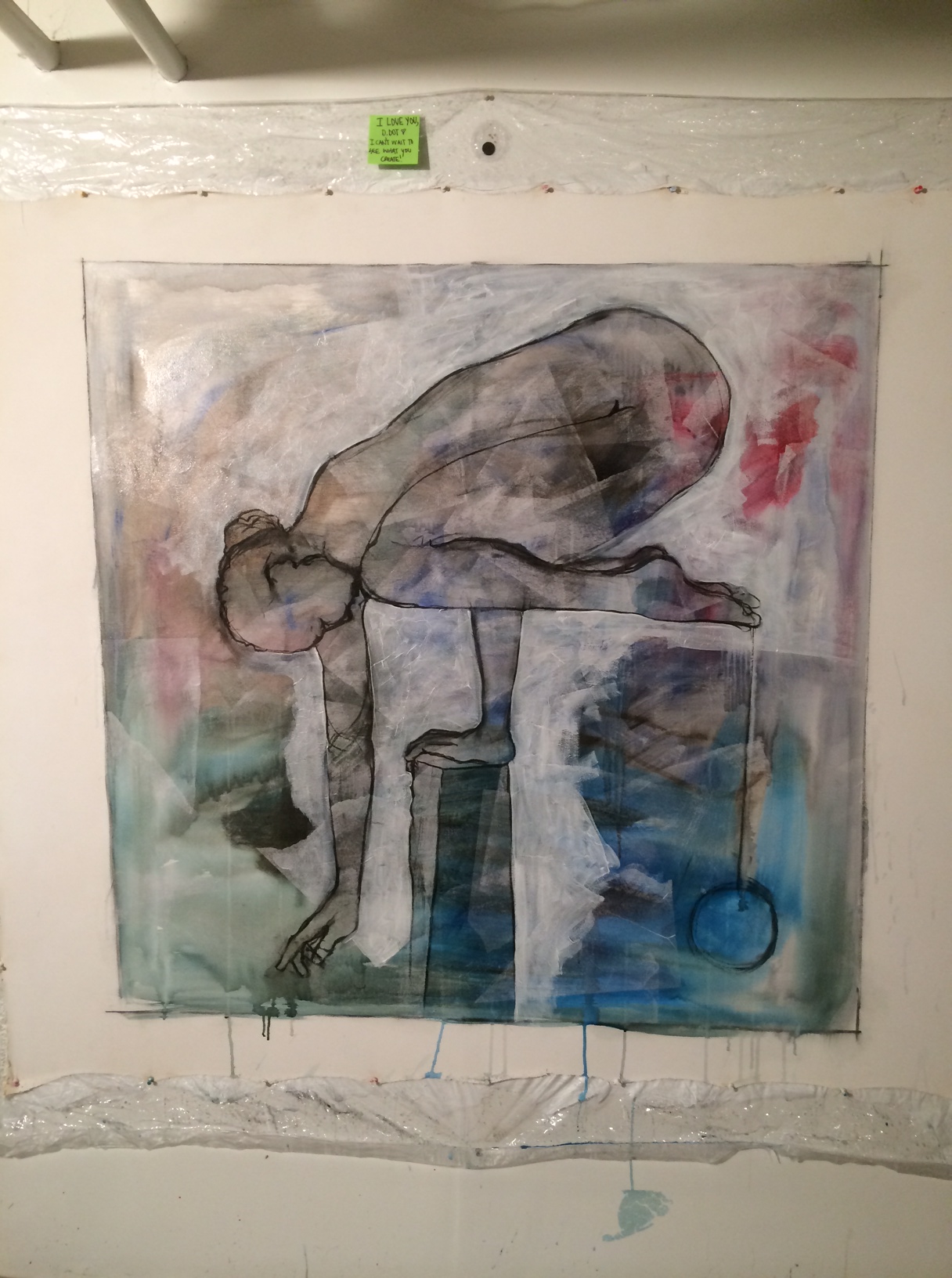
During his recent visit, Skip wanted to see my latest paintings so we went down to the studio. He is a great studier of people and processes and while flipping through my work he asked if I’d ever taken process shots or filmed my process of painting. Occasionally I take photographs of a painting in process – not to record the stages of development but so I can see what’s there. I’ve learned that a photograph can sometimes help me see what I’ve grown blind to seeing. I agreed to take and share some process shots. Yesterday, I started a new piece and here is the day’s progress:

#1

#1


#2

#2

This is the next in my “Yoga series” of paintings. A “yoga” is a practice and I started this series because I was curious about my practices: I was meditating on this question:what is the difference between what I actually do and what I think I do? For most of us the gap is vast between those two points. This series is my ongoing meditation/inquiry into the gap.

#3

#3

A study of your practices will surprise you. What you do and think each day is a practice – it is your yoga; your actions and thoughts constitute the rituals of your life. So, for instance, when I was younger (lots younger) I believed my paintings were “not good enough.” Each day I’d approach the easel and practice “not good enough.” It’s amazing the transformation that becomes possible when you simply change your practice. Practice dropping the judge from your menu. Why not?

Last night I had a conversation with someone who asked, “Why don’t people care?” I suggested that people do care but you have to practice seeing it. It’s all around us if we refocus our eyes. And, in cultivating the practice of seeing the acts of kindness and caring, we become kind and caring (because that is the object of our focus).

photo-5

#4

My yoga series has brought me to this (so far): The world does not need changing; we need, as Doug used to say, to close the gap between what we think we do and what we actually practice doing.

Change Your Mind

I used this quote by Friedrich Nietzche in The SEER:

“The snake which cannot cast its skin has to die. As well as the minds which are prevented from changing their opinions; they cease to be a mind.”

A few days ago I asked myself this question: What if I never painted another painting or wrote another word? What would happen? Who would I be?

title_pageThe first question, what would happen, is much less interesting to me than the second question: who would I be if I simply put down my brushes forever? When I was younger, I felt driven, as if I had to paint. I needed it. In asking the question I recognize that now I choose it. I don’t have to paint; I want to and consequently I am a much better artist. It’s a paradox: I am a better artist because I don’t need to be an artist. In other words, I don’t need to be, I am.

I’ve been revisiting The SEER. My initial team of wise-eyes unanimously voted the first draft to be “too much.” The book that I published is comprised of the first three chapters of the original draft. I deconstructed them and broke the steps into smaller bites. There were six more chapters outlined and, in my latest revisit, I recognize that I have a trilogy if I want it. So, book two is in process. I’m going to release the first draft in daily snippets as I write it. Everyone gets to be my wise-eyes this time around.

Here’s the launching pad section for book two from The SEER. It’s from the second cycle (story):

You can change your story. That is the sixth recognition. Doesn’t it sound simple? Say it this way: changing your story is the equivalent of changing who you know yourself to be. Changing your story often requires the loss of your illusion, a lot less armor and nothing left to lose. Who are you when you don’t know who you are or where you are going? This was the heart of Virgil’s question to me. Who are you distinct from your circumstance? Who are you when the mask comes off? More importantly, what are you capable of seeing when you are not looking through a [knight’s] visor? No one is immune to the stuff of life. Everyone lives a unique version of the story cycle. It too is a pattern, a natural process.

Go here to buy hard copies (and Kindle) of my latest book: The Seer: The Mind of the Entrepreneur, Artist, Visionary, Innovator, Seeker, Learner, Leader, Creator,…You.

Go here (to Leanpub) for all digital forms of The SEER

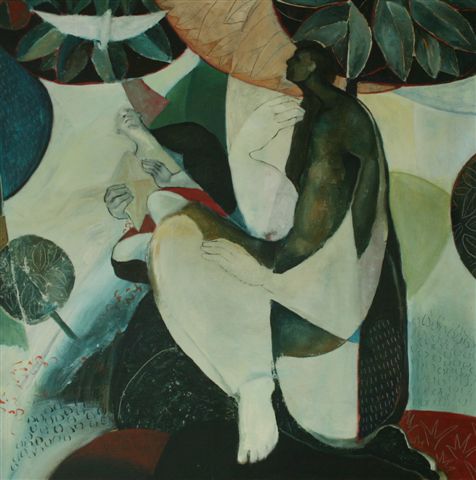
Canopy by David Robinson

Canopy by David Robinson

And, for fine art prints of my paintings, go here.


Learn To Swim

from my children's book on how to play, PLAY 2 PLAY

from my children’s book on how to play, PLAY 2 PLAY

Hoodie tells me that he is sarcastic by nature but I don’t believe it. I’ve spent a lot of time in nature and I find no sarcasm there. I also understand much about human nature and know that sarcasm is not a native plant; it is invasive. It is introduced into fertile, unknowing soil.

Sarcasm is the tool of the drowning man. It is an act of desperation to push others under the water in order to elevate the self. I’ve walked many paths and worked with many powerful and not-so-powerful people. There is a rule on the stage that applies: the king never needs to act powerful because the king is powerful. Those who need to demonstrate power have none. As Quinn used to tell me, if someone has to tell you that they’re important, they really aren’t. Sarcasm is a form of importance-telling. Powerful people create power with others. Power is a creative act. It is a communal act. They have no need to diminish or reduce others because they recognize that reduction also reduces. People who must reduce others are not powerful; they’ve confused control with power. They want to be king. They want to be seen as king. But, they do not believe they are king. Sarcasm is a form of perception control.

No one is by nature sarcastic. Sarcasm is learned in batting cages, at dinner tables, and on the field of play. Sarcasm is a mask. It is a place to hide smallness. It is passed down generationally. Masks both conceal and reveal and while it might feel good to pull others under the waves, it also reveals a non-swimmer. It is habit. It is learned.

Hoodie is not by nature sarcastic. Hoodie is a swimmer. He has the stuff of kings. He also tells me that his nature is to give comfort, to help others. He will one day realize, after he transcends his habit of drowning, that his nature to lift others is the center of his power place. Sarcasm separates him, reduces him, as do all forms of self-diminishment/control. Sarcasm is a lonely planet. Power is always a movement toward others. It is generative, as is all of nature.

title_pageGo here to buy hard copies (and Kindle) of my latest book: The Seer: The Mind of the Entrepreneur, Artist, Visionary, Innovator, Seeker, Learner, Leader, Creator,…You.

Go here to support my kickstarter campaign for The Lost BoyDSC_1196 copy


Welcome The Bump

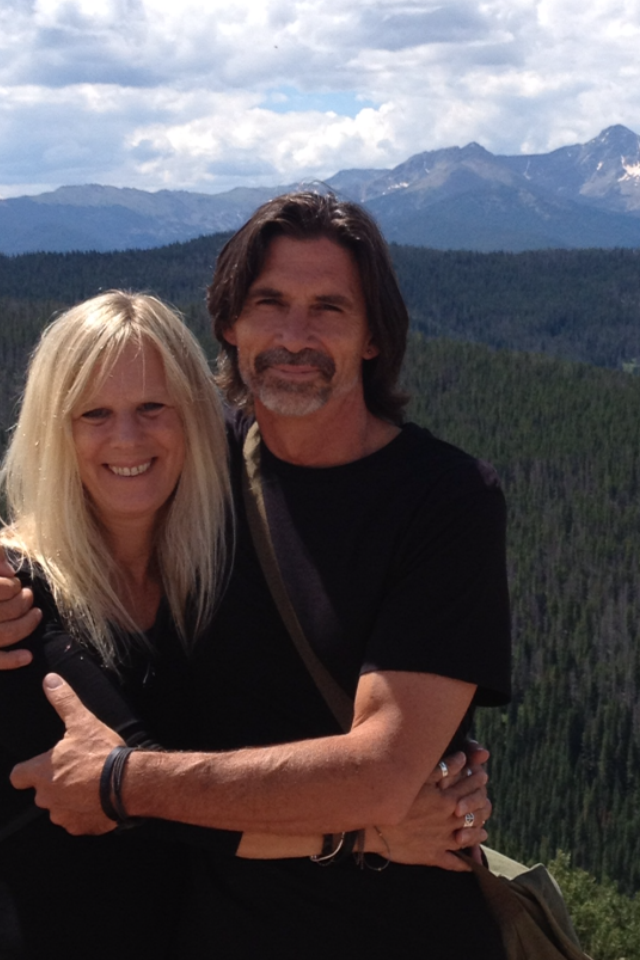
With Kerri on the top of a mountain

With Kerri on the top of a mountain in Colorado.

Just beyond Vail, Colorado there is a tiny two street town called Minturn. It began as a mining town when people were rushing for gold but these days it survives as a place for tourists. It is radically different than its founding fathers intended. We stayed there for a few days of rest and recuperation after our two-week double loop through Middle America.

The double loop through America was nowhere in the plan a month ago. Things just seemed to pop up. A death. Kerri’s daughter stumbled into a new job that necessitated an immediate move. Plans changed. Our intentions for the month went out the window. All of the artistry went on hold. We quickly packed the car and hit the road.

Just as plans change it is also true that change is rarely planned. I’ve yet to meet a person who doesn’t resist change (despite their rhetoric). Change requires a step into the unknown and that’s precisely the point: real change comes when we simply don’t know. Most of us like to know where we are going before we step. Change finds its way through the cracks that happen when patterns are disrupted, when things just seem to pop up, when we have no idea what the next step is. Change happens when we are making it up as we go. Change is a creative act, a tap dance on the event horizon.

Last week we drove to Colorado from Wisconsin through Iowa and Nebraska to attend my grandfather’s funeral. After the service we drove to Columbia, Missouri, crossing the full expanse of Kansas, to deliver some treasures from Beaky (Kerri’s mom) to Wendy (Kerri’s niece). Since we were driving to Denver, why not go home via Missouri? We returned home long enough to wash our clothes, pet the dog, and repack the car and head to Minneapolis. We packed up Kerri’s daughter and moved her to Vail via South Dakota with a sharp turn through Nebraska before arriving again in Colorado. After a rest in Minturn, a few hikes, some time with wine sitting on a porch, and a few precious nights with my parents, yesterday we returned to Wisconsin through Wyoming, South Dakota, and Minnesota.

It was a tap dance. Change found its way in as our patterns disappeared in the spontaneity of the double loop. We arrived home exhausted and exhilarated, with renewed eyes, a riches of profound and varied experiences, and much clearer intentions. What seemed initially like an interruption in our path was, in fact, a crack in the pattern, a necessary bump into the unknown.

title_pageGo here for my latest book

Pick Up Your Ordinary

From Kerri and my travels: a photo essay about what our feet have seen

From Kerri and my travels: a photo essay about what our feet have seen

I continue to process all of the amazing events and experiences from the past few weeks working abroad. They have jiggled loose an old thought-bubble and I’ve been pondering it since it bobbed to the surface.

The old thought-bubble is a tenet that comes from improvisational theatre: put down your clever and pick up your ordinary. I’ve used this tenet in any number of facilitations and coaching relationships. The basic idea is this: any attempt at being clever actually diminishes personal power and inhibits the capacity to be present. Trying to be clever focuses the eye inside and robs a performer or presenter of the only thing that really matters: relationship in the moment.

Dig a bit deeper and the real wealth of the tenet shows itself. We rarely recognize our true gift because we think everyone possesses it. We miss our unique gift because we think it’s ordinary. We mistake our gift for something common and therefore not of great value. In truth, what we brand as ordinary (how we see the world) is our most unique, most potent and powerful gift. So, to put down your clever and pick up your ordinary is to value your unique point of view. It is to honor yourself and how you see the world and also affords you the capacity to be seen as you are, not as you think you need to be seen. To pick up your ordinary is to become accessible.

Trying to be clever is actually an attempt at trying to be something we are not – or someone we are not. It is to hide, put on a mask, or pretend.

Ordinary reveals; clever obscures. Ordinary facilitates flow. Clever needs to control. Attempts at being clever are manufactured moments. Experts need to be clever, they need to whip up a straw man and call it substance. Clever is always an ego need – in fact, clever is nothing more than a plea for approval. It is a thirst for adulation. Clever needs center stage. Ordinary shares the stage. Clever needs to claim territory. Ordinary expands horizons. Ordinary is accessible. Clever is protected, aloof, and closed.

All of this is old news. It was in the old thought-bubble. Just behind it came a few new little trailer bubbles. Clever is oriented on what it gets (adoration, attention, acclamation). Ordinary is oriented according to what it brings: a unique point of view in service to a relationship. Ordinary is a form of potlatch: give what you have; give away your wealth as the road to increase. Clever comes from a universe of lack. Ordinary comes from an abundant life. It is a paradox. Unique is found in the ordinary. New vision comes when we cease trying to say something new and simply offer our unique, one-of-a-kind perspective. The beauty is in what we see.

title_pageGo here to get my latest book, The Seer: The Mind of the Entrepreneur, Artist, Visionary, Seeker, Learner, Leader, Creator…You.

Or, go here for hard copies and Kindle.

Story Your Life

title_pageI’ve received a few questions this week about life stories and rather than blather…here’s another snippet from my book, The Seer:

Stories often deal with the collision that arises when learned patterns blind us to our natural impulses. Living according to what we “should do” or “should think” inevitably collides with what we desire to do and this provides a hot crucible for growth. When Virgil asked me to practice “not knowing” he was poking a hole in my story of “should do” so that I might once again hear what I intuitively knew to be true. Stories show us how to get out of our own way. As Virgil recently wrote:

Virgil: You are at one time the source of your yearning and your greatest obstacle. What you think that you should do IS the obstacle to your desire.

In my latest chat with Virgil I told him of my revelations about ‘not knowing what I DO know,’ about my memory of my client, and how I convinced her that she didn’t need me and could do the work by herself. I wrote:

Me: At the time I really needed the money. I needed the business! And I spent that morning convincing a potential client that she didn’t need me. It’s the story of my life!

He responded:

Virgil: Oh, you are dangerously close to the third recognition.

I decided I needed to stop being careful with how I said things to Virgil. I’d just learned that my language mattered so I might as well write what I was thinking:

Me: Well, maybe you should tell me before I trip over something and hurt myself. You must have an answer or two in there somewhere…

Virgil: I’m woefully low on answers but I do have a question for you: What did you mean when you wrote: It’s the story of my life?

Me: I don’t know. It was just a phrase, an attempt at humor.

Virgil: What if it’s not just a phrase?

Me: You mean that convincing people that they don’t need my services is the story of my life? That is why my business crashed?

Virgil: No. I’m not inferring, interpreting or implying anything. You used this phrase: It is the story of my life. I’m asking you to consider that this is more than a flippant phrase. Are you aware of the story of your life?

I was getting angry again. And I was beginning to recognize that my anger was a pattern that flared when I felt lost. I get angry when I am driving and miss my turn or can’t find where I’m going. I wanted a map. I wanted Virgil to be my personal GPS and tell me where to go. Where were we going with this? Sometimes I can’t help my sarcasm:

Me: You mean I only get one story?

Virgil: Your story is not something you get. Remember, your language matters. Choose your words more carefully and you might see the third recognition before you trip over it. Connect the dots. Tripping over it will not hurt you. It’s the choice to be blind that causes your pain.

Go here to get my latest book, The Seer: The Mind of the Entrepreneur, Artist, Visionary, Seeker, Learner, Leader, Creator…You.

Go here for hard copies.


Locate Your Self

title_pageHere’s a short excerpt from my book, The Seer, dealing with the dance between investments, limitations, and the roles we play in life. This conversation is a kind of coaching session and is happening via online chat:

Me:…All week I’ve asked myself, “why?” Why the dramatic shift in experience from role to role? I’m a bit shocked to realize that I play many, many roles each day. In each role I want something and what I want is different depending upon the people I am with. I realized that my roles are not about me in isolation – and what do I mean by that? I mean that I define my role by how I define the relationship I am in at the moment. For instance, in my workshop, I assumed the role of “guide” and I wanted to lead the young people to some new insights that might help them create their businesses. In my conversation with my parents, in the role of “son,” I wanted them to be pleased with my work. I wanted to share and I wanted their approval. So, my role is defined by relationship and in each different relationship I tell a specific story based on what I want or need. I’ve “cast” myself in these little mini-stories. Or to use your term, “role” is the way I “locate” myself in the story.

Virgil: And how does this knowledge help you with your questions about business?

Me: The first thing that occurs to me is that I have the capacity to locate myself in a different way if I don’t like the role I’m playing. I can change how I locate myself. Also, there is a dance with the words “limitation” and “investment.” I took notes all week and realized that I was using the verb “to invest” over and over again to describe my experience of different roles. So, for instance, during my dinner with my friend Bruce I invested in helping him. I wanted Bruce to know that I cared about his challenges. Then, I watched Bruce invest in being the wine expert. It was his way of caring for me and demonstrating his expertise. I began to see my investments as keys to discerning my limitations. In some roles I’ve invested in the idea that I can’t do something or that I’m not good at something. In some roles I diminish myself; my limitations are investments in being small.

Virgil: Just a caution: as you explore further the dance between investment and limitation, remember to practice suspending your judgment. Remember: you are having experiences first so you can see how you make meaning and begin to choose how you make meaning.

Me: Thank you. It’s a good reminder. I was beating myself up every time I     realized I was investing in being small.

Virgil: We tell ourselves stories. We locate ourselves within the stories. In fact, that is the next recognition: you locate yourself within your story. We do it physically (like your description of choosing the table in the restaurant); we do it through the roles we assume – specifically our assumptions of how we need to play our roles, what is ours to do, etc. Locating is simply a way of establishing comfort. We sort to the known. If you judge how you locate yourself, you miss the opportunity to change how you locate yourself.

Me: Right. Judgment blinds me to the choices I am making.

Virgil: Judgment is always a version of the “things are happening to me” story. In fact, judgment is a way of locating: it is the warning signal when we step too close to discomfort. When I judge myself and say, “I’m an idiot,” I’m actually locating myself, pulling myself back into my comfort zone. When I judge others, “They are idiots,” I’m locating myself in a higher status position. The action of diminishing “them” elevates me back into a comfortable status position. Thus, suspending your judgments removes the easy step back to comfort and allows you to stand in “not knowing” and see what is there beyond what you think is there.

Go here to get my latest book, The Seer: The Mind of the Entrepreneur, Artist, Visionary, Seeker, Learner, Leader, Creator…You.

Or, go here for hard copies.

Choose Your Path

A watercolor I call, "House On Fire." It's an unusual piece for me...

A watercolor I call, “House On Fire.” It’s an unusual piece for me…

I am still unpacking from my move. My sketchbooks and journals have been bound in plastic wrap since I hauled them across the country and then brought them into the house from the Budget truck in October. I cut the wrap this morning because I was looking for a sketch to give as a gift and during my hunt I found an old work journal. It was a gold mine!

I’m preparing to facilitate a workshop on The Art of Team and the notes I found were from a team I worked with a few years ago. This organization had a history of abusive leadership. There was a serious lack of trust within the group. It was a classic case of “everyone else is to blame and nothing is my fault.” Everything was territory that needed to be guarded and protected, especially personal value. Their individual worth as human beings was always in question.

Here are notes from our world-class conversation. This is what the team discovered as it waded into the swamp of its dysfunction:

The path of power splits, there is a fork in the road of power:

One path leads to the creation of power with others.

The other path leads to power over others; a path of taking from others.

The fork is defined by where each individual seeks their worth:

Seeking your worth based on others responses will take you down the path of needing power over others.

Finding your worth within yourself will open your way to creating power with others.

Here’s the point: it is impossible to change the group dynamic and create a cohesive team until you change yourself. Every dysfunction in a team can be traced back to this root.

In this sense, people never have problems, they have patterns (This is the first recognition from my book, The Seer):

Seeking your worth from others is a pattern.

Finding your worth within yourself is a pattern.

Seeking your worth from others patterns you to orient according to what you get from others.

Finding your worth within yourself patterns you to orient according to what you bring to others.

If you desire a functional team, cease seeking to solve your problem (seeking your worth in others eyes) and begin establishing a new pattern (find your worth within yourself).

Go here to get my latest book, The Seer: The Mind of the Entrepreneur, Artist, Visionary, title_pageSeeker, Learner, Leader, Creator…You.

Or, go here for hard copies.