A Resurgence [David’s blog on Two Artists Tuesday]

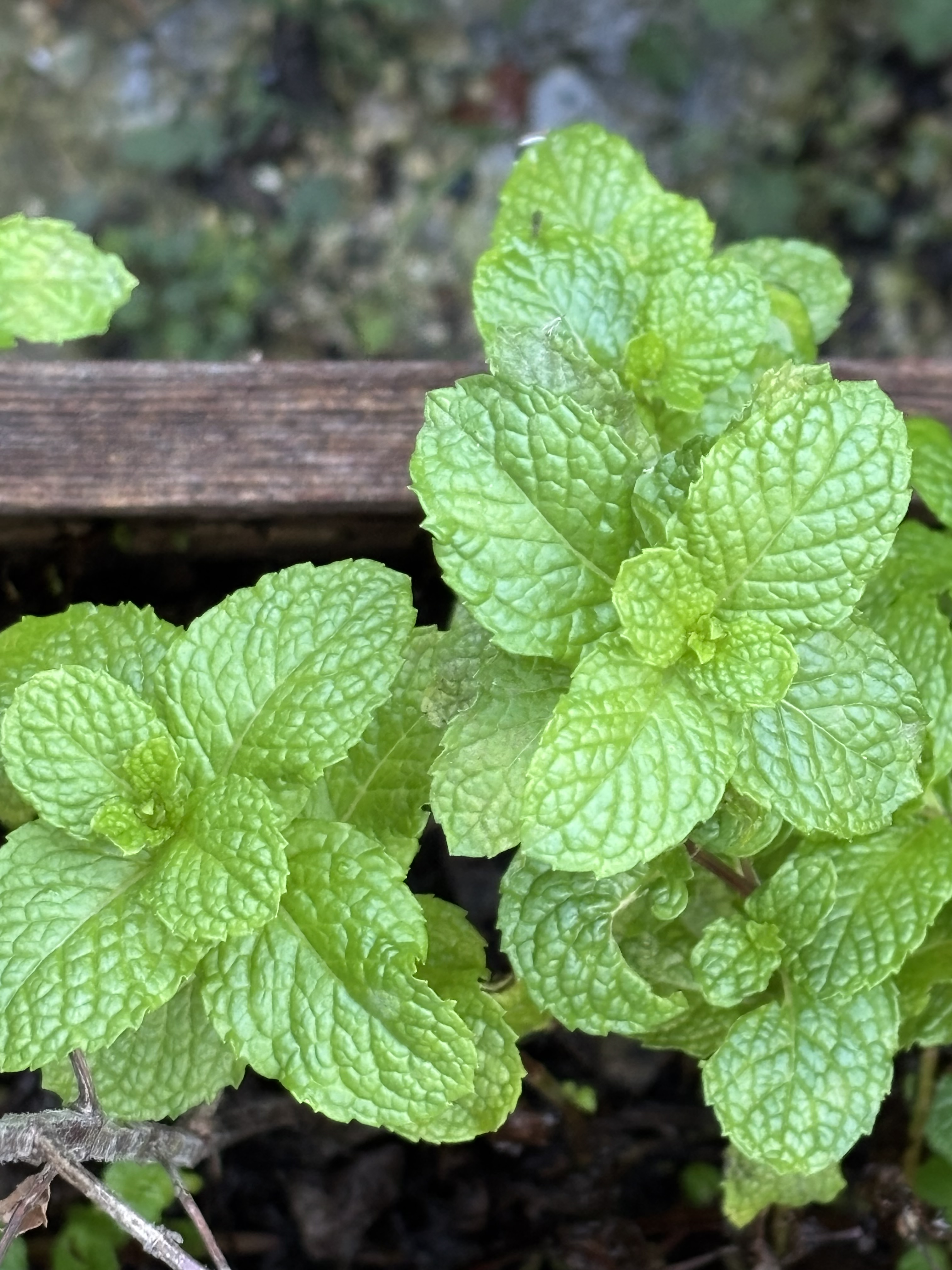
In a surprise move, the mint-gone-fallow has made a resurgence – just in time for the latest batch of sun tea. It is a sign of the season that Kerri had to chase the sun, moving the tea jug a few times from the fast approaching shadows.

I wrote a post yesterday and tried to stay away from current events. I was mostly successful though I felt remiss all day. It was as though I was ignoring the most important thing. And, I was. A few years ago a car caught fire in our elderly neighbor’s driveway. Even though I was in the middle of a zoom work call, I ran downstairs and across the street and pounded on her door. She didn’t want to leave her house until I explained the fire was near the gas line to her home. My post yesterday felt like I was turning my back on the driveway fire.

A few times I’ve heard others say, “There’s nothing we can do.”

I’ve asked the same question more than a few times myself: but, what can we do?

The corporate news seems hellbent on normalizing the monstrous. I wonder why some reporter hasn’t asked Mike Johnson why he’s being derelict in his duty to impeach a president who’s regularly declaring war on the cities of this country, who is using the justice department to prosecute people he doesn’t like. The unhinged speech at the UN would have been enough to evoke the 25th amendment for any past president. Are you seeing footage of the protests happening all around this nation? Neither am I.

Someone asked Mark Elias if we were crossing the river into authoritarianism and he responded that we crossed that river a long time ago. “Our shoes are already dry,” he said.

The fire is raging near the gas line of the national house. The very least we could do is care enough to bang on doors to wake our neighbors. Democracy is not dead – not yet. If we act, if we wake up a few neighbors, who knows, there might still be a resurgence.

read Kerri’s blogpost about MINT

likesharesupportthankyou

Ho-Ho-Ho [David’s blog on Merely A Thought Monday]

Evidently the elves had a bit too much nog and crashed the Wishing Palace into a tree. They must have been flying without a license since they seem to have crashed-and-run, leaving the Palace wedged into a tree with one runner missing. Will Santa be pissed? I’m not sure. Is jolly ole St. Nick capable of being cross? I imagine the sudden loss of The Wishing Palace during an drunken-elfen-joy-ride might raise his ire. In any event, I’d love to hear the whopper the elves tell Santa to explain the crash. Ho-Ho-Ho!

On second thought, instead of fleeing the scene, I’m not sure why the elves didn’t rush into the Palace and make a wish for an immediate full-Palace-repair. I mean, what good is a Wishing Palace if the wishes made in the Palace – especially wishes made by the elves that drive it – aren’t certain to come true? At the very least they could wish to keep the wreckage a secret from Santa – at least until they sober up and figure out how to repair the damage and return the Palace to its parking spot at the North Pole.

Apollo’s son, Phaeton, took the sun-chariot out for a spin and, like the elves, it was too much for him to handle. He couldn’t control the horses. Zeus had to strike Phaeton with a lightning bolt before the lad drove the chariot into the ground, scorching the earth in the process. If Apollo could enter the Wishing Palace he’d certainly wish to go back in time so he might prevent his son from taking his fatal joy ride.

The annals of time are filled with stories of incompetence at the helm.

The current administration, like Phaeton or the elves, have the reigns of the nation and have taken it out for a wild ride. Despite their bravado, despite the tale that they spin, it is increasingly clear that they are either too full of nog to hold democracy’s course or they do not have the fortitude to drive a constitutional republic.

In either case, we will very soon find ourselves lodged in a tree or can expect a lightning bolt that will end the joy ride. We can only hope that it’s merely a runner that we lose and that the crash sobers us. We can only hope that we have the wherewithal to repair what is broken. Since wishes seem empty at this point, we can at least hope for a republican party that remembers that governance begins with communicating with the other side. The art of compromise – the epicenter of democracy – begins with coming to the table willing to discuss solutions.

In any event, it’s not much fun listening to the whoppers that the republicans are telling, the fomenting of violence and division, their dedication to flying blind by hiding the economic indicators and jobs numbers. One thing is certain: to explain the crash they’ll no-doubt blame Obama or Biden or democrats. Taking responsibility for their actions is not in their wheelhouse. They’ll crash the Palace and run amok blaming everything under the sun but themselves. In response to their grand sham, I suggest we be like Santa and meet their reckless incompetence with a sober vote and a hearty Ho-Ho-Ho!

read Kerri’s blog about THE WISHING PALACE

likesharesupportcommentHOHOHO!

See Good Fortune [David’s blog on KS Friday]

One of the first things Kerri gave me was a small silver acorn. I carry it in a pocket of my wallet. For her family it is a symbol of abundance and good fortune. I have grown to love the acorn bump that now defines my wallet. It is a constant reminder: I carry good fortune with me wherever I go.

This past week we’ve both had miserable colds. We do everything together. Except for our run-in with Covid last fall, it’s been years since either of us has been knocked out by any ailment, especially the common cold. Our timing is not ideal since the weather has been gorgeous. Fall has arrived, warm sun and cool shade are calling. Needing to get out of bed and out of the house, we drove to our loop trail. We walked slowly, moaning and groaning and laughing at our creaky progress – yet the warmth of the autumn sun penetrated all the way to our bones. Our walk was exhausting but it was good medicine.

As Kerri often does, she stopped abruptly, pulled out her camera, walked back a few steps and knelt on the trail. “What do you see?” I asked.

“An affirmation,” she said, showing me the photo of the acorn. “See? Good fortune.”

See good fortune. It’s been a recurring theme lately. See how we are supported. See the abundance of our lives.

It’s Viktor Frankel: bring rather than seek the meaning in your life. “I carry some serious good fortune in my wallet,” I said.

“I know,” she smiled. “And now look! We are finding some on our trail.”

PEACE on the album AS IT IS © 2004 Kerri Sherwood

Kerri’s albums are available on iTunes and streaming on Pandora

read Kerri’s blogpost about THE ACORN

likesharesupportsubscribethankyou

Recognize The Real [David’s blog on DR Thursday]

Dan has lived his whole life in this town. He told me that, when he was a boy, there were thousands upon thousands of monarch butterflies. Their habitat is mostly gone. We delight watching them each evening, the three or four that flutter through our backyard sanctuary. I’ve always appreciated the appearance of these vibrant orange wobbly fliers, these harbingers of fall. Now, I see them with different eyes. These few are intrepid survivors, the carriers of a flickering torch into the future.

An enormous black wasp flew in hauling a long blade of grass. It pulled the grass into the tubing of the chair in which Kerri was sitting. Thinking that it was odd that a wasp was going it alone – and being reactive against a potential sting, we did some quick research. We discovered that it was a Organ Pipe Mud Dauber. They are not aggressive. The females build individual nests either by creating or finding an appropriate tube shaped hole. Thus, the name, Organ Pipe. They are great for a garden. We watched her during the evening as several times she flew away and returned with more grass to pull into the pipe for the nest. We marveled at our wrong assumptions and the mountain of things that we know nothing about. Our initial reaction, based on wrong assumptions and absolutely no information, nearly made us miss the miracle.

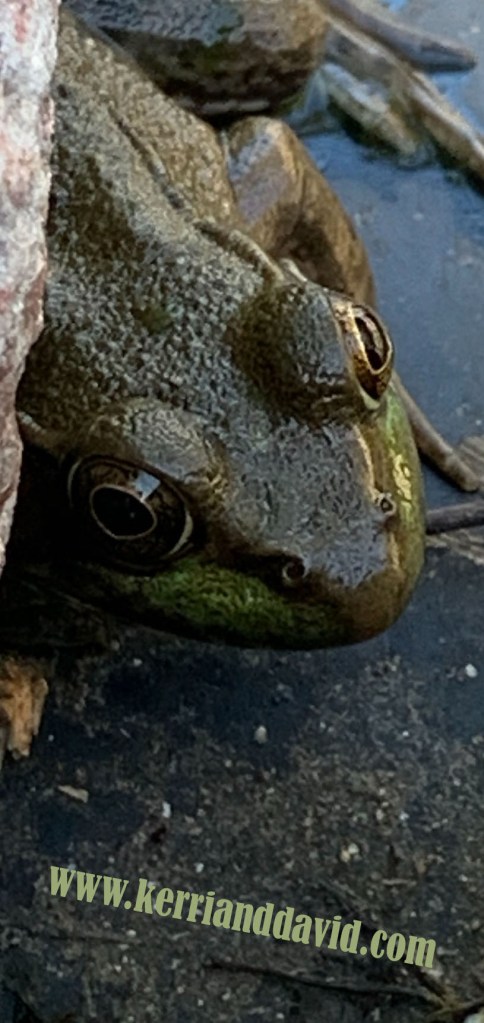
The first day of September. En route to refresh the water in the birdbath I startled a tiny frog. It leapt and plopped into the pond, disappearing. We’d given up hope that we’d have a frog this year. They usually show up in early July. In the middle of August we stopped checking, accepting that it would be a frog-less season. “FROG!” I shout-whispered to Kerri and she came running. We sat by the pond for several minutes. “Are you sure you saw it,” she asked.

“I’m sure.”

We’ve come to understand the arrival of a frog as an affirmation. A bringer-of-hope. It’s remains a mystery how frogs find their way to our tiny backyard pond. This little frog is evasive and has become something of a metaphor in these fraught times: hope is present but hard to see. We hear it plop into the pond but have not had a second sighting. I’m certain our neighbors think that we are deranged as they watch us carefully tip-toe to the pond. “Are they sneaking up on their pond?” Michele wrinkles her brow and asks John. He shrugs. He’s grown used to our peculiarity.

Sneaking up on hope. Making sure we don’t miss the miracle. Recognizing the real value of the few intrepid monarchs fluttering by.

perhaps finished? Title: 66 & 19, 31.5″x36″ mixed media on canvas

read Kerri’s blogpost about THE MONARCH

likesharesupportcommentsubscribethankyou

Plant The Seed [David’s blog on Not So Flawed Wednesday]

And just like that, fall is in the air. The harvest is happening and jalapeno poppers are on the menu. We have a bumper crop of tomatoes and are making an extra batch of pesto since the basil is outdoing itself. In the middle of nature’s man-made erratica, our garden thrives and reminds us to appreciate abundance where she shows her face.

Over the Labor Day weekend, a woman, an elder on the block, decided to host a neighborhood gathering. People came out of their houses with platters of food to share. Kerri has lived here for 36 years and has a long history with many of the people who sat in a circle and chatted. I’ve lived here for 13 years and although I’d seen many of the faces before, I’ve waved to many of the faces as we walked by, but I’d never actually had a conversation with most of my neighbors. They are delightful and quirky, each with an interesting story to share.

I decided that the people of this nation need one-big-block party with one rule: no talk of politics. Bring food to share. Shake hands. Ask, “How are you?” Talk about the real stuff, the plumbing problem or share photos of grandchildren. Talk about the zealous garden that the hot and humid summer weather ignited.

Kerri and I used to host many, many gatherings: slow dance parties, midnight X-mas eve bonfires, ukulele band rehearsals and choir potlucks. Since COVID and with the rise of ugly-maga-madness, we’ve “pulled up the drawbridge”. We keep and guard a tight circle of friends. We cultivate a sanctuary in our backyard.

This morning I read a quote by Noam Chomsky:

Neoliberal democracy. Instead of citizens, it produces consumers. Instead of communities, it produces shopping malls. The net result is an atomized society of disengaged individuals who feel demoralized and socially powerless. In sum, neoliberalism is the immediate and foremost enemy of genuine participatory democracy, not just in the United States but across the planet, and will be for the foreseeable future.

Maga is neoliberal. Project 2025 is neoliberal: it promotes “liberalizing” markets, meaning the removal of all regulation and oversight, while eliminating anything that smacks of service or a social program. Neoliberalism has been a disaster in the past; it promotes oligarchy and fosters dictatorship. Our Civil War and our Great Depression were in large part produced by a neoliberalist agenda. It worships business, undermines service, and fosters division. It is the toxic philosophy creating the national disaster we currently endure. Neoliberalism is a Roman orgy for the wealthiest few. It is an economic speeding car with no brakes and cares not-a-whit for who or what it runs over. It always ends in a nasty crash.

The phrase in Chomsky’s quote that struck a chord was “The net result is an atomized society…” Here we are. Atomized. It is undeniable. It is antagonistic.

On my growing list of responses to the question, “What can we do?” I am adding, “Host a neighborhood gathering.” Breaking bread together is an ancient tradition, perhaps as old as humanity itself. At the very least it is a step toward connection. Social power is a group sport and begins when neighbors gather and talk. A neighborhood gathering plants the seed for participation and active community, a someday-place-of-appreciation, a mighty harvest, where abundance will gladly show her face.

read Kerri’s blogpost about HARVEST

likesharesupportcommentsubscribethankyou

A New, Unique Personality [David’s blog on Two Artists Tuesday]

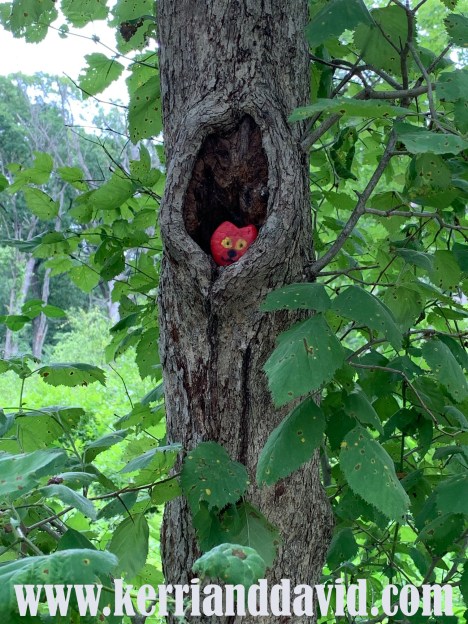
It really does not take much to transform a room. New furniture, accent walls or refreshed paint, area rugs…are all viable options. However, none of these work as well or as effortlessly as two googly eyes stuck on the wall. Try it. Your space will immediately have a new, unique personality. It will have an undeniable focal point. It will immediately fill guests with questions. It will, just like your conscience, look back at you. You will wonder what your new room reveals about your personality. You will catch yourself pondering what your room is thinking. Someday, inevitably, you will find yourself talking to your wall.

All of this transformation with the simple addition of two dime store googly eyes.

Keep in mind that three eyes are not better than two. One eye will confuse or irritate rather than illuminate. Eyes on every wall will cancel the magic. If personification is the goal, then two eyes are requisite. No more. No less.

It takes very little to personify, to project human qualities and traits onto – into – something as abstract as a wall. It’s why we find deep comfort in teddy bears or reach for the wisdom of the man in the moon. They look back at us. We endow them with compassion or quietly listen to the messages brought to us by the wind.

Conversely, it takes very little to dehumanize a human being. As easily as we assign humanity to objects we just as easily deny humanity to people. We make them objects. It’s easier to scoop them off the streets and put them into camps if we objectify them, if we downgrade their humanity. If we blame them for what ails us.

It’s simple. All we need do is project onto them our cruelty. Keep in mind, to be successful dehumanizers, it’s especially necessary to avoid opening your eyes. Opening your eyes will immediately fill you with questions about yourself. It will ignite your conscience; you will see “their” eyes looking back at you. You will wonder what your projection onto “them” reveals about you.

It really doesn’t take much to transform a culture. All you need do is close your eyes. It is just as effective to look the other way. It will serve to stifle questions especially the self-reflective variety. Averting or closing the eyes is especially useful when it is necessary to deny the obvious or to endow fiction with substance or abdicate personal responsibility. Choosing blindness you will become an easy mark, effortlessly misled.

All of this transformation with the simple condition of closing the eyes.

Rest assured, in the absence of sight, your community will have a new, unique personality.

read Kerri’s blogpost about EYES

likesharesupportcommentsubscribethankyou

A Reminder [David’s blog on KS Friday]

A free-spirit seed!

Wind and fate or luck? Who cares!

Nature finds a way.

This concludes one of the weirdest weeks on record. A good week or a bad week? We’ve decided to be like the seed. Nature is finding a way.

Kerri’s albums are available on iTunes and streaming on Pandora

read Kerri’s blogpost about NATURE

likesharesupportthankyou

Wandered [David’s blog on DR Thursday]

“Help me if you can I’ve got to get back the house at Pooh corner by one.” ~ Loggins & Messina, House at Pooh Corner

It is the height of irony that under the banner of going back to some fantasy greatness we hurtle forward into a fascist future. Those in my info-bubble, woke progressives, yearn for a time when adults were at the wheel of the nation.

Escapism is one of our coping mechanism. A favorite escape is The Chicago Botanic Garden. We’d live there if they let us. Passing through the gates we leave the chaos and corruption behind and enter a world of peaceful calm. It inspires slow walking. It is a playground for the senses: rich colors and interesting shapes. Many of the flowers beckon the nose to savor a deep fragrant inhale. It is nearly impossible to pass the vibrant plants without reaching out to touch them.

It never fails that I round a corner and am met by an image that is straight out of a children’s book. In those moments I am immediately stepping through the wardrobe into Narnia or jumping down the rabbit hole with Alice. The rabbit with the pocket watch must surely have passed this way! If I were a writer of children’s books I’d wander the garden each day for inspiration.

In our last visit to the garden a few weeks ago, wandering through the Japanese garden, I was taken by “the inaccessible Horaijima,” the Island of Everlasting Happiness. It symbolizes paradise. It is purposefully inaccessible, an island of beauty that humans beings cannot reach. Its purpose is for meditation. In the garden of our lives we are meant to focus our minds and hearts on a place of beauty. We are meant to reach for beauty, strive for serene beauty. Place our minds there.

I was overwhelmed. How far has our poor sad nation wandered from its focus on anything serene or beautiful? We currently focus on the opposite, our minds steeped in images from the Island of Devastating Ugliness.

Standing at the water’s edge, Horaijima seemed so close yet so far away.

The children’s book: The adults are inundated with darkness and spiraling down the well of hatred. The Island of Everlasting Happiness is shrouded from view. In desperation, the young girl or boy – or both – set out on a journey to lift the fog, to bring the Island back into view, to return beauty to their elders. Their path is fraught with ogres and trolls determined to stop them. Will they make it in time?

“But I’ve wandered much further today than I should
And I can’t seem to find my way back to the wood.”

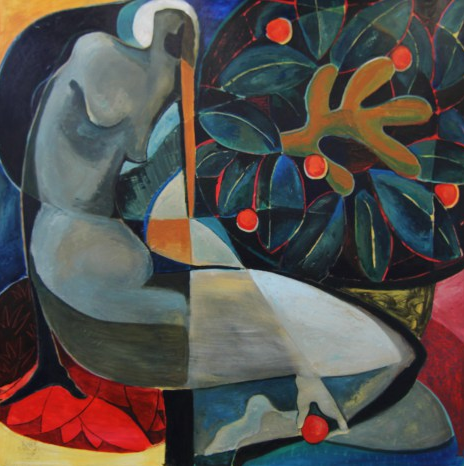
Eve, 48″x48″ acrylic on panel

read Kerri’s blogpost about THE GARDEN

likesharesupportcommentthankyou

The Only Question [David’s blog on KS Friday]

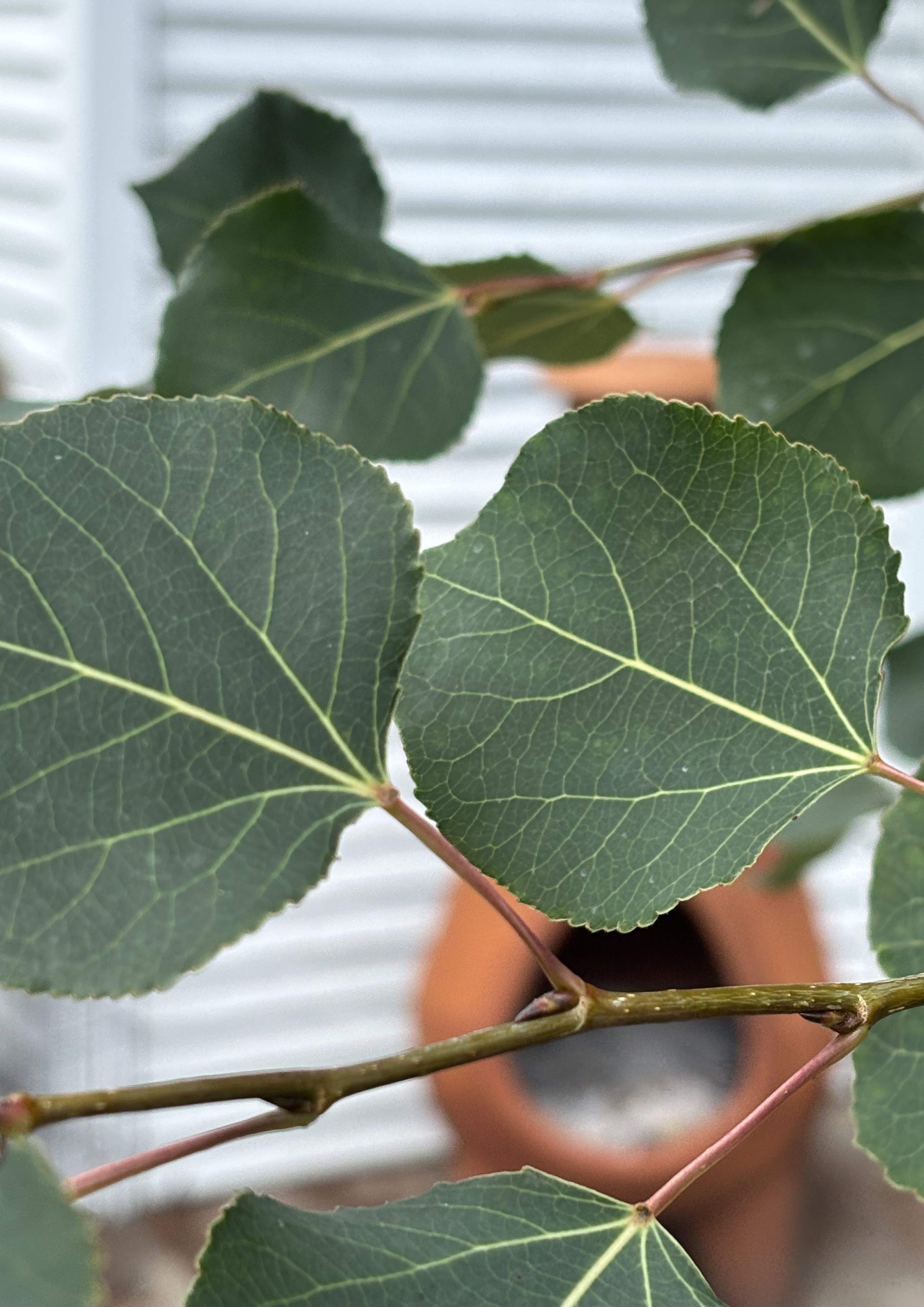
Breck the aspen tree is no longer a sapling. Since May she has grown a few feet taller. Her trunk is now the sturdy stock of a mature tree. Her bark is taking on the whitish hue of mature aspens. We stand at her base, crane our necks looking up, and marvel. In a few short months we have watched her come-of-age.

In a contentious time, an age of the disappearance of justice and the rise of a criminal, Breck is a reminder for us of all that is good. When we need a dose of sanity, when we need a reminder that nature takes little notice of human folly, we sit with Breck. We allow ourselves to be soothed by the comforting shimmer of her quaking leaves.

Joseph Campbell wrote The Hero With A Thousand Faces in 1949. I almost spit my coffee this morning when I read, “The tyrant is proud and therein resides his doom. He is proud because he thinks of his strength as his own; thus, he is in the clown role, as a mistaker of shadow for substance; it is his destiny to be tricked.”

I know it is a mistake to conflate myth with biography, yet, have you ever read a more perfect description of our authoritarian wanna-be?

Myth meets the historical moment. The tyrant is a clown. He is a mistaker of shadow for substance. He thinks his strength is his own. His destiny is to be tricked. Campbell also wrote that, in the mythic cycle, the tyrant, “usurps to themselves the goods of their neighbors, arise, and are the cause of widespread misery. They have to be suppressed.”

Usurping to himself the goods of his neighbors? Check.

The cause of widespread misery? Check.

In mythology, the tyrant is the harbinger of the hero’s rise (note: the hero need not be a male). “The great figure of the moment (the tyrant) exists only to be broken…The ogre-tyrant is champion of the prodigious fact; the hero the champion of creative life.”

The word “prodigious” in this sentence = unnatural, grotesque.

Locked in a shadowy lie-about-the-past with a monstrous clown? Or, progressing forward toward actual possibilities? We are a nation quaking to come-of age.

The tyrant exists only to be broken – and it makes sense in mythology and in the patterns of history. Breck can only grow in one direction. The same is true of us. The only question is how much damage will the tyrant do before we-the-people, the actual hero in our tale, awaken, open our eyes and rise?

WATERSHED on the album AS IT IS © 2004 Kerri Sherwood

watershed,(noun): an event or period marking a turning point in a course of action or state of affairs.

Kerri’s albums are available on iTunes and streaming on Pandora

read Kerri’s blogpost about BRECK

likesharesupportcommentsubscribethankyou

The Very Least [David’s blog on DR Thursday]

“Positive cultural change today (as it has always been) is about leveraging your life where you are: by doing small, possible, measurable daily acts of decency, of protest, of advocacy, of collaboration.” ~ John Pavlovitz, The Beautiful Mess, 2.27.25

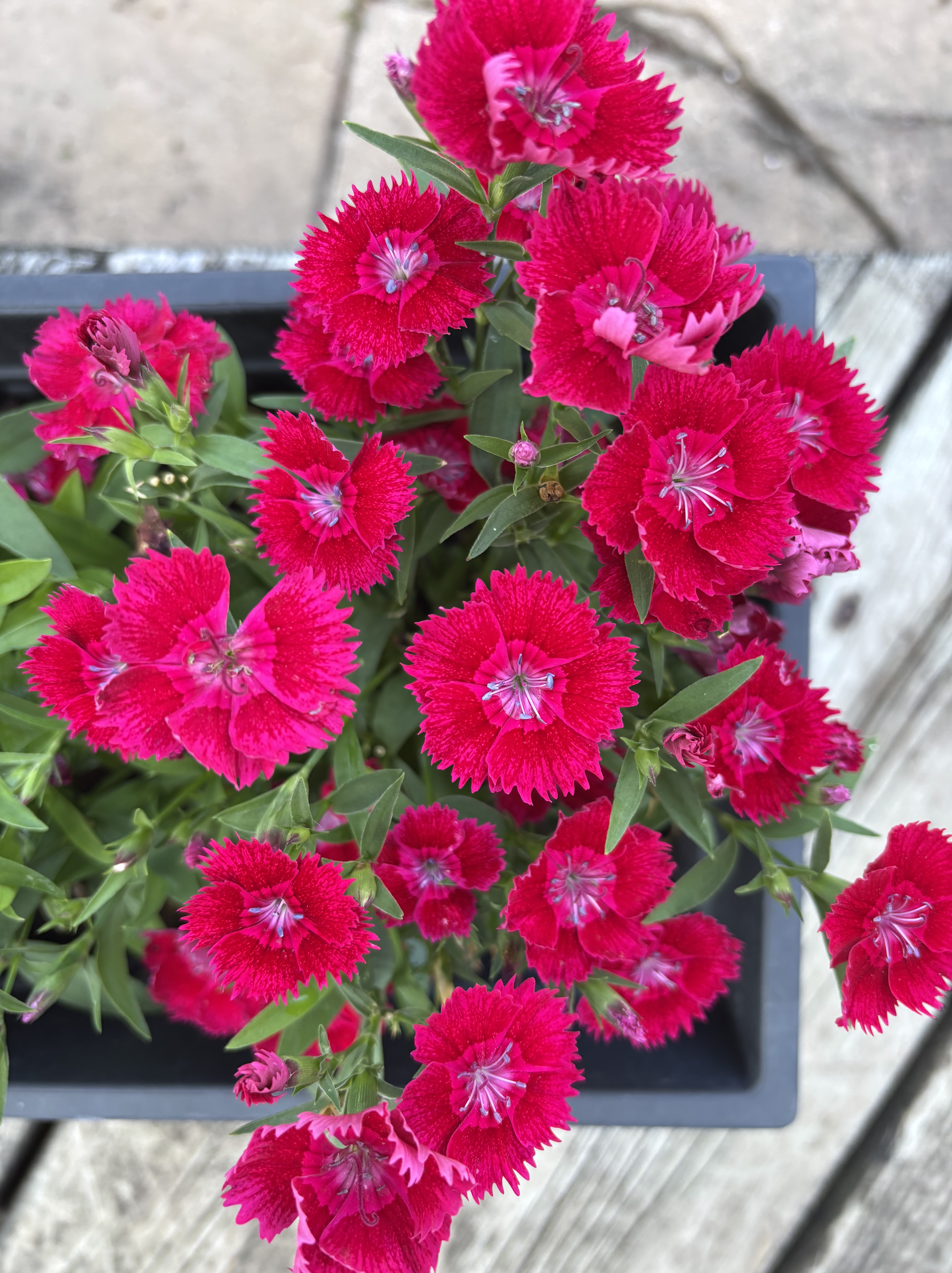
Red dianthus symbolizes deep love and affection. We’ve ringed our deck with pots of dianthus. It seems like such a small thing yet every time we step onto the deck, we smile. They invoke our affection. They magnify our deep love.

Symbols might seem like a small thing but they reach to the very core of our being. Who in the USA can see a bald eagle and not be taken by the majesty of the symbol? Who in the world can see a swastika and not be horrified by what it represents?

Language is constructed of symbols. We line our streets with universal symbols: stop, walk, yield, green-means-go. We think in symbols. We dream in symbols. We are naive to ignore or underestimate the power of symbols.

The Texas Democrats breaking quorum was a symbolic act. They understand that single-party-rule, as is now being legislated in Texas, is authoritarianism. Their symbolic act has sent a ripple of courage through an otherwise paralyzed Democratic party.

Yesterday I wrote that in the midst of our national horror, each and every day, we ask ourselves, “What can we do?” If I could I would go to the Texas legislature and stand with the Democrats who are now essentially being held hostage. I wish every lover of democracy could show up this morning on the floor of the Texas legislature and say with their presence, “We will not stand for this.” I wish every lover of democracy could show up on the floor of the nation’s legislature with the same message. Enough.

Protests are symbolic acts. So is delivering donations to a food pantry. John Pavlovitz reminded us this morning that the answer to our question, “What can we do?” need not be grand. In fact, we need only look around our community and, as Ann used to tell me, “Find a need and fill it.” Offering a helping hand is a symbolic act.

Calling out the national guard without reason is a symbolic act. Signing meaningless executive orders to do away with mail-in-voting is a symbolic act. Both are in direct opposition to these symbols: The Declaration of Independence, The Constitution of the United States, The Statue of Liberty, The Liberty Bell, The Boston Tea Party…the vote in free and fair elections.

Our vote is now all that stands between us and the loss of our democracy. By-the-way, that has always been true.

Our vote is under assault by a president and republican congress. They are rigging the system to eliminate democracy in favor of one party rule. They assault nothing less than our foundational symbolic action. The Right to Vote.

Our vote, until now, has been the sacred central symbol – the single symbolic act – of our experiment in democracy: rule of, by, and for the people. According to our symbol, our leaders serve at our pleasure. We choose them. If we do not like their actions, we vote them out.

Until now.

Voting seems like such a small thing. Yet, it is everything.

What can we do? Protect your right and mine, protect the right of every citizen without regard of color or gender, to vote in free and fair elections. It is no small act of decency to protect the single, central action, the primary symbol of our democracy, the one thing that you can DO that actually makes the whole country great: protect your right to vote. And then, when the day comes, exercise your right, perform your symbolic act. Vote. It is the very least – and the utmost – you can do.

detail of a work in progress

read Kerri’s blogpost on DIANTHUS

likesharecommentsupportsubscribethankyou