Pick Up Your Ordinary

From Kerri and my travels: a photo essay about what our feet have seen

From Kerri and my travels: a photo essay about what our feet have seen

I continue to process all of the amazing events and experiences from the past few weeks working abroad. They have jiggled loose an old thought-bubble and I’ve been pondering it since it bobbed to the surface.

The old thought-bubble is a tenet that comes from improvisational theatre: put down your clever and pick up your ordinary. I’ve used this tenet in any number of facilitations and coaching relationships. The basic idea is this: any attempt at being clever actually diminishes personal power and inhibits the capacity to be present. Trying to be clever focuses the eye inside and robs a performer or presenter of the only thing that really matters: relationship in the moment.

Dig a bit deeper and the real wealth of the tenet shows itself. We rarely recognize our true gift because we think everyone possesses it. We miss our unique gift because we think it’s ordinary. We mistake our gift for something common and therefore not of great value. In truth, what we brand as ordinary (how we see the world) is our most unique, most potent and powerful gift. So, to put down your clever and pick up your ordinary is to value your unique point of view. It is to honor yourself and how you see the world and also affords you the capacity to be seen as you are, not as you think you need to be seen. To pick up your ordinary is to become accessible.

Trying to be clever is actually an attempt at trying to be something we are not – or someone we are not. It is to hide, put on a mask, or pretend.

Ordinary reveals; clever obscures. Ordinary facilitates flow. Clever needs to control. Attempts at being clever are manufactured moments. Experts need to be clever, they need to whip up a straw man and call it substance. Clever is always an ego need – in fact, clever is nothing more than a plea for approval. It is a thirst for adulation. Clever needs center stage. Ordinary shares the stage. Clever needs to claim territory. Ordinary expands horizons. Ordinary is accessible. Clever is protected, aloof, and closed.

All of this is old news. It was in the old thought-bubble. Just behind it came a few new little trailer bubbles. Clever is oriented on what it gets (adoration, attention, acclamation). Ordinary is oriented according to what it brings: a unique point of view in service to a relationship. Ordinary is a form of potlatch: give what you have; give away your wealth as the road to increase. Clever comes from a universe of lack. Ordinary comes from an abundant life. It is a paradox. Unique is found in the ordinary. New vision comes when we cease trying to say something new and simply offer our unique, one-of-a-kind perspective. The beauty is in what we see.

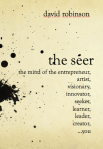
title_pageGo here to get my latest book, The Seer: The Mind of the Entrepreneur, Artist, Visionary, Seeker, Learner, Leader, Creator…You.

Or, go here for hard copies and Kindle.

Locate Your Self

title_pageHere’s a short excerpt from my book, The Seer, dealing with the dance between investments, limitations, and the roles we play in life. This conversation is a kind of coaching session and is happening via online chat:

Me:…All week I’ve asked myself, “why?” Why the dramatic shift in experience from role to role? I’m a bit shocked to realize that I play many, many roles each day. In each role I want something and what I want is different depending upon the people I am with. I realized that my roles are not about me in isolation – and what do I mean by that? I mean that I define my role by how I define the relationship I am in at the moment. For instance, in my workshop, I assumed the role of “guide” and I wanted to lead the young people to some new insights that might help them create their businesses. In my conversation with my parents, in the role of “son,” I wanted them to be pleased with my work. I wanted to share and I wanted their approval. So, my role is defined by relationship and in each different relationship I tell a specific story based on what I want or need. I’ve “cast” myself in these little mini-stories. Or to use your term, “role” is the way I “locate” myself in the story.

Virgil: And how does this knowledge help you with your questions about business?

Me: The first thing that occurs to me is that I have the capacity to locate myself in a different way if I don’t like the role I’m playing. I can change how I locate myself. Also, there is a dance with the words “limitation” and “investment.” I took notes all week and realized that I was using the verb “to invest” over and over again to describe my experience of different roles. So, for instance, during my dinner with my friend Bruce I invested in helping him. I wanted Bruce to know that I cared about his challenges. Then, I watched Bruce invest in being the wine expert. It was his way of caring for me and demonstrating his expertise. I began to see my investments as keys to discerning my limitations. In some roles I’ve invested in the idea that I can’t do something or that I’m not good at something. In some roles I diminish myself; my limitations are investments in being small.

Virgil: Just a caution: as you explore further the dance between investment and limitation, remember to practice suspending your judgment. Remember: you are having experiences first so you can see how you make meaning and begin to choose how you make meaning.

Me: Thank you. It’s a good reminder. I was beating myself up every time I     realized I was investing in being small.

Virgil: We tell ourselves stories. We locate ourselves within the stories. In fact, that is the next recognition: you locate yourself within your story. We do it physically (like your description of choosing the table in the restaurant); we do it through the roles we assume – specifically our assumptions of how we need to play our roles, what is ours to do, etc. Locating is simply a way of establishing comfort. We sort to the known. If you judge how you locate yourself, you miss the opportunity to change how you locate yourself.

Me: Right. Judgment blinds me to the choices I am making.

Virgil: Judgment is always a version of the “things are happening to me” story. In fact, judgment is a way of locating: it is the warning signal when we step too close to discomfort. When I judge myself and say, “I’m an idiot,” I’m actually locating myself, pulling myself back into my comfort zone. When I judge others, “They are idiots,” I’m locating myself in a higher status position. The action of diminishing “them” elevates me back into a comfortable status position. Thus, suspending your judgments removes the easy step back to comfort and allows you to stand in “not knowing” and see what is there beyond what you think is there.

Go here to get my latest book, The Seer: The Mind of the Entrepreneur, Artist, Visionary, Seeker, Learner, Leader, Creator…You.

Or, go here for hard copies.

Stand Rooted

I awoke this morning with this phrase hanging in my dream space: you can’t control your circumstance but you have infinite control over who you are within your circumstance. It is a well-worn phrase for me, like an old sweater, relevant to much of the teaching, coaching and facilitation I’ve done. It is useful to remember when the hurricane hits or the job disappears or life seems to be a festival of obstacles. The ability to discern between circumstance and personal center is of great value. It is a skill that lives atop of Maslow’s hierarchy.

A work in progress: K.Dot & D.Dot See An Owl

A work in progress: K.Dot & D.Dot See An Owl

We have these words in our canon of health: centered, grounded, rooted, conscious, present…. They are all terrific metaphors, earthy with eyes wide open. Flip them over and you get a good sense of what happens when you confuse your self with your circumstance: off center, uprooted, ungrounded, unconscious, not here; up in the air with eyes squeezed shut.

There is a Buddhist phrase that I appreciate: joyful participation in the sorrows of the world. It is necessary to know the difference between self and circumstance to really grasp the meaning of this phrase. Life is going to bring you trials, tribulations, and lessons. You can never know what is just around the corner. As Kerri often reminds me, it is what you don’t know that makes you grow. So, when the storm comes, participate. Stand in it. Love life in all of its forms and textures.

So many times when working with business clients I’ve had to say, “Don’t eliminate the wolf from your story.” In the story of Little Red Riding Hood, the wolf moves the story forward. In fact, without the wolf, there is no story. In business as in life we attempt to protect ourselves from the wolf. We resist the very thing that can bring growth and renewal. Circumstance is often the wolf. The storm comes. The relationship suffocates. The wolf always creates movement where the energy is stuck. It is uncomfortable. It hurts. It is scary. Yes. So, participate. Engage. Be-with-it. Within the circumstance, within the storm, learn to stand rooted, centered: earthy with eyes wide open.

The circumstance will pass and you will remain. You will know more. You will have grown. This simple understanding, that you are separate from your circumstance, allows for the joyful part of participation. Joy lives at the choice point. The world is and always will have plenty of sorrows to help you grow. Things happen. The question is, “How do you choose to participate?”

Go here to get my latest book, The Seer: The Mind of the Entrepreneur, Artist, Visionary, title_pageSeeker, Learner, Leader, Creator…You.
Or, go here for hard copies.


Trespass And Forgive

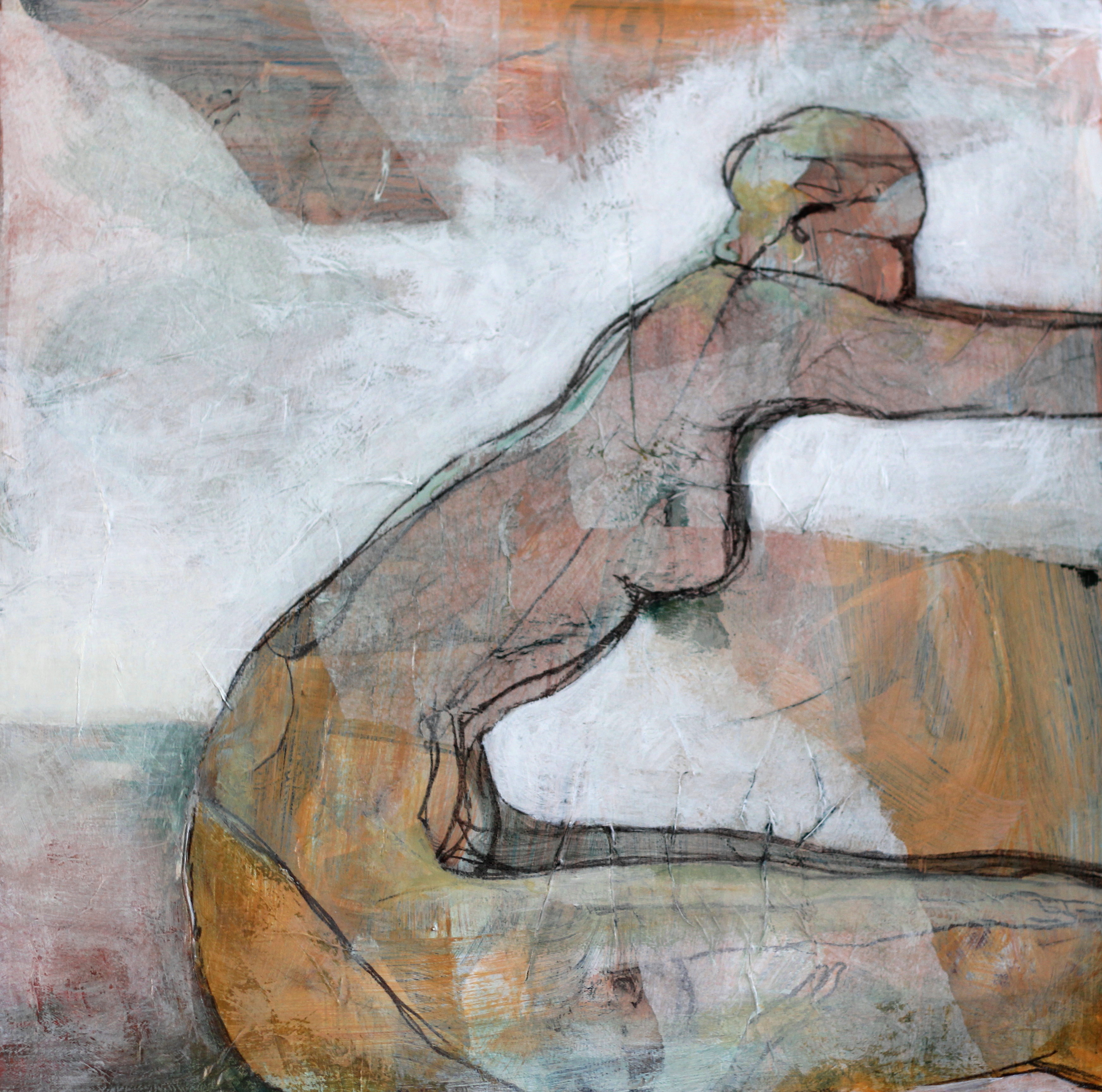
from my Yoga series of paintings.

from my Yoga series of paintings.

I’m back in the choir loft staring at the stained glass window. We’re having a conversation about the word ‘trespass;” it has lately been central to my meditation.

When I was a kid my cousin, Randal, and I used to trespass a lot. There was an old abandoned house built on a hillside. It had a big fence around it to keep us out. It also had the best tree swing in the world so it was worth the breach. Using the back porch as a launch pad, we could swing out over the hillside and let go, falling into a pile of mattresses and foam rubber stacked by all the trespassers. Many times we ran or hid when the police came to shoo us away, always returning when the coast was clear for another swing. It was thrilling.

I’ve trespassed a lot this past year, not into abandoned properties but into places within myself that I had erected fences, places I was not supposed to go. That is the necessity of growth. Transformation always requires a trespass. In stories it is the equivalent of leaving home and going where you are never supposed to go, the place where the monsters live, the place where the entire society (your psyche) tells you never to go. And, so, it becomes the one place that you must go to grow. It is usually ugly and messy and filled with betrayal – and that is the point: all the order dissolves into chaos so that a new order might emerge.

And, in the trespassing within, we trespass against others, especially against people we cherish. They are part of the old order. When the internal order dissolves, the outer order dissolves, too. That is also ugly and messy and filled with betrayal. There is loss of friendship. Love is tested.

My stained glass window tells me that forgiveness – of self and other – is a necessary step on the path to the new order. Trespass is a wrecking ball. Trespass is thrilling. The cops in the head (to borrow a phrase from Augusto Boal) will drive by to run you off or make you hide. The cops in the head will tell you that you are not safe or that you are doing damage that cannot be repaired. Fear wears a badge of authority. Fear wags a finger and calls you traitor, liar, or coward.

Trespass makes all things true and nothing true; that is the point of chaos. All location points disappear. My stained glass window tells me that forgiveness is new location point. It is an anchor. It is a sign that the new order, the butterfly, is emerging from the mush of chaos. Just as trespass is an essential movement away from the known, forgiveness is essential to return home. And, in story terms as in life, when you come home, finally and at last, after all of the trials and all of the betrayals, after all the mess and ugliness, you are new, so home is new, too. When you trespass, leave, and return, you find that there are no more fences and no more badges keeping you out. You find that the swing is available anytime. Love is reformed and everything becomes possible.

Go here to get my latest book, The Seer: The Mind of the Entrepreneur, Artist, Visionary, title_pageSeeker, Learner, Leader, Creator…You.

Or, go here for hard copies.


Hide The Horse

from my archives. This one is called 'Angels At The Well.'

from my archives. This one is called ‘Angels At The Well.’

I first learned this story prompt from Rick Stone at The Storywork Institute: I come from a people who (fill in the blank), and from them I learned (fill in the blank).

Rick’s story prompt was with me when I awoke this morning because I’ve lately been thinking about my grandma Sue. Kerri and I just started rehearsals on our Back To Center concert series and for some reason Grandma Sue has been present when we rehearse. She passed away several years ago and I adored her. She was small in body but big in spirit. Over the weekend my mother said of her mother, “She took everything in stride and adapted to whatever came her way.” Grandma Sue did not resist her lot in life, she made the most of it. She had fun. She created fun.

I’ve been rolling over and over in my mind a specific story about her that happened before my time on this planet. The shorthand goes like this: the glue factory was coming for an old horse that lived in the pasture next to her house. She knew the truck was coming so she hid the horse in her kitchen.

I grew up playing in her house. I know her kitchen. What makes the story miraculous to me is that 1) her kitchen was teeny and 2) you had to climb some stairs to get from the back door into her kitchen. This tiny woman managed to get an old horse through her back door, make a right hand turn, and climb some very narrow stairs. And then she “hid” it from the owner and the glue factory search team.

I do not doubt the truth of this story for a moment and if you knew my Grandma Sue you would not doubt it either. She was a champion for the underdog, a lover of the small moment, a believer in the extraordinary in the ordinary. She lived from her heart and not her need to make sense. What do you do if the sweet old horse next door is in imminent danger? Anything you can.

This morning, as I awoke, I was again thinking of my Grandma Sue and Rick Stone’s prompt came to me. I smiled because I come from a people who act on what they believe- against all odds. And from them I learned moxie and perseverance.

Go here to get my latest book, The Seer: The Mind of the Entrepreneur, Artist, Visionary, title_pageSeeker, Learner, Leader, Creator…You.

Or, Go here for hard copies.

Be Chosen

photo-3A few months ago Kerri and I went to look at guitars. The salesman reiterated what she’d already told me: you’ll know it when you see it. It’s personal and not rational. It will choose you. I played several guitars that day and a few more since and have yet to be chosen.

So it was with great wonderment and mirth that yesterday I watched Kerri be chosen. One of the first things I learned about her was that she has a deep river yearning to play the cello. We’ve often talked about it as something that may happen in the distant future, almost as if it was a fantasy or out of reach. In our travels we’ve seen a few cellos for sale that have served to pluck her yearning but nothing more.

Yesterday we went into the local music store to pick up a loaner trumpet for an Easter service. To the left of the register was a cello. It was as if the store and everyone in it disappeared. Dale was unpacking the trumpet to show her when she caught sight of the cello. It was like the sun and she was pulled into its orbit. Dale was in mid sentence when she walked away, touched the cello as if it was her long lost child, and caught her breath. Dale said, “Kerri? Kerri? Do you want to see this?” She was gone, beyond the land of Easter trumpets and caring for the day-to-day. We watched her pluck the strings, listen to tones, and whisper things like, “Ohhhh” and “Ahhhh.”

Dale raised his eyebrows and looked at me. I said, “Wow.”

He closed the trumpet case saying, “This can wait.” We both knew what was happening.

When she returned to earth and the land of Easter trumpets, Kerri peppered Dale with questions about the make of the cello, how it compared to other cellos, what he thought about this particular cello, and if he thought she was crazy to want to play the cello. He kept a remarkably straight face and answered all of her questions. She left the store to think about it but called and asked them not to sell it for 24 hours.

Many years ago I met Arnie for dinner. He’d just been asked to apply for a superintendent’s position and I spent the dinner listening to him tell me all the reasons why he shouldn’t throw his hat into the ring. “It’s a thankless job!” he insisted. “Why would I put myself into such a miserable position!” he thumped the table indignant with himself for even considering the option. We both knew he would do it. We both knew it was his destiny. We both knew he would be offered the job. When he’d exhausted his resistance we laughed and acknowledged what we both knew. He got the job and transformed the district. In transforming the district, he transformed himself.

When Kerri left the music store I felt as if I was having dinner with Arnie all over again. She told me all of the reasons why she shouldn’t get it. She listed the thousand and one reasons why it made no sense. She told me all of the things that she could do with the time and money that it would take to own and learn the cello. And when she’d exhausted her resistance, we laughed and acknowledged what we both knew. She had been chosen. This was her cello and it would give her life and light her creative fire.

Later, after bringing the cello home, we talked about how the important moments in life rarely make sense. Sense making is the province of the known; sense making is backward looking. The transformational moments are transformative precisely because they make no sense, precisely because they require a step away from what is known. From the point of view of sense, transformation seems ludicrous.

This is why art never makes sense. To be vital it is not supposed to make sense. Art is meant to pull you into the unknown where a cello can call your name.

Go here to get my latest book, The Seer: The Mind of the Entrepreneur, Artist, Visionary, title_pageSeeker, Learner, Leader, Creator…You.
Or, go here for hard copies.

Give Yourself Some Advice (3)

A younger version of myself rehearsing for The Creatures of Prometheus. The tats are fake!

A younger version of me rehearsing for The Creatures of Prometheus with The Portland Chamber Orchestra. The tattoos are fake!

[continued from GIVE YOURSELF SOME ADVICE (2)]

Here’s the third and final section of Horatio’s Advice To Myself. He sent it to me in an email last week. Horatio is one of my dear companions in art and artistry and I was so moved by his words that I asked him if I might post his thoughts. Were I still teaching young artists, this would be required reading:

Do not make work that attempts to control others. That is only advertising or propaganda and sustains no one. Make work that connects to others. That is sustaining. 

Do not make work that exalts yourself alone. That separates you from others.

Walking is good for you. Eating and sleeping are good for you. Loving is good for you. All those things sustain and heal you. Make your work like those other things. That kind of work is good for you, and for everyone.

Bragging is not good for you, or for anyone.

Never work in order to be famous or get rich. Never confuse your work with either one of those false goals, even though either or both may come your way.

Fame and riches are burdens and require a whole set of tools and abilities not at all related to the work that may have brought you fame and riches. No one but a very small minority of the rich and famous and a few visionary souls who are not rich or famous understand this. It may be the greatest false idol of human self-fulfillment of all time.

Time is the only asset that really matters. Value and prioritize it. You also need enough food and shelter, which usually means money. But enough is enough. That’s all that matters.

Having enough money for food and shelter is a necessity of doing good work. You have no choice but to figure something out. There are many paths. 

You will make bad choices. Learn from them. Forgive yourself so you can make other choices. Keep pursuing the real work.

You will waste effort and time. You will do work you don’t like. Everyone does. Try again.

All good work contains a discovery, something necessary for human life, even if it’s only that you need to drink water. 

All good work shows how we are all human, both you and your audience, that you connect, that you are the same.

All good work shows that it matters that we are all the same.

[to learn more about Horatio’s films or to read the complete Advice, visit www.Fidalgofilms.com]

Go here to get my latest book, The Seer: The Mind of the Entrepreneur, Artist, Visionary, title_pageSeeker, Learner, Leader, Creator…You.

Go here for hard copies.


Give Yourself Some Advice

Horatio as a young man

Horatio as a young man

A few days ago I received an email from Horatio. He is an amazing filmmaker and gifted visual artist. We’ve wiled hours and days away talking about art and acting. He’s a treasure. His email was advice that he wrote to himself, the artist (what a great idea!) and with his permission, over the next three days, I will share it in segments. If you are impatient and want to read ahead, visit his blog or take a gander at his work at www.fidalgofilms.com. Here’s his email with the first portion of his Advice To Myself:

The evening after screening The Bath at Taos Shortz Film Festival in March, 2014, a very adept interviewer with the wonderful name Tamara Stackpoole (straight from Downton Abbey or Jane Austen?) asked if I had any advice to emerging filmmakers. My answer, as I recall:

“Let your teachers go. Just tell your own truth. Learn the craft – setup and payoff, three-act structure, and so on – and learn it well. But then let it go and tell your own truth, your vision. You’ll know it when you see it.”

When I woke the next morning, I realized that I had a lot more to say, and that it amounted to advice to myself. It follows:

You only can control yourself, which means your choices. You cannot control anything else.

Choose ethically, you will regret anything else.

The foundation of ethics is to respect others. Treat others as you wish to be treated. Be humble. Pride is the foundation of all the deadly sins, according to Dante and his mentor Virgil.

Your work is the essential ingredient of your life, an expression of your choices, your ethics. 

Connection to others is the essential mechanism of ethics.

A reciprocal connection of human to human (parent/child, student/teacher, artist/audience, friend/friend, or lover/lover) is the basic means to give yourself to others and to receive from them, to further yourself and others.

You will always be learning and practicing that kind of connection. You will never be finished. 

[to be continued]

Prompted by Horatio’s inspiration, I’ve started writing my version of Advice To Myself. It’s a great exercise and amounts to yanking the blankets on what matters to you. It begs the question: what will be your legacy? What might you write to yourself?

Go here to get my latest book, The Seer: The Mind of the Entrepreneur, Artist, Visionary, title_pageSeeker, Learner, Leader, Creator…You.

Or, go here for hard copies.

Love Yourself Better

this one is from the archives. I painted this 10 years ago.

this one is from the archives. I painted this 10 years ago.

He said, “The current goal is to love myself better.” And then he added, “Not so much a goal but something that needs teaching from our own mind.” His statement begs a great question, an ages old question: Can the mind teach itself? Really, the question is can the mind see itself clearly enough to teach itself?  Or, the question within the question: Can the mind teach itself to love itself? I scribbled the questions in my notebook and beneath them I wrote, “Is love teachable? Is love reachable through the mind, especially self-love?

We’d been chatting for a while and had covered a lot of territory, from Monte Blanc pens to typewriters to soap use around the world, clean water, the difference between good and bad scotch, the shapes of the 50 states and how they might influence personal identity and we’d somehow wandered into the epicenter: self-love.

His statement nailed the universal dilemma perfectly. It was a declaration of separation. The self watching and wanting more for the self. The separation is in the language: to love myself better. I don’t know anyone who hasn’t made this statement. Which part of the self will better love the other part of the self? Which part of the mind will teach the other to love?

It is where myth meets the everyday. Every human being who has walked the earth has wrangled with separation and the yearning for self-love (re-connection to self, unity). The human journey is a walk from separation (birth, if you want to take it literally) to reunification (death). The story lives in mythologies the world round. If we were still willing to read our mythologies (religions) metaphorically, we’d see it. For instance, being expelled from the Garden of Eden for eating from the tree of knowledge is the story the ancients told of the experience of separation. The inevitable bite of apple from the tree of knowledge brought duality consciousness: male/female, us/them, mine/yours, haves/have-nots, me/you. Separation. The rest of the story, not often told, is how, through out the rest of our lives, we seek the Garden where there lives a second tree: the tree of everlasting life (unity). We journey from knowledge (separation) to everlasting life (reconnection). The death need not be literal. To die to the self is necessary to experience the SELF.

Here’s the great paradox: loving another person is an act of self-love. The path to self-love is found when we serve something bigger than our selves. Think about it: the movement is always from separation to joining, from isolation to connectivity. The obvious question is, “Connectivity to what?”

Self-love is not found when the mind teaches the mind but when the mind gets out of the way of the heart. The love is always there. Love is never missing. Self-love reveals itself when the definition of self grows beyond our own skin. According to our latest neurological science, we experience ourselves as separate because we dull ourselves to our fundamental connectedness to others. In other words, we cultivate a story of isolation and then set about the real work of our lives: to see beyond what we think.

And then he said, “You know what else I just realized?”

“What’s that?” I asked.

“I just landed myself in a blog post.”

Yep.

Go here to get my latest book, The Seer: The Mind of the Entrepreneur, Artist, Visionary, title_pageSeeker, Learner, Leader, Creator…You.

Or, go here for hard copies.

Be A Team

can you see the team boosting the child? I have many of these and will soon begin intentionally pursuing this form

can you see the team boosting the child? I have many of these and will soon begin intentionally pursuing this form

Many years ago Judy gave me a book by African writer Malidoma Some. He wrote that, in the village where he grew up, there were no locks on the doors. In fact, there were no doors. The people of the community respected the possessions and privacy of others. Locks were not necessary. The community cared for the health of its members so its members cared for the health of the community. From his point of view, a society that needs locks on the doors is a sick society. Locks are sign of communal breakdown.

I’ve been thinking much about sickness and the need for locks as I prepare to do a workshop for organizations about effective teams. I’ve done too many of these workshops not to recognize that the need to build teams is a sure sign of an unhealthy community. In Malidoma Some’s community, people were aware of and acted from a consideration of the health of the whole. Loyalty begets loyalty. “Acting for the good of the whole” is a great working definition for a team. It’s all you need to know to nurture great teams: make sure everyone in the organization, from the top to the bottom, is caring for the health of all the members. Make sure the choices are made for the good of the whole.

An organization that needs to team build is like a society that needs locks: most organizational systems support a philosophy of “every man and woman for themselves” while the executive suite needs cooperation and compliance to get the job done. No amount of team building can transcend compensation for individual merit. Once, a CEO asked me, “How do I get them to do what I want them to do?”

The short answer: you don’t.

A healthy team, just like a healthy community, requires no leveraging to act. It requires no policing. A team is a not a “thing.” A team is a relationship and just like a sports team or a theatre troupe, everyone needs to feel safe to really bring their game. They have to know the team cares for them as much as they care for the team. Many years ago, while sitting in a jury pool, the judge asked us, “Why do people resent being called to serve?” A lovely older woman raised her hand and replied, “The government offices are inaccessible and unhelpful when I need information or support. Why should I be happy to serve a system that wants nothing to do with me until it needs my money or someone to sit on a jury.” The rest of the jury pool applauded. When loyalty is a two-way street, teams form naturally. When loyalty is a given, people quite naturally offer their service to something greater than themselves.

There are a few other elementary things necessary for the relationship known as, “team,” like a common story (a common center) and a clear intention, but they are not possible when the metaphoric doors need locks. “Team” is something we are, not something we build or do.

Go here to get my latest book, The Seer: The Mind of the Entrepreneur, Artist, Visionary, title_pageSeeker, Learner, Leader, Creator…You.

Or, go here for hard copies.