Be Grand! [on saturday morning smack-dab.]

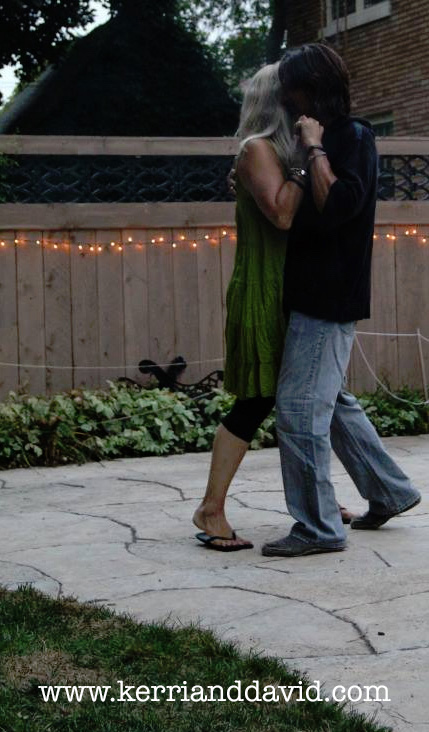
Little pot roasts are popping up everywhere! Adorable bundles of baby smell and killer smiles. In our pal-group, the babies are having babies. And it’s transforming us into something a little more grand.

Not having had children of my own (I am the proud papa of my two given-children), I’ve spent my life as the weird uncle. I taught my toddler niece to say, “I want another margarita!” and my sister was not pleased. I’ve never successfully changed a diaper but I’ve had riotous fun with many crawling creatives, banging pots and breaking crayons. Uncles, like grandparents, are there to break the rules.

Of this I am certain: Kerri dreams of heaping love and presents on her future grand-pot-roasts; I can’t wait to finger paint and then meet after the mess at the Cheerio bar. Green fingers and snacks! A sure sign that life is grand.

read Kerri’s blogpost on SNACK TIME!

[happy mother’s day!]

smack-dab. © 2021-2 kerrianddavid.com

Taste The Sound [on KS Friday]

Toadshade trillium. Say it out loud and taste the sounds. Toadshade trillium. Yummy words worthy of e.e. cummings.

I am working in a tech space and keep a document on my desktop: Terms in this Unknown Land. Tech folk speak in acronyms, PAI and SMB, SERP and TAM. Although my colleagues are mostly left-brainers, they are remarkably poetic in their language, peppering their acronym-speak with tasty terms like “cluster calculations” and “stemmings.” I admit to losing the sense of the conversation in the sound. They are, despite the stereotype, passionate and creative and unconsciously poetic. “Plots a curve of probability.”

Toadshade trillium. Plots a curve of probability. Forget the meaning and taste the sound! What might Mary Oliver have done with those syllables!

My lesson this week: I cannot stand and work at my computer all day. I can do the standing (I have a stand-up desk) but staring at a screen eventually shuts down my brain. Across from my stand-up desk is my drafting table. I think better with big pieces of paper and a pencil and then translate back to the computer. I need to move to think but that’s only part of the lesson. When at the drafting table I’m more likely to take things less seriously. I free myself. I get snarky and funny and scribble and draw big arrows and make fun of myself and the logjam in my thinking. I play.

And, while I play, I talk aloud, and hear the sounds of the shapes that I draw. Poetry and motion. Taste the movement. One and the same. Free the thinking. It’s enough to scare the dog but it’s liberating to my kinesthetic necessity. I scribble notes in every direction and dance back and forth between word and image. Consequently, I produce better work.

Thank goodness I finally tasted a few word-sounds that sent me tumbling into a productive scribble dance.

read Kerri’s blogpost about TOADSHADE TRILLIUM

kerri’s albums are available on iTunes and streaming on Pandora

pulling weeds/right now © 2010 kerri sherwood

Dissolve And Do [on DR Thursday]

“If you hear a voice within you say, ‘You cannot paint,’ then by all means paint, and that voice will be silenced.” ~ Vincent Van Gogh

“A writer writes. A painter paints.” Wise words from Tom. It was a mantra and his patent response when asked how one becomes an artist. I imagine Tom learned this wisdom from DeMarcus. DeMarcus certainly learned it from his mentor. Artistic ancestor to descendent, the quality that makes an artist is the practice. Nothing more. Ask me what makes an artist and you will hear what I learned from Tom.

There’s a special, hidden layer in this mantra. Someday, if you are a lucky artist, you stop thinking of yourself as an artist. The role dissolves in the doing. It no longer matters how others see you or the label you apply to yourself. It’s nice to separate yourself from the herd yet service to the herd is the point. That, I am coming to understand, is the moment that artistry fulfills itself. A deep trust ensues. No blue ribbon or large sale or shiny prize will change the essential. No outside eye or opinion or judgment or praise alters the fact in the least. A writer writes. A painter paints.

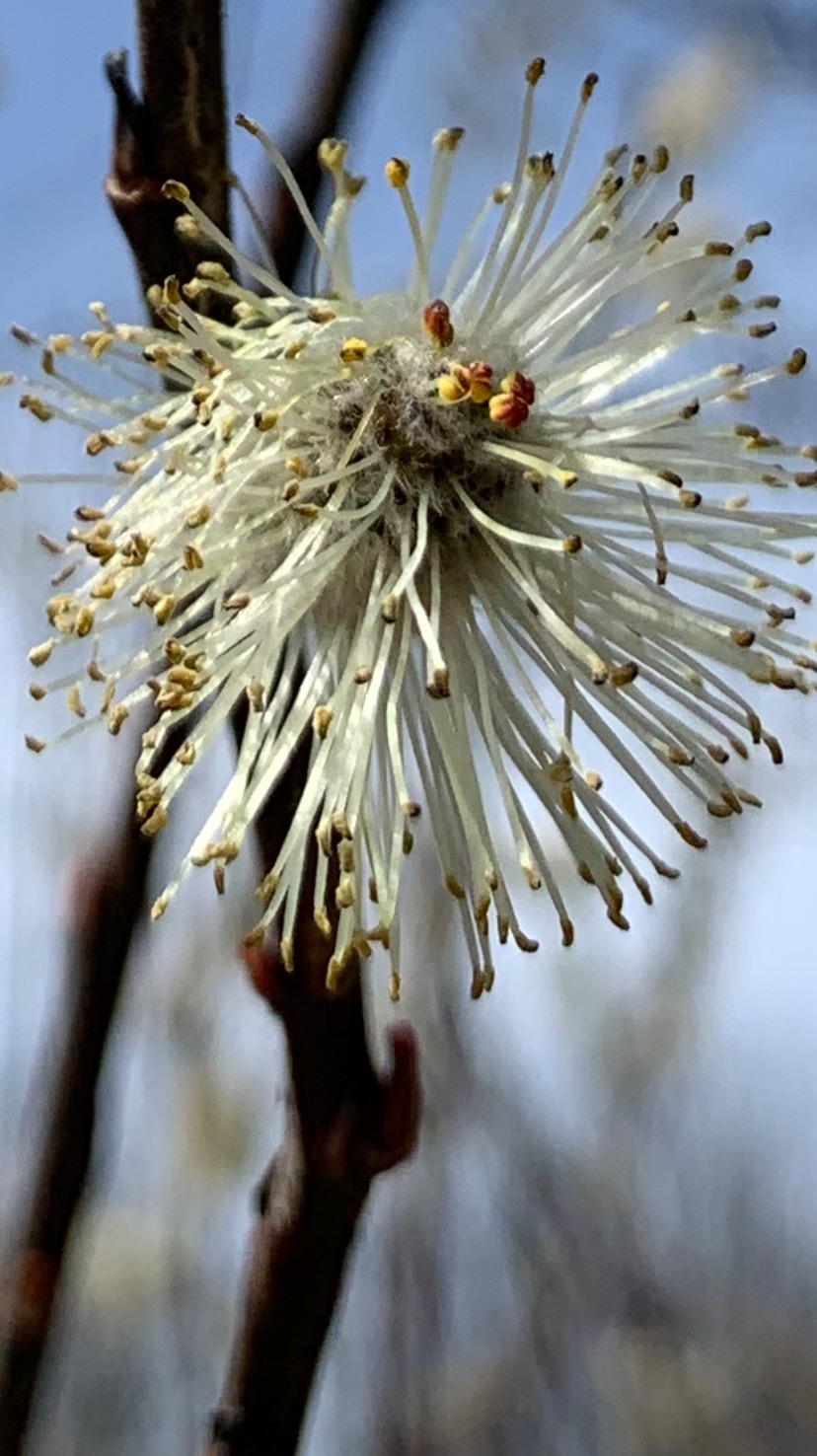
How do you pursue an artistic life? We take walks and pay attention. French blue sky and early tree blossom. And then, each day, as is our practice, we write or draw or compose.

read Kerri’s blogpost about TREE BLOSSOM

Newborn, 48x32IN, mixed media

newborn © 2019 david robinson

Call It Realism [on Not So Flawed Wednesday]

This garlic could have been painted by Jan Vermeer. To my eye it looks like the work of a Dutch master, an artist more concerned with realism than the ideal.

Art that reveals the beauty in the ordinary. For a few weeks in my surly youth I studied with a realist painter. I was wowed by his technique but could not yet grasp his dedication to capturing the everyday. Only later did I come to understand that his art was not about the technique but about bringing attention to the experience of the everyday. He rejected the aloof and desired to pull art down from the pedestal so it might reflect the lives of the “common people.” He believed that people needed to literally see themselves in the paintings to have access to the painting. They needed to see their hardship and toil as well as the objects that surrounded them.

Bertolt Brecht believed the opposite. In order for people to have access to the deeper messages of a play, they needed to be removed from their circumstance. So, in his way of thinking, people are more capable of seeing themselves in a piece of science fiction than in a reality-mirror.

David is working on a re-imagining of Pirandello’s play, Six Characters In Search of an Author. One of the questions of the play is, “Who is telling your story?” And, how are they telling it. I reread the play and was struck by how relevant it is to our times.

The beauty in the ordinary. The turmoils and struggles of the everyday. Ours is a time of tumultuous story tug-of-war. I wonder, in a hundred years, what historians will write about our time. I wonder what aspect of artistry – if any – will be considered “realism.” As defined by Vermeer and Pirandello, it’s to reach across a social line, from the privileged to the working class. For Brecht it is spatial: step out to look in.

One thing is constant, while reaching across time and artificial boundary, it is always the role of the artist to help their community ask the questions: Who is telling my story? Whose story am I telling? What is the story that we are telling?

I imagine those someday-historians will write tomes on our messy struggle to sort out what is “real” and what is not.

read Kerri’s blogpost about GARLIC

Marvel The Resilience [on Two Artists Tuesday]

The guys at the water utility told us not to bother replacing our yard until the fall. “The dirt needs to settle,” they said. After trenching from the street to the house, tearing up great chunks of the sidewalk and curb, blowing a hole in the foundation, throwing dirt into the moat and covering it with straw, ripping up the street and quickly tossing temporary asphalt over the hole, our front yard is a hot mess of destruction.

Our neighbor owns a landscape design business; he scowls every time he looks our way. It pains him that his pristine yard sits next to our ruin. “The dirt needs to settle,” I say and shrug as he looks in horror at his worst nightmare. To add insult to injury, I’ve threatened to park the truck on our ruin but Kerri gives me THAT look. If I want to stay above ground, the truck stays in the driveway.

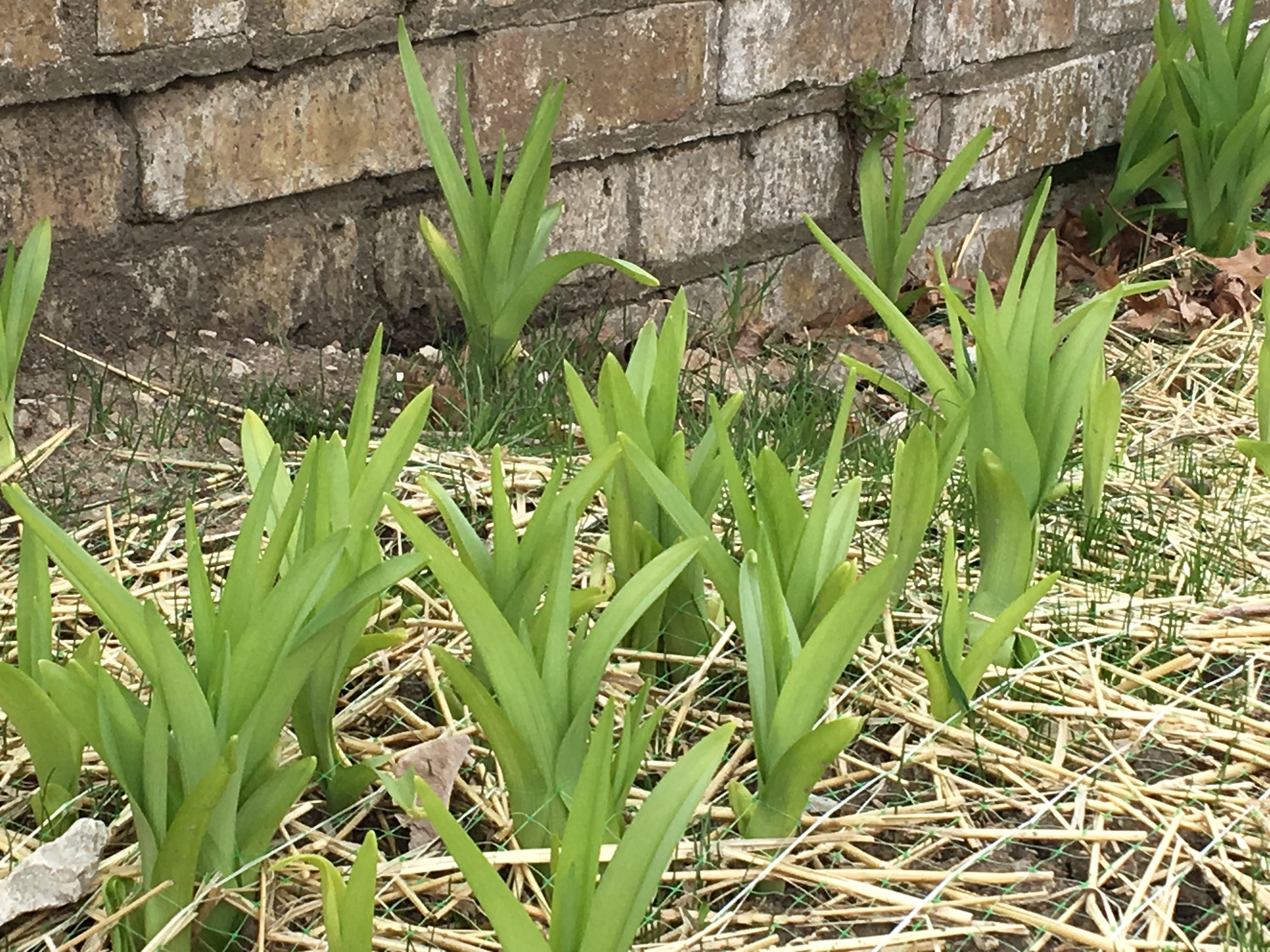
Standing on the front porch, amazed at the hardy green shoots reaching up through the devastation, straw and lawn netting, I thought of Tom. He marveled at the resilience of young people, students in the schools that he stewarded. Some of the children lived in extreme circumstances or had suffered terrific injury, and yet, they consistently transcended their situation. Pushing through the wreckage and reaching for the sun. “The human spirit,” he’d say and shake his head in amazement. “Marvelous.”

Despite being trenched, torn, mixed with concrete and rock, thrown about, turned over and over again, covered with straw and netting, the Day Lilies have not only survived, they are thriving. Just as a fire brings renewal to the forest, it seems the destruction served to energize the plants. More than a comeback, this is a riot of Lily return. A reunion.

“The impulse to life,” I whispered to Tom. “Unbelievable.”

“Yep,” he smiled.

read Kerri’s blog post about RESILIENCE

Know Their Name [on Merely A Thought Monday]

As I let Dogga out each morning, I stand for a few moments and listen to the birdsong. Our particular spot on the earth is alive with birds: starlings, finches, sparrows, robins, hawks, crows, owls… The Mourning Doves always stop my motion. Their song is hypnotic.

The pandemic changed – and continues to change – many things. Our world became significantly smaller. The table in the sunroom. The backyard. Our trails. As someone with his head in the clouds I am a dedicated generalist. I have always appreciated bird song yet never, not once, thought of identifying the specific birds and their song. “Sparrow? Finch? Who cares! They are beautiful and that’s enough for me! I spend too much time in my left brain as it is! The last thing I want to do is categorize the birds!”

COVID changed that. Sitting on the back deck or at the COVID table staring out the window for hours on end, our relationship with the birds grew. From general appreciation to specific experience. From passive appreciation to personal connection. We began to see nuance. Pattern. We wanted – and want to know more about these beings that sing us awake each morning, that alert us to changes in the weather, that signal alarm in the neighborhood.

While visiting the Botanical Gardens, Kerri found a small book, coded by color, that identifies the birds in our region. In a flash we can open the book and identify the bird. “Hey! Look! That’s Paul!” I say.

“Stop!” Kerri scowls. “It’s Martha. Paul’s on the fence.”

Just kidding. House Sparrow. Carolina Wren. My favorite to pronounce is Grackle. Great-tailed Grackle to be exact. I’ve decided that, were I to somehow achieve tough-guy status and ride a Harley to breakfast, my motorcycle-dude name will be Grackle. “Hey, Grackle,” the waiter will say, as I come through the door en route to my usual stool. “Hey,” I respond. Motorcycle-dudes named Grackle are birds of few words.

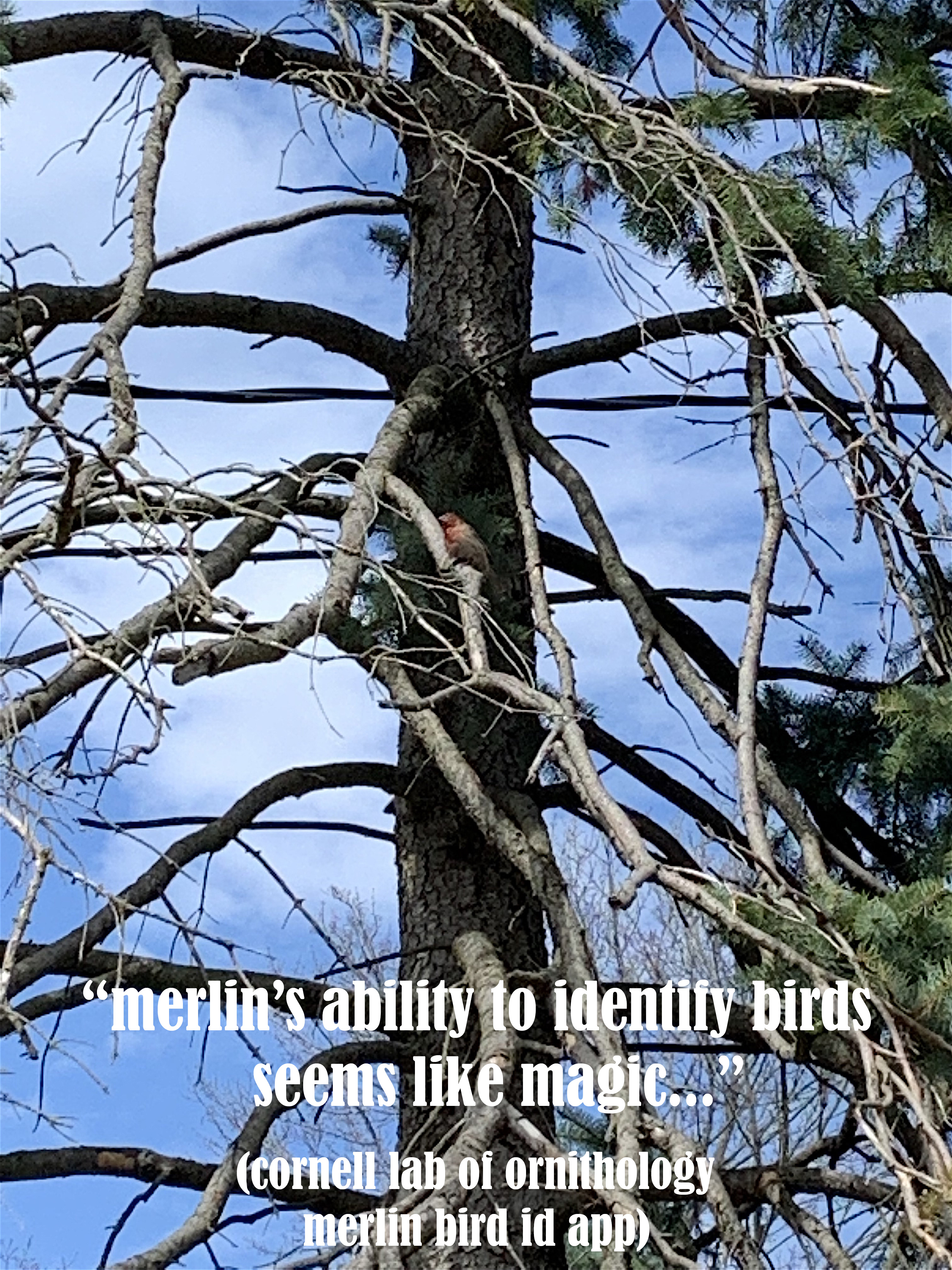
Deb showed us an app. Merlin. It identifies birds by their song. Now, armed with our book from the Botanical Garden and our Merlin app, when I ask, “What’s that?” Kerri – who is always alarmingly way ahead of me – has the answer. “Eastern Towhee,” she says.

“You’re making that up!” I cry, knowing she can’t stand to be challenged so will immediately jump to prove to me that she is right (it’s my secret fast-track to knowledge).

“Look it up!” she insists, showing me both the book and the Merlin return.

“Wow,” I say. “Towhee. Who knew. Maybe my pen name should be Grackle Towhee!”

She yanks the book from my hands. “Oh, Look!” she exclaims. “Merlin has identified you: Midwest DoDo.”

read Kerri’s blog post about BIRDS!