Open The Box

JIm Marsh of the band, Mom's Chili Boys, tuning up for rehearsal.

JIm Marsh of the band, Mom’s Chili Boys, tuning up for rehearsal.

It is often the simplest of actions that rock the world. I had one of those moments yesterday. It was a threshold moment. Its power took me by surprise. It changed me and all I did was open a box.

We flew to California to work on a play. I’ve worked on dozens of plays and performance pieces in my life but this one is special because it’s not an abstraction. It’s not a made-up story. I’ve lived it and lived with it for nearly a decade. The event, the catalyst of the play was the discovery of a box, a time capsule plastered into the walls of a ranch house over 130 years ago. Tom found the box. It held the possessions of an ancestor, a small boy who died in 1885. The boy’s mother, Isabelle, put his clothes and toys in a small trunk, wrote notes, some brief anecdotes about the boy, and then hid the box in the walls of the house.

Nearly ten years ago, we began creating the play when, late one night during a visit to the ranch, Tom asked me to help him. He asked, “What am I supposed to do with this box?” At first, much of the body of the play amounted to organized transcription. During each visit I recorded hours of conversation with Tom, hours of late night storytelling, and then flew home and transcribed the recordings. I wanted to catch the cadence of Tom’s vocal patterns. I wanted to catch the rhythms of his extraordinary voice and gift of storytelling. The play was his to perform; my work was simply to craft it, to draw a clear story-path for him to follow. The play, a one-man show, was ready for production when Tom’s health failed. He died a year ago.

During Tom’s decline I rewrote the play so that I might narrate the story and added another character to the piece. The Chili Boys had a battery of new music for the play so we gathered in Stockton to integrate the new music with the new text.

When we arrived in California, we visited Tom’s widow, Marcia. She gave us the trunk so we might photograph the clothes, toys, and notes. I’d seen the artifacts many, many times. Tom and I wiled away many nights unpacking the box and reading the notes, talking about his family stories. When our rehearsals were finished, sitting with Kerri and Jim moments before driving back to the airport for our return flight, we decided to open the trunk. Kerri had never seen the artifacts. As I lifted the lid, as I opened the trunk, I realized it was the first time; Tom had always opened the box. Tom had always reached inside, removed the shoes, the tattered coat, the hobby horse, the diary that contained the tracking notes of a fever that killed the boy. This boy was not fiction. Tom would say, “Look at this. Look at what she wrote on this.”

I opened the lid, for the first time, reaching inside, pulling out the shoes, the jumping jack, saying, “Do you see this? Someone must have made it for Johnny. And here, this is the notebook that Isabelle kept of Johnny’s fever. Look at what she wrote.”

DSC_1196 copyInvest in THE LOST BOY. See our kickstarter campaign


title_pageGo here to buy hard copies (and Kindle) of my latest book: The Seer: The Mind of the Entrepreneur, Artist, Visionary, Innovator, Seeker, Learner, Leader, Creator,…You.


End And Begin

Sand SpiralSome fragments of thought on common story phrases (and life):

Once upon a time. It started. The Big Bang! Movement from a single point, a center. Adventure requires a movement from center, a venture away from the known to the question. Moving from center implies imbalance and opens the possibility for a more expansive center. Here’s the paradox of moving from center: balance is everywhere and nowhere all at the same time. Every person is the center of their unique story. That will always be true: who else could star in your personal movie? Yet stories, in order to move, require imbalance. You know who you are, you lose who you are, you find who you are. Cells divide and divide again. The division is necessary for new forms to take shape. The encoding is already in there somewhere. The same is true of stories.

This is like that. Comparison. Simile. Metaphor. Analogy. It is why stories work. We compare ourselves to the protagonist. We are like him or her. Why do we tell the same stories again and again? Because we recognize ourselves in the story. Stories are like glue that binds a community. It’s why marketing works. To be more complete, you must buy this or wear that. Be like…. It’s all a story and in that way it is all made up, every category, every interpretation (see Once Upon a Time, The Big Bang, etc.).

And so the story goes. Chaos to order, order to chaos, generation to generation, winter, spring, summer, fall, winter, spring,…. This morning on our walk we watched parents take photos of their children as they returned to school. Backpacks, new clothes, and packed lunches; it’s the first day back. “Do you remember doing that for your kids?” I asked Kerri. She said, “It seems like yesterday.” It seems like yesterday when I was wearing new clothes and walking to school.

The End? An End? “The End” is definitive, singular. The Big Bang was a beginning but was it also an end? The end of one form is usually the beginning of another. Endings always lead to Once Upon A Time, don’t they? It depends upon where you stand or who’s telling the story or how you define yourself.

title_pageGo here to buy hard copies (and Kindle) of my latest book: The Seer: The Mind of the Entrepreneur, Artist, Visionary, Innovator, Seeker, Learner, Leader, Creator,…You.

Go here for all digital forms of The Seer.

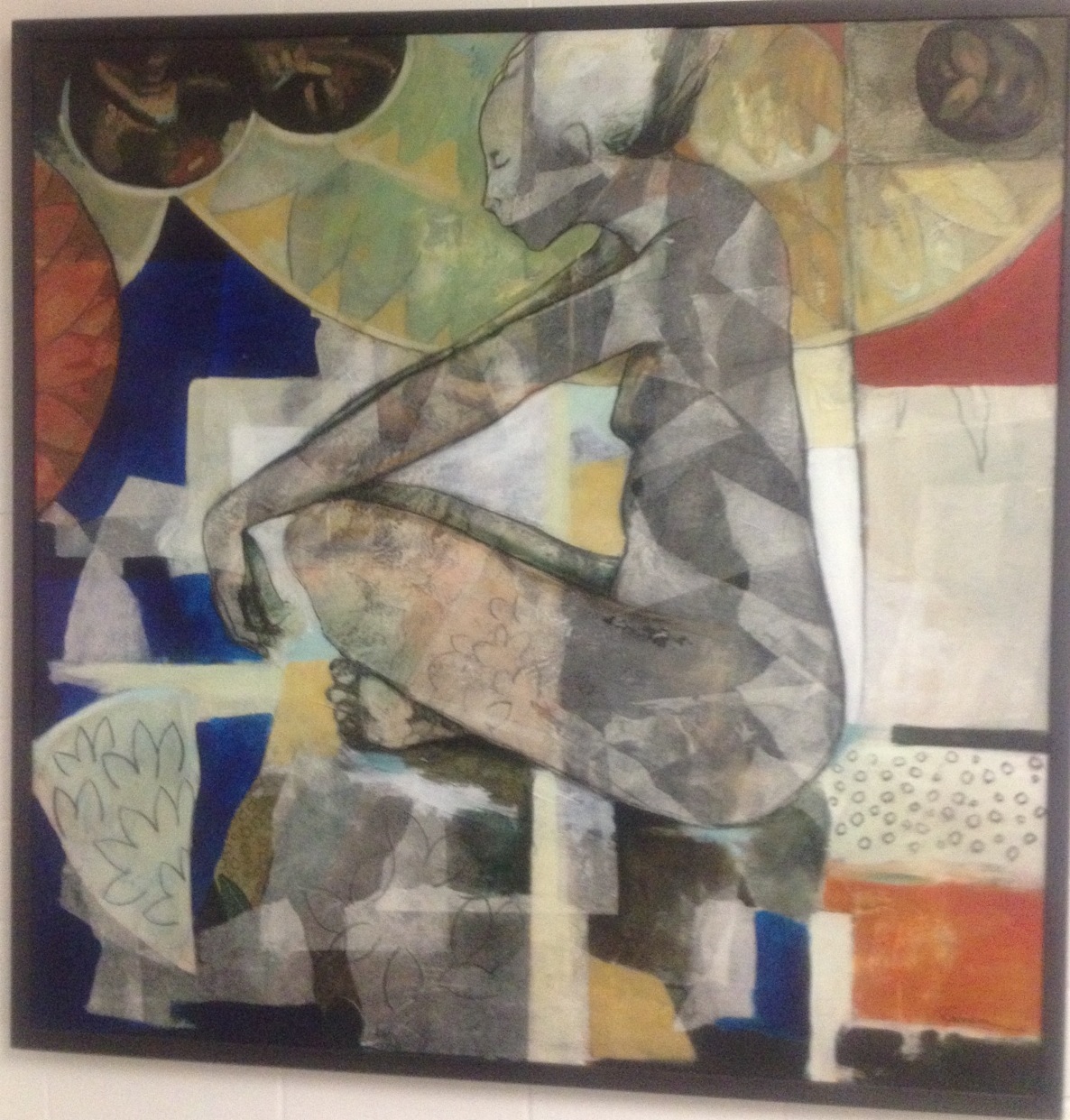
Eve, by David Robinson

Eve, by David Robinson

Go here for fine art prints (and other cool stuff) of my paintings.

Choose Your Label

title_pageThe second recognition in The Seer is that your language matters. It is a curiosity to me that of the nine recognitions in the book, this recognition is the one that causes the most conversation and generates the most questions. My latest theory is the notion that the moment we tack a word onto an experience we are defining the experience; we are making a choice. Owning that we have the power to define our experiences through the way we think and talk about them means taking responsibility for our lives. Ownership of your happiness and power and thought might seem overwhelming or, as someone once said to me, “That’s pie in the sky!”

As the storyteller of your life, the language you use to tell your story matters. Try this exercise for a single day: express gratitude for everything – even if you don’t feel gratitude. Tell yourself in the middle of the traffic jam that you are grateful for the jam. And, if you are really bold and brave, take the next step and assign a reason for your gratitude: the traffic is slowing you down so you can breathe a bit amidst an otherwise hectic day. Express gratitude for everything: the meeting you will attend, waiting in the doctors office, the dishes you wash. By the end of the day, if you have been diligent in telling the story of gratitude, you might just feel it. You will certainly have no more doubt that you live life labeling your experiences. It is only a short hop from knowing you have the power to label your life to choosing the label.

Go here to buy hard copies (and Kindle) of my latest book: The Seer: The Mind of the Entrepreneur, Artist, Visionary, Innovator, Seeker, Learner, Leader, Creator,…You.

Go here for all digital forms of The Seer.

And, for fine art prints of my paintings, go hereYoga.Meditation

What’s The Story

This is a very old watercolor that I called The Inner Monologue

This is a very old watercolor that I called The Inner Monologue

All the ladies were talking about how their bodies have changed with age. My body has changed, too! You’d never know it now but I used to be less than two feet tall with really pudgy knees. Kerri punched me when I offered my perspective on my body change. Apparently there is a statute of limitation for how far back in time you can go on the my-body-has-changed conversation.

When I was studying acting we were taught to write backstories for our characters. The play script was filled with clues but we learned that a character is not 3 dimensional until it has an articulated history. This was always problematic for me. I had no problem creating a backstory – that was easy – and I could justify my imagined story happenings in the script – but I couldn’t see how my imagined story led to more specific actions in the performance. If anything, the backstory got in my way. Like all young actors I got lost in the backstory, trying to “tell” it rather than pursue my clear action. Acting, like life, is about the pursuit of desire. My backstory muddied my ability to act. Acting is an art form of the present moment.

When I was teaching acting I came across the same problem. The young actors would spend hours telling me the details of their backstory which only served to diffuse their present action. They’d try to perform their history instead of pursue their current target.

The backstory was interesting but functionally useless in the present moment.

I’m finding the same challenge off the stage as I found on it. In one form or another I’ve coached a lot of people. I hear a lot of backstories. Our backstories are interesting. They do what they are meant to do: they give us identity. We spend hours and hours telling each other about our past adventures and abuses. People are storytellers, telling the story of their lives all day, everyday. Most of the storytelling concerns the past. What we did or did not do, what was done to us or justifying what we did to others. Most backstories are about limitation. Most backstories have a root in fear that show up as “reasons why I can’t” stories. Do you remember the famous Richard Bach quote? Argue for your limitations and sure enough they are yours. As interesting and informing as it is, very little of the backstory is functionally useful in the present moment. I don’t want the person I was a decade ago defining the choices I make today.

It’s become something of a mantra for me, something I find myself writing or saying a lot: The actions we need to take are usually very simple. The story we wrap around them make them difficult. What’s the story?

title_pageGo here to buy hard copies (and Kindle) of my latest book: The Seer: The Mind of the Entrepreneur, Artist, Visionary, Innovator, Seeker, Learner, Leader, Creator,…You.

Go here for fine art prints of my paintings:

This painting is called Icarus.

This painting is called Icarus.

Use Your Key

Photo by londonstreetart2

Photo by londonstreetart2

The other day I received an email from a long lost cousin. She spent some time on my website watching old interviews and contemplating my assertion that through our inner monologue we story ourselves. The idea was disturbing to her. How could she be the teller of her story and yet feel so powerless? So many things have happened to her! How could she possibly be responsible for the twists and turns of her life? She asked, “How exactly is one to find empowerment when the door is locked and the key wasn’t left under the mat….”

I’ve been slow in responding to her questions because my impulse to respond was so immediate. I wrote and then deleted, “If you do not have the key, who does?”

Her metaphor is perfect. There is door to life and it is locked. Someone else has the key.

And, to make matters more cruel, there is a mat, a tease, a place where the key should be. The mat is a constant reminder of the absence of the key. Her metaphor gives structure to a very specific story, does it not? It defines the actions of her life, the role in which she has cast herself. In such a story frame there is no access to life, there is no possibility of personal power.

I wonder what she might see if she held a different metaphor? I wonder what she might see if she recognized that she is the keeper of the metaphor and in that way the giver of meaning to her life and not the seeker of meaning? I wonder what she might experience if she saw herself as a locksmith or an opener of doors? I wonder what she might experience if she recognized that life is available on both sides of the door? Life knows no doors. Life needs no key.

Her confusion is also perfect. She has mistaken her circumstance for her story. None of us has control over our circumstances. Cancers come. Hurricanes happen. Empowerment comes when we recognize that we have infinite control over who we are within our circumstance. Empowerment is not given, it is chosen.

The Buddhists recommend joyful participation in the sorrows of the world. No one sails through life without difficulty and hardship. The difficulty and hardship are the very things that bring growth and illumination. Participate joyfully. Or, participate painfully. The sorrows of the world will always be there; how we participate is the story we choose to tell. If there is a key to life, if a key is necessary in your story, in her story, it is simply this choice.

title_pageGo here for my latest book, The Seer

Go here for fine art prints of my paintings.IMG_3185


Carry Your Story

I call this painting, "Canopy"

I call this painting, “Canopy”

Since writing my post yesterday I’ve been rolling around in my mind the image from this quote from Deepak Chopra’s book, Life After Death: “Every former self you have left behind is a ghost. Your body is no longer the body of a child. Your thoughts, desires, fears, and hopes have changed. It would be terrible to walk around with all your dead selves holding on.”

All day I’ve been looking at people as if they are walking around with all of their dead selves hanging on. And, technically, we are. We define our present moment through the eyes of the past. I suppose the number of ghosts we carry depends upon the definition we carry about ourselves.

Definitions are stories. Thoughts, desires, fears and hopes are contained in the form of a story. Any thought you have is actually a form of storytelling. When we worry if this will happen or that, we are telling a story. When we tell our friends about being stuck in a traffic jam, we are telling a story. When we say, “This is who I am,” we are telling a story. When we say, “That is who they are,” we are telling a story. In a week, my family will gather to memorialize my grandfather; we will tell his story.

I’ve found in many parables and myths that an inner monologue (the story you tell yourself) acts like a fog. It obscures the present. For instance, in the Sisyphus tale, Sisyphus goes to the underworld and watches the souls of the newly departed cross the river Styx. Each soul thinks it is alone even though they are with many others; they cannot see the others through the curtain of their ego story. To enter the great “I am” they must first stop telling a story of separation.

Stories obscure.

We carry our stories forward. That is a legacy. Carrying a story forward is how we connect to our ancestry. Jean Houston once used an image that I like: we are the burning point of the ancestral line. We carry the story-torch forward. Like the Olympic flame our fire was ignited by a spark that stretches back eons. And through us, this flame will reach far into the future. We burn now. This story-torch, the family story, is the root story. It illuminates us.

Stories enlighten.

In both cases, obscuring and illuminating, stories can be heavy to carry. Or, they can be light. It may not be so terrible to walk around with your dead selves holding on if your dead selves tell a story love and connection, a story of hope and aspiration, a story of yearning and possibility. If illumination is the act of transcending your story, a step toward illumination certainly includes a story of love, and usefulness, and a deep appreciation of the ordinary moments that we story to fill our extraordinary days.

title_pageGo here for my latest book


Story Your Life

title_pageI’ve received a few questions this week about life stories and rather than blather…here’s another snippet from my book, The Seer:

Stories often deal with the collision that arises when learned patterns blind us to our natural impulses. Living according to what we “should do” or “should think” inevitably collides with what we desire to do and this provides a hot crucible for growth. When Virgil asked me to practice “not knowing” he was poking a hole in my story of “should do” so that I might once again hear what I intuitively knew to be true. Stories show us how to get out of our own way. As Virgil recently wrote:

Virgil: You are at one time the source of your yearning and your greatest obstacle. What you think that you should do IS the obstacle to your desire.

In my latest chat with Virgil I told him of my revelations about ‘not knowing what I DO know,’ about my memory of my client, and how I convinced her that she didn’t need me and could do the work by herself. I wrote:

Me: At the time I really needed the money. I needed the business! And I spent that morning convincing a potential client that she didn’t need me. It’s the story of my life!

He responded:

Virgil: Oh, you are dangerously close to the third recognition.

I decided I needed to stop being careful with how I said things to Virgil. I’d just learned that my language mattered so I might as well write what I was thinking:

Me: Well, maybe you should tell me before I trip over something and hurt myself. You must have an answer or two in there somewhere…

Virgil: I’m woefully low on answers but I do have a question for you: What did you mean when you wrote: It’s the story of my life?

Me: I don’t know. It was just a phrase, an attempt at humor.

Virgil: What if it’s not just a phrase?

Me: You mean that convincing people that they don’t need my services is the story of my life? That is why my business crashed?

Virgil: No. I’m not inferring, interpreting or implying anything. You used this phrase: It is the story of my life. I’m asking you to consider that this is more than a flippant phrase. Are you aware of the story of your life?

I was getting angry again. And I was beginning to recognize that my anger was a pattern that flared when I felt lost. I get angry when I am driving and miss my turn or can’t find where I’m going. I wanted a map. I wanted Virgil to be my personal GPS and tell me where to go. Where were we going with this? Sometimes I can’t help my sarcasm:

Me: You mean I only get one story?

Virgil: Your story is not something you get. Remember, your language matters. Choose your words more carefully and you might see the third recognition before you trip over it. Connect the dots. Tripping over it will not hurt you. It’s the choice to be blind that causes your pain.

Go here to get my latest book, The Seer: The Mind of the Entrepreneur, Artist, Visionary, Seeker, Learner, Leader, Creator…You.

Go here for hard copies.


Have The Conversation

A painting I did twenty years ago of my dad. I call him Columbus.

A painting I did twenty years ago of my dad. I call him Columbus.

When Bob died I wrote his wife, Ruby, a note saying that I’d give anything to have another conversation with Bob. Just one more conversation.

When Jim wrote to tell me of Doug’s passing, we had an email exchange.

I signed off the email with this phrase: “Yet another conversation I will never have….” Jim answered with a warm reminiscence of Doug, a recounting of their meeting as young teachers, watching Doug navigate and ultimately heal the psychological wounds from war. Jim signed off with this thought:

War is not just hell.  It is eternal hell.  Particularly for those with first hand experience. Why the race continues to tolerate it may be the greatest mystery. Another conversation I will never have with Doug.

I remember in vivid detail the last conversation I had with Tom. He was already sliding into the hell of his dementia and knew it. He desperately wanted to tell me a story, something that was vitally important for me to know though he did not know why. I sat attentive in his small cabin home as he told me the story of the lost boy, a story that together we’d spent years developing into a play. I’d heard the story a thousand times and he no longer remembered. He forgot everything but the imperative to tell me the story, to transmit the history to me. So we enacted the ritual as our final conversation.

Columbus fishing at his 80th birthday celebration.

Columbus fishing at his 80th birthday celebration.

Many years ago I traveled home to spend time with my dad. I wanted to know who he was and felt as if I’d missed it, as if I didn’t really know the person behind the role. He was generous and vulnerable and spent three days with me answering all my questions, sharing the inner sanctum of his thought and being. It was the greatest gift I have ever been given and, at the same time, the greatest gift I have given myself: I asked if he would spend time with me.

One of the things I learned during those days with my dad is that there will always be the yearning for one more conversation. There is no bottom to the magic and mystery of the people that we love and who give order and richness to our world. This year I am learning that although there will always be the yearning for just one more conversation, there will of necessity be a last exchange. And, because that is an inescapable truth, there is nothing more important on this earth than to take the time, make the space, to ask, “How are you doing? What’s happening in your world?”

title_pageGo here to get my latest book, The Seer: The Mind of the Entrepreneur, Artist, Visionary, Seeker, Learner, Leader, Creator…You.

Or, go here for hard copies and Kindle.


Join The Story

Johnny is sitting on a mule named Old Abe. This was taken a few months before he died.

Johnny is sitting on a mule named Old Abe. This was taken a few months before he died.

Yesterday I finished the final edit/redraft of The Lost Boy. It is a play I began years ago based on interviews with Tom. Late one night while I was visiting him at the ranch, he asked me to help him. “Do what?” I asked. He shrugged his shoulders. He didn’t know. He felt that he had an obligation to an ancestor, his great grandmother, Isabelle, and he felt as if he’d not yet met his obligation. In 1885, Isabelle had a son that died. His name was Johnny and he was only ten years old. Isabelle carefully packed a trunk with all of Johnny’s worldly possessions, she wrote notes, and when no one was looking, she hid the trunk in the walls of the ranch house. She told no one. Tom found the trunk 100 years later.

We decided that his obligation was to tell Johnny’s story. We decided that Isabelle wanted to somehow keep the memory of her son alive but her method was a mystery since she told no one about the trunk. Tom shared the trunk with school children and historical societies but somehow felt as if he had yet to fulfill his obligation to Isabelle. Our idea was to create a play. I would interview Tom and write the piece. He would perform it. Along the way a terrific band, Mom’s Chili Boys, composed and compiled music from era.

We had a play with music. We’d solved the mystery of why Isabelle plastered the trunk into the walls. We made a few attempts at doing workshop performances but the piece always stalled or something unforeseen blocked our path. During a living room read/play through, it became apparent that we missed our window. Tom was slipping into dementia and got lost during the read through. He was no longer capable of performing the play. We stopped. We let the play sit dormant.

During Tom’s decline I rewrote the play so I might tell his story. The Chili Boys were my allies and my rock of encouragement and support. They played the music at performances and told the story in a condensed version and gathered some good feedback. Once, we tried to organize another run at doing the play and it hit a wall of resistance. So, it sat for a few years in the projects-that-could-have-been pile.

When Tom passed this fall it was as if the universe that was so dedicated to blocking our path finally said, “Now.” The Chili’s have new music and it is gorgeous. In doing the rewrite I was gob smacked to realize that Tom had to pass before the play would be complete. He wondered how he might honor his obligation to Isabelle and the answer was something he never knew: he had to ask for help, not to share the story but to enter it. As it turns out, The Lost Boy is not about Johnny or Isabelle. It is about how Tom found his way home.

Go here to get my latest book, The Seer: The Mind of the Entrepreneur, Artist, Visionary, title_pageSeeker, Learner, Leader, Creator…You.

Or, go here for hard copies.


Tell The Story

"...and for everything which is natural which is infinite which is yes..." e.e. cummings

“…and for everything
which is natural which is infinite which is yes…” e.e. cummings

Three hundred and sixty six days ago I met Kerri. What I thought was going to be a casual meeting, the beginning of a new friendship, was much more than I anticipated though I didn’t really understand the scope and depth of our relationship until three hundred and sixty five days ago. On that day, exactly one year ago, I went with her to experience a Taize service. Taize is a meditation service and she was guiding the music. I sat with her during the Taize and, in a single moment, on a specific word of the Lord’s Prayer, we had an experience so potent, so mystical that a year later I still am unable to explain or comprehend it. Our lives changed in an instant. The moment was so powerful that we sat in the church for hours after the service. We couldn’t move. We couldn’t leave that space.

Yesterday, we both cleared our calendars and spent the day telling the story of our year. Our telling was not for reminiscence. It was not like a new year’s review of things past. It was not a measure of how far we’d come. It was elemental. It was the kind of telling that communities used to tell when they renewed themselves. It was the kind of telling people used to do to define themselves. It was story as a sacramental act. We visited the fire and the transformation, the earth and the necessity of rooting, the water and the miracle of flow, and the wind of inspiration and ancestry. We generated by regeneration.

So, I offer this as an exercise: give yourself a gift, take some time, and tell the story of everything you experienced on this earth, in this life, over the past three hundred and sixty five days. Visit the awe, the disappointment, the hurt, the joy, the boredom, the loss, the discovery, the exhaustion, the wonder, and anything else that affirms your life as unique and gorgeous. No one else walked the path you walked. No one else can or will walk the path you walk. See it. You’ll be amazed.

Go here to get my latest book, The Seer: The Mind of the Entrepreneur, Artist, Visionary, title_pageSeeker, Learner, Leader, Creator…You.

Or, go here for hard copies.