Know What Matters

A day with Beaky

A day with Beaky

When you leave Florida driving north there is a stretch of highway in Georgia that is littered with billboards advertising everything from the adult superstore to the second coming. The spectrum is as breathtaking as it is comical.

I’ve driven this stretch three times during the past several months and each time I wonder what an archeologist from some distant future might deduce about us if this stretch of highway was the only remaining fragment of evidence of our culture. A few years ago I spent a day in Herculaneum, the other city buried with Pompeii on the day that Vesuvius erupted. Like Pompeii, it was remarkably well preserved. We have so much writing from that time, we have eyewitness accounts, we have museums stuffed with artifacts and art. While I walked the streets of Herculaneum on that hot summer day, I read about the social norms, the exercise practices, food preparation, infrastructure, and what we assume a normal day was like. I also read, based on the placement of the bodies, what that most unusual day, the day the world ended, must have been like. There was a timeline of events. All the while I couldn’t help but wonder if our study of their culture could only reach the superficial, the top layer, the economics. We can sort through the garbage and garner much about daily practices. To study is not the same as knowing. What we know is minute when compared to what we do not know. The timeline told me little of the terror. It told me nothing of the love. The economic statistics told me less than the plaster cast of the old couple huddled together, arms wrapped around each other on their final day.

I recently watched a short TED talk by Ric Elias who was on the plane that a few years ago landed in the Hudson River. He talked about his thoughts as the plane went down, what he learned about life when he faced his death. He was surprised that there was no fear in dying but there was great sadness for all the things he would miss, all the relationships he would leave behind. He learned from that experience that the only thing in his life that mattered was being a good father. He also decided to clear all the toxic relationships and never again participate in negative energy. He said that he gave up being right. I thought of him as I drove the billboard gauntlet a few days ago. The archeologist from the distant future would glean much about our economics and ponder our obvious confusion. She would write studies useful for the tourists that would travel halfway around the world to visit the site of a once thriving community. The tourists would walk the stretch of ancient freeway, gape at the billboards and speculate about our addictions. But they would know nothing of the people who everyday drove that stretch of road with their families, or about people, like me, who drove more than a thousand miles to spend a day or two with a 93 year old woman named Beaky who can tell a story better than almost anyone I’ve ever known.

Go here to get my latest book, The Seer: The Mind of the Entrepreneur, Artist, Visionary, title_pageSeeker, Learner, Leader, Creator…You.

Go here for hard copies.


Love Yourself Better

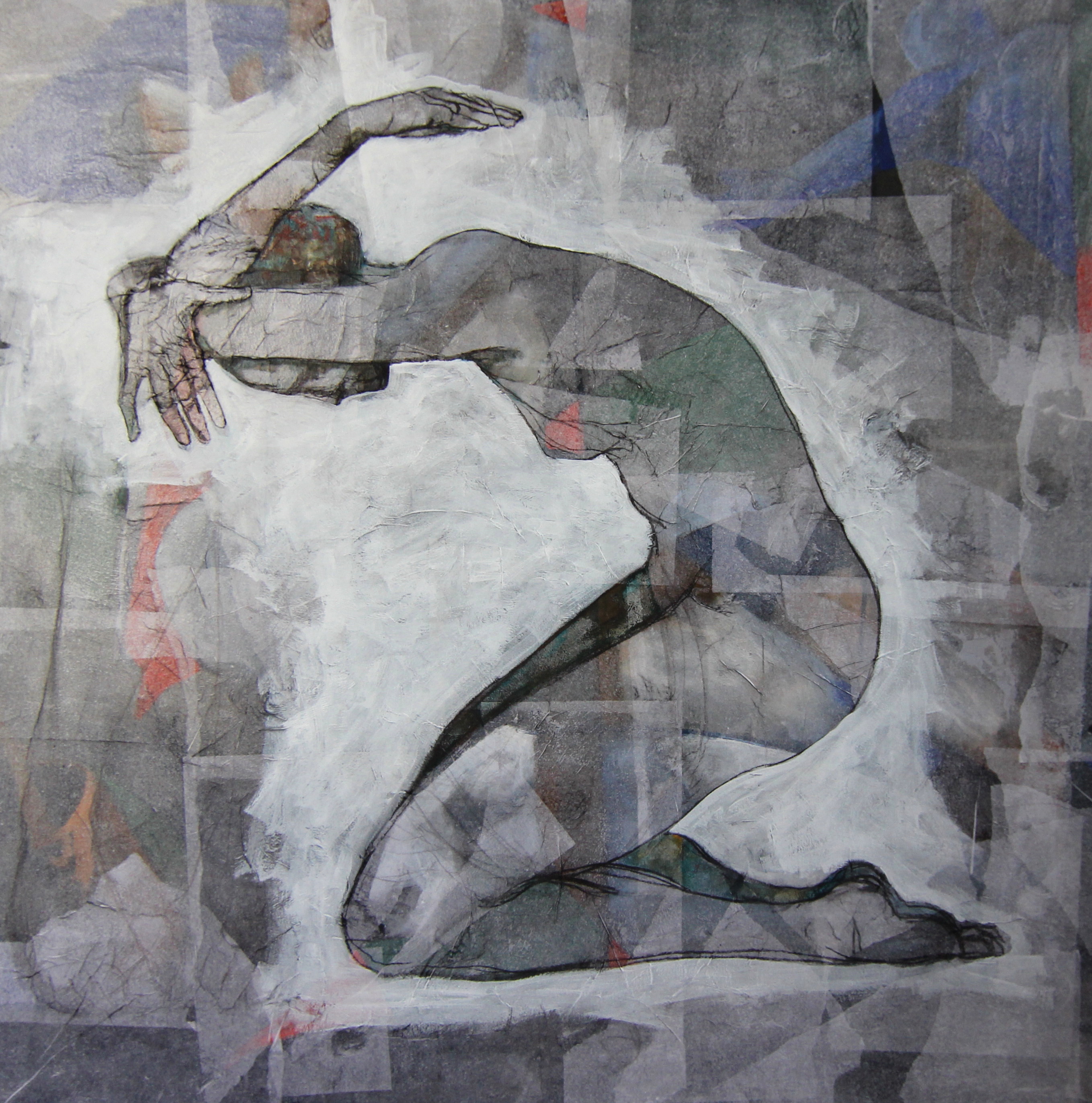
this one is from the archives. I painted this 10 years ago.

this one is from the archives. I painted this 10 years ago.

He said, “The current goal is to love myself better.” And then he added, “Not so much a goal but something that needs teaching from our own mind.” His statement begs a great question, an ages old question: Can the mind teach itself? Really, the question is can the mind see itself clearly enough to teach itself?  Or, the question within the question: Can the mind teach itself to love itself? I scribbled the questions in my notebook and beneath them I wrote, “Is love teachable? Is love reachable through the mind, especially self-love?

We’d been chatting for a while and had covered a lot of territory, from Monte Blanc pens to typewriters to soap use around the world, clean water, the difference between good and bad scotch, the shapes of the 50 states and how they might influence personal identity and we’d somehow wandered into the epicenter: self-love.

His statement nailed the universal dilemma perfectly. It was a declaration of separation. The self watching and wanting more for the self. The separation is in the language: to love myself better. I don’t know anyone who hasn’t made this statement. Which part of the self will better love the other part of the self? Which part of the mind will teach the other to love?

It is where myth meets the everyday. Every human being who has walked the earth has wrangled with separation and the yearning for self-love (re-connection to self, unity). The human journey is a walk from separation (birth, if you want to take it literally) to reunification (death). The story lives in mythologies the world round. If we were still willing to read our mythologies (religions) metaphorically, we’d see it. For instance, being expelled from the Garden of Eden for eating from the tree of knowledge is the story the ancients told of the experience of separation. The inevitable bite of apple from the tree of knowledge brought duality consciousness: male/female, us/them, mine/yours, haves/have-nots, me/you. Separation. The rest of the story, not often told, is how, through out the rest of our lives, we seek the Garden where there lives a second tree: the tree of everlasting life (unity). We journey from knowledge (separation) to everlasting life (reconnection). The death need not be literal. To die to the self is necessary to experience the SELF.

Here’s the great paradox: loving another person is an act of self-love. The path to self-love is found when we serve something bigger than our selves. Think about it: the movement is always from separation to joining, from isolation to connectivity. The obvious question is, “Connectivity to what?”

Self-love is not found when the mind teaches the mind but when the mind gets out of the way of the heart. The love is always there. Love is never missing. Self-love reveals itself when the definition of self grows beyond our own skin. According to our latest neurological science, we experience ourselves as separate because we dull ourselves to our fundamental connectedness to others. In other words, we cultivate a story of isolation and then set about the real work of our lives: to see beyond what we think.

And then he said, “You know what else I just realized?”

“What’s that?” I asked.

“I just landed myself in a blog post.”

Yep.

Go here to get my latest book, The Seer: The Mind of the Entrepreneur, Artist, Visionary, title_pageSeeker, Learner, Leader, Creator…You.

Or, go here for hard copies.

Be A Team

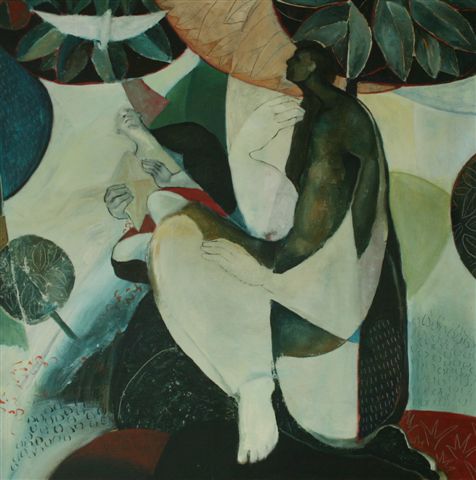
can you see the team boosting the child? I have many of these and will soon begin intentionally pursuing this form

can you see the team boosting the child? I have many of these and will soon begin intentionally pursuing this form

Many years ago Judy gave me a book by African writer Malidoma Some. He wrote that, in the village where he grew up, there were no locks on the doors. In fact, there were no doors. The people of the community respected the possessions and privacy of others. Locks were not necessary. The community cared for the health of its members so its members cared for the health of the community. From his point of view, a society that needs locks on the doors is a sick society. Locks are sign of communal breakdown.

I’ve been thinking much about sickness and the need for locks as I prepare to do a workshop for organizations about effective teams. I’ve done too many of these workshops not to recognize that the need to build teams is a sure sign of an unhealthy community. In Malidoma Some’s community, people were aware of and acted from a consideration of the health of the whole. Loyalty begets loyalty. “Acting for the good of the whole” is a great working definition for a team. It’s all you need to know to nurture great teams: make sure everyone in the organization, from the top to the bottom, is caring for the health of all the members. Make sure the choices are made for the good of the whole.

An organization that needs to team build is like a society that needs locks: most organizational systems support a philosophy of “every man and woman for themselves” while the executive suite needs cooperation and compliance to get the job done. No amount of team building can transcend compensation for individual merit. Once, a CEO asked me, “How do I get them to do what I want them to do?”

The short answer: you don’t.

A healthy team, just like a healthy community, requires no leveraging to act. It requires no policing. A team is a not a “thing.” A team is a relationship and just like a sports team or a theatre troupe, everyone needs to feel safe to really bring their game. They have to know the team cares for them as much as they care for the team. Many years ago, while sitting in a jury pool, the judge asked us, “Why do people resent being called to serve?” A lovely older woman raised her hand and replied, “The government offices are inaccessible and unhelpful when I need information or support. Why should I be happy to serve a system that wants nothing to do with me until it needs my money or someone to sit on a jury.” The rest of the jury pool applauded. When loyalty is a two-way street, teams form naturally. When loyalty is a given, people quite naturally offer their service to something greater than themselves.

There are a few other elementary things necessary for the relationship known as, “team,” like a common story (a common center) and a clear intention, but they are not possible when the metaphoric doors need locks. “Team” is something we are, not something we build or do.

Go here to get my latest book, The Seer: The Mind of the Entrepreneur, Artist, Visionary, title_pageSeeker, Learner, Leader, Creator…You.

Or, go here for hard copies.


Shift The Frame

another of my illustrations for Lucy & The Waterfox

another of my illustrations for Lucy & The Waterfox

I’ve been sitting in my fair share of waiting rooms, coffee houses, and gathering spaces lately and so I’ve been eavesdropping on conversations. Who knew there were so many problems in the world! Based on my public space sample you’d think that things were dire. The news of the day concurs with the casual coffee shop discourse. Problems abound. Wars rage, resources dwindle, political leaders squabble, corporations pillage, siblings rival, and people cut each other off in traffic! As my friend Albert used to say, “Good heavens! Just drop the bomb, already!” With so much devoted suffering, so much impending doom, ill intent and disaster anticipation, it’s a wonder we can sleep or step out of our houses in the morning.

Why is this the story we tell? We talk about life as if it was happening to us, as if we play no role in making things happen. I used to make it my practice to count the acts of kindness I saw each day and compare them with my count of acts of cruelty. There was never a day when the cruelty outpaced the kindness. For every example of road rage there were 20 instances of road generosity. In fact, in my count, the acts of kindness so far outstripped the cruelty that it became ridiculous to keep the count. We are far more kind than cruel, far more capable than inept, far more connected than detached, yet our narrative reverses the order. We tell a story of separation, of dog-eat-dog, of the inability to cooperate.

Many years ago the good folks at Disney conducted a study and found that when people had a bad experience at Disneyland they’d tell on average 18 other people. If they had a positive experience at the park they’d tell 3 people. That’s a significant imbalance. We seem reticent to share our joys and adept at sharing our fears.

It’s as if we are addicted to conflict and, well, we are. We delight in defining ourselves by our problems. It’s a pattern. More, it’s a story imperative. We are, after all, storytelling beings. We never cease storying ourselves through our inner monologues and outer dialogues. We justify. We defend. We interpret. In general, stories – lived and scripted – are driven by conflict; conflict moves the story forward. Stories are made meaningful by overcoming the forces of opposition. Our lives are made meaningful by the metaphoric mountains we climb. We mistakenly define a good life as the absence of conflict. Conflict is necessary; it is our relationship to conflict that keeps us hooked on the drama like so much sugar.

There is a significant threshold, a passage into health and power that happens in a life when the narrative changes from, “things happen to me,” to a story of, “I make things happen.” Conflict is present in both story frames. In the frame of, “things happen to me,” conflict is an oppositional wind. In the frame of, “I make things happen,” conflict is fuel, we no longer are at the mercy of the forces but in alignment with them. The metaphoric wind is at our back moving us forward.

When we make this story frame shift, we no longer need the drama; we no longer seek to fix things. We see a different set of options. Literally, we see a different set of possibilities. We create and live from a different pattern. We see choices instead of victimization. We see active participation, conflict as challenge, engagement, and opportunity.

The, “I make things happen story,” necessitates responsibility: wars can’t just happen, resources can’t just dwindle, political leaders just can’t squabble, corporations can’t just pillage. We would tell a story of “we,” and take the step into maturity that the story of, “things happen to me,” obscures.

Go here to get my latest book, The Seer: The Mind of the Entrepreneur, Artist, Visionary, title_pageSeeker, Learner, Leader, Creator…You

Or, go here for hard copies (Amazon)

Honor The Split

after hurricane Katrina I was invited to write an illustrate a children's book. There is only one copy: the original went to a child displaced by the storm. This is the first plate. The book is called 'Peri Winkle Rabbit Was Lost.'

After hurricane Katrina I was invited to write and illustrate a children’s book. There is only one copy: the original went to a child displaced by the storm. This is the first plate. The book is called ‘Peri Winkle Rabbit Was Lost.’

Another of the revelations that tumbled through my mind yesterday concerned “splits.” I’ve written often about split intentions, a concept that the fabulous Viv McWaters encapsulated for me when she offered the Chinese proverb: Chase two rabbits and both will get away. Much of my organizational, educational and creative coaching life has been in service to clients who come to me when they have split their intention and are watching both their rabbits escape. I helped them unify their intention and, therefore, clarify their pursuit.

The dark side of the moon that I rarely talk about (and that came clear to me yesterday) is the necessity of a split intention at certain points in a process that make growth possible. The best example is the split that happens within a caterpillar’s body once it cocoons. The encoding for “butterfly” activates, the caterpillar’s body reads it as a cancer, and a battle ensues. A split occurs: to remain a caterpillar or to become a butterfly. Old systems do not easily let go so the caterpillar’s body fights and nearly defeats the inner butterfly intention. However, the resistance makes the butterfly code grow stronger and it fights back. This back-and-forth inner debate progresses until finally the caterpillar’s body collapses into mush (in story cycles, this “mush phase” is the step into the unknown). The mush slowly takes on a new shape and a new identity emerges. The final necessary battle is the newly formed butterfly’s struggle to exit the cocoon. Help a butterfly out of the cocoon and you will kill it; the final struggle is necessary for the wings to grow strong.

This necessary split plays out in humans, too. All change (all stories) begin when the main character (you) are knocked off balance by an event or an inner imperative. This is the moment of a necessary split intention: do I stay or do I go. After being knocked off balance we do the same thing that the caterpillar’s body does: we run to safety and grab onto what we know. We fight off the necessity of change, denying the imperative, grasping for the feeling of security we no longer possess. This is a necessary phase! This debate, running to the safety of home and hiding – and then walking to the edge of our known world and staring at the horizon – and running back home again, creates heat. It gets energy moving. This back and forth, this inner split intention is necessary. It makes the imperative grow impossible to ignore. It is the process necessary for the main character (you) to understand that what was once secure is now suffocating. The discomfort of the unknown becomes more attractive than the safety of the known because of this inner split, this tug-of-war. When, like the caterpillars body, everything goes to mush and there is no way to go back, the only way forward is to step into the present moment without form or identity. Letting go of the known, stepping into the unknown, is the beginning of reunifying the split. Stepping into the unknown is a commitment to a single rabbit to chase.

The split creates the heat necessary for change. At the right moment in every life story, just as in the caterpillar’s transformation, a split intention is essential. To rush through this phase is just as devastating as trying to help the butterfly out of the cocoon. Trying to eliminate the discomfort too soon is a sure way to stay split and ultimately kill the transformation.

Go here to get my latest book, The Seer: The Mind of the Entrepreneur, Artist, Visionary, title_pageSeeker, Learner, Leader, Creator…You.

Or, go here for hard copies (Amazon)

Listen To The Window

'Dancing In The Front Yard' by David Robinson

‘Dancing In The Front Yard’ by David Robinson

I am having an ongoing conversation with a stained glass window. Perhaps it sounds odd but I sit in the choir loft, across the sanctuary from it, and I listen. Without fail a thought always jumps into my head. Sometimes it’s a feeling and if I continue to listen, if I ask questions, breathe and get quiet, great insight follows. My conversations may be the fodder for my next book.

Here’s what I heard today: Stories can be the heaviest thing on earth to carry.

“Tell me more,” I prompted, staring at the red robe that serves as the visual focal point of the window.

After a few moments I heard: So many stories are fear-based. Fear stories are the centerpiece of angst and depression. They are monumental. If you pay attention you can see the weight of the story that people carry. Closed hearts and furrowed brows, burdened shoulders and bad backs: these are bodies struggling under the weight of the story they carry. Stories of shame are heaviest of all.

There was silence but I know enough to sit still, breathe, and listen. After a few moments, the stained glass window continued: No one need carry the burden. Every story can be set down. A story can be left behind.

“Why do we choose to carry the weight?” I asked.

I heard almost immediately: Everyone has experiences that inform the arc of their lifetime. Sometimes it is a wound. Sometimes it is a loss. The story is often the account of “something happening to me.” It forms the great helplessness. It is the victim story. People confuse their life with the story they tell of their life. They think they need the story to know who they are. Without the story they would have to own their choices. Both feet in! They would have to start living. People are life, not the story they tell of life.

“People tell stories. It’s what they do!” I responded.

The light poured in through the window. The clouds must have shifted across the sky. I imagined the window was chuckling at me as I heard: Stories can be the lightest thing on earth to carry….

Go here to get my latest book, The Seer: The Mind of the Entrepreneur, Artist, Visionary, title_pageSeeker, Learner, Leader, Creator…You.

Go here for hard copies (it’s Amazon;-)

Stalk The Story

title_pageLast year I wrote a book and only recently got around to publishing it. One of the many benefits of waiting several months to publish is that I forgot what I wrote so, in preparing to publish, I got to read my book as if someone else wrote it. I got to discover my own book!

Now that the book is out in the world I’m receiving lots of requests to talk about it or coach to it. The requests are driving me to read it again and again – only through a different set of eyes each time. The question I’m asking myself is this: What is teachable beyond the obvious? I end each chapter with exercises and ideas but the real teachable moments happen within the story (just like life!). Here’s a “for instance” tidbit from the book:

When a story stalks you through your lifetime you inevitably learn some things about stories; you unwittingly stalk them, too. One of the first things I learned was that the word “beginning” is arbitrary. An end is always a beginning. A beginning is always an end. What we call a beginning or the middle or an end is really a simple matter of our point of view. It depends on what we see.

We rarely recognize the teachable moments in our lives. They seem so distant or have become so wrapped in justification that we don’t recognize them as opportunities for learning. A teachable moment is often embedded in the story that stalks you. In the book I weave the story of Parcival through the main narrative because Parcival gives his voice away. The main character of my book gives his voice away. He invests in the idea of what he should be and, so, loses sight of who he really is. He betrays himself. I’ve yet to meet a person who hasn’t given their voice away or lived from an image (a “should-do”) instead of honoring their “I-want-to-do.”  A moment of self-betrayal is a story that will stalk you all of your life. It will follow you until you reclaim your voice. And, the capacity to reclaim voice comes from a lifetime spent stalking the moment of self-betrayal. It’s a life story loop.

What are the stories that stalk you? The answer to this might not seem immediately apparent but if you take a moment and reflect you’ll likely come up with a moment (or several) that has shaped or continues to shape your life.

A moment of betrayal and a moment of reclamation might make a tight little beginning-middle-end story or might represent two beginnings or two ends, depending on how you decide to see it. Wounds are often opportunities for growth. Triumphs are often the beginning of a new chapter. We grow. We learn. We story and re-story ourselves. We give pieces away and reclaim them later. What’s important is that we learn to see our dance, capture the moment, and grow.

Go here to get my latest book, The Seer: The Mind of the Entrepreneur, Artist, Visionary, title_pageSeeker, Learner, Leader, Creator…You.

Go here to get hard copies


Make Sense

'John's Secret' by David Robinson

‘John’s Secret’ by David Robinson

Several years ago, decades in fact, G was driving his car. A young boy sprinted into the street in front of his car and was killed. To this day, G holds himself responsible. Even though it was an accident, he cannot forgive himself for the death of the young boy. He blames himself. Forgiveness is beyond his reach.

This terrible accident has become the defining moment of his life. Rather, his search for understanding why it happened and his refusal of forgiveness has shaped his existence.

He is a kind man. He is generous. He is devout. He is very old, walks with a cane, moves slowly, cares for his ailing wife, always smiles, He is generous with his time and his resources even though his resources are very, very limited. He sings. He prays. He listens. He asks, “Why?”

“What if I had left the house a minute later? What if I had left minute sooner? What if I’d decided to stay home? How could I have been the instrument of that young boy’s death? What could I have done…?” He suffers because, for him, there can be no absolution.

What do you do when there is no answer to the question, “Why?” What do you understand about your life and the forces of the universe when there is no sense to be made? What do we do when the experiences of our lives betray the sense that we’ve already made?

We do what we always do. We do what is most human: we make sense. We create order so we might not have to experience the chaos. We make statements in the form of questions: “What kind of God would let this happen?” or, “Why me?” There are so many things that we cannot control so somewhere there must be a bigger picture, a greater intention, a man behind the curtain, a reason why. We say to ourselves, “There must be a right path, a rule, a law, a design that we must follow.” It is something to ponder: why is our greatest horror to be out-of-control? What if we danced with the mystery rather than tried to contain it?

“To understand” is a form of the control illusion. Do you believe you need to know how to do something before you do it? You don’t but without the control-illusion of “how” you’d come face to face with the reality that process is chaos. Chaos is uncomfortable. Things happen. Order is something that is made after the fact. “There must be a way!” “There must be a reason!” There is always a way but you won’t know it until you walk the path and turn around to see it. There is always a reason, but you create it. It is not given. Order feels good.

And, it is necessary. Giving order to our chaos, telling a story, is what makes us human. If you could boil my work in the world down to a single phrase, it would be this: we have experiences first and then we make meaning, not the other way around.

We make meaning, we contain to infinite, through the stories we tell. The choreography of the human dance happens between the poles of “no sense to be made of the mystery,” and “the need to understand why.” G is making sense of his life. I am making sense of my life. As are you and everyone you meet today.

[to be continued]

Go here to get my latest book, The Seer: The Mind of the Entrepreneur, Artist, Visionary, title_pageSeeker, Learner, Leader, Creator…You.

 Go here for hard copies

See The Color

857. Join me in inspiring truly powerful people. Each day I will add a new thought, story or idea to support your quest and mine.

Occasionally, for reasons I can’t explain, I become fixated on the words people use to describe their experiences. Language is powerful and we are rarely aware that in using specific language to describe particular experiences we are, in fact, defining ourselves.

Today I was struck by the predominance of phrase polarity I heard in my conversations and travels. People were “effective” or “ineffective.” Experiences were “good” or “bad.” We “liked” or “didn’t like” an idea. I heard, “Are you in or out?” A frustrated pedestrian shouted at a young woman who’d stopped to adjust her ear buds, “Walk or Don’t Walk!”
This or that. Up or Down. Black or white. More or less. Main Street or Wall Street.

It is comfortable to pretend that things are simple and easily defined. It is probably efficient to pretend that there are only two available options. We are, after all, a society of laws and in a legal preset there must always exist a clear line though we learn again and again that the line is never clear. Who honestly believes that Justice is blind? Context complicates even the smallest decision.

Dogma is not spirituality. Data is not knowledge and is miles from approaching wisdom. Wisdom is complex. Data sorts to the simple. There are an infinite number of points between those two poles. The question remains: how is your language defining you. Do you define yourself as data with two points or do you allow for more complexity? Listen to how you story yourself and your world.

The challenge with phrase polarity is that the points are often pitted against each other. It’s as if data and wisdom are two distinct paths so you can have one or the other but not both. The phrase “effective or ineffective” recognizes no middle ground. It eliminates any common ground. The same holds true if you define yourself as either good or bad. Do you have worth or are you worthless? Are you identified with a red state or a blue state? Can business have heart? Can data support wisdom? Can wisdom translate data?

Isn’t life sweet with only two choices! In such a paradigm it is easy to be the good guy and so by default the “others” are bad. In such a paradigm, when rushing to your very important meeting, all the “others” are in your way. My way or the highway is a bleak and immature paradigm.

The important questions do not live at the poles but are in constant movement in search of a balance point. Balance is available in the center and the center moves all of the time. Do you love your children? Do you want to make a better world? Do you want your life to have meaning? Is it possible that people in the other color states also want the same things?

Coloring outside of the lines requires crossing lines. It requires a desire to work with color, lots and lots of color, which opens the capacity to see a multitude of options. Everyday I work with people searching for the greater meaning in their lives. The first thing they come to realize is that they have choices. Not one or two but many, many choices. They have a full palette of choices. And they can only see the multitude of choices when they stop telling themselves that the world is black or white. They can only see the rainbow of possibilities when they get off the pole of rightness or wrongness and step toward the middle. Living a rich and varied story begins when you start telling a rich and varied story. Language is the building block of story. It matters.

Be An Idealist

851. Join me in inspiring truly powerful people. Each day I will add a new thought, story or idea to support your quest and mine.

We rolled down the windows even though it was still hot. The sun was almost down and we just began the climb out of the central valley. Skip said, “Do you think it’s cool enough to turn off the air-conditioner?” Neither one of us liked air-conditioning and only used it when absolutely necessary.

“Of course!” I chirped. We rolled down the windows and the hot air blasted us. I put my hands out of the car window and said, “See! Nice and cool!” Skip smirked and called me an idealist. Truer words were never spoken. I am an idealist.

I’m told (often) that the best thing about me is that I tell a good story. I will put a good spin on every experience. I’m also told that the worst thing about me is that I tell a good story. Is it denial or optimism? Am I detaching, dealing, not dealing or dancing? Am I telling myself a lie or loving to live? Maybe it is all of the above.

Like everyone I know I’ve walked a broken road. No ones’ path is pretty. Earlier in my life I invested in the tragedy and wrestled with every angel. I made up lots of demons to fight. My gifts scared me so I pretended they were not there and served the gifts of others. I dialed down my life-force. I lived in resistance. I took on everyone’s pain and made others problems and priorities my own. I created limits and then moaned about my confinement. I did all of those things, made messes and looked to the heavens and asked for a break.

The heavens looked back at me and said, “It’s not happening to you. You are creating it. If you want a break then make a break, break something, or take a break. Either way, stop pretending that it is someone elses job to make it pretty for you.”

What I broke (am breaking) was my idea of myself. Carol recently told me that she was breaking up with her relationship with the world. She wanted a new relationship. She was tired of waiting for the world to change her story so she decided to change her story of the world. I was tired of telling a broken story. I was tired of telling a story of being broken. I was tired of making my focus other peoples’ stuff. So, I broke up with my story. Call me an idealist or tell me that I’m in denial but this life is mine to interpret and I much prefer joy stories to frustration. As someone once said to me, “I’m the only one who feels my anger so getting angry all the time is only hurting me.” That rule works in reverse, too.

An hour after the sun set we were off the valley floor and the air finally cooled. I looked at Skip and said, “See! I told you it was cool!” He laughed and wrinkled his brow. I said, “This is the strategy of an idealist. Claim that it is cool and then wait long enough for reality to match the ideal.” It always does.