ILY [David’s blog on Merely A Thought Monday]

Shapes become symbols. The alphabet is my evidence. Or the silhouette of a dove carrying an olive branch. Two equilateral triangles merged into a star, once the property of Venus and now under the stewardship of David.

Occasionally I incorporate calligraphy-like strokes in my paintings. The marks resemble the Chinese alphabet. Patrons have asked me what the symbols mean? I’ve learned to smile as if keeping a secret. They want the lines, the symbol, to have a meaning. I’ve learned not to rob them of their wanting. “What does it mean to you?” I ask. A question answered with a question.

Kerri saw this marking in a felled tree. “It’s I love you in sign language!” she exclaimed. ILY. Her family flashes the hand sign for I Love You when it’s time to depart. It’s the last thing we see as we drive down the street, turn the corner.

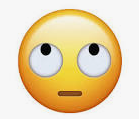
Lately, our world is populated with emojis. Heart, heart, heart. So many yellow faces with so many possible expressions. Symbols adding nuance to symbols. “What does this one mean,” I sometimes ask. I am a clumsy user of emojis. It’s yet a foreign language and I have been reprimanded for symbolizing the wrong thing; sending the wrong message. “But I love this whacky face!” I insist. I like using the wrinkled face, one eye open, tongue sticking out.

She rolls her eyes. I flash the I Love You sign. She rolls her eyes again only this time it is followed with a warm hug.

A hug. It’s universal. The best of all symbols.

read Kerri’s blogpost about ILY

like. support. share. comment. ponder. query. skip. swing. dance.
buymeacoffee is a symbolic offer to the creators of symbol in sound, on paper, and in other not-yet-named dimensions.

Seed The Pocket [on Flawed Wednesday]

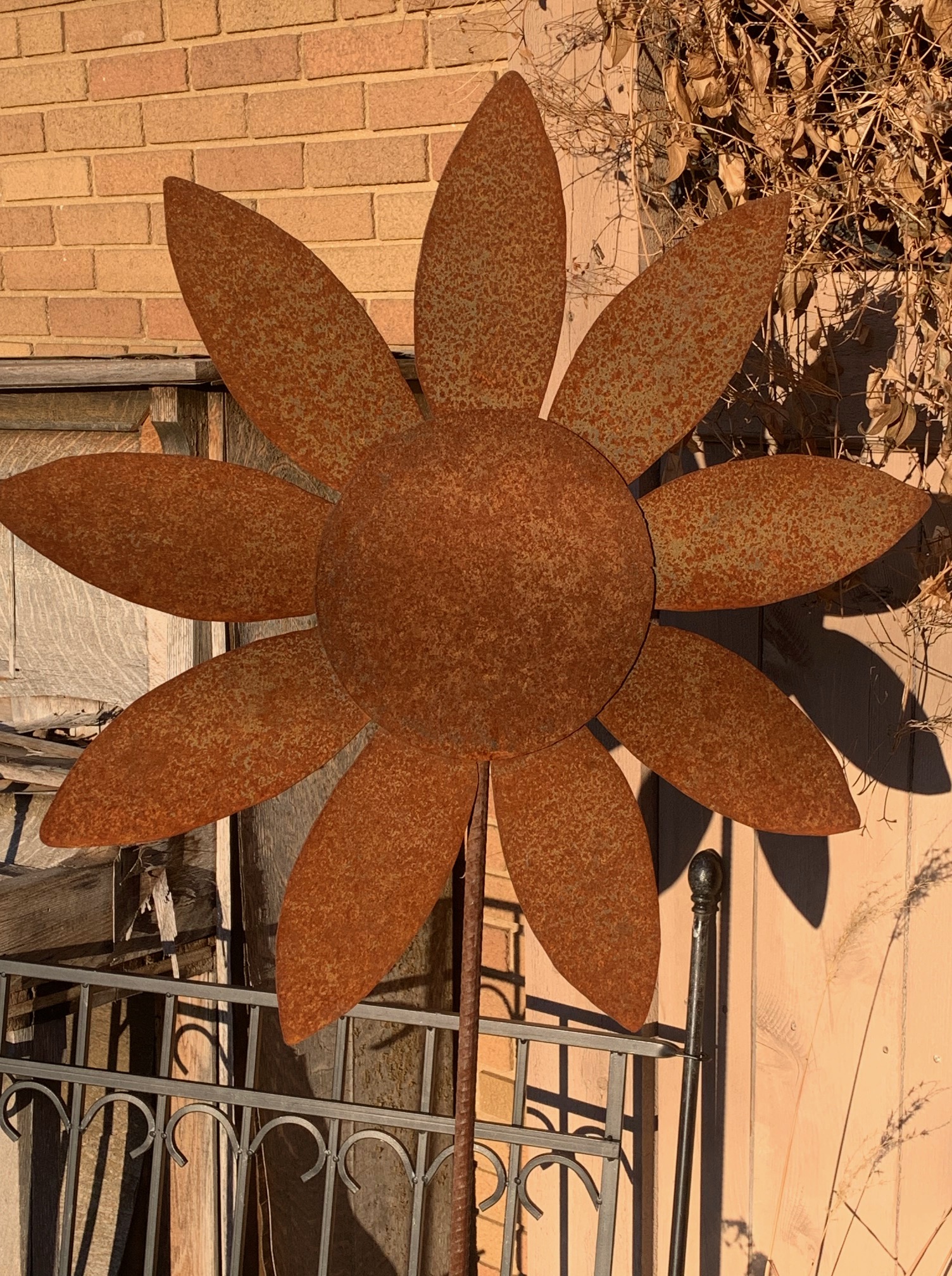
I’ve appreciated this sunflower for many years and until a month ago it never made me think of Ukraine. Now, that’s all I see. Thus, the power of a symbol. Sunflower seeds placed into the pockets of Russian soldiers by brave Ukrainian elders. “So, some good may come from your death.”

Walking through the antique mall, Brad spotted an ugly homemade sculpture. Golf balls with multiple screws protruding, spray painted and supported by wire rods. “Look, the coronavirus!” he exclaimed. Three years ago spheres with spiky knobs would have made me wrinkle my brow but never associate the shape with a virus. Now?

And masks? Will we ever see a surgical mask without feeling the divide in our nation? A confederate flag paraded through the Capitol? Members of the Capitol Police beaten with the stars and stripes; symbols matter.

Every year more and more our written communication is reimagined with emojis. Visual symbols. The new Ideogram. A thumbs up. A heart. Laughing face. Saying more with less or at the very least opening up our communication to broader interpretation. I find that I’m symbolically rolling my eyes more and more. Exclamation point. HAHA! Know what I mean? Winky face.

Leonard Shlain wrote some remarkable books about how our brains are wired by how we communicate; he posits that linear language, the introduction of writing drove us into our left brains and away from our holistic right. Perhaps in our movement back toward the ideogram we are rebalancing? A course correction or returning to center? It takes more than a few years for brains to rewire. Our descendants will, no doubt, either write books about it or communicate their thoughts through a combo platter of alphabet and pictograph.

Either way, we can only hope they grasp the meaning of the peace symbol. Or, at the very least, learn how to give it more preference than the dollar sign. Or, better yet, figure out how to make peace profitable. Can you imagine? Certainly there will be a symbol for that.

Until then, sunflowers in the killing fields. Sad face. Broken heart.

read Kerri’s blog post about THE SUNFLOWER

Wander In Wonderland [on Two Artists Tuesday]

I’ve re-read his email several times. Skip’s explanation of the development of the computer. Subject/Object. Noun/Verb. Items/Action. It’s a story of cause and effect. This causes that. I’ve learned more from this single email than from my very expensive graduate degree. And, it’s sent me down the rabbit hole and I am currently in a world easily as miraculous as Alice’s Wonderland.

Does the moon cause the tides? It does if you are an English-speaker. Causation is the foundation structure of the English language. An action needs an initiator. The noun is king. He kicked. The sea rocked the boat. The moon causes tides. If you speak Mandarin, the moon and the tides are inseparable, not perceived or described as separate events but as interconnected. The same dance, differentiated forms.

Where does an action begin? A consequence end? I warned you. A rabbit hole.

Our perception of the world has everything to do with the language we use to describe it. Our creating of the world has everything to do with the language we use to imagine it. In a world where actions are separate from items, verbs from nouns, this causes that, it’s easy to believe that order is separate from disorder, cosmos is separate from earth, humans are separate from nature. Death is separate from life. Is it?

Each year that passes I’ve noticed the world of written communication includes more emojis and fewer words. Attention spans are shorter – mine, too. Tweet and text. Images carries the bulk of the message. If you could see the analytics on my blog you’d note that if I use more than 600 words, you are less likely to read what I write. We are slowly moving toward ideograms and slowly away from alphabets. Whatever will we do, what might we see, when nouns and verbs blend into image? When the eyes of dedicated separation begin to see through the eyes of interconnectivity – or, as Skip says, “When actions become central.”

It’s called a Wolf Moon, I read, because wolves are particularly loud and vocal during the first months of the year. One questioner asked if the moon causes the wolves to howl. Noun/Verb. Subject/Object.

read Kerri’s blogpost about THE WOLF MOON