Yes. It’s Like That [David’s blog on Two Artists Tuesday]

I used to wonder how Emily Dickinson, living most of her life in the isolation of her family home, could write poetry so soul-expansive. Her world of experience was impossibly narrow yet her view into the human heart so broad and deep. I am no longer confused about the limitlessness available in a tiny garden. There is more life teeming in our small backyard than I can possibly comprehend.

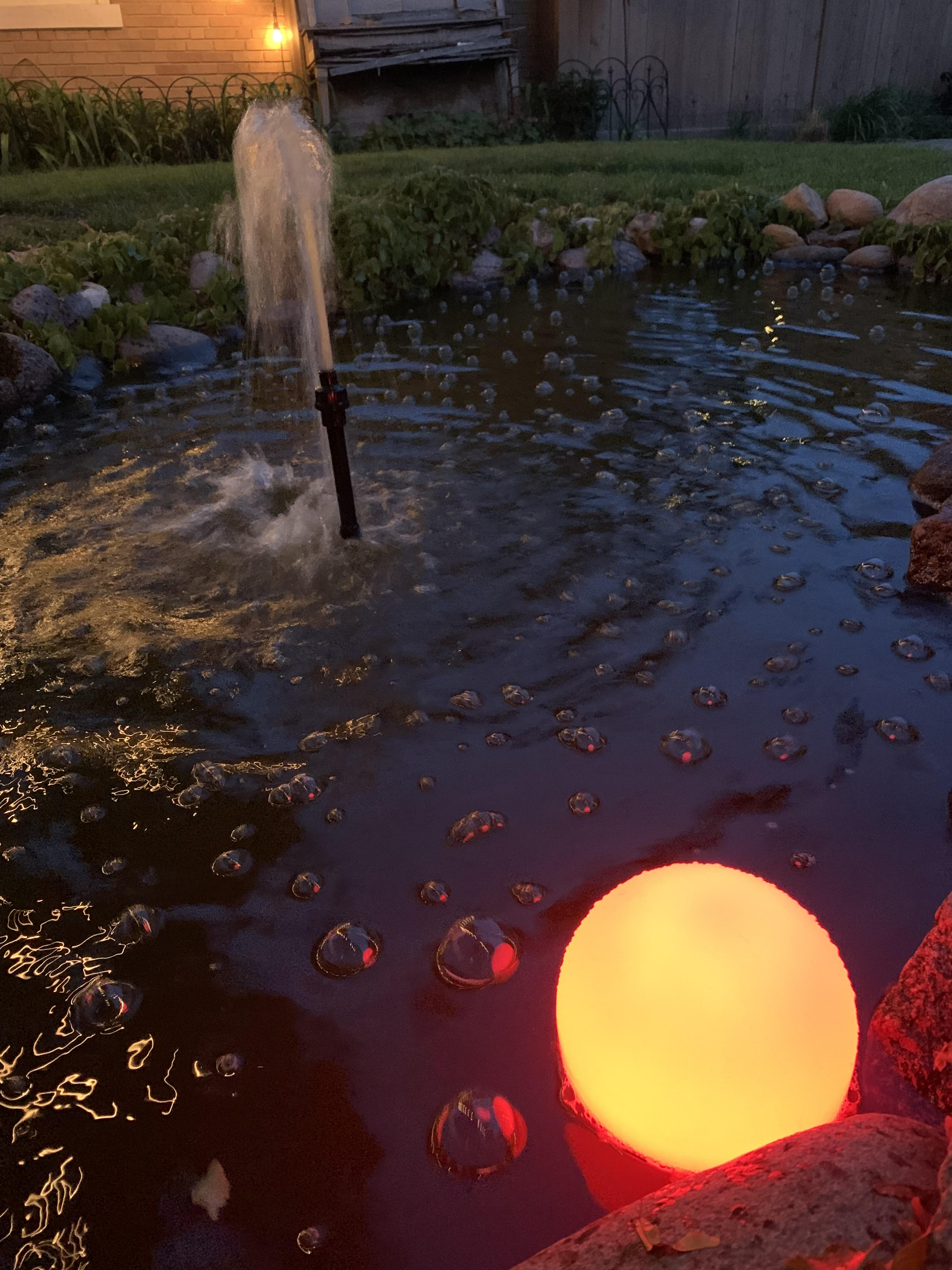
It had been years since we gathered with the Up-North gang in our home. They commented that our yard was “zen”. It’s true. We’ve come to think of it as our sanctuary. A creation borne of Covid isolation, of necessity during the pandemic, we brought our full attention to the only place in the world that seemed safe. Our yard. Over long winter months, sitting at the black table in our sunroom, we stared into the backyard. We watched the patterns of the birds and discovered the nests of bunnies and chipmunks. We watched with awe the subtle changes of seasons and the play of light. We wondered how we could make our safe space more comfortable for us and amenable to the plants and animals. We dreamed. And slowly, throughout our isolation and beyond, we carefully attended to our peace-of-heart. Is it no wonder that we now adore sitting in our yard, daily trying to comprehend the abounding life within our eyesight?

Emily Dickinson wrote her poems from just such an expansive place. Lately I feel an affinity with her. More than once, lost in wonder, I have thought, “How can I possibly describe what I’m seeing and feeling?” I understand, like Emily, it’s not possible to capture, but isn’t that the artist’s job, the poet’s errand, to somehow express that which is beyond our capacity to grasp? To bring hearts and minds together through a poem or play or a composition, so we might together whisper, “Yes. It’s like that.”

read Kerri’s blogpost about THE ORB

share. support. like. comment. subscribe. we appreciate it.

Check The Resale [on KS Friday]

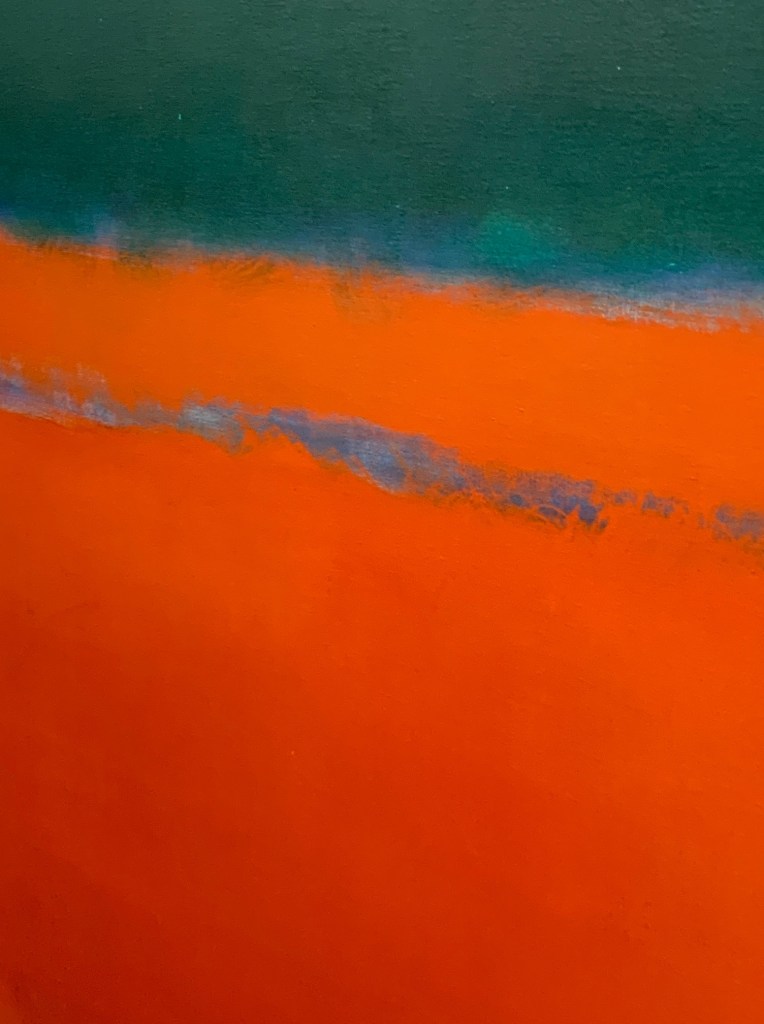
“Although Rothko lived modestly for much of his life, the resale value of his paintings grew tremendously in the decades following his suicide.”

The premise of this sentence made my jammies bunch-up. This wiki entry might have been written about Van Gogh. “Lived modestly” is a euphemism for “poor.” My favorite stereotype: the poor artist.

William Blake also lived modestly; he’d be shocked at the “resale value” of his work now. Nothing brings valuation to an artist’s work like the sudden end of the supply. Blake’s life came to a natural conclusion, so at least there’s that.

How do we know something has value? Resale, of course. Commodity. Soul reduced to a bottom line.

.003 percent of the nation’s budget goes to the National Endowment for the Arts. Valuation. If you desire to truly understand the phrase, “lived modestly,” visit your local not-for-profit arts organization. They’ll heap sincere gratitude upon you if you donate a ream of paper.

As an exercise in understanding soul, ask an actor or painter or dancer or composer the most obvious question: why do you do it?

Their answer will have nothing to do with resale value or commodity. Keep in mind, that doesn’t mean that they don’t want to be paid. Imagine Van Gogh’s answer. Or Mark Rothko’s. Emily Dickinson’s. Wouldn’t you love to know what they knew, see what they saw? Attempting to stand in their shoes, to see what they saw, is the reason that their resale value is so high. They connect us to something greater than commodity.

A caution: the next time you ask yourself, “What’s it all about?” be careful to direct your question to your inner Mary Oliver rather than your inner Elon Musk. They serve remarkably different gods.

My favorite quote of late: “And while a hundred civilizations have prospered (sometimes for centuries) without computers or windmills or even the wheel, none have survived a few generations without art.” David Bayles & Ted Orland, Art & Fear

.003%. That equates to an amount far less than Jeff Bezos’ tax bill. As a percentage, that’s much more than Kerri gets paid for a single spin of one of her pieces on your favorite streaming service (.000079 of a cent). Spotify, Pandora, and the rest are making out like bandits while the independent artists continue to “live modestly.”

What’s the real value of a nation that so desperately undervalues its art? I guess we’ll just have to wait for the postmortem resale.

Kerri’s albums are available on iTunes and streaming on Pandora

read Kerri’s blogpost about ROTHKO

every breath/as it is © 2004 kerri sherwood

Watch For Turtles [on DR Thursday]

“The art of living… is neither careless drifting on the one hand nor fearful clinging to the past on the other. It consists in being sensitive to each moment, in regarding it as utterly new and unique, in having the mind open and wholly receptive.” ~ Alan Watts

The ferns have returned. Last week they were sharp tendrils poking through the leaves and earth; little green aliens. A mere seven days later, they are over three feet tall, fern-flags unfurling.

Driving to our trail we saw a turtle crossing the road. Kerri whipped a u-turn and I jumped out of the car, picked it up, expedited its journey, moving it from the pavement to the grass. There’s something special about the turtles. Throughout March and April, while walking on our trail, we’d cross the bridge over the Des Plaines River, and look for the turtles’ return. The turtle in the road was our first sighting of the season. Later, on the bridge over the river, we saw a dozen. “They’re back!” she said and smiled.

Lately we’re given to walking the same trail. We’ve seen it change through several seasons. We followed our loop last week and I swear, this week, it’s an entirely different trail. The trees are flowering. The trillium are showing their purple.

I used to wonder how Emily Dickinson thrived looking at the same garden for years and years. How did she write such beautiful poetry with such a small window to the world? Now I know that her world was enormous and my question was too small.

“Hope is the thing with feathers…”

read Kerri’s blogpost about FERNS

iconic © 2010 david robinson