There Is Wisdom In Dancing

TODAY’S FEATURED THOUGHT FOR HUMANS

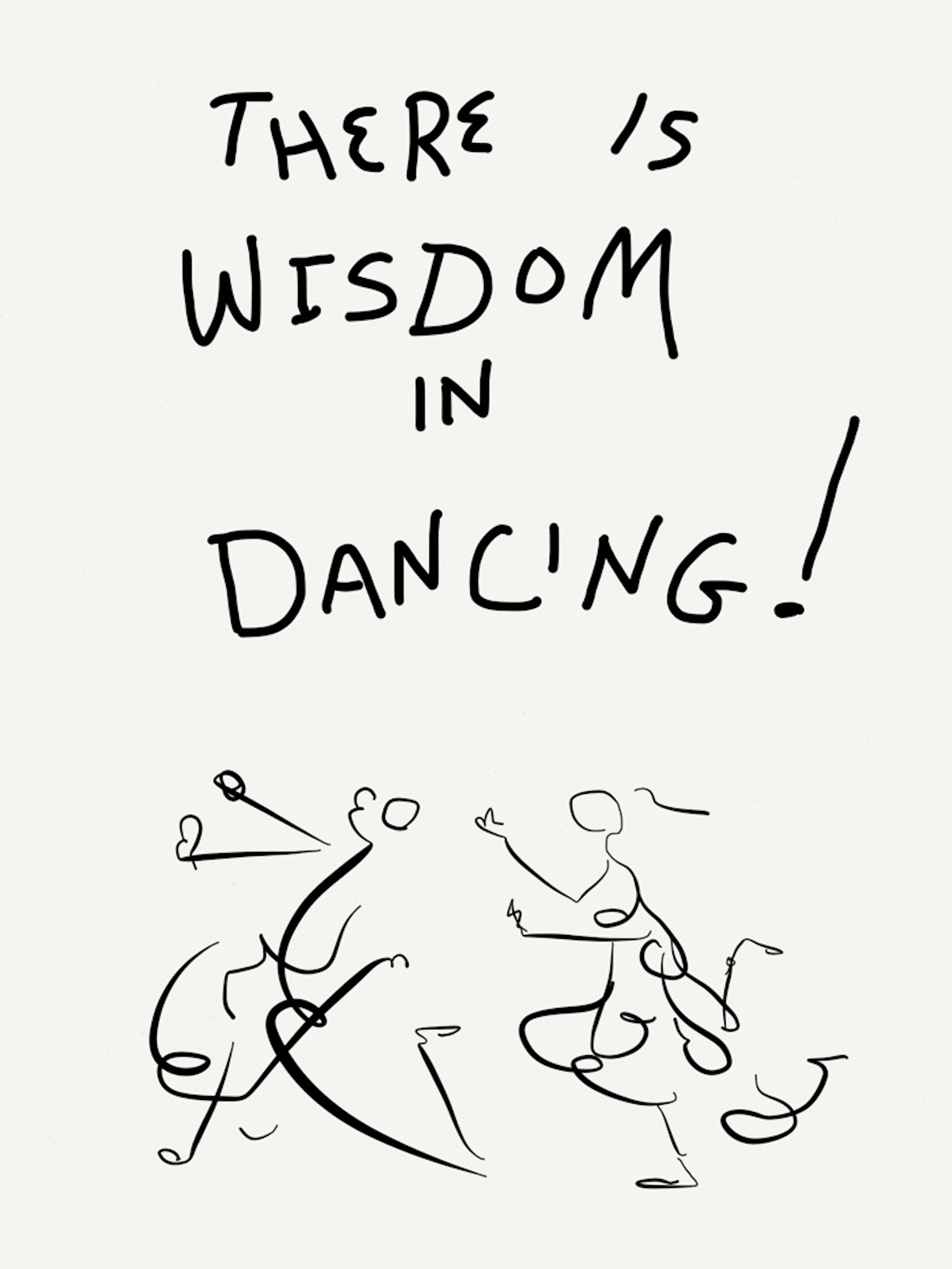
There is wisdom in dancing

To restate an old notion: knowledge is not wisdom. And, often times, our reliance on knowledge blinds us to wisdom (for instance, passing a test has little or nothing to do with learning). My mentors taught me that the toughest thing in life to master is relationship. The reason: relationship is at the heart of everything we do whether we acknowledge it or not. Life IS a relationship. Education, business, art, spirituality, leadership, management, self love, economics, agriculture, kindness, gratitude… are all relationship skills. Wisdom is found in the fields beyond your thinking. Get onto the floor of life and dance.

TO GET TODAY’S FEATURED THOUGHT FOR HUMANS, GO HERE.

Sometimes It Takes More Than A Text

TODAY’S FEATURED IDEA FOR HUMANS

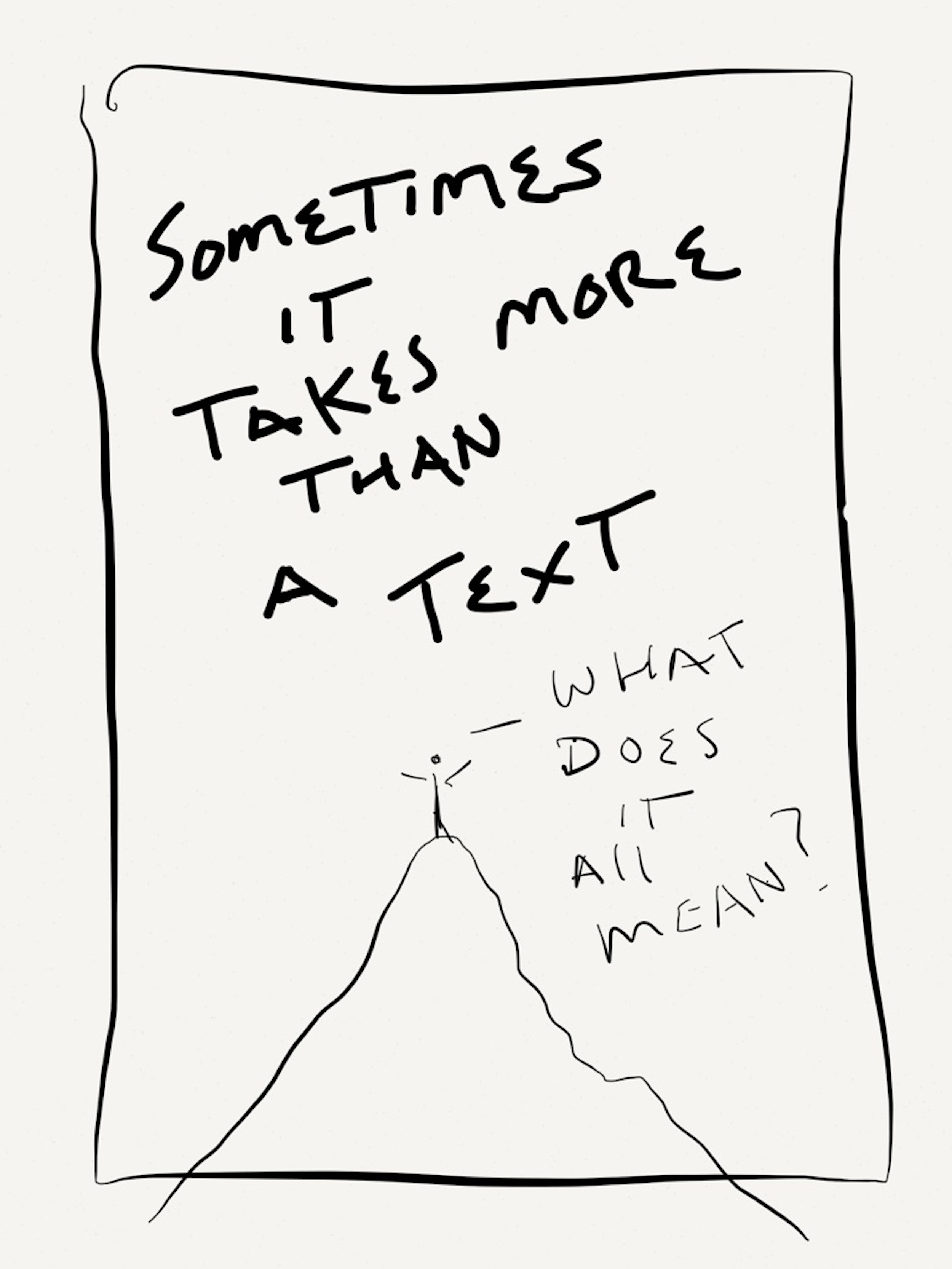
Sometimes It takes more than a text

In a recent post I wrote that we are often slaves to brevity. We want quick and easy answers to life’s big questions. Peter Block wrote that, in 30 years of consulting with businesses, he was routinely asked “How” but never asked “Why.” Relationship is at the heart of almost every big question (like leadership, management, marriage, self-love, the sacred,…) and, in relationship, there is no shorthand.

FOR TODAY’S FEATURED PRINT FOR HUMANS, GO HERE.

Reach Through Time

TODAY’S FEATURED PRINT FOR HUMANS

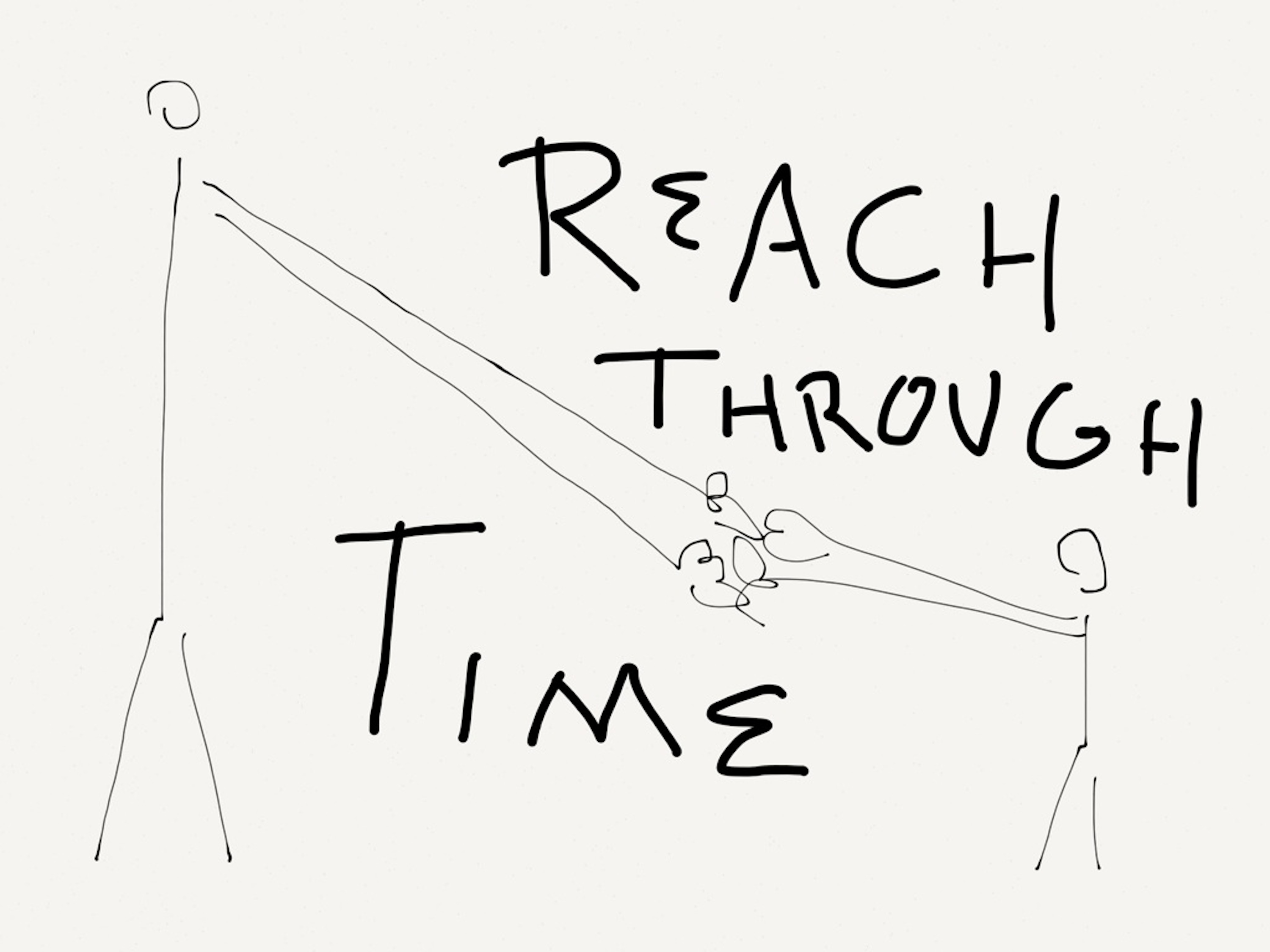
Reach Through Time

FOR TODAY’S FEATURED PRINT FOR HUMANS, GO HERE.

Step Into The Unknown

Step Into Unknown with Sig

FOR TODAY’S FEATURED PRINT FOR HUMANS, GO HERE…

Dance With Sherry

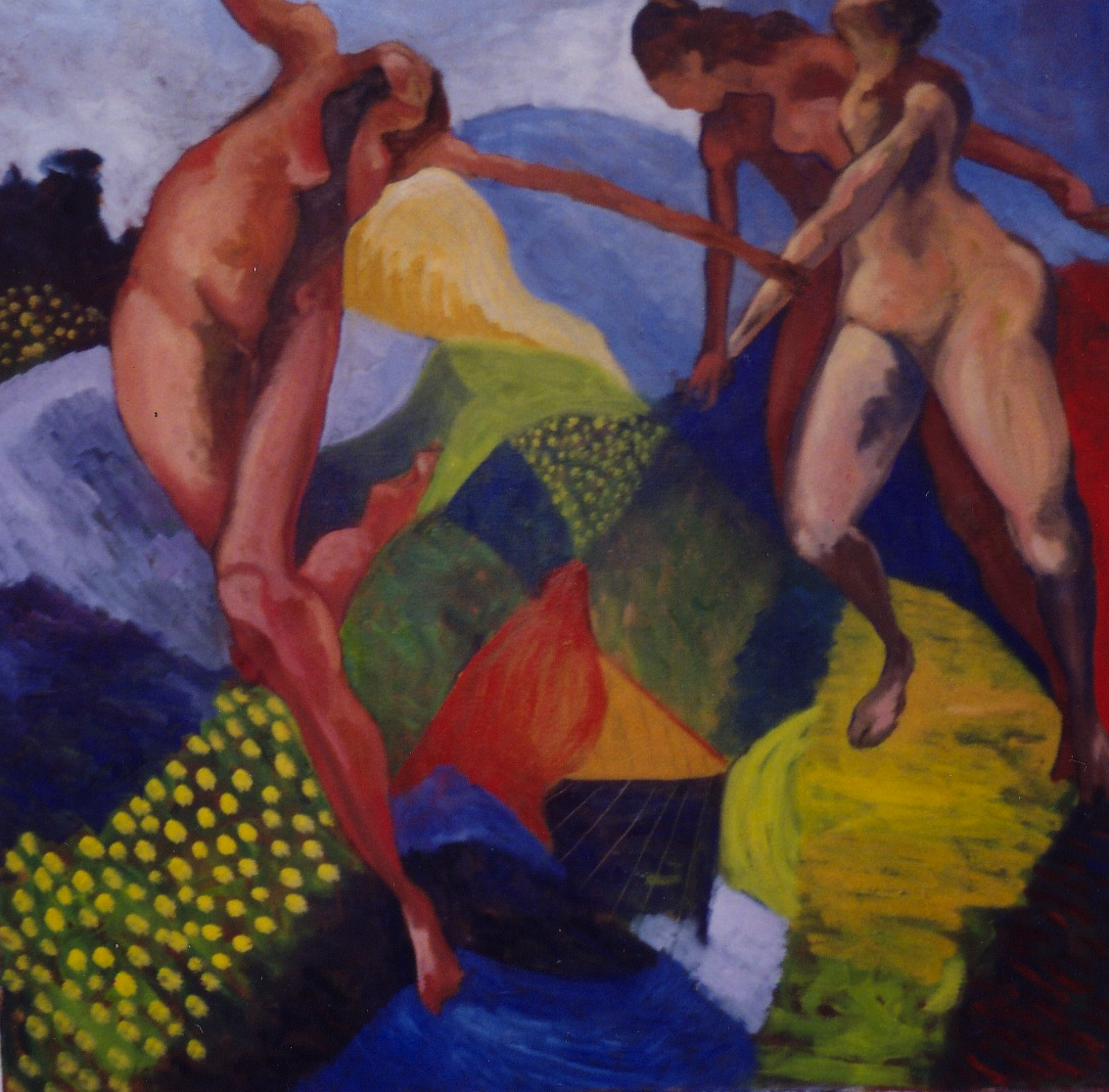
A painting from the archives. I call it 'Revelry!'

A painting from the archives. I call it ‘Revelry!’

Sherry was killed in a car wreck many years ago. It was ironic. She had a severe food allergy and was pronounced dead more times than she could count. Every time she went out to eat she rolled the dice. And, because she had been back and forth over that dark line so many times, she never took a day (or a meal) for granted. Death walked with her so she was awash in the appreciation of life. Sherry never missed an opportunity to laugh or dance or shock people. She was a one-person party and her enthusiasm was infectious.

She was a true friend and a colleague and took the plunge with me when I wanted to start a communications academy (teaching core curriculum through experiential processes; with students we made movies, plays, performance art pieces, poetry slams and ran businesses. It was not only a blast but hugely successful. We created things as opposed to studied things. The only trouble I ever had was getting the students to go home). Initially, the academy was a risk but she was quick to throw herself into the chaos and brought her friend Linda kicking and screaming with her. Both were extraordinary English teachers looking for a better way to teach. We were like adventurers in the wilds of education, blowing up old models and exploring new territory. It would be impossible to do today; innovators are nailed to the floor by the standardized master-tests that they must serve.

The last time I saw her she said, “This is the last time you’ll ever see me!” She had a Cheshire grin and I protested, “Why? Are you planning on avoiding me!” She leaned in so no one else might hear and said, “I doubt I’ll be alive when you come back.” I told her not to be stupid but, as usual, she was right. She also asked me to not come back for her funeral. “Let this be our goodbye,” she said.

Kerri and I have been cleaning out the house, purging years and years of boxes, clothes, and…stuff. We are making space for new things. Each load that goes out the door is matched by an opportunity or insight that flows in. Not only are we cleaning out but we are reaching back in time and visiting old friends and extraordinary moments. More than once we’ve sat to share photographs or letters, “This is what I used to look like,” or, “Remember I told you about my friend…., this is us 20 years ago.” For some reason, Sherry has been with me today. I have no photos of her and no letters but I have terrific memories. I’ve been meditating on joy all day and she was the embodiment of joy. She was the queen of mischief and bold leaps of faith. “Life is never sure!” she’d giggle. “You only have today so dance it or get off the floor!” she’d shout, punching me, her Cheshire grin breaking across her face before erupting in gales of laughter.

title_pageGo here to buy hard copies (and Kindle) of my latest book: The Seer: The Mind of the Entrepreneur, Artist, Visionary, Innovator, Seeker, Learner, Leader, Creator,…You.


Yoga.MeditationGo here for fine art prints (and other stuff) of my paintings.

See The Force

from my children's book, Peri Winkle Rabbit Was Lost

from my children’s book, Peri Winkle Rabbit Was Lost

Bill is a board member for non-profit education organization and is forming a case for changing the curriculum. He’s asked me to help him shape his argument. The students going to the organization’s classes did not fare well in the public schools. As Bill wrote, most of the students are interested in the arts and there are no arts available. He wrote that the curriculum is mostly “traditional.”

Many years ago, my mentor, Tom, told me that the alternative schools were filled with artists, so Bill’s observation is not surprising. Anyone familiar with Howard Gardner’s work will recognize the notion that people learn in different ways. Desks are torture chambers to kids who need to move or manipulate things in order to process information. I was one of those kids and I can tell you that the word “torture” is not an overstatement. Even today, sitting is unproductive time for me. I do my best thinking while I walk or while painting. Staring out a window is also highly productive: after all, the imagination is a fancy dancer.

Bill is making the same wrong assumption made by all people interested in educational reform when they first wade into the swamps of change: he’s focusing on the teaching and the teachers. If only the teachers could see the value of working experientially, engaging the students in a real pursuit instead of an abstraction, all things would be better. On the surface, that might be true. What he’s not considering are the forces in place that require teachers to default to rote exercises, compartmentalization, and standardization. In his case (and all cases), the teachers are not being reinforced (paid) to engage the students on a learning journey; they are being reinforced to raise test scores. The change he seeks is not in the teachers or the teaching. He must address the forces of compliance that teachers, just like their students, must obey. He must address the systemic assumptions that define the expectations.

This is the same conundrum that organizations face when they desire their employees to work in teams but are structured to reward individual achievement. The desire for team is in direct conflict with the systemic foundations.

As Arnie recently reminded me, 1) our system of education was not created by educators, so 2) the aim was never to educate but to standardize. These two aspects, the structure and the intention, are powerful forces to change. They now define our assumptions of what education should be. Systems are living things, and, as I learned in school, will fight to the death just like all other living things.

Bill has his work cut out for him. Changing the focus of the teachers is the easy part and can only happen when the focus of the system supports the deep human desire to learn.

Go here to get my latest book, The Seer: The Mind of the Entrepreneur, Artist, Visionary, title_pageSeeker, Learner, Leader, Creator…You.

Go here for hard copies.

Speak Out Of Turn

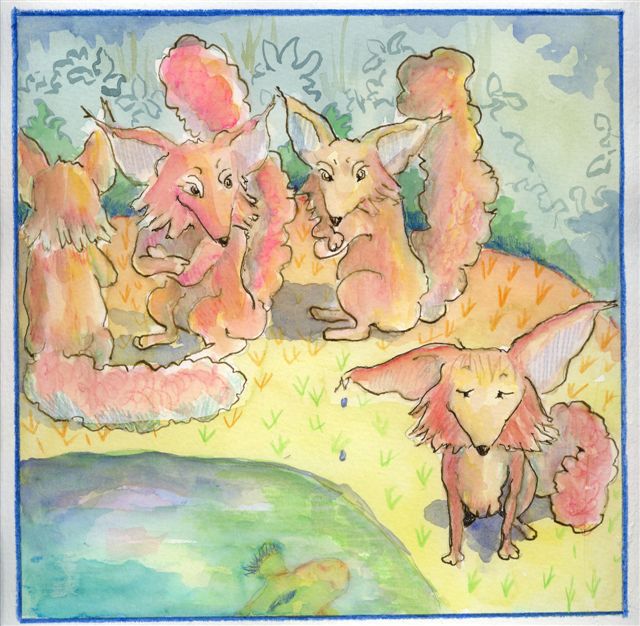
From my book, Lucy & The Waterfox. The waterfox is shunned for deviating from the norm.

From my book, Lucy & The Waterfox. The waterfox is shunned for deviating from the norm.

I’m not supposed to be writing about the system of education in America. It is a topic that I made off limits for myself because I was ranting too much. I finally allowed myself to admit what I’ve known for years but refused to accept. Our system of education is not broken and never has been; it was designed to create maximum docility and is succeeding magnificently. I decided to open the off-limits file because I just posted a question concerning education inspired by my friend and retired superintendent, Arnie Glassberg, and then this morning the same news story featuring the resignation letter of a teacher came across my screen three times. It is tragic to read and resonated with me: after a career playing in the fields of innovation and change in education, I now have a hard time driving by a public school without shuddering.

For grins I googled “origins of education in America (it was the subject of Arnie’s comment to me),” and came up with more than a few options but was struck by how many of the links topping the list concerned the reprehensible origins and intentions behind this thing we continue to call school. Several were articles, speeches, and youtube clips of John Taylor Gatto, a former New York state Teacher of the Year and most well known for his book, Dumbing Us Down. Here’s a bit from a speech he gave several years ago to a home schooling conference in Vermont:

The secret of American schooling is that it doesn’t teach the way children learn — nor is it supposed to. Schools were conceived to serve the economy and the social order rather than kids and families — that is why it is compulsory. As a consequence, the school cannot help anybody grow up, because its prime directive is to retard maturity. It does that by teaching that everything is difficult, that other people run our lives, that our neighbors are untrustworthy even dangerous. School is the first impression children get of society. Because first impressions are often the decisive ones, school imprints kids with fear, suspicion of one another, and certain addictions for life. It ambushes natural intuition, faith, and love of adventure, wiping these out in favor of a gospel of rational procedure and rational management.

Compare this quote (or read the text of his speech) with the teacher’s resignation letter making the news today. I’ve read a similar letter each spring for the past several years; a teacher – probably a great teacher – can no longer participate in the creation of docility in children and in themselves. They admit what they’ve known for years: the intention of they system they serve is the opposite of what it purports: they can no longer wipe out their natural intuition with the gospel of rational procedure (standardized tests).

John Taylor Gatto’s quote reminded me of the first few pages of one of my favorite books, Teaching As A Subversive Activity, by Neil Postman. It was published in 1969. Here’s a snippet from page 2:

In our society, as in others, we find that there are influential men at the head of important institutions who cannot afford to be found wrong, who find change inconvenient, perhaps intolerable, and who have financial or political interests they must conserve at any cost. Such men are, therefore, threatened in many respects by the theory of the democratic process and the concept of an ever-renewing society…Such men as these would prefer that the schools do little or nothing to encourage youth to question, doubt, or challenge and part of the society in which they live, especially those parts that are most vulnerable.

Retarding maturity has long term consequences: a population that is 1) incapable of the necessary self-awareness that comes with maturity cannot recognize how far it has drifted from it’s center and, 2) even if it did see the tower tipping, it is incapable of meaningful action as the conjoined twins of passivity (born of fear of speaking up) and divisiveness (do you really think the red state/blue state nonsense has no origin or implication?) have been so thoroughly thrummed into the national anthem.

To loop back a few posts to Master Marsh’s quote that keeps on giving: I’ve come to believe this is less about can and can’t than about the challenge of doing. And not doing is always easier.

Complaining is no substitute for doing. Neither is ranting, which is why education is off limits for me. I do not know what to do and have no belief that a butterfly will come from a system directed by a few small minds so hell-bent on remaining a caterpillar.

The only thing I can think to do is echo a sentiment offered by John Taylor Gatto in this short clip: the system is great at hammering the individual deviant but is incapable of handling a mass of deviants. To the teacher who resigned in frustration and all those who have, will, want to, or do not yet know they can, join hands. Become a mass and deviate. Do the thing that you’ve been so trained not to do: speak out of turn. Stop raising your hand and join hands. The kids can’t resign and they need you to, as Neil Postman writes, become a “shockproof crap detector.”

Go here to get my latest book, The Seer: The Mind of the Entrepreneur, Artist, Visionary, title_pageSeeker, Learner, Leader, Creator…You.

Go here for hard copies.

Serve Your Gift

Each night for the past 6 nights, k.dot has read to me a chapter from Deepak Chopra’s Seven Spiritual Laws of Success. I was moved last night when she read in the final chapter, the law of Dharma, guidance and advice that he’d given to his children. He taught them to meditate at four years old. He asked them not to concern themselves with making money but instead to identify what was their unique gift and how could they might best give it in service to the world.

I keep telling myself to give up educational rants. I’ve banged the drum of hope and change for years. I watched the hopeful, the dreamers, and the revolutionaries get creamed by a machine that cared more for dollars than for children. I watched Lisa slowly get pulled into the machinery and get crushed; she was brilliant. She cared for children over politics so, of course, she had to go. I might as well have led her to slaughter. We talked about it years ago, this possibility of systemic rejection. Never-the-less, I am culpable and no longer capable of looking at an educator and saying, “believe.”

Last night I found myself wanting this man, Deepak, to lead the education reform movement in these United States of America. What is the use of testing the pants off our children if the adults meant to guide them are clueless to the things that matter? Don’t you just want to scream, “Your soul is worth infinitely more than the job your will trade it for.” A score on a test means nothing if you can’t put your feet in the river and know that you are unique and divine. Owning a BMW is just as empty if you don’t know your unique gift and understand how to give it with gusto. Don’t just get through life. Live it!

If you can’t answer this question, “What is mine to do?” then the education system has failed you. If you are oriented to taking instead of giving your community is crumbling. Period.

Technology has wrought a whole new ball game and the only people who don’t know it are the policy makers pulling the levers of education. The kids know. They tolerate the system and then go pursue something meaningful.

Isn’t it a great educational north star to ask these two questions: 1) What is your unique gift? 2) How can you use it to serve the world? If these simple questions were the drivers of your education you’d spend almost no time in your life asking yourself if you mattered or if your work had meaning. You’d know. The people guiding you would value your self-direction and support you in the giving of your gift. They’d be invested in guiding you to personal power instead of controlling you.

Giving completely your gift is the path to fulfilling yourself and what is the point of education if not that? And, wouldn’t it be helpful to learn how to cultivate inner quiet while you are young? Navigating this noise world, operating from a solid center, is easy if you’ve developed the skill of deep listening. Self-direction and self-regulation are qualities of powerful people and come from listening. They are qualities that we are born with. They are ordinary. Power is ordinary. Divinity is ordinary. Losing it to the little stuff is…tragic.

[899. Join me in inspiring truly powerful people. Each day I will add a new thought, story or idea to support your quest and mine].

For a humorous look at the wonderful world of innovation and new ventures, check out my new comic strip Fl!p and the gang at Fl!p Comics.

Look For The Crossroads

855. Join me in inspiring truly powerful people. Each day I will add a new thought, story or idea to support your quest and mine.

I’m having an ongoing email conversation with Rafael. We are discussing educational change but more specifically asking how to change a culture of exclusion. I won’t go on a rant so let it suffice to say that the idea that we have equal access is just that: a nice idea but is nowhere apparent in the national fabric or the lived narrative of our nation. Our tax codes are created to keep the poorest poor and the wealthiest wealthy. Revolutionizing education is to revolutionize the economy and that is why it has become such a wicked problem. The forces in play do not favor the many. The voices in power represent the few.

I’ve spent a great deal of my life pushing against the public school system. And despite my capacity to fling around phrases like, “You can’t solve a problem at the level of the problem,” I’m only now seeing beyond the level of the problem. Inequity is institutionalized and deeply embedded in the national narrative so it is a fool’s errand to push on the institutions. As Buckminster Fuller advises, move toward what you want to create. This requires a new narrative. It requires to look at something other than what currently exists.

We go where we look. Where are we looking? We can hit division every time if we insist on seeing division. What’s good for business is not always what’s good for community and I often think that business wins the contest every time because we have a fleeting sense of community. We define our national health by the stock exchange. We are up or we are down. When I listen to the news or read the papers I am filled with the narrative of division. It is Us and Them on every page. This is not a new narrative. It is as old as our nation. Life, Liberty, and The Pursuit of Happiness refers to land ownership and at the time those words were penned those privileges were extended to a few white males with resources and no others. A system does what a system was designed to do.

A new narrative would be one of unity. A new narrative is one of inclusion. A new narrative would consider the health of the system – in fact it would demand a healthy system and that is impossible to realize if any segment of the system is impoverished. A healthy plant cannot grow in exhausted soil. This is not an abstraction. Grow a garden in polluted soil and tell me what you discover.

It feels as if we are standing at the crossroads of “Every man for himself,” and “I am my brother’s keeper.” Both of these phrases are philosophies of an economy. The great thing about a crossroads is that the roads cross. They come together and are neither this nor that. They are a meeting ground and places of commerce accessible to all. Meeting grounds are also the place where new narratives are created. They are places of possibility. We know that our political climate is averse to seeing crossroads. We do not have to go where they are looking. We are capable of telling a different story if we are courageous enough to look where the roads cross and decide to stand in the place of an economy that includes instead of an economy that excludes.

It Matters

808. Join me in inspiring truly powerful people. Each day I will add a new thought, story or idea to support your quest and mine.

From the department of subtlety in language comes a submission from Skip. During lunch today (His email said, “Meet me for a black and tan. We’ll call it late lunch or early dinner.”) During “lunch” he told me about a speaker who made the distinction between a student and a learner – to make the point that our systems of education (higher and lower) are not about learning. To be a student and to be a learner are not the same thing at all.

The distinction is in the assumptions beneath the words. The word “student” implies the need for teachers, curricula, etc. The deeper implication is in the necessary action: it is ‘other-directed.” The word learner, on the other hand, requires no teacher, no agenda, nor a curriculum. The necessary action is self-directed. The action can be facilitated, it can be mentored, it can be shared, but the imperative is within.

Why, you ask, does this matter? Isn’t this just splitting hairs?

Last year Skip and I met at a conference for educators on reinventing learning but in Skip’s words, it was not about learning at all. It was about reinventing teaching. The organizers were educators so their assumption set necessitated students and teachers in an expert driven relationship. The teachers know. The students receive the knowing. No learning required. There were incredible conversations that day and few had to do with learning.

Learning is a pursuit. It is a discovery path. There is nothing passively receptive about learning (note: the moment you separate content from method you end all learning and enter the realm of student/teacher).

It matters. The way we ask the question determines the possibilities we see or don’t see. None of our current questions in the field of education have much to do with learning. I walk in many worlds and in the business realm I regularly hear these phrases: “Why don’t my employees take any initiative?” “They expect to be rewarded for everything?” “It’s impossible to critique anything because they take it so personally.” “Everything needs to be an ‘atta-boy!” “They might do just what you ask but never go beyond the prescription.” Frustration abounds.

Well. We get what we create. Students look for permission, color inside the lines, need approval and fixate on their grade. Learners embrace challenges, step across lines, and know intrinsically whether or not their work is good. It matters.