Give Yourself Some Advice

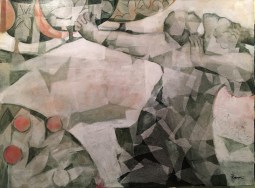
Horatio as a young man

Horatio as a young man

A few days ago I received an email from Horatio. He is an amazing filmmaker and gifted visual artist. We’ve wiled hours and days away talking about art and acting. He’s a treasure. His email was advice that he wrote to himself, the artist (what a great idea!) and with his permission, over the next three days, I will share it in segments. If you are impatient and want to read ahead, visit his blog or take a gander at his work at www.fidalgofilms.com. Here’s his email with the first portion of his Advice To Myself:

The evening after screening The Bath at Taos Shortz Film Festival in March, 2014, a very adept interviewer with the wonderful name Tamara Stackpoole (straight from Downton Abbey or Jane Austen?) asked if I had any advice to emerging filmmakers. My answer, as I recall:

“Let your teachers go. Just tell your own truth. Learn the craft – setup and payoff, three-act structure, and so on – and learn it well. But then let it go and tell your own truth, your vision. You’ll know it when you see it.”

When I woke the next morning, I realized that I had a lot more to say, and that it amounted to advice to myself. It follows:

You only can control yourself, which means your choices. You cannot control anything else.

Choose ethically, you will regret anything else.

The foundation of ethics is to respect others. Treat others as you wish to be treated. Be humble. Pride is the foundation of all the deadly sins, according to Dante and his mentor Virgil.

Your work is the essential ingredient of your life, an expression of your choices, your ethics. 

Connection to others is the essential mechanism of ethics.

A reciprocal connection of human to human (parent/child, student/teacher, artist/audience, friend/friend, or lover/lover) is the basic means to give yourself to others and to receive from them, to further yourself and others.

You will always be learning and practicing that kind of connection. You will never be finished. 

[to be continued]

Prompted by Horatio’s inspiration, I’ve started writing my version of Advice To Myself. It’s a great exercise and amounts to yanking the blankets on what matters to you. It begs the question: what will be your legacy? What might you write to yourself?

Go here to get my latest book, The Seer: The Mind of the Entrepreneur, Artist, Visionary, title_pageSeeker, Learner, Leader, Creator…You.

Or, go here for hard copies.

Embrace The Paradox

Mark Seely's gift to me: A Wordle of my blog

Mark Seely’s gift to me: A Wordle of my blog!

This is a landmark post: number 1000. When I started blogging I told Horatio that I feared I only had enough thought for 10 posts. He said, “If you can write 10, you can write 1000.” I wrinkled my brow in disbelief but it turns out that Horatio was right. With every step comes a new perspective. Kerri has a phrase I love: take down one tree at a time. In other words, if you can’t see where you are going, take the step that you can see; many single steps translate into miles of walking just as one post at a time can become 3 years of small thought-shares all in a row. What is a lifetime but a long series of days?

I’m writing this from a dining room table. All around me, covering the walls, are long strips of newsprint with a gathering storm of many colored post-it notes. The notes contain phrases, actions, like “Burn Your Trash,” or “Both Feet In, “ or “ Leave the Yuck Behind,” or, as you’ve already guessed, “Take Down One Tree At A Time.” They are story prompts. They are insight and idea prompts. Each prompt is associated with one of Kerri’s music compositions (she has 15 albums to date, with material enough for 3 more). They are building blocks for concert/storytelling evenings or keynote speech/performances. From the more than 60 post-it note prompts (and growing) we can combine any 9 to configure an audience-specific performance. The possibilities are endless. The viable themes are both unique and universal. Our umbrella title is Back To Center. We have a series of workshops to compliment the performances. The workshops illuminate the extraordinary moments and liberate the boundless capabilities of we mortals, we ordinary human beings. The big box is appropriately a prompt: Be A Ray!

Kerri and I are bringing our work together in a new form: Be A Ray!

Kerri and I are bringing our work together in a new form: Be A Ray!

As it turns out, I am a man of my time after all. The notion of a series of discreet component thoughts assembled to create a universal conception is taking over all of my processes – writing, painting, coaching, facilitating. It is the “many small steps making one large journey” philosophy of creation. It has taken over our world. It is contemporary: note the thought behind an App store or an Army of One. It is natural; cells do it. In the blog world it goes by the name of a “plug-in.” Build your own burger: design your car from the available components. It is the illusion of individuality in the midst of a constraint of choices. There is no arrival, just continuing process of expansive and interchanging capability. It is the Kahn Academy. Work at the pace that is appropriate to you. It is yoga: begin where you are, not where others are. It is what the old world of government process (ridiculously obscure tax codes), health care, education…the usual bureaucratic suspects and old school businesses do not understand. The world of rolling process has ascended; products and outcomes are obsolete before they hit the shelves. Story is more accurate than data (data is, after all, a type of story).

Nimble thinking requires nimble processes. Expansive living requires expansive thinking. Cathedrals are built one block at a time but the secret story of a cathedral is that it is never finished. It is always under construction, always changing, updating, repairing and modernizing. That’s the point of a sacred path. Stability, your sacred home, in this modern age is now found in motion, in a pure engagement with a moment. This is what we mean when we say, Be A Ray! Get into motion and focus your intention. Safety is never found in stasis.

Yesterday I wrote that a good life is marked by the capacity to stand solidly in the constancy of discovery. It is a paradox. Another prompt on the wall, one of my favorites, reads, “Embrace The Paradox.” Yes.

Go here to get my latest book, The Seer: The Mind of the Entrepreneur, Artist, Visionary, title_pageSeeker, Learner, Leader, Creator…You.

Or, go here for hard copies.


Feed The Spark

Marcia, DeMarcus, and me many moons ago.

Marcia, DeMarcus, and me many moons ago.

If I’d shared a context-less photo of Lake Michigan yesterday you’d swear I was standing on a beach in the Bahamas. The water was vibrant turquoise. It was intense and stopped me in my tracks more than once. It was a 180° turnabout from earlier this week when the lake was frozen over and looked like a sea of broken glass. Things change so fast. These extraordinary moments pass so quickly.

I talked with Marcia this morning. Today is her 85th birthday and she told me that she’s working on becoming present. “I’m not very good at it,” she said, “though I think my life would be so much better if I didn’t project myself into a made-up future and worry about the well going dry.” We laughed heartily.

Marcia was a great actress in her day. And when she stepped off the stage she became an exquisite costume designer. Her father, DeMarcus, was a pioneer in the theatre and a great painter and I am the lucky to carry forward their tradition of artistry. I know my lineage! It seems like yesterday that Marcia was designing a play that I was directing; she pulled me aside and said, “DeMarcus wants you to have these.” She handed me a painter’s box with his brushes and paint. That was over 25 years ago. If my house was on fire and I could only save one possession I’d take that box. It contains some of her renderings and some of his notebooks. It is sacred to me.

I dedicated my book to Marcia and her husband, Tom. Tom was my mentor and he passed away in August. Marcia said, “I’m reinventing myself now that Tom is gone.” I asked what she was discovering in her reinvention. “The creative spark never goes away!” she chirped. “I need a good project!” She told me that the final years with Tom were like cocooning because all of her energy went to caring for Tom in his dementia and failing health. “It was hellish!” she whispered, “I wasn’t doing any of the things that keep me fed. I’m ready to create again!”

Before hanging up I asked what she was going to do on her birthday. She chortled and said, “I have an excellent day planned for myself. I’m going to put new carpet in the studio and then I’m going to put my hands in the soil and feel the earth! I’ve no time to lose so you can be certain that I’m going to feed the spark.”

Go here to get my latest book, The Seer: The Mind of the Entrepreneur, Artist, Visionary, title_pageSeeker, Learner, Leader, Creator…You.

Get hard copies here.

Where’s Your Safety?

from my Yoga series

from my Yoga series

Bill said, “People must make time to smell the roses.”

We were talking about the stories, specifically the stories we tell that become self-made prisons. “It’s never made any sense to me!” he laughed, “I’ve never been able to work for anyone because the whole mindset seems like madness. For instance, I just talked to a man who believes he must work at his job for three more years so he might have a better retirement. He hates his job!”  He added, “I have a dear friend that sat down after a game of tennis and died of a brain aneurism. We never know, do we?” His question was actually a statement and I nodded my head in agreement. It’s never made any sense to me to give away this day of life for an idea of life in the future.

“Why do you think people do that?” he asked. Social norms. Expectations. Fear. Stability. There are many reasons. There are many good reasons. We have to feel safe. I used to tell groups that a child can’t play unless he or she feels safe. To the man holding on for retirement, trading today for a possible tomorrow makes him feel safe and a safety story is a necessity in a culture that has forgotten community. Without a tribe, people must fen for themselves and the sacrifice they make is their autonomy. It’s a paradox. It’s a story.

Bill and I tell a different story. I’m a terrible employee. I have too many ideas. I like to change things. I do my best work late at night or very early in the morning. The middle of the day, the normal working hours, are down time. Fog time. I feel safe by breaking patterns and changing rhythms. I feel safe when I don’t know what is coming. I value presence and feeling alive much more than retirement. I do not know what retirement means because my job has never been a thing that I do. To retire means to die. I’ll certainly do that someday but I see no reason to save up for it.

My story, my path is no better or worse than the man who gives up his today for tomorrow. We both create our idea of security and live from a set of assumptions that define a good life. We both make sense – we make it. Sense is not found like happiness is not found. Both ensue.

Bill looked at me and said, “Maybe asking why people give away today for tomorrow is not the right question. Maybe the right question is, ‘Do they know that they are making a choice?”

Go here to get my latest book, The Seer: The Mind of the Entrepreneur, Artist, Visionary, title_pageSeeker, Learner, Leader, Creator…You.

Go here for hard copies

Meet At “We.”

Many years ago I was watching Johnny direct a play. It was one of Shakespeare’s though I can’t remember which play. Suddenly, in the middle of the rehearsal, he was overcome with the recognition that he and his actors where carrying forward a tradition. They were engaged in an artistic tradition that stretches back centuries. They were carrying the torch in this lifetime so that they might pass the flame to the next generation. Johnny’s passion and recognition was infectious and his cast dawned to the reality that they were in service to something greater than their small parts in a singular production of the play. They became priests and priestesses enacting the ritual story for all ages.

They found deeper meaning to their work. It mattered. They found connection to both the past (the tradition) and the future (the legacy). Their work rippled in time and came alive in the present moment because they suddenly understood who they were relative to the past and the future. They located themselves. This play was theirs to do. Their service to the play and the tradition defined their purpose. Their art was their gift to the community and the community the served transcended time: it reached into the past and stretched into the future.

This is the purpose of the arts: to locate us in time relative to our traditions and our legacy. The arts orient us to the question, “Who are we?” The arts do not answer the question, there is no single answer, but they facilitate an ongoing conversation and exploration of what it is to be alive as a member of a community.

Artists are the keepers of the communal narrative. When the artists no longer occupy the center, the narrative dissipates and so does the society. Rules and laws can hold the pieces together for a while but disparity and self-interest are inevitable. They are harbingers of communal collapse. A common narrative is the beating heart of a healthy community.

No plant can live without it root and neither can a community. No person can prosper alone. The purpose is never the “I.” Purpose requires a target so it is by definition the “We.” Greater purpose extends to the past and the future, just as the roots of a plant reach deep into the earth while the branches and leaves reach to meet the sun. This reaching, this connection to past and future that meets and grows in the present moment defines us. It is the two directions of mattering that meets in the moment of “We.”

(895. Join me in inspiring truly powerful people. Each day I will add a new thought, story or idea to support your quest and mine.)

For a humorous look at the wonderful world of innovation and new ventures, check out my new comic strip Fl!p and the gang at Fl!p Comics.

Occupy Your Center

773. Join me in inspiring truly powerful people. Each day I will add a new thought, story or idea to support your quest and mine.

Robert is a gifted actor, director and teacher. We had a long conversation yesterday about actors and acting. He said that the art of acting is unusual because young actors in training don’t always recognize the necessity of technique. So, for instance, an opera singer would never expect to advance in his or her career unless they had rooted their voice in solid technique. A pianist would not expect to become a concert level musician without a solid technique. As Robert said, “Many young actors believe that if they feel it, if they connect the dots from feeling to feeling then they are acting. “Anyone can emote and call him or her self an actor,” he said, “but acting requires just as solid a technique as any other art form. It’s just not as expected or understood.” Robert recently told a young actor, “It does the audience no good if you feel it but they aren’t invited to participate.” Technique facilitates participation because it frees the artist to be present. The point of any art form is to share, to include, to transport. Artistry is never about the artist. It is always about the relationship.

Today in tai chi Saul-The-Chi-Lantern paired the beginners (me) with the more advanced students. We were doing a simple push hands exercise that I recognized as the technique beneath the practice. I had a revelation that shocked me to the core and inspired me to teach it to every artist that I know. In push hands, the idea is to empty of all resistance, to drop deeply into your center and use your partners force to knock them off center. As the advanced students told me, “The point of the exercise is to fail. Failing is the only way to find your center and empty yourself of opposition.” My revelation was this: opposition (resistance) is the act of giving another person responsibility for your balance. Literally, you invest your balance in their center. It is visceral. My partners easily tossed me off balance because I easily gave away my center every time I resisted them. When I (occasionally) found my center and emptied myself of resistance, I entered a balanced fluid center that shocked me in its potency.

I left tai chi today and went to see a student production of a Shakespeare play. The rivers of my conversation with Robert and my tai chi revelation met as I watched the young actors push and force and resist and reach for feelings. They did not know to include me. Their play was about them, not the story or the opportunity for relationship with me, the audience. Yet, the paradox, the moment of truth came after the play when I listened to their investment in what the audience thought of their work. They gave me their center because they shut me out of their play. Had I cared I could have easily tossed them off balance. As I left the theatre I thought, “Someone needs to teach them how to fail.” In that direction technique is found. In that direction is learning.

I wished the young actors had access to Robert or the advanced students in my tai chi class. If I keep at it in fifteen years or so I might have the capacity to keep my center. The young actors need to pretend that they can do it all now. They are oriented to the test (performing the words with feeling) and not the mastery.

Even though I know the 37 moves that constitute the tai chi form, I am only now capable of beginning. At this age, I am finally capable of understanding the relevance and necessity for solid technique.

Do As Lexi Does

620. Join me in inspiring truly powerful people. Each day I will add a new thought, story or idea to support your quest and mine.

“We don’t eat sticks, David,” she said to me. And, with a shake of her head added, “Ick!” Her 2 year-old eyes, brown and deep as a well to the center of the earth, looked into me to make sure I got the seriousness of the message. I did, so we went on to the next, “We don’t eat stop signs, David. They are no good!” I shook my head and said, “Ick.” She shook her head with me. “Ick,” we said together and made faces of distaste and disdain.

At two years old, Lexi already has a vocabulary that matches mine. She will soon outpace me and I will need to look down at the 3 year-old version of her and ask, “What does that mean?” She will sigh, choose to have patience with me, and slow down long enough to explain. At dinner the other night I attempted to secure my superior word status and set a trap for her: I used the word “pterodactyl” and she looked at me (again with those eyes that look into my soul), spotted my trap, all but yawned and said perfectly, “pterodactyl.” Then, as if to torture me, she said, “hanguber (hamburger).” It is refreshing to be with a little Buddha that has yet to learn the word “can’t.” Everything is possible and trying is everything. It is infectious; I have seen otherwise constipated adults giggle and scribble outside of the lines in the presence of a 2 year-old. With Lexi, I make faces and outrageous bear sounds (do you know the sound a bear makes when it laughs?); hang out with us and you are certain to hear it.

Picasso famously said, “Every child is an artist. The problem is how to remain an artist once we grow up.” He is also said, “I am always doing that which I cannot do, in order that I may learn how to do it.” With two quotes he states the problem for living a good life and solves for it. Problem: how to remain an artist once we grow up. Solution: always do what you cannot do in order that you may learn how to do it. Hint: do as Lexi does and eliminate the word “can’t” from your vocabulary. Try with gusto! Mispronounce everything! Do what you have never done because you have never done it! Turn to the person nearest you and declare with awe and enthusiasm, “I kicked the ball, David!” (keep the “David” part even if the person closest to you is otherwise named; it tickles me to think that I will be the universal recipient of your unbridled enthusiasm. Note: that is not a trap).

Truly Powerful People (455)

455.
Join me in inspiring truly powerful people. Each day I will add a new thought, story or idea to support your quest and mine.

(continued from 454)

Alan: The point of meditation is to be more fully present (life is a meditation).
Diane: Imagine yourself as sacred and watch all the separations disappear.
Judy: We are nature observing itself.

Ana-the-wise once told me that my goal should be to make all the world my studio. In other words, to drop the notion that there is a single place where I create or am most creative; that my artistry is my being and not in my doing. This is a more powerful thought than it might first appear. It is a thought with serious traction especially when you are ready to drop any notion of separation – when going to church on Sunday does not a worshipper make. In other words church/synagogue/mosque etc. is not a place to go – it is every place and how you are in it matters. I cannot leave my studio and believe I leave my creative impulse behind without a serious cleaving of my self from my self. If all the world is my studio, if I am always in a sacred place, then the relationship I have with myself must be primary; the story-I-tell-myself-about-myself and the world needs to be conscious and intentional.

Diane’s lesson of developing a better relationship with your self (entertain the realization that you are sacred – try it), ignited within me a chain reaction of thought: 1) If I truly pay attention to the relationship I have with myself and give it as much nurturing and attention as I give other relationships, I learn that 2) my thinking matters. My thinking is how I interpret my experiences. I learn that my thinking can continue swirling in the reactive whirlpool (science tells us that the vast majority of the thoughts we think everyday are the same thoughts from yesterday – don’t ask me how the good folks in the lab figured that out but they did) or I can 3) learn to direct my thought. I can place my thought on what I choose. I can choose my thought. This is a muscle to be exercised not a bit of magic from a hat. You’d be amazed how many times a day I catch myself spinning in a drama-loop and say to myself, “Is this where I want to place my thought?” The answer is always “No.” And, when I ask the question my preferred thought placement is always crystal clear and easily available. 4) Where I direct my thought matters because it determines the world I see and how I am in it. It is a creative act.

When I am in my studio I rarely “think.” I am in a quiet space, a still place, clear and alert and something “comes through.” Why would I limit that potent powerful way of being and confine it to the room I call my studio? Why would I not craft my life to be 100% in the studio?

Ana-the-wise is aptly named: All the world can be your studio. Diane knows it begins with the realization that you are sacred and should treat yourself as such. Alan understands that the point of this life (cradle to grave meditation) is to be fully present so you can do as Judy suggests: revel in nature observing itself.