Say Yes To How

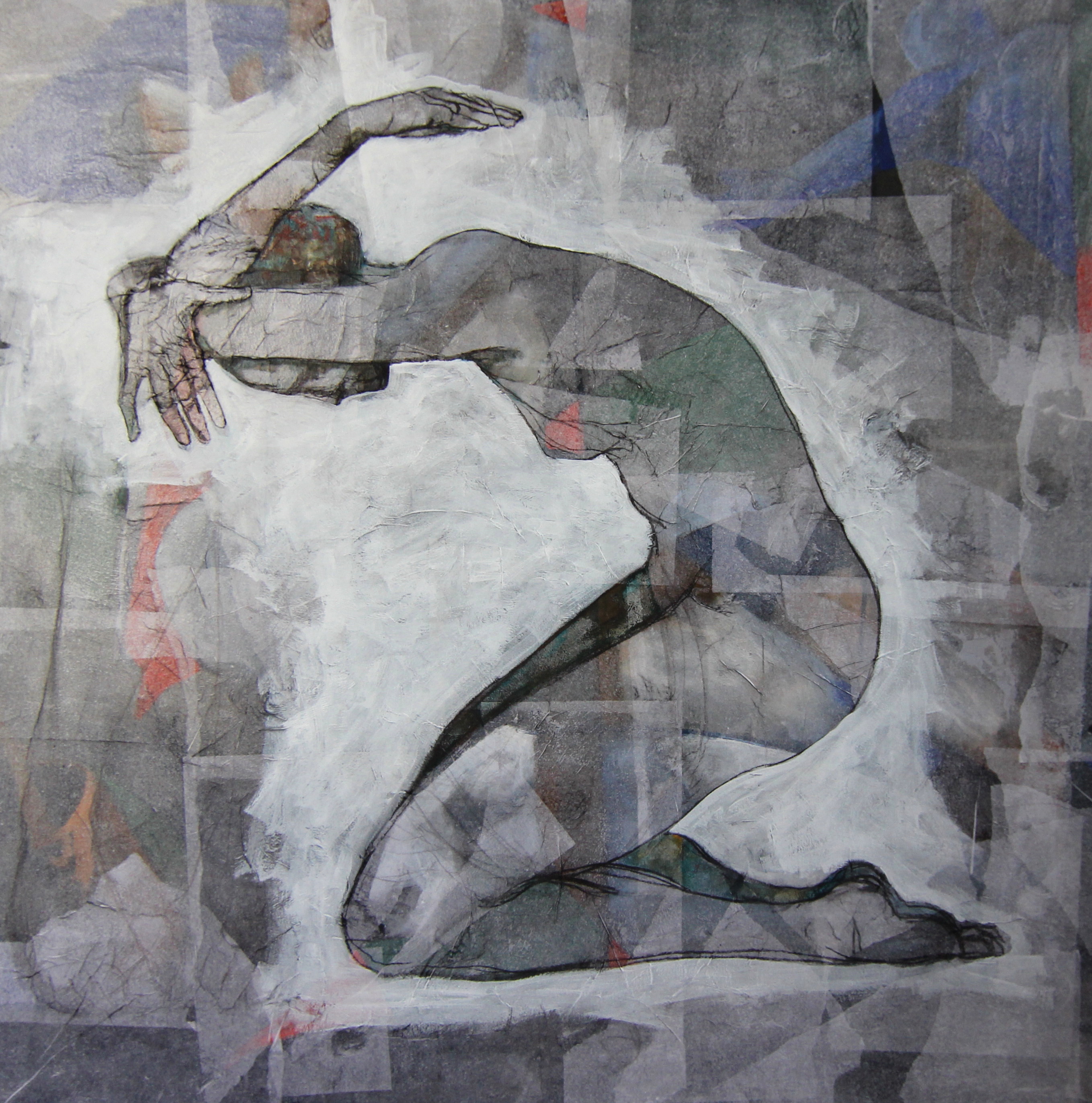
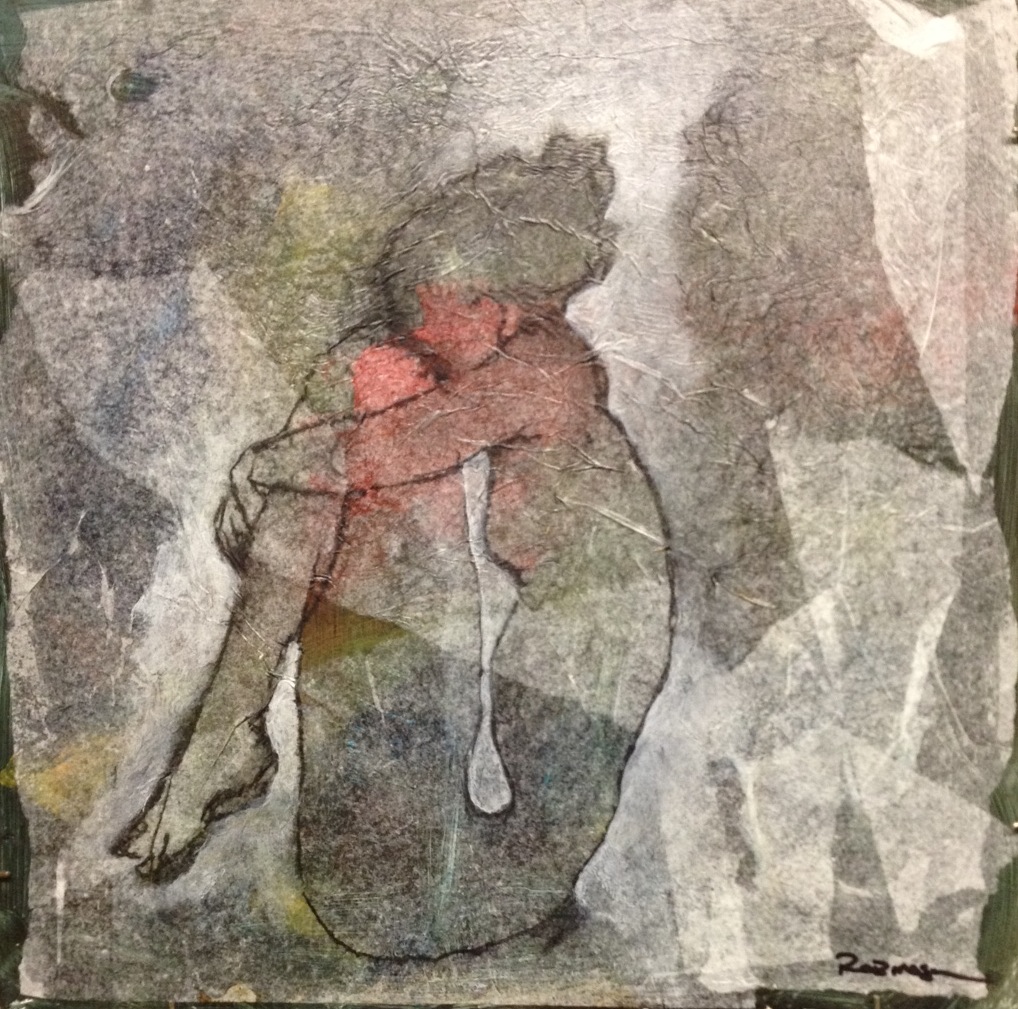
This is one of my first test paintings for the yoga series. It's small, maybe 10inches square.

This is one of my first test paintings for the yoga series. It’s small, maybe 10inches square.

I’ve spent much of the past week shooting and cropping photos of my paintings. I’m cataloguing. I’m gearing up to show again.

I took an extended hiatus from showing when I went on my walk-about. Actually, in the few years prior to walking about, I stopped showing except for open studio nights and the few opportunities that found me. I continued to paint. I drew a comic strip. I wrote a book. There was lots and lots of energy output but very little energy to calling attention to my work.

The process of shooting the photographs has been a process of rediscovery: I painted paintings and stored them. More than once, now, I’ve unrolled a canvas and exclaimed, “Ah! I forgot all about you!” It’s a paradox: it’s as if I stumbled upon the work stash of some long ago artist; each roll holds a surprise. Each roll also holds a homecoming.

Early sample from the Yoga series. 18" x 24"

Early sample from the Yoga series. 18″ x 24″

Because I’ve been painting but not showing, I’ve inadvertently created an opportunity! I have an intact series: my yoga paintings. This series is a great gift because I can track my growth, I can trace the development of a technique and a visual stream of consciousness. I can see the seed. I can see the the seed cracking open, the green tendrils that grew from the seed. I can see the blossom. And, there is more to come that remains yet unknown.

When I started the series I had no idea that I was actually starting a series. At the time I was bored with my work. A friend, an acupuncturist, asked me to create some paintings for his office. Bodies in motion. I was messing around with different surfaces so I took the opportunity to play. I thought few people would see the paintings so there was no pressure to produce. I actually practiced what I preach: I played. I loved the mess. The point was the process and not the product. No single painting was an end in itself. There was no thought to being good or investing in any of the games that make art a labored mental exercise. It was fun. It was a discovery path.
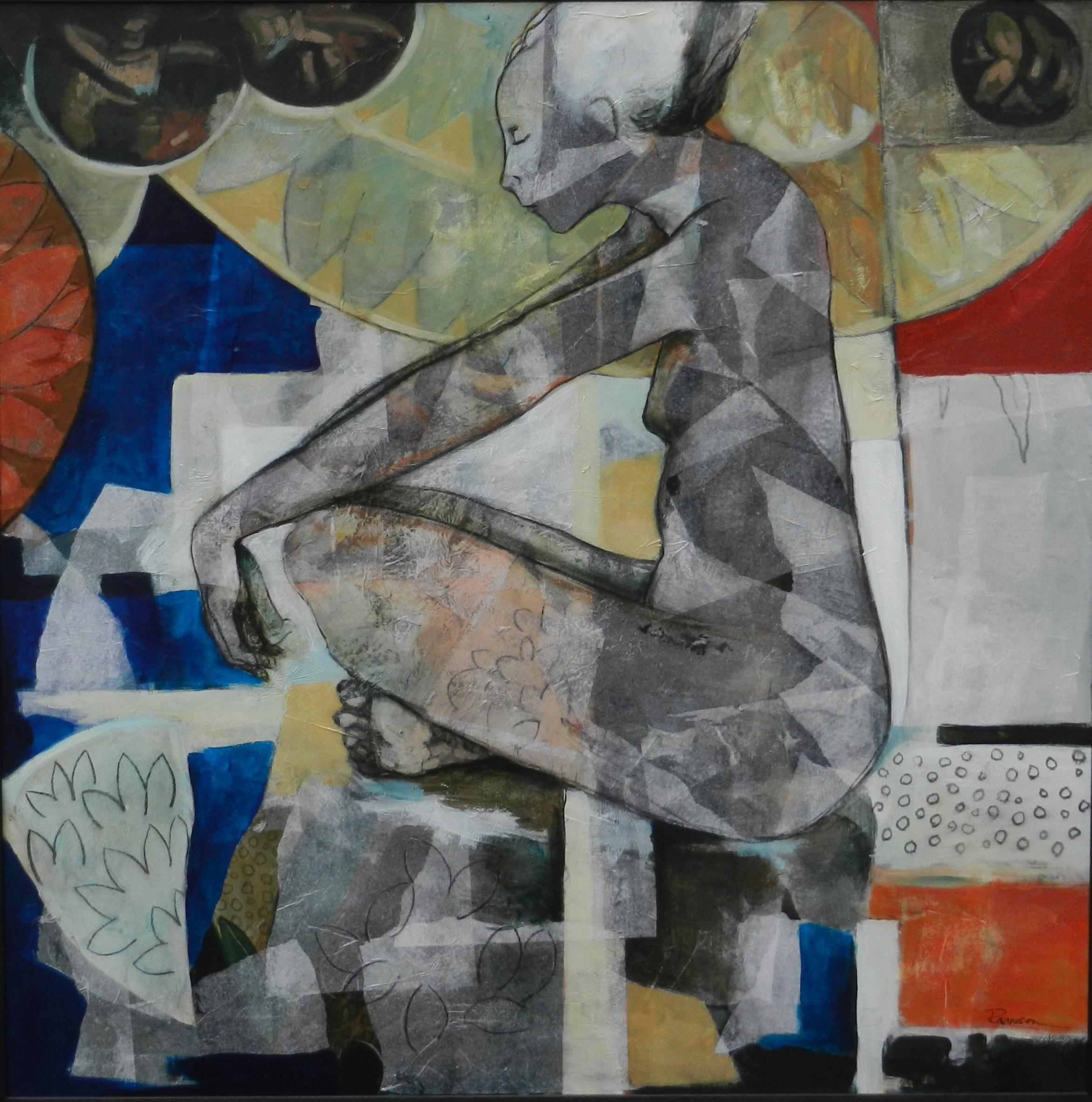
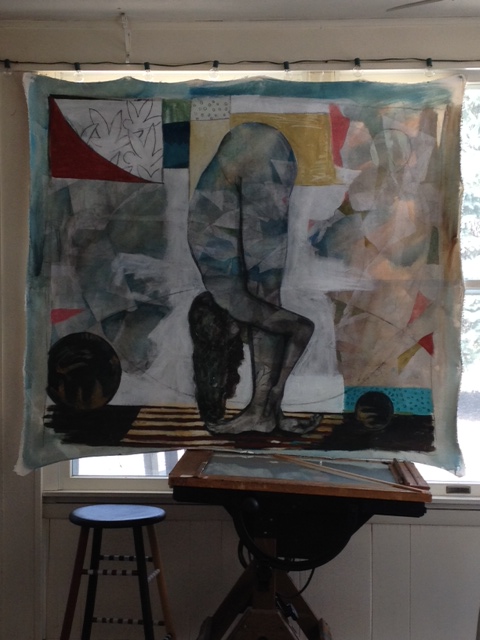
The Yoga series all grown up. This piece is  4' x 4'

The Yoga series all grown up. This piece is
4′ x 4′

It continues to be fun. It continues to be a path of discovery. The pieces are becoming more complex; the figures at first were suspended in space. Now, they exist in environments. The pieces started small. Now, they are quite large (and getting bigger).

I’ve been writing these past few weeks about the question “How?” I realized yesterday, as I shot the latest painting in the series, that over the past few years I’ve often asked myself, “How am I going to paint that?” The answer has always been a rich and vital, “I don’t have the vaguest idea! Let’s find out.”

The latest in the series. This piece is almost 5ft x 5ft

The latest in the series. This piece is almost
5ft x 5ft

Peter Block wrote a great little book entitled, The Answer To How is Yes. As it turns out, these paintings are my visual record of how I said and continue to say Yes to How.

Go here for art prints of my yoga series. The newest pieces will be available soon!


title_pageGo here for my latest book

Let Yourself Go

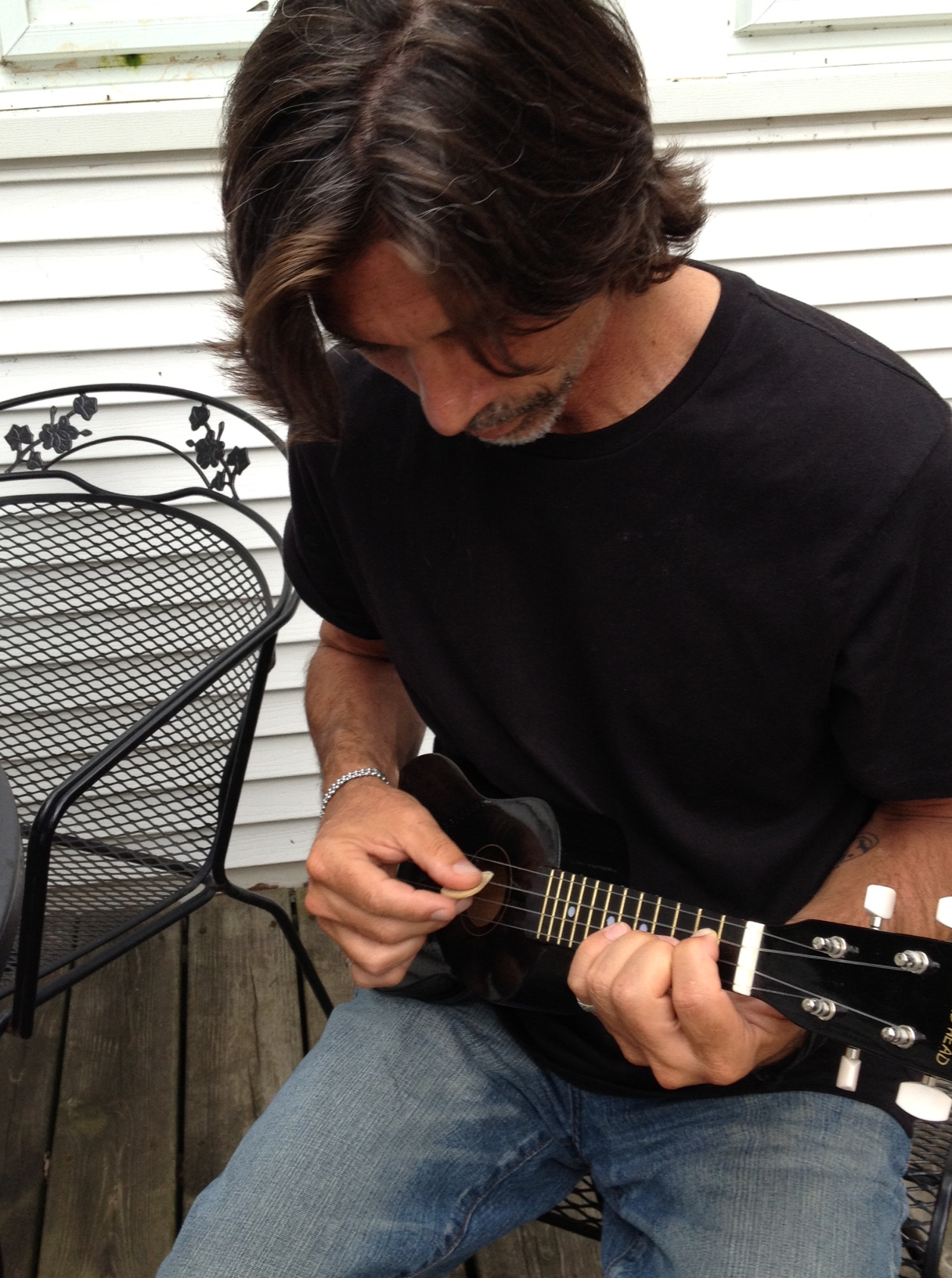
I have no idea how, but I'm making a mess of sound and will one day play the ukulele.

I have no idea how, but I’m making a mess of sound and will one day play the ukulele. Kerri says that I already am…

My meditation on the word “how” continues.

At our recent Summit in Holland, Alan and I asked the question, “What would you do if you didn’t have to know how?” It is a great question. The short answer is this: you’d figure it out. You’d try things. And if your first attempts led nowhere you’d try something else.

In this musing I have often written that “how” is something that is known at the end of the journey. We can’t answer “how” with any honesty until the story is played. Today I recognize that there are two distinctly different “hows:” 1) the explanation, “This is how I did it. This is how you do it. This is the “how” that presumes a path or a prescription. When dealing with this version of “how” I ask groups or clients to consider their life story and tell me how they got to this day in this place doing this job, etc.. The answer is mostly, “A clear path with a lot of happy accidents,” or something like, “I have no idea. I didn’t try.” Yes. Ask me how to paint a painting and I will tell you that I have no idea. I’ve painted a thousand of them and I can teach color theory or composition but I cannot tell you how to open to the muse, how to become a channel for something greater to come through. To paint a painting, to act in the play, to write the book, there is something akin to letting go. There is a divine surrender. So, how did you get to this place in your life? Divine surrender. Happy accident. Unstoppable forces.

If the first form of “how” is an explanation, the second is akin to giving permission. I have worked with a legion of blocked artists who set up studios, buy musical instruments, sign up for improv class,…, and then sit in their studio, stare at their musical instrument, and forget to go to class. When they call me, they tell me their story and always finish the telling with, “I don’t know how….” For my fee, I could say a single, simple word: start. Instead, what we usually do in our work together is find their internal permission. When they realize that their block has nothing to do with “how” and everything to do with the fear of being judged (“how” is an internal braking system meant to prevent starting), when they are ready to, as Saul would say, “Orient to their own concern,” they allow that their opinion of their work trumps all others, they give themselves permission. They start. They play.

Recently, a brilliant woman, an attendee of the Summit, a maker of incredible mandalas, sent me an email with a photo of the start of a painting. She asked for my advice. I wrote: make a mess. Paint on top of the mess. Then repeat. Today in my inbox I received her beautiful mess with a note that their would be more messes to follow. She started. She picked up a brush. She splashed some paint. She splashed some more paint in response to her first splashes. That is how art is made. That is how light bulbs were invented.

This morning I laughed when I realized the double definition of the phrase, “Let yourself go.” In common parlance, it is used as a negative, when people give up, when they stop trying to maintain their health or their appearance, “He really let himself go.” The second possible meaning is to start. To go. The next time someone is sitting in their studio and asks me the question “how,” I will respond like this: let yourself go.

Go here for my latest book. title_page

Yoga Series 7Go here for fine art prints of my yoga series (and more).

Give As Love

The stack of paintings sitting in my basement waiting for me to show them.

The stack of paintings sitting in my basement waiting for me to show them.

Sitting in the choir loft this morning I was at first disappointed that the stained glass window was silent. I was so full of questions – and have lately been so full of questions – and have come to look forward to hanging out in the loft, conversing with the window, while Kerri plays a service.

When I bring my questions the window always has something to say. The window offers a better set of questions or a startling reflection or a slap of insight. The window’s responses always come in the form of a message of return (return to heart, return to forgiveness, etc.). If I get quiet and ask my question, out of the peace, a conversation always ensues. Today, from my quiet, I asked my question about artistry, about my artistry, and I was met with an unusual silence. I wrinkled my brow. I wondered if my conversation with the window had come to an end or if perhaps my question was out of the scope of topics for a stained glass window.

There was a visiting pastor, an elder who’d been preaching for over 50 years. I sat up and paid attention when he began his sermon this way:

“Artists have a special gift. They help others see in a new way….”

His message was about love. Love, he told us, takes many forms and the form that love takes depends upon the unique gifts of the lover: a symphony is a gift of love, a painting is a gift of love. A plumber fixing a broken water main late into the evening is a gift of love. “What is your gift? he asked. Do you recognize it as love?

A few years ago, on New Year’s Eve, I visited a tarot woman at a bookstore in Denver. During our session she asked me a question that felt like a cold slap in the face. “You know god’s voice,” she said. “Why do you not use it?” I mumbled a lame excuse that dribbled into silence. “Why do you not use it?” she asked again.

Sitting across the table from the tarot woman, I knew without doubt that I have, my whole life, been a great servant to other people’s artistry but a lousy servant to my own. In my life I’ve been the midwife to many people’s gifts while mine have remained mostly unrealized.

The window whispered, “A painting is a gift of love. So is a play. So is a book. These are your forms of love. Your gift is a gift of love. Love is god’s voice and you know god’s voice.”

“I do know it,” I said, timid to admit it. “Don’t we all?” I asked the window.

“Access is open to all. Few actually listen,” the window replied. “Few know how to listen. Most fear their gift and plug their ears.”

To offer my gift without inhibition is how I best express love to the world? That was old and new for me at the same time. I asked the window, “How many artists need to hear that message? How many people need to hear that message?”

“You are deflecting. You deflect your gift by serving other people’s purposes before your own. These questions you ask are the wrong questions,” said the window. “Yes, of course, all people need to hear the message. But, is it your purpose to deliver the message or is it your purpose to fulfill your gift? Helping others hear their message is not yours to do. Yours is to fulfill your gift and, in that way, help others to see their gift in a new way. You need do nothing but give your gift. They will see or not without your intervention. Love by giving your gift. It is simple. Give your gift, give your love, without reservation or doubt.”

“Love can be how you listen to a friend in need,” the pastor said. Love is not about the rules or the restrictions. Even when you try to alienate love, it will always find its way back to you. It will find its way back through you.

“You know god’s voice,” the window continued. “And you know it. Return to the truth; return to your truth. The question, ‘Why do you not use it,’ no longer matters. It, too, is a deflection. Asking ‘why’ merely delays the giving. Use it. Give it. Give as love.”

Go here to get my latest book, The Seer: The Mind of the Entrepreneur, Artist, Visionary, title_pageSeeker, Learner, Leader, Creator…You.

Or, go here for hard copies.

Give Time.

Here's a watercolor study for a larger painting that has yet to happen.

Here’s a watercolor study for a larger painting that has yet to happen.

She said, “I can’t do it because it takes too much time.” I didn’t respond. I didn’t validate her inability to do what she said she desired to do. I waited. “There’s only so much time in a day!” she exclaimed.

“That true. That will always be true,” I responded. I didn’t say it but I’ve noticed that it is usually the things we say that we desire to do that get short shrift. Spaciousness takes time. So does relationship. So does physical health, mental health and a spiritual practice. It all takes time. I’ve coached a legion of people who’ve set up art spaces in their homes and then avoided them like the plague. Their excuse for establishing the physical location but fleeing from what they might do in it: it takes too much time.

She was silent and I could tell that she was caught in her web of justifications. She was swirling in a reasoning-eddy called, “I have no choice.”

“Listen to the language you use,” I said, seeing her distress. She wrinkled her brow.

“Everything takes your time. It’s like life is a pickpocket stealing your precious time and you never have enough. You are divided against yourself. Who decides where your time goes if not you? You lack because you pretend that you have no control over your time. Choose to do it or choose not to do it. It’s in your language.”

She was quiet for a moment and then said, “It seems too easy to just change the way I talk about things.”

I smiled. “I know but imagine who you might be if, instead of life taking all your time, you started talking about where you choose to give your time. If life takes your time, then you are a victim. If you own where you give your time, then you are a creator. The actions of your day might look the same but who you are within them will be radically different. A whole world of possibilities would become visible if you realized that no one else is in control of your time. Where do you choose to give your time?”

Go here to get my latest book, The Seer: The Mind of the Entrepreneur, Artist, Visionary, title_pageSeeker, Learner, Leader, Creator…You.

Or, go here for hard copies and Kindle.


Clear The Static

'John's Secret' by David Robinson

‘John’s Secret’ by David Robinson. I’ve used this image before but this painting came to mind while writing so I’m using it again.

So many of my conversations with the stained glass window have to do with returns. For instance, the first conversation was about the return to silence. Over the year, we’ve had lengthy chats about the return to the sacred, a return to light, gratitude, alignment, unity, presence and love. Today our conversation was about the return to voice.

When people talk about voice they generally associate the verb “to give.” Give voice to your thoughts. Give voice to your ideas. Giving voice implies that you have something inside that is unexpressed. It implies that your inner editor has run amok and has a choke hold on your communication. Release the grip and give rein to your voice.

Free expression is all well and good but giving voice also comes with a caveat. Someone I once knew told a great story of a woman who grew tired of hearing her associates complain about not having a voice. This woman, in a fit of frustration, asked, “If you had a voice, what would you say?” It is a potent caveat: it is not enough to have a voice. In addition to the capacity to give voice you also need something meaningful to say. The 24-hour news cycle is rife with great examples of voice sans content.

My conversation with the window had nothing to do with giving voice to the unexpressed or to the necessity of useful content. The window surprised me. The window reminded me of a favorite quote by Vincent Van Gogh: If you hear a voice within you say, “you cannot paint,” then by all means paint, and that voice will be silenced. Oddly, my discussion with the window about the return to voice had to do more with with silence than with sound. It had to do with the quieting the static. In other words, full expression is available when the inner radio station is properly tuned. Clear the noise and the channel opens. Clear the noise and act: paint the paintings, write the next book, create the Be-A-Ray performances, give life to my play, The Lost Boy. The return to voice is a path that leads through quiet. It is a paradox and to my great delight it is a paradox that loops back to my very first conversation with the window. Silence and voice, voice and silence: they are dynamic and intimately connected.

Go here to get my latest book, The Seer: The Mind of the Entrepreneur, Artist, Visionary, title_pageSeeker, Learner, Leader, Creator…You.

Or, go here for hard copies.


Join A Group!

title_page“This book invites conversation,” Mary said. “I’m enjoying that others feel the same way and want to talk about it.”

I was enjoying it, too because it was my book, The Seer, that they were meeting to discuss. It was the first time since publishing The Seer that I’d participated in a conversation about it. There have been other group conversations and I’ve received some very useful emails and insightful notes, but this was the first time that I was able to attend. Since I’ve been approached to coach people using The Seer process, I was delighted with the opportunity to hear their discussion. It was the first of several calls with a people from many countries who are working their way through the 9 Recognitions (the chapters are a progressive series of recognitions).

During the call I thought about my very first art exhibit. I was young, shy and unknown so I was able to follow people through the gallery and listen to what they saw in my paintings. It was a revelation. There were as many different interpretations of my paintings as there were people in the gallery. Each person interpreted the paintings through their unique lens; they did not see what I painted, they made sense of the image through their life-narrative. They recreated the images. I loved it. It was a lesson in the power of art, seeing and was a seed for my fascination in communal narrative: where do our stories become transcendent and singular? Where does identity become cultural?

During the call I listened to what was important about the First Recognition to each caller. They had unique experiences with the concept. The First Recognition sounds simple but is capable of reorienting what you see if you take it seriously. It goes like this: you don’t have a problem, you have a pattern. “Problem-seeing” is a lens and defines a path of available actions. It defines a worldview is rooted in the notion of separation. “Pattern-seeing” is also a lens and defines a path of available action. It, too, defines a worldview but the rooting is in connectivity. The callers discussed their experiences of shifting their seeing from problem to pattern.

Mostly, I appreciated Mary’s comment because she echoed two concepts layered into the book: 1) No one creates alone. Creating, whether it is a painting or a life story, is a team sport. We need each other to make sense of this life. 2) Working with my book is like riding a bike or throwing a pot: you can’t make the shift unless you do it. To read it alone is useful and perhaps illuminating, but the real worth becomes available when you step into the actions, when you get on the metaphoric bike and fall down a few times. And, looping back to the first point, it is easier to fall with others stumbling along with you. Creating is a team sport because life is a team sport. This group inspired me and how lovely for the potency of the First Recognition to come back at me through the eyes of my readers.

Go here to get my latest book, The Seer: The Mind of the Entrepreneur, Artist, Visionary, Seeker, Learner, Leader, Creator…You.

Go here for hard copies.

Be Chosen

photo-3A few months ago Kerri and I went to look at guitars. The salesman reiterated what she’d already told me: you’ll know it when you see it. It’s personal and not rational. It will choose you. I played several guitars that day and a few more since and have yet to be chosen.

So it was with great wonderment and mirth that yesterday I watched Kerri be chosen. One of the first things I learned about her was that she has a deep river yearning to play the cello. We’ve often talked about it as something that may happen in the distant future, almost as if it was a fantasy or out of reach. In our travels we’ve seen a few cellos for sale that have served to pluck her yearning but nothing more.

Yesterday we went into the local music store to pick up a loaner trumpet for an Easter service. To the left of the register was a cello. It was as if the store and everyone in it disappeared. Dale was unpacking the trumpet to show her when she caught sight of the cello. It was like the sun and she was pulled into its orbit. Dale was in mid sentence when she walked away, touched the cello as if it was her long lost child, and caught her breath. Dale said, “Kerri? Kerri? Do you want to see this?” She was gone, beyond the land of Easter trumpets and caring for the day-to-day. We watched her pluck the strings, listen to tones, and whisper things like, “Ohhhh” and “Ahhhh.”

Dale raised his eyebrows and looked at me. I said, “Wow.”

He closed the trumpet case saying, “This can wait.” We both knew what was happening.

When she returned to earth and the land of Easter trumpets, Kerri peppered Dale with questions about the make of the cello, how it compared to other cellos, what he thought about this particular cello, and if he thought she was crazy to want to play the cello. He kept a remarkably straight face and answered all of her questions. She left the store to think about it but called and asked them not to sell it for 24 hours.

Many years ago I met Arnie for dinner. He’d just been asked to apply for a superintendent’s position and I spent the dinner listening to him tell me all the reasons why he shouldn’t throw his hat into the ring. “It’s a thankless job!” he insisted. “Why would I put myself into such a miserable position!” he thumped the table indignant with himself for even considering the option. We both knew he would do it. We both knew it was his destiny. We both knew he would be offered the job. When he’d exhausted his resistance we laughed and acknowledged what we both knew. He got the job and transformed the district. In transforming the district, he transformed himself.

When Kerri left the music store I felt as if I was having dinner with Arnie all over again. She told me all of the reasons why she shouldn’t get it. She listed the thousand and one reasons why it made no sense. She told me all of the things that she could do with the time and money that it would take to own and learn the cello. And when she’d exhausted her resistance, we laughed and acknowledged what we both knew. She had been chosen. This was her cello and it would give her life and light her creative fire.

Later, after bringing the cello home, we talked about how the important moments in life rarely make sense. Sense making is the province of the known; sense making is backward looking. The transformational moments are transformative precisely because they make no sense, precisely because they require a step away from what is known. From the point of view of sense, transformation seems ludicrous.

This is why art never makes sense. To be vital it is not supposed to make sense. Art is meant to pull you into the unknown where a cello can call your name.

Go here to get my latest book, The Seer: The Mind of the Entrepreneur, Artist, Visionary, title_pageSeeker, Learner, Leader, Creator…You.

Or, go here for hard copies.

Give Yourself Some Advice (3)

A younger version of myself rehearsing for The Creatures of Prometheus. The tats are fake!

A younger version of me rehearsing for The Creatures of Prometheus with The Portland Chamber Orchestra. The tattoos are fake!

[continued from GIVE YOURSELF SOME ADVICE (2)]

Here’s the third and final section of Horatio’s Advice To Myself. He sent it to me in an email last week. Horatio is one of my dear companions in art and artistry and I was so moved by his words that I asked him if I might post his thoughts. Were I still teaching young artists, this would be required reading:

Do not make work that attempts to control others. That is only advertising or propaganda and sustains no one. Make work that connects to others. That is sustaining. 

Do not make work that exalts yourself alone. That separates you from others.

Walking is good for you. Eating and sleeping are good for you. Loving is good for you. All those things sustain and heal you. Make your work like those other things. That kind of work is good for you, and for everyone.

Bragging is not good for you, or for anyone.

Never work in order to be famous or get rich. Never confuse your work with either one of those false goals, even though either or both may come your way.

Fame and riches are burdens and require a whole set of tools and abilities not at all related to the work that may have brought you fame and riches. No one but a very small minority of the rich and famous and a few visionary souls who are not rich or famous understand this. It may be the greatest false idol of human self-fulfillment of all time.

Time is the only asset that really matters. Value and prioritize it. You also need enough food and shelter, which usually means money. But enough is enough. That’s all that matters.

Having enough money for food and shelter is a necessity of doing good work. You have no choice but to figure something out. There are many paths. 

You will make bad choices. Learn from them. Forgive yourself so you can make other choices. Keep pursuing the real work.

You will waste effort and time. You will do work you don’t like. Everyone does. Try again.

All good work contains a discovery, something necessary for human life, even if it’s only that you need to drink water. 

All good work shows how we are all human, both you and your audience, that you connect, that you are the same.

All good work shows that it matters that we are all the same.

[to learn more about Horatio’s films or to read the complete Advice, visit www.Fidalgofilms.com]

Go here to get my latest book, The Seer: The Mind of the Entrepreneur, Artist, Visionary, title_pageSeeker, Learner, Leader, Creator…You.

Go here for hard copies.


Give Yourself Some Advice (2)

Finishing a painting is really about having a conversation with yourself. This one is talking!

Finishing a painting is really about having a conversation with yourself. This one is talking!

[continued from Give Yourself Some Advice]

Here’s the next bit of an email Horatio sent to me with his Advice To Myself. He wrote it following a question from a reporter about advice he’d give to emerging filmmakers. I am particularly fond of this section as many of my teachers, mentors, and guides are now passing away and I am revisiting what is mine to add to this “ancient conversation.” Here is the next section of Horatio’s advice to himself (for the full text, visit his blog at www.fidalgofilms.com):

Respect the boundaries of others; do not seek to control anyone else. You can only control your own choices.

Learn and honor with absolute integrity your own boundaries so that others may not try to control you or your work. Unfortunately, this is usually only learned through a certain amount of trial and error. 

Learning to trust is an art, and absolutely necessary. Learn to trust yourself first. Learn to trust others.

Always respect the tradition of your work, its ancient human conversation.

Connect to tradition, to all your teachers and your teachers’ teachers. Give yourself to it so that it can give to you and to your work. Honor it with rigor and doubt, with hours and hours of study and practice.

Then let your teachers go, follow the path that you understand as truth. You will know it when you see it. It will be your part of the ancient conversation. Likely, you will find that parts of one or two of your teachers have become part of you.

If you do not let your teachers go, your part of the ancient conversation will not be yours, but rather what you think other people want you to add to the conversation. That is not from you and only clogs up the conversation.

[to be continued]

Horatio asks great questions: What is the tradition that you carry forward? I follow the line of Tom and Marcia McKenzie, who learned from DeMarcus Brown, who learned from Eva Le Gallienne, who learned from…. What teachers/teaching do you need to let go?

Go here to get my latest book, The Seer: The Mind of the Entrepreneur, Artist, Visionary, title_pageSeeker, Learner, Leader, Creator…You.

Or, go here for hard copies (Amazon)


Give Yourself Some Advice

Horatio as a young man

Horatio as a young man

A few days ago I received an email from Horatio. He is an amazing filmmaker and gifted visual artist. We’ve wiled hours and days away talking about art and acting. He’s a treasure. His email was advice that he wrote to himself, the artist (what a great idea!) and with his permission, over the next three days, I will share it in segments. If you are impatient and want to read ahead, visit his blog or take a gander at his work at www.fidalgofilms.com. Here’s his email with the first portion of his Advice To Myself:

The evening after screening The Bath at Taos Shortz Film Festival in March, 2014, a very adept interviewer with the wonderful name Tamara Stackpoole (straight from Downton Abbey or Jane Austen?) asked if I had any advice to emerging filmmakers. My answer, as I recall:

“Let your teachers go. Just tell your own truth. Learn the craft – setup and payoff, three-act structure, and so on – and learn it well. But then let it go and tell your own truth, your vision. You’ll know it when you see it.”

When I woke the next morning, I realized that I had a lot more to say, and that it amounted to advice to myself. It follows:

You only can control yourself, which means your choices. You cannot control anything else.

Choose ethically, you will regret anything else.

The foundation of ethics is to respect others. Treat others as you wish to be treated. Be humble. Pride is the foundation of all the deadly sins, according to Dante and his mentor Virgil.

Your work is the essential ingredient of your life, an expression of your choices, your ethics. 

Connection to others is the essential mechanism of ethics.

A reciprocal connection of human to human (parent/child, student/teacher, artist/audience, friend/friend, or lover/lover) is the basic means to give yourself to others and to receive from them, to further yourself and others.

You will always be learning and practicing that kind of connection. You will never be finished. 

[to be continued]

Prompted by Horatio’s inspiration, I’ve started writing my version of Advice To Myself. It’s a great exercise and amounts to yanking the blankets on what matters to you. It begs the question: what will be your legacy? What might you write to yourself?

Go here to get my latest book, The Seer: The Mind of the Entrepreneur, Artist, Visionary, title_pageSeeker, Learner, Leader, Creator…You.

Or, go here for hard copies.