Possess It

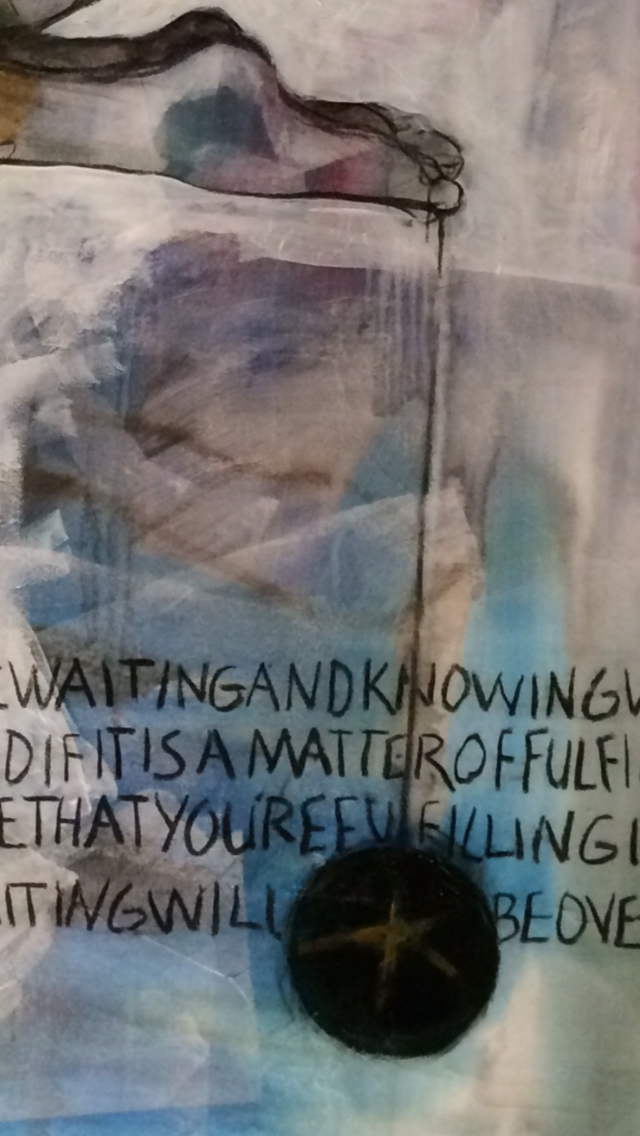
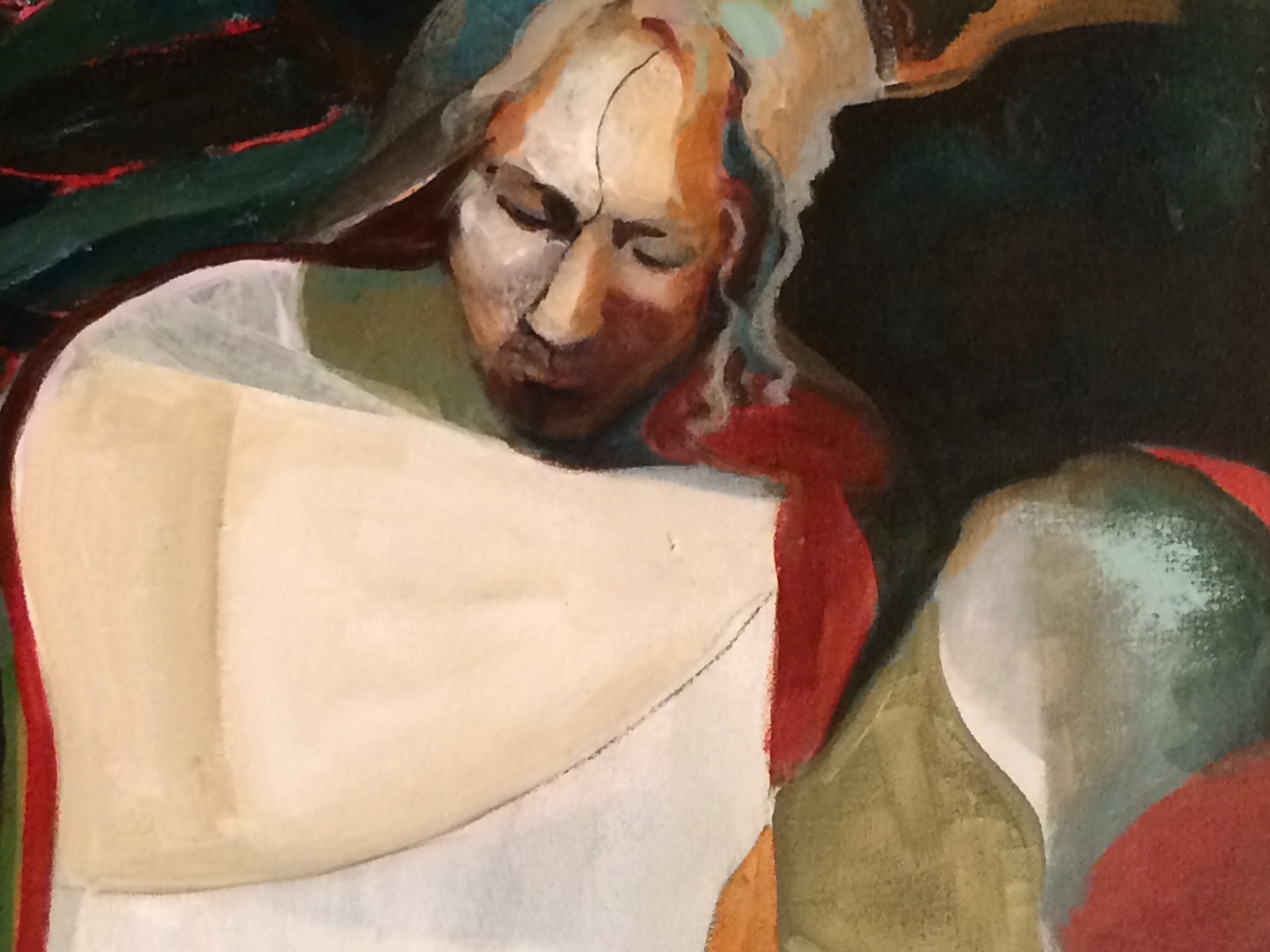
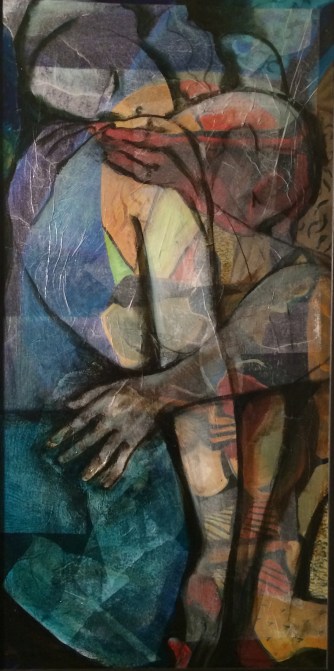
An untitled  watercolor I did years ago

An untitled watercolor I did years ago

Last night P-Tom said, “This is the time of year that everyone is telling us what we need and where we can go to buy it.”

Yesterday I worked on website language. After a year-long hiatus I’m re-visioning what was once a coaching practice. All day I was aware that words like “potential” and “purpose” are abstractions; they are marketing terms. Many years ago, when I was first establishing a coaching practice, I read articles and listened to recordings full of advice about “how to start a coaching business;” the recommendation was unanimous: host free calls, help people see their problem, and end the call. Leave them standing in the mud so they will need you. Create lack (isn’t that a great definition for marketing?).

What does it really mean to fulfill your potential? What does it mean to “find your purpose?” Look to the layer beneath. To fulfill, to find…, these are terms from the canon of outcome and result. No one willingly seeks his or her endpoint. If there is a universal problem it is that we see our existence as something with a bottom line and hire coaches and therapists to help us do the accounting.

(Insert mantra: nothing is broken. You do not need to be fixed).

Good coaches, teachers, mentors, and therapists get you out of the spreadsheet and into the moment. Looking for the fullness of life is usually a process that requires the cessation of looking so we might see what is right in front of us. Stop the search and you will be found. As the old saying goes, life is the thing that is happening while you are running around looking for it.

I’m a world-class note taker and always take notes when I work with people. For me it’s like mapping verbal terrain, capturing inner geography. Lately I’ve been reviewing the maps before I destroy them and I find not seekers of potential and purpose, but people overwhelmed by the experience of 1) feeling lost, 2) feeling that something is missing or they are missing something, 3) feeling that they are pushing on a door that won’t open, or 4) a yearning for a different way of being. These are questions of feeling. These are questions of orientation to life (experiences of life). “Potential” and “purpose” are words of doing. These are questions of being.

What if meaning, value, purpose,… in life was not something found or bought but something that is already possessed?

Go here to buy hard copies (and Kindle) of my latest book: The Seer: The Mind of the Entrepreneur, Artist, Visionary, Innovator, Seeker, Learner, Leader, Creator,…You.


Be The Fool

The Fool card from The Radiant Rider Waite deck

The Fool card from The Radiant Rider Waite deck

Each day I open The Bible of Mankind (sadly, now out of print) and read a phrase. It’s a form of daily meditation for me akin to throwing the I Ching; I pick from the reading what seems relevant. Some days the phrase is confusing, some days it is curious, some days it is profound. Every day it is significant. Today, the phrase was from the Buddhist tradition and under the subtitle, Foolishness & Wisdom:

“The man who has learned little grows old like an ox. His flesh grows but his knowledge does not.”

I delighted in the pairing of foolishness with wisdom. I suspect there is only one path to wisdom and it requires a good deal of foolishness. I googled the meaning of the Fool card in the tarot because, as I recollect, when upright, the Fool is about beginnings and bold steps into the unknown. From my search I found other words and phrases like unlimited potential, purity, and innocence. The Fool is ever present and has in his (her) bag all the tools and resources necessary for the journey through life. The Fool came to this earth to learn.

Another phrase that caught my attention was this: the Fool is always whole, healthy, and without fear. He is the spirit of who we are, the spirit expressed and experienced as wonder, awe, curiosity, and anticipation.

Recently, Bruce and I had a great talk about how life looks different at 50 than it did at 30. The main difference is that you know without doubt that it is limited. And, because the big death is visible, all the little death passages, the steps into the unknown, take on more import. Yearning is more electric when mortality is undeniable. All of the belief and investment in outcomes and achievements dissipate. This life is an experience, nothing more. It passes. And, it is dealer’s choice whether the experience is expressed and experienced as fear or expressed and experienced as The Fool: wonder, awe, and curiosity.

The wisdom path is the Fool’s path. The ox, to become a fool filled with knowledge, need only step out of its pen, into the unknown, and be filled with new experiences.

title_pageGo here to buy hard copies (and Kindle) of my latest book: The Seer: The Mind of the Entrepreneur, Artist, Visionary, Innovator, Seeker, Learner, Leader, Creator,…You.

Eve, by David Robinson

Eve, by David Robinson

Go here for Fine Art prints of my paintings.

Change Your Mind

I used this quote by Friedrich Nietzche in The SEER:

“The snake which cannot cast its skin has to die. As well as the minds which are prevented from changing their opinions; they cease to be a mind.”

A few days ago I asked myself this question: What if I never painted another painting or wrote another word? What would happen? Who would I be?

title_pageThe first question, what would happen, is much less interesting to me than the second question: who would I be if I simply put down my brushes forever? When I was younger, I felt driven, as if I had to paint. I needed it. In asking the question I recognize that now I choose it. I don’t have to paint; I want to and consequently I am a much better artist. It’s a paradox: I am a better artist because I don’t need to be an artist. In other words, I don’t need to be, I am.

I’ve been revisiting The SEER. My initial team of wise-eyes unanimously voted the first draft to be “too much.” The book that I published is comprised of the first three chapters of the original draft. I deconstructed them and broke the steps into smaller bites. There were six more chapters outlined and, in my latest revisit, I recognize that I have a trilogy if I want it. So, book two is in process. I’m going to release the first draft in daily snippets as I write it. Everyone gets to be my wise-eyes this time around.

Here’s the launching pad section for book two from The SEER. It’s from the second cycle (story):

You can change your story. That is the sixth recognition. Doesn’t it sound simple? Say it this way: changing your story is the equivalent of changing who you know yourself to be. Changing your story often requires the loss of your illusion, a lot less armor and nothing left to lose. Who are you when you don’t know who you are or where you are going? This was the heart of Virgil’s question to me. Who are you distinct from your circumstance? Who are you when the mask comes off? More importantly, what are you capable of seeing when you are not looking through a [knight’s] visor? No one is immune to the stuff of life. Everyone lives a unique version of the story cycle. It too is a pattern, a natural process.

Go here to buy hard copies (and Kindle) of my latest book: The Seer: The Mind of the Entrepreneur, Artist, Visionary, Innovator, Seeker, Learner, Leader, Creator,…You.

Go here (to Leanpub) for all digital forms of The SEER

Canopy by David Robinson

Canopy by David Robinson

And, for fine art prints of my paintings, go here.


Mix Better Color

A painting from another time - and also from as as-yet-unfinished exloration

A painting called ‘Sleepers’  from another time – and also from as as-yet-unfinished exploration

The lake was angry. Because it is the fifth largest lake in the world, it packs a punch when enraged. The local news reported that the waves were 14ft high. The force of the waves smacking the shore hurled huge stones from the wall constructed on the banks to protect the land. Although it is an easy walk from our house, the wind was so powerful and cold that we drove the few blocks to see it.

There are days that the lake is glassy smooth and quiet with barely a noticeable ripple. This day the lake was muddy brown and dangerous. Parts of the bank collapsed. A tree close to the shore was consumed. Many years ago I was in a small boat protected by the islands from the force of the ocean’s wrath; for a few moments we had to round a point, exposed to the fury, to get into a bay. The captain pointed the boat directly into waves that towered over us. I’ve rarely felt like such a bug on the arm of an angry world. Had it decided to, the ocean would have smashed us with little or no notice. The lake was like that this day. I was grateful to be on shore. Sometimes awe for the power of nature requires a respectful distance.

Sometimes appreciating the fullness of life also requires a respectful distance. I recently took Bill and Linda down stairs into my current studio. They are elders and I have enormous respect for them. They’d asked to see my paintings. We spent several moments looking at my current work and then began stepping backwards in time. My paintings ring like songs from the past; each represents a specific era of my life and is capable of sparking intense remembering. It was fun to pull pieces for them, answer questions (or not answer them), and to open the doors of time. Like the lake, the doors were varied and unpredictable: some of the doors flooded me with peace, other doors overwhelmed me with grief, and still others brought intense joy. I loved it all because with time, with distance, life ceases to be about good times and bad times, hard times or ease, it’s all one long rich varied walk, all necessary and useful like color on a palette. Some of it goes to mud and that is the only way to learn to mix better color. Just as every forest fire causes renewal and every storm heaves stones and creates a new shoreline, sometimes distance and respect for this powerful messy life reveals the face of continual renewal and necessitates vast, quiet awe.

title_pageGo here to buy hard copies (and Kindle) of my latest book: The Seer: The Mind of the Entrepreneur, Artist, Visionary, Innovator, Seeker, Learner, Leader, Creator,…You.


Expose The Value

photo-3We debated our costumes for Brad and Jen’s Halloween extravaganza for months prior to the party. The letter for this year’s costume theme was “T” (with extra credit for using a “Q”). During the long hours of our summer road trips, our conversation sounded something like this:

“We could be Trollops.”

“Trollop is good. We could be Tin men.”

“I like that. What about Tootsie Pops!”

“Someone will come as a Tootsie Pop. How about Tramps.”

“No. I did that when I was twelve. What about tsunami! We could be a tsunami!”

And on and on we’d go. We finally settled on this bit of whimsy: Too-many-ideas & Too-many-questions. Kerri was going to be Too-many-ideas and I was intended to be Too-many-questions – but we changed our minds in the final hours.

At the party you might have asked, as many people asked us, “What is a Tarving Artist?” We wore paint-spattered clothes and artist aprons filled with paint and brushes. On the aprons we wrote: Dying Of Exposure. Between us we carried a donation bucket with a sign that read: Our “S” was repossessed. Please help us buy it back.

In the week prior to the party, Kerri was asked to play for an event. Every artist in the nation is used to hearing the words she hears weekly: “We have no money to pay you but it will be great exposure for you.” She is a consummate, career musician with 15 albums, (going on 16) and needs no help with her exposure. I loved her response: “Let me call my accountant and ask if she accepts exposure for payment.” Her latest encounter with empty exposure started a long hysterical conversation and note-comparison session of all the amazing ways people have asked us to work for anything and everything but money (Yes, it is true. When artists make art they are working as surely as a plumber who plumbs or a doctor who diagnoses. When was the last time you asked your dentist to work for exposure?).

The common mistake at the center of every work-for-exposure offer: it will be good for the artist. It’s never good for the artist. For two reasons it’s a notion that is good for everyone but the artist. First, no artist wants the kind of exposure that reinforces that their work is without real value. Second, no creative artist wants to be defined as a player of background music or drawer of dog portraits (unless, of course, their dream in life is to draw dog portraits). The act of drawing or playing a musical instrument is not what defines the artist or their art. It is a mistake to assume that because I can draw and paint that the act of drawing and painting is what constitutes the art. A carpenter uses a hammer but the hammer does not define their work. It is a tool. The keyboard, the paint and brushes are tools.

People who pay artists with exposure see the tool but not the artist. That is why Kerri and I opted to change our costume. Certainly dressing as a Tarving Artist was a statement but more than that, we realized that only a starving artist would agree to play for exposure; only a starving artist would agree to hammer incessantly to get the attention of people who can’t see them to begin with. It’s never good for the artist and is always a costume or role they assume for the empty promise of exposure. The cost for the artist is always greater than the exposure and at the end of the day, after trading a bit of their integrity, they still aren’t able to pay the bills.

title_pageGo here to buy hard copies (and Kindle) of my latest book: The Seer: The Mind of the Entrepreneur, Artist, Visionary, Innovator, Seeker, Learner, Leader, Creator,…You.

Yoga.ForwardFoldGo here for fine art prints of my paintings


Leave The Wasteland Behind

[continued from Enter The Castle]

In her book, Radical Acceptance, Tara Brach tells the story of a daughter holding vigil at her mother’s deathbed. The mother regained consciousness before dying and said, “You know, all my life I thought something was wrong with me.” And then she shook her head as if to say, “What a waste.”

title_page

The full Parcival tale is woven through The Seer.

The metaphor of the moment is the Holy Grail and, more specifically, the search for it. The search for the Grail is a metaphor for a search for the self – not the roles that we think we play, the purposes that we think we serve, and not the jobs that we do. Grail seekers deal with their ‘being’ and not their ‘doing.’ When the roles are dropped, the purposes stripped away, when the jobs are left behind – beyond all the masks and definitions and importance and interpretations, labels, judgments, and pursuits of perfection, the Grail castle awaits us all. It’s a paradox: the Grail castle is found in the ordinary, the everyday.

We rarely come to the castle because of our wholehearted attachment to The Wasteland (the other great metaphor in the Parcival tale).

Parcival goes on his quest to find the Grail castle because as a young knight, purely by accident, he bumbled into it. He was invited in. He was given the opportunity to speak his truth and at the crucial moment, he denied himself. Instead of truth he spoke what he thought was socially acceptable. He did what he thought he was supposed to do and not what he wanted to do. He played his role and was polite. And his punishment for denying himself was banishment from the castle. And, worse, the whole kingdom fell into famine and he was to blame. He was personally responsible for The Wasteland. So he went on a quest to find the castle and redeem himself.

He believed himself broken and in need of fixing. The harder he tried to prove his worth and regain his wholeness, the worse the Wasteland became. In today’s world he would have purchased a shelf of self-help books. He would have attended seminars and exercised his positive thinking. He would have clarified his purpose and conquered his fear on a ropes course. He might have earned his PhD, bought a BMW, been named ‘Best-in-Show,’ and lined his wall with trophies.

The important point is this: Parcival had no idea why he failed as a young knight. He did what he was taught to do and found himself in The Wasteland. So he began a quest to fix what was broken (he identified himself as broken). He was fighting a battle to redeem himself but had no idea what he was attempting to redeem. He could only regain access to the castle by ceasing to think that he was broken. It was only when he stopped looking for perfection that he experienced himself as perfect just as he was. As the hermit said to Parcival the moment the castle reappeared, “Boy, it’s been there all along.”

Go here to buy hard copies (and Kindle) of my latest book: The Seer: The Mind of the Entrepreneur, Artist, Visionary, Innovator, Seeker, Learner, Leader, Creator,…You.

Go here for all digital forms of The Seer.


Enter The Castle

[continued from Tell A Good Story]

Shuttering the business, closing down my coaching practice, ending all corporate work, cleaning out the metaphoric closet – created quite a void. Standing solidly in a void of my own making I found myself once again enrapt with the Parcival tale. I’ve told this story dozens of times to audiences of all sizes, in performance and in facilitation. I wove it through The Seer as the main character’s stalking story (the story that follows you throughout your life and only opens when you are ready for it). It continues to open for me, a flower with many petal layers.

title_page

The Parcival story is woven throughout The Seer

It’s a grail quest story. Because every human being is in search of his or her personal grail (their true selves), once the metaphors are understood, it is a very useful story for navigating life. At one point in the story, after years of trying to prove himself worthy and save the world from becoming a wasteland – something that he is personally responsible for causing – believing himself to be invincible, he is defeated. A “nature warrior” knocks him off his warhorse and his magic sword shatters into a thousand pieces. Parcival strips off his armor (his role) and weeps. He lets go. He shutters his business. Despite his best efforts, despite fighting every dragon and ogre, despite defeating every dark knight, the wasteland still happened.

As is true in life, in the moment of greatest defeat, the second master appears and for Parcival it is a hermit. Parcival follows the hermit back to his cave and retreats from the world. He waits impatiently for the hermit to teach him, becomes frustrated, and finally resigned to the absence of any useful lesson, all the while, each day, chopping wood for the fire, carrying water to the cave. Over time he forgets that he was ever a knight. He forgets that he felt broken. He forgets his quest. He becomes present to the moment and is no longer invested in a role or purpose. He chops wood. He carries water. He feels the sun on his face. He appreciates his moment.

And, as is true in life, that is the moment that the grail castle appears for the second time. To re-enter the grail castle, to become the grail king (or queen), we must see ourselves as we are, beyond the role we use for armor, beyond the mission we use for meaning making, beyond the things we think we need to say, or do, or be. We have to recognize that we are enough, just as we are created, sacred and beautiful and complete. We are not broken. Nothing needs to be fixed or changed or achieved. Parcival, enters the grail castle (life) in this consciousness, speaks his truth, and the wasteland, in a single moment, disappears.

[to be continued]

Go here to buy hard copies (and Kindle) of my latest book: The Seer: The Mind of the Entrepreneur, Artist, Visionary, Innovator, Seeker, Learner, Leader, Creator,…You.

Go here (Leanpub) for all digital versions

Tell A Good Story

The Storyteller emerges from the forest. Lucy & The Waterfox

The Storyteller emerges from the forest. Lucy & The Waterfox

Over the years I’ve tried countless marginally successful ways to define for others what I do. It would seem obvious: I am a painter. I am a writer. Oh, and a theatre artist. And a consultant. And I’ve maintained a coaching practice. I’ve worked in education, the corporate world, with non-profits, and with entrepreneurs. So, in conclusion, I do too many things.

Well, that’s not exactly true. I do one thing. I deal in story.

I speak the language of story and that is confusing in any arena. What does it mean? Such a simple word, story, and yet it can mean so many different things. For instance, a truism in effective, transformational coaching is that the story doesn’t matter. By story, coaches mean the circumstance; in transformation, in the fulfillment of potential, the details of what happened – the story – are not useful. The circumstance story usually equates to blaming or endless attempts at self-fixing. The circumstance story gets in the way of growth. It is an anchor in the sea of dysfunction.

I don’t work with circumstance stories.

By story, I mean inner monologue, the-story-you-tell-yourself-about-yourself. By story, I mean the language that we use within ourselves to articulate belief. I work with the orientation story, the personal and communal mythology. Rather than get in the way, the orientation story defines the way. It defines what we see. It defines our relationship with time, with nature, with god, with community: it is the lens through which we make meaning. I help people change their lenses. Try explaining that to a CEO!

Last year, when Skip and I shuttered our business, I also shuttered my coaching practice. I ended my corporate work. Much of it came to feel like wearing an ill-fitting shirt –or a host of ill-fitting shirts – so I decided to clean out the closet. I wanted to drop all the definitions, the old forms, to make space for the new.

Last week I decided it was time to peek into the empty closet. And, as serendipity would dictate, I happened to be reading Frank Delaney’s engaging book, The Last Storyteller. On page 99 of this fictional tale, this is what I read:

“…every legend and all mythologies exist to teach us how to run our days. In kind fashion. A loving way. But there’s no story, no matter how ancient, as important as one’s own. So if we’re to live good lives, we have to tell our own story. In a good way. A way that’s decent to ourselves.”

I threw my head back and laughed. There is no story as important as one’s own. To live a good life we have to tell our own story in a good way. And then, there was this:

“…I don’t give anybody advice. All I do is release the good thinking that’s already inside of you. You’re the one who acts on your own advice, and I have the pleasure of helping you reach those thoughts about yourself. So it’s not me helping you. It’s you helping you.”

Ask me today what I do and I will say, I write. I paint. Ask me for more detail and I’ll open the book to page 99.

[to be continued]

title_pageGo here to buy hard copies (and Kindle) of my latest book: The Seer: The Mind of the Entrepreneur, Artist, Visionary, Innovator, Seeker, Learner, Leader, Creator,…You.

All digital forms of The Seer can be found here

Feel The Day

My favorite face of exuberance.

My favorite face of exuberance.

And so, the sun! These crisp, bright fall days bring pause. They make us slow down and pay attention to the small things, the sensual things: the smell of coffee, the sweet taste of butter on warm toast, the gentle music of the leaves, the blue sky vibrant through the luminous yellow leaves.

These are the days of easy appreciation; gratitude stands close-by. With senses heightened and deep inner quiet rising to the surface comes the simple acknowledgment that this day will never come again. It is precious, like all days, but on these days-of-the-senses, when reason, explaining, and justification take a break, the obvious becomes apparent. Every moment of life is this rich, precious. Wisdom comes through the senses, when tight reason takes a break. This life is passing. This life is bigger than any one of us. It is as vast as a human heart.

Turning my face to the autumn sun, I close my eyes and with great relish listen to the exuberant life celebration of Tripper Dog-Dog-Dog, barking because he can, digging holes to bury treasure, racing around the yard for no other reason than it feels really good.

title_pageGo here to buy hard copies (and Kindle) of my latest book: The Seer: The Mind of the Entrepreneur, Artist, Visionary, Innovator, Seeker, Learner, Leader, Creator,…You.

Yoga.ForwardFoldOr, go here to buy fine art prints of my paintings


Be The Detail

I took photo and used this image in The Seer.

I took photo and used this image in The Seer.

When I shared the early chapters of The Seer with friends, their feedback was universal: I was trying to say too much. They asked me to break it down into smaller bites. At first I resisted because I couldn’t see the path to smaller bites! In time I was able to step back and see what they were telling me. All of the necessary connective tissue was in my mind; I was filling in the thought-gaps. My wise-eyed readers had no access to my mental filler and saw a story riddled with gaps.

It was a valuable lesson for me. What I see is never what others see. Even when we share an experience, it is false to suppose that we had the same experience. We share. That is a much different thing than assuming sameness. When I think I am being clear, when I think that my point of view is right, I remember the gaps. I am projecting content and context filler onto every experience and so are all the other people in the room.

Perception is at best a moving target. This simple principle is what makes art so necessary and science so exciting. Newton thought he was dealing in absolutes. He was describing a universe based on uncontestable fixed principles. And then came Einstein. We see from and through a context that we like to call “truth” but, it is at best relative. Is it a particle or a wave? Well, it depends…

I used to facilitate an exercise called Mask Mingle. It is a powerful way to open eyes and hearts to the grace that we grant ourselves but rarely grant to others: specificity of story. We cannot walk through our days without carrying the specificity of our experiences and the rolling, roiling interpretations and re-interpretations of those experiences that we call ‘memory.’ No one can see what we’ve done and where we’ve been. No one sees the joy, the hurt, the dreams, the losses, the fears, the perseverance. They cannot see the detail. The best they can do is interpret us through their lens. We will always be a generality in the eyes of others.

I find that central to much of what I write about and coach about is the surrender of what other people might think. It is a fallacy to think that you can determine what others think of you. You will never see through their eyes. You will never know their lens. It is a powerful moment when an artist (or anyone) realizes that they have no control over the perception of others. The best they can do is offer their gift from their unique, unknowable, rich, point of view. That moment is called artistic freedom.

title_pageGo here to buy hard copies (and Kindle) of my latest book: The Seer: The Mind of the Entrepreneur, Artist, Visionary, Innovator, Seeker, Learner, Leader, Creator,…You.