Step Into The Dot

Kerri and I are bringing our work together in a new form: Be A Ray! More on this tomorrow

Kerri and I are bringing our work together in a new form: Be A Ray! More on this tomorrow

Raquel and I had an extraordinary conversation yesterday. We always have extraordinary conversations that serve to shake loose the penny in my mind that needs to drop. Yesterday’s penny was about the question of a universe by design versus a universe of utter chaos.

So much of this past year seems by design. There have been too many serendipities, too many perfect circumstances, too many uncanny seeming coincidences. Last year I told her I was in a fast moving river racing toward my destiny. I could feel it. I can feel it. Raquel asked if perhaps that has always been true and that I was simply seeing it now.

My response to her question surprised me. I told her that all of my life I’ve had one foot in each universe. When the tides seemed against me or things were uncomfortable, then I was convinced that I was a bobber in a chaotic ocean. When I had one of the mystic/profound experiences that have become the hallmark of my life, when the tides seemed to go my way, I found it convenient to believe in a universe of a perfect design. I told Raquel that this year I’ve finally understood that I can’t have it both ways. I am either a bobber in a vast ocean or I’m here by design. Or, more to the point, I understand that the chaos I experience is my response to the design. Both feet are in one idea. The universe-by-design (a universe of participation and co-creation) must be true in the uncomfortable moments as well as the profound. It has to be true in the ordinary as well as the extraordinary. There is only one tide. It is a game to pretend otherwise.

In the past few years, the theme of my growth has been to finally see where I have been living with one foot in and one foot out – and to at last put both feet in. If you are driving to work waiting for retirement, you are one foot in. If you have a backdoor plan in your relationship, you are one foot in. If you are seeking proof of your faith, you are one foot in. You’d be amazed at what becomes visible, what you see, when you cease dividing your intention, splitting your presence, and stand with both feet in. Kerri and I call this, “stepping into the dot.”

[to be continued]

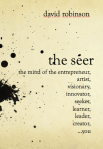
Go here to get my latest book, The Seer: The Mind of the Entrepreneur, Artist, Visionary, title_pageSeeker, Learner, Leader, Creator…You.

Or, go here for hard copies

Shift The Frame

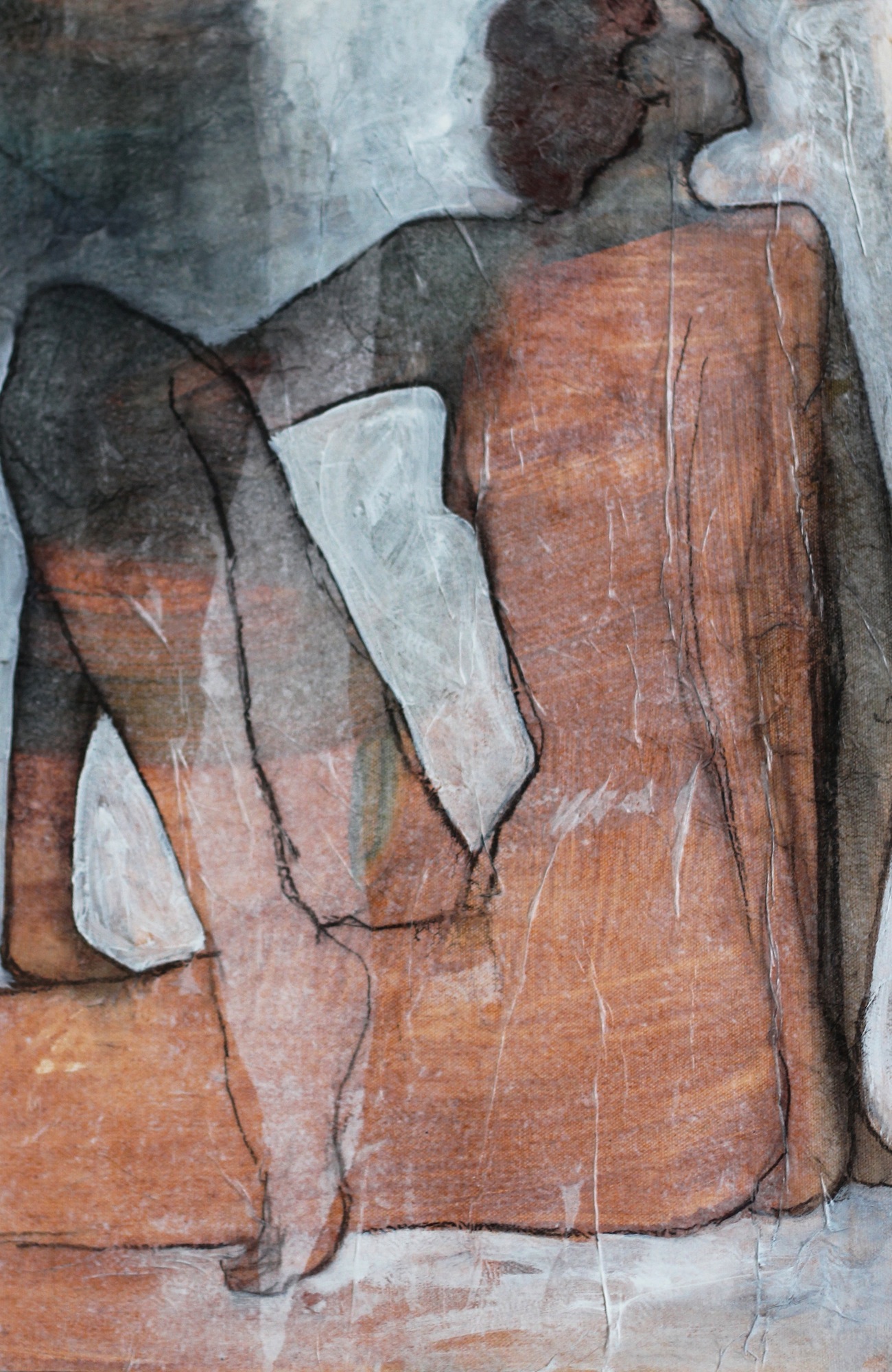
another of my illustrations for Lucy & The Waterfox

another of my illustrations for Lucy & The Waterfox

I’ve been sitting in my fair share of waiting rooms, coffee houses, and gathering spaces lately and so I’ve been eavesdropping on conversations. Who knew there were so many problems in the world! Based on my public space sample you’d think that things were dire. The news of the day concurs with the casual coffee shop discourse. Problems abound. Wars rage, resources dwindle, political leaders squabble, corporations pillage, siblings rival, and people cut each other off in traffic! As my friend Albert used to say, “Good heavens! Just drop the bomb, already!” With so much devoted suffering, so much impending doom, ill intent and disaster anticipation, it’s a wonder we can sleep or step out of our houses in the morning.

Why is this the story we tell? We talk about life as if it was happening to us, as if we play no role in making things happen. I used to make it my practice to count the acts of kindness I saw each day and compare them with my count of acts of cruelty. There was never a day when the cruelty outpaced the kindness. For every example of road rage there were 20 instances of road generosity. In fact, in my count, the acts of kindness so far outstripped the cruelty that it became ridiculous to keep the count. We are far more kind than cruel, far more capable than inept, far more connected than detached, yet our narrative reverses the order. We tell a story of separation, of dog-eat-dog, of the inability to cooperate.

Many years ago the good folks at Disney conducted a study and found that when people had a bad experience at Disneyland they’d tell on average 18 other people. If they had a positive experience at the park they’d tell 3 people. That’s a significant imbalance. We seem reticent to share our joys and adept at sharing our fears.

It’s as if we are addicted to conflict and, well, we are. We delight in defining ourselves by our problems. It’s a pattern. More, it’s a story imperative. We are, after all, storytelling beings. We never cease storying ourselves through our inner monologues and outer dialogues. We justify. We defend. We interpret. In general, stories – lived and scripted – are driven by conflict; conflict moves the story forward. Stories are made meaningful by overcoming the forces of opposition. Our lives are made meaningful by the metaphoric mountains we climb. We mistakenly define a good life as the absence of conflict. Conflict is necessary; it is our relationship to conflict that keeps us hooked on the drama like so much sugar.

There is a significant threshold, a passage into health and power that happens in a life when the narrative changes from, “things happen to me,” to a story of, “I make things happen.” Conflict is present in both story frames. In the frame of, “things happen to me,” conflict is an oppositional wind. In the frame of, “I make things happen,” conflict is fuel, we no longer are at the mercy of the forces but in alignment with them. The metaphoric wind is at our back moving us forward.

When we make this story frame shift, we no longer need the drama; we no longer seek to fix things. We see a different set of options. Literally, we see a different set of possibilities. We create and live from a different pattern. We see choices instead of victimization. We see active participation, conflict as challenge, engagement, and opportunity.

The, “I make things happen story,” necessitates responsibility: wars can’t just happen, resources can’t just dwindle, political leaders just can’t squabble, corporations can’t just pillage. We would tell a story of “we,” and take the step into maturity that the story of, “things happen to me,” obscures.

Go here to get my latest book, The Seer: The Mind of the Entrepreneur, Artist, Visionary, title_pageSeeker, Learner, Leader, Creator…You

Or, go here for hard copies (Amazon)

Get To Maybe

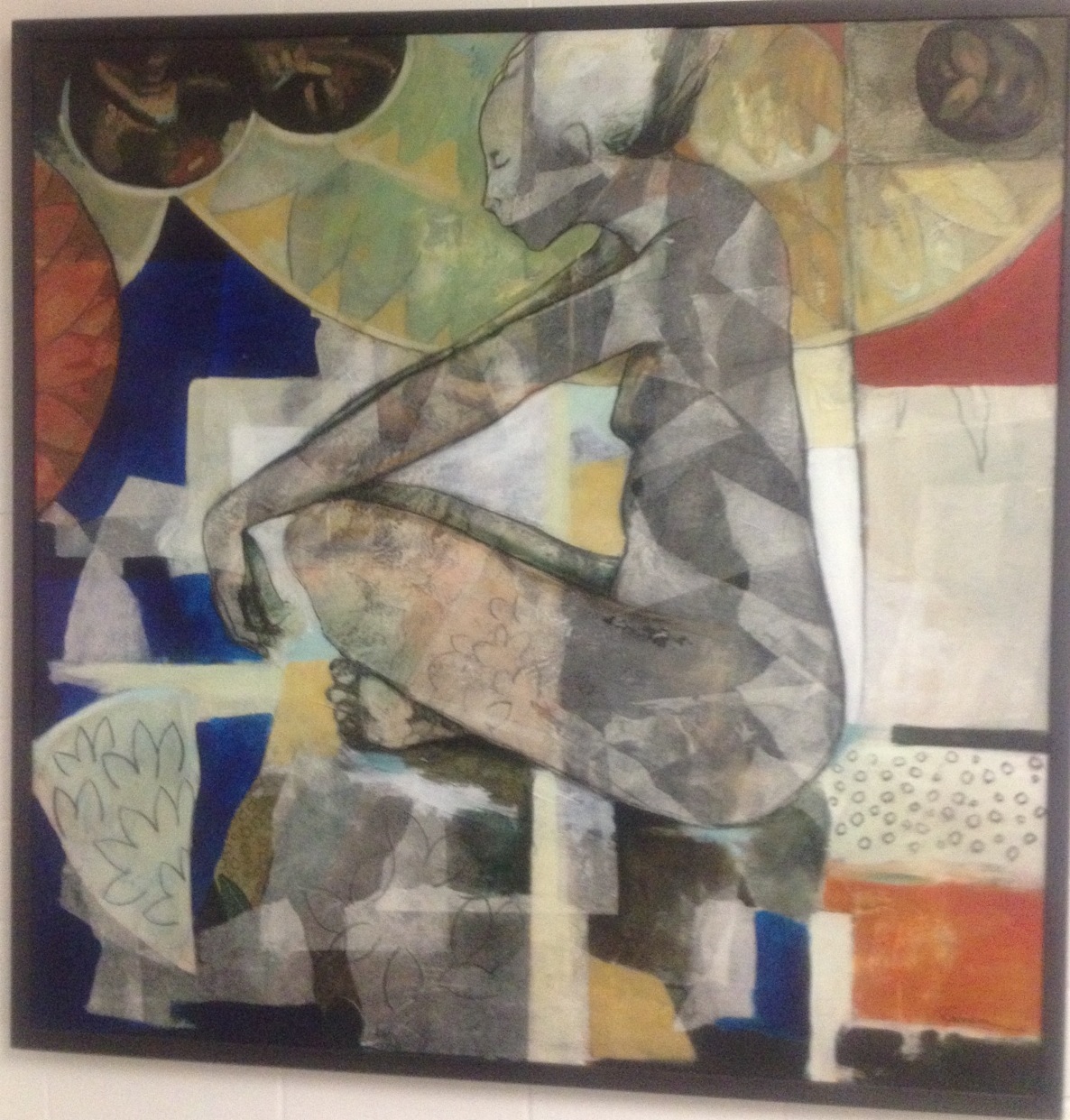
from the Yoga series by David Robinson

from the Yoga series by David Robinson

A few days ago a I had one of those rare mornings when the revelation door opened and a whole beautiful box of thought toys spilled out and hit me on the head. My favorite came when the “3 kinds of problems” model from a terrific book, GettingTo Maybe, crossed wires with one of my favorite concepts to teach: control your controllables and let the rest go. It goes like this:

The authors of Getting To Maybe define three kinds of problems to illustrate that, at the core of most organizational (and relationship) dysfunction, is a confusion of problem type. In brief, the three kinds of problems are:

1)    A simple problem (baking a cake. If you have a recipe and ingredients, you can get to cake almost every time).

2)    A complicated problem (a moon shot. It require much more expertise, higher math, technology, and tons of money but with the all of the above, landing a human being on the moon is solvable).

3)    A  complex problem (raising a child. No amount of math or “how to” books will help because there isn’t a prescription. The only useful action is to engage. Another word for complex problem is “relationship”).

People and the institutions that they (we) create don’t like the mess of complexity so they (we) pretend that their (our) complex problems are merely complicated. We are great creators of rules and laws and pretend that our rules and laws are unassailable and apply equally to all people in all situations (which is to ignore our complexity and pretend that people are merely complicated).

So far, so good.

When “the control your controllables” wire crossed the Getting To Maybe model, I realized that simple and complicated problems are really about variable control. They are about knowing HOW before you start. They deal with the knowable. Success is determined by the control of the process. In the paradigm of simple and complicated problems, each step is a prescription. It is life as craft assembly or paint by numbers. Needing to know HOW is essentially a desire to control the experience. It’s why we deny the complexity of our lives and pretend that we can know…

Complex problems (relationships. life) are another animal altogether. Success is based on quality of engagement; the variables can never be fully known or fully controlled. In a complexity, we have the experience first and make meaning second. We are present with what is right in front of us, not what we want in front of us. Complexity cannot be controlled. In the complexity paradigm, HOW is something that can only be known after the fact. It is life as art or a path of discovery. Awe is found on this path. So is wonder. It is to accept that we are more mystery than map.

Go here to get my latest book, The Seer: The Mind of the Entrepreneur, Artist, Visionary, title_pageSeeker, Learner, Leader, Creator…You.

Go here for hard copies (Amazon)

Serve Life

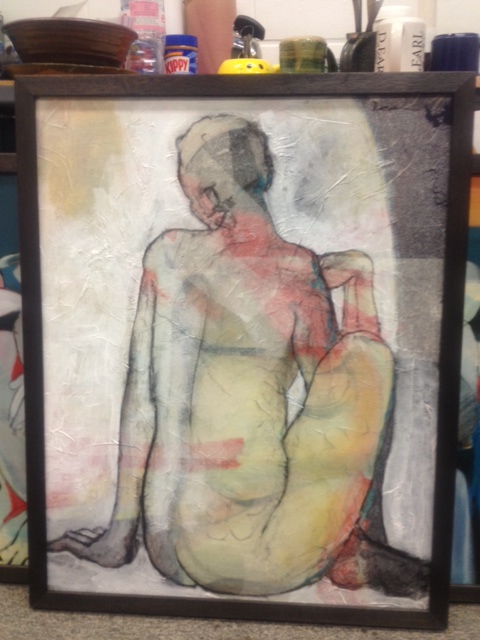
Untitled by David Robinson

Untitled by David Robinson

I’m writing language for a website. In the past my website reinventions felt like an exercise of the same old cereal in a new marketing box. This time it’s different. I am a new cereal and I’m not certain that I want a box. It makes a difficult task of telling people what I do when I’m fully invested in container resistance. As I wrangled deep into the night with clever but remarkably meaningless marketing language, I had two mini-epiphanies:

1) Last year, unlike the captain of the Titanic, I sailed my ship directly at an iceberg so that it would sink. I sank the ship with all of the fine china, the gold bars and diamonds in the safe, the furniture, the clothes and fine food. It all went to the bottom of the ocean. I wanted off the ship so why would I now build for myself a new ship? I didn’t bob around in my raft in the vast ocean spearing tuna and catching rainwater so that I might someday step back on to the bridge and do it all over again. What, exactly, am I building?

2) I have tried my whole life to squeeze myself into too small of a box (as, I suspect, all of you have, too). I have worn the jacket of coach, of facilitator, of teacher, of director, of actor and waiter and painter. I am none of these and all of these. I have made websites complete with testimonials and classes, nice pictures and e-books, workshops and retreats. The process of building a site is a two-agenda process: first, locate yourself in space and time for other people so that they might find you and, second, orient yourself toward other people’s concern so they might know why they should seek you. In other words, 1) this is where I am and, 2) this is what I provide. The pronoun is “I.”

What, exactly, do I provide? I am not a plumber or a pizza maker. Every marketing person I’ve ever known has advised me to brand myself. Brand myself as what? Brands are made up. A year ago on New Year’s eve, tarot woman told me that she didn’t see a career for me. Rather, she saw lots of expression. “Brand that!” I thought to myself. Last night I reasoned, “I am not a brand.” Neither can I reduce what I do to a pithy phrase or clever visual. That’s precisely why I sought an iceberg and sank the ship!

I’m an artist (a painter and performer) and I write. I like to write a lot. At the center of all that I do is…disruption or change or spirituality or transformation, words that sound great but what do they mean on the concrete, day-to-day experience of living. I deal in heart, intuition, and soul. Great. I hold people’s hands and walk with them into their dreams. I dive with them into their past so they might let go of their story and sit solidly in their present. I help them unbuckle the weight belt of their story so they might surface for air. Brand that.

To ask, “What do I provide?” is to ask the wrong question. This question will always lead to too tight boxes.

Joe sent me some links: short films of Stephen Jenkinson (The Meaning of Death and Making Humans). Stephen Jenkinson says that humans are made, not born. He speaks eloquently about the necessity of dying to our childhood – which means recognizing that our short lives are limited. That’s the recognition necessary to grow up. We can only really fulfill our gifts when we understand the necessity to serve life, not our life. We end. Life continues. Martin Prechtel writes of his community’s male passage rituals; young men learn that they can only serve their community when they recognize their mortality. The passage ritual is meant to bring them to the realization that they are finite. Only then can they understand the imperative to serve something greater than themselves: life. Tonight in the Taize service, Pastor Tom read a passage about losing yourself to find yourself. It is the same concept wrapped in biblical clothes.

Here’s what I want to say on my site: when you are willing to stop trying to save your life and ready to start giving it, call me. No box necessary.

Go here to get my latest book, The Seer: The Mind of the Entrepreneur, Artist, Visionary, title_pageSeeker, Learner, Leader, Creator…You.

Go here for hard copies (amazon)

Face The Sun

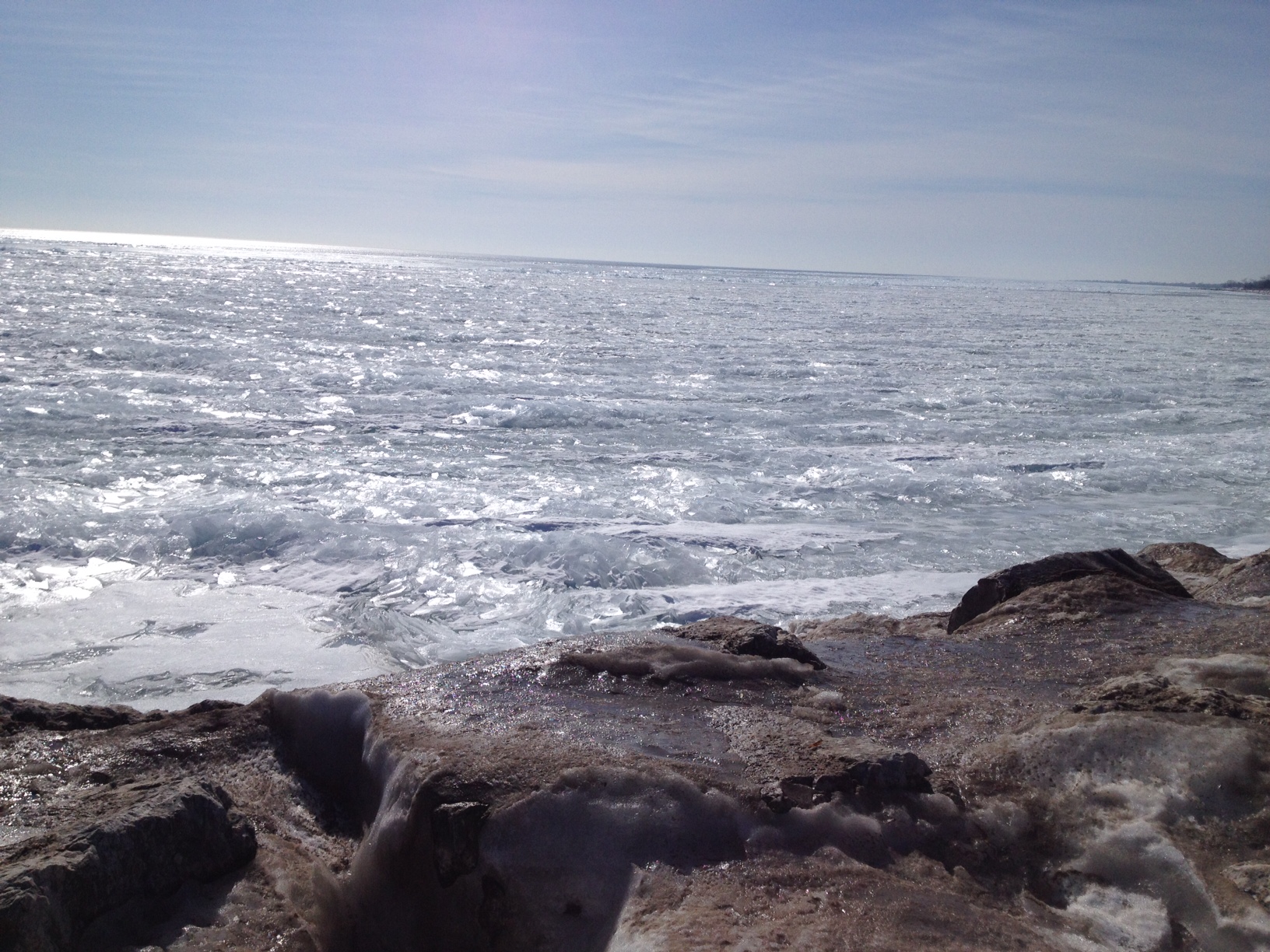
Lake Michigan frozen

Lake Michigan frozen

Standing on the sea wall, the sun on our faces, the frozen Lake Michigan looked like a vast field of broken glass, shards akimbo, glistening in the morning light. The shards popped and crackled, moaned and snapped; it was the first warm day in months. The birds frolicked. It was a small taste of spring, a gift before winter’s return tomorrow. I closed my eyes, faced the sun, and drank it in.

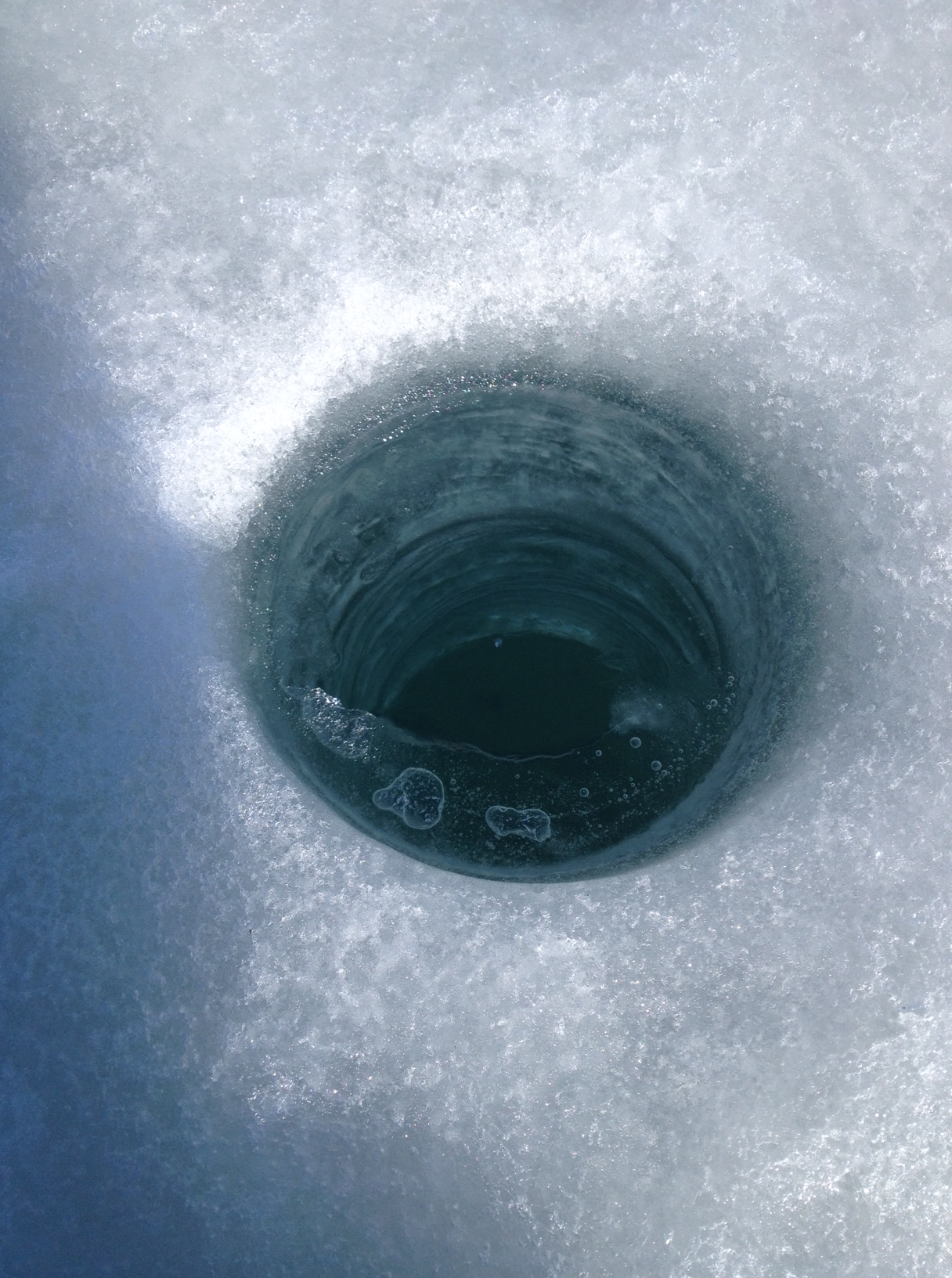
Kerri and I had just walked across the harbor. We watched the ice fishermen drill holes in the ice. The bit dropped more than two feet before breaking through. The fishermen assured us that the ice was very thick. “I’ve lived my whole life here and never seen the ice this deep,” the man said, sipping his coffee and looking at the lines he’d dropped in the water. We stepped out onto the ice, making a pact to rescue the other – and walked across the harbor.

The sea wall is on the far side of the harbor and usually requires a boat to reach. It is constructed of enormous boulders, some still encased in ice and looking like something the artist Christo might have created. On our water walk to the sea wall we snapped photographs, splashed in newly formed puddles, and left footprints in the snowy spots.  We laughed. We waltzed around an old fishing hole. We looked at each other and said over and over, “I can’t believe it!”

On the wall, listening to the ice chorus, my eyes closed and soaking up the sun, I photo-1remembered a conversation that I had years ago with Father Lauren when I was a student at The College of Santa Fe. We had great conversations because he knew I was not a believer in his faith. In many ways we saw the world from diametrically opposed points of view but rather than wrestle with winning the other to our perspective, we asked questions to try and understand. Father Lauren saw the earth as corrupt. I saw (and see) it as magnificent. We were talking about reincarnation and he’d just asked, “What kind of god would punish people by bringing them back to this place?” I responded with a phrase I’d recently heard in a lecture Joseph Campbell delivered about the gnostic gospels, “The kingdom of heaven is on earth and men just do not see it.”

Father Lauren closed his eyes and tried to spin his paradigm around. He asked, “So, we are already in heaven and simply need to open our eyes to the beauty of it all?”

“Yes,” I said. “That’s what I believe.”

He smiled, “I just can’t believe it.”

Standing on the sea wall, Kerri took my hand. The ice sang. She whispered, “I just can’t believe it.”  I wanted to reach back in time and tell Father Lauren, “Yes. That’s the thing! When you open your eyes and see heaven on earth, what you see is impossible to believe.” Heaven has nothing to do with belief and everything to do with what you choose to see.

“Me, too,” I whispered, the sun on my face. “It is unbelievable.”

Go here to get my latest book, The Seer: The Mind of the Entrepreneur, Artist, Visionary, title_pageSeeker, Learner, Leader, Creator…You.

Go here for hard copies (Amazon)

Step On The Stage

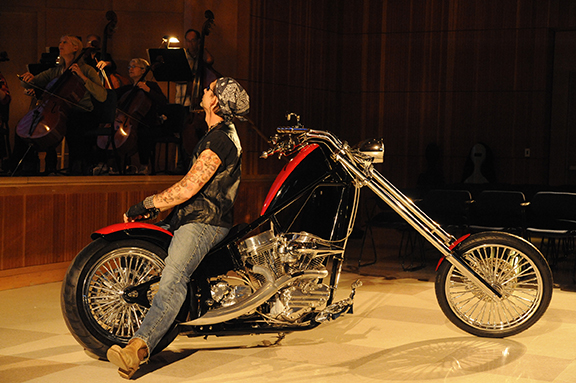
My performance with the Portland Chamber Orchestra of "The Creatures of Prometheus. I wrote and performed the piece for PCO.

My performance with the Portland Chamber Orchestra of “The Creatures of Prometheus.” I wrote and performed the piece for PCO.

Craig is laughing at me and with good reason. Through a post he asked a simple question about people building boxes around themselves. He issued a singular challenge: to apply what I found in his post to my writing. I’ve had more ideas and random ruminations than I know what to do with; he opened a big can. Before I let it go, I want to wade into the last part of his question: when did I know to create my stage?

Craig positioned a stage (showing up) as the polar opposite of a box (hiding) so I read his question as asking when I decided to show up. I’ve learned that a stage can be a strategy for hiding, too, so “showing up” means much more than just being visible.

Many actors get on the literal stage because they are seeking appreciation or approval from the audience. When anyone mounts a stage, either literal or metaphoric, to seek approval, they split themselves. By definition, they must hide their intention (to seek approval) and in so doing, give away their power and potential. Young teachers often pass through a growth phase in which they seek the approval of their students; they want to be liked and their need for appreciation neutralizes their capacity to teach. Ironically, in both cases (actors and teachers), the moment they cease splitting their intention they become great at what they do and their respective audiences can’t help but appreciate them. That’s the way power works.

Several years ago I was working with a corporate client who was upset because he felt uncomfortable with what he’d learned from my workshop. I told him that I could either serve him or please him but I could not do both. I understood that my job was to help him grow and that necessarily required discomfort. If he wanted to be pleased he needed to hire someone else.

I hid for years. I split myself for decades. My dear friend Roger once said that one day in his middle 30’s he realized that he was no longer becoming someone. He was someone. Everyone navigates the “becoming.” It is a necessary and vital growth phase and is often filled with fears of inauthenticity and split intentions; everyone wants to be appreciated and everyone sacrifices their primary intention in a mad dash for approval until one day, if they are lucky, they realize the only approval they need is their own. My revelation came when I was preparing to go on stage to perform. I realized that I was steeling myself against the audience (preparing to hide). I was assuming that they were going to judge me, which is a form of approval seeking. It was like a cold slap. I’d never had a bad experience with an audience. I’d only ever experienced appreciation and support and wondered why I was steeling myself against the very people I was there to serve. My need for approval dropped like a stone. I went on stage, perhaps for the first time in my life, present and powerful. I didn’t need anything from them. I was bringing life and my gifts to them and that was all that was required. My whole world flipped. No armor. No mask. No need other than to offer my gift on that day to that specific group. Whether or not they accepted my offer could no longer be my concern.

I’ve since learned that discomfort is a very valuable thing. It is present anytime learning and growing is happening. In fact, if there is no discomfort, there’s no learning. And that is the plaque nailed to my stage.

Go here to get my latest book, The Seer: The Mind of the Entrepreneur, Artist, Visionary, title_pageSeeker, Learner, Leader, Creator…You.

Go here for hard copies (Amazon;-)

Hear Your Words

[continued from EAT WELL]

Craig originally wrote a post about the boxes people construct around themselves and the alternative choice of creating a stage.  After his post he challenge me to enter the fray and muck about with boxes and stage and I’ve been pleasantly surprised at how much I have to say – I’ve followed the thread for a few days and will probably keep following it for a few more. It’s a rich exploration!

Yesterday I mentioned that I had the opportunity to work with Skip’s Human Centered Design class at the Illinois Institute of Technology in Chicago. I tossed the group into several exercises and experiences designed to help them understand how people story themselves. Specifically, we took a look at language as the building block of perception. We captured on video portions of my time with the students so rather than write about it, here’s clip from the day. [Note: the real riches start about 2:30 minutes in but I thought the students questions might be of use to set the stage so I left it in the cut. They’d just completed an exercise of misnaming things]. Let me know if you find some juicy bits about the boxes we build around ourselves and our attempts to “step outside of the box.”

[to be continued]

Go here to get my latest book, The Seer: The Mind of the Entrepreneur, Artist, Visionary, title_pageSeeker, Learner, Leader, Creator…You.

Go here for hard copies (it’s Amazon…)

Eat Well

"Lovers," a work in progress by David Robinson

“Lovers,” a work in progress by David Robinson

[continued from LOOK BEYOND THE BOX]

I’m looping back to Craig’s questions concerning boxes and stages. I think the next question to wade into is about what I see from my stage and when did I know to create my stage.

This is the view from my stage. It may sound bleak at first but stay with me:

Yesterday I had the opportunity to travel into Chicago and work for a couple of hours with Skip’s class at the Illinois Institute of Technology. They are budding entrepreneurs. There’s lots of energy in the world today bubbling around this word, “entrepreneur.” Accelerators and incubators are popping up everywhere. We are now a society gorging on new technology; since we are modeled on the Rome of the Caesars we have little patience for digestion (it takes time) so we prefer to vomit what we just consumed to make room for the next course. We are living at the time of an idea feeding frenzy and mind blowing technological advances. Folks with resources but few ideas are hungry to link up with folks with ideas and no resources. Everyone is insatiably hungry. No amount of gorging will satisfy the hunger.

In our world of rabid consumption, nutrition isn’t necessarily a high priority. I mean that literally and metaphorically. For evidence, look at what the networks call “news.” Long ago we realized that entertainment is more profitable than reporting so reporting is now entertainment. It matters little if there is substance to the story so long as people consume it. More evidence: one of my favorite rants of the past decade came from Dane, a neighbor, who was sitting on his stoop eating a bag of potato chips. He called me over to look at the ingredients listed on the package. High on the list, in fact the second ingredient listed, was sugar. Dane screamed, “There’s more sugar than salt in my chips!” He fumed, “I’ve been reading the ingredient lists on everything and there’s sugar in everything. It’s more important to get us hooked than to feed us anything of substance!” Of course, the punch line to the story is that he ranted with his mouth full of chips. Another bit of evidence: I stopped counting the times I’ve heard a politician say, “We have to weigh our interests against our values.” You can find a variation of this statement in the news of the day everyday. You can find an example of it in your life each day, too. How do you weigh your interests against your values?

This consumption/nutrition question is the epicenter of confusion for lots of people. It is the reason many boxes and stages are constructed.

Most people that I work with are seeking greater meaning. They want a richer experience of life. They want to fulfill their potential. In the midst of their consumption of time, they feel consumed. They have little time to breathe. They have little capacity to develop deep, meaningful relationships. They are finding that their stuff doesn’t fill the void. They are finding that their achievements are hollow unless they serve the real needs of others. They always find that what they seek is something that they’ve had all along: relationships.

There is no magic to sustenance. Slow down and enjoy your meal: literally and metaphorically. Slow down and make the meal: literally and metaphorically. Slow down and make the meal from food that hasn’t been processed: literally and metaphorically. Care for the soil and you will grow healthy food: literally and metaphorically. This requires slowing down. All of these are about the relationship you have with your world. All rich relationships require lingering and the riches are always in the relationship. Always.

Substance is always about a relationship. Relationship can’t be consumed; it must be entered and/or engaged. Tend the relationships, especially the relationship you have with yourself. In this way, the box or stage you construct will be built from self love and self love is the wellspring of love for others.

I see riches in the relationships all around me and a species (homo sapiens) trying to remember what it means to eat from the tree of life.

[to be continued]

Go here to get my latest book, The Seer: The Mind of the Entrepreneur, Artist, Visionary, title_pageSeeker, Learner, Leader, Creator…You.

Go here to get a hard copy (it’s Amazon)

Look Beyond The Box

one of my paintings (untitled) from the Yoga series

one of my paintings (untitled) from the Yoga series

[continued from SEE THE BOX]

Craig’s question is bigger than a single post can accommodate. He’s both reflecting and asking several questions about the boxes people construct around themselves, about building personal “stages” and what becomes visible to us when we open ourselves to life without editor or inhibition. He’s asking deep river questions about the assumptions we make when we look at others through the lens of our own experience. He asked about what I see from my stage and when did I know to create my stage. And, here’s the kicker question, “When was the last time you stepped up and saw something you didn’t know was there?”

I want to start with the last question first because I believe it colors all of the other questions. At this point in my life, there isn’t a day that passes that I don’t see something surprising or new. I know that sounds like a superficial dodge until you consider that it wasn’t always the case. Like everyone else, I was schooled in a long series of mistaken notions: 1) that people need to know where they are going before they go there, 2) people need to know what they are doing before they do it, 3) knowing is something that happens in the head, and 4) that truth is singular and knowable; believers in right/wrong paradigms are especially fond of this point.

It took a few years (okay, decades) to realize that “knowing” is a process and not an arrival platform and, therefore, no body knows. People build boxes around themselves because they think they must know what is unknowable. People build boxes around themselves because they think they must look a certain way or think what others want them to think. People build boxes around themselves in an attempt to control what they can never control. No one really knows where they are going (well, everyone knows where they are going but dying is an existential question – a topic for another post). No one knows what tomorrow will bring. As Marshall McLuhan wrote, people step into the future with their eyes in the rearview mirror. We make sense of today through yesterday’s eyes so we can only “know” what happened, not what will happen. The day before September 11, 2001 people walked into airports to greet their friends and relatives at the gate. And then, the very next day, like millions of people, I sat in front of a television and watched a plane fly into the World Trade Center. That day I understood that what I thought I knew was basically useless.

Each of us has, at one time or another, had a personal September 11th. People learn. They grow. They have experiences and then make meaning of their experiences. People change. Life is a moving target. At one point in my life I started my own school within a school. It was experiential and filled with filmmaking and theatre and performance art. At the beginning of that era of my life I thought I would run that school until I the day I died. Three years later, I was done with my exploration in education and I surrendered my cushy tenured position and ran for the air of uncertainty. People story themselves according to inner imperatives through lenses of past experiences. The idea that we are primarily rational and reasonable is…not rational or reasonable.

At some point, when you cease thinking you know stuff, your eyes open. You see beyond what you think. Everything is surprising beyond the dull-wit of thinking. Thinking (a language-based activity) will always be an abstraction. Put a word on something and you delude yourself into thinking that you “know” what it is. This is especially heinous when applied to other people. People build boxes around themselves because of the words placed on them or the words they place on themselves.

Mostly, people build stages for the exact same reason. Saying, “I’m not going to be influenced by others; I’m going to act independent of others” is also a delusion constructed from notions of “knowing” or trying to determine how others will see you. Most stages are constructed from the desire to control. Sometimes the biggest box looks like a stage.

When you no longer need to know anything, you see surprising things everywhere you look.

[to be continued]

Go here to get my latest book, The Seer: The Mind of the Entrepreneur, Artist, Visionary, title_pageSeeker, Learner, Leader, Creator…You.

Go here for hard copies (it’s Amazon, don’t be afraid;-)


Stalk The Story

title_pageLast year I wrote a book and only recently got around to publishing it. One of the many benefits of waiting several months to publish is that I forgot what I wrote so, in preparing to publish, I got to read my book as if someone else wrote it. I got to discover my own book!

Now that the book is out in the world I’m receiving lots of requests to talk about it or coach to it. The requests are driving me to read it again and again – only through a different set of eyes each time. The question I’m asking myself is this: What is teachable beyond the obvious? I end each chapter with exercises and ideas but the real teachable moments happen within the story (just like life!). Here’s a “for instance” tidbit from the book:

When a story stalks you through your lifetime you inevitably learn some things about stories; you unwittingly stalk them, too. One of the first things I learned was that the word “beginning” is arbitrary. An end is always a beginning. A beginning is always an end. What we call a beginning or the middle or an end is really a simple matter of our point of view. It depends on what we see.

We rarely recognize the teachable moments in our lives. They seem so distant or have become so wrapped in justification that we don’t recognize them as opportunities for learning. A teachable moment is often embedded in the story that stalks you. In the book I weave the story of Parcival through the main narrative because Parcival gives his voice away. The main character of my book gives his voice away. He invests in the idea of what he should be and, so, loses sight of who he really is. He betrays himself. I’ve yet to meet a person who hasn’t given their voice away or lived from an image (a “should-do”) instead of honoring their “I-want-to-do.”  A moment of self-betrayal is a story that will stalk you all of your life. It will follow you until you reclaim your voice. And, the capacity to reclaim voice comes from a lifetime spent stalking the moment of self-betrayal. It’s a life story loop.

What are the stories that stalk you? The answer to this might not seem immediately apparent but if you take a moment and reflect you’ll likely come up with a moment (or several) that has shaped or continues to shape your life.

A moment of betrayal and a moment of reclamation might make a tight little beginning-middle-end story or might represent two beginnings or two ends, depending on how you decide to see it. Wounds are often opportunities for growth. Triumphs are often the beginning of a new chapter. We grow. We learn. We story and re-story ourselves. We give pieces away and reclaim them later. What’s important is that we learn to see our dance, capture the moment, and grow.

Go here to get my latest book, The Seer: The Mind of the Entrepreneur, Artist, Visionary, title_pageSeeker, Learner, Leader, Creator…You.

Go here to get hard copies