Take The Time [on Two Artists Tuesday]

“Nobody sees a flower – really – it is so small it takes time – we haven’t time – and to see takes time, like to have a friend takes time.” ~ Georgia O’Keeffe

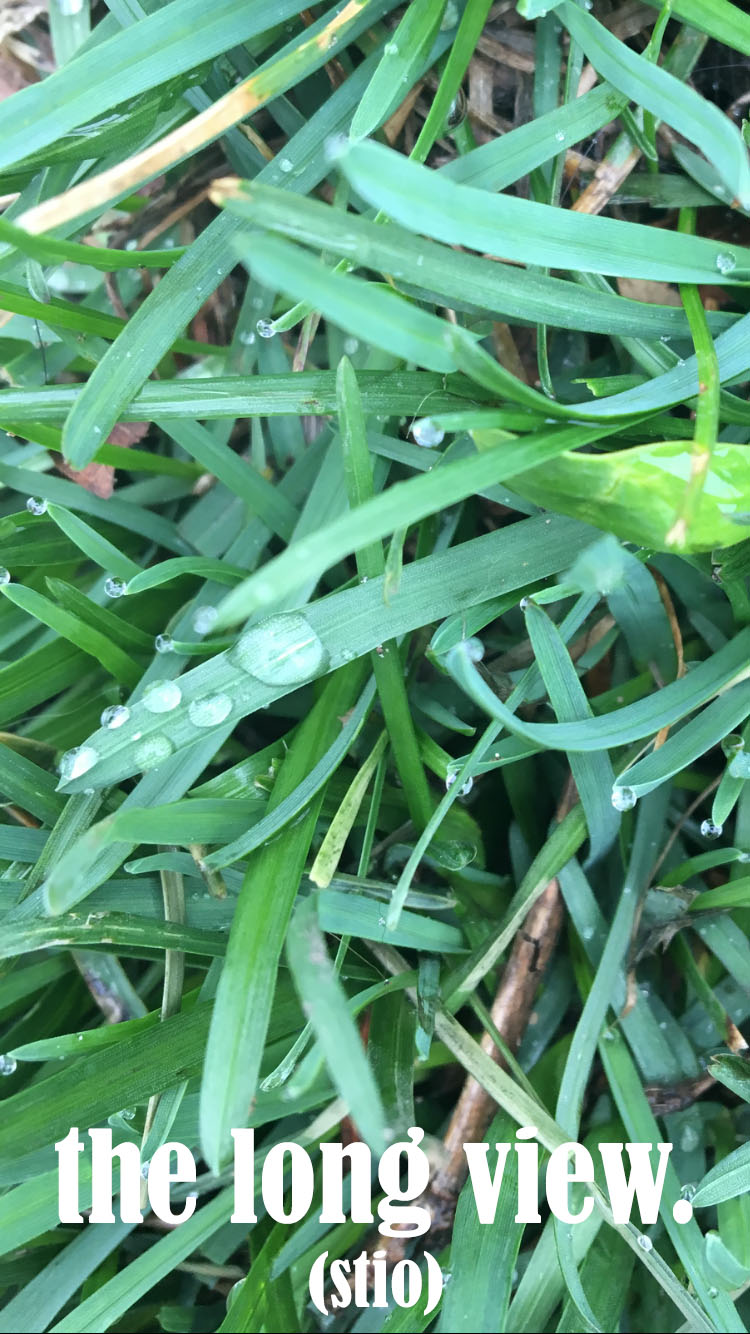
To see takes time.

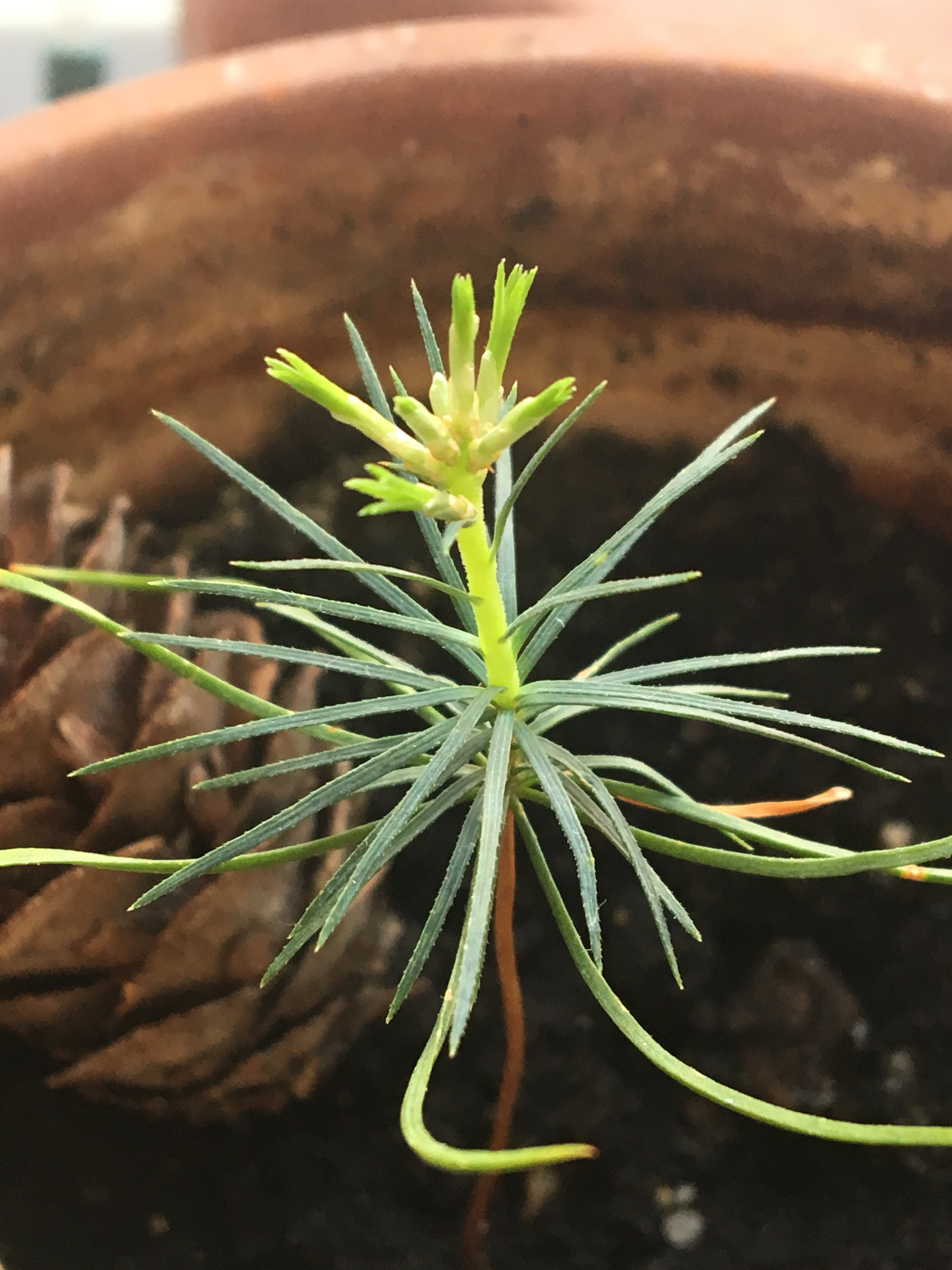
Desi has been teaching us to see. She sits on the table in a clay pot. We join her at the table every evening to sip a glass of wine, watch the light wane, the robins and cardinals dart across the yard, debrief the day. We’ve been watching Desi all winter, spending time with her. Watching.

Truth be told, I did not expect Desi to live long in her pot. She’s seemingly so fragile, her “trunk” no wider than a sewing needle. And yet, throughout the winter, her robust green needles never yellowed. She thrived, verdant in her unlikely home.

Kerri talks to Desi more than I do. I’m the silent male but I regularly send her my good thoughts. She regularly reciprocates. Kerri and Desi can carry on for quite awhile about nothing in particular. Soil. Water. Warm days. Pine-tree-talk. Hope.

Hope. A few weeks ago, Desi stood taller. New tender sprouts pressed from nowhere , tiny arms reaching for the sun. We celebrated Desi’s new heights. We encourage her to keep going – and she does! Now, each evening, first thing when we sit at the table, we spend time ‘seeing’ Desi.

In a hard pandemic time she lightens our spirits. She cares nothing for the news cycle or the ridiculous foibles of bipeds and we find that refreshing. Most of all, if, for a moment, we forget that we are surrounded by hope – it’s everywhere – we take a moment or two and have a sit-down-visit with Desi. We take the time to see what is always right in front of our eyes.

read Kerri’s blog post about DESI

Be The Miracle [on Merely A Thought Monday]

“The infinity in the microscope is as dazzling as that of the cosmos.” ~ John O’Donohue

After my surgery, the doctor said, “You my friend are now a modern medical miracle.” It’s true. Had I been born in another century I would not have survived. In fact, had I been born in another century, I would have met the average life expectancy of 30-40 years. Each and every one of us, walking the streets with an expectation to live beyond our thirties, are modern medical miracles and indebted to the brave explorers of the microscopic cosmos.

Early in this pandemic, before it hit the shores of these divided-united-states, we watched the movie Contagion. So much of the world painted in the film was spot on. Pandemic deniers decrying the virus as a made-up assault on their freedom. Charlatans selling miracle cures and misinformation. Conspiracy theories run amok. The initial panic emptied shelves at the grocery store. Quarantine. An economy in tatters. A weary and anxious populace awaiting a vaccine that would stop the micro-assault. A microscopic threat vanquished by a microscopic man-made-miracle.

When we pulled into the abandoned-drive-through-bank to receive our vaccines, I felt that I was in the movie. We’d placed our names on a list to receive vaccines that would otherwise need to be discarded. The call came on a Friday afternoon, “Come now!” We jumped into the truck as the sun was setting on a frigid snowy day and raced to the given address: an abandoned bank turned into public health center. We were directed to stop at cone number 1. Nurses in snow pants, knit caps and mufflers came out to the truck. It was so cold that we had to open the door to communicate, the windows were frozen and would not roll down. A bit of paperwork, coats shed and arms exposed, and the vaccines were administered. Coats and gloves and hats were quickly donned again. We were asked to wait at cone number 1 for 15 minutes. They gave us a flag to wave if we needed help.

As we waited, engine running to beat back the bitter cold, we admired those amazing women who gave us our shots. They were absolutely delightful, upbeat, and incredibly kind. Pandemic. A blisteringly frigid day. They’d been giving vaccines since early in the morning, repeatedly taking off their gloves in frostbite conditions. We were the last two of the day. And there wasn’t a hint of exhaustion or suffering or complaining from the cold. “People can be amazing,” Kerri said. “It’s good to remember that sometimes.”

It was good to remember. Dedicated people selflessly serving others in the face of a deadly virus, enduring extreme cold, extreme misinformation, tip-toeing across ice and politics to bring big-heart-comfort and a bit of modern miracle to the dazzling cosmos called my body and yours. My health is your health. Intimately linked as we pass in the grocery store or on the street or trail, across the nation and the world. The microscopic world does not know us as individuals and cares not about our investments or beliefs or freedoms, imagined or not. All that I know is that I am, once again, a modern medical miracle, and owe a deep debt of gratitude to the men and women at the microscope and those that stand for hours in the cold.

read Kerri’s blog post about VACCINES

Really Look [on KS Friday]

20 watches the house, the dog and our very large cat when we are away. To keep us in touch with what’s going on at home, he sends us mystery photos: common things around our house made mysterious through an extreme close up or unusual angle. Our job is to solve the photo-riddle. I love the game because, no matter where we are, it instantly makes me look at the world in a different way. Or, better said, it makes me look. Really look.

I also appreciate the game because, upon returning home, I run around the house looking at the objects he transformed into enigmas. All that I have grown dull to seeing re-emerges as rich in color and shape and texture and story.

Kerri has the visual sensibility of a contemporary artist. She went down a path of music but might just as well aimed her artistry at the visual. Hers is a natural sense of design. Her camera might as well be an accessory or visual-opportunity-attachment since she moves through the day capturing photographs of passing detail. I’ve known her to be paying bills and jump up suddenly to catch the light on the wall or the texture of the door. Her eye is never passive. She and 20 are alike in that. They are visual twins with unique sensibilities and both serve to keep my eyes open and looking-beyond-what-I-think.

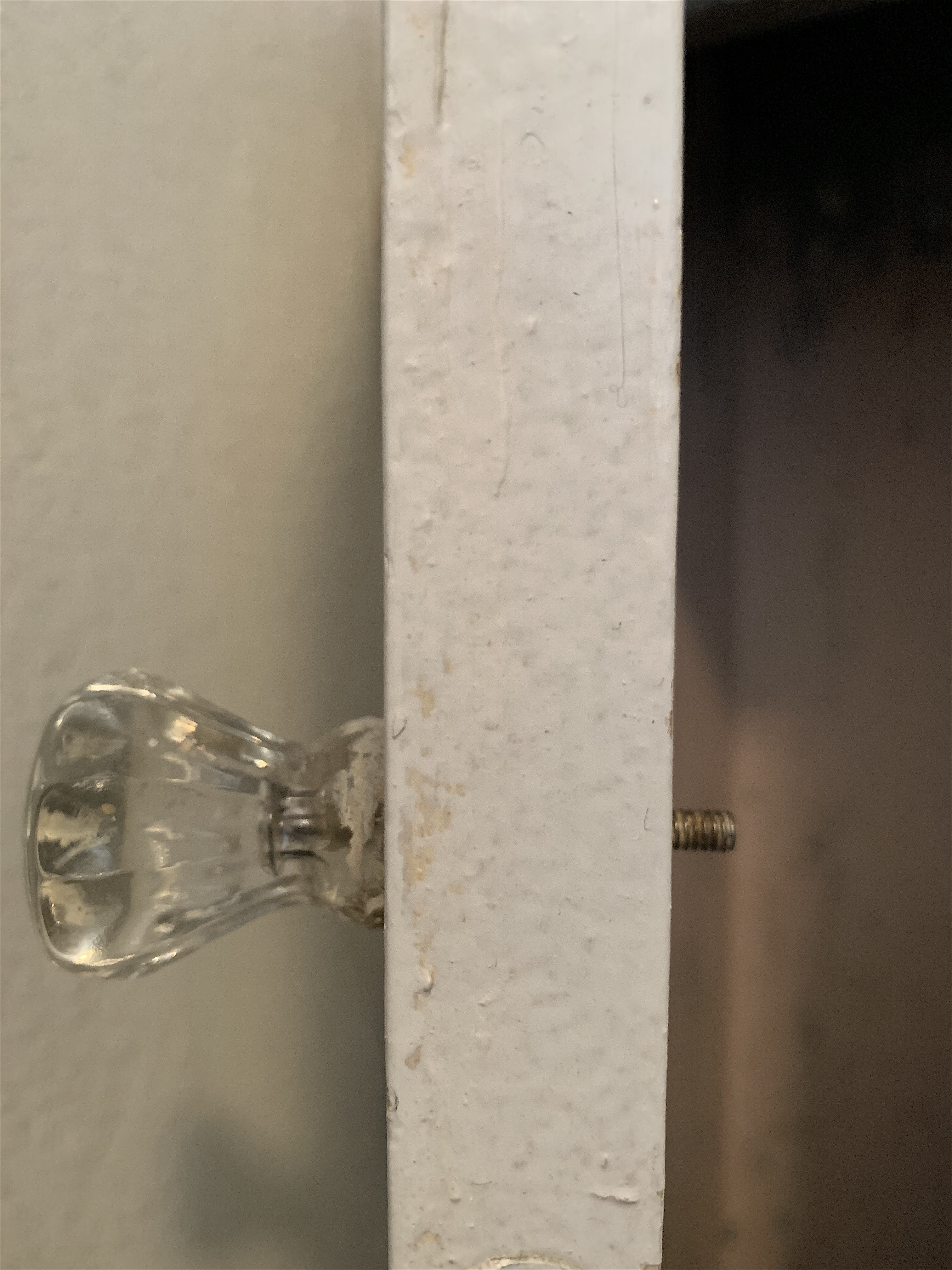
Yesterday, in mid-sentence, she stopped and said, “Oh! I want to show you something!” turned and ran down the hall. When I started to follow she said over her shoulder, “You can’t look! Stay there!” A minute later she returned, sheepish, and showed me the photo she’d just taken. “Do you know what this is?” she beamed. Too excited to wait for my answer she announced, “It’s the laundry chute! Isn’t it cool!” She walked away studying her photograph, muttering, “It’s so coooool.” I ran to the laundry chute to have a look. To really look as if for the very first time.

read Kerri’s blog post about THE CHUTE

find Kerri’s albums on iTunes

Catch The Glimmer [on Two Artists Tuesday]

Yesterday a treasure arrived in the mail. Mike sent it for my birthday. It is a painting, a study for class that her father, DeMarcus, did when he was a young art student. He was learning to see and use color. This painting hung in her hallway. More than once I stopped and studied it, his color swatches carefully placed at the bottom of the page. She must have noticed that I was drawn to this painting.

Many years ago, Mike gave me DeMarcus’ notebook from this same class on color. It is from a time before it was possible to go to the drugstore and buy a notebook. DeMarcus cut the paper, made a cover from old Levi’s, starched for strength, and stitched it together. The pages, a hundred years later, are tender, so I am careful when I read them. Reading his notes always buoys my spirit since they are a record of his revelation, of training his eyes to see.

During the bitter cold of the past few weeks, an entire ice-age played out on the top of the awning over our backdoor. A creeping ice shelf moved slowly down the awning, crawling over the side. One evening, the long fingers of the ice-age reaching for the deck below, became brilliant with the winter colors of the sky. Kerri grabbed her phone, flung open the door, frigid air blasting into the warmth of the room, she stepped out and snapped photos of the fingers.

“Look!” she said, showing me the screen. “I love this picture!”

Just above the center of the photograph, a glimmer of electric blue. Amidst the suspended bubbles and greens and purples and light-reflections, a tiny beacon of vibrant blue. I could almost hear DeMarcus laughing.

read Kerri’s blog post about ICICLES

Understand That Little Is More Than Enough [on Merely A Thought Monday]

I think that maybe\ I will be surer\ of being a little nearer.\ That’s all. Eternity\ is in the understanding\ that that little is more than enough.” ~ R.S. Thomas [via Anam Cara by John O’Donohue]

And so our dear H is gone. I have written about him before, about how I learned from him how to age well. To “have a wonderful urgency to live life to the full” [John O’Donohue]. H was a study in wonderful urgency. He did not grow cranky as he grew old. He did not darken his sight with what he could no longer do. He gently pushed the edges of what he could do. He was a master of focus-placement.

I have known many people who proclaim a spiritual life. They are quick to advertise their illumination. They live to stand on the mountain top and call attention to their heights. H was not one of those. He simply lived his faith as he lived his life – without need for acknowledgment or recognition. No trumpet necessary. I suspect that his why I was drawn to him. He was simon-pure. Genuine.

“We’re afraid you’re going to take her from us,” H said to me, more warning than salutation, when I sat next to him in choir. It was my first rehearsal in my first choir and, as an avowed non-singer, I was intimidated. Kerri was the director. She’d recently asked H, at 87 years old, to rap Via Dolorosa. He’d jumped at the challenge and, as I heard the story, performed brilliantly, complete with costume and bling. He and Kerri were thick as thieves.

He guided me through that first rehearsal, laughed when I honked a bad note – which was often, and, by sweet example over time, steered me through my confusion until I found more joy than fear in singing. At the end, as he was moving into his 94th year, just before the pandemic made rehearsals impossible, it was my joy to help him find his place in the music. A perfect circle.

This morning, just before we received the news of his passing, I spent some time in the final pages of Anam Cara. The last words are a Blessing for Death and this phrase struck me: May you live compassionately and creatively and transfigure\ everything that is negative within you and about you. When the news came of his passing, I was certain it was H who’d tapped me on the shoulder and whispered, “Pay attention to this phrase.” It describes him perfectly. It encapsulates what I believe, H, without words, was trying to teach me. Through compassion and creativity, transfigure everything that is negative within you and about you. That is how to live well and age with wonderful urgency. No trumpet necessary.

read Kerri’s blog post about H

Listen To The Lake [on KS Friday]

The sun poured in the window this morning. We sat in it. No, we basked in it, ate breakfast, sipped coffee. Simple pleasures. Endless appreciation. We reminisced about our childhood homes. Kerri recalled the layout of the den. I described the kitchen in my growing-up house. We remembered cooking smells and Formica table tops.

Our story zones expanded to include the many chapters of our lives. Multiple eras. Times that seemed as if they would never end. Times that passed too quickly. We imagined a day when we would reminisce about these times, pandemic times, both the hardships and the appreciations. For instance, in our isolation, we’ve created an end-of-the-work-day-ritual called ‘snack time.’ A glass of wine, french fries hot from the oven or a pear and cheese. Olives. We sit at the table we placed by the window, watch the day wane, and savor. I suspect snack time, borne of the pandemic, will be with us for the rest of our lives.

When in my old age I tell the story of the pandemic times, when the hardships fade in importance (as they always do), I will tell the tale of life slowed down. I will remember how limits made movement less frenetic and much more mindful. Rather than doing more, we pared down. We did less and experienced more. We placed increased importance on the simple things. In fact, we placed importance on the important things. Connecting with friends and family, not out of obligation or unconscious pattern, but out of necessity and intention.

I will talk about our walks, already central to our daily happiness, how they took on a wholly new significance. Getting out and walking became an exercise in paying attention, in absolute appreciation of the simple miracles. Affirmations of life. The magic appearance of the robins on a frigid day. The sunset bringing fire to the ice in the harbor.

I will tell the story of the day we were stopped in our tracks by the song of the ice on the lake. It sounded like whale song. I will tell the story of standing still in blistering cold, listening in utter amazement until ours eyes watered and our fingertips burned, until we looked at each other and in unison said, “Snack time!”

read Kerri’s blog post about LAKE SONG

Breathe and Make Choices [on Two Artists Tuesday]

“The greatest weapon against stress is our ability to choose one thought over another.” ~ William James

A note from the Rejuvenation Fairy: the relief we seek may depend upon the phrase we choose. For instance, consider this phrase: coping mechanisms. What ease might become available if we viewed ourselves as something other than machines? Turn this dial. Adjust this screw. Add a little oil. Check the battery. Do this, then that will happen. Turn down the pressure gauge. Talk to others. Take a break. Cause and effect.

Breathe. Sentient beings are much more complex and subtle than apparatus made from iron and steel.

We story ourselves. For reasons no one will ever fully comprehend, we sort to the tragic. We imagine the worst. Ask any good storyteller and they will confirm that conflict is the driver. Yearnings meet obstacles and stories ensue. Everyone, without exception, is telling themselves a story. Everyone, without exception, is starring in their own movie, complete with impossible mountains to climb, monsters to face, dreams that remain just out of reach. Robert Sapolsky has it right: zebras don’t hold onto their tale of stress while human beings are reticent to let it go. We like to tell it again and again and again.

If we cast ourselves as victims in our movie, our stories will be filled with ogres to blame. If we reduce ourselves to the mechanical, our stories will be endless attempts at fixing what’s broken, looking for the right hose to replace. How to recharge the battery. The fortunate few recognize that their movie might be a story of choice. Choices made within given circumstances. The storm, like time, passes. How do we stand in it?

There’s little doubt that we are living in stressful times. There’s nothing like a deadly pandemic to turn up those mechanical pressure gauges. Add another notch or two of pressure with extreme national ideological division, cowards at the switches of government, mix in some economic stress…there are plenty of choices on the angst-menu. All are visceral. All are circumstances to the story we choose to tell, the story I choose to tell.

I came across a few universal coping strategies. Eat healthy. Exercise. Give yourself a break. Get plenty of sleep. Talk to others. Recognize when you need help and ask for it. I wondered why these good choices are reserved for times of stress. Why not give yourself a break as an everyday expectation. Talk to others. Eat healthy. Weave a calm center it into the fibers of daily life. Make choices. Especially in the story you tell yourself about yourself. The thought upon which you choose to fixate, to play over and over again in your movie-mind.

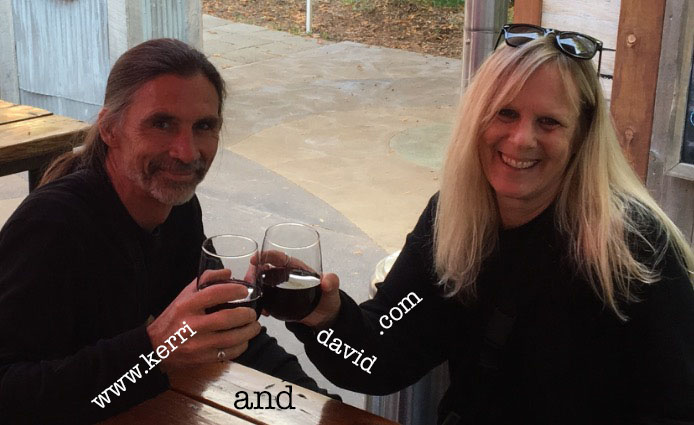
When Kerri and I fall off the pony and run around like our hair is on fire, we make chicken soup. I am the sous chef. She is the master mind. The recipe comes from her mother so the making of the soup is more than food prep, it’s a love-touch to her anchor. We touch love. And, of course, defying the advice of experts to avoid alcohol, we enjoy a glass of red wine. We choose the glasses: Jamie’s? Or Skip’s? Or Joan’s? For our wedding, we were gifted with many special wine glasses from many special people. Recently, Jay and Carol and Rob sent us wine. When we clink our glasses, we touch the depth of our support and reach of our friendships. We call 20 and laugh. As the soup simmers and the wine disappears, we realize that our hair is not on fire, that, although we are not zebras, we are infinitely capable of releasing our tale of woe. We need not cope or distract. We can grasp hold of the full tale of the enormity of our lives. We need only refocus our eyes, see the depth and expanse of our story and choices, enjoy the warming soup. Appreciate the story of the wine.

read Kerri’s blog post about CHICKEN SOUP & WINE

Start Here [on Flawed Wednesday]

Let’s start here: a strange attractor. “Chaos has its own pattern, a peculiar kind of order.” This magical definition pairing chaos and order is from the good folks at Merriam-Webster. They provide definitions of words. Words are a collection of symbols, called “letters,” assigned to specific sounds which, when placed in a sequence, carry meaning. For instance, D-O-G points to something unique and different than, say C-A-T. A collection of words placed in a sequence carries even more complex meaning. Dogs chase cats.

Thought. Expression. It’s nothing short of miraculous if you think about it. And, if you are thinking about it, you, too, are a carrier of meaning. The symbols and their sequence are useless without me and you, reaching to each other, agreeing on the general meaning of the sequence of sounds. And, more to the point, we not only carry but we create meaning. With our magical sounds-in-sequence we are capable of generating the high art of story, the supreme gift of understanding each other. We can reach each other, touch each other, move each other. We can find each other with our words. We shape each other with our words.

From the chaos of all-possible-sound, to the pattern of word and alphabet, to the order of sentence, to the power of story. Anyone who tells you that they are not creative is missing the point of their existence.

I suspect the power of story is infinitely more powerful than we might realize. We take it for granted, this extraordinary capacity, this glorious gift. You’d think we’d have more appreciation for our high art of language, our transcendent ability of speech. You’d think we might honor and protect truth and fact. They are the compass, the map through the forest of all possible tales. You’d think we might use our most powerful accomplishment to find, or better yet, to create shared ground. Common good is an intention, a creation.

You’d think.

There’s a vast difference between disagreement, conflicting points of view, and lie.

The point of a disagreement is to find agreement. After all, single-point-perspective begins from two disparate points of view. It is a “coming together.”

The point of a lie is to mislead. To deceive. To create false impression. False ideals. To foster disagreement. It is a tool for exploitation. It is meant to render apart.

Because we so easily sequence our words, pattern our thoughts, we are capable of using our magic, our ordered language to create…order. We are also capable of using it to create chaos. Disorder.

To help. To hurt. To accomplish. To disrupt. It’s a matter of intention. The direction of intention. How do you intend to use your precious gift?

The real power comes when we learn to think beyond our belief. To question. To ask.

The first rule of education, an essential rule in shaping precious words into thoughts, into actions, is simple: check your sources. Make sure the story you’re embracing, the piper you are following, arises from a well spring of good intention. That it has an ethical center. Check that it seeks to clarify and reach rather than obscure and demonize. Check that your thought-house is not built on a lie.

Check your sources. Of information. You, too, are a source of information, so…check your sources.

With our most powerful capacity to pattern, to create, to think in words and sentences and stories, we can be a carrier of the lie-virus or we can be part of the cure. Reach or reject. It is our choice, through how we use our miracle words and language, what we agree to create together.

Let’s start here.

read Kerri’s blog post on AGREE

Conceal To Reveal [on Two Artists Tuesday]

When I was tilting at windmills, one of my favorite things to facilitate was mask work. I brought masks to lawyers, to CEOs, to teacher’s, government workers, elementary school students, corporate trainers, business coaches and sometimes to actors. There’s nothing better than a mask to pop open possibilities and challenge petrified thinking.

Masks conceal and reveal. They serve the paradox and, therefore, are tapped into the root of truth.

It’s impossible to work with masks for long before realizing that the faces we wear everyday are also masks. We “put on” a smile. We attempt to hide what we feel by the mask we manufacture. Some faces freeze in masks of indifference or masks of disdain. We perform ourselves, and craft our masks accordingly.

Many cultures around this world believe the mask opens a communication with the gods. Don a mask and something bigger-than-you speaks through you. When I paint I often have that feeling. Artistry sometimes means getting out of the way so the creation can flow.

It’s why I brought masks to lawyers and CEOs and corporate folks and teachers. To introduce them to the fields that bloom beyond their need to control. So much of their lives, so many of their problems and challenges were wrestling matches of control. They were actively creating the obstacles that they desired to remove.

What do we actually control when we harden our faces over what we feel? What do we gain by attempting to control what others see or think or feel? We are makers of our own prisons. We are deluded by our fantasy that we have the capacity to determine what others see. The only control we exert is upon ourselves.

The mask work makes abundantly clear that control is not power. Power – creativity – flows. It is the dance of the artist to master technique, to learn control, and then transcend it. To get out of the way.

My favorite moment, with every group, in every circumstance, came when the masks released the people and they slowly, respectfully said goodbye and removed them. Their faces was also mask-less. It was like seeing infant’s faces. Bright. Open. They would, for a few brief moments, look at each other, unmasked and unprotected. Simply astonished at being alive, together, in the world.

read Kerri’s blog post about MASK

See It For What It Is [on DR Thursday]

In the aftermath of my calls with Horatio I often feel as if I’m descending the mountain, as if I’ve just spent a few precious moments with the wise being sitting at the top. He will no doubt frown at my assertion because, as he says, he puts his pants on one leg at a time just like everyone else. Pants or no pants, Horatio is clear-seeing. He is in-sight-full.

This morning he interrupted my diatribe about the insurmountable dangers of competing information bubbles. “We have to stop the narrative of polar-opposites,” he said, “We’re not a polarized nation. We’ve been invaded by opportunists.”

His point was simple and distinct: It’s not a two-way street. PBS is not the polar opposite of FOX. CNN is not in an apples-to-apples comparison with the likes of OAN. “PBS has a virtuous intention. CNN has a virtuous intention,” he said, “The same cannot be said of FOX or NewsMax or Limbaugh and all the rest. They are opportunistic predators.”

Waging war on truth for profit is not the same as attempting to report the truth.

Horatio continued, “PBS or CNN might be feckless or inconsistent, they may get things wrong, but they are not predatory. They serve a decent intention and the same cannot be said of FOX.”

“The incentive for hucksterism is vibrant in the United States. Apply game theory,” he quipped. “The incentive for waging war on us and our institutions for personal power, personal gain and financial benefit is great. It’s been with us for a long, long time and is now perfected to a fine art. We are living in a confluence of hucksters.”

Josh Hawley. Lindsey Graham. Marco Rubio. Ted Cruz. And all of those who voted not to certify a legitimate election, even after a violent insurrection on the Capitol driven by their willing support of fabrications. Opportunistic predators all. Yes, a confluence of hucksters.

He paused. “We are not radicals,” he sighed. “We’re not being radicalized. PBS and CNN – the NY Times – are not the ideological polar equivalent of FOX or Limbaugh. They are not attempting to radicalize us or disseminate lies for power, profit or position. We have to stop it. We have to say it differently. The press needs to say it differently. Call it out. The press, the real press, not the hucksters, are keeping the world alive. They’re doing the work and the work is often dangerous. It’s inspiring.” he said. “We are living in a golden age of the press. The real press as distinct from the opportunists, the predators.”

They are not the same. Horatio is right.

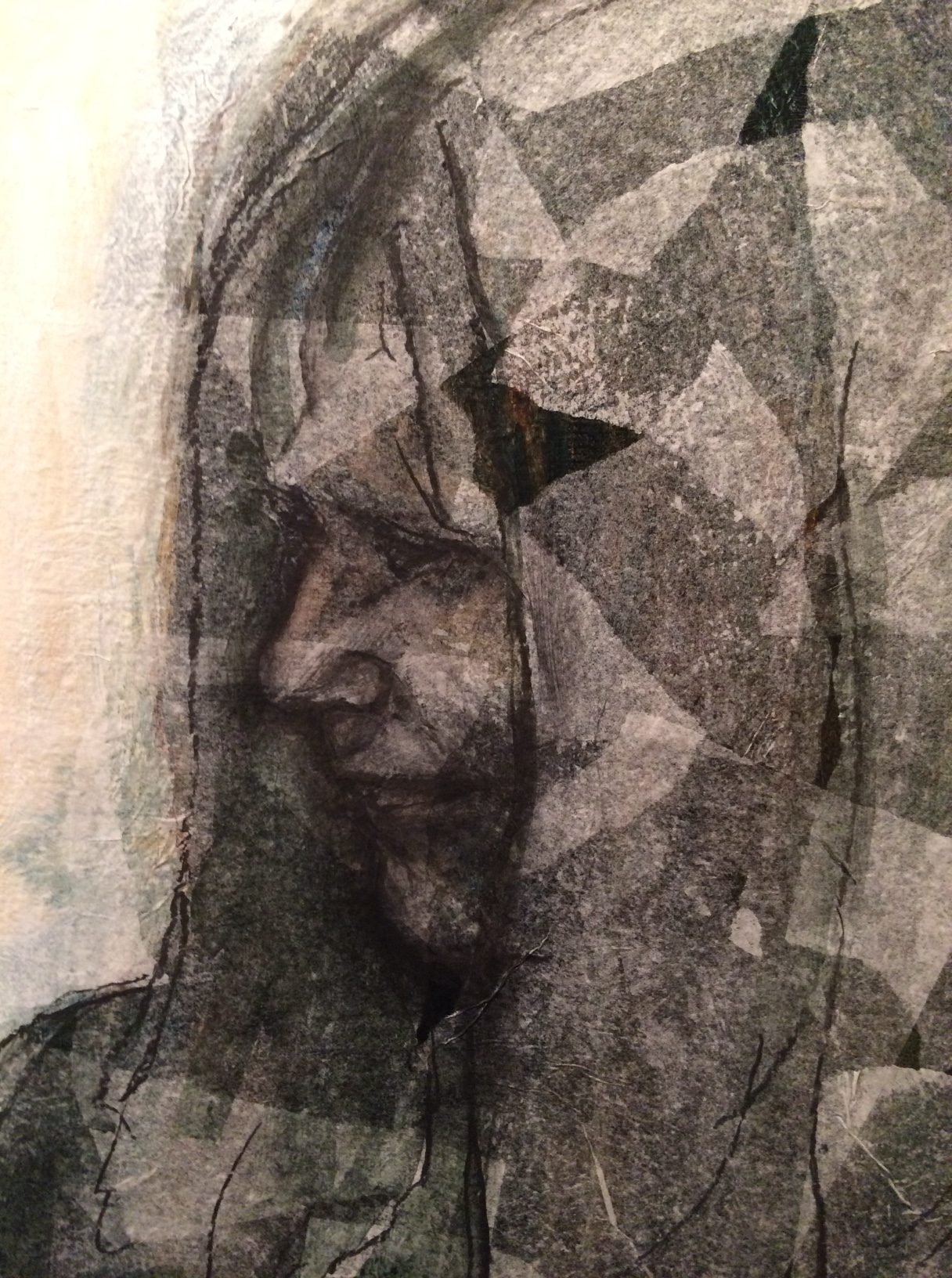
After our call I went into the studio to find a painting to use in the Melange, something I’ve not used before. “Use this one,” Kerri recommended. It’s one of many I painted of the same theme. “It’s timely,” she said.

Yes. Timely.

read Kerri’s blog post on the UNTITLED PAINTING

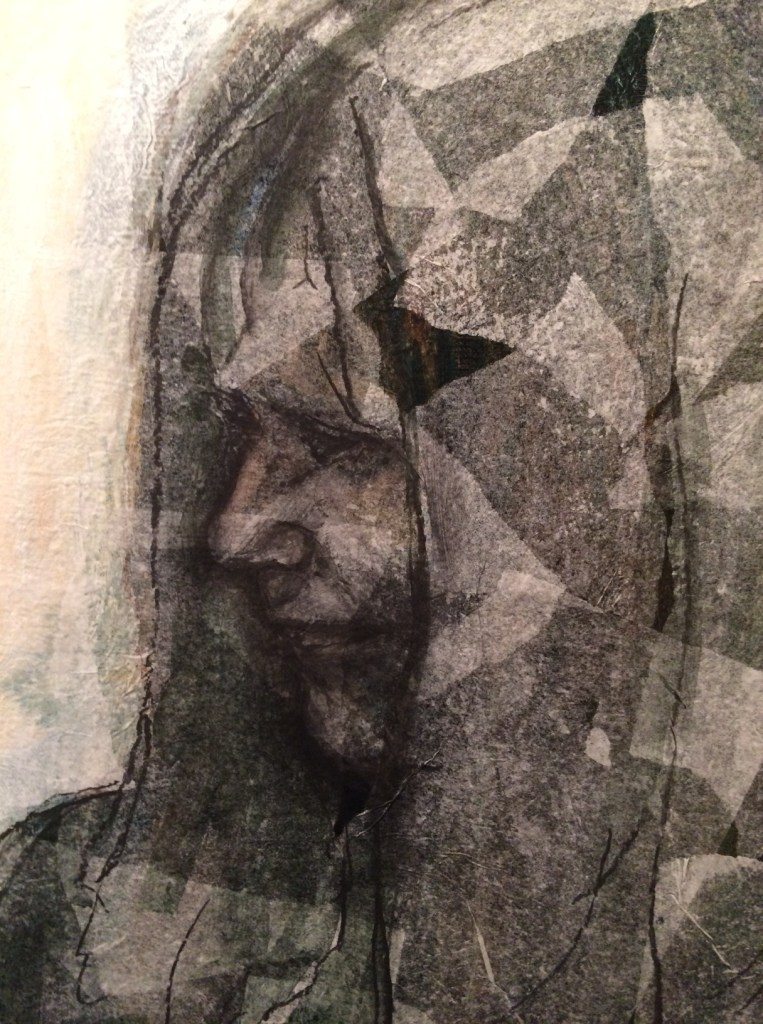
untitled ©️ 2019 david robinson