Say More With Less

TODAY’S FEATURED THOUGHT FOR HUMANS

say more with less

One of my favorite humans is Master Jim Marsh. He told me a story of a dilemma. Something in his world was bugging him. He complained about it a lot. One day he realized that complaining was not helping. He said, “I decided I had 3 choices: to stop complaining, to move, or to do something about it.” He stopped complaining and began acting to change on what was bugging him. Sometimes talking about something makes us feel like we’re doing something. It’s a deflection. Actions, as we are told, speak louder than words. 

TO GET TODAY’S FEATURED THOUGHT FOR HUMANS, GO HERE.

Screen Shot Say More

Embrace The Bump

photoArt stores are dangerous places. We entered the store with a short list: vine charcoal and titanium white paint. We left with a suspiciously large bag – Kerri found the pen and pencil aisle and got “that look” in her eyes. I found her sitting amidst a vast circle of pen possibilities making marks on a pad of paper. “Ooooooooooo,” she cooed, feeling the latest pen for weight and suitability for her hand. “I looooooove this one,” she said to herself. Her pile of “I love this one” selections was formidable. Art stores are like opium dens.

20 (aka John) was with us. He regularly incites us to riot and misbehavior. He was little help extracting Kerri from her pen-nest. 20 impacts us like a snout-full of laughing gas. He has a way of making the darkest day bright. 20 is, in fact, a bringer of light; he has developed this capacity because, like all bringers of light, he knows well the other side. One day in early summer, we sat on the deck drinking coffee and made our belly buttons talk, giving voice to the things we think but cannot say in polite society. We laughed so hard that I had to run inside the house; I couldn’t breathe. Twenty’s belly button had a lot to say.

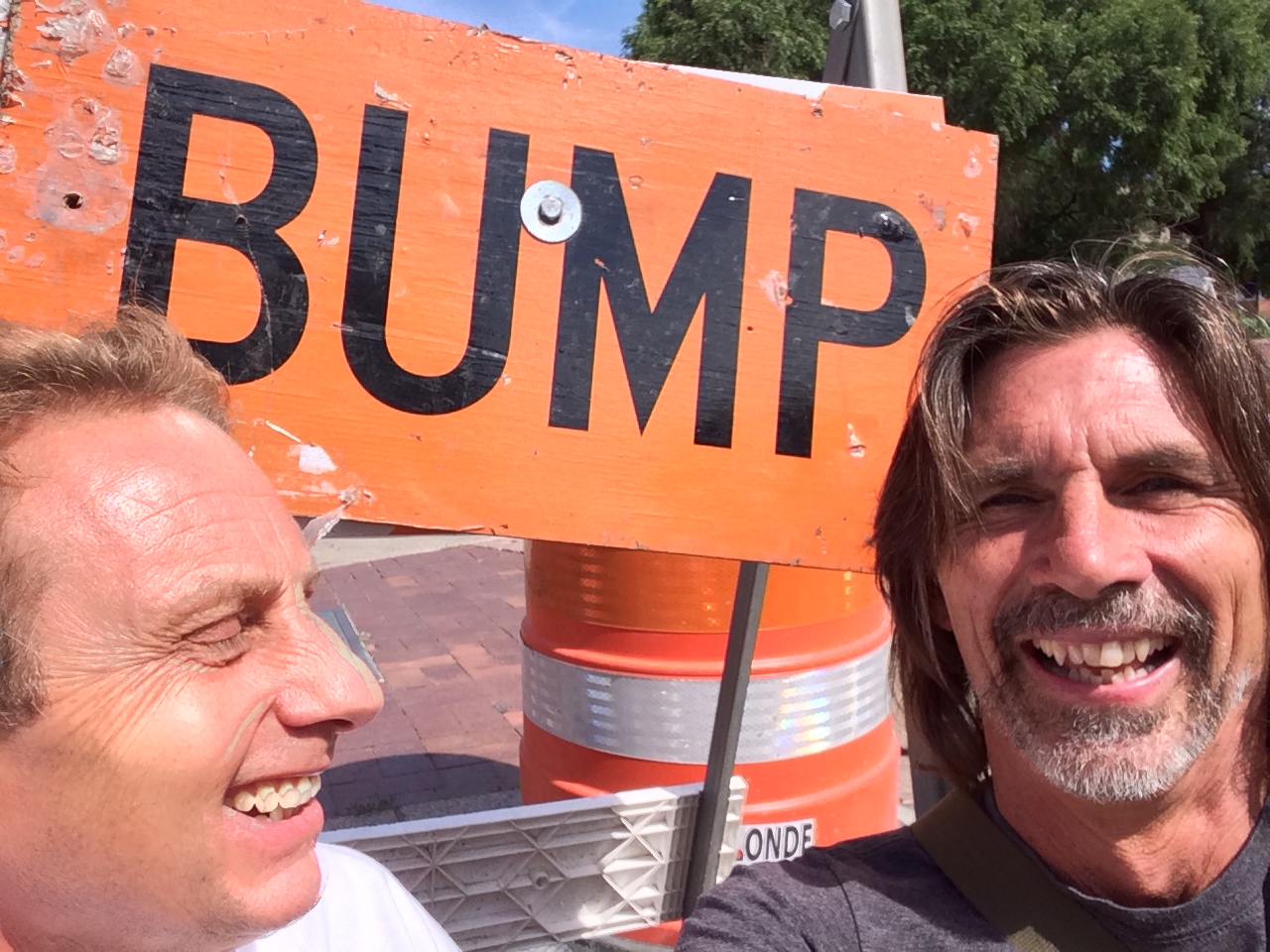
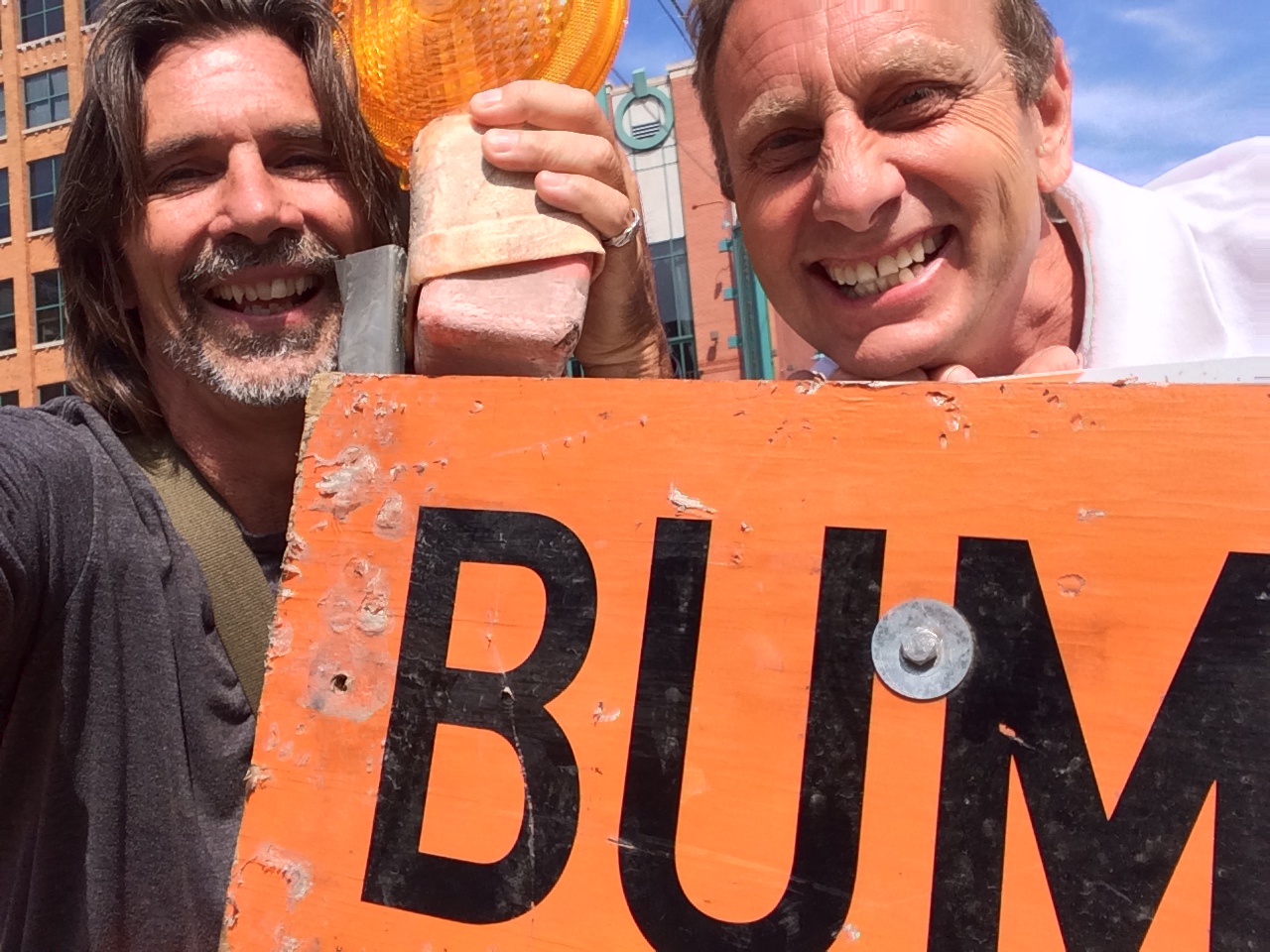
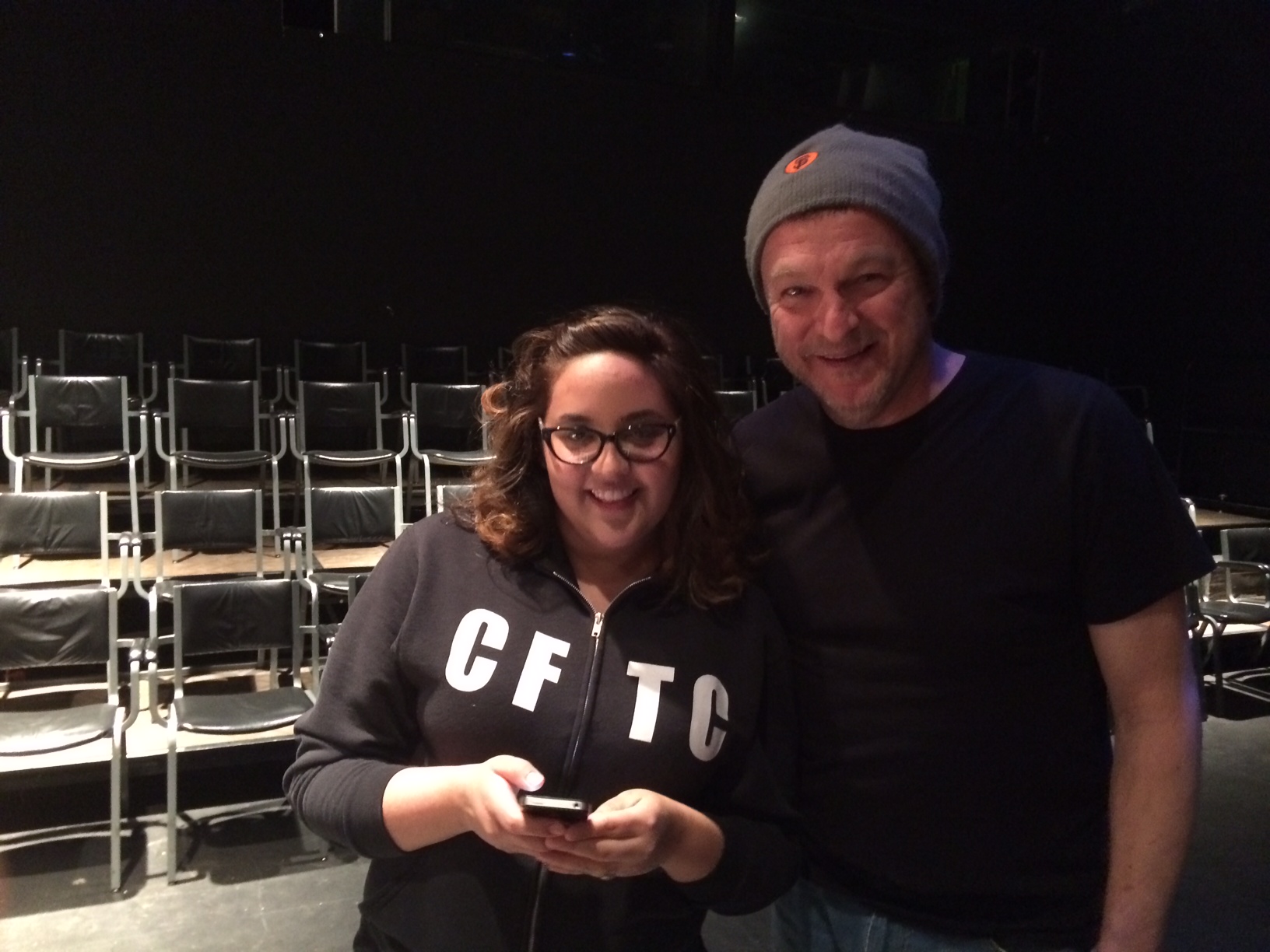
After escaping the art store, Kerri hefted her bag of supplies to the car while 20 and I waited on the corner. That’s when we saw the sign. It was something Sartre might have provided had he been a traffic engineer. It was existential. 20 and I jumped at the chance to make a selfie with the sign-philosophical. It simply read, BUMP.

photo-1As we snapped our selfies, laughing all the way, I couldn’t help but recognize that life – a good life – is riddled with bumps. In my consulting days I used to work with people to embrace the bumps rather than try to remove them. There is a pervasive notion that smooth sailing makes a good life. A bump-free life is a recipe for disaster. All of life’s lessons are found within the bumps. A life without bumps is a life without challenges is a life that is boring. And, in truth, people create bumps if they don’t already exist. They’re called a hobby or gossip or a complaint or drama. In story language, bumps (called ‘conflict’) drive the story; without bumps there is no movement. Yearning is a bump. So is desire. Unrequited love is a bump. Loss is a bump. Wondering what is beyond the horizon is a great bump.

20 is a great teacher of how to address bumps: Laugh. Make a selfie. Alter the word to something even more outrageously appropriate. Look for the next opportunity. Let your belly button talk.

photo-2

Walk With Your Ally

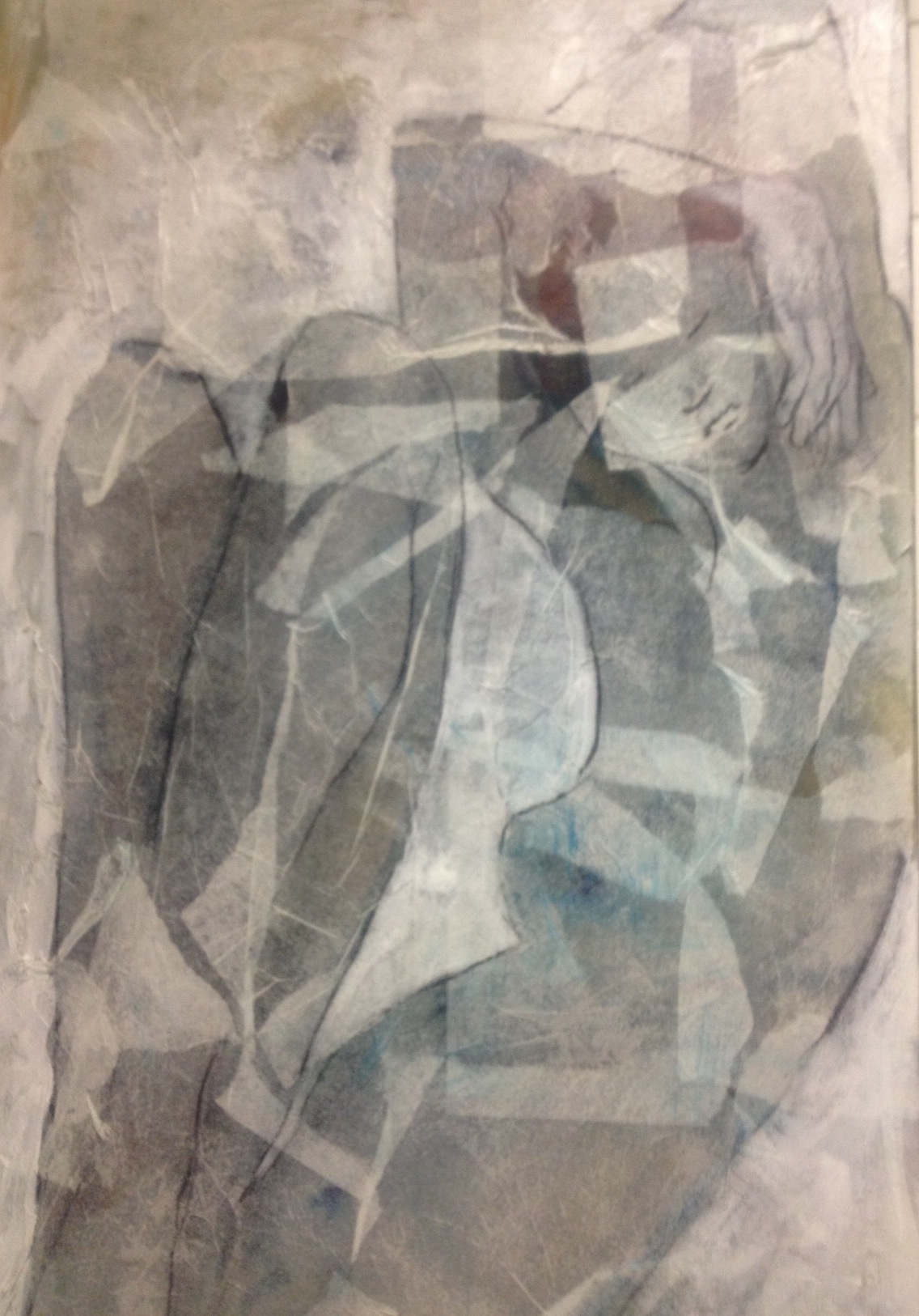
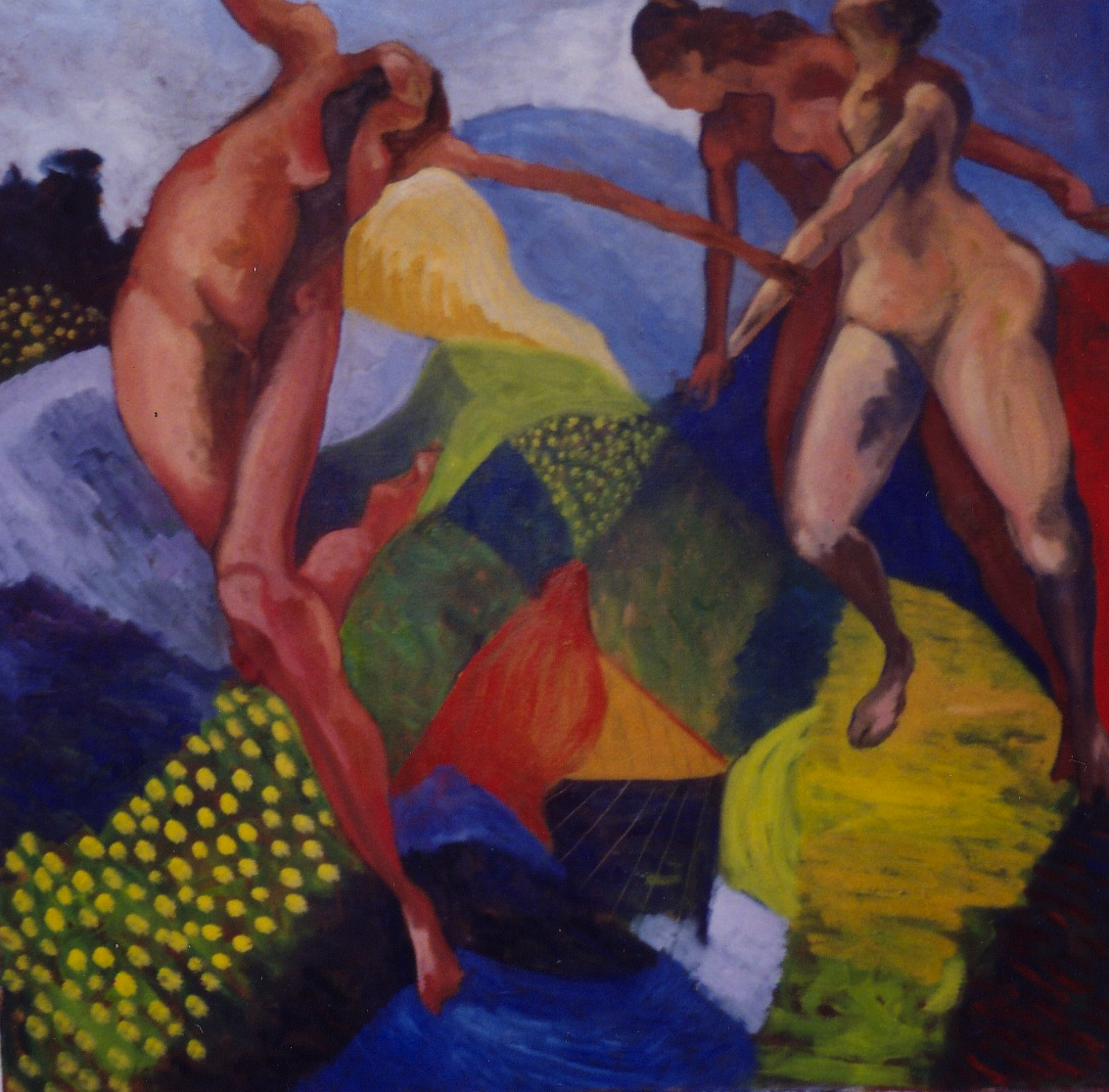
another painting in the Yoga series

the latest painting in the Yoga series

David is among my chief muses. He was the first person I met in my spontaneous-no-plan-move-to-Seattle over 15 years ago. We sat next to each other at a conference and he asked me if I wanted to be in a play. When I said yes he said, “Great. Can you be at rehearsal tonight?” Like me, he is a painter as well as a theatre artist. He steps through life with his eyes firmly focused on the possibilities. He reminds me that obstacles are nothing more than interesting process steps. When I wander through museums or galleries David goes with me whether he is there or not. When I see a play that inspires me, I wish that he might see it, too, so we might talk about it.

Recently, he sent this quote: “My intention has been, often, to say what I had to say in a way that would exemplify it; that would, conceivably, permit the listener to experience what I had to say rather than just hear about it.” – John Cage, Where the Heart Beats: John Cage, Zen Buddhism, and the Inner Life of Artists.

When I was in college studying acting I had a professor who would say, “You will always know a good play from a bad play because a bad play wants to tell you what happens. A good play wants to include you in what happens.” He also used this rule to define good acting from bad acting. His shorthand phrase was, “Show me, don’t tell me.” It is the artistic equivalent of, “Give a man a fish and he will have a meal; teach a man to fish and he will eat forever.” Art, regardless of the form it takes, is meant to teach people to fish.

Art is not a “thing,” it is a relationship. It is a dynamic orientation to life. It is an experience (not a possession). My interpretation of my professor’s rule goes something like this: a good play/performance/painting includes; a bad play/performance/painting excludes. Vital art reaches for others. Empty art rejects or attempts to elevate itself above others.

The best artists I know have learned to get out of their own way. They have essentially, let go of all investment in self-importance. They serve the art and, so, are not terribly invested in whether a critic or a friend likes or dislikes their work. They have grown beyond attempting to control the perceptions of others (control is an act of exclusion); they are attempting to reach the soul of the matter, touch the soul of the other.

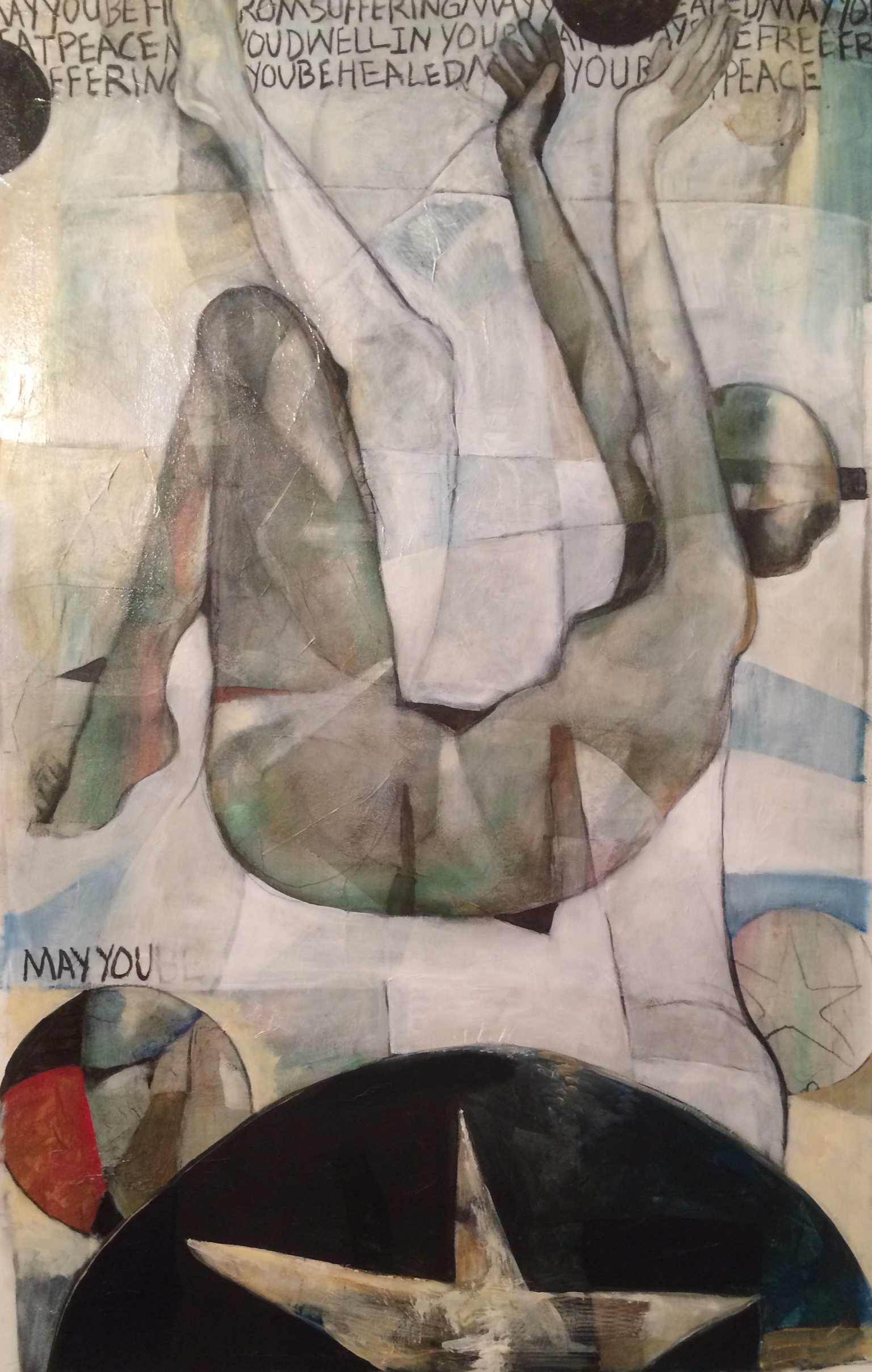
finally finished: May You Be

finally finished: May You Be

It is also true that great artists are constantly learning. And, since growth is always in the direction of the unknown, it is terribly important to have allies to walk with you. Stepping into the unknown is best done in the company of others, those special few wanderers who you can turn to and say, “Whoa! Did you just see that?” David, who is always there with me, laughs in response to my awe, and says, “Tell me! What did you see?”


Breathe Out. Breathe In

...if beakybeaky was a band, this would be the album cover...

…if beakybeaky was a band, this would be the album cover…

The most important thing in life is to learn how to give out love, and to let it come in. Mitch Albom, Tuesdays With Morrie.

Somewhere in the 22nd hour of our drive, the sun rose. Even through our exhaustion and bad fast food coffee, it took our breath away. It replaced, or, rather, swallowed, a brilliant sliver-crescent moon.

We’d stayed longer in Tampa than we expected. The day after Beaky’s book reading and signing, Sunday, we were exhausted so we delayed our return trip home for a day. The following day, Monday, was bad for Beaky – she was in tremendous pain and we were overwhelmed with the need to stay. So, we stayed, knowing the result would be a 24 hour dash home for rehearsals.

His voice dropped to a whisper. Let it come in. We think we dont deserve love, we think if we let it in well become too soft. But a wise man named Levine said it right. He said, Love is the only rational act.’” Mitch Albom, Tuesdays With Morrie

...and the truth of beakybeaky....

…and the truth of beakybeaky….

This year is unusual. I’ve done too many plays, paintings, and projects to count and each had its rewards and regrets. Twice since the turning of the New Year I’ve completed a project that was so fulfilling, so right, that I would not change a thing. Both have this in common: the intention was pure. I did them for the right reason: someone else. The first, The Lost Boy, was a message from Tom to his nephew, Seth, and I was the messenger. The second, Beaky’s first book, Shayne, was to make a dream happen. Every dream needs assistance to be born: the manuscripts existed. Beaky’s desire to share (publish) existed. They lacked an illustrator and designer. I did the illustration. Kerri did the layout and design; a dream fulfilled itself. For me, both are lessons in breathing out love so that I might also breathe it in.

Just prior to Beaky’s reading, we took a series of selfies with her. I told her that, if Beakybeaky was a rock band, the selfies would make excellent album covers. After our photo opp, we wheeled her to a standing-room-only crowd, many people that she knew and many more that she didn’t, people who’d gathered to hear an almost-94 year old author read and sign her very first book.

a dream fulfilled

a dream fulfilled

Breathe out. Breathe in. It turns out that an exhale is necessary for the inhale.


Meet Shayne

frontcoverscreenshotAbout six weeks ago, Beaky called to discuss her writing and the viability of sharing it. Beaky is a few months shy of 94 years old and puts pen-to-paper almost every day. She calls it chicken scratch and is mostly unaware that she is a fantastic storyteller (actually, I believe she knows it but is too humble to apply the word ‘fantastic’ to herself). She can’t help it; storytelling is in her bones. Some of my favorite days of the past few years have been at Beaky’s side listening to her tell a tale.

At 93 she is reviewing her life and, like all of us, she wants to do more, be more. It is hard to understand for those of us who know her because she is a rare and special person. She is a bringer of joy; Beaky makes people smile. That, too, is in her bones. Some months ago we spent a long night in the emergency room with her. She’d taken a fall and we feared she’d broken her hip. Deep in the night, writhing in excruciating pain, Beaky looked into the eyes of an exhausted attending nurse and through her pain said, “You have the most beautiful smile.” The nurse giggled, blushed and beamed. Laughter, blushing and beaming are common occurrences when hanging out with Beaky. Even while in pain she seeks the giving-moment.

Almost sixty years ago she wrote a trilogy of stories for her children. For months we looked high and low for the folder of her stories. Not long ago we found them and discovered that each had a submission cover page; Beaky wanted to be published. So, we decided to put our heads down and make it happen. I illustrated the first book and Kerri did the layout and design. Today, Beaky’s first book, SHAYNE, is now available; it is published. Beaky is published. Within the next two months the second and third books of the trilogy will be published, too (SHAYNE AND THE YELLOW DRAGON and SHAYNE AND THE NEW BABY). Next week we will travel to be with her as she has her very first book reading & signing party. She is, of course, busy practicing her signature (wouldn’t you?).

Jim has a magnet on his refrigerator that reads, “It is never too late to become what you might have been.” In Beaky’s case I might add: It’s never to late to realize what you have always been AND be a children’s book author, too.

One of my favorite photos: Kerri with her mom, Beaky

One of my favorite photos: Kerri with her mom, Beaky

[check out Beaky’s website! www.beakysbooks.com]

End And Begin

photo-2My fascination with this play grows every day. It has had a hold on me for over a decade. I’ve told the story of The Lost Boy to everyone I know. And now, as we approach opening night, the story of the production, the timing of the production, the people coming out of the woodwork for the production, Tom’s relatives appearing with additions to the narrative that Tom originally relayed to me – is equal to or exceeding the marvel of the play itself. The story around the story is, in some ways better than the story itself. Or, perhaps it is an extension to the story, the next chapter. Roger once told me that he believed the most interesting aspect of the story was not the discovery of a trunk plastered into the walls, not the story Tom felt an imperative to pass on to me, but the story of my time with Tom. “I want you to tell that story,” he said.

I have a file of recordings that I made of some of my conversations with Tom. They were in a format that made them inaccessible to me. I kept them but have been unable to listen to them for several years. A few nights ago, on a whim, I searched for conversion programs and in less than an hour, I was listening to one of the recordings. It was like opening the trunk that had been plastered into the wall. I listened to one of our conversations. I listened to our laughter. I listened to the questions I asked and his thoughtful and generous responses. I listened as I told him that I believed the real story was not Johnny’s or Isabelle’s, but his. He considered it but could not see himself as anything other than a messenger. My suggestion to him was prophetic.

On a lovely August evening in 2013 I was on a pier in Wisconsin when I received the call that Tom had passed. I sat on a bench and talked with Marcia, Tom’s widow, for over an hour. After the call I walked with Kerri and as we watched the sun set I told her stories of Tom.

My attempts to produce the play while Tom was alive (though too ill to perform the piece) hit walls of brick and stone. If I wanted disaster to strike I only needed to attempt to mount a production of The Lost Boy. I’d all but shelved it and, although I’d rewritten it so I could perform the story, the script seemed incomplete, somehow awkward. When Tom passed, the end of the play became apparent – I saw the flaw. Tom needed to join the story, not tell it. I did a final rewrite and the play was ready.

I’ve been amused because, after so many obstacles, this attempt is almost producing itself. It is as if we couldn’t stop the transmission of the story if we tried. Jim said, “I think Tom is working his magic from the other side.” The other night, in rehearsal, just as I worked the section about Isabelle (Tom’s great grandmother) reaching through time, ringing a cow bell to summon Tom, the bells from the neighboring church began to toll.

It made me laugh and I recalled a question he often asked: where does a story end? Where does it begin?

title_pageGo here to buy hard copies (and Kindle) of my latest book: The Seer: The Mind of the Entrepreneur, Artist, Visionary, Innovator, Seeker, Learner, Leader, Creator,…You.

The PoetGo here for fine art prints of my paintings.


Dance With Sherry

A painting from the archives. I call it 'Revelry!'

A painting from the archives. I call it ‘Revelry!’

Sherry was killed in a car wreck many years ago. It was ironic. She had a severe food allergy and was pronounced dead more times than she could count. Every time she went out to eat she rolled the dice. And, because she had been back and forth over that dark line so many times, she never took a day (or a meal) for granted. Death walked with her so she was awash in the appreciation of life. Sherry never missed an opportunity to laugh or dance or shock people. She was a one-person party and her enthusiasm was infectious.

She was a true friend and a colleague and took the plunge with me when I wanted to start a communications academy (teaching core curriculum through experiential processes; with students we made movies, plays, performance art pieces, poetry slams and ran businesses. It was not only a blast but hugely successful. We created things as opposed to studied things. The only trouble I ever had was getting the students to go home). Initially, the academy was a risk but she was quick to throw herself into the chaos and brought her friend Linda kicking and screaming with her. Both were extraordinary English teachers looking for a better way to teach. We were like adventurers in the wilds of education, blowing up old models and exploring new territory. It would be impossible to do today; innovators are nailed to the floor by the standardized master-tests that they must serve.

The last time I saw her she said, “This is the last time you’ll ever see me!” She had a Cheshire grin and I protested, “Why? Are you planning on avoiding me!” She leaned in so no one else might hear and said, “I doubt I’ll be alive when you come back.” I told her not to be stupid but, as usual, she was right. She also asked me to not come back for her funeral. “Let this be our goodbye,” she said.

Kerri and I have been cleaning out the house, purging years and years of boxes, clothes, and…stuff. We are making space for new things. Each load that goes out the door is matched by an opportunity or insight that flows in. Not only are we cleaning out but we are reaching back in time and visiting old friends and extraordinary moments. More than once we’ve sat to share photographs or letters, “This is what I used to look like,” or, “Remember I told you about my friend…., this is us 20 years ago.” For some reason, Sherry has been with me today. I have no photos of her and no letters but I have terrific memories. I’ve been meditating on joy all day and she was the embodiment of joy. She was the queen of mischief and bold leaps of faith. “Life is never sure!” she’d giggle. “You only have today so dance it or get off the floor!” she’d shout, punching me, her Cheshire grin breaking across her face before erupting in gales of laughter.

title_pageGo here to buy hard copies (and Kindle) of my latest book: The Seer: The Mind of the Entrepreneur, Artist, Visionary, Innovator, Seeker, Learner, Leader, Creator,…You.


Yoga.MeditationGo here for fine art prints (and other stuff) of my paintings.

See Why

Once again, H wrote me with some good advice concerning my limping kickstarter campaign. I opened his email while taking a break from research I was doing on grants for artists. His email collided with something I’d just read (and applauded) on the Surdna Foundation grant site. Here’s his email:

Something dawned on me today when I checked your KS page. Two things, actually.

The first, you actually could make your goal. $7k days are not that uncommon on KS.

The second is that you can’t seem to stop yourself from teaching, and I think you need to for this work, just as you should in order to write and direct the play. All the “truths” and lessons of story and of art should be axed. Because they are true and obvious when we see them in action. But the statement of those truths and lessons distract and dilute that action. 

Tell why you love Tom’s legacy and The Lost Boy, why it is essential to your life’s work, and why your life’s work matters, why it has to be done… 

You have time for one more ask…..

And, here’s the bit of text that I applauded from the Surdna site:

“Art is fundamental to our collective understanding of who we are, what we believe, and how we relate to each other and our surroundings. Artists and their coconspirators weave the cultural fabric necessary for a sustainable, vibrant society.”

In 1998 I applied for and was accepted into master’s programs in both painting and theatre (directing). It was confusing for me at the time because both acceptances felt miserable, like walking into a cage. In my desire to go back to school, I wasn’t looking for technique or an answer to “how-to.” I needed to take a deep dive into “why?” So, instead of the obvious route, I jumped into a degree in organizational systems because I could bend it to my real pursuit: art as central to the identity function of a culture: art (specifically ‘story’) AS the system. As the folks as Surdna wrote: artists weave the fabric necessary for a sustainable, vibrant society. The story inside you, the story-you-tell-yourself-about-yourself, is inseparable from the story happening outside of you, the story-the-community-tells-itself-about-itself. When a society has a living, breathing mythology, they live from a single, shared story. As Joseph Campbell famously said, “Our mythology is dead.”

We orient and make meaning according to a shared narrative. So, if there is something that bugs you about the world it is most likely a reflection of something within you. If you want to change the world, you must start with your self. How do we begin to tell a different story when we imagine that our story is separate from all other stories? How do we make a better world when the story of the individual supersedes the story of the community?

Working with the shared narrative, dancing with the inner and outer story in all of its power and potential is my life’s work. Tom is one of the few people I’ve ever known who understood this dance. He is responsible for igniting the fire in a legion of artists, for guiding a multitude of lost boys onto a power path. He opened my eyes to a deeper path through the arts and life. He taught me that the Greeks believed that the telling of the epic stories was necessary for the health and wellbeing of a community. He taught me that we’ve forgotten what the Greeks knew. The story of The Lost Boy is Greek and has the power to help us remember. Tom believed in a better world and that a better world happens naturally when we tell a better story. That is why this play needs to be done.


Go here to help me make possible a $7k day:

DSC_1196 copy

Be Kind Now

Kerri with her mom, Beaky

Kerri with her mom, Beaky

On Beaky’s refrigerator there is a colorful poster with this quote by Gerald Jampolsky:

“How simple it is to see that we can only be happy now and there will never be a time when it is not now.”

Bruce told me of his children. He related a few simple anecdotes: a moment of confidence on the stage, a gentle moment caring for an old dog. His voice quaked as he said, “David, my children are considerate and kind.” I wanted to tell him that they get that from their father. Bruce has always been kind though he does not know it.

Judy and I were talking about community. She lives in a supportive intentional community. She said, “I think we do our selves a disservice by placing so much emphasis on the individual. No one does this alone.”

We entered Beaky’s room at the rehab facility. Lying on her side, flat on the mattress with no pillow beneath her head so she can see the notes she is scribbling, she writes in her journal the chronicle of her life. “You’ll never be able to read this!” she exclaims, and then without taking a breath, “Did I ever tell you of the time when….” We sit with her, deep in story, for the next several hours. “This is the stuff that matters.” Beaky says. Not the stories themselves; she means the sharing of stories.

In our phone call Judy also said, “When you are in trouble it is not your money that will save you. It’s your relationships that matter.”

The nurse wheeled Beaky to the car. We gathered from all around the country to be with her. At 93 years old she is going into a radical surgery that is the best of bad choices. As we progress down the hall, an entourage of family following a woman in a wheelchair, nurses kneel and kiss her. They hug her. They tell her that they loved her. “She is special to us,” they say. “She does more for us than we could ever do for her.”

Kerri said, “Momma, see how many people love you?” Beaky replied, “Everyone is so kind.”

There will never be a time when it is not now.

title_pageGo here to buy hard copies (and Kindle) of my latest book: The Seer: The Mind of the Entrepreneur, Artist, Visionary, Innovator, Seeker, Learner, Leader, Creator,…You.

Check out my kickstarter campaign for my play The Lost DSC_1196 copyBoy


Aim For The Field

An illustration from my children's book, Play To Play

An illustration from my children’s book, Play To Play

Lately, Saul the Tai Chi master has been much in my thoughts. It is now September and it has been a year since he taught me a lesson that has become the new mantra of my life: orient to your own concern. Actually, he said that I should look beyond my opponent into the field of possibilities and orient to my own concern. “In this way,” he instructed, “you will no longer have an opponent.” He used the word “opponent” loosely. Any limitation or form of internal resistance is the opponent.

Beyond the opponent is a wide-open field of possibilities.

In the intervening year I have learned that I have been both my greatest opponent and the one who can look into the field of possibilities. Isn’t this true of all people? All stories worth telling (and hearing) are ultimately tales of transcending the inner opponent. If you need help identifying your personal mythic journey simply listen to the areas in life in which you say to yourself, “I can’t.” In that place you will find your opponent. You will also be surprised to find that your inner opponent is most often an orientation to other people’s concern; the fear of what others might think is a mighty inner-monster creator.

I’ve also learned that Saul’s lesson has come to me in many forms throughout the course of my life. For instance, many years ago I directed plays and, because I am also a visual artist, I was often in the position of designing the sets as well. With great love and humor, another terrific mentor watched as I struggled with my dual role. He gently showed me that I was orienting my designs according to the budget and construction limitations I perceived. I was working in the wrong order, asking “how” before lingering in the potential.   He told me that I needed to “Live first in the possibilities.” Design/orient according to the potential and not the limitations.

To live first in the possibilities is to walk the imagination without a leash. It is to let the imagination run wild. What is beyond your capacity to imagine? What is possible beyond the boundaries of belief? At one point in my life cell phones were science fiction. Today, they are ordinary.

Look beyond the opponent. Orient to your own concern. Imagine how life might change if instead of asking, “Can we do this?” we began by asking, “What’s possible?” And then aim for the field.

title_pageGo here to buy hard copies (and Kindle) of my latest book: The Seer: The Mind of the Entrepreneur, Artist, Visionary, Innovator, Seeker, Learner, Leader, Creator,…You.

Go here for all digital forms of The Seer.

Yoga Series 7Go here for fine art prints of my paintings