Love Yourself Better

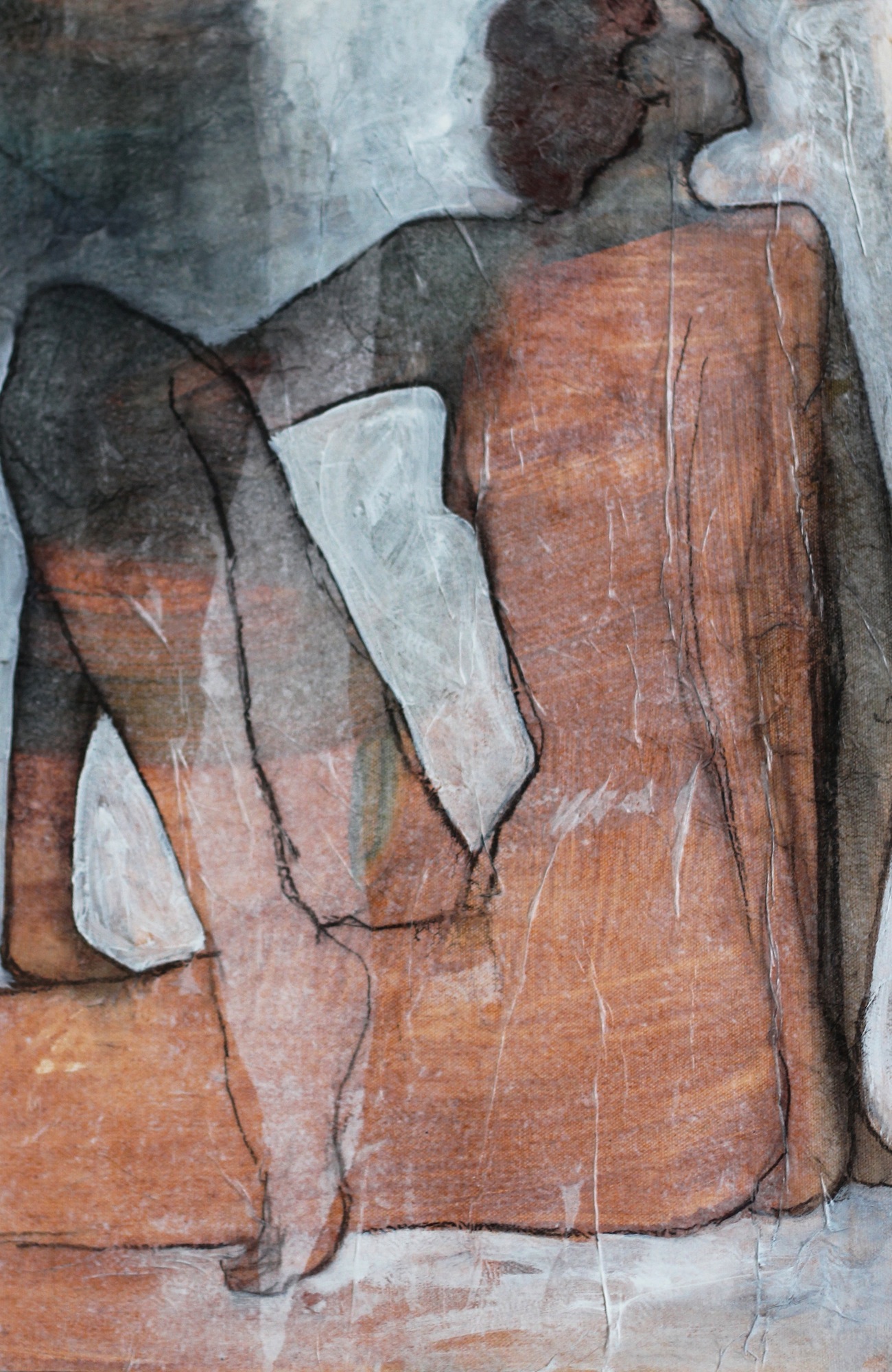
this one is from the archives. I painted this 10 years ago.

this one is from the archives. I painted this 10 years ago.

He said, “The current goal is to love myself better.” And then he added, “Not so much a goal but something that needs teaching from our own mind.” His statement begs a great question, an ages old question: Can the mind teach itself? Really, the question is can the mind see itself clearly enough to teach itself?  Or, the question within the question: Can the mind teach itself to love itself? I scribbled the questions in my notebook and beneath them I wrote, “Is love teachable? Is love reachable through the mind, especially self-love?

We’d been chatting for a while and had covered a lot of territory, from Monte Blanc pens to typewriters to soap use around the world, clean water, the difference between good and bad scotch, the shapes of the 50 states and how they might influence personal identity and we’d somehow wandered into the epicenter: self-love.

His statement nailed the universal dilemma perfectly. It was a declaration of separation. The self watching and wanting more for the self. The separation is in the language: to love myself better. I don’t know anyone who hasn’t made this statement. Which part of the self will better love the other part of the self? Which part of the mind will teach the other to love?

It is where myth meets the everyday. Every human being who has walked the earth has wrangled with separation and the yearning for self-love (re-connection to self, unity). The human journey is a walk from separation (birth, if you want to take it literally) to reunification (death). The story lives in mythologies the world round. If we were still willing to read our mythologies (religions) metaphorically, we’d see it. For instance, being expelled from the Garden of Eden for eating from the tree of knowledge is the story the ancients told of the experience of separation. The inevitable bite of apple from the tree of knowledge brought duality consciousness: male/female, us/them, mine/yours, haves/have-nots, me/you. Separation. The rest of the story, not often told, is how, through out the rest of our lives, we seek the Garden where there lives a second tree: the tree of everlasting life (unity). We journey from knowledge (separation) to everlasting life (reconnection). The death need not be literal. To die to the self is necessary to experience the SELF.

Here’s the great paradox: loving another person is an act of self-love. The path to self-love is found when we serve something bigger than our selves. Think about it: the movement is always from separation to joining, from isolation to connectivity. The obvious question is, “Connectivity to what?”

Self-love is not found when the mind teaches the mind but when the mind gets out of the way of the heart. The love is always there. Love is never missing. Self-love reveals itself when the definition of self grows beyond our own skin. According to our latest neurological science, we experience ourselves as separate because we dull ourselves to our fundamental connectedness to others. In other words, we cultivate a story of isolation and then set about the real work of our lives: to see beyond what we think.

And then he said, “You know what else I just realized?”

“What’s that?” I asked.

“I just landed myself in a blog post.”

Yep.

Go here to get my latest book, The Seer: The Mind of the Entrepreneur, Artist, Visionary, title_pageSeeker, Learner, Leader, Creator…You.
Or, go here for hard copies.

Bang On Stuff

from Lucy & The Waterfox by David Robinson

from Lucy & The Waterfox by David Robinson

John said, “The real challenge is how to help people across the ‘I can’t’ line.” What a great phrase! I imagined myself drawing a line in the sand while my imaginary inner-voice shouted, “Don’t step over this line!”

“Everyone has an “I can’t” line.” John added, “The challenge is never the external stuff. It’s the stuff in our heads that stop us.” Too true!

John is a terrific drummer and extraordinary teacher. He told me that many people come to the drums from the place of, “I can’t” and his job is to hold their hand as they cross the threshold. “Of course they can,” he said, “they just need to know it.”

“How do you do it?” I asked. “How do you help them know it?”

“I have them bang on stuff and I bang on stuff with them.” He smiled.

In other words, gets them to experiment and play. When experimenting, there is no line between can or can’t. It’s a unified space called, “Let’s see!” In play, there is no need for achievement or expertise; there is only play. Bang on stuff and see what happens: it is a great definition for artistry. It is beginner’s mind.

In Austin Kleon’s latest book, Show Your Work, he suggests that we be intentional amateurs. He writes, “Amateurs are not afraid to make mistakes or look ridiculous in public. They’re in love, so they don’t hesitate to do work that others think of as silly or just plain stupid.”

If you desire to step across the “I can’t” line, embrace your inner amateur. Work for the love of your work and not the need to impress or “do it right.” Bang on stuff. Make messes. As Skip says, “Put a stake in the ground and then test it.” Pull on the chain. Walk through the door. Ask questions. Try a new technique. Invent a new technique.

In a bizarre and beautiful chapter in my life I was given a full ride scholarship for a masters degree in costuming. I’d never touched a sewing machine and was a danger to myself and others when trying to cut things with adult scissors. “Why not!” I said to myself and I went for a year. After turning in my first assignment in costume construction, the professor hugged my muslin mess to her breast and laughed, saying, “In the history of garments there have only been 7 possibilities (shirt, pants, skirt, etc.) and you have just created the 8th!” I didn’t know what I could or could not do so I did anything. It was fun. I had no “I can’t line.

John reminded me that the world’s first drum was (and is) a heart. “Everyone’s a drummer,” he said. “The day you can’t drum is the day you are dead.”

Go here to get my latest book, The Seer: The Mind of the Entrepreneur, Artist, Visionary, title_pageSeeker, Learner, Leader, Creator…You.

Go here for hard copies.


Embrace The Paradox

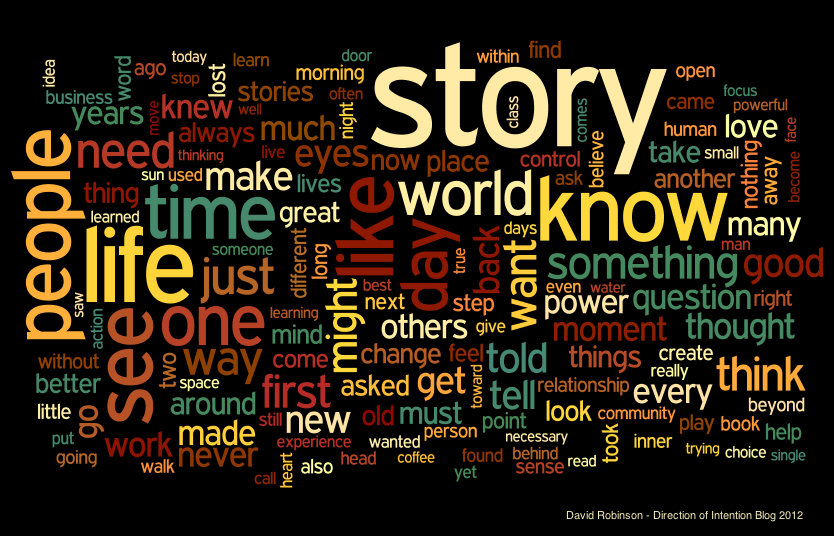
Mark Seely's gift to me: A Wordle of my blog

Mark Seely’s gift to me: A Wordle of my blog!

This is a landmark post: number 1000. When I started blogging I told Horatio that I feared I only had enough thought for 10 posts. He said, “If you can write 10, you can write 1000.” I wrinkled my brow in disbelief but it turns out that Horatio was right. With every step comes a new perspective. Kerri has a phrase I love: take down one tree at a time. In other words, if you can’t see where you are going, take the step that you can see; many single steps translate into miles of walking just as one post at a time can become 3 years of small thought-shares all in a row. What is a lifetime but a long series of days?

I’m writing this from a dining room table. All around me, covering the walls, are long strips of newsprint with a gathering storm of many colored post-it notes. The notes contain phrases, actions, like “Burn Your Trash,” or “Both Feet In, “ or “ Leave the Yuck Behind,” or, as you’ve already guessed, “Take Down One Tree At A Time.” They are story prompts. They are insight and idea prompts. Each prompt is associated with one of Kerri’s music compositions (she has 15 albums to date, with material enough for 3 more). They are building blocks for concert/storytelling evenings or keynote speech/performances. From the more than 60 post-it note prompts (and growing) we can combine any 9 to configure an audience-specific performance. The possibilities are endless. The viable themes are both unique and universal. Our umbrella title is Back To Center. We have a series of workshops to compliment the performances. The workshops illuminate the extraordinary moments and liberate the boundless capabilities of we mortals, we ordinary human beings. The big box is appropriately a prompt: Be A Ray!

Kerri and I are bringing our work together in a new form: Be A Ray!

Kerri and I are bringing our work together in a new form: Be A Ray!

As it turns out, I am a man of my time after all. The notion of a series of discreet component thoughts assembled to create a universal conception is taking over all of my processes – writing, painting, coaching, facilitating. It is the “many small steps making one large journey” philosophy of creation. It has taken over our world. It is contemporary: note the thought behind an App store or an Army of One. It is natural; cells do it. In the blog world it goes by the name of a “plug-in.” Build your own burger: design your car from the available components. It is the illusion of individuality in the midst of a constraint of choices. There is no arrival, just continuing process of expansive and interchanging capability. It is the Kahn Academy. Work at the pace that is appropriate to you. It is yoga: begin where you are, not where others are. It is what the old world of government process (ridiculously obscure tax codes), health care, education…the usual bureaucratic suspects and old school businesses do not understand. The world of rolling process has ascended; products and outcomes are obsolete before they hit the shelves. Story is more accurate than data (data is, after all, a type of story).

Nimble thinking requires nimble processes. Expansive living requires expansive thinking. Cathedrals are built one block at a time but the secret story of a cathedral is that it is never finished. It is always under construction, always changing, updating, repairing and modernizing. That’s the point of a sacred path. Stability, your sacred home, in this modern age is now found in motion, in a pure engagement with a moment. This is what we mean when we say, Be A Ray! Get into motion and focus your intention. Safety is never found in stasis.

Yesterday I wrote that a good life is marked by the capacity to stand solidly in the constancy of discovery. It is a paradox. Another prompt on the wall, one of my favorites, reads, “Embrace The Paradox.” Yes.

Go here to get my latest book, The Seer: The Mind of the Entrepreneur, Artist, Visionary, title_pageSeeker, Learner, Leader, Creator…You.

Or, go here for hard copies.


Sizzle!

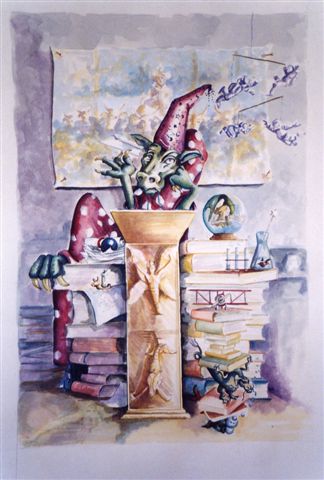
an illustration from a book I never published: A Dragon's Tale

an illustration from a book I never published: A Dragon’s Tale

I’m breaking my book down into component actions almost as if I was dissecting a play script. It’s an interesting exercise because I’m experiencing a measure of creator’s blowback: I’m having the distinct impression that someone else wrote this book knowing that I’d read it someday. The author formerly known as “me” knew that I’d need to know what it contains. It is often true that we teach what we most need to know.

I started my component part breakdown because I’ll soon be throwing people into an exploration of the book’s 9 Recognitions. I wanted to chart the actions of the story and the learning embedded within the narrative. I say, “throw people into an exploration,” because I eschew the word “teaching.” My life has taught me that good teaching is about creating a container for exploration. Good teaching involves no teaching. Good teaching is watching and waiting for the right moment to ask a single simple question: what did you discover? The response will always be personal and relevant to the learner. No amount of control or planning can match the power of relevant personal discovery.

A side note: good teaching and a good life share a common center: the capacity to stand solidly in the constancy of discovery.

The primary thought-river that carries the raft of my book is “to have the experience first and make meaning second.” Making meaning second is what we do even when we think we know where we are going. Life is mundane only when “mundane” is the meaning we assign to it. Life goes bland and gray when we make meaning prior to having experiences.

The word “presence” is shorthand for having experiences before assigning meaning to the experience. If you strive to be more present simply cease thinking that you know what’s coming. You don’t.

And so, this is what my component part breakdown/book blowback looks like:

“Throw them into an exploration.” This is a remarkably different action than, “teach them.” (Another Recognition from my book: the language we use to assign meaning matters more than we know).

“Ask a single simple question” This is also a remarkably different action than, “teach them.” Live in the question and not the need for an answer.

When I was an aspiring actor deep in my acting school studies I learned that the verbs that I choose matter. The actions that I assign to my pursuit can ignite me up or block my path. The same is true on my discovery path: when I am making meaning, use really good verbs. There’s no need to minimize the sizzle of this extraordinary life.

Go here to get my latest book, The Seer: The Mind of the Entrepreneur, Artist, Visionary, title_pageSeeker, Learner, Leader, Creator…You.

Or, go here for hard copies (Amazon)

Dream It!

a blast from the past. A self portrait of yearning from long ago.

a blast from the past. A self portrait of yearning from long ago.

[continued from Step Into The Dot]

Standing with both feet in your life means you get rid of Plan B – or at least to put Plan A and Plan B in the right sequence. It has been a source of wonder for me why people (including myself at times) pour their energy into the back-up plan before they jump head first into their dream. Dreams rarely seem practical. Plan B always seems practical. In fact, that is the role of Plan B: lower the bar so it is easily cleared.

I’ve mentioned before how often in coaching relationships I hear the story of people diligently building their art studio but never entering it. Or, if they allow themselves to enter the creative space, they sit, frozen, unable to pick up the brush or the camera. It is dangerous to entertain the freedom that comes with dreaming. It’s as if we allow ourselves to pull back the covers, peek at the dream, to get close enough to feel the heat of it, but not close enough to ignite it into possibility. It is a special kind of pain to delay a dream. It satisfies the desire to want it but not pursue it. It affords the soothing notion of, “ I tried,” or the devastating notion of, “It wasn’t realistic.”

Kerri and I are bringing our work together in a new form: Be A Ray!

Kerri and I are bringing our work together in a new form: Be A Ray!

This is why Kerri and I are combining our performance, teaching and storytelling gifts in a palate of offers we’re calling Be A Ray! Dreams deferred cause energetic eddies; they make people swirl, putting time and energy into actions that feel good (like building a studio) but do not move the intention forward. To stop the spin is to see the pattern of deferment. It is to see the story beneath a lifetime of actions that lead everywhere but in the direction of the dream. In our vernacular, to “Ray Up!” is to stop the spin, to look squarely at the dream, and to seize the second chances. It is to claim the dream and pursue it.

Dreams need not be realized. They only need to be pursued. In fact, a proper dream pursuit is never realized just as an artist is never finished. Like every good art process, the dream changes with the pursuit. It grows and morphs until the pursuer and the dream unite. There is never an outcome, only a joining, a blending of dream and dreamer. And, this blending is the reason most people go with Plan B. Dreams can’t be controlled and neither can dreamers once unleashed. In other words, the first step in Raying Up! is to relinquish control. Pick up the brush and throw paint; let go of outcome and live in vital process. Let go of what anyone else thinks of your dream and dream it.

Go here to get my latest book, The Seer: The Mind of the Entrepreneur, Artist, Visionary, title_pageSeeker, Learner, Leader, Creator…You.

Go here for hard copies.

Get To Maybe

from the Yoga series by David Robinson

from the Yoga series by David Robinson

A few days ago a I had one of those rare mornings when the revelation door opened and a whole beautiful box of thought toys spilled out and hit me on the head. My favorite came when the “3 kinds of problems” model from a terrific book, GettingTo Maybe, crossed wires with one of my favorite concepts to teach: control your controllables and let the rest go. It goes like this:

The authors of Getting To Maybe define three kinds of problems to illustrate that, at the core of most organizational (and relationship) dysfunction, is a confusion of problem type. In brief, the three kinds of problems are:

1)    A simple problem (baking a cake. If you have a recipe and ingredients, you can get to cake almost every time).

2)    A complicated problem (a moon shot. It require much more expertise, higher math, technology, and tons of money but with the all of the above, landing a human being on the moon is solvable).

3)    A  complex problem (raising a child. No amount of math or “how to” books will help because there isn’t a prescription. The only useful action is to engage. Another word for complex problem is “relationship”).

People and the institutions that they (we) create don’t like the mess of complexity so they (we) pretend that their (our) complex problems are merely complicated. We are great creators of rules and laws and pretend that our rules and laws are unassailable and apply equally to all people in all situations (which is to ignore our complexity and pretend that people are merely complicated).

So far, so good.

When “the control your controllables” wire crossed the Getting To Maybe model, I realized that simple and complicated problems are really about variable control. They are about knowing HOW before you start. They deal with the knowable. Success is determined by the control of the process. In the paradigm of simple and complicated problems, each step is a prescription. It is life as craft assembly or paint by numbers. Needing to know HOW is essentially a desire to control the experience. It’s why we deny the complexity of our lives and pretend that we can know…

Complex problems (relationships. life) are another animal altogether. Success is based on quality of engagement; the variables can never be fully known or fully controlled. In a complexity, we have the experience first and make meaning second. We are present with what is right in front of us, not what we want in front of us. Complexity cannot be controlled. In the complexity paradigm, HOW is something that can only be known after the fact. It is life as art or a path of discovery. Awe is found on this path. So is wonder. It is to accept that we are more mystery than map.

Go here to get my latest book, The Seer: The Mind of the Entrepreneur, Artist, Visionary, title_pageSeeker, Learner, Leader, Creator…You.

Go here for hard copies (Amazon)

Spin A Web

from the Yoga series by David Robinson

from the Yoga series by David Robinson

Quinn’s study smelled of cigarettes and books. There was always a red felt tip pen and a yellow pad for note taking or for his latest composition. Quinn didn’t type and I doubt that he ever touched a computer. He had to feel the pen move across the paper. He was a sports writer though, in truth, he was more a poet philosopher. For Quinn, sports were a path to illumination. He filled his articles with haiku, analogies to chaos theory, Michael Murphy, and George Leonard.

One day while sitting in his study, talking about athletic achievement and success, he said, “You have to cultivate your serendipity.” What a terrific phrase! Serendipity is one of those paradoxical words that imply both coincidence and destiny. So, according to Quinn’s coupling of “cultivate” with “serendipity,” we must either promote coincidences or encourage destiny. Or both.

I responded, “So, in other words, the harder you work, the luckier you get.”

“It’s more than that,” he said. “It’s much more than that. Of course you have to do your work. But you also have to share your work. You have to show up, be visible, ask lots of questions, and seek the masters in your field. You have to show what you don’t know. In fact, you have to operate from what you don’t know. There’s always a better way to make a shot or shoot a basket. To cultivate your serendipity is to never stop learning, never stop improving, never assume that you’ve got it.” He paused and then said, “What you don’t know can be an obstacle or it can be connective tissue.”

Quinn watched me take it in. I knew we were talking about more than athletic achievement. He was trying to help me. At the time, I was an accomplished introvert and was wrestling mightily with sharing my work. I had no problem painting the paintings but telling galleries about my work seemed an utter impossibility. Sharing meant I would have to talk to people. It meant I’d have to say, “This is my work and it is good work.” It meant claiming my gift beyond the thoughts and opinions of others. Quinn was teeming with blarney and always seemed at ease in a crowd though I knew even then that we shared a similar demon. He doubted his gift. He recognized my struggle because it was his struggle.

After a moment he lit a cigarette, blew the smoke and continued, “It’s like spinning a web – and the silk, the connectivity, is spun from seeking what you have yet to learn. The more you share your gift, the more you ask others what they see, the more people know about your gift, the higher the odds that a path to success will open. You have to spin the web.” I nodded my head, taking it in. I remember being daunted by what he was telling me. He leaned back in his chair, his eyes filled with mirth, and said, “Success is really about letting yourself learn; always learn.”

I nodded and stared at the floor. He took a drag on his cigarette and as he blew the smoke he added, “No one does this alone.”

Go here to get my latest book, The Seer: The Mind of the Entrepreneur, Artist, Visionary, title_pageSeeker, Learner, Leader, Creator…You.

Go here for hard copies

Step On The Stage

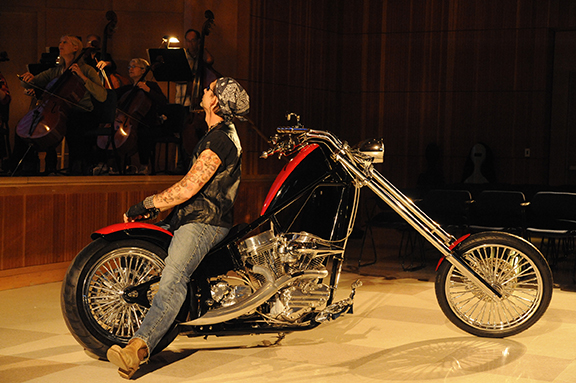
My performance with the Portland Chamber Orchestra of "The Creatures of Prometheus. I wrote and performed the piece for PCO.

My performance with the Portland Chamber Orchestra of “The Creatures of Prometheus.” I wrote and performed the piece for PCO.

Craig is laughing at me and with good reason. Through a post he asked a simple question about people building boxes around themselves. He issued a singular challenge: to apply what I found in his post to my writing. I’ve had more ideas and random ruminations than I know what to do with; he opened a big can. Before I let it go, I want to wade into the last part of his question: when did I know to create my stage?

Craig positioned a stage (showing up) as the polar opposite of a box (hiding) so I read his question as asking when I decided to show up. I’ve learned that a stage can be a strategy for hiding, too, so “showing up” means much more than just being visible.

Many actors get on the literal stage because they are seeking appreciation or approval from the audience. When anyone mounts a stage, either literal or metaphoric, to seek approval, they split themselves. By definition, they must hide their intention (to seek approval) and in so doing, give away their power and potential. Young teachers often pass through a growth phase in which they seek the approval of their students; they want to be liked and their need for appreciation neutralizes their capacity to teach. Ironically, in both cases (actors and teachers), the moment they cease splitting their intention they become great at what they do and their respective audiences can’t help but appreciate them. That’s the way power works.

Several years ago I was working with a corporate client who was upset because he felt uncomfortable with what he’d learned from my workshop. I told him that I could either serve him or please him but I could not do both. I understood that my job was to help him grow and that necessarily required discomfort. If he wanted to be pleased he needed to hire someone else.

I hid for years. I split myself for decades. My dear friend Roger once said that one day in his middle 30’s he realized that he was no longer becoming someone. He was someone. Everyone navigates the “becoming.” It is a necessary and vital growth phase and is often filled with fears of inauthenticity and split intentions; everyone wants to be appreciated and everyone sacrifices their primary intention in a mad dash for approval until one day, if they are lucky, they realize the only approval they need is their own. My revelation came when I was preparing to go on stage to perform. I realized that I was steeling myself against the audience (preparing to hide). I was assuming that they were going to judge me, which is a form of approval seeking. It was like a cold slap. I’d never had a bad experience with an audience. I’d only ever experienced appreciation and support and wondered why I was steeling myself against the very people I was there to serve. My need for approval dropped like a stone. I went on stage, perhaps for the first time in my life, present and powerful. I didn’t need anything from them. I was bringing life and my gifts to them and that was all that was required. My whole world flipped. No armor. No mask. No need other than to offer my gift on that day to that specific group. Whether or not they accepted my offer could no longer be my concern.

I’ve since learned that discomfort is a very valuable thing. It is present anytime learning and growing is happening. In fact, if there is no discomfort, there’s no learning. And that is the plaque nailed to my stage.

Go here to get my latest book, The Seer: The Mind of the Entrepreneur, Artist, Visionary, title_pageSeeker, Learner, Leader, Creator…You.

Go here for hard copies (Amazon;-)

Hear Your Words

[continued from EAT WELL]

Craig originally wrote a post about the boxes people construct around themselves and the alternative choice of creating a stage.  After his post he challenge me to enter the fray and muck about with boxes and stage and I’ve been pleasantly surprised at how much I have to say – I’ve followed the thread for a few days and will probably keep following it for a few more. It’s a rich exploration!

Yesterday I mentioned that I had the opportunity to work with Skip’s Human Centered Design class at the Illinois Institute of Technology in Chicago. I tossed the group into several exercises and experiences designed to help them understand how people story themselves. Specifically, we took a look at language as the building block of perception. We captured on video portions of my time with the students so rather than write about it, here’s clip from the day. [Note: the real riches start about 2:30 minutes in but I thought the students questions might be of use to set the stage so I left it in the cut. They’d just completed an exercise of misnaming things]. Let me know if you find some juicy bits about the boxes we build around ourselves and our attempts to “step outside of the box.”

[to be continued]

Go here to get my latest book, The Seer: The Mind of the Entrepreneur, Artist, Visionary, title_pageSeeker, Learner, Leader, Creator…You.

Go here for hard copies (it’s Amazon…)

Eat Well

"Lovers," a work in progress by David Robinson

“Lovers,” a work in progress by David Robinson

[continued from LOOK BEYOND THE BOX]

I’m looping back to Craig’s questions concerning boxes and stages. I think the next question to wade into is about what I see from my stage and when did I know to create my stage.

This is the view from my stage. It may sound bleak at first but stay with me:

Yesterday I had the opportunity to travel into Chicago and work for a couple of hours with Skip’s class at the Illinois Institute of Technology. They are budding entrepreneurs. There’s lots of energy in the world today bubbling around this word, “entrepreneur.” Accelerators and incubators are popping up everywhere. We are now a society gorging on new technology; since we are modeled on the Rome of the Caesars we have little patience for digestion (it takes time) so we prefer to vomit what we just consumed to make room for the next course. We are living at the time of an idea feeding frenzy and mind blowing technological advances. Folks with resources but few ideas are hungry to link up with folks with ideas and no resources. Everyone is insatiably hungry. No amount of gorging will satisfy the hunger.

In our world of rabid consumption, nutrition isn’t necessarily a high priority. I mean that literally and metaphorically. For evidence, look at what the networks call “news.” Long ago we realized that entertainment is more profitable than reporting so reporting is now entertainment. It matters little if there is substance to the story so long as people consume it. More evidence: one of my favorite rants of the past decade came from Dane, a neighbor, who was sitting on his stoop eating a bag of potato chips. He called me over to look at the ingredients listed on the package. High on the list, in fact the second ingredient listed, was sugar. Dane screamed, “There’s more sugar than salt in my chips!” He fumed, “I’ve been reading the ingredient lists on everything and there’s sugar in everything. It’s more important to get us hooked than to feed us anything of substance!” Of course, the punch line to the story is that he ranted with his mouth full of chips. Another bit of evidence: I stopped counting the times I’ve heard a politician say, “We have to weigh our interests against our values.” You can find a variation of this statement in the news of the day everyday. You can find an example of it in your life each day, too. How do you weigh your interests against your values?

This consumption/nutrition question is the epicenter of confusion for lots of people. It is the reason many boxes and stages are constructed.

Most people that I work with are seeking greater meaning. They want a richer experience of life. They want to fulfill their potential. In the midst of their consumption of time, they feel consumed. They have little time to breathe. They have little capacity to develop deep, meaningful relationships. They are finding that their stuff doesn’t fill the void. They are finding that their achievements are hollow unless they serve the real needs of others. They always find that what they seek is something that they’ve had all along: relationships.

There is no magic to sustenance. Slow down and enjoy your meal: literally and metaphorically. Slow down and make the meal: literally and metaphorically. Slow down and make the meal from food that hasn’t been processed: literally and metaphorically. Care for the soil and you will grow healthy food: literally and metaphorically. This requires slowing down. All of these are about the relationship you have with your world. All rich relationships require lingering and the riches are always in the relationship. Always.

Substance is always about a relationship. Relationship can’t be consumed; it must be entered and/or engaged. Tend the relationships, especially the relationship you have with yourself. In this way, the box or stage you construct will be built from self love and self love is the wellspring of love for others.

I see riches in the relationships all around me and a species (homo sapiens) trying to remember what it means to eat from the tree of life.

[to be continued]

Go here to get my latest book, The Seer: The Mind of the Entrepreneur, Artist, Visionary, title_pageSeeker, Learner, Leader, Creator…You.

Go here to get a hard copy (it’s Amazon)