Explore The Human

photo-2

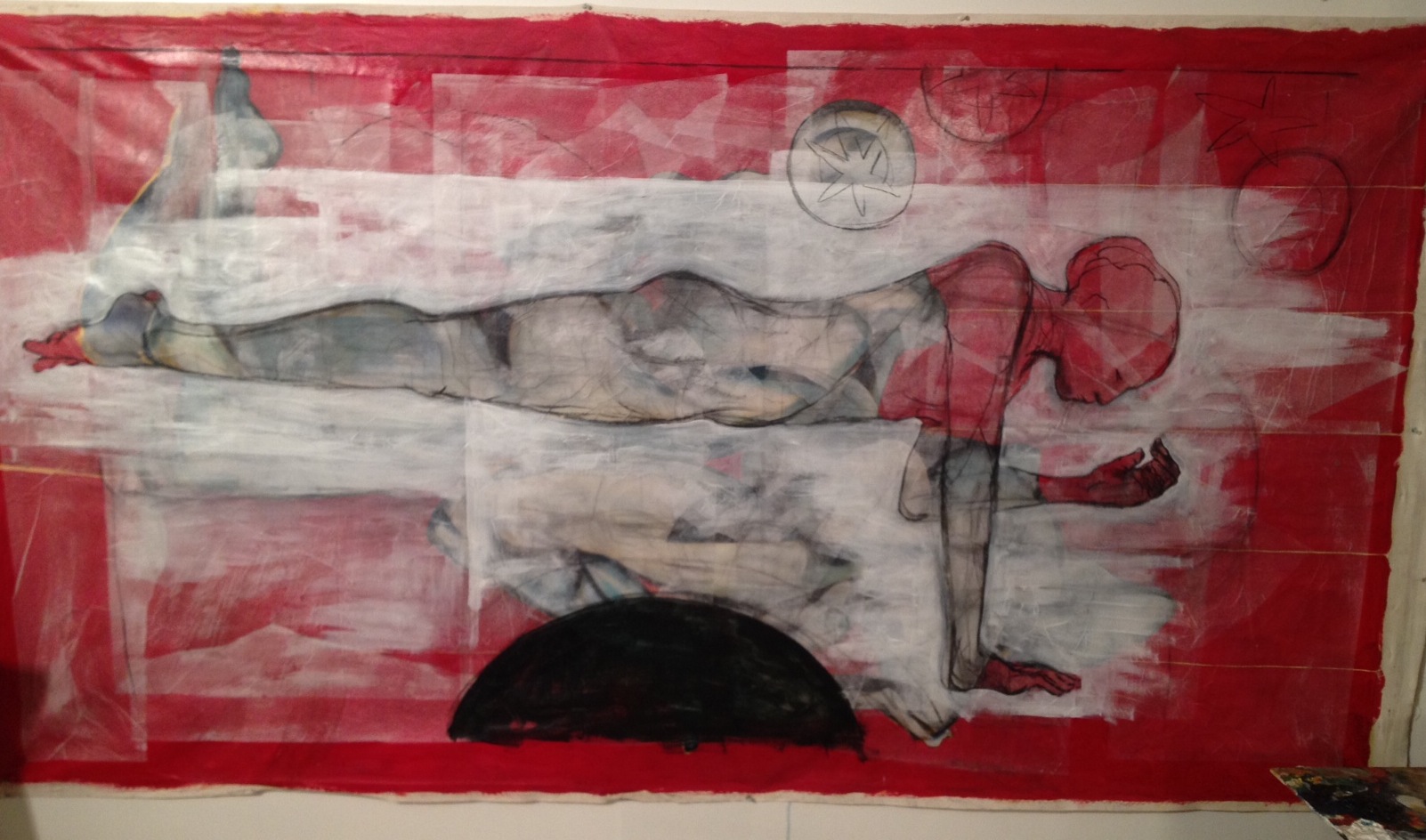
my latest work-in-progress. No name yet, approximately 5ft x 9ft.

Standing on the stair to her studio, Pam said, “I’m not sure where my work is going. I’ve pulled out all of the old paintings so I can see where I’ve been, what I’ve been doing, and maybe that will help me live into what’s next.” Like me, Pam has been a painter most of her life. She’s been through this transition many times before and recognizes the necessity of fallow artistic fields. Rather than push or panic, she’s matured as an artist and knows enough to value the emptiness.

With maturity comes faith. The muse never leaves. She rests. Artistic cycles are no different than seasons. Like a farmer living through the winter months on the harvest of the fall, Pam will spend hours sitting with her old work, thinking nothing, drinking in the nutrient of her artistic yield, allowing her inspiration fields to recharge and rejuvenate. She will allow herself to go empty, creating ample space for the new work when the muse reawakens. And then, one day, she will pick up a brush and be surprised by what comes through her.

Hans said, “An artist matures when he or she ceases working from their pain and begins exploring the human condition.” Working from the wound is necessary as adolescence is necessary. Most artists in our western tradition begin in rebellion, pushing against, making statements. We celebrate the outsider, the margin-sitter and so the wound can be difficult to escape: artistic pain becomes a role, an expectation. In practice it is akin to a developmental stall. The only place to go when pain is the norm is into the intellect: to produce, to make statements. Pain isolates and ultimately, an isolated artist is ineffective. Artistry, like all things vital, must occupy a shared space. It is communal or it is impotent.

Potency comes when the eyes turn out, when the question of “we” becomes more vital and interesting than the question of “I.” Artists mature when they reorient, when instead of the art expressing their pain, they serve the art and, make no mistake, art is another word for “human condition.” Art is bubbling life in all its forms: visual, kinesthetic, aural. As Hans said, “I want to fall deeper and deeper into the music. I want to find the edges and follow where it takes me, give myself over to it.”

title_pageGo here to buy hard copies (and Kindle) of my latest book: The Seer: The Mind of the Entrepreneur, Artist, Visionary, Innovator, Seeker, Learner, Leader, Creator,…You.

DSC_1196 copyGo here to support the kickstarter campaign for my play, The Lost Boy.

Tend The Root

The moon over Benziger Winery

The moon over Benziger Winery

I am not and have never been a landscape painter. I paint the figure. Yet, my current sketchbook is filled with fanciful landscapes, sketches from places I have been and places in my mind. Great scribbles, cross hatches, and curly cues carve rolling hills and midnight skies. I started drawing these landscapes just before I stepped off the reservation and went on my walk-about. They are meditations.

When I was very young, over and over again, I drew a cabin in the woods. There was a tree in the foreground and beyond, across a meadow, stood a rough cabin. It was as if I knew the place and I was drawing it to remember. I must have drawn it hundreds of times, the leaves on the trees, the door and windows calling for a visit. The quiet. Even today, forty years later, I can feel the quiet when I remember drawing my cabin.

Doodles and Dwight notes

Doodles and Dwight notes

The other night while on the phone with my long lost friend, Dwight, I needed to write a note – he was sparking such great insights – and all I had within reach was my sketchbook. I wrote the notes and also started to doodle as we talked. My doodles went the way of the landscape. Shapes and swirls and squiggles. Drawing is also a form of note-taking.

Dwight talked about going through the crush and coming out the other side as something – someone – wholly new, simpler. The crush refers to the process of grapes becoming wine. Life can crush us. Life does crush us. We change form, grapes to wine, children to adults to ancestors.

I told Dwight of the gift Skip gave me: lessons in wine and a few days with Barney who walked me though a vineyard and taught me about the roots and the vine. Trying to rush the grape with fertilizers and pesticides will perhaps provide short-term gain but will kill the vine in the long term. It makes the vine weak and incapable of drinking the nutrient. Health, true health, requires respect for the root and an understanding of the natural pace of things. This simple respect for the root, care and attention to the whole plant, the seen and unseen, and not a blind focus on production or the test score or the bank account, creates health. It is a meditation.

title_pageGo here to buy hard copies (and Kindle) of my latest book: The Seer: The Mind of the Entrepreneur, Artist, Visionary, Innovator, Seeker, Learner, Leader, Creator,…You.

DSC_1196 copyGo here to support my kickstarter campaign for my play, THE LOST BOY

Do.

from my children's book, Play 2 Play

from my children’s book, Play 2 Play

About the river, Jim said something like this: I had to stop complaining, leave town, or do something about it.

Jim chose to do something about it. He got busy. Now, he’s dedicating time each week to clean and care for a stretch of the river. He’s working to make people aware of the rich life that the river supports. He’s drawing the plant life. He’s made and delivers an incredible Powerpoint presentation.

Jim came to an awareness threshold: complaining is not doing – but unlike most people, he crossed the threshold and changed. The first necessity in any change process is to change yourself. Complaining is a first step but it is where most people stop. Complaining feels good because it provides the illusion of action. Complaining can become fuel if it is followed with a step toward action.

I’ve worked with scores of people who wanted to write books or paint paintings and most came to me with a complaint: lack of time, no quiet space, or some other circumstance that blocked their happiness. When we removed complaining as an option, they created time or quiet space. They wrote. They painted. It was not magic. It was practical. Complaining requires dedicated energy. It also takes time and more than a little thought-space. Painting, writing, or cleaning the river also requires dedicated energy. The question is about where the energy is dedicated.

Ultimately, as Jim described it, the move from complaining to doing changed how he was in the world. He changed so his world could change. He stepped from helpless witness to active participant.

title_pageGo here to buy hard copies (and Kindle) of my latest book: The Seer: The Mind of the Entrepreneur, Artist, Visionary, Innovator, Seeker, Learner, Leader, Creator,…You.

DSC_1196 copyGo here to support my kickstarter campaign for my play, The Lost Boy


Covet The Right Stuff

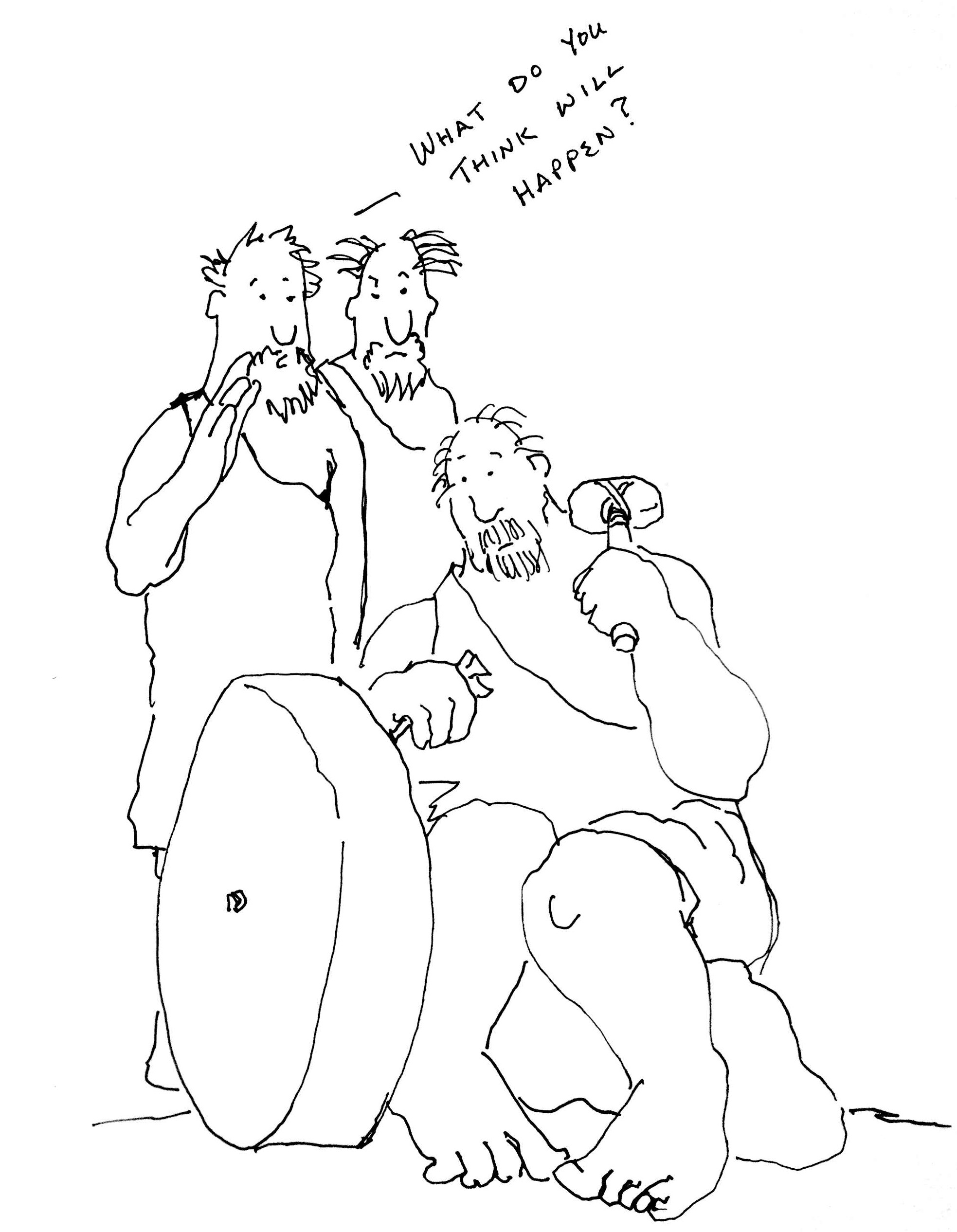
I did this drawing for my book, The Seer

I did this drawing for my book, The Seer

This morning Kerri shared a nice definition of the word “covet:” insufficient gratitude for what you already possess. It made me laugh because the definition exposes the ethical double bind of being human.

I imagine that in some distant past, a hairy guy stepped out of his cave and was startled to find that his neighbor had a new thing called fire. Being cold and also tired of eating sushi for every meal, he coveted his neighbor’s fire. He wanted some of that. A healthy lack of gratitude for what you already possess is often how good ideas spread (a random anthropological note: I read this morning that the average life span of a cave man was 18 years. I suspect coveting warmth-by-fire increased the average by a couple of years).

So, to covet is sometimes useful, especially where essentials like food, fire, and stories are concerned. It is only human to want enough food, a roof over your head, and a life-story that has meaning and purpose.

To desire is human. To want a better life is universal. What is the line between desire and coveting? To want what others have, to a certain extent, is pack behavior and we are, like it or not, creatures of the pack. Product marketers around the world count on our capacity to want what other people have and so our covet-muscle is exercised daily. The creation of imaginary need is a super trick for selling stuff and coveting what others have is key to lack creation. It’s hard to sell things if people are fulfilled.

So, to covet may be a warning signal that you are building your tower of meaning on sandy soil.

And that loops back to gratitude. All day, Kerri and I have been talking about being conscious in the moments of your life. None of us have unlimited time on this earth. The only thing we actually possess is our moments and our choices within our moments. The other stuff is really on loan and generally passing. Spiritual teachers and artists throughout history are unanimous on this point: the path to a rich life is built upon presence. Paying attention, exercising deep gratitude for the moments of your life, will always illuminate the extraordinary in the ordinary. Cultivating the capacity to see your extraordinary life will help you will covet the right stuff. Feeling grateful for your moment is always easier when you are warm and your brontosaurus burger is cooked just right.

title_pageGo here to buy hard copies (and Kindle) of my latest book: The Seer: The Mind of the Entrepreneur, Artist, Visionary, Innovator, Seeker, Learner, Leader, Creator,…You.

Check out the kickstarter campaign for my play The Lost Boy. DSC_1196 copy

Open The Box

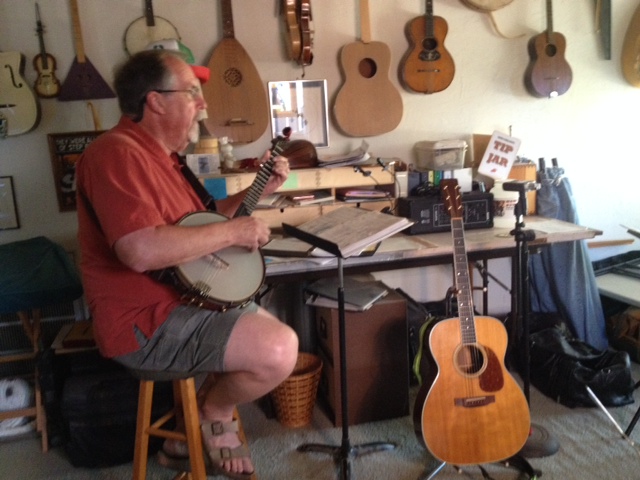
JIm Marsh of the band, Mom's Chili Boys, tuning up for rehearsal.

JIm Marsh of the band, Mom’s Chili Boys, tuning up for rehearsal.

It is often the simplest of actions that rock the world. I had one of those moments yesterday. It was a threshold moment. Its power took me by surprise. It changed me and all I did was open a box.

We flew to California to work on a play. I’ve worked on dozens of plays and performance pieces in my life but this one is special because it’s not an abstraction. It’s not a made-up story. I’ve lived it and lived with it for nearly a decade. The event, the catalyst of the play was the discovery of a box, a time capsule plastered into the walls of a ranch house over 130 years ago. Tom found the box. It held the possessions of an ancestor, a small boy who died in 1885. The boy’s mother, Isabelle, put his clothes and toys in a small trunk, wrote notes, some brief anecdotes about the boy, and then hid the box in the walls of the house.

Nearly ten years ago, we began creating the play when, late one night during a visit to the ranch, Tom asked me to help him. He asked, “What am I supposed to do with this box?” At first, much of the body of the play amounted to organized transcription. During each visit I recorded hours of conversation with Tom, hours of late night storytelling, and then flew home and transcribed the recordings. I wanted to catch the cadence of Tom’s vocal patterns. I wanted to catch the rhythms of his extraordinary voice and gift of storytelling. The play was his to perform; my work was simply to craft it, to draw a clear story-path for him to follow. The play, a one-man show, was ready for production when Tom’s health failed. He died a year ago.

During Tom’s decline I rewrote the play so that I might narrate the story and added another character to the piece. The Chili Boys had a battery of new music for the play so we gathered in Stockton to integrate the new music with the new text.

When we arrived in California, we visited Tom’s widow, Marcia. She gave us the trunk so we might photograph the clothes, toys, and notes. I’d seen the artifacts many, many times. Tom and I wiled away many nights unpacking the box and reading the notes, talking about his family stories. When our rehearsals were finished, sitting with Kerri and Jim moments before driving back to the airport for our return flight, we decided to open the trunk. Kerri had never seen the artifacts. As I lifted the lid, as I opened the trunk, I realized it was the first time; Tom had always opened the box. Tom had always reached inside, removed the shoes, the tattered coat, the hobby horse, the diary that contained the tracking notes of a fever that killed the boy. This boy was not fiction. Tom would say, “Look at this. Look at what she wrote on this.”

I opened the lid, for the first time, reaching inside, pulling out the shoes, the jumping jack, saying, “Do you see this? Someone must have made it for Johnny. And here, this is the notebook that Isabelle kept of Johnny’s fever. Look at what she wrote.”

DSC_1196 copyInvest in THE LOST BOY. See our kickstarter campaign


title_pageGo here to buy hard copies (and Kindle) of my latest book: The Seer: The Mind of the Entrepreneur, Artist, Visionary, Innovator, Seeker, Learner, Leader, Creator,…You.


Sit Down

google "Chicken Little" and this one will come up. www.homesforsaleinlascruces.com

Google “Chicken Little” and this one will come up. http://www.homesforsaleinlascruces.com

Many years ago I was feeling disoriented in my life. I told my friend Rob that I was lost in the woods and looking for my way out. He replied, “Sometimes when you are lost in the woods the best thing to do is nothing. Just sit down.” His message was clear: no one gets oriented or reoriented by spinning. Running in circles, although it might feel useful, will only make you dizzy. Sit down. Get quiet. Listen. It was great advice and at the time nearly impossible.

Orientation to life comes from getting quiet. In one of his books, Deepak Chopra wrote that an important practice on the path to success is a half hour of meditation in the morning and another half hour at the end of the day. Make a practice of getting quiet. Exercise the muscle of stillness. Listen. Clarity will ensue. That way, when the inner compass goes awry, the right tool for the job will be more readily available.

Sitting down can be hard. Stillness and disorientation are not natural bedfellows. The impulse is to action, any action. I was once in a car on a remote mountain dirt road. The road collapsed and the car slowly rolled into a gully. My friend and I spent two days trying unsuccessfully to build a road out. It was only after we gave up and sat down that we were capable of thinking things through. Disorientation generally inspires panic. Panic-driven actions, like running in circles or hauling stones to build a road, are generally comical and make for great stories after orientation is restored. We’ve all turned the wrong way down a one-way street when lost and panicked. Pulling over would have been better but much harder to do when dedicated to forcing an outcome.

Beneath Rob’s message to me was a more important lesson: let go. Let go of the need to do. Let go of the need to solve, fix, or find. The path to orientation always leads through a necessary disorientation and the disorientation comes from hanging on to old ideas, old roles, old baggage, old heroics. The cycle is perfect as hanging on necessitates letting go and letting go often means to sit down, surrender, and breathe. To sit down always affords the opportunity to see where you are as distinct from where you think you should be. To surrender is to open. To breathe is to invite in the new. No one is lost when they stop trying to be some other place.

title_pageGo here to buy hard copies (and Kindle) of my latest book: The Seer: The Mind of the Entrepreneur, Artist, Visionary, Innovator, Seeker, Learner, Leader, Creator,…You.

Go here to support my kickstarter campaign for The DSC_1196 copyLost Boy project

Step Into Your Sanctuary

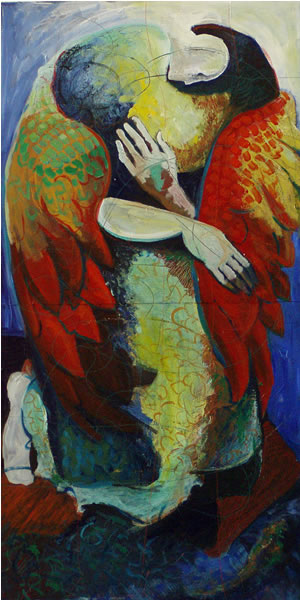
An oldie simply called ANGEL

An oldie simply called ANGEL

It is night and I am hanging out in the sanctuary while Kerri attends a meeting. I never in my life thought I’d hang out in a sanctuary but I quite like it. It is quiet and I am by myself. It is a good place to meditate or just get still. I am sitting with my stain glass window wondering if there is a conversation in the offing. I’ve spent many nights in my life sitting alone in dark empty theatres and always felt the same sense of peace that I feel at this moment.

I like the word “sanctuary.” It implies a safe place, a resting place. If all the world is my studio then it is also my aspiration to live as if all the world is my sanctuary. I’ve always understood my studio to be a holy place, a place of creation and presence. Going to my studio has always been a step into a safe space. It is where I rejuvenate. Tonight, sitting here, it occurs to me that “studio” and “sanctuary” are very similar words. They are very similar places just as “theatre” and “church” have, for me, been mostly interchangeable: where we go to affirm the stories that identify and transform us; where we go to find our community. My sister finds her community in a church. I have, until lately, found mine in the theatre.

This rambling path begs the question, “What is sacred and what is not?” Yesterday Diane told me that she is a spiritual teacher and I believe that is true. This morning while walking I remembered her words and wondered if we are all spiritual teachers to each other. Some of my greatest teachers had no idea that they were teaching me.They had no intention of teaching me. One great teacher was sweeping a floor and had no idea that I was watching him. He was one of the happiest people I have ever seen. He was shining. He was doing a job that most people would deplore. Everyone who saw him smiled, myself included. He was not his job. He was not his body. He was…connected and alive in his moment. He was living in his sanctuary and helped me know that all the world can be a holy place. He helped crack my understanding of what is possible.

These lines we draw between the sacred and profane are mostly imagined. They are convenient and sometimes useful but they are illusions that I am beginning to understand as destructive. Us and them. A divided house begins in a belief of divisions – a need for division. I’ve often told the story of the executive, red in the face, pounding the table with his fist, shouting, “I know how to compartmentalize my reason from my emotions!” I remember thinking, why would any one want to cut off their emotions from their reason? A better question might have been, who, in their right mind, willingly cleaves themselves into pieces? What delusion is necessary to entertain the notion that reason and emotions are distinct and separate? Separations are generally an indication of not-right-mindedness and a dedication to controlling the uncontrollable.

The angry executive was also a great spiritual teacher for me, too. He taught me to check my assumptions and step over the lines of false distinction that I draw. I can connect the dots directly from his table pounding exclamation to my desire to define my studio as all the world; to live consciously in my sanctuary all of my days.

title_pageGo here to buy hard copies (and Kindle) of my latest book: The Seer: The Mind of the Entrepreneur, Artist, Visionary, Innovator, Seeker, Learner, Leader, Creator,…You.

Or, go here for all digital forms of The Seer.

Go here for fine art prints of my paintingsEmbrace

Know Your Meditation

photo-1Some random thoughts on consciousness:

Last night I read that, according to some traditions, all forms of separation are an illusion. Only the whole is real but to experience the whole, one must experience him or her self as separate from it. What a conundrum!

Or, is it a gift? Tonight we witnessed the most extraordinary sunset. It’s been stormy these past few days and this evening the storms finally broke. The colors of the sunset were subtle, muted, otherworldly. Breathtaking.

We witness all of creation. All of it. And, as witnesses, we experience ourselves as separate from it. A sunset stops us in our tracks because we glimpse the glory of it all. Once, I stood on top of a mountain at sunrise and cried for the sheer beauty of what I was witnessing. Or, perhaps I cried for the feeling; I was, for a brief moment, not separate.

Consciousness is like a flashlight. We point its beam. We see what we illuminate. And, we illuminate what we see. We assign meaning and value where we point our beam. Some experiences – like sunsets – we define as glorious. Some, we define as lacking. Both are forms of meditation. Every choice to aim the beam is a meditation. All assignment of what is found in the light of the beam is a meditation.

What is your meditation?

As Joe said, the entire universe tends toward wholeness. Every time I recall his words I realize a deeper truth in what he said. We tend toward wholeness because we are already whole; the illusion of separation makes us think otherwise. In fact, thinking makes us think otherwise.

The Balinese have an art form, the shadow puppet, called Wayan Kulit. The audience sees the story as shadows cast on a screen. The performance is meant to remind the community that what they see is illusion. It is meant to remind them that they (we) are all casters of shadows. Our minds are screens upon which we play our dramas. Behind the screen, when all the characters are put away, when all the conflict is resolved, when all the separate pieces unified, there is only one artist, and we are….all.

title_pageGo here for my latest book, The Seer

For hard copies, go here.

The latest in the series. This piece is almost 5ft x 5ft

For fine art prints of my paintings, go here.

Carry Your Story

I call this painting, "Canopy"

I call this painting, “Canopy”

Since writing my post yesterday I’ve been rolling around in my mind the image from this quote from Deepak Chopra’s book, Life After Death: “Every former self you have left behind is a ghost. Your body is no longer the body of a child. Your thoughts, desires, fears, and hopes have changed. It would be terrible to walk around with all your dead selves holding on.”

All day I’ve been looking at people as if they are walking around with all of their dead selves hanging on. And, technically, we are. We define our present moment through the eyes of the past. I suppose the number of ghosts we carry depends upon the definition we carry about ourselves.

Definitions are stories. Thoughts, desires, fears and hopes are contained in the form of a story. Any thought you have is actually a form of storytelling. When we worry if this will happen or that, we are telling a story. When we tell our friends about being stuck in a traffic jam, we are telling a story. When we say, “This is who I am,” we are telling a story. When we say, “That is who they are,” we are telling a story. In a week, my family will gather to memorialize my grandfather; we will tell his story.

I’ve found in many parables and myths that an inner monologue (the story you tell yourself) acts like a fog. It obscures the present. For instance, in the Sisyphus tale, Sisyphus goes to the underworld and watches the souls of the newly departed cross the river Styx. Each soul thinks it is alone even though they are with many others; they cannot see the others through the curtain of their ego story. To enter the great “I am” they must first stop telling a story of separation.

Stories obscure.

We carry our stories forward. That is a legacy. Carrying a story forward is how we connect to our ancestry. Jean Houston once used an image that I like: we are the burning point of the ancestral line. We carry the story-torch forward. Like the Olympic flame our fire was ignited by a spark that stretches back eons. And through us, this flame will reach far into the future. We burn now. This story-torch, the family story, is the root story. It illuminates us.

Stories enlighten.

In both cases, obscuring and illuminating, stories can be heavy to carry. Or, they can be light. It may not be so terrible to walk around with your dead selves holding on if your dead selves tell a story love and connection, a story of hope and aspiration, a story of yearning and possibility. If illumination is the act of transcending your story, a step toward illumination certainly includes a story of love, and usefulness, and a deep appreciation of the ordinary moments that we story to fill our extraordinary days.

title_pageGo here for my latest book


Leave Your Ghost

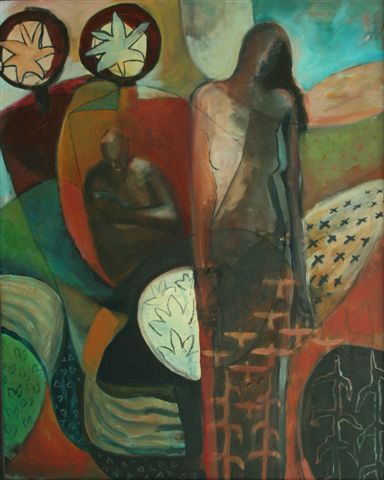
from the archives. I call this painting "Demeter."

from the archives. I call this painting “Demeter.”

As Alan said, this year for me is a year of departures. First Tom, then Kathy, Bob, and Doug passed; mentors all. Earlier this month Casey, who lived a long season and once told me that heaven didn’t want him and hell wouldn’t have him, finally found his way out of this life and into his proper place in the mystery.

When I was a boy my favorite book was an old college text of my father’s on comparative religions. It was moldering on a shelf in the basement with other long forgotten books. Finding it was like uncovering buried treasure. I fell into it, reading and rereading it. Among other things, it helped me understand that religion was not fact but a cultural expression of universal experiences. Human beings have to deal with the enormity of existence (who am I?), birth (where do I come from), death (where am I going?), and everything in between (what’s my purpose?). Human beings deal with the enormity of existence like they deal with everything in life: they story it.

Since there has been so many significant departures this year I’ve been doing some reading about death and dying. Lately, I’m reading Deepak Chopra’s book, Life After Death. He weaves the book around a parable of a young woman who must confront Death. The woman seeks the help of rishi, a wise contemplative who lives in the forest. In one of my favorite sections of the parable, the rishi introduces the young woman to ghosts. The first is a toddler; the second is young girl. The woman soon recognizes that the ghosts are her past; they are the phantoms of various stages of her own life. The rishi tells her, “Every former self you have left behind is a ghost. Your body is no longer the body of a child. Your thoughts, desires, fears, and hopes have changed. It would be terrible to walk around with all your dead selves holding on.”

He teaches her that death has been with her every moment of her life. “You have survived thousands of deaths every day as your old thoughts, your old cells, your old emotions, and even your old identity passed away. Everyone is living in the afterlife right now. What is there to fear and doubt?”

title_pageGo here for my latest book

Go here for fine art prints of my paintings.