Bang On Stuff

from Lucy & The Waterfox by David Robinson

from Lucy & The Waterfox by David Robinson

John said, “The real challenge is how to help people across the ‘I can’t’ line.” What a great phrase! I imagined myself drawing a line in the sand while my imaginary inner-voice shouted, “Don’t step over this line!”

“Everyone has an “I can’t” line.” John added, “The challenge is never the external stuff. It’s the stuff in our heads that stop us.” Too true!

John is a terrific drummer and extraordinary teacher. He told me that many people come to the drums from the place of, “I can’t” and his job is to hold their hand as they cross the threshold. “Of course they can,” he said, “they just need to know it.”

“How do you do it?” I asked. “How do you help them know it?”

“I have them bang on stuff and I bang on stuff with them.” He smiled.

In other words, gets them to experiment and play. When experimenting, there is no line between can or can’t. It’s a unified space called, “Let’s see!” In play, there is no need for achievement or expertise; there is only play. Bang on stuff and see what happens: it is a great definition for artistry. It is beginner’s mind.

In Austin Kleon’s latest book, Show Your Work, he suggests that we be intentional amateurs. He writes, “Amateurs are not afraid to make mistakes or look ridiculous in public. They’re in love, so they don’t hesitate to do work that others think of as silly or just plain stupid.”

If you desire to step across the “I can’t” line, embrace your inner amateur. Work for the love of your work and not the need to impress or “do it right.” Bang on stuff. Make messes. As Skip says, “Put a stake in the ground and then test it.” Pull on the chain. Walk through the door. Ask questions. Try a new technique. Invent a new technique.

In a bizarre and beautiful chapter in my life I was given a full ride scholarship for a masters degree in costuming. I’d never touched a sewing machine and was a danger to myself and others when trying to cut things with adult scissors. “Why not!” I said to myself and I went for a year. After turning in my first assignment in costume construction, the professor hugged my muslin mess to her breast and laughed, saying, “In the history of garments there have only been 7 possibilities (shirt, pants, skirt, etc.) and you have just created the 8th!” I didn’t know what I could or could not do so I did anything. It was fun. I had no “I can’t line.

John reminded me that the world’s first drum was (and is) a heart. “Everyone’s a drummer,” he said. “The day you can’t drum is the day you are dead.”

Go here to get my latest book, The Seer: The Mind of the Entrepreneur, Artist, Visionary, title_pageSeeker, Learner, Leader, Creator…You.

Go here for hard copies.


Embrace The Paradox

Mark Seely's gift to me: A Wordle of my blog

Mark Seely’s gift to me: A Wordle of my blog!

This is a landmark post: number 1000. When I started blogging I told Horatio that I feared I only had enough thought for 10 posts. He said, “If you can write 10, you can write 1000.” I wrinkled my brow in disbelief but it turns out that Horatio was right. With every step comes a new perspective. Kerri has a phrase I love: take down one tree at a time. In other words, if you can’t see where you are going, take the step that you can see; many single steps translate into miles of walking just as one post at a time can become 3 years of small thought-shares all in a row. What is a lifetime but a long series of days?

I’m writing this from a dining room table. All around me, covering the walls, are long strips of newsprint with a gathering storm of many colored post-it notes. The notes contain phrases, actions, like “Burn Your Trash,” or “Both Feet In, “ or “ Leave the Yuck Behind,” or, as you’ve already guessed, “Take Down One Tree At A Time.” They are story prompts. They are insight and idea prompts. Each prompt is associated with one of Kerri’s music compositions (she has 15 albums to date, with material enough for 3 more). They are building blocks for concert/storytelling evenings or keynote speech/performances. From the more than 60 post-it note prompts (and growing) we can combine any 9 to configure an audience-specific performance. The possibilities are endless. The viable themes are both unique and universal. Our umbrella title is Back To Center. We have a series of workshops to compliment the performances. The workshops illuminate the extraordinary moments and liberate the boundless capabilities of we mortals, we ordinary human beings. The big box is appropriately a prompt: Be A Ray!

Kerri and I are bringing our work together in a new form: Be A Ray!

Kerri and I are bringing our work together in a new form: Be A Ray!

As it turns out, I am a man of my time after all. The notion of a series of discreet component thoughts assembled to create a universal conception is taking over all of my processes – writing, painting, coaching, facilitating. It is the “many small steps making one large journey” philosophy of creation. It has taken over our world. It is contemporary: note the thought behind an App store or an Army of One. It is natural; cells do it. In the blog world it goes by the name of a “plug-in.” Build your own burger: design your car from the available components. It is the illusion of individuality in the midst of a constraint of choices. There is no arrival, just continuing process of expansive and interchanging capability. It is the Kahn Academy. Work at the pace that is appropriate to you. It is yoga: begin where you are, not where others are. It is what the old world of government process (ridiculously obscure tax codes), health care, education…the usual bureaucratic suspects and old school businesses do not understand. The world of rolling process has ascended; products and outcomes are obsolete before they hit the shelves. Story is more accurate than data (data is, after all, a type of story).

Nimble thinking requires nimble processes. Expansive living requires expansive thinking. Cathedrals are built one block at a time but the secret story of a cathedral is that it is never finished. It is always under construction, always changing, updating, repairing and modernizing. That’s the point of a sacred path. Stability, your sacred home, in this modern age is now found in motion, in a pure engagement with a moment. This is what we mean when we say, Be A Ray! Get into motion and focus your intention. Safety is never found in stasis.

Yesterday I wrote that a good life is marked by the capacity to stand solidly in the constancy of discovery. It is a paradox. Another prompt on the wall, one of my favorites, reads, “Embrace The Paradox.” Yes.

Go here to get my latest book, The Seer: The Mind of the Entrepreneur, Artist, Visionary, title_pageSeeker, Learner, Leader, Creator…You.

Or, go here for hard copies.


Sizzle!

an illustration from a book I never published: A Dragon's Tale

an illustration from a book I never published: A Dragon’s Tale

I’m breaking my book down into component actions almost as if I was dissecting a play script. It’s an interesting exercise because I’m experiencing a measure of creator’s blowback: I’m having the distinct impression that someone else wrote this book knowing that I’d read it someday. The author formerly known as “me” knew that I’d need to know what it contains. It is often true that we teach what we most need to know.

I started my component part breakdown because I’ll soon be throwing people into an exploration of the book’s 9 Recognitions. I wanted to chart the actions of the story and the learning embedded within the narrative. I say, “throw people into an exploration,” because I eschew the word “teaching.” My life has taught me that good teaching is about creating a container for exploration. Good teaching involves no teaching. Good teaching is watching and waiting for the right moment to ask a single simple question: what did you discover? The response will always be personal and relevant to the learner. No amount of control or planning can match the power of relevant personal discovery.

A side note: good teaching and a good life share a common center: the capacity to stand solidly in the constancy of discovery.

The primary thought-river that carries the raft of my book is “to have the experience first and make meaning second.” Making meaning second is what we do even when we think we know where we are going. Life is mundane only when “mundane” is the meaning we assign to it. Life goes bland and gray when we make meaning prior to having experiences.

The word “presence” is shorthand for having experiences before assigning meaning to the experience. If you strive to be more present simply cease thinking that you know what’s coming. You don’t.

And so, this is what my component part breakdown/book blowback looks like:

“Throw them into an exploration.” This is a remarkably different action than, “teach them.” (Another Recognition from my book: the language we use to assign meaning matters more than we know).

“Ask a single simple question” This is also a remarkably different action than, “teach them.” Live in the question and not the need for an answer.

When I was an aspiring actor deep in my acting school studies I learned that the verbs that I choose matter. The actions that I assign to my pursuit can ignite me up or block my path. The same is true on my discovery path: when I am making meaning, use really good verbs. There’s no need to minimize the sizzle of this extraordinary life.

Go here to get my latest book, The Seer: The Mind of the Entrepreneur, Artist, Visionary, title_pageSeeker, Learner, Leader, Creator…You.

Or, go here for hard copies (Amazon)

Dream It!

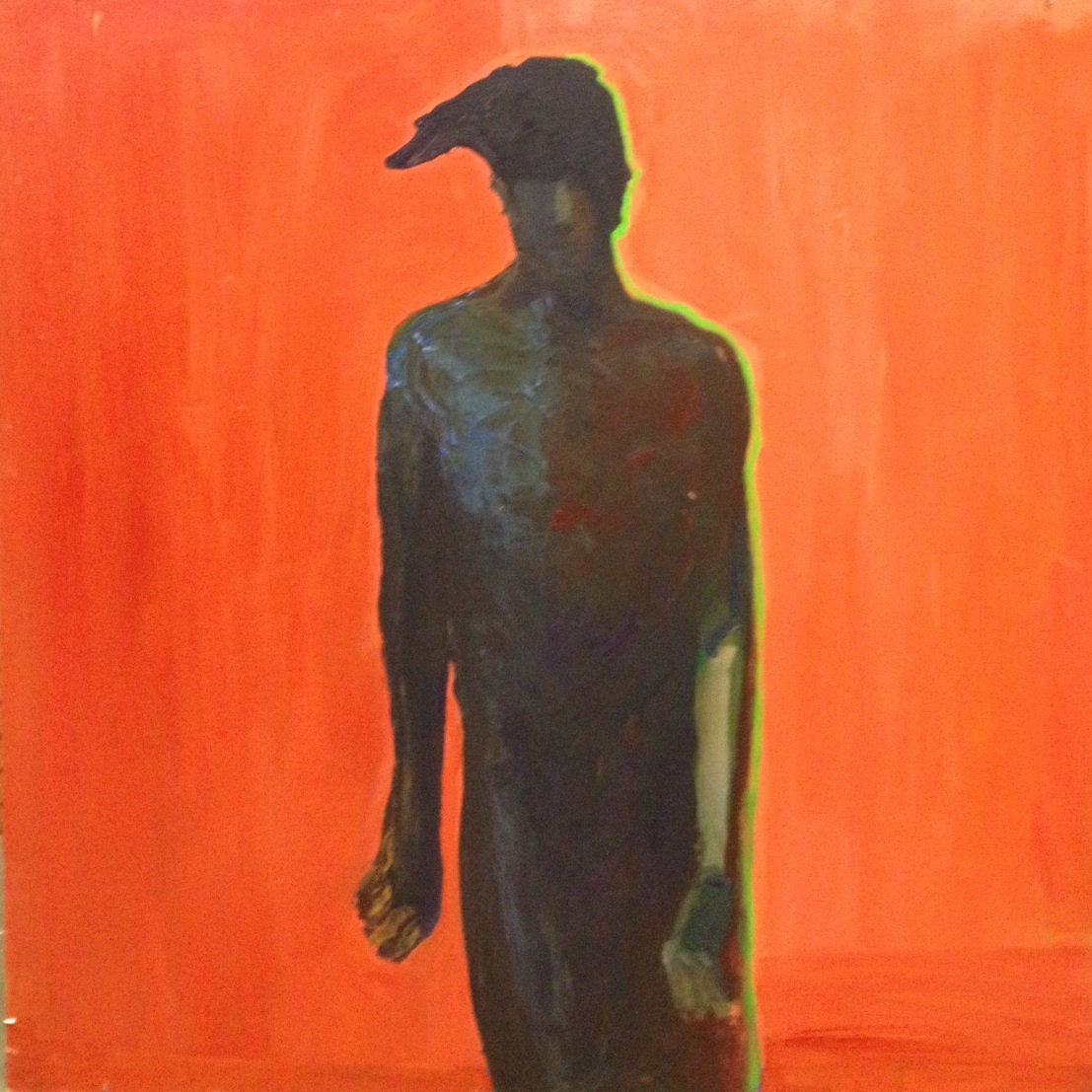
a blast from the past. A self portrait of yearning from long ago.

a blast from the past. A self portrait of yearning from long ago.

[continued from Step Into The Dot]

Standing with both feet in your life means you get rid of Plan B – or at least to put Plan A and Plan B in the right sequence. It has been a source of wonder for me why people (including myself at times) pour their energy into the back-up plan before they jump head first into their dream. Dreams rarely seem practical. Plan B always seems practical. In fact, that is the role of Plan B: lower the bar so it is easily cleared.

I’ve mentioned before how often in coaching relationships I hear the story of people diligently building their art studio but never entering it. Or, if they allow themselves to enter the creative space, they sit, frozen, unable to pick up the brush or the camera. It is dangerous to entertain the freedom that comes with dreaming. It’s as if we allow ourselves to pull back the covers, peek at the dream, to get close enough to feel the heat of it, but not close enough to ignite it into possibility. It is a special kind of pain to delay a dream. It satisfies the desire to want it but not pursue it. It affords the soothing notion of, “ I tried,” or the devastating notion of, “It wasn’t realistic.”

Kerri and I are bringing our work together in a new form: Be A Ray!

Kerri and I are bringing our work together in a new form: Be A Ray!

This is why Kerri and I are combining our performance, teaching and storytelling gifts in a palate of offers we’re calling Be A Ray! Dreams deferred cause energetic eddies; they make people swirl, putting time and energy into actions that feel good (like building a studio) but do not move the intention forward. To stop the spin is to see the pattern of deferment. It is to see the story beneath a lifetime of actions that lead everywhere but in the direction of the dream. In our vernacular, to “Ray Up!” is to stop the spin, to look squarely at the dream, and to seize the second chances. It is to claim the dream and pursue it.

Dreams need not be realized. They only need to be pursued. In fact, a proper dream pursuit is never realized just as an artist is never finished. Like every good art process, the dream changes with the pursuit. It grows and morphs until the pursuer and the dream unite. There is never an outcome, only a joining, a blending of dream and dreamer. And, this blending is the reason most people go with Plan B. Dreams can’t be controlled and neither can dreamers once unleashed. In other words, the first step in Raying Up! is to relinquish control. Pick up the brush and throw paint; let go of outcome and live in vital process. Let go of what anyone else thinks of your dream and dream it.

Go here to get my latest book, The Seer: The Mind of the Entrepreneur, Artist, Visionary, title_pageSeeker, Learner, Leader, Creator…You.

Go here for hard copies.

Open To Belief

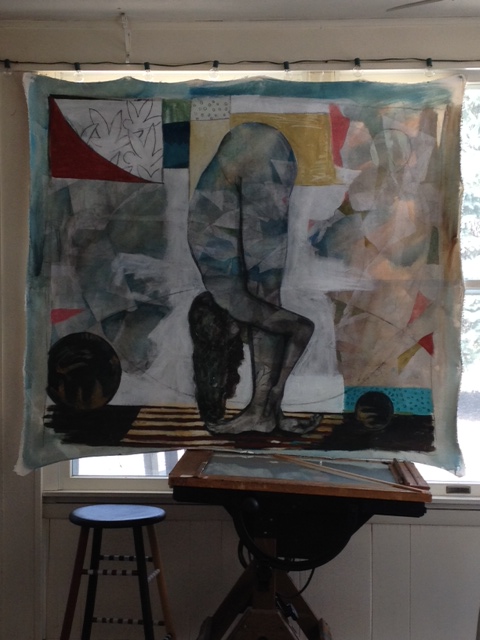
another from the Yoga series by David Robinson

another from the Yoga series by David Robinson

I’m having one of those days ripe with revelations and have been scrambling to capture the insight ripples before they rush down my thought river, around the bend, and out of mind.

One of the ripples has to do with the “As if….” The “As if…” is a tool for actors, self-growth seekers, and human beings in general. For an actor, to act “As if…” opens the door to belief in a character. For the seeker of self-growth, to act “As if…” opens the door to belief in his or her capacities, as if they were a character in the play of their own lives. The “As if” serves as a bridge into a possible future when belief is hard to come by.

When I was younger, a favorite “As if” mantra imparted to me by adults was, “To dress for the job I wanted, not the job I was applying for.” In other words, dress as if I already had the job I wanted. In my case it was lousy advice because donning pants and shirts spattered with paint was not the ladder climbing attire they wanted me to embrace. For me, the elders needed a different premise beneath their “As if” advice. There was no ladder in my paradigm. Dressing for any job felt like self-betrayal on my way to soul death. Of course, years later, having lost my mind, I actually put on a suit and lace-up shoes to coach my first executive client.  He laughed heartily as I writhed in my new suit. He advised me to show up as I am, not as what I thought he wanted me to be. Great advice! His quote, “You are an unmade bed and need to own it. It’s why I hired you – because you are different.” As if!

I’ve understood for years that people perform themselves. “As if” can be a kick-starter for a belief-filled performance. It is an illusion-seed that, when watered and tended, grows into the identity you wish to inhabit. In other words, perform the person you want to become and not the one you currently believe yourself to be. Invoke “As if…” and sooner or later you may start to believe in your performance. Sooner or later you may become who you imagine yourself to be.  The roles we play are not fixed identities and much more fluid than we pretend! Becoming who you imagine yourself to be is called growth and requires a wee bit of acting.

One of my favorite lessons from the theatre is that character (the role you play, like Hamlet or Juliet) is not something you pretend, it is found in how you do what you do. Characters in plays want something; how they go about getting what they want reveals who they are. So, when building a character, swim upstream.  The character will reveal itself through you (the actor) if you identify and take action: craft how he or she does what they do. Young actors have to transcend the notion that acting is pretending. It is not. Action and pretense are two different things. A musician does not pretend to play music and an actor does not pretend to play a character. An actor pursues intentions. An actor acts (thus, the moniker). Actions are the notes an actor plays. Hamlet is the consummate student. He seeks truth. He tests hypotheses. How he goes about seeking and testing determines what we see as a character.

The same might be said of you and me. A human being pursues intentions. We take actions everyday and so, perform ourselves. How we go about our pursuit reveals what we believe. When we have little belief and big, big fear, we have the option of acting “As if…” It’s a loop. “As if…” leads to belief and belief leads to “As if…” Life off the stage is just like life on the stage: it is a cycle of belief and dis-belief. “As if…” is an ongoing growth process. Imagination knows no outcome.

In a recent workshop, after remembering a favorite childhood game, a man in the workshop said, “My imagination opened me to my belief.” Yes. That’s it exactly!

Go here to get my latest book, The Seer: The Mind of the Entrepreneur, Artist, Visionary, title_pageSeeker, Learner, Leader, Creator…You.

Go here for hard copies (Amazon)

Spin A Web

from the Yoga series by David Robinson

from the Yoga series by David Robinson

Quinn’s study smelled of cigarettes and books. There was always a red felt tip pen and a yellow pad for note taking or for his latest composition. Quinn didn’t type and I doubt that he ever touched a computer. He had to feel the pen move across the paper. He was a sports writer though, in truth, he was more a poet philosopher. For Quinn, sports were a path to illumination. He filled his articles with haiku, analogies to chaos theory, Michael Murphy, and George Leonard.

One day while sitting in his study, talking about athletic achievement and success, he said, “You have to cultivate your serendipity.” What a terrific phrase! Serendipity is one of those paradoxical words that imply both coincidence and destiny. So, according to Quinn’s coupling of “cultivate” with “serendipity,” we must either promote coincidences or encourage destiny. Or both.

I responded, “So, in other words, the harder you work, the luckier you get.”

“It’s more than that,” he said. “It’s much more than that. Of course you have to do your work. But you also have to share your work. You have to show up, be visible, ask lots of questions, and seek the masters in your field. You have to show what you don’t know. In fact, you have to operate from what you don’t know. There’s always a better way to make a shot or shoot a basket. To cultivate your serendipity is to never stop learning, never stop improving, never assume that you’ve got it.” He paused and then said, “What you don’t know can be an obstacle or it can be connective tissue.”

Quinn watched me take it in. I knew we were talking about more than athletic achievement. He was trying to help me. At the time, I was an accomplished introvert and was wrestling mightily with sharing my work. I had no problem painting the paintings but telling galleries about my work seemed an utter impossibility. Sharing meant I would have to talk to people. It meant I’d have to say, “This is my work and it is good work.” It meant claiming my gift beyond the thoughts and opinions of others. Quinn was teeming with blarney and always seemed at ease in a crowd though I knew even then that we shared a similar demon. He doubted his gift. He recognized my struggle because it was his struggle.

After a moment he lit a cigarette, blew the smoke and continued, “It’s like spinning a web – and the silk, the connectivity, is spun from seeking what you have yet to learn. The more you share your gift, the more you ask others what they see, the more people know about your gift, the higher the odds that a path to success will open. You have to spin the web.” I nodded my head, taking it in. I remember being daunted by what he was telling me. He leaned back in his chair, his eyes filled with mirth, and said, “Success is really about letting yourself learn; always learn.”

I nodded and stared at the floor. He took a drag on his cigarette and as he blew the smoke he added, “No one does this alone.”

Go here to get my latest book, The Seer: The Mind of the Entrepreneur, Artist, Visionary, title_pageSeeker, Learner, Leader, Creator…You.

Go here for hard copies

Let’s Dance

from my cartoon series, FLUB

from my cartoon series, FLUB

[This is a response to my dear friend who believes he will someday be worthy to call himself “artist.”]:

There is a trap that every artist must negotiate: the mistaken notion that “artist” is something you achieve. “Artist” is something that you are (and every child is an artist, wouldn’t you agree?). Art is an exploration of life. Some of the greatest artists in history had no training and no experience. They, like you, enjoy playing with various colors and never followed a textbook or a guideline because art doesn’t happen in textbooks and the only guideline that ultimately matters is in the heart of each individual artist. Art is an exploration. It is a relationship with the mystery.  It is not a prescription. There isn’t A WAY to do it. There is your way. And my way.

Art is an engagement with something intangible and if it is life giving to you, that is all that matters. It gives you life and you bring it to life and that dance of giving and bringing life is the work of the artist. The viewer will never see what you see because they do not have your eyes or your life experience or your heart. They will see what they see and interpret it according to their life-filters. Some people will love your work, some will hate it, most will be indifferent – and that has nothing to do with you. You can’t (nor should you) determine what they see. A painting or photograph is like a doorway: the viewer can step through or not. They can choose to engage or not to engage and you have no power over what they  do or see or feel or think. And, it is vital that you understand that because the notion that you can control what they think is the very thing that leads you to believe that you must pass some credibility test to be deemed and artist. When a viewer engages with a work of art they cease to be a viewer and themselves become an artist. Engagement with art is never passive; it is creative. They enter their own dance of creation. They become creators. Yours is to offer the doorway, not to push people through it.

In truth, the shadow side for the artist in trying to control what other people think is that they give away the essential thing: what they think. Why assign to other people the responsibility for your identity as “artist.” If they like your work then you are an artist? If they hate your work then you are not? You can either serve your heart (art) or please other people but you cannot do both.

I’ve coached a legion of people who set up great studio space for themselves and then never go into it. People are great at creating separation from what they want. They can get close to it (set up the studio) but fear stepping into it (picking up the paint brush) because the act of making art is the act of releasing control. It is to offer without condition. It can be a scary thing to give voice to what you see. It is vulnerable to show your heart to the world. It is only scary until you own it and get out of the trap of valuing other people’s point of view over your own.

Another form of separation is to say, “I will be an artist when I sell my work.” Selling your work does not make you an artist. Making art is what makes you an artist. Acceptance does not make you an artist. Making art is what makes you an artist. 10,000 hours in the studio will make you better and better (meaning freer and freer to express) but it will not make you an artist. You are an artist in the first hour and an artist in the 10,000th hour because you are exploring your relationship with life. You might have better mastery of the tools in the 10,000th hour but “master of tool” and “artist” are two distinctly different things. The  artist uses the tool, the tool does not define the artist.

You have the courage to go to your studio and get lost in an exploration of life through image and color. You lose all sense of time because your relationship with the mystery is pure. And, in the end of the day, who cares if anyone sees you as an “artist;” who cares if you see yourself as an “artist.” All that matters is that you enter that sacred studio place and open yourself to the mystery and say, “Let’s dance.”

Go here to get my latest book, The Seer: The Mind of the Entrepreneur, Artist, Visionary, title_pageSeeker, Learner, Leader, Creator…You.

Or, go here for hard copies and Kindle (Amazon)

Step On The Stage

My performance with the Portland Chamber Orchestra of "The Creatures of Prometheus. I wrote and performed the piece for PCO.

My performance with the Portland Chamber Orchestra of “The Creatures of Prometheus.” I wrote and performed the piece for PCO.

Craig is laughing at me and with good reason. Through a post he asked a simple question about people building boxes around themselves. He issued a singular challenge: to apply what I found in his post to my writing. I’ve had more ideas and random ruminations than I know what to do with; he opened a big can. Before I let it go, I want to wade into the last part of his question: when did I know to create my stage?

Craig positioned a stage (showing up) as the polar opposite of a box (hiding) so I read his question as asking when I decided to show up. I’ve learned that a stage can be a strategy for hiding, too, so “showing up” means much more than just being visible.

Many actors get on the literal stage because they are seeking appreciation or approval from the audience. When anyone mounts a stage, either literal or metaphoric, to seek approval, they split themselves. By definition, they must hide their intention (to seek approval) and in so doing, give away their power and potential. Young teachers often pass through a growth phase in which they seek the approval of their students; they want to be liked and their need for appreciation neutralizes their capacity to teach. Ironically, in both cases (actors and teachers), the moment they cease splitting their intention they become great at what they do and their respective audiences can’t help but appreciate them. That’s the way power works.

Several years ago I was working with a corporate client who was upset because he felt uncomfortable with what he’d learned from my workshop. I told him that I could either serve him or please him but I could not do both. I understood that my job was to help him grow and that necessarily required discomfort. If he wanted to be pleased he needed to hire someone else.

I hid for years. I split myself for decades. My dear friend Roger once said that one day in his middle 30’s he realized that he was no longer becoming someone. He was someone. Everyone navigates the “becoming.” It is a necessary and vital growth phase and is often filled with fears of inauthenticity and split intentions; everyone wants to be appreciated and everyone sacrifices their primary intention in a mad dash for approval until one day, if they are lucky, they realize the only approval they need is their own. My revelation came when I was preparing to go on stage to perform. I realized that I was steeling myself against the audience (preparing to hide). I was assuming that they were going to judge me, which is a form of approval seeking. It was like a cold slap. I’d never had a bad experience with an audience. I’d only ever experienced appreciation and support and wondered why I was steeling myself against the very people I was there to serve. My need for approval dropped like a stone. I went on stage, perhaps for the first time in my life, present and powerful. I didn’t need anything from them. I was bringing life and my gifts to them and that was all that was required. My whole world flipped. No armor. No mask. No need other than to offer my gift on that day to that specific group. Whether or not they accepted my offer could no longer be my concern.

I’ve since learned that discomfort is a very valuable thing. It is present anytime learning and growing is happening. In fact, if there is no discomfort, there’s no learning. And that is the plaque nailed to my stage.

Go here to get my latest book, The Seer: The Mind of the Entrepreneur, Artist, Visionary, title_pageSeeker, Learner, Leader, Creator…You.

Go here for hard copies (Amazon;-)

See The Box

‘The Box’ by Kerri Sherwood from her album Blueprint for My Soul Craig sent me a link and a challenge. The link was to his recent blog post, Break Down The Box. It’s about how people build boxes around themselves. “Instead of building a box that may later require extra work to remove,” he writes, “I suggest building a stage.” What a great image! His challenge to me was to apply it to my writing. He texted, “It’s relevant to your general topics.”

My question back to Craig was about the word “apply.” Is he challenging me to write about boxes and stages? Is he challenging me to build a stage and stand on it? Both? His challenge came on a day that I said aloud to myself and the universe, “I’m feeling boxed!” His timing was impeccable.

Self Cut outWe’ve not finished our correspondence so I don’t yet know what he means by applying it to my writing. To stall I will write what I know about boxes:

1) Everyone has one. Don Miguel Ruiz writes that we come into this earth as free, uninhibited spirits and then the adults around us begin impressing rules and random philosophy upon us. They teach us constraint and we comply. We are a pack animal, after all, and must operate within the greater needs of the community. That’s why there are traffic lights and a proper fork to use when eating a salad. Our greatest need is to belong; The GAP, Old Navy, or Abercrombie & Fitch could not exist otherwise. The need to belong is the driver behind box building. It’s a paradox. Somewhere amidst all of the compliance we begin to assume that we are no good or start making comparisons to others or create standards of perfection that are impossible to inhabit. So, we build a box called, “should be”. The paradox is that, in order to belong, our action is to hide.

2) Growth comes from constraints. No box is built without the need to deconstruct it. That is the opportunity of the box. Joseph Campbell would call box deconstruction The Heroes Journey. In the great mythologies of the world there is a tension between The Right Hand path (what society expects you to do) and The Left Hand path (following your bliss). Both are necessary and, in the end, we all must find the middle way between the two paths. The middle way is known in mythological terms as The Holy Grail. Bliss always needs the participation of others. We are pack animals and need the pack to know where we fit.

3) Constraint is necessary for creative fulfillment. School boards around the nation have the misguided notion that art is the absence of rule and/or discipline. It must be a requirement of school board participation to attend the symphony without recognizing that the musicians on stage have given their lives to discipline and constraint. It might come as a surprise to most people but artists outstrip the military in rule adherence and rigid discipline. The disconcerting aspect for the school board is that the rules and discipline of the artist are self-imposed. They are inner imperatives. Artists do not need a drill sergeant. They need constraints to push against, boundaries to overcome, rules to challenge, and patterns to disrupt. Watch a kid on a skateboard try to learn a new skill (oh, yes – they are artists, too). They might break their arm in the process but the break will just fuel the need to improve.

4) No one sees clearly their box. To return to a Don Miguel Ruiz-ism, we are the stars of our own movie and can never know the movie of another person (and they can never know our movie). The paradox is, of course, as the star of your movie you never get to see your life from any meaningful perspective until lots of time affords you some distance. Even then, you’ll interpret your movie through the lens of having lived it. If you have an inner monologue, you are center stage of your movie and your movie is your box.  Here’s the beautiful thing about movies/boxes: they all come with flaws and the flaws are almost always the location of the opportunities. As I recently learned, the Amish intentionally place a small flaw in every quilt because they believe that the flaw is what lets the spirit in. The same might be said of boxes.

I’ve been privileged in my life to work with and direct a bevy of actors and most had to learn to stand on a stage. In fact, the stage frightens most of the really good ones. They understand the power of being seen, the responsibility that comes with visibility. It is simply this: be present without the need to control the thoughts or emotions of another. Be present with them. Offer them a story without the self-protection of trying to control what they see. All stories are maps out of boxes. Or, more to the point, stories are maps out of one layer of box to a lesser layer of box. So:

5) Boxes are like onions. A stage is merely a layer.

Go here to get my latest book, The Seer: The Mind of the Entrepreneur, Artist, Visionary, title_pageSeeker, Learner, Leader, Creator…You

Go here for hard copies or Kindle

Update Your Model

InfinityI laughed when I read this phrase on Skip’s Power Point presentation:

“All models are false. However, some are useful.” Alan Kay

I spent years of my life reading books built upon the thought models of thinkers, consultants, physicists, mathematicians, artists, business people and spiritual thinkers. None of the models was true. Many contradicted other models. Models are only useful if they help us make sense of our days on this planet.

Culture is a thought model. Travel to another culture and you’ll spend some time being disoriented because you will have entered a different model for sense making. For instance, some cultures/models place the accent on the individual and others place it on the group. I come from a culture that celebrates the individual and my world was rocked in a culture that celebrates the group; the model was so different that I could not sense make anything and fell head long into “not knowing.” While stumbling about unable to make sense of the world, I saw my own cultural model for what it is: a useful model – not truth.

Art, in most of Western culture, is considered important if it breaks or disturbs the model. In most Eastern cultures art is considered important if it supports the model.  Neither is truth. Neither is right. Both are useful for sense making if you understand the model.

Language is a model. It is very useful model, wouldn’t you agree? Wade Davis is sounding an important alarm that is going mostly unnoticed: we are losing languages faster than species are going extinct. Each language lost is more than a lost collection of words; a language lost is an entire world lost. It is a mythology lost. A language lost is a way of seeing and engaging with the mystery that is lost. What is useful and unknowable (un-see-able) to other languages/models is lost forever.

Religion is a model. Science creates and constantly revises its models. Religion could learn a thing or two from science (and vice versa). Maps are models. For a terrific book on mind models, get Charles Hampden-Turner’s, Maps Of The Mind.

A study of history is a study of models that served as sense makers for a time but collapsed under the weight of updates. For instance, no explorer ever sailed off the edge of the world despite the unassailable model of the day. It turns out that the sun does not rotate around the earth though many people were hushed and crushed for going against the model of their day. Newton showed us that space and time were fixed and Einstein showed us that space and time are not only fluid but connected.

We get into trouble when we confuse our models with truth. No model is true. No model is right. This applies especially to the models that we carry within us: the mind models that lead us to believe that, “I can’t do it…” are false. My favorite model that is mistaken for truth shows up like this: “I’m not creative.” That is a model that is both false and not very useful. What might you need to do to reconsider your model and accept an update?

Go here to get my latest book, The Seer: The Mind of the Entrepreneur, Artist, Visionary, title_pageSeeker, Learner, Leader, Creator…You.

Go here for hard copies