Explore The Human

photo-2

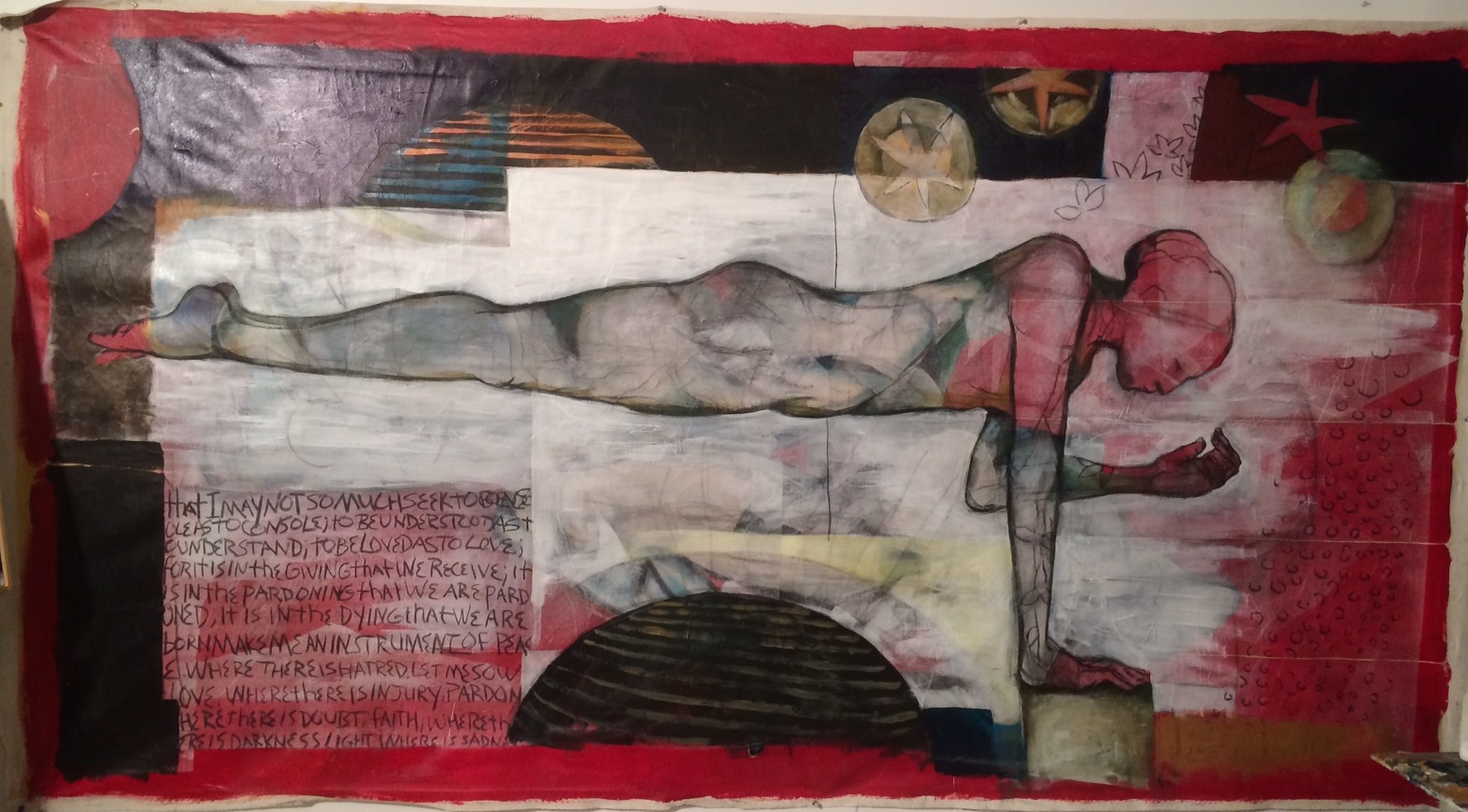
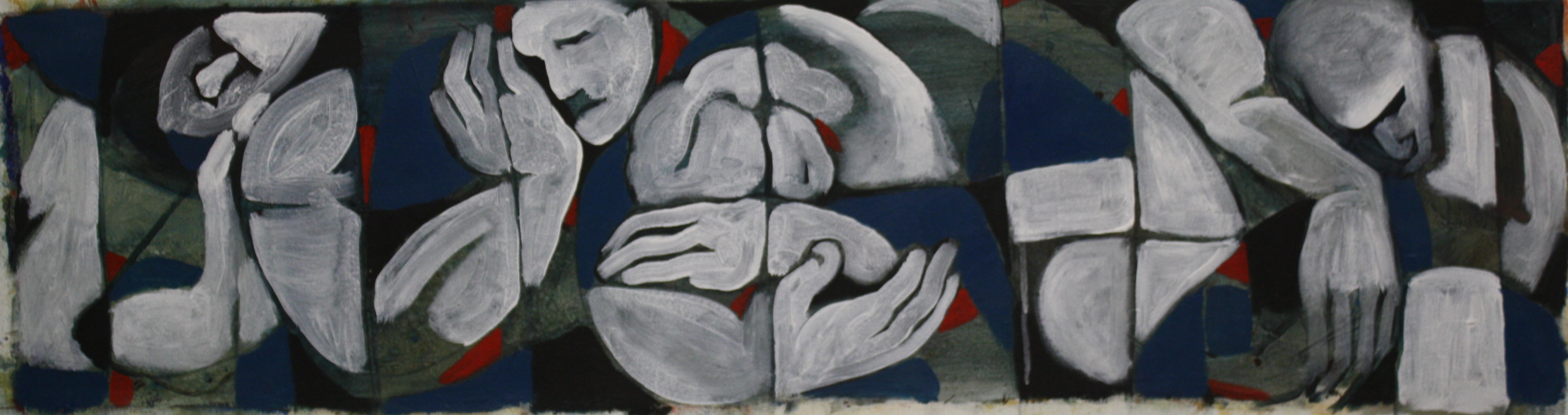
my latest work-in-progress. No name yet, approximately 5ft x 9ft.

Standing on the stair to her studio, Pam said, “I’m not sure where my work is going. I’ve pulled out all of the old paintings so I can see where I’ve been, what I’ve been doing, and maybe that will help me live into what’s next.” Like me, Pam has been a painter most of her life. She’s been through this transition many times before and recognizes the necessity of fallow artistic fields. Rather than push or panic, she’s matured as an artist and knows enough to value the emptiness.

With maturity comes faith. The muse never leaves. She rests. Artistic cycles are no different than seasons. Like a farmer living through the winter months on the harvest of the fall, Pam will spend hours sitting with her old work, thinking nothing, drinking in the nutrient of her artistic yield, allowing her inspiration fields to recharge and rejuvenate. She will allow herself to go empty, creating ample space for the new work when the muse reawakens. And then, one day, she will pick up a brush and be surprised by what comes through her.

Hans said, “An artist matures when he or she ceases working from their pain and begins exploring the human condition.” Working from the wound is necessary as adolescence is necessary. Most artists in our western tradition begin in rebellion, pushing against, making statements. We celebrate the outsider, the margin-sitter and so the wound can be difficult to escape: artistic pain becomes a role, an expectation. In practice it is akin to a developmental stall. The only place to go when pain is the norm is into the intellect: to produce, to make statements. Pain isolates and ultimately, an isolated artist is ineffective. Artistry, like all things vital, must occupy a shared space. It is communal or it is impotent.

Potency comes when the eyes turn out, when the question of “we” becomes more vital and interesting than the question of “I.” Artists mature when they reorient, when instead of the art expressing their pain, they serve the art and, make no mistake, art is another word for “human condition.” Art is bubbling life in all its forms: visual, kinesthetic, aural. As Hans said, “I want to fall deeper and deeper into the music. I want to find the edges and follow where it takes me, give myself over to it.”

title_pageGo here to buy hard copies (and Kindle) of my latest book: The Seer: The Mind of the Entrepreneur, Artist, Visionary, Innovator, Seeker, Learner, Leader, Creator,…You.

DSC_1196 copyGo here to support the kickstarter campaign for my play, The Lost Boy.

Tend The Root

The moon over Benziger Winery

The moon over Benziger Winery

I am not and have never been a landscape painter. I paint the figure. Yet, my current sketchbook is filled with fanciful landscapes, sketches from places I have been and places in my mind. Great scribbles, cross hatches, and curly cues carve rolling hills and midnight skies. I started drawing these landscapes just before I stepped off the reservation and went on my walk-about. They are meditations.

When I was very young, over and over again, I drew a cabin in the woods. There was a tree in the foreground and beyond, across a meadow, stood a rough cabin. It was as if I knew the place and I was drawing it to remember. I must have drawn it hundreds of times, the leaves on the trees, the door and windows calling for a visit. The quiet. Even today, forty years later, I can feel the quiet when I remember drawing my cabin.

Doodles and Dwight notes

Doodles and Dwight notes

The other night while on the phone with my long lost friend, Dwight, I needed to write a note – he was sparking such great insights – and all I had within reach was my sketchbook. I wrote the notes and also started to doodle as we talked. My doodles went the way of the landscape. Shapes and swirls and squiggles. Drawing is also a form of note-taking.

Dwight talked about going through the crush and coming out the other side as something – someone – wholly new, simpler. The crush refers to the process of grapes becoming wine. Life can crush us. Life does crush us. We change form, grapes to wine, children to adults to ancestors.

I told Dwight of the gift Skip gave me: lessons in wine and a few days with Barney who walked me though a vineyard and taught me about the roots and the vine. Trying to rush the grape with fertilizers and pesticides will perhaps provide short-term gain but will kill the vine in the long term. It makes the vine weak and incapable of drinking the nutrient. Health, true health, requires respect for the root and an understanding of the natural pace of things. This simple respect for the root, care and attention to the whole plant, the seen and unseen, and not a blind focus on production or the test score or the bank account, creates health. It is a meditation.

title_pageGo here to buy hard copies (and Kindle) of my latest book: The Seer: The Mind of the Entrepreneur, Artist, Visionary, Innovator, Seeker, Learner, Leader, Creator,…You.

DSC_1196 copyGo here to support my kickstarter campaign for my play, THE LOST BOY

Make An Appeal

Tom and me a long time ago.

Tom and me a long time ago.

Horatio wrote and said he hoped my kickstarter campaign picked up steam soon. Me, too. It looks like a long hill to climb with less than 10 days to go and less than a third of the way to our goal.

In his email, Horatio asked a great question and also gave me some good advice:

The question: why should anyone care?

The advice: make a direct appeal.

The question (why should anyone care?): To be honest, I’m not sure why anyone cares or does not care about anything. I have lots of cerebral reasons why I think this play should matter but to expound the list feels somewhat like one of the many times I’ve stood in front of a school board telling them why the arts matter. What I know in my bones will bounce off because it is not yet personal to my audience. I know it has to be personally relevant for people to engage or invest in any thing, not just the arts. For instance, the people raising money for breast cancer research and awareness are the same people who’ve had breast cancer or know someone who has. It’s personal. It matters.

This is personal for me. I spent hundreds of hours over several years listening to Tom’s stories, taking notes, recording him. We walked through graveyards. We drove through the fields and stopped at places where his ancestors lived and played out their lives. It’s where he played out his life. He took me those places and told me those stories because he feared they would die with him. He wanted to keep alive the family story and, at the time, no one in his family was present to listen. I was present. I wanted to listen. I wanted to spend time with my friend and mentor and that time was a great gift to me. Tom is chief among the patriarchs of my artistic family. I am his artistic descendent.

Last week as I travelled back to the San Joaquin Valley to work with The Chili Boys to integrate the new music into the play, it occurred to me that I’ve poured more energy and time into this play than any other artistic project in my life. It’s been a decade of development and attempts to get it to production. We let it sit fallow for a spell after Tom’s health collapsed. Oddly, it was Tom’s passing that made it ready, necessary.

One mistake I made in setting up the campaign: I thought people would join the kickstarter because of Tom. It has been somewhat of a mystery to me but also a great delight that the majority of people supporting the play never knew Tom. I thought the legion of Tom’s students, peers, and friends would be the primary donors. Instead, the folks throwing in their support are my peers, students, and friends. They know me. They are supporting me. So, the only answer I can come up with that may make this relevant for you: because I care, because I need to bring this play across the finish line. Because I am now on the front line of an artistic legacy: I carry the stories, the teaching, the value-set, the vision as I inherited it. Making art (performing this play) is the way I serve as conduit to the next generation. It’s how I (like all artists) pass it on. Kerri continues to remind me that there is more to it than that. It’s not just the passing of the legacy to me. It is the reminder we all need in this busy world – the reminder that family story needs to be told and needs to be heard. And everyone has a family story to pass on. Period.

As for Horatio’s advice: make a direct appeal. Here it is: I have 10 days and need your help. Pass on the link. Give $10.00..or $1,000.00. Mostly, I appreciate your correcting my mistake. Thank you for supporting me.

DSC_1196 copyGo here for The Lost Boy Kickstarter campaign

Go here to buy hard copies (and Kindle) of my latest book: The Seer: The Mind of the Entrepreneur, Artist, Visionary, Innovator, Seeker, Learner, Leader, Creator,…You.title_page

Covet The Right Stuff

I did this drawing for my book, The Seer

I did this drawing for my book, The Seer

This morning Kerri shared a nice definition of the word “covet:” insufficient gratitude for what you already possess. It made me laugh because the definition exposes the ethical double bind of being human.

I imagine that in some distant past, a hairy guy stepped out of his cave and was startled to find that his neighbor had a new thing called fire. Being cold and also tired of eating sushi for every meal, he coveted his neighbor’s fire. He wanted some of that. A healthy lack of gratitude for what you already possess is often how good ideas spread (a random anthropological note: I read this morning that the average life span of a cave man was 18 years. I suspect coveting warmth-by-fire increased the average by a couple of years).

So, to covet is sometimes useful, especially where essentials like food, fire, and stories are concerned. It is only human to want enough food, a roof over your head, and a life-story that has meaning and purpose.

To desire is human. To want a better life is universal. What is the line between desire and coveting? To want what others have, to a certain extent, is pack behavior and we are, like it or not, creatures of the pack. Product marketers around the world count on our capacity to want what other people have and so our covet-muscle is exercised daily. The creation of imaginary need is a super trick for selling stuff and coveting what others have is key to lack creation. It’s hard to sell things if people are fulfilled.

So, to covet may be a warning signal that you are building your tower of meaning on sandy soil.

And that loops back to gratitude. All day, Kerri and I have been talking about being conscious in the moments of your life. None of us have unlimited time on this earth. The only thing we actually possess is our moments and our choices within our moments. The other stuff is really on loan and generally passing. Spiritual teachers and artists throughout history are unanimous on this point: the path to a rich life is built upon presence. Paying attention, exercising deep gratitude for the moments of your life, will always illuminate the extraordinary in the ordinary. Cultivating the capacity to see your extraordinary life will help you will covet the right stuff. Feeling grateful for your moment is always easier when you are warm and your brontosaurus burger is cooked just right.

title_pageGo here to buy hard copies (and Kindle) of my latest book: The Seer: The Mind of the Entrepreneur, Artist, Visionary, Innovator, Seeker, Learner, Leader, Creator,…You.

Check out the kickstarter campaign for my play The Lost Boy. DSC_1196 copy

Open The Box

JIm Marsh of the band, Mom's Chili Boys, tuning up for rehearsal.

JIm Marsh of the band, Mom’s Chili Boys, tuning up for rehearsal.

It is often the simplest of actions that rock the world. I had one of those moments yesterday. It was a threshold moment. Its power took me by surprise. It changed me and all I did was open a box.

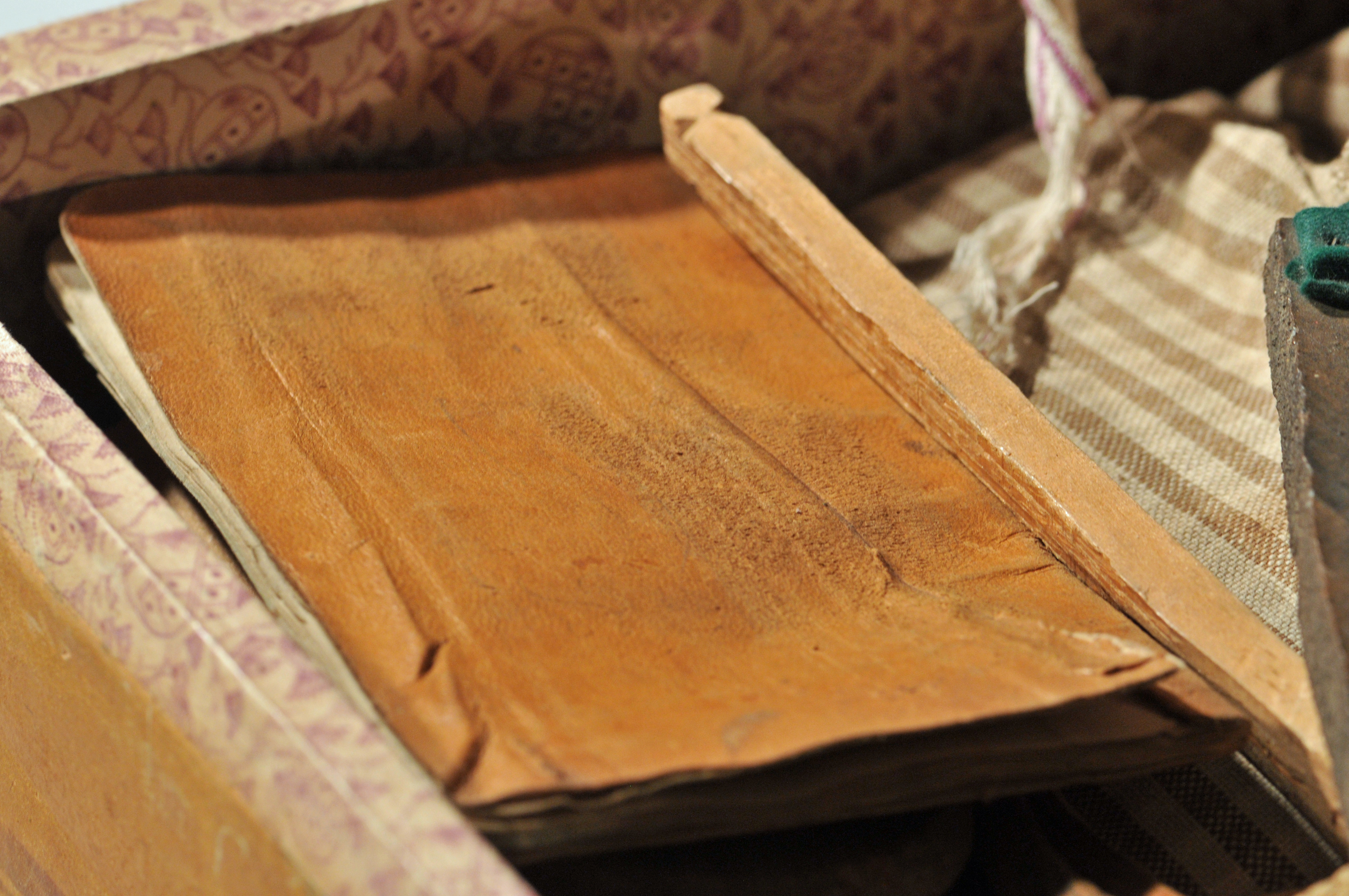
We flew to California to work on a play. I’ve worked on dozens of plays and performance pieces in my life but this one is special because it’s not an abstraction. It’s not a made-up story. I’ve lived it and lived with it for nearly a decade. The event, the catalyst of the play was the discovery of a box, a time capsule plastered into the walls of a ranch house over 130 years ago. Tom found the box. It held the possessions of an ancestor, a small boy who died in 1885. The boy’s mother, Isabelle, put his clothes and toys in a small trunk, wrote notes, some brief anecdotes about the boy, and then hid the box in the walls of the house.

Nearly ten years ago, we began creating the play when, late one night during a visit to the ranch, Tom asked me to help him. He asked, “What am I supposed to do with this box?” At first, much of the body of the play amounted to organized transcription. During each visit I recorded hours of conversation with Tom, hours of late night storytelling, and then flew home and transcribed the recordings. I wanted to catch the cadence of Tom’s vocal patterns. I wanted to catch the rhythms of his extraordinary voice and gift of storytelling. The play was his to perform; my work was simply to craft it, to draw a clear story-path for him to follow. The play, a one-man show, was ready for production when Tom’s health failed. He died a year ago.

During Tom’s decline I rewrote the play so that I might narrate the story and added another character to the piece. The Chili Boys had a battery of new music for the play so we gathered in Stockton to integrate the new music with the new text.

When we arrived in California, we visited Tom’s widow, Marcia. She gave us the trunk so we might photograph the clothes, toys, and notes. I’d seen the artifacts many, many times. Tom and I wiled away many nights unpacking the box and reading the notes, talking about his family stories. When our rehearsals were finished, sitting with Kerri and Jim moments before driving back to the airport for our return flight, we decided to open the trunk. Kerri had never seen the artifacts. As I lifted the lid, as I opened the trunk, I realized it was the first time; Tom had always opened the box. Tom had always reached inside, removed the shoes, the tattered coat, the hobby horse, the diary that contained the tracking notes of a fever that killed the boy. This boy was not fiction. Tom would say, “Look at this. Look at what she wrote on this.”

I opened the lid, for the first time, reaching inside, pulling out the shoes, the jumping jack, saying, “Do you see this? Someone must have made it for Johnny. And here, this is the notebook that Isabelle kept of Johnny’s fever. Look at what she wrote.”

DSC_1196 copyInvest in THE LOST BOY. See our kickstarter campaign


title_pageGo here to buy hard copies (and Kindle) of my latest book: The Seer: The Mind of the Entrepreneur, Artist, Visionary, Innovator, Seeker, Learner, Leader, Creator,…You.


Determine The Value

The Lost Boy (one of many) sitting on a mule.

The Lost Boy (one of many) sitting on a mule.

Last year Skip taught me that crowd sourcing sites like Kickstarter or Indiegogo were great ways to test the viability of a project or product. If an idea is valuable, people will invest in it. If not, not. If an idea is viable it will attract support.

As an artist I’ve had a wonky relationship with the valuation equation. Generally, the economics of art live outside the norms of the marketplace. For instance, I’ve run or consulted with many theatre companies; it is virtually impossible for the product of a theatre company – the live performance of a play – to pay for itself through ticket sales. Unlike other products, things like cars or bananas, arts organizations and the products they produce are made possible through grants, donations, patrons and this weird mechanism called “non-profit” status. The costs of producing the play (the art) usually outstrip the capacity of the “product” to generate a profit.

When I first met Skip he asked me a question for which I had no capacity to answer: “How can you scale up?” His question brought me to the concept confusion that lives at the very heart of the economics of art: bananas, cars, and iphones can be mass-produced. They are meant to be consumed on a grand scale. They are built to break down, to be replaced by the newest, latest, and greatest. The arts, to be living, to be vital, are rarely capable of mass consumption.

The arts serve personal (and, therefore, communal) transformation. They are not meant to break down, to be replaced by the new; they are meant to sustain, to renew from a deep irreplaceable wellspring. If the iphone, banana, or car is the fruit of the vine, the arts are the root system, that which brings nutrient to the fruit, that which holds the identity of the culture. Pluck the fruit and the vine will replace it. There will always be more. Pluck the root and you kill the plant. There is only one root. The fruit is meant for consuming. The root serves a different purpose.

Places of worship and education face the same value confusion. The sacred stuff, like art, is not consumable so how does a consumer culture determine its value? Learning is an ongoing personal process, an irreplaceable relationship with the world. Both education and worship, like a living art, are experiences rather than products. They are meant to be valued differently than a new countertop or a pair of shoes.

Some forms of art are capable, through the miracle of technology, of mass consumption: movies, music recordings, art posters and prints. Technology can do many things but it cannot replace presence. It allows us to see. It cannot replace touch. It allows us on a mass scale to see a reproduction of a painting by, let’s say, Van Gogh. We can appreciate the painting through the print. However, we cannot experience it. Nothing can replace direct experience, the personal moment of standing with the painting. A live performance is…live. It is alive, inclusive, and meant to transform through presence and participation in a shared moment. The economics of valuation confuse the greater valuation.

I am testing Skip’s notion with the viability of a project. I’ve launched a Kickstarter – my first – to fund a play. It is a heart project, personal to me and I think relevant to my community. Take a look. If it looks like it has value, you’ll know what to do.

Go here to check out my kickstarter for THE LOST BOYDSC_1196 copy


title_pageGo here to buy hard copies (and Kindle) of my latest book: The Seer: The Mind of the Entrepreneur, Artist, Visionary, Innovator, Seeker, Learner, Leader, Creator,…You.


Step Into Your Sanctuary

An oldie simply called ANGEL

An oldie simply called ANGEL

It is night and I am hanging out in the sanctuary while Kerri attends a meeting. I never in my life thought I’d hang out in a sanctuary but I quite like it. It is quiet and I am by myself. It is a good place to meditate or just get still. I am sitting with my stain glass window wondering if there is a conversation in the offing. I’ve spent many nights in my life sitting alone in dark empty theatres and always felt the same sense of peace that I feel at this moment.

I like the word “sanctuary.” It implies a safe place, a resting place. If all the world is my studio then it is also my aspiration to live as if all the world is my sanctuary. I’ve always understood my studio to be a holy place, a place of creation and presence. Going to my studio has always been a step into a safe space. It is where I rejuvenate. Tonight, sitting here, it occurs to me that “studio” and “sanctuary” are very similar words. They are very similar places just as “theatre” and “church” have, for me, been mostly interchangeable: where we go to affirm the stories that identify and transform us; where we go to find our community. My sister finds her community in a church. I have, until lately, found mine in the theatre.

This rambling path begs the question, “What is sacred and what is not?” Yesterday Diane told me that she is a spiritual teacher and I believe that is true. This morning while walking I remembered her words and wondered if we are all spiritual teachers to each other. Some of my greatest teachers had no idea that they were teaching me.They had no intention of teaching me. One great teacher was sweeping a floor and had no idea that I was watching him. He was one of the happiest people I have ever seen. He was shining. He was doing a job that most people would deplore. Everyone who saw him smiled, myself included. He was not his job. He was not his body. He was…connected and alive in his moment. He was living in his sanctuary and helped me know that all the world can be a holy place. He helped crack my understanding of what is possible.

These lines we draw between the sacred and profane are mostly imagined. They are convenient and sometimes useful but they are illusions that I am beginning to understand as destructive. Us and them. A divided house begins in a belief of divisions – a need for division. I’ve often told the story of the executive, red in the face, pounding the table with his fist, shouting, “I know how to compartmentalize my reason from my emotions!” I remember thinking, why would any one want to cut off their emotions from their reason? A better question might have been, who, in their right mind, willingly cleaves themselves into pieces? What delusion is necessary to entertain the notion that reason and emotions are distinct and separate? Separations are generally an indication of not-right-mindedness and a dedication to controlling the uncontrollable.

The angry executive was also a great spiritual teacher for me, too. He taught me to check my assumptions and step over the lines of false distinction that I draw. I can connect the dots directly from his table pounding exclamation to my desire to define my studio as all the world; to live consciously in my sanctuary all of my days.

title_pageGo here to buy hard copies (and Kindle) of my latest book: The Seer: The Mind of the Entrepreneur, Artist, Visionary, Innovator, Seeker, Learner, Leader, Creator,…You.

Or, go here for all digital forms of The Seer.

Go here for fine art prints of my paintingsEmbrace

Ask, “Now What?”

photo-1On one of the many Post-It notes that line our idea wall is written, “Say ‘I Don’t Know.” It is especially relevant today as a few days ago, in a fit of spontaneous remodeling, we tore the five-decade-old laminate off the countertops. After the moment of deconstruction we looked at each other, shrugged our shoulders, and asked “Now what?”

I delight in moments like this for two reasons: 1) the first action (tearing off the laminate) always comes from years of wanting change but seeing only obstacles. In what feels like a spontaneous moment, the focus shifts from the obstacle to the action. 2) When the focus shifts only a single step is visible and that step is always some variation of, “I don’t know but I’m going for it anyway!” Second steps are generally invisible until there is a committed action, until there is a first step taken.

These two steps together are a good working definition for the creative process. Shift your focus from the obstacle to the only action you can see. Take the action. Repeat until the action takes hold of you.

The first step generally feels like deconstruction. It feels like breaking things or breaking out of things (like a focus on obstacles). A committed step into, “I don’t know” creates motion and motion begets motion. Rip off the old laminate without a plan and a plan will emerge. Or a mess will emerge followed by a new plan.

title_pageGo here to buy hard copies (and Kindle) of my latest book: The Seer: The Mind of the Entrepreneur, Artist, Visionary, Innovator, Seeker, Learner, Leader, Creator,…You.

Go here for all digital forms of The Seer.

Or, go here for fine art prints of my paintings (and other stuff, too)

Eve, by David Robinson

Eve, by David Robinson

Aim For The Field

An illustration from my children's book, Play To Play

An illustration from my children’s book, Play To Play

Lately, Saul the Tai Chi master has been much in my thoughts. It is now September and it has been a year since he taught me a lesson that has become the new mantra of my life: orient to your own concern. Actually, he said that I should look beyond my opponent into the field of possibilities and orient to my own concern. “In this way,” he instructed, “you will no longer have an opponent.” He used the word “opponent” loosely. Any limitation or form of internal resistance is the opponent.

Beyond the opponent is a wide-open field of possibilities.

In the intervening year I have learned that I have been both my greatest opponent and the one who can look into the field of possibilities. Isn’t this true of all people? All stories worth telling (and hearing) are ultimately tales of transcending the inner opponent. If you need help identifying your personal mythic journey simply listen to the areas in life in which you say to yourself, “I can’t.” In that place you will find your opponent. You will also be surprised to find that your inner opponent is most often an orientation to other people’s concern; the fear of what others might think is a mighty inner-monster creator.

I’ve also learned that Saul’s lesson has come to me in many forms throughout the course of my life. For instance, many years ago I directed plays and, because I am also a visual artist, I was often in the position of designing the sets as well. With great love and humor, another terrific mentor watched as I struggled with my dual role. He gently showed me that I was orienting my designs according to the budget and construction limitations I perceived. I was working in the wrong order, asking “how” before lingering in the potential.   He told me that I needed to “Live first in the possibilities.” Design/orient according to the potential and not the limitations.

To live first in the possibilities is to walk the imagination without a leash. It is to let the imagination run wild. What is beyond your capacity to imagine? What is possible beyond the boundaries of belief? At one point in my life cell phones were science fiction. Today, they are ordinary.

Look beyond the opponent. Orient to your own concern. Imagine how life might change if instead of asking, “Can we do this?” we began by asking, “What’s possible?” And then aim for the field.

title_pageGo here to buy hard copies (and Kindle) of my latest book: The Seer: The Mind of the Entrepreneur, Artist, Visionary, Innovator, Seeker, Learner, Leader, Creator,…You.

Go here for all digital forms of The Seer.

Yoga Series 7Go here for fine art prints of my paintings

Bring Your Boon

This painting is called Icarus.

This painting is called Icarus.

During my call with Skip I used the word, “boon.” He scribbled a note saying, “You’ve not used that word before.” The word came up because he’s been overrun by well meaning advice-givers that think he needs to know about the hero’s cycle. Skip said, (and it’s true) that he’s forgotten more about the hero’s cycle than most people will ever know. “I’m a business guy so they think I can’t possibly know about it!” he exclaimed. “If another person tells me about the hero’s cycle I’m going to explode.”

My thought for him was to pay attention to why so many people are coming up with the same response when they hear about his work. What’s evoking the common response: have you heard about the hero’s cycle? I always pay attention when a book title repeatedly drops into my world (I get the book) or when a place or a metaphor seems to pop up everywhere. What’s there that I may be overlooking? What is hammering Skip that he may not see? That’s what sparked the word, “boon.”

When the hero (and we are all heroes in our personal story) emerges from the ordeal of change, when they escape the belly of the whale, they are transformed. They know something that they didn’t before understand. This is the boon. They have a new gift or insight that will, in turn transform the community. Personal change is communal change. They are one and the same thing.

There is a small catch when dealing with boons: communities (like individuals) talk a lot about the need for change but mostly resist it. When you are the bringer of the gift, the carrier of the insight, often you are not welcome when you share it. New insights are dangerous to the status quo. History is resplendent with visionaries banished for sharing the boon of their transformation or bringing to the community the gold that they need but are incapable of recognizing.

Skip has arrived back to the world with a boon. He sailed to the edge and has returned with strange knowledge and a unique perspective. His insight contradicts common models of business. His boon describes motion, a flow, which is hard to see when the landscape is dominated by bottom lines and outcomes. His community mistakenly thinks he needs to go on a hero’s journey when, in fact, he is just returning. His hands are full of gold that they cannot see.

The best we can do is share what we hold. How it is received is out of our hands. If it is received at all is not in our control. Vincent Van Gogh died having sold one single painting – and that to his brother. The glory of his life – and the lives of all visionaries – is that he kept painting regardless of whether the world might someday see the boon, or not. It didn’t (and doesn’t) matter. Bringing the boon home is all that is required.

title_pageGo here for my latest book, The Seer

Go here for Fine Art prints of my paintingsYoga.Meditation