Visit With Your Guardian

My Threshold Guardian at the Jelly Belly store.

My Threshold Guardian at the Jelly Belly store.

In addition to being a dear friend, Arnie is my personal threshold guardian. His appearances in my life always signal that change is a’comin’. The last time that I saw Arnie I left behind everything that I knew (literally and metaphorically). I began a long pilgrimage to the church of my self. It felt as if I stepped into my big wooden sailing ship and set a course for the edge of the known world and then, with great intention, sailed over the edge.

Two years have passed since our last meeting. In the interim, I have experienced Sirens and Cyclops, I lost my metaphoric ship and crew to the great whirling Charybdis, I was held captive on an island, I paid an extraordinary visit to the underworld and, at last, returned to the light with new knowledge. And, this week, as is his custom when I am ready to pass through the next portal, Arnie came to visit.

Saul’s voice roared in my head as Arnie and I debriefed my two-year journey: address your self to the field of possibility, not to the opponent. Possibility, I learned, becomes visible when we are vulnerable and available to it. It appears when we place our focus on it, when we seek it. Pushing and protecting and fighting and resisting obscures the field of possibility because our focus is on the opponent, not on the possibility.

And, of course, the greatest opponent is our self.

In the language of story, for great personal transformation to occur, we must leave behind everything we know and go on a journey into the unknown. That includes leaving behind who we know ourselves to be. In other words, we are required to let go of all the things we believe that we can control – but in truth cannot; we are required to release our insistence on keeping things “as they are.” In the end, we are required to face and then release the things that we are trying “to make work” but cannot – and let go of all the things we want to force into existence but cannot. That is the moment the opponent in our self disappears and we are at last able to turn our eyes outward and see the field of possibility that has been available for us all along.

title_pageGo here to buy hard copies (and Kindle) of my latest book: The Seer: The Mind of the Entrepreneur, Artist, Visionary, Innovator, Seeker, Learner, Leader, Creator,…You.

Eve, by David Robinson

Eve, by David Robinson

Go here to buy fine art prints of my paintings.


Follow The Thread

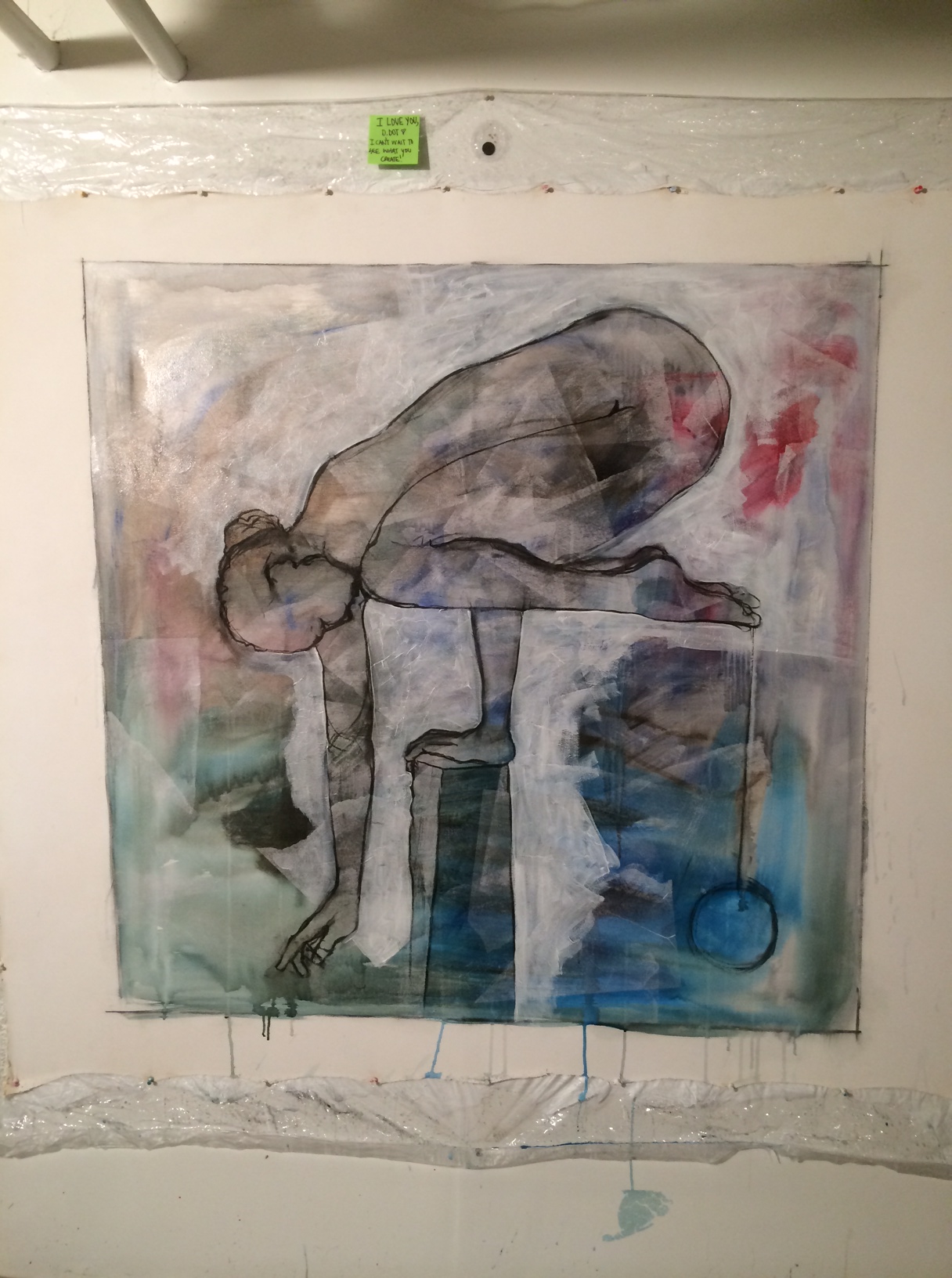
My work in progress.

My work in progress.

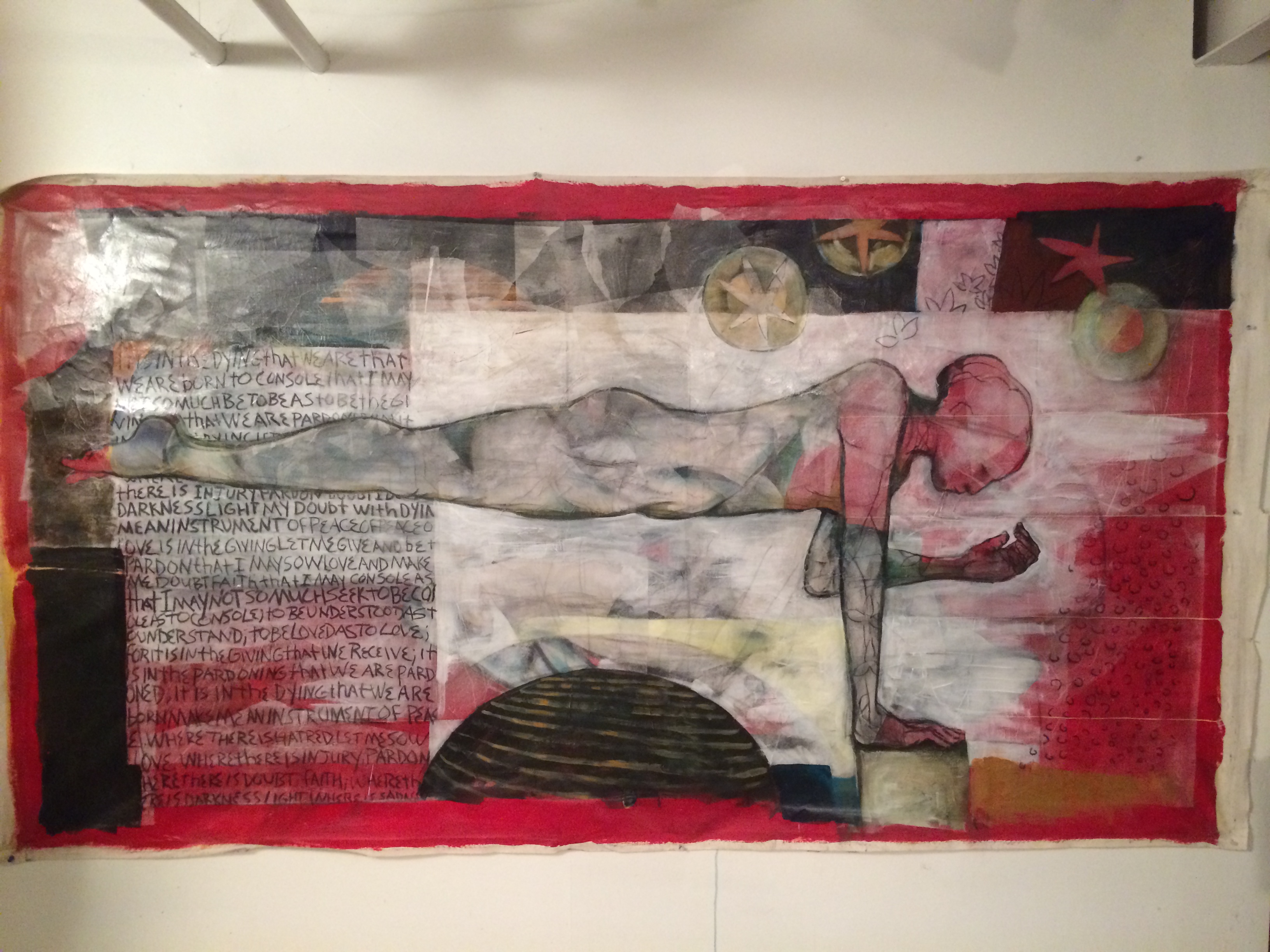
I spent the morning in the studio fanning the flame of a painting I started weeks ago. It’s hard for me to leave a painting once I start it. Once started, there is a thread that I must follow through the maze of developing imagery that will eventually bring me to completion. If I drop the thread, I lose my way. When I find myself thinking too much I know I’ve lost the thread and it is best to do nothing. It is best to sit in the maze and be lost. Moving from the intellect alone will always create mud or worse, it will kill the painting. The thread, to be useful, is intuitive, a guide of feeling. I’ve learned that sitting still is a necessary and useful skill.

To return to the painting requires finding a wholly new thread. It requires sitting with the existing image until the new thread appears. Sometimes the new thread presents itself when I stare at the painting. Sometimes the new thread jumps me in an alley or while having coffee with a friend. That’s what happened with this painting.

The new thread mugged me. I was miles from the studio and heard someone recite a portion of The Prayer of Saint Francis; the painting was suddenly smacking my inner eye. I knew exactly what I needed to do. It felt right. It felt vital. It would not leave me alone – and that’s how I know I’ve found the thread again. The prayer wanted to be in the painting. This thread would not lead to the same outcome. This thread would lead to a completely different painting.

More and more, words are showing up in my paintings. As I walk deeper into specific symbolism, I’m discovering the word as image. Using words as design elements, shaping a word as I shape a drawing, letters as visual symbol (they are symbols referential to sound). These words that do so much to shape our perception and either put locks on our experiences or set us free – they are calling to me as pure visual forms. Letters are simple lines and shapes sequenced and given meaning as words. Just so, words are lovely shapes sequenced and given meaning as sentences. The meaning is not carried in the words (the symbols) but in the reader. The shapes are visual statements before they are infused with symbolic meaning. Open a book written in a language that you do not read and you’ll see what I mean. You can’t make meaning of the symbols but you can appreciate the visual – in fact, once your brain ceases attempting to assign meaning to the symbols you can actually see the pure form (this is a good rule of thumb for cultivating presence, too).

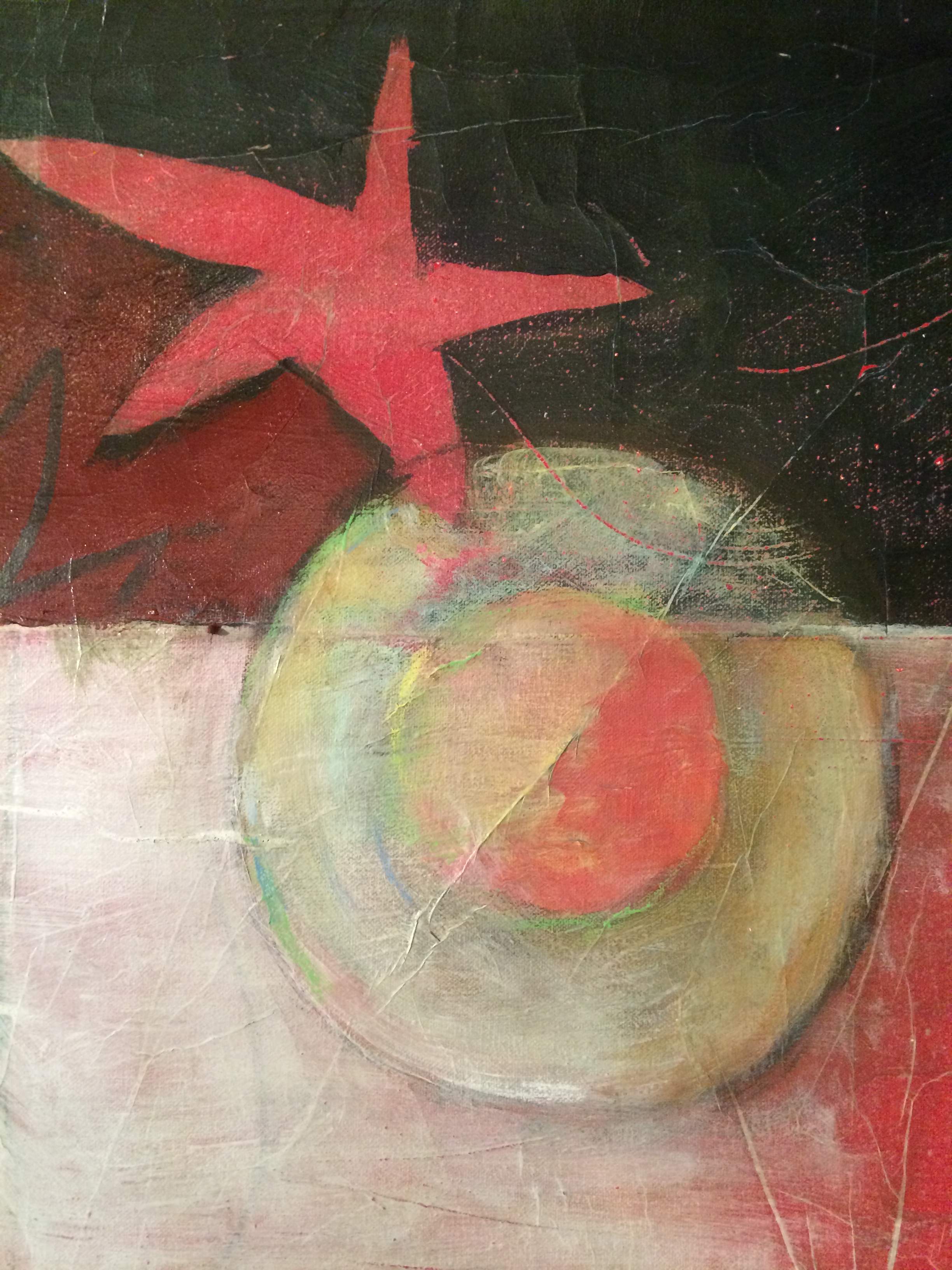
Here’s the prayer in its symbol form for you to interpret and an image of how it currently exists in the painting:

Lord, make me an instrument of Your peace. Where there is hatred, let me sow love; where there is injury, pardon; where there is doubt, faith; where there is despair, hope; where there is darkness, light; where there is sadness, joy.

A detail of the prayer.

A detail of the prayer.

O’ Divine Master, grant that I may not so much seek to be consoled as to console; to be understood as to understand; to be loved as to love. For it is in giving that we receive; it is in pardoning that we are pardoned; it is in dying that we are born again to eternal life.


title_pageGo here to buy hard copies (and Kindle) of my latest book: The Seer: The Mind of the Entrepreneur, Artist, Visionary, Innovator, Seeker, Learner, Leader, Creator,…You.


Touch The Past

The journal/record Isabelle kept of the fever that killed Johnny.

The journal/record Isabelle kept of the fever that killed Johnny.

I’ve been posting updates to pledgers for my play, The Lost Boy, through the Kickstarter campaign. I’ve been using images of the artifacts – Johnny Quiggle’s possessions – found in the trunk. Jim, the chief Chili Boy, has been doing archival and art shots of the artifacts. The images have served to make a vital point about the play: this story happened. This little boy died. The story that unfolded for me moved both forward and backwards in time. And, while receiving it from Tom, I realized that it was also my story, and your story. It’s universal and, therefore, worthy to tell. My latest update generated much feedback so I’m sharing it here, too:

Jim has completed shooting archive and detail photos of the contents of Johnny’s trunk. This journal was the last thing Isabelle put in the trunk before she closed it in 1885 and secretly sealed it into the walls. Tom told me that this journal told him more about Isabelle than any other object in the trunk. In her record of the fever, he could read her worry, her despair, her fears, a few days of hope, and then the devastation at losing her son. This play is more than a good story well told; it is one of the ways Isabelle reached through time, through Tom, and into me to tell a story that is relevant to all of us.

Thank you for everything you have done to bring this play to life. It is your encouragement and support (financially and otherwise) that will open the trunk to larger audience and extend Isabelle’s intention beyond the walls of the ranch, beyond the Quiggle/McKenzie families, and into the greater conversation.

Johnny crop copySupport the kickstarter campaign for The Lost Boy


title_pageGo here to buy hard copies (and Kindle) of my latest book: The Seer: The Mind of the Entrepreneur, Artist, Visionary, Innovator, Seeker, Learner, Leader, Creator,…You.


Get Back On And Ride

Guess what. I'm doing it.

Guess what? I’m doing it.

It is universally true that we must fail to learn. In fact, as absolutes and paradoxes go, the single universal lesson that we must learn is that there is no such thing as failure. To unlearn is, in fact, also to learn. Everything is a step forward when failure is out of the equation. I fell off my bike more than once before I learned to balance and ride. I made some terrifically ugly colors as I learned to paint. That is the nature of learning.

Over the past decade I’ve tried more than once to produce my play, The Lost Boy. And, like learning to ride a bike, I’ve fallen off with each attempt. The latest tumble came with a failed Kickstarter attempt. Sitting on the curb, my metaphoric bike akimbo, I asked, “What is it about this play?” It will not leave me alone and yet it has been more than difficult to produce. And, as it does, the learning followed the fall. And there is nothing to be done but get back up and ride.

And, as is also true, when you decide that you are going to do something, the way opens (note: that does not mean that there are no challenges). When we didn’t meet our Kickstarter goal, I had the option to let it go forever or, I had to decide that I was going to produce this play with bake sales, lemonade stands, or any other whacky idea that would get me to opening night. This play will not leave me alone and, as I learned in the fall, I will not leave it alone. The decision was already made and I needed the failed campaign to see it.

And the way opened. The University of the Pacific decided to donate the theatre and to help with some marketing through alumni networks. I laughed when, given their generous donation, I made my new budget. The amount I need (bare bones) to get to opening night is almost identical to the amount pledged in the failed campaign. So, taking what I’ve learned, I’ve mounted a new campaign and asked the previous pledgers to pledge again. And, since I adore paradoxes and don’t really believe in absolutes, I’m passing this link out in every way possible. Nothing is for sure – except that I will do this play in February in California.

The lesson, of course, is to ask for help and ask again (something I was not good at doing in the first campaign). The other lesson is this: a play that will not let you go is worth doing and it is worth doing whatever it takes to give it life. So help me give it life. Here’s the new Kickstarter campaign. Please support it if you can by pledging or passing the link out through your networks.

I don’t mind falling off my bike again because now I know that I will simply dust myself off and get back on to ride. Join me in California in February for the world premiere of The Lost Boy.

title_pageGo here to buy hard copies (and Kindle) of my latest book: The Seer: The Mind of the Entrepreneur, Artist, Visionary, Innovator, Seeker, Learner, Leader, Creator,…You.

Guess what. I'm doing it.

And, in case you missed it, here’s the link to the new The Lost Boy Kickstarter campaign

Mix Better Color

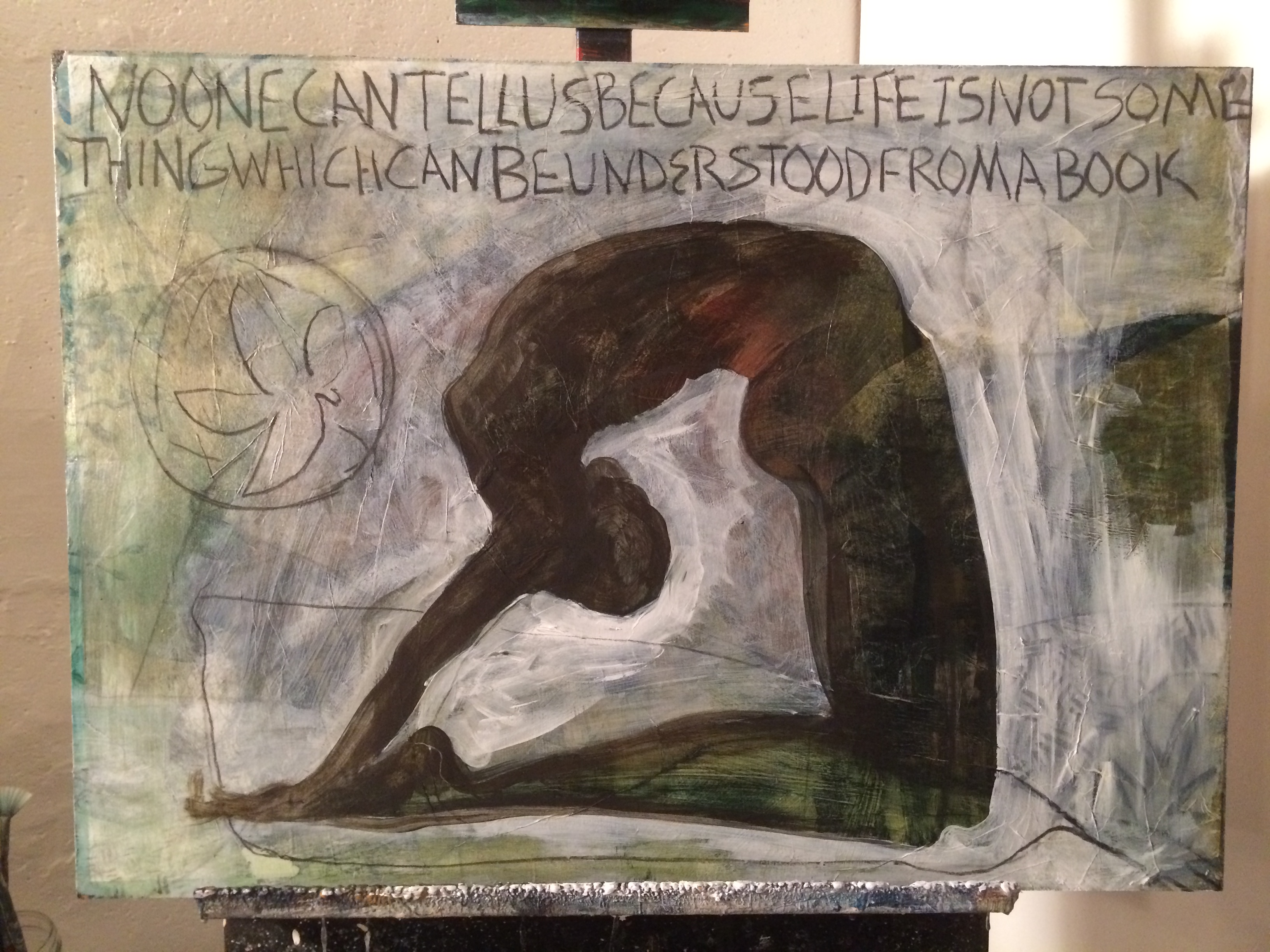
A painting from another time - and also from as as-yet-unfinished exloration

A painting called ‘Sleepers’  from another time – and also from as as-yet-unfinished exploration

The lake was angry. Because it is the fifth largest lake in the world, it packs a punch when enraged. The local news reported that the waves were 14ft high. The force of the waves smacking the shore hurled huge stones from the wall constructed on the banks to protect the land. Although it is an easy walk from our house, the wind was so powerful and cold that we drove the few blocks to see it.

There are days that the lake is glassy smooth and quiet with barely a noticeable ripple. This day the lake was muddy brown and dangerous. Parts of the bank collapsed. A tree close to the shore was consumed. Many years ago I was in a small boat protected by the islands from the force of the ocean’s wrath; for a few moments we had to round a point, exposed to the fury, to get into a bay. The captain pointed the boat directly into waves that towered over us. I’ve rarely felt like such a bug on the arm of an angry world. Had it decided to, the ocean would have smashed us with little or no notice. The lake was like that this day. I was grateful to be on shore. Sometimes awe for the power of nature requires a respectful distance.

Sometimes appreciating the fullness of life also requires a respectful distance. I recently took Bill and Linda down stairs into my current studio. They are elders and I have enormous respect for them. They’d asked to see my paintings. We spent several moments looking at my current work and then began stepping backwards in time. My paintings ring like songs from the past; each represents a specific era of my life and is capable of sparking intense remembering. It was fun to pull pieces for them, answer questions (or not answer them), and to open the doors of time. Like the lake, the doors were varied and unpredictable: some of the doors flooded me with peace, other doors overwhelmed me with grief, and still others brought intense joy. I loved it all because with time, with distance, life ceases to be about good times and bad times, hard times or ease, it’s all one long rich varied walk, all necessary and useful like color on a palette. Some of it goes to mud and that is the only way to learn to mix better color. Just as every forest fire causes renewal and every storm heaves stones and creates a new shoreline, sometimes distance and respect for this powerful messy life reveals the face of continual renewal and necessitates vast, quiet awe.

title_pageGo here to buy hard copies (and Kindle) of my latest book: The Seer: The Mind of the Entrepreneur, Artist, Visionary, Innovator, Seeker, Learner, Leader, Creator,…You.


Expose The Value

photo-3We debated our costumes for Brad and Jen’s Halloween extravaganza for months prior to the party. The letter for this year’s costume theme was “T” (with extra credit for using a “Q”). During the long hours of our summer road trips, our conversation sounded something like this:

“We could be Trollops.”

“Trollop is good. We could be Tin men.”

“I like that. What about Tootsie Pops!”

“Someone will come as a Tootsie Pop. How about Tramps.”

“No. I did that when I was twelve. What about tsunami! We could be a tsunami!”

And on and on we’d go. We finally settled on this bit of whimsy: Too-many-ideas & Too-many-questions. Kerri was going to be Too-many-ideas and I was intended to be Too-many-questions – but we changed our minds in the final hours.

At the party you might have asked, as many people asked us, “What is a Tarving Artist?” We wore paint-spattered clothes and artist aprons filled with paint and brushes. On the aprons we wrote: Dying Of Exposure. Between us we carried a donation bucket with a sign that read: Our “S” was repossessed. Please help us buy it back.

In the week prior to the party, Kerri was asked to play for an event. Every artist in the nation is used to hearing the words she hears weekly: “We have no money to pay you but it will be great exposure for you.” She is a consummate, career musician with 15 albums, (going on 16) and needs no help with her exposure. I loved her response: “Let me call my accountant and ask if she accepts exposure for payment.” Her latest encounter with empty exposure started a long hysterical conversation and note-comparison session of all the amazing ways people have asked us to work for anything and everything but money (Yes, it is true. When artists make art they are working as surely as a plumber who plumbs or a doctor who diagnoses. When was the last time you asked your dentist to work for exposure?).

The common mistake at the center of every work-for-exposure offer: it will be good for the artist. It’s never good for the artist. For two reasons it’s a notion that is good for everyone but the artist. First, no artist wants the kind of exposure that reinforces that their work is without real value. Second, no creative artist wants to be defined as a player of background music or drawer of dog portraits (unless, of course, their dream in life is to draw dog portraits). The act of drawing or playing a musical instrument is not what defines the artist or their art. It is a mistake to assume that because I can draw and paint that the act of drawing and painting is what constitutes the art. A carpenter uses a hammer but the hammer does not define their work. It is a tool. The keyboard, the paint and brushes are tools.

People who pay artists with exposure see the tool but not the artist. That is why Kerri and I opted to change our costume. Certainly dressing as a Tarving Artist was a statement but more than that, we realized that only a starving artist would agree to play for exposure; only a starving artist would agree to hammer incessantly to get the attention of people who can’t see them to begin with. It’s never good for the artist and is always a costume or role they assume for the empty promise of exposure. The cost for the artist is always greater than the exposure and at the end of the day, after trading a bit of their integrity, they still aren’t able to pay the bills.

title_pageGo here to buy hard copies (and Kindle) of my latest book: The Seer: The Mind of the Entrepreneur, Artist, Visionary, Innovator, Seeker, Learner, Leader, Creator,…You.

Yoga.ForwardFoldGo here for fine art prints of my paintings


Tell A Good Story

The Storyteller emerges from the forest. Lucy & The Waterfox

The Storyteller emerges from the forest. Lucy & The Waterfox

Over the years I’ve tried countless marginally successful ways to define for others what I do. It would seem obvious: I am a painter. I am a writer. Oh, and a theatre artist. And a consultant. And I’ve maintained a coaching practice. I’ve worked in education, the corporate world, with non-profits, and with entrepreneurs. So, in conclusion, I do too many things.

Well, that’s not exactly true. I do one thing. I deal in story.

I speak the language of story and that is confusing in any arena. What does it mean? Such a simple word, story, and yet it can mean so many different things. For instance, a truism in effective, transformational coaching is that the story doesn’t matter. By story, coaches mean the circumstance; in transformation, in the fulfillment of potential, the details of what happened – the story – are not useful. The circumstance story usually equates to blaming or endless attempts at self-fixing. The circumstance story gets in the way of growth. It is an anchor in the sea of dysfunction.

I don’t work with circumstance stories.

By story, I mean inner monologue, the-story-you-tell-yourself-about-yourself. By story, I mean the language that we use within ourselves to articulate belief. I work with the orientation story, the personal and communal mythology. Rather than get in the way, the orientation story defines the way. It defines what we see. It defines our relationship with time, with nature, with god, with community: it is the lens through which we make meaning. I help people change their lenses. Try explaining that to a CEO!

Last year, when Skip and I shuttered our business, I also shuttered my coaching practice. I ended my corporate work. Much of it came to feel like wearing an ill-fitting shirt –or a host of ill-fitting shirts – so I decided to clean out the closet. I wanted to drop all the definitions, the old forms, to make space for the new.

Last week I decided it was time to peek into the empty closet. And, as serendipity would dictate, I happened to be reading Frank Delaney’s engaging book, The Last Storyteller. On page 99 of this fictional tale, this is what I read:

“…every legend and all mythologies exist to teach us how to run our days. In kind fashion. A loving way. But there’s no story, no matter how ancient, as important as one’s own. So if we’re to live good lives, we have to tell our own story. In a good way. A way that’s decent to ourselves.”

I threw my head back and laughed. There is no story as important as one’s own. To live a good life we have to tell our own story in a good way. And then, there was this:

“…I don’t give anybody advice. All I do is release the good thinking that’s already inside of you. You’re the one who acts on your own advice, and I have the pleasure of helping you reach those thoughts about yourself. So it’s not me helping you. It’s you helping you.”

Ask me today what I do and I will say, I write. I paint. Ask me for more detail and I’ll open the book to page 99.

[to be continued]

title_pageGo here to buy hard copies (and Kindle) of my latest book: The Seer: The Mind of the Entrepreneur, Artist, Visionary, Innovator, Seeker, Learner, Leader, Creator,…You.

All digital forms of The Seer can be found here

Be The Detail

I took photo and used this image in The Seer.

I took photo and used this image in The Seer.

When I shared the early chapters of The Seer with friends, their feedback was universal: I was trying to say too much. They asked me to break it down into smaller bites. At first I resisted because I couldn’t see the path to smaller bites! In time I was able to step back and see what they were telling me. All of the necessary connective tissue was in my mind; I was filling in the thought-gaps. My wise-eyed readers had no access to my mental filler and saw a story riddled with gaps.

It was a valuable lesson for me. What I see is never what others see. Even when we share an experience, it is false to suppose that we had the same experience. We share. That is a much different thing than assuming sameness. When I think I am being clear, when I think that my point of view is right, I remember the gaps. I am projecting content and context filler onto every experience and so are all the other people in the room.

Perception is at best a moving target. This simple principle is what makes art so necessary and science so exciting. Newton thought he was dealing in absolutes. He was describing a universe based on uncontestable fixed principles. And then came Einstein. We see from and through a context that we like to call “truth” but, it is at best relative. Is it a particle or a wave? Well, it depends…

I used to facilitate an exercise called Mask Mingle. It is a powerful way to open eyes and hearts to the grace that we grant ourselves but rarely grant to others: specificity of story. We cannot walk through our days without carrying the specificity of our experiences and the rolling, roiling interpretations and re-interpretations of those experiences that we call ‘memory.’ No one can see what we’ve done and where we’ve been. No one sees the joy, the hurt, the dreams, the losses, the fears, the perseverance. They cannot see the detail. The best they can do is interpret us through their lens. We will always be a generality in the eyes of others.

I find that central to much of what I write about and coach about is the surrender of what other people might think. It is a fallacy to think that you can determine what others think of you. You will never see through their eyes. You will never know their lens. It is a powerful moment when an artist (or anyone) realizes that they have no control over the perception of others. The best they can do is offer their gift from their unique, unknowable, rich, point of view. That moment is called artistic freedom.

title_pageGo here to buy hard copies (and Kindle) of my latest book: The Seer: The Mind of the Entrepreneur, Artist, Visionary, Innovator, Seeker, Learner, Leader, Creator,…You.


See Why

Once again, H wrote me with some good advice concerning my limping kickstarter campaign. I opened his email while taking a break from research I was doing on grants for artists. His email collided with something I’d just read (and applauded) on the Surdna Foundation grant site. Here’s his email:

Something dawned on me today when I checked your KS page. Two things, actually.

The first, you actually could make your goal. $7k days are not that uncommon on KS.

The second is that you can’t seem to stop yourself from teaching, and I think you need to for this work, just as you should in order to write and direct the play. All the “truths” and lessons of story and of art should be axed. Because they are true and obvious when we see them in action. But the statement of those truths and lessons distract and dilute that action. 

Tell why you love Tom’s legacy and The Lost Boy, why it is essential to your life’s work, and why your life’s work matters, why it has to be done… 

You have time for one more ask…..

And, here’s the bit of text that I applauded from the Surdna site:

“Art is fundamental to our collective understanding of who we are, what we believe, and how we relate to each other and our surroundings. Artists and their coconspirators weave the cultural fabric necessary for a sustainable, vibrant society.”

In 1998 I applied for and was accepted into master’s programs in both painting and theatre (directing). It was confusing for me at the time because both acceptances felt miserable, like walking into a cage. In my desire to go back to school, I wasn’t looking for technique or an answer to “how-to.” I needed to take a deep dive into “why?” So, instead of the obvious route, I jumped into a degree in organizational systems because I could bend it to my real pursuit: art as central to the identity function of a culture: art (specifically ‘story’) AS the system. As the folks as Surdna wrote: artists weave the fabric necessary for a sustainable, vibrant society. The story inside you, the story-you-tell-yourself-about-yourself, is inseparable from the story happening outside of you, the story-the-community-tells-itself-about-itself. When a society has a living, breathing mythology, they live from a single, shared story. As Joseph Campbell famously said, “Our mythology is dead.”

We orient and make meaning according to a shared narrative. So, if there is something that bugs you about the world it is most likely a reflection of something within you. If you want to change the world, you must start with your self. How do we begin to tell a different story when we imagine that our story is separate from all other stories? How do we make a better world when the story of the individual supersedes the story of the community?

Working with the shared narrative, dancing with the inner and outer story in all of its power and potential is my life’s work. Tom is one of the few people I’ve ever known who understood this dance. He is responsible for igniting the fire in a legion of artists, for guiding a multitude of lost boys onto a power path. He opened my eyes to a deeper path through the arts and life. He taught me that the Greeks believed that the telling of the epic stories was necessary for the health and wellbeing of a community. He taught me that we’ve forgotten what the Greeks knew. The story of The Lost Boy is Greek and has the power to help us remember. Tom believed in a better world and that a better world happens naturally when we tell a better story. That is why this play needs to be done.


Go here to help me make possible a $7k day:

DSC_1196 copy

Explore The Human

photo-2

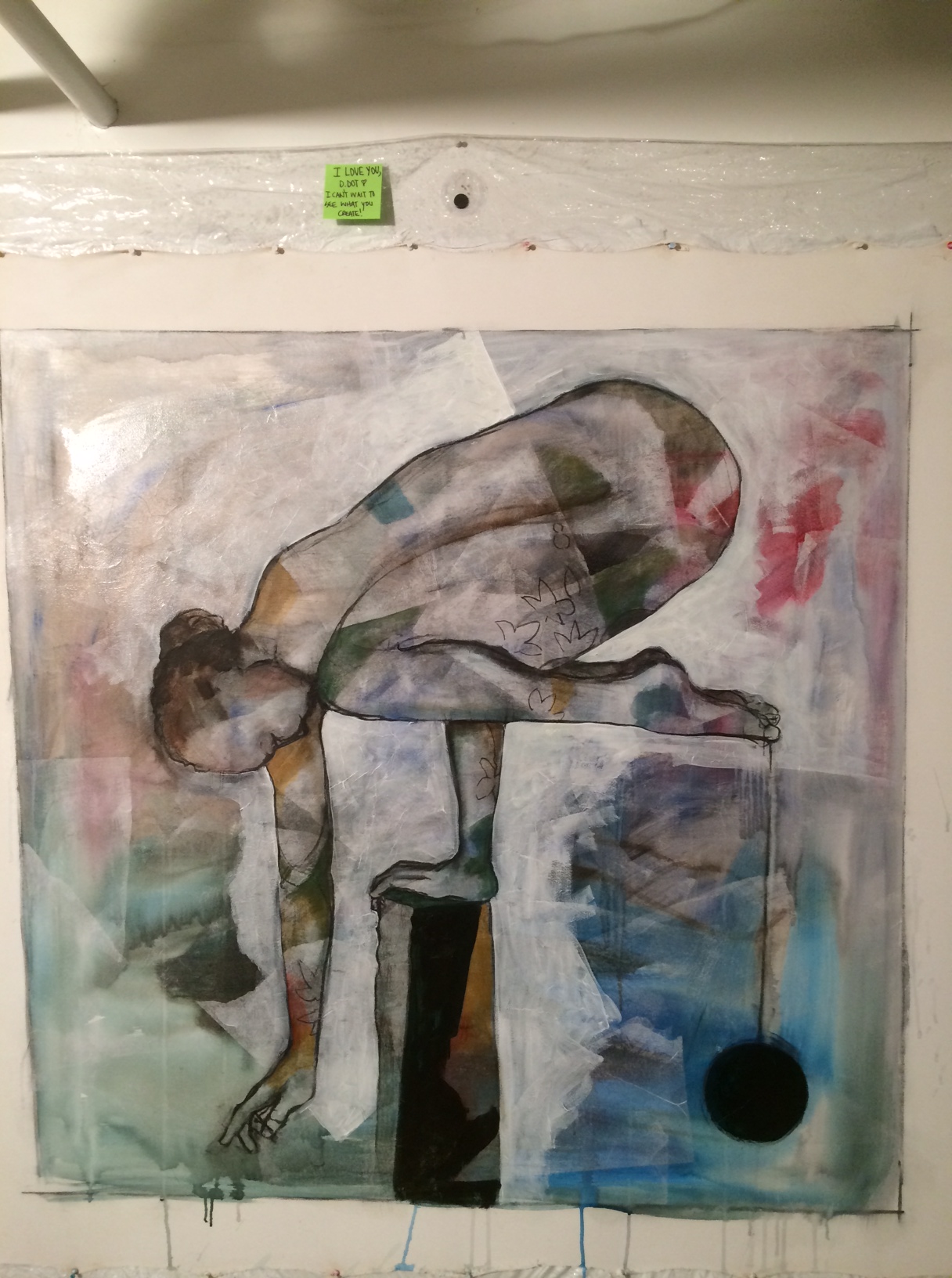
my latest work-in-progress. No name yet, approximately 5ft x 9ft.

Standing on the stair to her studio, Pam said, “I’m not sure where my work is going. I’ve pulled out all of the old paintings so I can see where I’ve been, what I’ve been doing, and maybe that will help me live into what’s next.” Like me, Pam has been a painter most of her life. She’s been through this transition many times before and recognizes the necessity of fallow artistic fields. Rather than push or panic, she’s matured as an artist and knows enough to value the emptiness.

With maturity comes faith. The muse never leaves. She rests. Artistic cycles are no different than seasons. Like a farmer living through the winter months on the harvest of the fall, Pam will spend hours sitting with her old work, thinking nothing, drinking in the nutrient of her artistic yield, allowing her inspiration fields to recharge and rejuvenate. She will allow herself to go empty, creating ample space for the new work when the muse reawakens. And then, one day, she will pick up a brush and be surprised by what comes through her.

Hans said, “An artist matures when he or she ceases working from their pain and begins exploring the human condition.” Working from the wound is necessary as adolescence is necessary. Most artists in our western tradition begin in rebellion, pushing against, making statements. We celebrate the outsider, the margin-sitter and so the wound can be difficult to escape: artistic pain becomes a role, an expectation. In practice it is akin to a developmental stall. The only place to go when pain is the norm is into the intellect: to produce, to make statements. Pain isolates and ultimately, an isolated artist is ineffective. Artistry, like all things vital, must occupy a shared space. It is communal or it is impotent.

Potency comes when the eyes turn out, when the question of “we” becomes more vital and interesting than the question of “I.” Artists mature when they reorient, when instead of the art expressing their pain, they serve the art and, make no mistake, art is another word for “human condition.” Art is bubbling life in all its forms: visual, kinesthetic, aural. As Hans said, “I want to fall deeper and deeper into the music. I want to find the edges and follow where it takes me, give myself over to it.”

title_pageGo here to buy hard copies (and Kindle) of my latest book: The Seer: The Mind of the Entrepreneur, Artist, Visionary, Innovator, Seeker, Learner, Leader, Creator,…You.

DSC_1196 copyGo here to support the kickstarter campaign for my play, The Lost Boy.