When It’s All Said And Done [David’s blog on Merely A Thought Monday]

I discarded another post this morning. Aghast at the latest lies and childish memes I wrote yet another political rant. It was harsh. It was too much. It led us into a lengthy conversation about how we might live and write in this toxic environment and yet not let the toxins poison us. How do we remain healthy while not denying the reality – the horrors – of our democracy’s collapse at the hands of those who swore to protect it?

In truth, I have not been happy with my recent posts. So many years ago I began writing for a specific audience – and myself – to make the distinction between unhealthy control and generative power. The shorthand is this: Control over/Power with.

Control is wielded over others while power is created with others. Control is self-absorbed. Power is other-focused. Control is the product of duality: us/them, black/white, winner/loser…It is oppositional. It can only lead to discord.

Power is created in a dynamic triad. It is relational. It is complementary and reciprocal. It always gives rise to harmony.

I realized in our conversation this morning that I had myself slipped into a duality. My writing has become oppositional. As our nation grows more violent and ugly by the day, my impulse has been to push back, to sound an alarm. I want to scream, “I am not that! WE are not that!”

Ronald Reagan famously said that “Government is the problem.” He was wrong. Government is neither a problem nor is it a solution (a duality). Government is a service (a triad). It is made of elected representatives in service to their constituents relative to serving the greater needs of the whole. It is dynamic. When functional and fair, it is complementary. Symbiotic.

Government becomes dysfunctional when it tries to run like a business and pretends it is subject to a bottom line (profit or loss). It is death for any service organization that forgets its reason-for-being and attempts to be something that it is not: government is not a business. It’s a no-brainer: privatization of government services places the emphasis on the bottom line – not on serving the people. For instance, privatize prisons and the bottom line of profitability will require the creation of more and more prisoners. Businesses need to grow. The same levers are true when applied to healthcare (as we are seeing) or education.

I believe most of the people of this nation are well intended. I believe the endgame of this administration is control so it must necessarily define everything as Us-and-Them. Demagogues need to demonize vulnerable communities and blame them for the ills of the nation. Demagogues need enemies-from-within since pitting us against each other is the route to ultimate control over…Demagogues need a Them.

People who are not steeped in blaming others for their pain are more likely to take responsibility for their destiny – which means they seek opportunity – which means that they are more apt the reach out to help and for help. Opportunity is a triad. Blame is a duality.

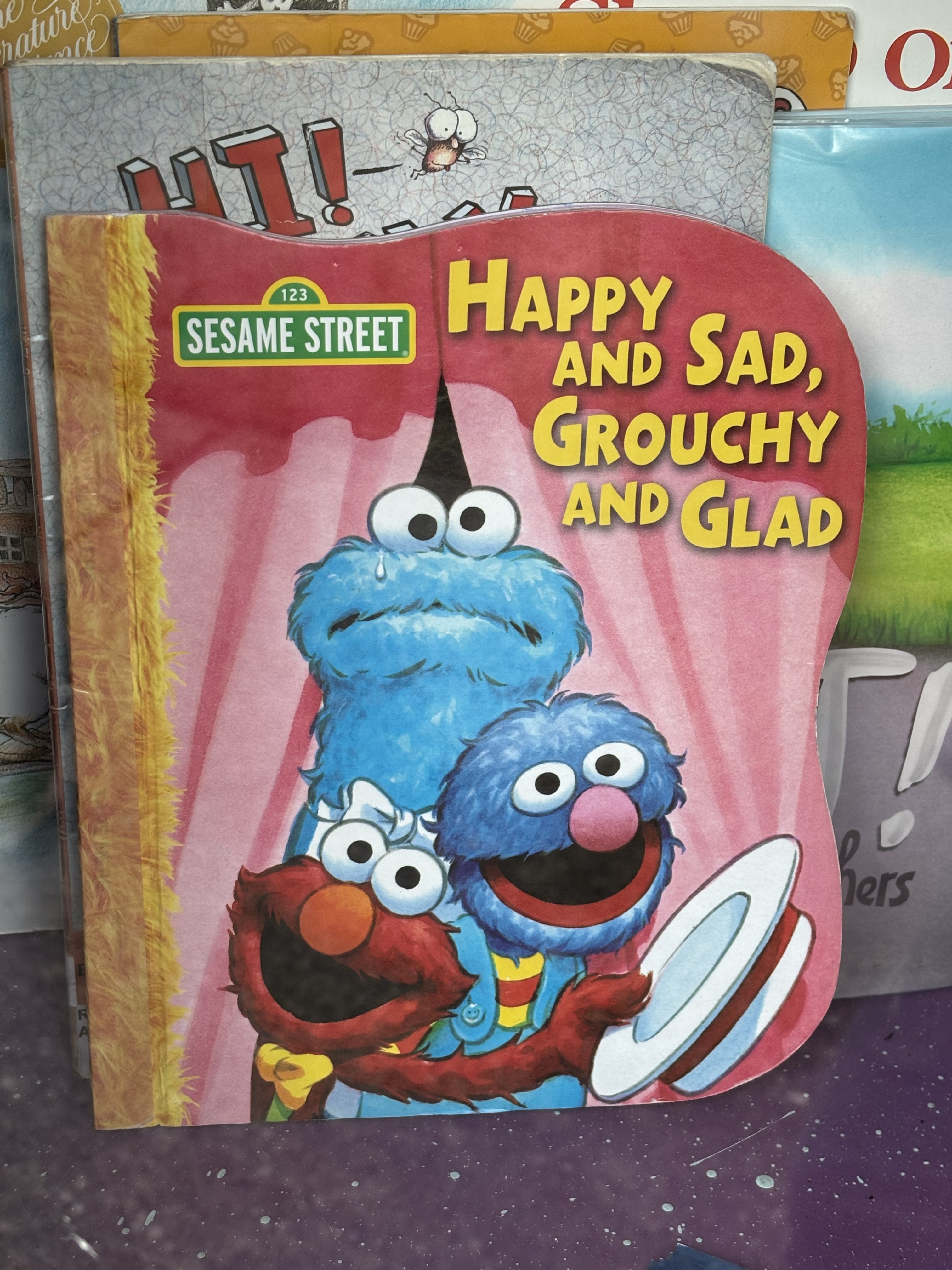
You might rightly ask me, “How on earth could a prompt featuring Sesame Street characters lead to a post so toxic that you had to toss it?” The answer is simple: in a control strategy like the one raging across our nation, in a forced duality designed to appear as angels and devils, good guys and bad guys, the bad guys will always get the focus. That’s the point of a control game: to see bad guys everywhere. To become reactive, suspicious, and angry. To reduce an otherwise complex, diverse thriving nation into a simplistic monotone. We are angels. They are devils. Happy and sad, grouchy and glad.

As someone once said to me, “It’s like drinking poison and expecting the other person to die.”

I drank the poison. I’m so glad that our conversation this morning opened my eyes and left me asking, “How do I not bury my head in the sand but deal with the reality and still remain healthy?”

Triads, baby. Focus on the dynamic relationships and set about creating some real power with others. When it’s all said and done isn’t that the point of a democracy?

read Kerri’s blogpost about SESAME STREET

likesharesupportthankyou

Incite Some Deviance [David’s blog on Merely A Thought Monday]

I searched for it but couldn’t find it. A short clip of Carl Sagan placing life on our tiny planet into the perspective of the enormity of the universe. A little sun in a galaxy of suns in a universe of billions and billions of galaxies. Through this lens, it is mind-boggling, the hubris necessary to believe we are the center of it all.

Initially this morning, I wrote a post about grace but cut it. I asked a question about the collision of values: loyalty-to-a-group smacking down telling-the-truth. It’s a uniquely human dilemma. The insistence upon tribe, Us-and-Them, spins some very dark necessities. I tossed it because grace was overshadowed by gloomy.

This is what I intended to write: on this tiny blue ball there is a group of Us defined as “All Humans”. Loyalty to this group is understood as idealistic. How can we possibly reach across so many imagined boundaries? What would we do with a definition of Us that was all inclusive? We would invite grace. Float all boats.

Each year, everywhere I wander, I am steeped in songs-of-the-season that appeal to the best of our nature. Peace on earth. Goodwill. Love one another. Perhaps we should listen to the lyrics of these songs. They are written by us for us as an appeal to our idealism, a sentiment central during this season of light’s return. Peace. Peace. Peace. We should “take it to heart.”

Let’s face it, loving one another is deviant if it is all inclusive.

It’s a reach, I know, but it’s really not so hard to imagine Us in the context of this vast universe, on this tiny ball spinning and spinning around our minuscule sun, one of billions and billions and billions. In such a context, the boundaries-in-our-minds dissolve and invite a different set of questions to arise: How can we better share this blue dot together? Conflict makes money yet collaboration creates possibility.

Pouring a little light into so much dedicated tribalism is deviant. It requires a touch of dignity. Pouring light into darkness is called Grace. Grace, in the face of so much division, is deviant.

When I cut my initial post I wondered what it would take to breach the code of tribe, reach beyond the singing platitudes, and incite some deviant behavior like peace-on-earth and all-inclusive love-of-one-another.

read Kerri’s blogpost about DEVIANT BEHAVIOR

like. share. comment. support. lending a hand to anyone is a way to support us. think on it.

buymeacoffee is a force like gravity helping the artists you appreciate keep their feet on the earth.

Be An Alien [David’s blog on Two Artists Tuesday]

“We are in an alien world…” he wrote, “and it is unraveling.” Somedays I wonder if I went to sleep and woke up in a tragicomedy. I wanted to reply that I feel more and more like an alien moving through an increasingly unrecognizable world. Well, truth be told, I’ve always felt like an alien. The rules of the game make no sense to me. For instance, if safe supportive society is what we seek, why are we arming ourselves to the teeth? I imagine I am not alone in my alien-feeling.

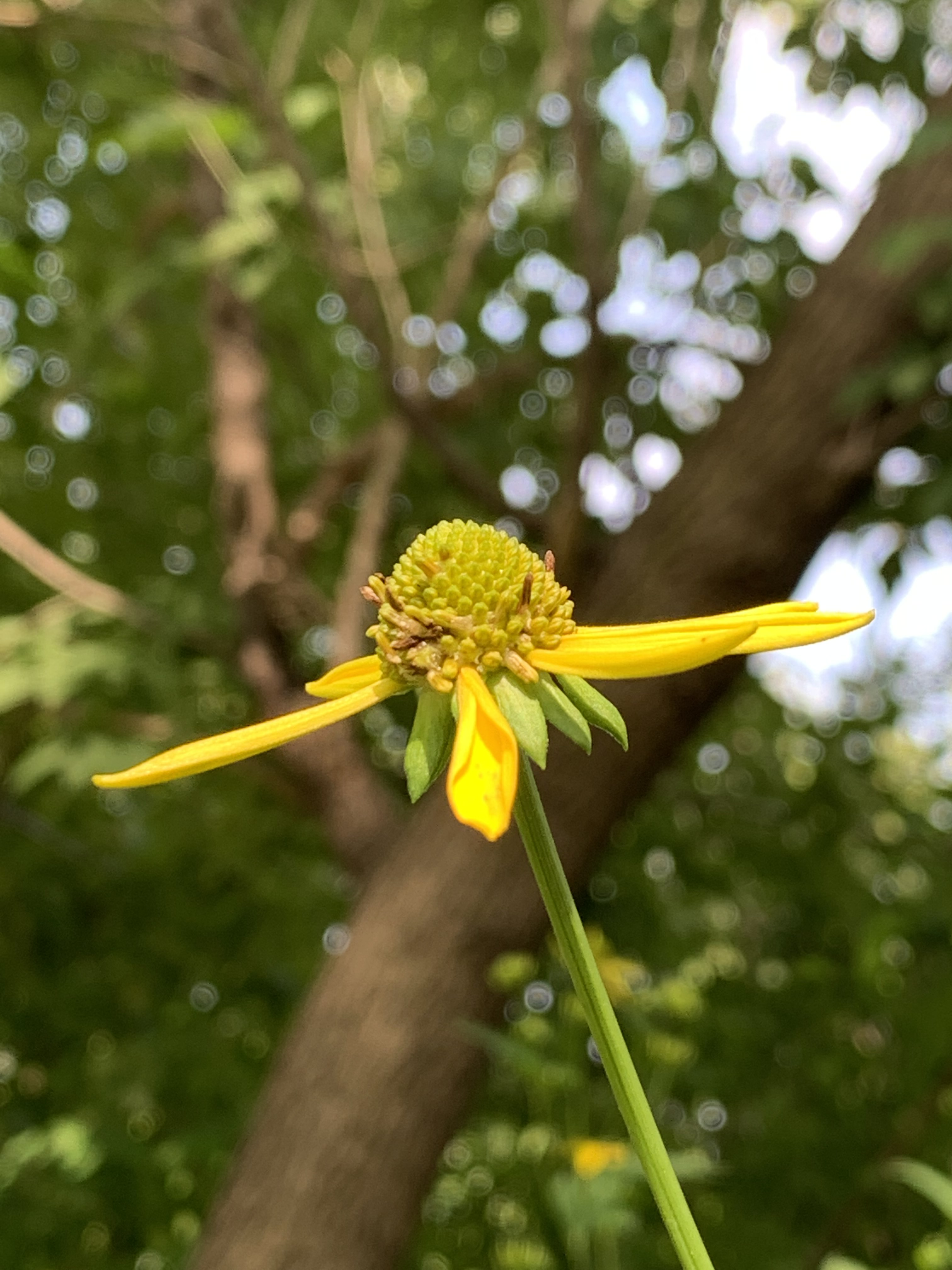
Walking the trail Kerri stopped and pointed. “Doesn’t that flower look like a spaceship?” Yellow petals stretched-like-wings in every direction. “Imagine the cool aliens!” she said, kneeling to take a photo.

The word “alien” brought to mind the recent congressional hearings on UFO’s (or UAPS: unidentified aerial phenomena). The hearings were a discussion about what we know. “No, really,” asked the panel, “What do we know?” It’s not known what we know or it’s known but concealed to the point of being unknown. The unknown is what makes an alien an alien, so, apparently, we’ll remain aliens to each other in the foreseeable future.

I had a jolting revelation yesterday. Kerri and I watch vlogs of PCT through-hikers. People who walk 2650 miles from Mexico to Canada. Thousands of people start the trail each year and only a small percentage actually finish. It seems a herculean task. They have tents, travel stoves, proper shoes, all-weather clothes, resupply stops, rest days and are well-funded. They speak lovingly of the kindness of strangers on the trail. In contrast, a hungry person leaving the Honduras walks approximately 2,558 miles, often with few or no resources, through dangerous and hostile environments, to reach the border of the mythical United States. Rather than celebrating their spirit, their fortitude and perseverance, qualities to be admired, qualities we celebrate as uniquely American, we vilify these people, calling them “aliens.” They do not tell stories of the kindness of strangers.

If you boil down the storyline of most apocalyptic-alien-invasion films, you’ll find the same inspiring moment. Humanity turns from its division and finally recognizes that ultimate survival necessitates combining forces, acting as one. Identifying as one. Transcending superficial differences and abstract lines on a map, redefining “us” to include “all human beings.”

He concluded his email with this: “I’m waiting for the crisis to finally arrive and further devastate us.  At least then we can get to the Awakening phase during which we will come together and reunite as humankind.”  He’s referring to the book The Fourth Turning. The cyclical pattern of chaos and order.

The question that identifies me more and more as an alien is this: why does it take a crisis? I know, I know…the rules of the game make no sense to me. And, after all, nature uses forest fires for renewal. I know, I know. Yet, why point a gun when extending a hand actually produces the safety and security we ultimately seek? Reaching creates kind humans; pointing a gun creates unkind humans. What am I missing? We always pull together in a crisis – it’s our natural impulse – so why wait for a crisis?

We are strange beings. Our stories are universally driven by conflict. Unknown to each other, we opt to be frightened of what we don’t understand (or refuse to consider). I’ve read that we are hardwired and dedicated to an Us-and-Them world.

I’ve also read that the purpose of our big-big brains is to transcend our animal nature so I’m confident that, one day, in the far distant future, our big-big brains will respond to the latest crisis and transcend our ancient hardwiring.

read Kerri’s blogpost about ALIEN FLOWER

like. support. share. comment. many thanks.

See The Point [on Merely A Thought Monday]

“When we are no longer able to change a situation, we are challenged to change ourselves.” ~ Viktor Frankel

There is a new mantra cycling through my circle of friends. Once, highly frustrated with people refusing to participate as a community in the relatively benign measures necessary to end the pandemic, they’ve now forged their frustration into a different shape: there’s no point in trying to change “them.”

The circle is closed. Or, perhaps, it has been closed all along. Us. Them.

We spent the weekend in a special cabin with The Up North Gang. Walks in the woods. Pontoon boat rides seeking a sunny spot to anchor. Friends that heal what hurts. Laughter and wine. Occasionally, our conversation wandered into politics and pandemics, usually spurred by a local man posting cryptic and apocalyptic messages from deep within his conspiracy well. He is one of “them.”

“How can he believe this stuff?”

“Imagine everything he has to ignore to believe this stuff!”

“He’s always been a bit kookie.”

“There’s no point in reasoning with him.”

“There’s no point in writing a response, he’d just deny the facts, the court cases, the data, the science, the…”

There’s no point. That’s the mantra. There’s no point.

Us and Them. Together in the same boat. One half trying to rock the boat. The other half trying to keep it from flipping.

Exhaustion? Surrender?

“It’s like they’re drowning in bad information,” she said,

He replied, “And, there’s no sense throwing them a rope, they’d refuse to take it.”

“We have thrown them a rope,” she added. “It’s called the vaccine.”

We laugh a sad laugh, shaking our heads. What’s the point?

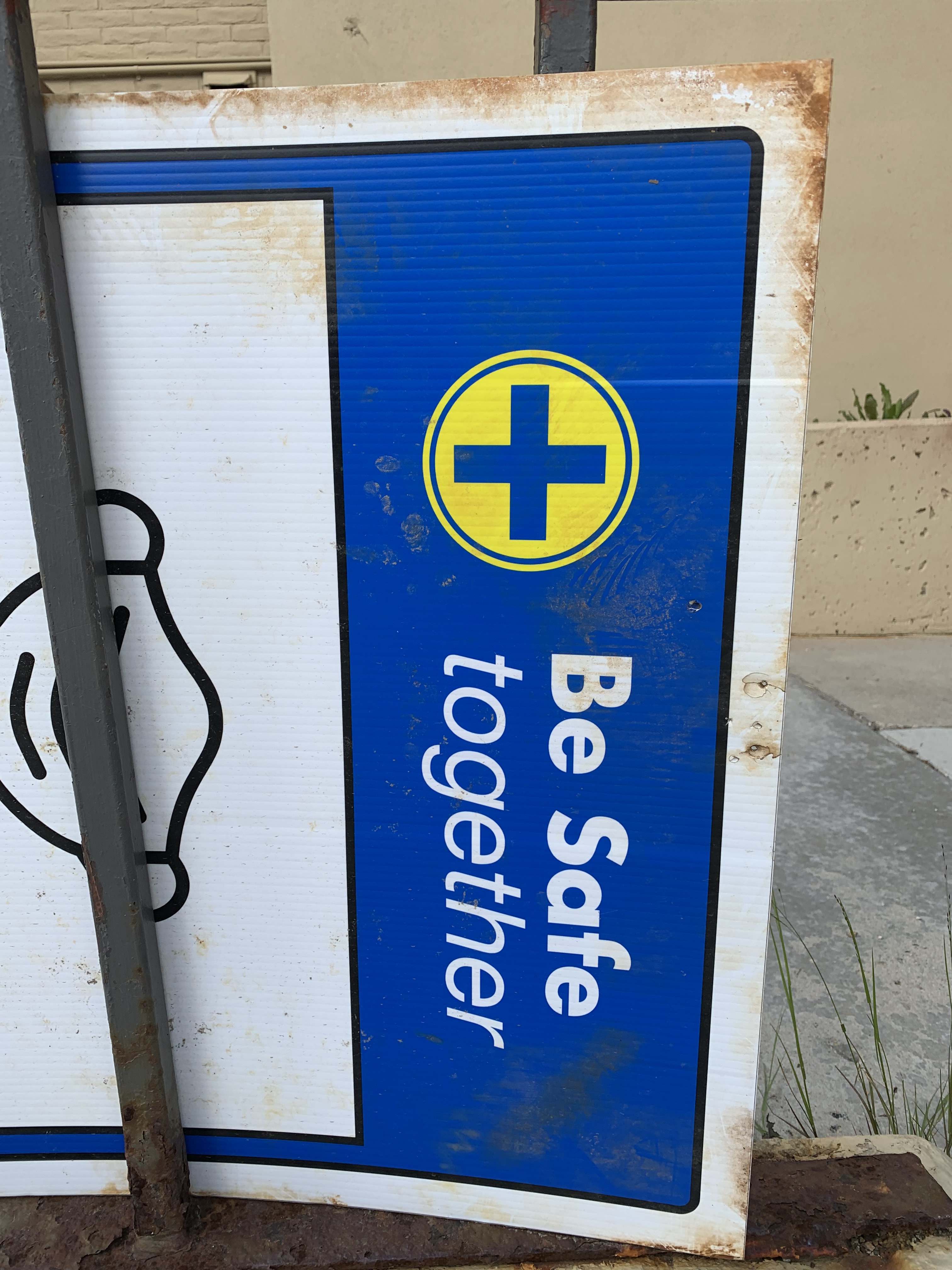
read Kerri’s blog post about Safe Together

Keep The Sign [on Flawed Wednesday]

I have never, until this election, planted candidate signage in my yard. This season, however, Biden signs abounded. Our front yard was a wash of blue.

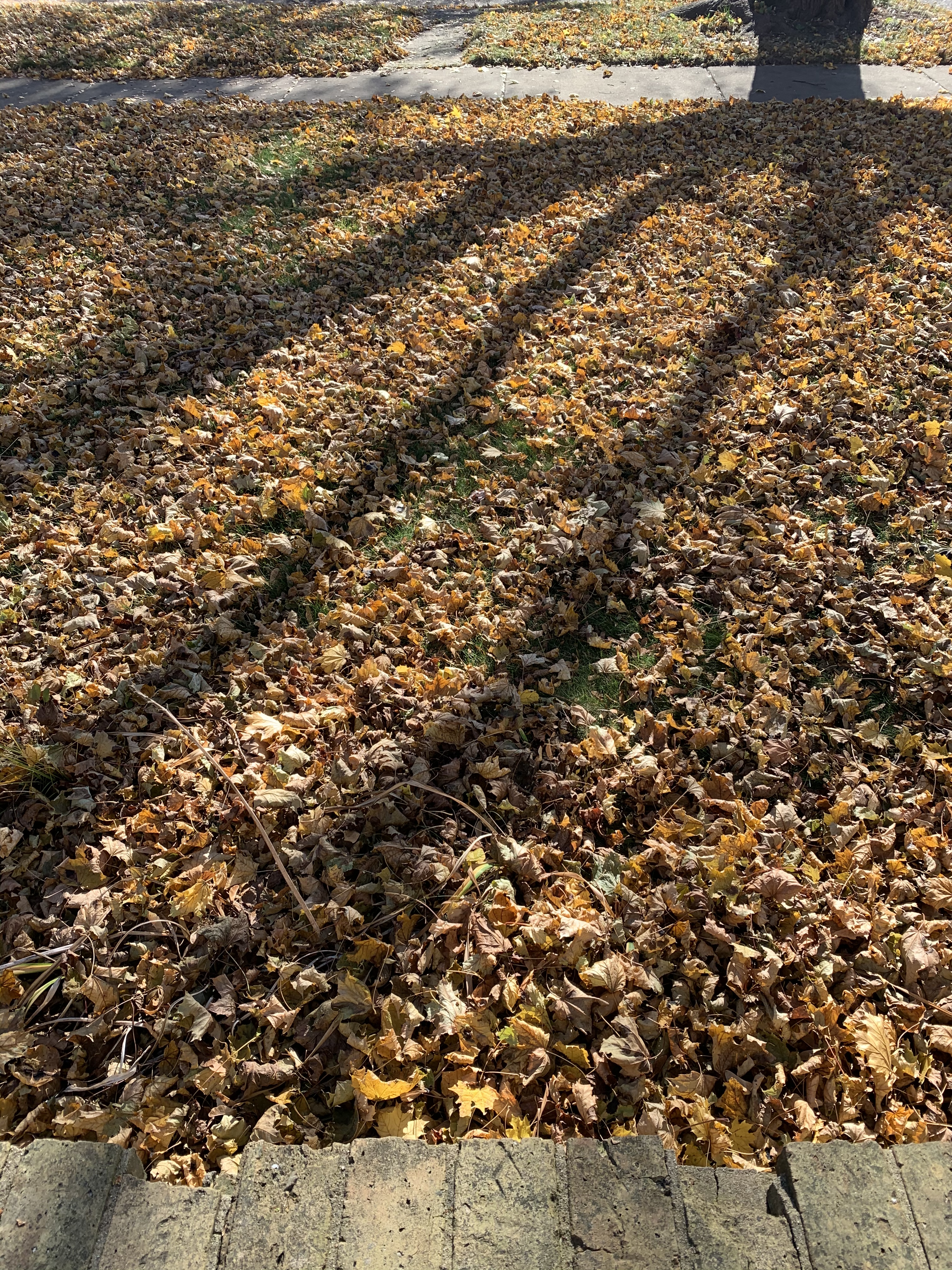
We opened the blinds the morning after the election was called and our signs were gone. The sign kidnapper left a clear trail through the leaves. We took a drive around the neighborhood and saw that other homes had their signs nabbed. The larger Biden signs had been tipped over or kicked to the ground.

Anger, as the old trope states, is a secondary emotion. Anger is one of the many shades of fear. That someone – or many someones – would, in their anger at an election loss, troll a neighborhood, stomp and steal signs would be laughable except it is akin to the behavior of their candidate, the one that lost. An angry pout. A child breaking toys so others can’t play. Holding the nation hostage.

In my career I worked with many, many schools and learned that a school generally takes on the personality of its principal. Nations are the same. Aggression, thuggery, bullying, lying…generally erasing opposition (“you’re fired”) in a single-direction-loyalty-imperative is the personality of our outgoing populist-principal. His behavior-fractal extends to the smallest cell of the sick red organism he created so it was not a surprise that election signs were stolen or stomped. Would-be bullies following their leader.

As we endure the final pout, a myriad of empty court cases in a frantic attempt to manufacture evidence of voter fraud, all-caps twitter-temper-tantrums, hoarding all the toys so the transition of power is delayed, sycophants-in-suits tumbling over themselves to please the grand-pout, we should perhaps ask the obvious question, ” What are they afraid of?”

They. Them. They are, I suspect, afraid of Us – of what US really implies. They are afraid of progress, an intention to unify. They fear the exposure of science and fact. They are afraid of women in power and a “minority” becoming the majority. They are afraid of people of color. Just as wagon wheel makers shook their fists at auto makers, just as coal barons now sneer at wind power, the boys club stuffs the courts while throwing doubt at a system called democracy. The remaining tools in their box are obstruction and denial.

We are a crossroads nation that is made great because we have to constantly reinvent ourselves. We change. That is our strength when the center ideals hold. The sign-stompers would have us look backward to a Hallmark time that never actually existed. Perhaps out of our recent chaos will emerge an order that finally fulfills the promise and includes all citizens, one that strives to fulfill the democratic ideals of equality rather than remove them. Obstruct them. Deny them. Perhaps.

“They can have the signs,” Kerri said, “as long as they take their guy with them.”

Amen to that.

read Kerri’s blog post about SIGNAGE

Compose Your Differences [on Flawed Wednesday]

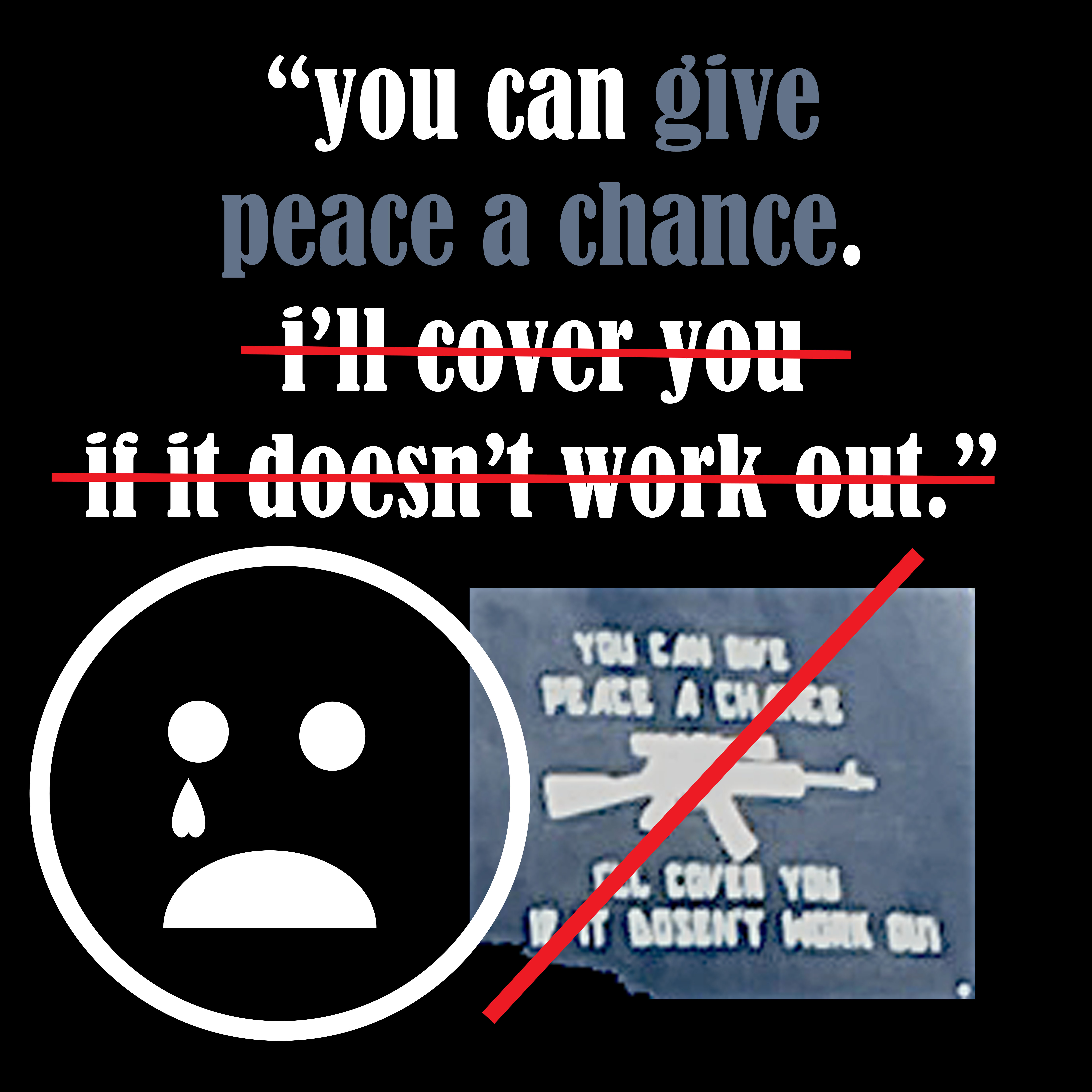
give peace a chance copy

A quick glance at recorded human history and it’s not a stretch to suggest that we’ve done everything BUT give peace a chance. Peace, I imagine, is buried beneath the stacks of untouched gun control legislation towering on Mitch McConnell’s desk.

The centerfold of the June, 2020 National Geographic Magazine is a color-coded chart of the roots of violence across time with corresponding estimates of lives lost. Religious conflicts, wars of conquest, colonial exploitation and revolt, despots, dynastic disputes, wars of dominance, and internal clashes make up some of the variations of the theme. The two most relevant to our current struggle are internal clash and collapse of state.

In an us-and-them world, resources are worth fighting for. There’s not enough pie to go around apparently so taking other people’s pie is reason enough to kill. Defending pie is also reason to kill. It follows.

In 2011 Steven Pinker published a book, The Better Angels of Our Nature: Why Violence Has Declined. He argues that violence has declined over time and provides a mountain of data and theories to support his contention. He suggests that we are not inherently violent. I find that hopeful.

Of course, the decline in violence can only be seen by stepping far enough away. These days it feels like the necessary step is into outer space. Up close and personal, and according to the narrative-of-the-day, we’re a bloody fighting mess. It’s the story we tell. Startlingly, we are living proof that data, fact, and science can’t hold a candle to conspiracy theory and narcissistic fantasy. Gullibility, thy name is human.

Here’s my two cents: war is profitable and peace is not. Make peace profitable and we’d give it more than a passing chance, we’d insist upon it. That sounds jaded but keep in mind that our lexicon includes the phrase “military-industrial complex.” President Eisenhower warned us against this unholy alliance, the marriage of defense contractors and the armed forces. It would become, he foretold, a threat to our democracy. “We must learn how to compose differences not with arms, but with intellect and decent purpose.”

Decent purpose.

The second of my two cents goes like this: we’ve built our castle on a bedrock economy of war. It’s a complex system and systems do not go gentle into that good night, they fight to the death to sustain themselves. Peace will have a chance when we decide to embrace a decent purpose and, ironically, that will probably require a fight.

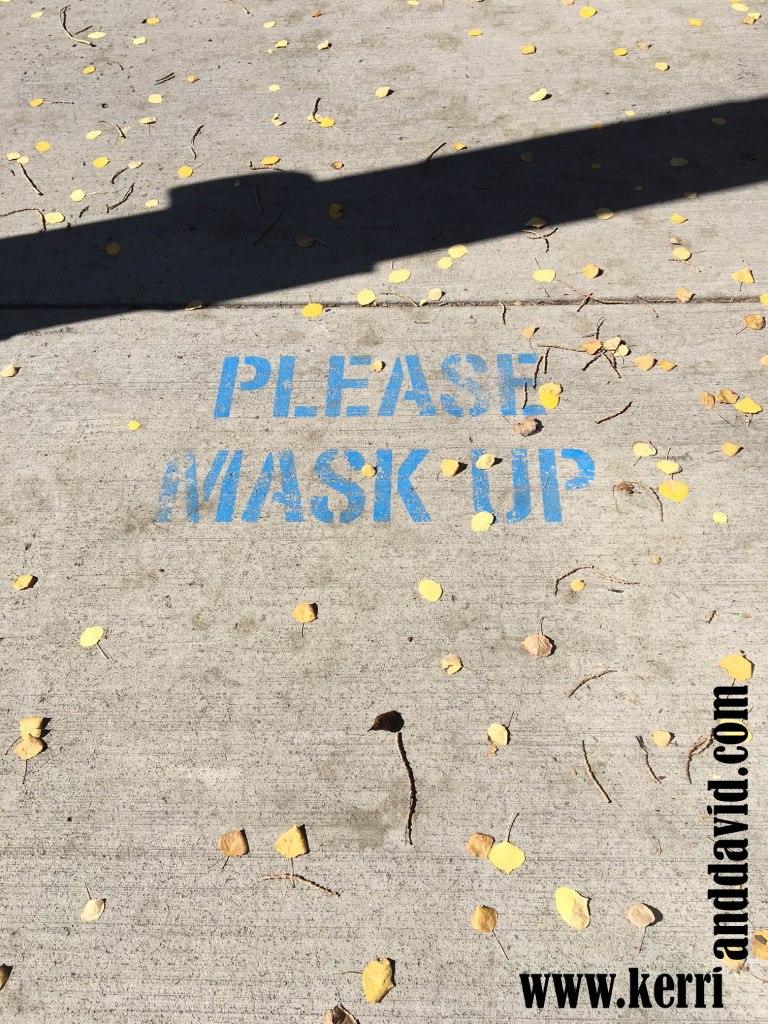
In the meantime, we’ll see multiple conflicts fueled around the globe, military budgets that dwarf every other line item to fund the fighting. Locally, our leaders will douse us in endless thoughts and prayers as the next elementary school is shot up, we’ll see small differences of opinion settled by guns and not intellect, conversation, or simply agreeing to disagree [on a very sad and revealing note: the people at our local grocery store are timid to reinforce their mask policy for fear of being killed. And so, we see up close and personal the threat to our democracy that Eisenhower cried out to no one listening].

As for me, I do not wish to be covered by anyone with an assault rifle. I do not wish to have one pointed at me either. I do not think citizens in a civilized society need military grade weapons unless they are confined to the shooting range. I think a civilized society should operate on the principles it espouses, principles of civility and, yes, intellect and the most decent of purposes: peace.


read Kerri’s blog post about PEACE


stick people website box copy


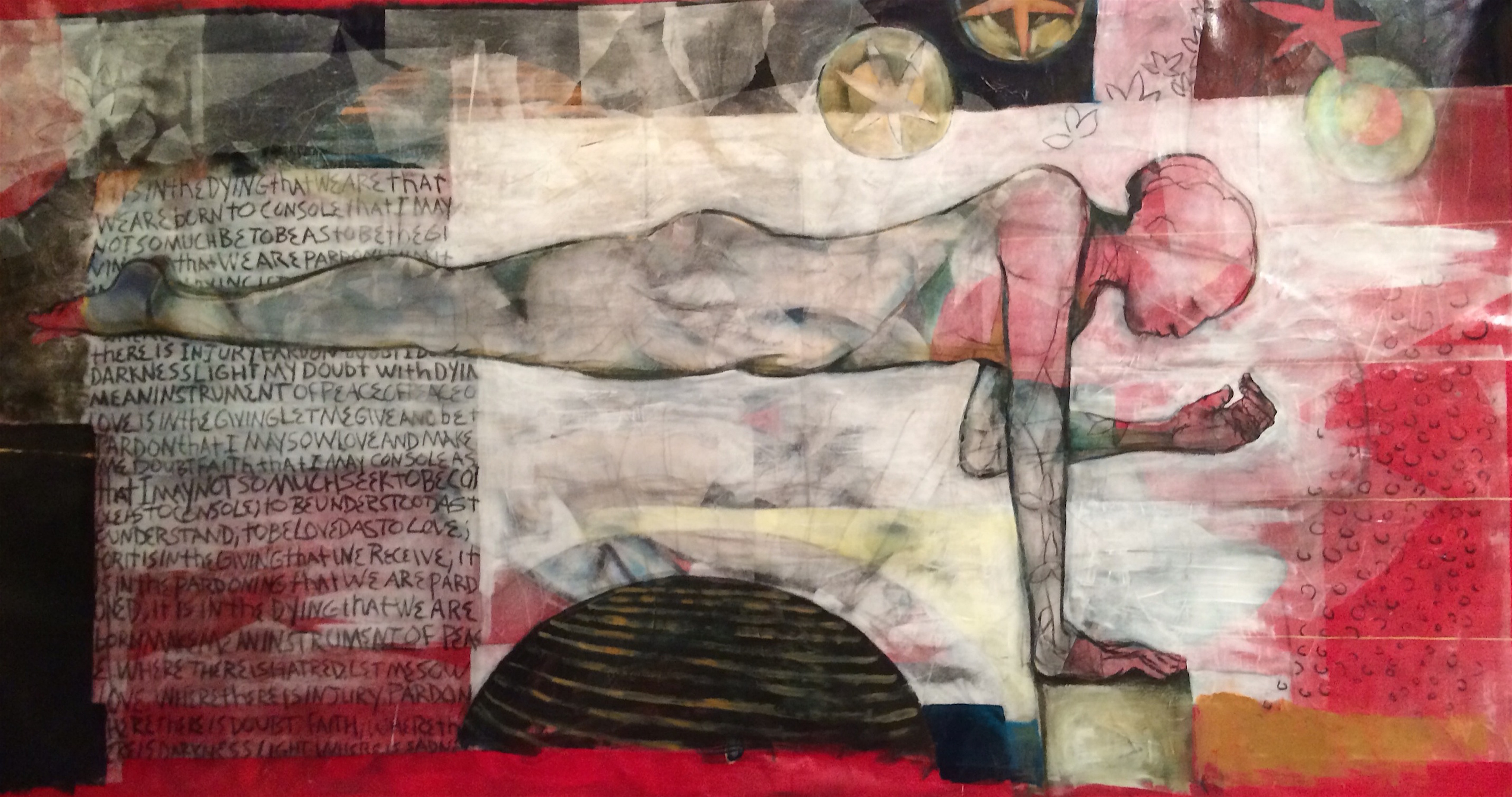
instrument of peace ©️ 2015 david robinson


Bring A Little Hope [on Merely A Thought Monday]

emerging with frame copy


“Multiculturalism asserts that people with different roots can co-exist, that they can learn to read the image-banks of others, that they can and should look across frontiers of race, language, gender and age without prejudice or illusion, and learn to think against this background of a hybridized society. It proposed – modestly enough – that some of the most interesting things in history and culture happen at the interface between cultures. It wants to study border situations, not only because they are fascinating in themselves, but because understanding them may bring with it a little hope for the world.” ~ Robert Hughes

I read in my newspaper that tribalism is the new normal [insert eye roll here]. There’s nothing new in tribalism. Fear-full people lost in a very small Us-N-Them tale is as old as the old gods. It’s pulled out and paraded about when power structures are shifting.

I marveled at the utter absurdity of it. No one can deny that our airwaves and e-waves are choked with noisy proclamations of division and fear.  However, it only takes a quick scan through the rest of my newspaper to grasp the undeniable reality of our situation: global markets, global economies, populations on the move, United Nations, NATO, WTO, multinational corporations, Bitcoin, international space stations, satellites, not to mention some of our greatest challenges like global warming, and invasive plant and insect species (made possible through global shipping and the necessity of sharing/exploiting resources). Take a stroll down the aisle of your local supermarket and educate yourself on the scope, depth and breadth of your food sources. Count the countries represented on the shelves.

Tribalism is not new. It was normal a few centuries ago. Nowadays it is a construct, an old dry log to toss on a fire to stoke divisions and create distractions.  It’s a headline to sell newspapers. Division sells. Good theatre requires hot conflict. People are easier to control when divided. There’s nothing new there, either.

There is a truism in change processes: people hold on tightest to what they know just before releasing their fear and walking into the unknown future. They take a step back, temporarily entrench, before answering the call of growth and change. Call that tribalism if you must, or denial, or the conservative impulse. It’s a process step. “Age and stage,” as 20 likes to say.

What’s actually new? All the world is now a crossroads. People with different roots ARE coexisting – that, after all, IS the great experiment and central promise of these United States. Looking across the frontiers of race, language, gender and age – without prejudice or illusion – is the hope in our emergence. It is the cathedral we are building.

The other direction can only bring our decrease. And, as history has taught us again and again, that’s an ugly path. There’s nothing new in that, either.


read Kerri’s blog post on EMERGING HUMANS EMERGING


Let’s Be Us

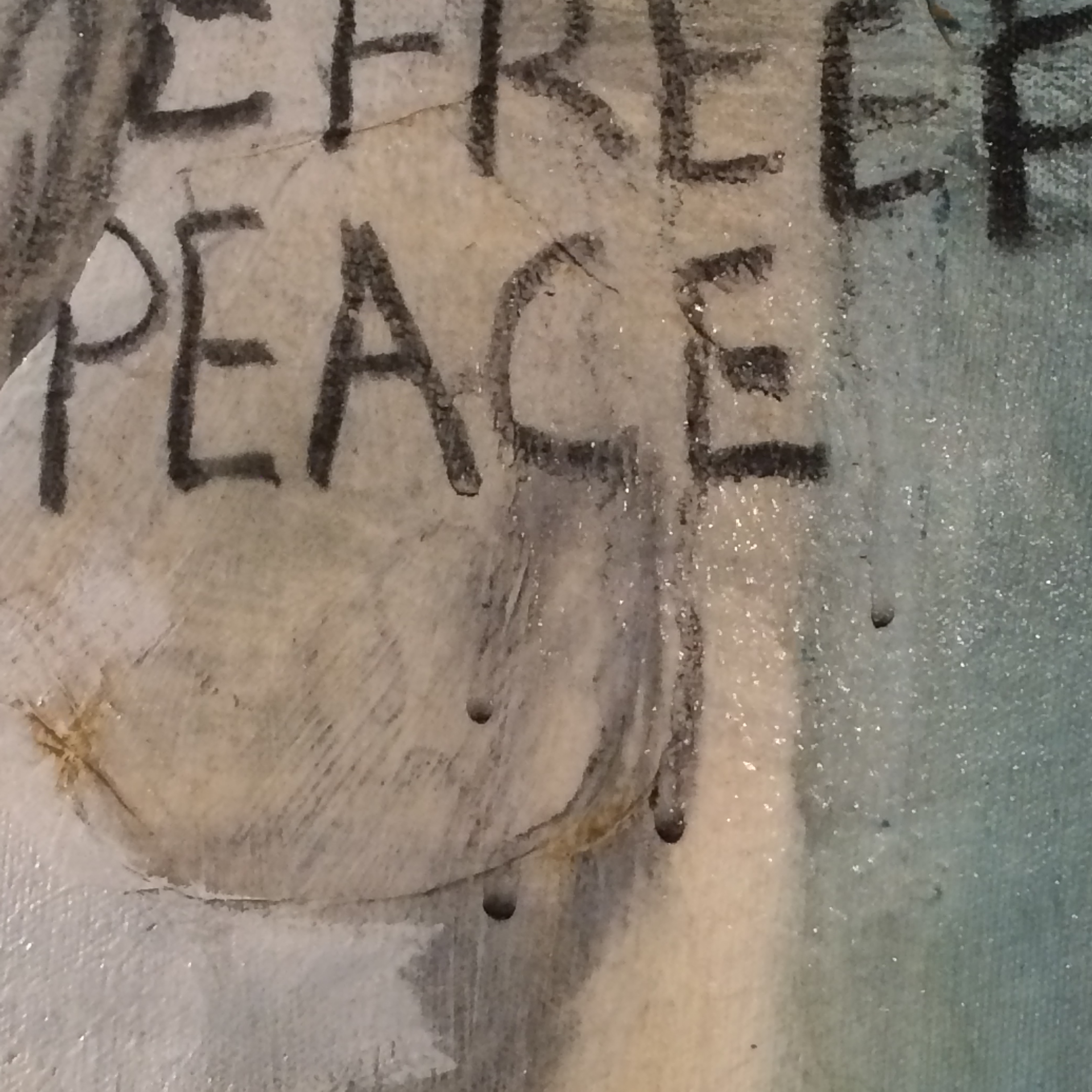
a detail from my painting, May You Be

a detail from my painting, May You Be

[continued from Put Down The Hammer]

It is night and I am sitting alone in the sanctuary. I’ve been setting up chairs for a performance and now that the job is complete I’m taking a moment to savor the silence and review this day.

The temperatures have been unseasonably warm and when I opened the back door this morning for Tripper Dog-Dog-Dog I was greeted by the sound of birds singing. It was an April sound in the middle of December. I was so taken by the sound that I called Kerri, “Come and listen to this!” We stood in the doorway for many minutes. It was beautiful as well as a little disconcerting. “El Niño or global warming?” I asked.

Arnie wrote a comment to my last post. He asked: Can it be that we don’t want the ‘we’ in our society – we aren’t comfortable with the ‘we’ and only feel our identity by living out the “us and them”? I am an idealist but, of course, he is right. David Berreby wrote a terrific book called, Us and Them. We are hardwired to perceive the world through a lens of Us and Them. It’s a survival imperative to distinguish between friend and foe. However, a point that is most salient to me: the delineation of Us is mutable. It is not a fixed state but largely circumstantial. That is especially true in this modern age. There is an out of fashion phrase used to describe these United States: a melting pot. There could not be a better metaphor for an ever fluid definition of US. We need not melt but we do need to acknowledge that we are in the same pot. “Give us your tired, your hungry, your poor,…” is central to our national identity (not always central to our national rhetoric) and is a sacred, central statement of an ever-changing US.

We are among the first humans in history to have the pleasure of seeing our planet Earth from space and, as it has been said, from space there are no visible borders. The definition of US depends upon how far out we pull the camera. From space WE are the human race. There are a bevy of alien invasion movies that carry a common theme: when attacked WE inhabitants of Earth will pull together. Or, said another way, until there is a THEM that invades from another planet, WE will be incapable of recognizing full inclusion in the Earth pot.

To Arnie’s point, there is a lot of responsibility that comes with WE. A few months ago, Kerri and I were in Chicago for the day and passed a homeless man, holding a filthy cardboard sign asking for help. He was young, in his early 20’s, and more filthy than his sign. He was suffering. We walked by him. On the train home we had a long conversation about our responsibility to that young man or to any member of our community that is suffering. Many years ago I was with a student group in Bali. We were invited to Udayana University and one member of our group gave a talk about homelessness in America. Our Balinese hosts were shocked. “How could a member of your community be without a home?” they asked. The concept was abhorrent to them, unthinkable. “You are the wealthiest people on Earth…,” they stammered. Later, a Balinese professor said to me, “When you came here today, we wanted to be like you Americans. As you leave, we are proud to be Balinese.”

Us. Them. We. Like me. Not like me. Me. Little words with far-reaching impact. I am not the same person I was only a few years ago. I find it infinitely hopeful – especially now – that, just like me, the delineation of US is mutable, ever changing. It begs the question, Who are WE? And, to another of Arnie’s points, the answer to the question depends upon where we decide to place our focus.