Fill The Space With Goodness [on Two Artists Tuesday]

When I was learning to be on a stage there was a phrase I particularly appreciated: fill the space. There was also a companion question that seemed to be more important: what are you bringing to the space?

The assumption beneath both the phrase and the question is that you have a profound impact on your world. Not in abstraction. You are an active participant in creating it. After all, the space is shared, co-created. What do you intend to bring to the shared space? Are you going to “take” energy from the shared space (it’s all about me) or are you going to “bring” energy to the shared space (we are in this together). I understand this choice to be the direction of intention. It’s the origin story behind the name of this blog. A performers job is to bring good energy and light to the shared space, to unify it. To grow the goodness.

I think that’s why Kerri and I are attracted to prayer flags. The mantras on the flags are blown by the wind to fill all the space of the world with good will and compassion. Fill the space with goodness to the benefit of all. A straightforward yet profound intention.

It seems like such a simple thing, doesn’t it? Intend to bring good energy to the space that is shared by all. And, to us, it seems like the number one imperative of our times. In this me-me-me era, rife with “taking” energy from the space, it’s crucial to help reverse the tide.

She was holding black and white bandanas and I saw the thought hit her. She turned and asked, “Do you think it’s a good idea to make our own prayer flags?”

“Absolutely.” I said. “Why not? This world could use all the good intention that we can muster.”

All the world’s a stage, after all.

read Kerri’s blogpost about PRAYER FLAGS

like it. share it. support it. comment on it. we appreciate it.

See Down The Pike [on Flawed Wednesday]

“Age and stage,” 20 says, to explain the behavior of people. Age and stage.

I pulled up Shakespeare’s Seven Ages of Man soliloquy. Jaques from As You Like It. “All the world’s a stage…” We perform the role of ourselves in this drama of life. In a funny coincidence, I’m spending some time inside Pirandello’s play, Six Characters In Search of An Author. David is updating the script and preparing for a production. I’m fortunate enough to play witness to his journey. ‘All the world’s a stage’ meets ‘who will tell our story?’

In the final lap of his career, Tom was an assistant superintendent at a school district. He’d shake is head and say, “Parents forget that they were once children and expect their kids to do things that they themselves could not do as children.” Each age grows blind to the previous stage. We forget the great learning-power of making a mistake.

My favorite of Tiago Forte’s 10 Principles of a Second Brain is to make it easier for your future self. It’s a great idea and I wish the bevy of my past selves had been kind enough to consider me at this age and stage. When I turn and look at the rough wake of my passage I know that, with some better choices, I might have scribed a more direct path. Or not. My past selves caution me to fully appreciate the messes and the mistakes that they made. My life is better today because of the rampant foolishness of those former-me’s.

The Balinese believe that we come back every seventh generation. They are an ancestor returned. As such, they are less likely to foul their nest believing they will themselves be the future inhabitants of the nest. Looking down the long-road, they see themselves dealing with the world they currently create. And so cooperation, sustainability, and peace are much higher on their priority list than guns and every-man-for-himself. To care for another is to care for their future self. They find a society like ours, that allows anyone in the community to be homeless, to be broken. Diseased. Or simply adolescent.

I can’t help but think they are mature while we are mewling toddlers. Considering the impact of your actions seven generations into the future is surely a sign of maturity. Thinking of others, understanding betterment as a shared responsibility, is an adult perspective. Currently, we allow our children to be slaughtered and protect the gun that killed them. Surely there’s some growing-up to be done.

I wish I had a penny for every recent conversation I’ve heard that began with the phrase, “I don’t understand what’s going on in this nation.” 20’s voice pops into my head, “Age and stage,” he says in my mind. “Age and stage.” Let us hope that there’s some maturity coming down the pike, that we survive this stick-your-finger-in-the-socket stage.

Perhaps we will someday look back and appreciate the mess, the rampant foolishness, the mishmash we are making.

read Kerri’s blogpost about AGE AND STAGE

Go To The Shoe Room [on Two Artists Tuesday]

When I managed the theatre conservatory at PCPA Theaterfest, I occasionally gave backstage tours. It was great fun because the favorite stop on the tour – on every tour I gave – was the shoe room. Visitors always enjoyed standing on the stage, they were impressed with the scene and costume shop, they delighted to watch the prop master at work, but the moment we entered the shoe room, they were transcendent. Wide-eyed and giggling, pulling period shoes from the shelves to show their companions, it was as if they’d entered a candy store. The magic was released through the shoes.

The shoes, I suspect, harkened back to a time of dress-up. Childhood. The shoes touched their spirit of play. They beckoned to be worn and, as any actor knows, the shoes will inform how a character moves. The sooner you don the shoes, the sooner you will “find” the character. The shoe room was a portal to possible-other-lives.

I am more enamored by sketches than I am by final drafts. I delight in watching master craftsmen and craftswomen work. Theatre artists do not create illusions, they provide access to other worlds, unknown paths. They invite us to the shoe room to try on another life, even for a moment. The process, to me, is more beautiful than the performance.

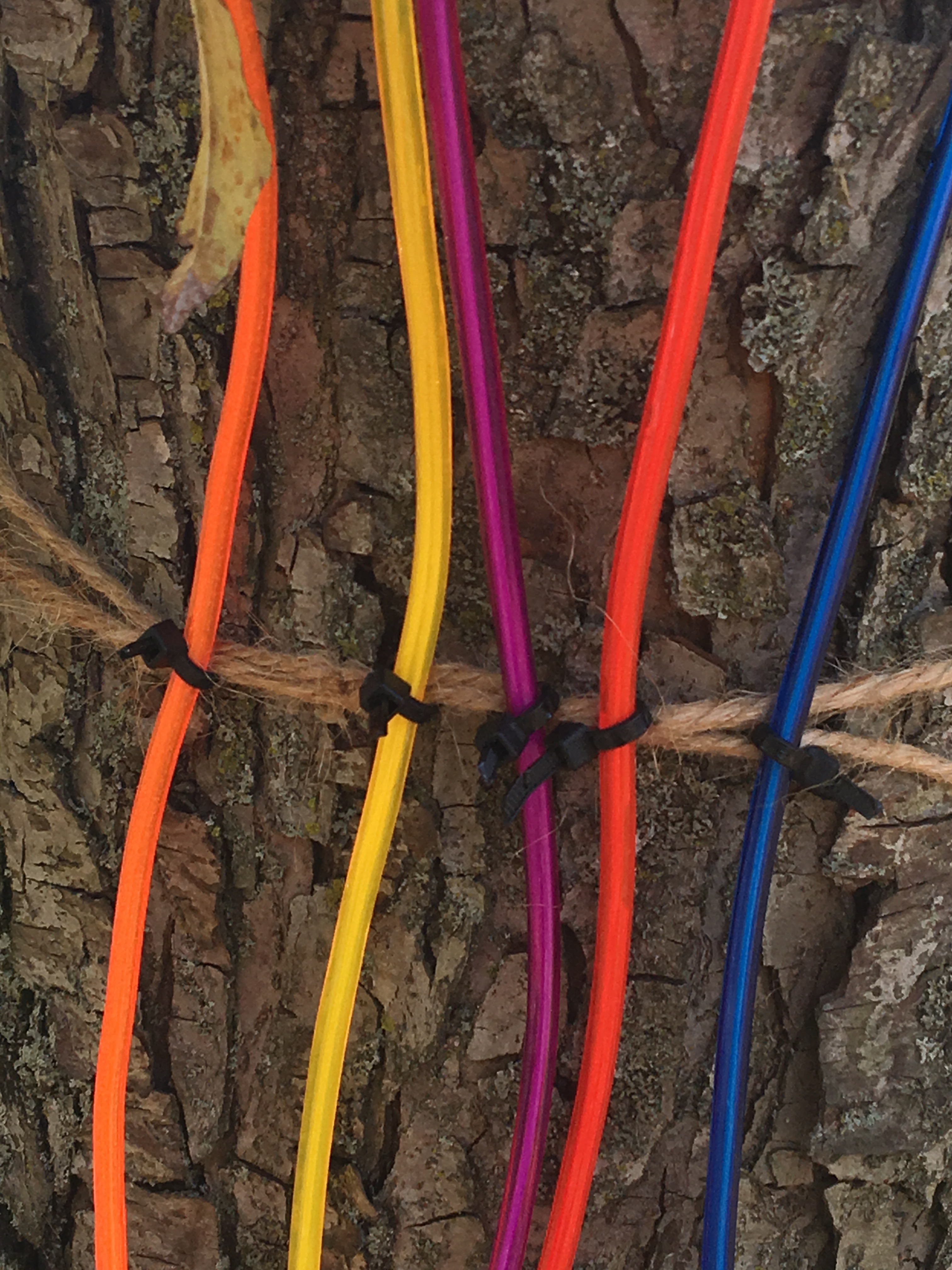
As we walked the paths of the Botanical Gardens, the technicians were preparing for the festival of lights. Walkie-talkies crackled. Connections were checked. Battery packs were carefully placed. Multi-colored light strands ran like rivers up the trunks of trees. E-candles on armatures floated in the waterways. Magic was in the making. During the daylight, the entire expanse of the Garden is backstage – exposed wires and explicit design. At night, the mechanics will fade behind the light curtain. Backstage will become fore-stage. The light will invite us into another world. The light will touch the spirit of play.

I have always believed that people, lurking behind those serious faces, really just want to play. It’s the reason I kicked off my shoes every time I entered a room to do a facilitation. Lose your shoes and it’s no longer a serious affair. Play threatens. Play is suddenly a real possibility. The spirit of play cracks even the most harden entrenchment. Play necessitates collaboration and sharing. Pirates and Princesses need mates and parrots and knights in order for the world to be complete. Lawyers will take off their ties and wear them as headbands when the shoes come off and the serious topics are approached in socks and bare toes.

I recently – as we all have – been privy to an endless contentious debate about what this nation needs to do to get back on track. I believe it is not so complicated. We can carry on our oh-so-serious-division, but the single rule should be that no one can open their mouth – politician, pundit, and pedestrian alike – before first taking off their shoes.

read Kerri’s blog post about LIGHT STRANDS

Take The Opportunity [on Two Artists Tuesday]

Paul used to teach his actors that, in choosing to step onto a stage, they had a profound responsibility. “Never underestimate your power to influence another person’s life,” he’d say. I took his lesson and passed it along to my students. I hope that a few of my students took Paul’s lesson and, in turn, passed it on. You have a responsibility.

Another lesson I learned, this time from Jim, was that great acting is about standing in truth. “Acting is the honest pursuit of an intention in imaginary circumstances.” Honest pursuit. It’s a misunderstanding to equate the art of acting with pretending. The circumstances are pretend. Actors are meant to be portals to a shared story, a channel to a common experience. They transport. They transform. “Never underestimate your power…”

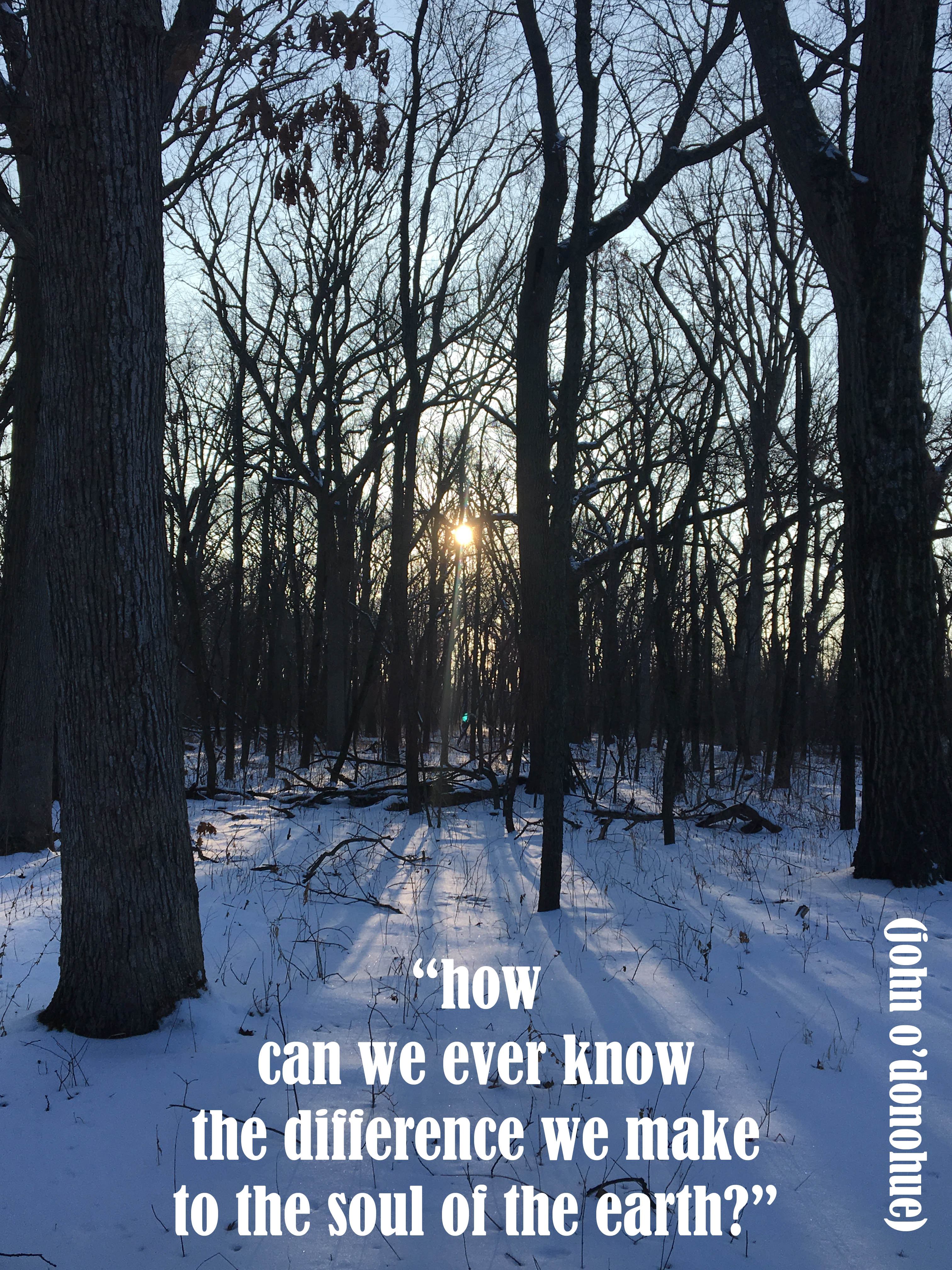
John O’Donohue writes that the soul does not inhabit a body. It’s the other way around: bodies live within the soul. We only think we are isolated individuals, bubbles. The bubble is singular, soul, and we play our small dramas within it. We fill our bubble by how we stand in it, by what we bring into it. There is no on-stage or off. It’s all the stage.

The other day I was exhausted. I was standing on the edge of despair when my phone dinged. It was Rob. “What kind of wine do you like?” he texted. The edge disappeared.

From across the country, MM sends me cartoons that make me smile. Horatio sent an episode of The Twilight Zone. “You gotta watch this,” he said. David sends photos of Dawson at the easel. There is nothing so freeing to an aging artist than to watch a child draw. No limits.

The bubble is singular. The soul of the earth. These good friends, living honestly on the stage, have no idea of their profound impact and influence on me.

These days, when I think of my good teachers and dedicated mentors, when I think of Jim and Tom McK and Paul, I know that, were I to teach again, I would add a small caveat to our legacy-lesson. I’d say, “In choosing to step onto the stage, you have a profound responsibility and opportunity: never underestimate your power to influence another person’s life.”

Take the opportunity. Each and every moment. Ripples sending ripples.

read Kerri’s blog post about SOUL OF THE EARTH

Step On The Stage

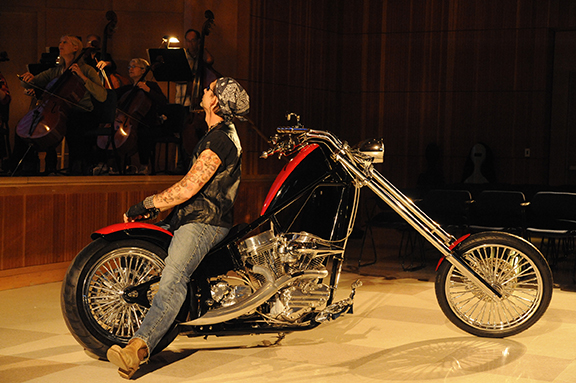
My performance with the Portland Chamber Orchestra of "The Creatures of Prometheus. I wrote and performed the piece for PCO.

My performance with the Portland Chamber Orchestra of “The Creatures of Prometheus.” I wrote and performed the piece for PCO.

Craig is laughing at me and with good reason. Through a post he asked a simple question about people building boxes around themselves. He issued a singular challenge: to apply what I found in his post to my writing. I’ve had more ideas and random ruminations than I know what to do with; he opened a big can. Before I let it go, I want to wade into the last part of his question: when did I know to create my stage?

Craig positioned a stage (showing up) as the polar opposite of a box (hiding) so I read his question as asking when I decided to show up. I’ve learned that a stage can be a strategy for hiding, too, so “showing up” means much more than just being visible.

Many actors get on the literal stage because they are seeking appreciation or approval from the audience. When anyone mounts a stage, either literal or metaphoric, to seek approval, they split themselves. By definition, they must hide their intention (to seek approval) and in so doing, give away their power and potential. Young teachers often pass through a growth phase in which they seek the approval of their students; they want to be liked and their need for appreciation neutralizes their capacity to teach. Ironically, in both cases (actors and teachers), the moment they cease splitting their intention they become great at what they do and their respective audiences can’t help but appreciate them. That’s the way power works.

Several years ago I was working with a corporate client who was upset because he felt uncomfortable with what he’d learned from my workshop. I told him that I could either serve him or please him but I could not do both. I understood that my job was to help him grow and that necessarily required discomfort. If he wanted to be pleased he needed to hire someone else.

I hid for years. I split myself for decades. My dear friend Roger once said that one day in his middle 30’s he realized that he was no longer becoming someone. He was someone. Everyone navigates the “becoming.” It is a necessary and vital growth phase and is often filled with fears of inauthenticity and split intentions; everyone wants to be appreciated and everyone sacrifices their primary intention in a mad dash for approval until one day, if they are lucky, they realize the only approval they need is their own. My revelation came when I was preparing to go on stage to perform. I realized that I was steeling myself against the audience (preparing to hide). I was assuming that they were going to judge me, which is a form of approval seeking. It was like a cold slap. I’d never had a bad experience with an audience. I’d only ever experienced appreciation and support and wondered why I was steeling myself against the very people I was there to serve. My need for approval dropped like a stone. I went on stage, perhaps for the first time in my life, present and powerful. I didn’t need anything from them. I was bringing life and my gifts to them and that was all that was required. My whole world flipped. No armor. No mask. No need other than to offer my gift on that day to that specific group. Whether or not they accepted my offer could no longer be my concern.

I’ve since learned that discomfort is a very valuable thing. It is present anytime learning and growing is happening. In fact, if there is no discomfort, there’s no learning. And that is the plaque nailed to my stage.

Go here to get my latest book, The Seer: The Mind of the Entrepreneur, Artist, Visionary, title_pageSeeker, Learner, Leader, Creator…You.

Go here for hard copies (Amazon;-)