Let Yourself Go

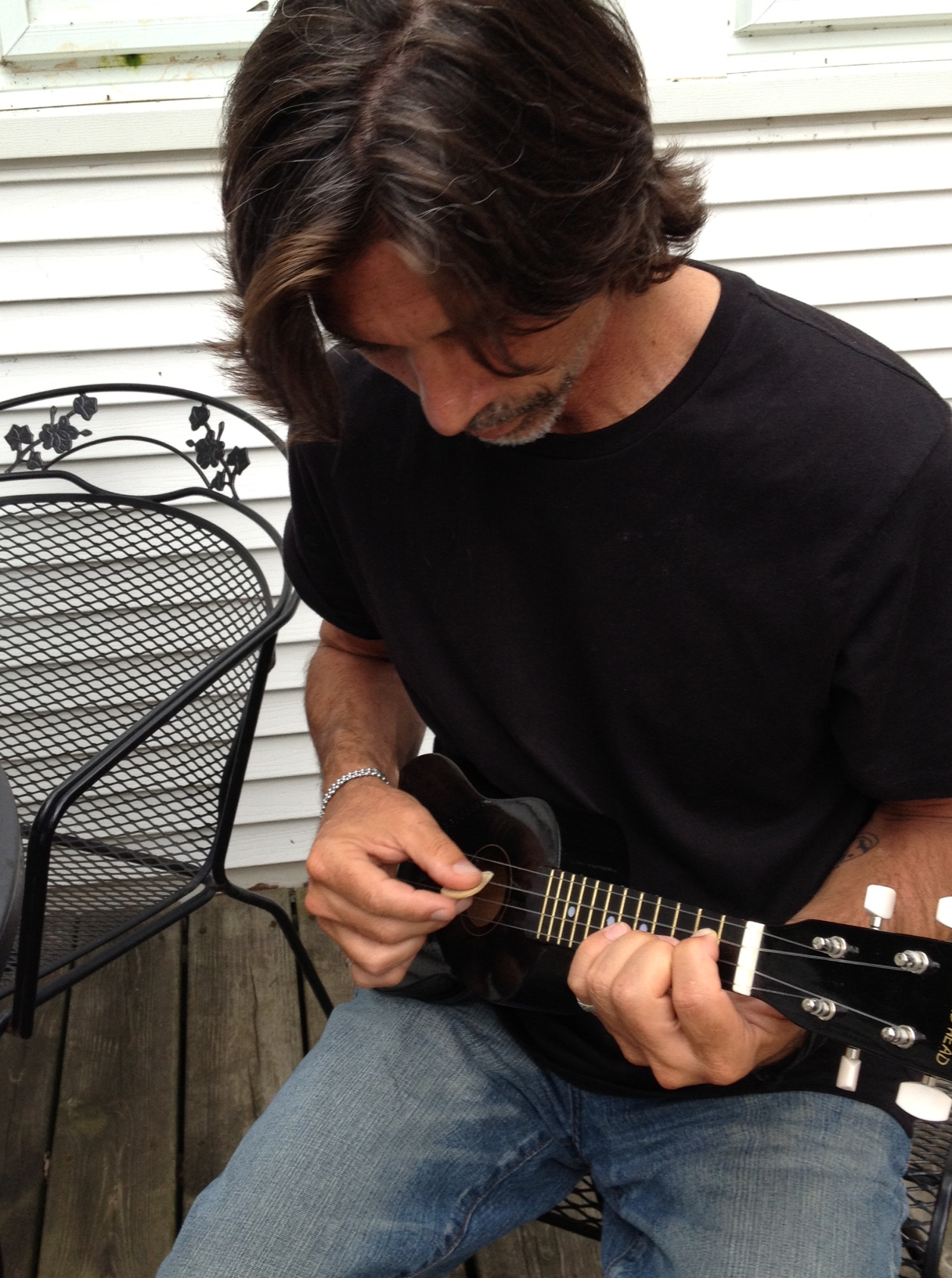
I have no idea how, but I'm making a mess of sound and will one day play the ukulele.

I have no idea how, but I’m making a mess of sound and will one day play the ukulele. Kerri says that I already am…

My meditation on the word “how” continues.

At our recent Summit in Holland, Alan and I asked the question, “What would you do if you didn’t have to know how?” It is a great question. The short answer is this: you’d figure it out. You’d try things. And if your first attempts led nowhere you’d try something else.

In this musing I have often written that “how” is something that is known at the end of the journey. We can’t answer “how” with any honesty until the story is played. Today I recognize that there are two distinctly different “hows:” 1) the explanation, “This is how I did it. This is how you do it. This is the “how” that presumes a path or a prescription. When dealing with this version of “how” I ask groups or clients to consider their life story and tell me how they got to this day in this place doing this job, etc.. The answer is mostly, “A clear path with a lot of happy accidents,” or something like, “I have no idea. I didn’t try.” Yes. Ask me how to paint a painting and I will tell you that I have no idea. I’ve painted a thousand of them and I can teach color theory or composition but I cannot tell you how to open to the muse, how to become a channel for something greater to come through. To paint a painting, to act in the play, to write the book, there is something akin to letting go. There is a divine surrender. So, how did you get to this place in your life? Divine surrender. Happy accident. Unstoppable forces.

If the first form of “how” is an explanation, the second is akin to giving permission. I have worked with a legion of blocked artists who set up studios, buy musical instruments, sign up for improv class,…, and then sit in their studio, stare at their musical instrument, and forget to go to class. When they call me, they tell me their story and always finish the telling with, “I don’t know how….” For my fee, I could say a single, simple word: start. Instead, what we usually do in our work together is find their internal permission. When they realize that their block has nothing to do with “how” and everything to do with the fear of being judged (“how” is an internal braking system meant to prevent starting), when they are ready to, as Saul would say, “Orient to their own concern,” they allow that their opinion of their work trumps all others, they give themselves permission. They start. They play.

Recently, a brilliant woman, an attendee of the Summit, a maker of incredible mandalas, sent me an email with a photo of the start of a painting. She asked for my advice. I wrote: make a mess. Paint on top of the mess. Then repeat. Today in my inbox I received her beautiful mess with a note that their would be more messes to follow. She started. She picked up a brush. She splashed some paint. She splashed some more paint in response to her first splashes. That is how art is made. That is how light bulbs were invented.

This morning I laughed when I realized the double definition of the phrase, “Let yourself go.” In common parlance, it is used as a negative, when people give up, when they stop trying to maintain their health or their appearance, “He really let himself go.” The second possible meaning is to start. To go. The next time someone is sitting in their studio and asks me the question “how,” I will respond like this: let yourself go.

Go here for my latest book. title_page

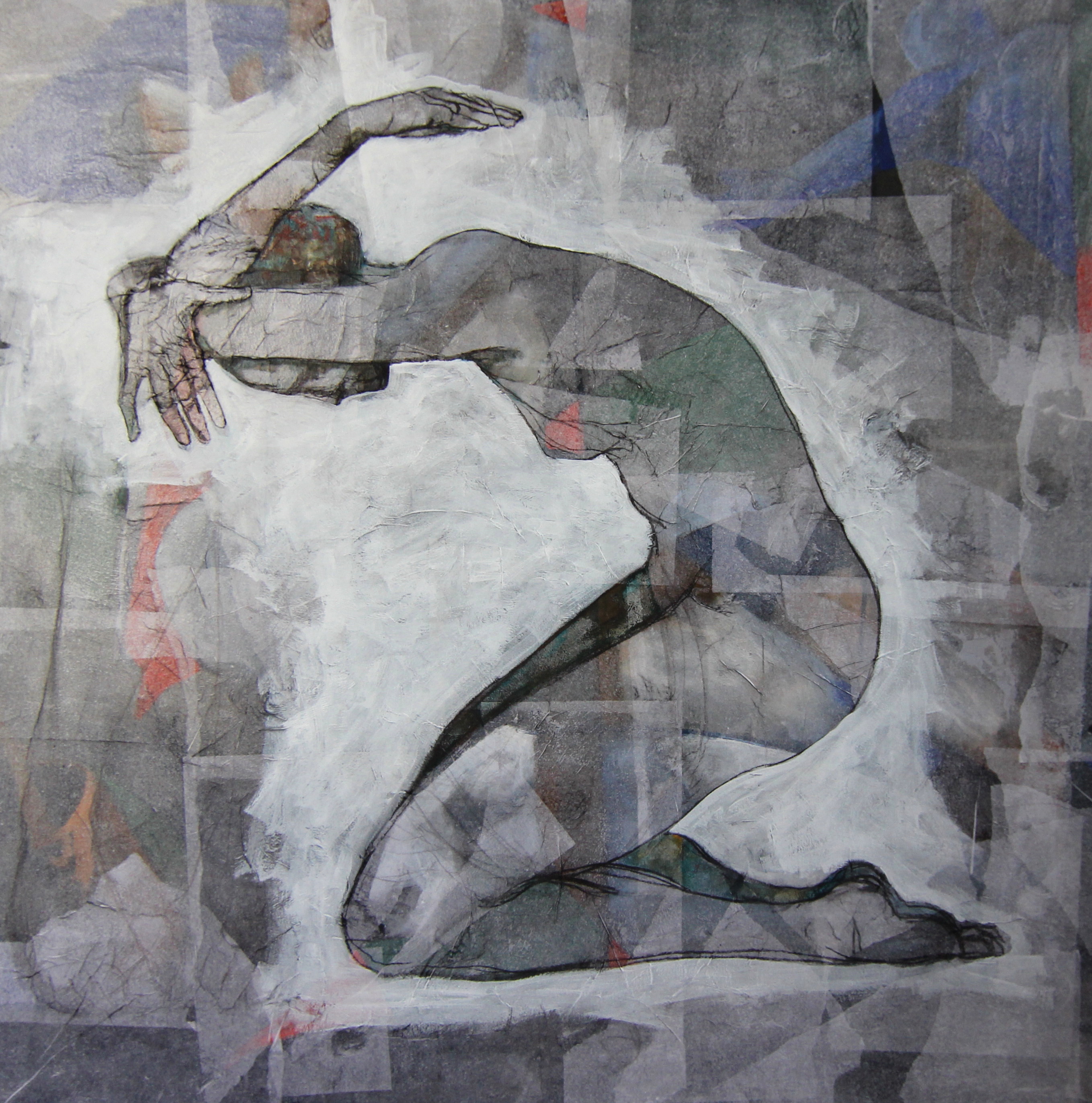
Yoga Series 7Go here for fine art prints of my yoga series (and more).

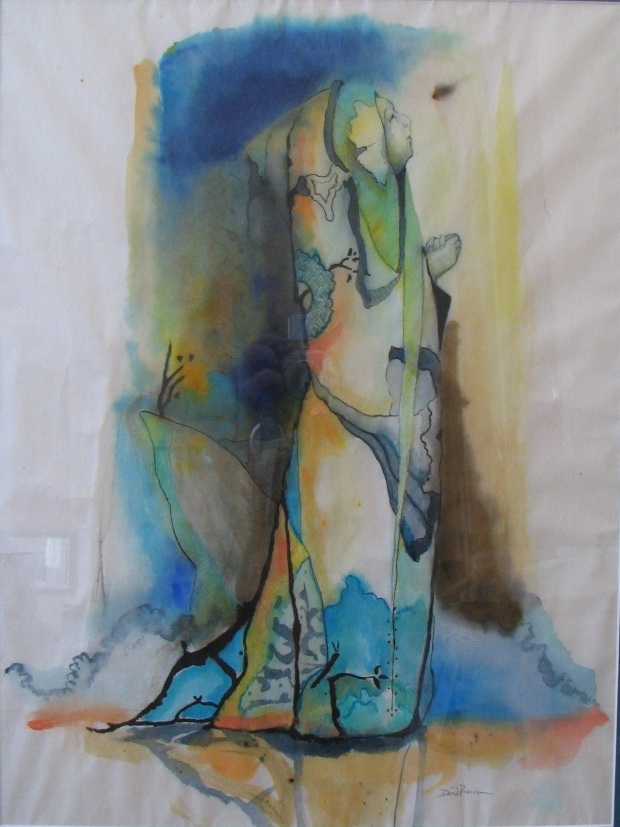
Embrace The Mess

circa 2011

circa 2011

I did not intend for this post to be a continuation of yesterday’s but when Amy climbed the stairs into the choir loft and said, “I don’t do change very well,” I laughed. It was word-for-word the same phrase that Kerri had just spoken.

For some reason, we’ve come to expect change to be comfortable and breezy. We expect ourselves to be paragons of reason in the face of imbalance. I find this ridiculous expectation of centered-off-centeredness to be suspiciously corporate. Apparently all change needs management and if it is not managed smoothly and without feeling or emotion then it is not well done.

Emotion is messy. Change is hard. The seed cracks before the tender shoot finds its way to the sun. The seed needs to crack in order for the new form to emerge. Hearts are broken, like seeds, to allow new forms to emerge. Even the “right” relationship is dynamic, messy, surprising, joyful, disappointing, filled with fear, the heights of elation, tenderness, quiet, and at the core is this volatile thing called love. Love burns hot during transformation; love is snuffed when excessively managed. Love is transformative when not unduly controlled.

Everyone does change well because change is the nature of our existence. Energy is always in motion. If humans are expert at anything it is change. We do change well because we can’t avoid it. What we do not do well is afford ourselves the grace of feeling the grief, the insecurity, the frustration, the anger, the joy, the exhilaration, and the dizziness that comes with change. We limit our emotional color palate when we confuse change with control. We do not allow ourselves the mess, the unpredictability, and the loss of balance that necessarily comes with this rolling vibrant transformation called life.

Amy would have been more accurate had she said, “I don’t do control very well.” I didn’t tell her the secret: no one who experiences the fullness of life does control well. In the face of her messy, volatile, change process, she wouldn’t have appreciated my counterpoint. When someone is standing in the middle of the muck it is cold comfort to tell them that they are in the right spot. So, I simply laughed, nodded my head, and said, ‘I know….”

Go here to get my latest book, The Seer: The Mind of the Entrepreneur, Artist, Visionary, title_pageSeeker, Learner, Leader, Creator…You.


Go here for fine art prints of my paintings.


Know Your Pilgrimage

Arnie owns this one. A watercolor from days past.

Arnie owns this one. A watercolor from days past.

I keep notes and short phrases to spark thoughts for future posts. The notes are scattered everywhere: scribbled in margins of my notebooks, written on Post-it notes stuck to the wall or in a helter-skelter line running the length of the table, or cryptic messages typed at the bottom of other documents. This morning I caught sight of this prompt:

Pilgrimages are supposed to be arduous.

During facilitations I used to tell groups that people without challenges create challenges. These created challenges are called hobbies. Or, really bored people create drama: drama is a unique challenge otherwise known as gossip.

People thrive when challenged. People grow when challenged. When I was a teacher I used to love the skateboarders. They’d dedicate hours and hours of repetition, broken wrists and ankles to master a move. Every athlete and artist knows the journey to their personal Everest is fraught with challenge and impossibility. That is why they do what they do. One of the people I admire most on this planet is John Kirschenbaum. He is a master woodworker. His criteria for taking on a project: it has to include something that he does not know how to do.

The idea that a good life is safe and easy is a marketing idea meant to sell you a suburban house in a gated community that includes a hot tub. It is also a recipe for boredom and frustration. It is also a lie. A good life is not without obstacles just as a good story is driven by challenges. A good life is not safe or easy. A good life is passionate. A life well-lived has a bliss-center that is focused on fields of potential and not fears of failure. A life well-lived does not avoid challenges; it embraces them. It courts them. It celebrates them.

Pilgrimages are meant to challenge you. They make your feet ache while they open your eyes and heart. They are meant to help you recognize what matters and what does not.

Go here to get my latest book, The Seer: The Mind of the Entrepreneur, Artist, Visionary, title_pageSeeker, Learner, Leader, Creator…You.

Or, go to Amazon: The Seer, David Robinson

Pick Up Your Ordinary

From Kerri and my travels: a photo essay about what our feet have seen

From Kerri and my travels: a photo essay about what our feet have seen

I continue to process all of the amazing events and experiences from the past few weeks working abroad. They have jiggled loose an old thought-bubble and I’ve been pondering it since it bobbed to the surface.

The old thought-bubble is a tenet that comes from improvisational theatre: put down your clever and pick up your ordinary. I’ve used this tenet in any number of facilitations and coaching relationships. The basic idea is this: any attempt at being clever actually diminishes personal power and inhibits the capacity to be present. Trying to be clever focuses the eye inside and robs a performer or presenter of the only thing that really matters: relationship in the moment.

Dig a bit deeper and the real wealth of the tenet shows itself. We rarely recognize our true gift because we think everyone possesses it. We miss our unique gift because we think it’s ordinary. We mistake our gift for something common and therefore not of great value. In truth, what we brand as ordinary (how we see the world) is our most unique, most potent and powerful gift. So, to put down your clever and pick up your ordinary is to value your unique point of view. It is to honor yourself and how you see the world and also affords you the capacity to be seen as you are, not as you think you need to be seen. To pick up your ordinary is to become accessible.

Trying to be clever is actually an attempt at trying to be something we are not – or someone we are not. It is to hide, put on a mask, or pretend.

Ordinary reveals; clever obscures. Ordinary facilitates flow. Clever needs to control. Attempts at being clever are manufactured moments. Experts need to be clever, they need to whip up a straw man and call it substance. Clever is always an ego need – in fact, clever is nothing more than a plea for approval. It is a thirst for adulation. Clever needs center stage. Ordinary shares the stage. Clever needs to claim territory. Ordinary expands horizons. Ordinary is accessible. Clever is protected, aloof, and closed.

All of this is old news. It was in the old thought-bubble. Just behind it came a few new little trailer bubbles. Clever is oriented on what it gets (adoration, attention, acclamation). Ordinary is oriented according to what it brings: a unique point of view in service to a relationship. Ordinary is a form of potlatch: give what you have; give away your wealth as the road to increase. Clever comes from a universe of lack. Ordinary comes from an abundant life. It is a paradox. Unique is found in the ordinary. New vision comes when we cease trying to say something new and simply offer our unique, one-of-a-kind perspective. The beauty is in what we see.

title_pageGo here to get my latest book, The Seer: The Mind of the Entrepreneur, Artist, Visionary, Seeker, Learner, Leader, Creator…You.

Or, go here for hard copies and Kindle.

Story Your Life

title_pageI’ve received a few questions this week about life stories and rather than blather…here’s another snippet from my book, The Seer:

Stories often deal with the collision that arises when learned patterns blind us to our natural impulses. Living according to what we “should do” or “should think” inevitably collides with what we desire to do and this provides a hot crucible for growth. When Virgil asked me to practice “not knowing” he was poking a hole in my story of “should do” so that I might once again hear what I intuitively knew to be true. Stories show us how to get out of our own way. As Virgil recently wrote:

Virgil: You are at one time the source of your yearning and your greatest obstacle. What you think that you should do IS the obstacle to your desire.

In my latest chat with Virgil I told him of my revelations about ‘not knowing what I DO know,’ about my memory of my client, and how I convinced her that she didn’t need me and could do the work by herself. I wrote:

Me: At the time I really needed the money. I needed the business! And I spent that morning convincing a potential client that she didn’t need me. It’s the story of my life!

He responded:

Virgil: Oh, you are dangerously close to the third recognition.

I decided I needed to stop being careful with how I said things to Virgil. I’d just learned that my language mattered so I might as well write what I was thinking:

Me: Well, maybe you should tell me before I trip over something and hurt myself. You must have an answer or two in there somewhere…

Virgil: I’m woefully low on answers but I do have a question for you: What did you mean when you wrote: It’s the story of my life?

Me: I don’t know. It was just a phrase, an attempt at humor.

Virgil: What if it’s not just a phrase?

Me: You mean that convincing people that they don’t need my services is the story of my life? That is why my business crashed?

Virgil: No. I’m not inferring, interpreting or implying anything. You used this phrase: It is the story of my life. I’m asking you to consider that this is more than a flippant phrase. Are you aware of the story of your life?

I was getting angry again. And I was beginning to recognize that my anger was a pattern that flared when I felt lost. I get angry when I am driving and miss my turn or can’t find where I’m going. I wanted a map. I wanted Virgil to be my personal GPS and tell me where to go. Where were we going with this? Sometimes I can’t help my sarcasm:

Me: You mean I only get one story?

Virgil: Your story is not something you get. Remember, your language matters. Choose your words more carefully and you might see the third recognition before you trip over it. Connect the dots. Tripping over it will not hurt you. It’s the choice to be blind that causes your pain.

Go here to get my latest book, The Seer: The Mind of the Entrepreneur, Artist, Visionary, Seeker, Learner, Leader, Creator…You.

Go here for hard copies.


Locate Your Self

title_pageHere’s a short excerpt from my book, The Seer, dealing with the dance between investments, limitations, and the roles we play in life. This conversation is a kind of coaching session and is happening via online chat:

Me:…All week I’ve asked myself, “why?” Why the dramatic shift in experience from role to role? I’m a bit shocked to realize that I play many, many roles each day. In each role I want something and what I want is different depending upon the people I am with. I realized that my roles are not about me in isolation – and what do I mean by that? I mean that I define my role by how I define the relationship I am in at the moment. For instance, in my workshop, I assumed the role of “guide” and I wanted to lead the young people to some new insights that might help them create their businesses. In my conversation with my parents, in the role of “son,” I wanted them to be pleased with my work. I wanted to share and I wanted their approval. So, my role is defined by relationship and in each different relationship I tell a specific story based on what I want or need. I’ve “cast” myself in these little mini-stories. Or to use your term, “role” is the way I “locate” myself in the story.

Virgil: And how does this knowledge help you with your questions about business?

Me: The first thing that occurs to me is that I have the capacity to locate myself in a different way if I don’t like the role I’m playing. I can change how I locate myself. Also, there is a dance with the words “limitation” and “investment.” I took notes all week and realized that I was using the verb “to invest” over and over again to describe my experience of different roles. So, for instance, during my dinner with my friend Bruce I invested in helping him. I wanted Bruce to know that I cared about his challenges. Then, I watched Bruce invest in being the wine expert. It was his way of caring for me and demonstrating his expertise. I began to see my investments as keys to discerning my limitations. In some roles I’ve invested in the idea that I can’t do something or that I’m not good at something. In some roles I diminish myself; my limitations are investments in being small.

Virgil: Just a caution: as you explore further the dance between investment and limitation, remember to practice suspending your judgment. Remember: you are having experiences first so you can see how you make meaning and begin to choose how you make meaning.

Me: Thank you. It’s a good reminder. I was beating myself up every time I     realized I was investing in being small.

Virgil: We tell ourselves stories. We locate ourselves within the stories. In fact, that is the next recognition: you locate yourself within your story. We do it physically (like your description of choosing the table in the restaurant); we do it through the roles we assume – specifically our assumptions of how we need to play our roles, what is ours to do, etc. Locating is simply a way of establishing comfort. We sort to the known. If you judge how you locate yourself, you miss the opportunity to change how you locate yourself.

Me: Right. Judgment blinds me to the choices I am making.

Virgil: Judgment is always a version of the “things are happening to me” story. In fact, judgment is a way of locating: it is the warning signal when we step too close to discomfort. When I judge myself and say, “I’m an idiot,” I’m actually locating myself, pulling myself back into my comfort zone. When I judge others, “They are idiots,” I’m locating myself in a higher status position. The action of diminishing “them” elevates me back into a comfortable status position. Thus, suspending your judgments removes the easy step back to comfort and allows you to stand in “not knowing” and see what is there beyond what you think is there.

Go here to get my latest book, The Seer: The Mind of the Entrepreneur, Artist, Visionary, Seeker, Learner, Leader, Creator…You.

Or, go here for hard copies.

Remember The Fire

this is the first painting in a triptych I did for The Creatures Of Prometheus, a performance I did with The Portland Chamber Orchestra. special kudos to Jen and Brad for housing these enormous paintings for me.

This is the first painting in a triptych I did for The Creatures Of Prometheus, a performance I did with The Portland Chamber Orchestra. Special kudos to Jen and Brad for housing these enormous paintings for me.

With the spring the storms have come. Brilliant blinding flashes of lightning followed by thunder that rolls and rolls for minutes without ceasing. Joseph Campbell once posited that the voice of the thunder was humankind’s first experience of the godhead; as I listen now to the sky roil and rumble, watching Tripper-Dog-Dog-Dog look for a safe place to hide, I am grateful to be inside protected from the god’s displeasure.

Last week I learned that the phrase, “blinding flash of lightning” was more than poetry. Kerri and I were taking our usual late night stroll. There were distant rumbles of thunder, but nothing close or threatening. The crack and flash seemed to come from nowhere. I ducked. Kerri screamed. It felt like we were inside the lightning rather than beneath it. The ground rumbled in concert with the sky. For blocks around us, car alarms whooped and beeped like Chicken Little. I imagined the cars were as taken by surprise as Kerri and I. For several moments after the flash, I was literally blind.

We were already running when sight returned, we laughed and squealed and kept our heads down as if that would make a difference. It seemed as if the storm was far distant one moment and on top of us the next. The sky spit hail. It rained for a moment. And, as suddenly as it was on us, it was gone. We stood still in the wake of the storms departure. I wondered if I’d imagined it except the parked cars were still sounding their alarms.

Once, when I was in high school, I hiked with a friend to the top of a peak. We were above the timber line and although I knew enough to be off the mountain top before the afternoon storms rolled over the divide, the thunder clouds came fast and we were caught in a powerful storm in a meadow just beneath the peak. It seemed as if we were literally inside the cloud as the lightning made the hair on my head stand on end. We wedged ourselves in a sitting fetal position between some boulders, and reflexively closed our eyes and covered our heads. Each flash sent a jolt of fear through me. I’ve rarely been as frightened or exhilarated as I was that day. The storm roared over the mountain top and descended into the valley. It was gone as fast as it came. It was awesome.

In one of the versions of the Prometheus story, Zeus charges Prometheus with the task of creating creatures for the sole purpose of worshipping the gods. Zeus wants the new creatures to be crude and stupid. Prometheus, instead, creates something beautiful and smart: humans. From clay, he sculpts a female and male form. Knowing that Zeus will never give life to his beautiful creatures, Prometheus steals the immortal fire, the lightning, and sparks the human hearts to life. To punish Prometheus, to keep his beautiful creatures from knowing their own beauty, Zeus introduces them to warfare, both the internal and external variety; he makes them doubt. He infuses them with fear. He makes it easy for them to focus on their ugliness so that they might misdirect their awesome power and forget the creative fire burning in their hearts.

Go here to get my latest book, The Seer: The Mind of the Entrepreneur, Artist, Visionary, title_pageSeeker, Learner, Leader, Creator…You.

Go here for hard copies.

Step Into The Pool

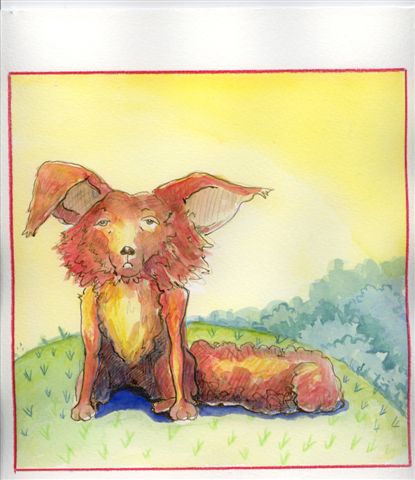
From my children’s book, “Lucy & The Waterfox.” This is what Lucy looks like when she gives up her dream.

Do you remember this phrase from Richard Bach: Argue for your limitations, and sure enough they are yours. I am a notorious eavesdropper and today, listening to the conversations, I think all of life is one long argument for limitations.

The wicked thing about arguing for limitations (I think to myself while eavesdropping) is that we rarely recognize that we are doing it. For instance, blaming others for our misery is actually an argument for limitation. Blaming is an abdication of responsibility, an investment in the notion that, “I can do nothing about that which bothers me.” Blame is an assignment of potency to everyone but your self.

I think all things worth knowing are paradoxical. Arguments for limitation are double-edged because they often also mark the boundary between safe and not safe. An argument for a limitation often looks on the surface to be a defense of the perimeter or an argument for safety. The fulfillment of a dream usually requires a step or two beyond the perimeter and who hasn’t dipped their toe into the pool of their big dream only to pull it back and refuse to wade into it. The shore is safe and known. Stepping into the dream pool never feels safe because the depth of the water is always unknown – and no one ever knows how to swim in the dream pool until they jump in. Staying safely ensconced in Plan B is a great disguised argument for limitation. It is a disguise that will always make sense; self-imposed limitations always make rational sense.

Go here to get my latest book, The Seer: The Mind of the Entrepreneur, Artist, Visionary, title_pageSeeker, Learner, Leader, Creator…You.

Go here for hard copies

Let Owl Guide You

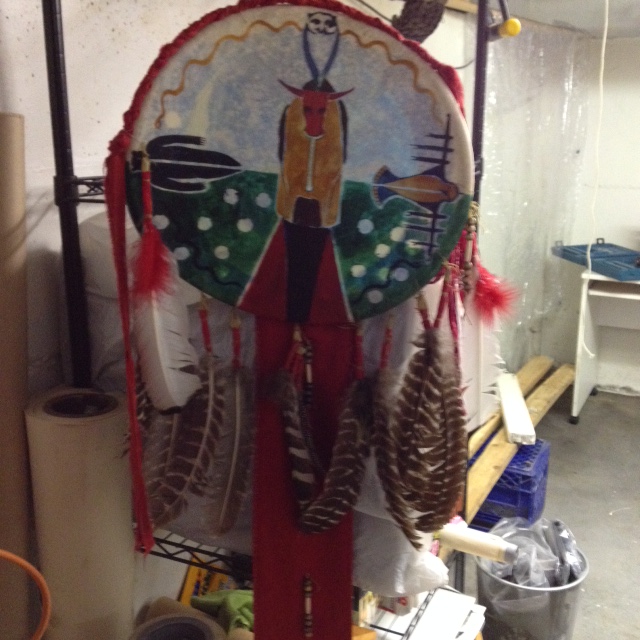
With the guidance of an elder, I made this medicine shield years ago.

With the guidance of an elder, I made this medicine shield years ago.

“Your vision will become clear only when you can look into your own heart. . . . Who looks outside, dreams; who looks inside, awakes.” Carl Jung

For a few disconcerting moments, I thought the crows had followed me across the country. You will remember that while living in Seattle, I was plagued by crows. They swooped me on a daily basis, picking me out of crowds for a sneak attack. I came to the conclusion that they were trying to wake me up. According to Crow Medicine, crows are an omen of change. When crows are around, something special is about to happen, consciousness is about to change and dis-ease will be dispelled. Since we can only connect the dots backward I can now say with great confidence that I took the medicine and it worked. They hammered me on the head for months before I stepped into the void and allowed new forms to emerge. Needless to say, I have a love-hate relationship with crows.

Yesterday afternoon our backyard was a festival of crows frantically barking. It brought back visceral memories and I went on high alert. As it turns out, the crows were focused on our owl and not me. I haven’t heard the owl since autumn and had forgotten that we have an owl in the backyard. I was happy that the owl was back. The crows were not happy as owls are great nest robbers and also, if hassled excessively, will make a dinner of an adult crow.

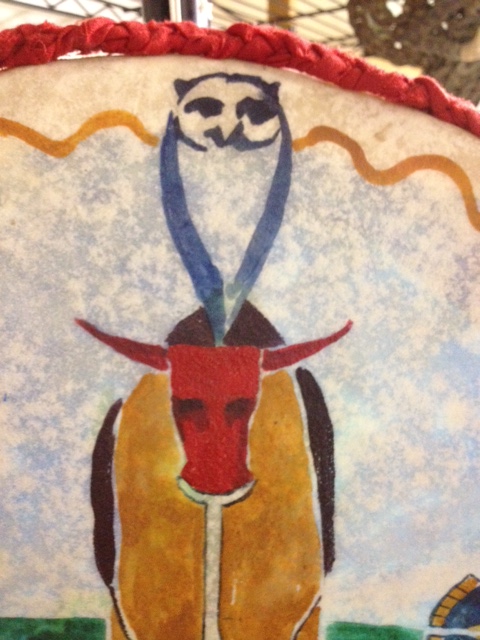
A detail from my shield. Owls have been with me for a long time. The owl is the top symbol.

A detail from my shield. Owls have been with me for a long time. The owl is the top symbol.

Last fall I googled Owl Medicine when the owl hooted above my head almost every night. I learned that, as a totem, Owls have great intuition. They follow their instincts. They see clearly (meaning they cannot be deceived). Owls see what others cannot. For instance, Owls see into the inner life of others; generally, they know more about a person’s inner life than that person knows about him or her self. This is why people do not sit next to me at parties! Also, owls are fierce warriors if something dear to it is threatened.

What a fantastic collision of bird archetypes for the crows and the owl to return to my world at the same moment. The owl was mostly indifferent to the incessant crow barking and attacks. There was no contest. In the evening the owl flew away to hunt and I wondered if there might be one less crow barking in the morning.

Both owl and crow are harbingers of change. They both speak to a comfortable relationship with the unknown and an attraction to the mysteries of life. I laughed when I re-read the symbols as I’ve lately been preaching through my book, The Seer (owls and crows are both seers) to cultivate “not knowing” as a necessary step on the path to health and creative vibrancy. In the practice of “not knowing,” one learns to see.

Later in the night, while driving back from Chicago, Kerri and I were talking about the extraordinary and meteoric changes in our lives this past year. She encapsulated my crow and owl commentary when she said, “We make plans according to what we know. It’s what we don’t know that changes us.” Her thought reminded me of another Carl Jung quote. He famously wrote that, “Religion is a defense against a religious experience.” Just so, a life plan is often a defense against a vital life. Adventure and discovery are never in the direction of the known. When you pay attention to the symbolic crow hitting you on the head you can also rest assured that when you step into the void there will always be an owl waiting to guide you.

title_pageGo here to get my latest book, The Seer: The Mind of the Entrepreneur, Artist, Visionary, Seeker, Learner, Leader, Creator…You.

Or, go here for hard copies (Amazon…Kindle version available here, too)


Love Yourself Better

this one is from the archives. I painted this 10 years ago.

this one is from the archives. I painted this 10 years ago.

He said, “The current goal is to love myself better.” And then he added, “Not so much a goal but something that needs teaching from our own mind.” His statement begs a great question, an ages old question: Can the mind teach itself? Really, the question is can the mind see itself clearly enough to teach itself?  Or, the question within the question: Can the mind teach itself to love itself? I scribbled the questions in my notebook and beneath them I wrote, “Is love teachable? Is love reachable through the mind, especially self-love?

We’d been chatting for a while and had covered a lot of territory, from Monte Blanc pens to typewriters to soap use around the world, clean water, the difference between good and bad scotch, the shapes of the 50 states and how they might influence personal identity and we’d somehow wandered into the epicenter: self-love.

His statement nailed the universal dilemma perfectly. It was a declaration of separation. The self watching and wanting more for the self. The separation is in the language: to love myself better. I don’t know anyone who hasn’t made this statement. Which part of the self will better love the other part of the self? Which part of the mind will teach the other to love?

It is where myth meets the everyday. Every human being who has walked the earth has wrangled with separation and the yearning for self-love (re-connection to self, unity). The human journey is a walk from separation (birth, if you want to take it literally) to reunification (death). The story lives in mythologies the world round. If we were still willing to read our mythologies (religions) metaphorically, we’d see it. For instance, being expelled from the Garden of Eden for eating from the tree of knowledge is the story the ancients told of the experience of separation. The inevitable bite of apple from the tree of knowledge brought duality consciousness: male/female, us/them, mine/yours, haves/have-nots, me/you. Separation. The rest of the story, not often told, is how, through out the rest of our lives, we seek the Garden where there lives a second tree: the tree of everlasting life (unity). We journey from knowledge (separation) to everlasting life (reconnection). The death need not be literal. To die to the self is necessary to experience the SELF.

Here’s the great paradox: loving another person is an act of self-love. The path to self-love is found when we serve something bigger than our selves. Think about it: the movement is always from separation to joining, from isolation to connectivity. The obvious question is, “Connectivity to what?”

Self-love is not found when the mind teaches the mind but when the mind gets out of the way of the heart. The love is always there. Love is never missing. Self-love reveals itself when the definition of self grows beyond our own skin. According to our latest neurological science, we experience ourselves as separate because we dull ourselves to our fundamental connectedness to others. In other words, we cultivate a story of isolation and then set about the real work of our lives: to see beyond what we think.

And then he said, “You know what else I just realized?”

“What’s that?” I asked.

“I just landed myself in a blog post.”

Yep.

Go here to get my latest book, The Seer: The Mind of the Entrepreneur, Artist, Visionary, title_pageSeeker, Learner, Leader, Creator…You.

Or, go here for hard copies.