Cut A New Path

ComfortNow

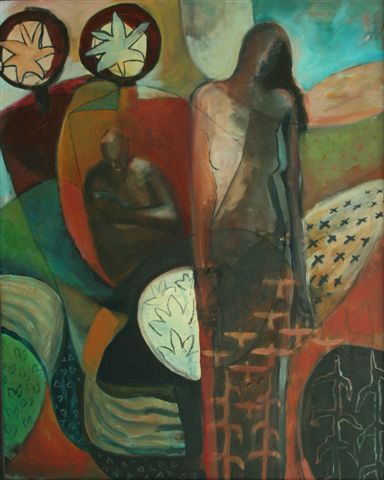
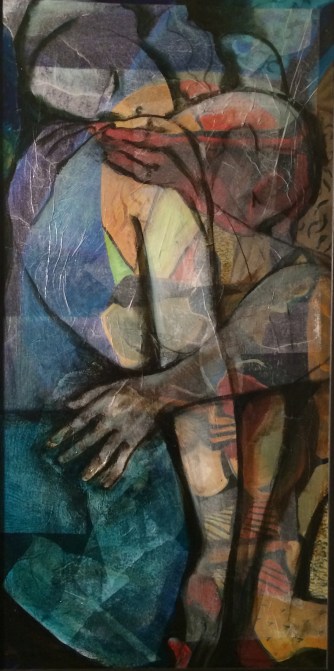
The latest in my Held In Grace series. This is Comfort Now

It seems to me that most of our days on this earth are spent moving through patterns, conscious or unconscious. These patterns are the rituals of our lives. Some of the rituals are easy to see. For instance, what is the sequence of actions you perform before going to bed each night? What about your ritual of rising each day? The care and feeding of Tripper Dog-Dog-Dog and Babycat are central to my rising and retreating rituals each day. We move through the same actions every morning and evening and I delight in the warmth of the ritual.

Some of the rituals are not so easy to see. Researchers tell us that most of the thoughts we think every day are the same thoughts we had yesterday. We mostly think in patterns (it makes sense once you recognize that language is constructed of category and pattern). We talk to ourselves, cutting paths through the forest of our minds and, once we’ve established a trail, we like to stay on it. Easy is often unconscious. There’s nothing wrong with staying on the easy trail if the path you’ve cut, your repetitious thought-ritual, is self-loving. The rub: ritual paths of self-loathing and self-limitation are also easy, well-worn paths and that makes them both unconscious and hard to leave.

Cutting a new path through the mind forest begins with recognizing that new paths are always available. They just aren’t easy to establish. They require new practices. They require surrender and the first bit of surrender necessary for cutting a new path is the ritual giving-over of needing-to-know-anything; new paths, by definition are unknown.

New paths are not comfortable precisely because they require attention, consciousness.

My teachers taught me that all stories worth telling are stories of transformation. The main character or characters will know something at the end of the story that they did not know at the beginning and the new knowledge will be hard-won. That’s what makes the story worth engaging. Hamlet is a much different character in Act 5 than he was in Act 1. His peace was difficult to come by. He had to learn to surrender. To cut a new path he had to make a practice of peace.

The same ideal applies to the stories we live off the stage.


Go Slow

Our feet at Montauk

Our feet not rushing at Montauk


Years ago Quinn gave me a book by George Leonard called Mastery. I revisit it from time to time when I feel, as I do now, that I know nothing. In truth, the older I get, the more experiences I have, the more certain I become that I know nothing at all. If George Leonard was still living I imagine he would approve of my not knowing. “Finally, we are getting somewhere!” he might declare.

Here’s a bit from the book’s introduction:

“The many comments and inquiries that I continue to receive have convinced me more than ever that the quick-fix, fast-temporary-relief, bottom-line mentality doesn’t work in the long run, and is eventually destructive to the individual and the society. If there is any sure route to success and fulfillment in life, it is to be found in the long-term, essentially goalless process of mastery.”

Although in the quarter of a century since Mastery was published the pace of life has, if anything, shifted into hyper-drive, the truth of George Leonard’s assertion remains constant. Fulfillment is found in the long-term. It is found in the goalless processes like friendship or love or a walk in the woods. Fulfillment is a relationship and not an achievement. Learning is a relationship and not an achievement. Spirituality is a relationship and not an achievement. Artistry is a relationship and not an achievement.

All the things we think we know, the things we argue for or against, the righteous territories we claim, the belief flags we plant in the sand, the battle lines we draw, the hills we die on, the idea-wars we wage,.., make muddy the life crackling right before our eyes. After all, what do we really know?

On Sunday I witnessed a baptism. The next day I attended a funeral. These two back-to-back rituals left me with a question: What’s the rush?

I have absolutely no idea.

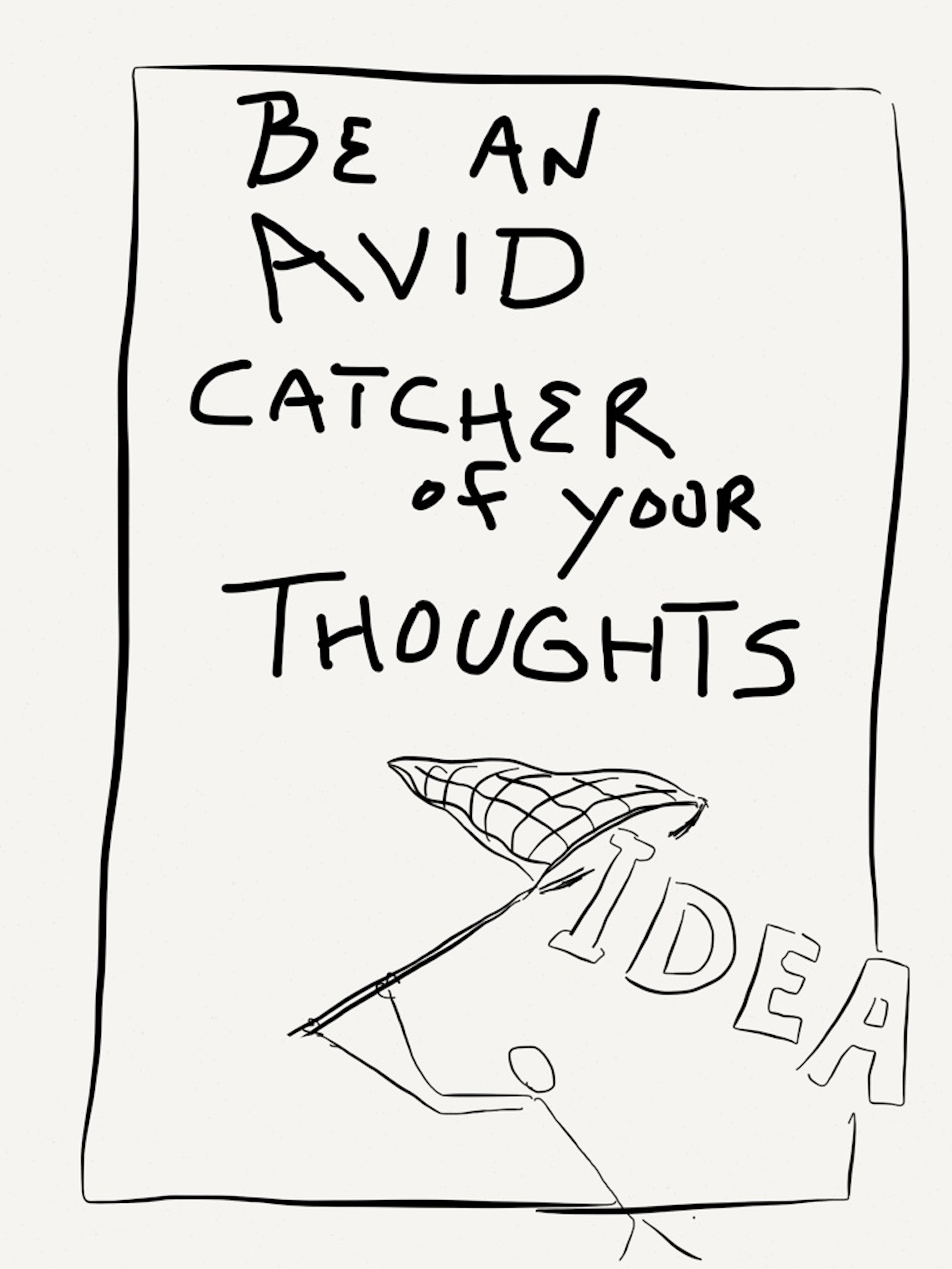
Be An Avid Catcher Of Your Thoughts

TODAY’S FEATURED IDEA FOR HUMANS

Be an avid catcher of your thoughts

This notion is the heart of change. It is the practice of self-awareness. Listen to the story you tell yourself about your self.  It is ripe with ideas, dreams, and yearnings. It is also ripe with fears, doubts, and comparisons. Capture the ideas. Listen to the dreams. Follow the yearnings. It’s a muscle. Develop a focus for the creative. Capture what’s useful and let the other jabber go.

Screen Shot Avid Catcher

TO GET TODAY’S FEATURED IDEA FOR HUMANS, GO HERE

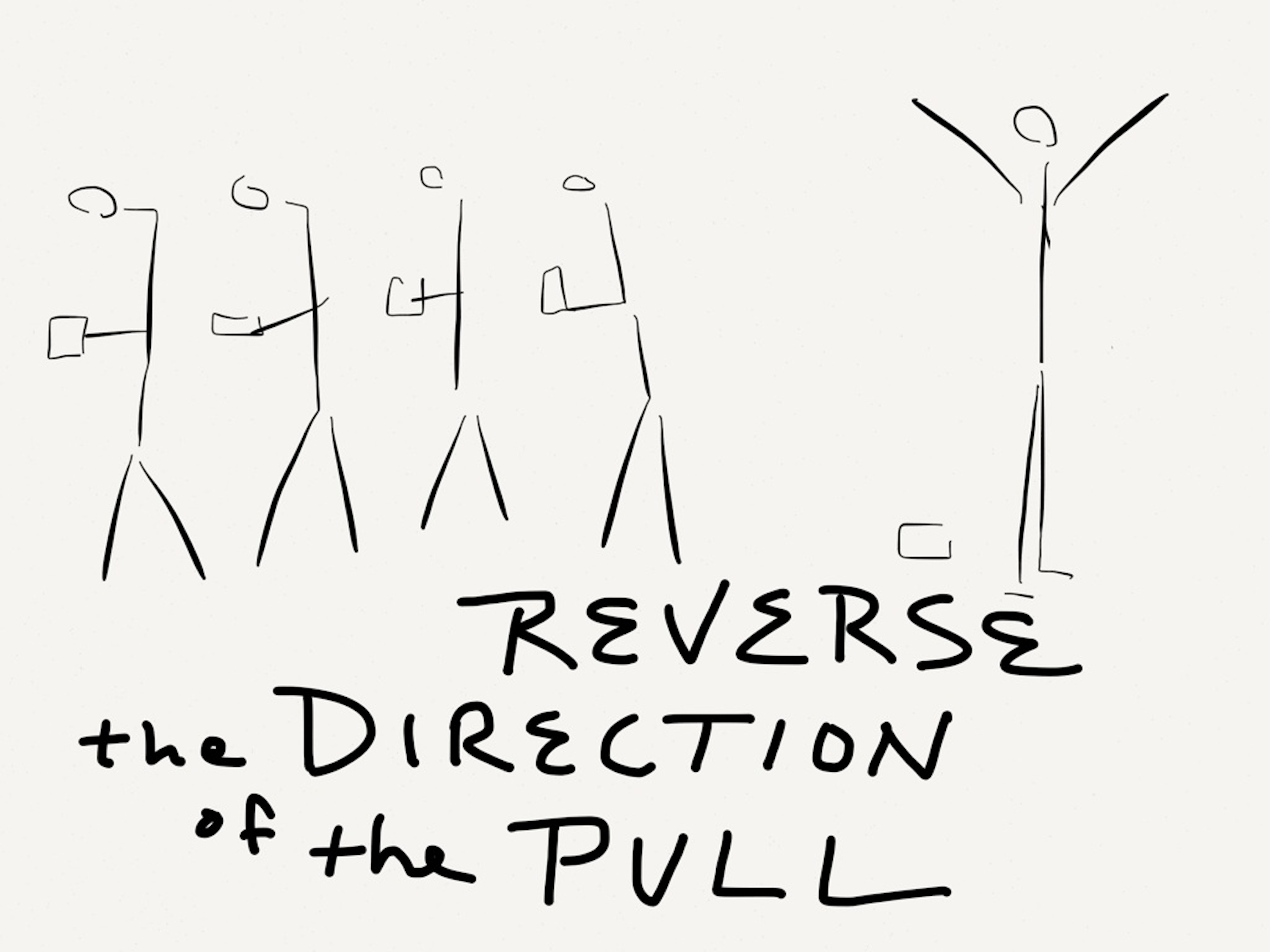
Reverse The Direction Of The Pull

TODAY’S FEATURED IDEA FOR HUMANS

Reverse The Direction

FOR TODAY’S FEATURED IDEA FOR HUMANS, GO HERE.

Step Into The Unknown

Step Into Unknown with Sig

FOR TODAY’S FEATURED PRINT FOR HUMANS, GO HERE…

Doubt

Pidgeon Pier - acrylic on canvas

Pigeon Pier – acrylic on canvas

It’s been months since I had a good chat with the stained glass window. I hadn’t realized that the conversations had stopped. The summer was a blur of unplanned travel and I suspect during the chaos of coming and going that I simply stopped asking questions.

This morning we awoke to snow, the first of the season. Snow arrives silently and inspires inner silence. Steeped in the snow’s quiet I heard the window’s greeting. “Ah, Welcome back.” And so began our conversation about doubt.

Doubt is a double-edged sword, it has two distinct faces. The first face, unlike the snow, is noisy. Doubt does not arrive in silence. It demands to be heard. In the middle of my conversation with the window I heard P-Tom say, “Fear makes us doubt our belief and believe our doubts.” This face of doubt is a crazy maker. It makes muddy the inner waters. It makes all fears come true.

There is another face of doubt, not born of fear but arising from love. The 5th Agreement of Don Miguel Ruiz is this: doubt everything that you think. To doubt what you think makes little sense without the preceding agreements, the most powerful (to me) is this – Be impeccable to your word: speak your truth and nothing else; do not blame or accuse or make others responsible for your pain (your thoughts and actions); own your thoughts; own your actions. Or, better said, love yourself enough to express your love and nothing else. Don Miguel writes that impeccability to your word requires self-love. In this context, this other face of doubt is a step forward. Coming from love, to doubt what you think is akin to cleaning up the dirty dishes. It is to not take anything too seriously. Thought is nothing more than storytelling and to doubt the story births detachment from investment in the story. Detaching from the story-investment brings quiet, like the snow.

title_pageGo here to buy hard copies (and Kindle) of my latest book: The Seer: The Mind of the Entrepreneur, Artist, Visionary, Innovator, Seeker, Learner, Leader, Creator,…You.

Yoga Series 7Go here for fine art prints of my paintings

Leave The Wasteland Behind

[continued from Enter The Castle]

In her book, Radical Acceptance, Tara Brach tells the story of a daughter holding vigil at her mother’s deathbed. The mother regained consciousness before dying and said, “You know, all my life I thought something was wrong with me.” And then she shook her head as if to say, “What a waste.”

title_page

The full Parcival tale is woven through The Seer.

The metaphor of the moment is the Holy Grail and, more specifically, the search for it. The search for the Grail is a metaphor for a search for the self – not the roles that we think we play, the purposes that we think we serve, and not the jobs that we do. Grail seekers deal with their ‘being’ and not their ‘doing.’ When the roles are dropped, the purposes stripped away, when the jobs are left behind – beyond all the masks and definitions and importance and interpretations, labels, judgments, and pursuits of perfection, the Grail castle awaits us all. It’s a paradox: the Grail castle is found in the ordinary, the everyday.

We rarely come to the castle because of our wholehearted attachment to The Wasteland (the other great metaphor in the Parcival tale).

Parcival goes on his quest to find the Grail castle because as a young knight, purely by accident, he bumbled into it. He was invited in. He was given the opportunity to speak his truth and at the crucial moment, he denied himself. Instead of truth he spoke what he thought was socially acceptable. He did what he thought he was supposed to do and not what he wanted to do. He played his role and was polite. And his punishment for denying himself was banishment from the castle. And, worse, the whole kingdom fell into famine and he was to blame. He was personally responsible for The Wasteland. So he went on a quest to find the castle and redeem himself.

He believed himself broken and in need of fixing. The harder he tried to prove his worth and regain his wholeness, the worse the Wasteland became. In today’s world he would have purchased a shelf of self-help books. He would have attended seminars and exercised his positive thinking. He would have clarified his purpose and conquered his fear on a ropes course. He might have earned his PhD, bought a BMW, been named ‘Best-in-Show,’ and lined his wall with trophies.

The important point is this: Parcival had no idea why he failed as a young knight. He did what he was taught to do and found himself in The Wasteland. So he began a quest to fix what was broken (he identified himself as broken). He was fighting a battle to redeem himself but had no idea what he was attempting to redeem. He could only regain access to the castle by ceasing to think that he was broken. It was only when he stopped looking for perfection that he experienced himself as perfect just as he was. As the hermit said to Parcival the moment the castle reappeared, “Boy, it’s been there all along.”

Go here to buy hard copies (and Kindle) of my latest book: The Seer: The Mind of the Entrepreneur, Artist, Visionary, Innovator, Seeker, Learner, Leader, Creator,…You.

Go here for all digital forms of The Seer.


Tend The Root

The moon over Benziger Winery

The moon over Benziger Winery

I am not and have never been a landscape painter. I paint the figure. Yet, my current sketchbook is filled with fanciful landscapes, sketches from places I have been and places in my mind. Great scribbles, cross hatches, and curly cues carve rolling hills and midnight skies. I started drawing these landscapes just before I stepped off the reservation and went on my walk-about. They are meditations.

When I was very young, over and over again, I drew a cabin in the woods. There was a tree in the foreground and beyond, across a meadow, stood a rough cabin. It was as if I knew the place and I was drawing it to remember. I must have drawn it hundreds of times, the leaves on the trees, the door and windows calling for a visit. The quiet. Even today, forty years later, I can feel the quiet when I remember drawing my cabin.

Doodles and Dwight notes

Doodles and Dwight notes

The other night while on the phone with my long lost friend, Dwight, I needed to write a note – he was sparking such great insights – and all I had within reach was my sketchbook. I wrote the notes and also started to doodle as we talked. My doodles went the way of the landscape. Shapes and swirls and squiggles. Drawing is also a form of note-taking.

Dwight talked about going through the crush and coming out the other side as something – someone – wholly new, simpler. The crush refers to the process of grapes becoming wine. Life can crush us. Life does crush us. We change form, grapes to wine, children to adults to ancestors.

I told Dwight of the gift Skip gave me: lessons in wine and a few days with Barney who walked me though a vineyard and taught me about the roots and the vine. Trying to rush the grape with fertilizers and pesticides will perhaps provide short-term gain but will kill the vine in the long term. It makes the vine weak and incapable of drinking the nutrient. Health, true health, requires respect for the root and an understanding of the natural pace of things. This simple respect for the root, care and attention to the whole plant, the seen and unseen, and not a blind focus on production or the test score or the bank account, creates health. It is a meditation.

title_pageGo here to buy hard copies (and Kindle) of my latest book: The Seer: The Mind of the Entrepreneur, Artist, Visionary, Innovator, Seeker, Learner, Leader, Creator,…You.

DSC_1196 copyGo here to support my kickstarter campaign for my play, THE LOST BOY

Leave Your Ghost

from the archives. I call this painting "Demeter."

from the archives. I call this painting “Demeter.”

As Alan said, this year for me is a year of departures. First Tom, then Kathy, Bob, and Doug passed; mentors all. Earlier this month Casey, who lived a long season and once told me that heaven didn’t want him and hell wouldn’t have him, finally found his way out of this life and into his proper place in the mystery.

When I was a boy my favorite book was an old college text of my father’s on comparative religions. It was moldering on a shelf in the basement with other long forgotten books. Finding it was like uncovering buried treasure. I fell into it, reading and rereading it. Among other things, it helped me understand that religion was not fact but a cultural expression of universal experiences. Human beings have to deal with the enormity of existence (who am I?), birth (where do I come from), death (where am I going?), and everything in between (what’s my purpose?). Human beings deal with the enormity of existence like they deal with everything in life: they story it.

Since there has been so many significant departures this year I’ve been doing some reading about death and dying. Lately, I’m reading Deepak Chopra’s book, Life After Death. He weaves the book around a parable of a young woman who must confront Death. The woman seeks the help of rishi, a wise contemplative who lives in the forest. In one of my favorite sections of the parable, the rishi introduces the young woman to ghosts. The first is a toddler; the second is young girl. The woman soon recognizes that the ghosts are her past; they are the phantoms of various stages of her own life. The rishi tells her, “Every former self you have left behind is a ghost. Your body is no longer the body of a child. Your thoughts, desires, fears, and hopes have changed. It would be terrible to walk around with all your dead selves holding on.”

He teaches her that death has been with her every moment of her life. “You have survived thousands of deaths every day as your old thoughts, your old cells, your old emotions, and even your old identity passed away. Everyone is living in the afterlife right now. What is there to fear and doubt?”

title_pageGo here for my latest book

Go here for fine art prints of my paintings.

Invite Them In

When Kerri read this poem I almost laughed. She was leading the Taize service and had chosen this poem specifically for me to hear. I had, all day, decided to have a very very hard day. In retrospect, nothing happened that was necessarily overwhelming. A tornado did not blow my house down. My paintings did not burn in a hill fire. All of the people I love survived the day, in fact, most thrived! My challenges were imaginary. They were walls of my own creation!

I chose frustration. I danced with disappointment. And then I got angry at myself for being frustrated. It was a feedback loop of self-incrimination. I told myself that I’d lost a perfectly beautiful day in my dedication to my mania. In the middle of my dark storm, Kerri introduced this poem. Enjoy it. Remember it the next time you choose to have a very very hard day.

The Guest House by Rumi

This being human is a guest house                                                                                               Every morning a new arrival.                                                                                                                 A joy, a depression, a meanness                                                                                                   Some momentary awareness comes                                                                                                 As an unexpected visitor.

Treat each guest honorably.                                                                                                                 He may be clearing you out                                                                                                                 For some new delight.

The dark thought, the shame, the malice,                                                                                       Meet them at the door laughing                                                                                                           And invite them in.

Be grateful for whoever comes                                                                                                     Because each has been sent                                                                                                                    As a guide from beyond.

title_pageGo here for my latest book