Matter.

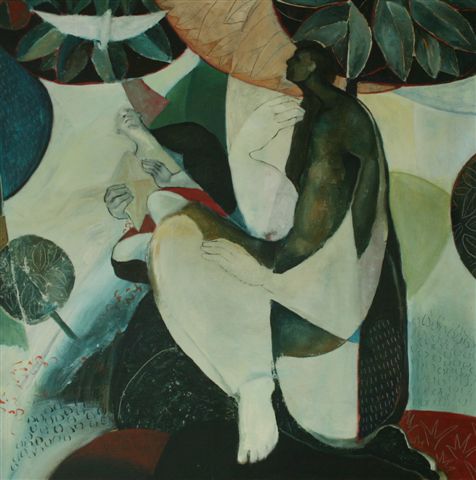
From the archive: 'Angels At The Well.'

From the archive: ‘Angels At The Well.’

Paul used to tell the acting students at the conservatory that they should never underestimate their power to impact another person’s life. In other words, their work – how they brought themselves to the stage – mattered. Simply by doing their work they had the capacity to open a mind or challenge a story. The caveat, of course, was that, in all likelihood, they would never know the impact that they had.

His lesson applies as much or more in daily life as it does on the stage. What if we lived as if we understood our power to impact others? What if we recognized that the small stuff matters? What if we didn’t need to know – but simply brought ourselves to our days knowing that our actions and attitudes mattered?

Sitting outside at a Starbucks in Wesley Chapel, Florida, a young woman Skyped into a bridal shower happening in Pennsylvania. It was her bridal shower and, because she was starting a new job, she couldn’t get the time off to fly home. So, via Skype, she checked in on the party and giggled at the celebration. Kerri and I sat at the next table listening to the conversation, the love and festivities. I watched as Kerri, stricken with the grief of her mother’s passing, change. Her heart lightened. It changed her focus. The young woman, with no knowledge, eased Kerri’s grief. Kerri ran into the store and bought the woman a gift card. “Congratulations on your wedding,” she said as she gave the card to the young woman.

In coffee-desperation we pulled off the highway in Salem, Illinois. We bumbled into the M&M Coffeehouse on Main Street. Mike, the owner is a master chef. He told us the story of love that brought him to Salem, the story of his love for making food and how he became proprietor of a coffeehouse, the story of how the community was embracing his gift and returning the love; the coffeehouse was now also a catering business. He was teaching cooking classes and volunteering his time to the monthly Elks club hamburger dinner fundraiser. The Elks were raising tons of funds since he started making the meals. “You never know where life is going to take you,” he smiled. Mike never knew the gift he gave us; he was simply being chatty with strangers. We needed a good dose of hope and encouragement to carry us the final 6 hours of our long drive home. He filled our hope-tank to the top.

Whether we know it our not, it matters. Always.


Make It So

Pasta. Meat sauce. Warm Bread. Wine.

Pasta. Arugula salad. Wine.

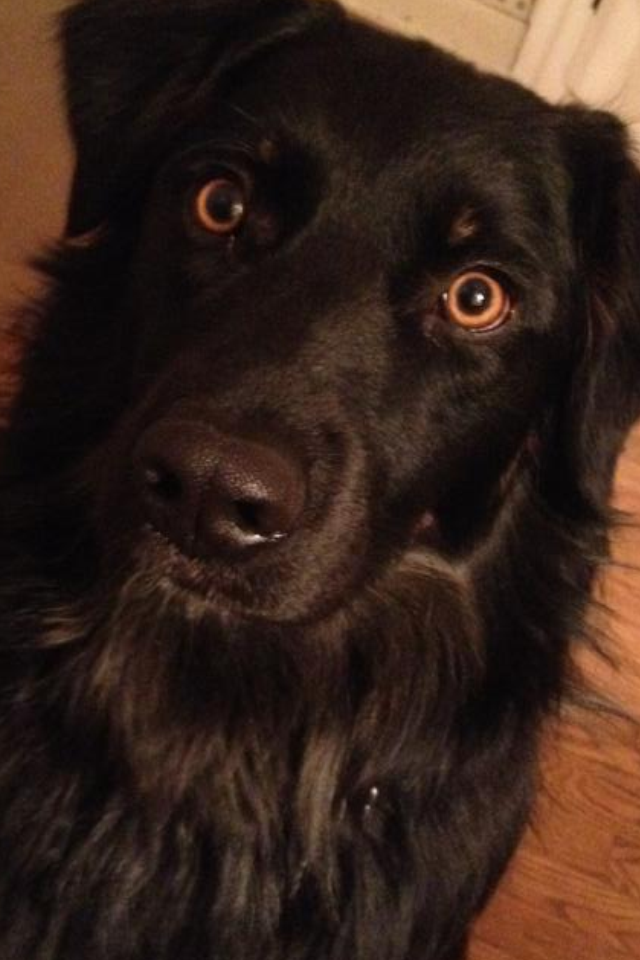
Tripper Dog-Dog-Dog knows the world through his nose. He sniffs everything. It is not uncommon after we finish a meal to come face-to-muzzle with a scent-curious Dog-Dog. Lately, as the objects of his sniffer, we’re given to staring into his amber eyes and offering the menu, saying something like, “Pasta. Arugula salad. Red wine,” or “English muffin. Peanut butter with black cherry jam. Banana. Coffee.” Satisfied with our description, he moves on to the next smell-enticing investigation.

I delight in our Dog-Dog food reports. They’ve become commonplace and matter of fact; “Chocolate chip cookie. Espresso.” Our reports never contain qualifiers, so, for instance, we never say, “A great chocolate chip cookie. Delicious espresso.” We provide the minimum, the noun.

Our Dog-Dog reports have rekindled an age-old fascination of mine: the power of words, specifically, the enormous power of the labels we attach to our experiences.

Language is a sword that cuts both ways. It can liberate and it can imprison. The difference is in how it is used. Language is the primary tool we use to make meaning. Big magic happens the day a person realizes that meaning is not something that is found, rather, it is something that is given and it is given the moment we apply a word-label to an experience. Nothing is good/bad, hard/easy until our label makes it so.

Applying a label to an experience is an act of creation. It is not passive. Take note of the word-judgments you apply to yourself or to others. For a week make a game of flipping them over and applying the label “beautiful” to where you usually apply a judgment. So, for instance, instead of, “I am fat,” why not say to your self, “I am beautiful.” Both are labels. One imprisons while the other liberates. The difference is a single word.

The label determines the possibilities we see (or don’t see). In a past life I used to facilitate organizational change and I came understand that my role was to help my clients ask better questions (use different language). They always came to the table with a “how” question: how do we change without feeling any discomfort? Response: what might you see if you stopped pre-labeling what you might feel as “discomfort?”

The mantra: have the experience first, make meaning second. And then, recognize the great capacity and opportunity you have to make meaning. Why not make a better meaning? Why not take a step and let it be a step merely?

Try this: do the Dog-Dog and, for one week, eliminate the qualifiers so that nothing is good or bad or right or wrong. It just is because you choose to make it so.

Look To Each Other

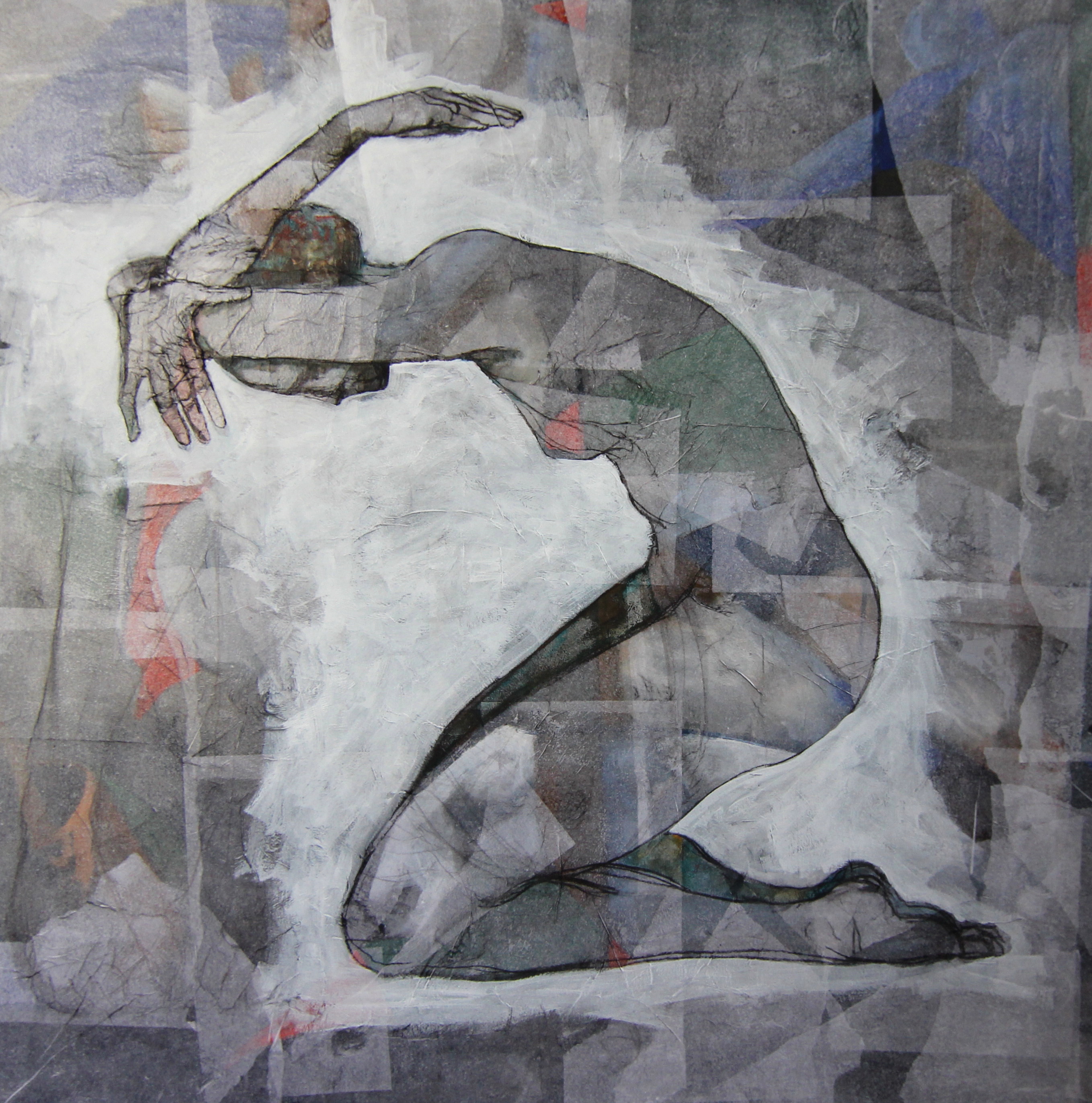
my latest work-in-progress

my latest work-in-progress

Josh laughed from the back seat of the car. He read aloud the text that made him laugh: I’m in MoMA (the museum of modern art) and someone dropped a glove. Now, people are walking around it because they don’t know whether it is art or not!

I’ve spent a goodly amount of my time on the planet in museums of contemporary art and know that most folks passing through the museum have the same confusion about the pieces on the walls. What makes something art and something else not-art?

Almost a century ago Marcel Duchamp entered a urinal in an exhibition and gave it the title, “Fountain.” At the time it was scandalous and now represents a major milestone in art history. Today, a urinal in a museum exhibition would get the same treatment as the glove on the floor: confused consideration. Is it or is it not art? The beauty of the glove moment, the thing that binds it to the urinal moment, is that, in both cases, the gallery goers looked to others, perfect strangers, to ascertain a proper response: it is art if they say it is. Art, in this case, is an agreement.

This agreement, looking for approval about how to behave when confronted with the art-or-not-art question may seem superficial until you consider that recently people in Paris lost their lives over a disagreement of what was art and what was not. In recent history (2001), the Taliban destroyed centuries old giant statues of the Buddha in the Bamiyan Valley. They considered the statues idols (not art) and dynamited them off of the face of the earth (I will leave you to discover and ponder the irony between my Paris and Bamiyan Valley examples).

the words written into my work-in-progress

a close-up: the words written into my work-in-progress

Art is meant to open our perspective, to make us question, to help us see. A society that is capable of seeing is also a society that is capable of questioning; they go hand-in-hand. Questioning is always present when people are growing – so is art. Questioning also begets tolerance – it requires us to doubt our perspective and consider the view from someone else’s shoes. In these times when I hear someone bemoan the end of civility and the horrors in the world, I wonder if they’ve argued to cut art from the schools or  recently attended a concert to hear music to move their soul. Art is dangerous to leaders who like their people blind. Art is offensive to people who want their community thought-less. I delighted that somewhere in the world, in a museum of modern art, a group of people walked around a lost glove and looked to each other for guidance.

title_pageGo here to buy hard copies (and Kindle) of my latest book: The Seer: The Mind of the Entrepreneur, Artist, Visionary, Innovator, Seeker, Learner, Leader, Creator,…You.

For all manner of digital SEER copies, go here

Yoga.ForwardFoldFor posters and prints of my paintings, go here.

Learn To Swim

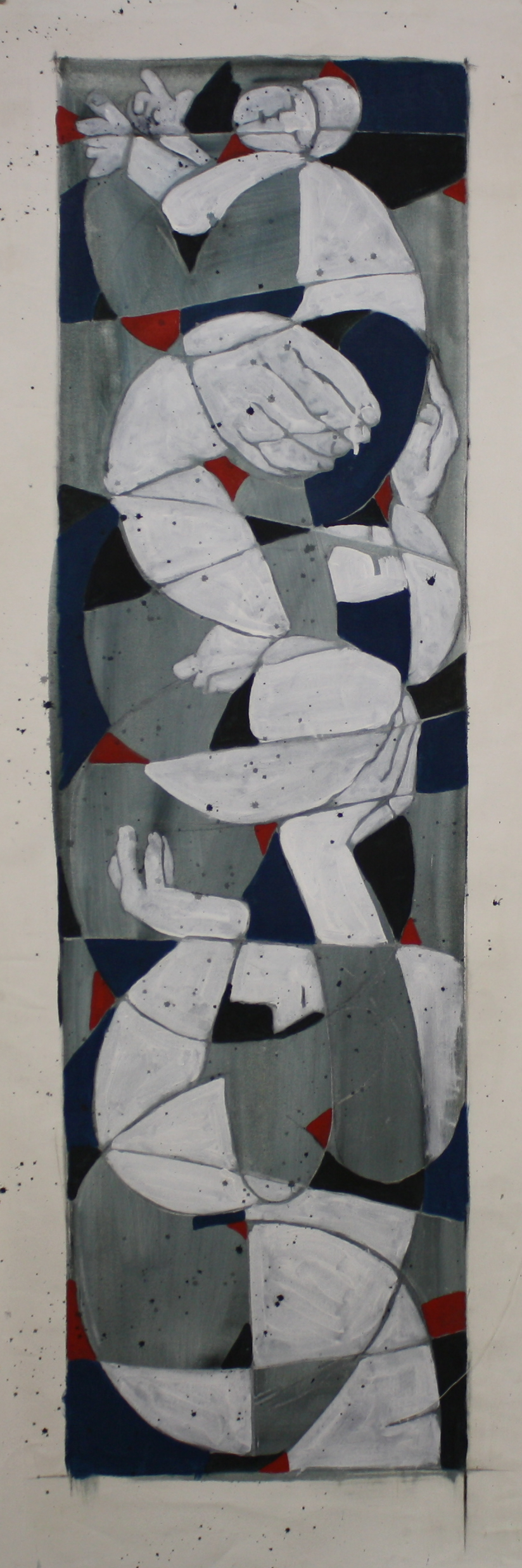
from my children's book on how to play, PLAY 2 PLAY

from my children’s book on how to play, PLAY 2 PLAY

Hoodie tells me that he is sarcastic by nature but I don’t believe it. I’ve spent a lot of time in nature and I find no sarcasm there. I also understand much about human nature and know that sarcasm is not a native plant; it is invasive. It is introduced into fertile, unknowing soil.

Sarcasm is the tool of the drowning man. It is an act of desperation to push others under the water in order to elevate the self. I’ve walked many paths and worked with many powerful and not-so-powerful people. There is a rule on the stage that applies: the king never needs to act powerful because the king is powerful. Those who need to demonstrate power have none. As Quinn used to tell me, if someone has to tell you that they’re important, they really aren’t. Sarcasm is a form of importance-telling. Powerful people create power with others. Power is a creative act. It is a communal act. They have no need to diminish or reduce others because they recognize that reduction also reduces. People who must reduce others are not powerful; they’ve confused control with power. They want to be king. They want to be seen as king. But, they do not believe they are king. Sarcasm is a form of perception control.

No one is by nature sarcastic. Sarcasm is learned in batting cages, at dinner tables, and on the field of play. Sarcasm is a mask. It is a place to hide smallness. It is passed down generationally. Masks both conceal and reveal and while it might feel good to pull others under the waves, it also reveals a non-swimmer. It is habit. It is learned.

Hoodie is not by nature sarcastic. Hoodie is a swimmer. He has the stuff of kings. He also tells me that his nature is to give comfort, to help others. He will one day realize, after he transcends his habit of drowning, that his nature to lift others is the center of his power place. Sarcasm separates him, reduces him, as do all forms of self-diminishment/control. Sarcasm is a lonely planet. Power is always a movement toward others. It is generative, as is all of nature.

title_pageGo here to buy hard copies (and Kindle) of my latest book: The Seer: The Mind of the Entrepreneur, Artist, Visionary, Innovator, Seeker, Learner, Leader, Creator,…You.

Go here to support my kickstarter campaign for The Lost BoyDSC_1196 copy


Choose Your Label

title_pageThe second recognition in The Seer is that your language matters. It is a curiosity to me that of the nine recognitions in the book, this recognition is the one that causes the most conversation and generates the most questions. My latest theory is the notion that the moment we tack a word onto an experience we are defining the experience; we are making a choice. Owning that we have the power to define our experiences through the way we think and talk about them means taking responsibility for our lives. Ownership of your happiness and power and thought might seem overwhelming or, as someone once said to me, “That’s pie in the sky!”

As the storyteller of your life, the language you use to tell your story matters. Try this exercise for a single day: express gratitude for everything – even if you don’t feel gratitude. Tell yourself in the middle of the traffic jam that you are grateful for the jam. And, if you are really bold and brave, take the next step and assign a reason for your gratitude: the traffic is slowing you down so you can breathe a bit amidst an otherwise hectic day. Express gratitude for everything: the meeting you will attend, waiting in the doctors office, the dishes you wash. By the end of the day, if you have been diligent in telling the story of gratitude, you might just feel it. You will certainly have no more doubt that you live life labeling your experiences. It is only a short hop from knowing you have the power to label your life to choosing the label.

Go here to buy hard copies (and Kindle) of my latest book: The Seer: The Mind of the Entrepreneur, Artist, Visionary, Innovator, Seeker, Learner, Leader, Creator,…You.

Go here for all digital forms of The Seer.

And, for fine art prints of my paintings, go hereYoga.Meditation

Ask Them To Be Kind

A black cloud moving in.

A black cloud moving in.

While driving across South Dakota, the darkest cloud I’ve ever seen rolled across the sky and consumed the light. The cloud was dense and black. It was heavy, its belly hung over the car and seemed to press us to the earth. It seemed more than cloud. It was ominous, a presence.

When we started the day we’d intended to drive through the Badlands but a prodigious rain had slowed our progress. We saw the rains marching toward us across the open land. It was both beautiful and daunting and hit us with a wave of authority. This storm meant business. We crawled through Wyoming with other back road drivers, watching the barely visible white lines to keep on the road. Motorcyclists pulled off the road and stood next to their bikes; there was no shelter to be found.

Although we lost a few hours to the storm we thought we might still make it through the Badlands before nightfall. And then the black cloud appeared and ate the last light of the day. Once many years ago I did a night dive through the wreck of a sunken ship. In the dark of night, deep in the ocean, while swimming through the bowels of the ship, it’s decks between me and the surface, I felt as if I couldn’t breathe. This blackest of clouds enveloped us like the ocean at night and I felt that same sense of pressing suffocation.

The gods of nature are not to be ignored. Once, I sat with a Balinese man who told me that, according to their belief, it was with the dark forces of nature that people need alliance. There is no hell in their paradigm so dark and evil are not bedfellows. There are forces: creation and destruction in an eternal cycle of rejuvenation. Their rituals are about making peace with the black clouds, the gods of lightning and rain. “The forces of light are already with us,” he said. “We ask the dark forces to be kind.”

Looking through the windshield at the ominous pressing cloud I whispered, “Be kind.” It was. It let us go. We heeded the warnings and left the Badlands for another day. Later that night, sipping wine from plastic hotel cups, safe in our room, we sighed and laughed at how utterly small we felt on the open plain amidst the power of the storms. With that smallness came the gift of alertness. We were fully awake, alive with moment, stripped of the illusion that humans have dominion over anything. We savored our moment, temporary, passing, and perfect.

title_pageGo here for my latest book, The Seer.

Or here for all digital downloads of The Seer.


And, here you will find fine art prints of my paintings

Canopy by David Robinson

Canopy by David Robinson

Revisit And Revise

Pidgeon Pier (Alan and David on the Sound) by David Robinson

I used this painting as the cover image for The Ground Truth. I call this painting Pigeon Pier.

With the success of my book, The Seer, I’ve been revisiting some previous manuscripts and ebooks. I have a lot of them, mostly unpublished and unseen. One of my favorites, and one that I am considering revising and releasing, is called the Ground Truth. The ground truth is a military term and denotes the difference between the truth as seen by the generals in the war room (an abstraction) and those actually doing the fighting on the ground (actuality). I gave the book the subtitle: Six Dynamic Relationships That Will Change Your Life. Marketing claims are usually brazen. The book is really about how to orient to personal truth.

As I’ve been revisiting the book, I’ve also been revisiting several of the concepts in it. One concept that has been much on my mind lately is the Hero and the Anti Hero. Here’s an excerpt from The Ground Truth defining the concept:

In a small notebook with a red cover I found a drawing. The image is horizontal on the page. On the far left I wrote the word “Hero” and scribbled a circle around it. On the far right I wrote, “Anti-Hero” and also scribbled a circle around it. The circle with the Hero and the other with the Anti-Hero are connected with a line. The drawing looks like a cartoon barbell. I must have been explaining this to someone; I can tell by how emphatically I scribbled the circles.

The Hero and The Anti Hero was a revelation that Harald shared with me a few years ago. Harald’s first language is German so he used the term Anti-Hero instead of villain or devil or “big dog yapping in my brain.” I like Anti-Hero because it is actually more appropriate than any term I might have used.

He told me that he’d spent much of his life trying to rid himself of his inner Anti-Hero. It had consumed much of his life, this powerful inner voice of self-criticism and judgment. It plagued him and the more he resisted the Anti-Hero the stronger it became. One day, exhausted by his inner turmoil he had an epiphany. He realized that the way to rid himself of this Anti-Hero was to stop expecting to be a Hero. In fact, his expectation of being a savior, being perfect, being everything to everybody was the very thing that fueled the Anti-Hero. Letting go of the Hero dissipated the power of the Anti-Hero and what was left was…human. Beautiful, flawed, funny and messy, Harald was a human no longer at war with himself.

Internal warfare causes split intentions, split intentions create internal warfare. It’s a feedback loop. As Harald discovered, trying to be the Hero in the eyes of everyone else split him into two pieces: the unreal expectation (Hero) and an ever-vigilant judge (Anti-Hero). Harald was attempting to control what he could not control: the expectations and responses of other people. His happiness was contingent upon the responses of others so he was constantly measuring his worth against others responses: The actor (Hero) and the measurer (Anti-Hero). The internal warfare was inevitable.

In the next few days I’ll write more on The Hero and the Anti Hero, and what a few years and new eyes have brought.

title_pageGo here for my latest book

Yoga Series 7Go here for fine art prints of my paintings

Unlearn And Step

Helping Hands.

Helping Hands.

I revisited an old journal this morning. I’ve been thinking much about power these past few days and I have a mountain of writing about power. This blog began as an exploration of personal power, the creation of power (power-with), confusing control with power (power-over), grasping power (fulfilling potential) or vampiring (drinking power from others).

Lately, I’ve been thinking that the question “how?” is a form of learned powerlessness. Most people (adults) are reticent to do something until they know how to do it. That’s backwards; no one knows how to do anything until they actually do it. Doing is a prerequisite of knowing how. As a coach I often hear the fear beneath the phrase, “But, I don’t know how…” Needing to know “how” stops all motion.

Children do not have this problem. The firewall-from-life called “how” is learned. Or, more accurately, it is installed. For instance, the other day when Craig and I walked passed the batting cages, he said, “Those things make me shudder. I totally, I have PTSD from those.” He was joking in the way that means, “I’m not joking.”  Shame is a lousy teacher. So is bullying. The message: there is a right way to do it and you better know the right way before you swing. Or else. Shame is a powerful action inhibitor. It is the tool of the powerless teacher. It develops in the student the necessity of knowing “how” prior to taking action. No one willingly steps toward shame or a bully.

The question, “How?” often functions as a form of premature cognitive commitment. It is how elephants are held captive by the weakest of strings. As infants, a strong chain is attached to one of the elephant’s legs and the other end of the chain is secured to a strong tree or stake in the ground. The young elephants pull and pull until they learn that pulling does no good. They stop testing the chain. They make a premature cognitive commitment to their restraint. They will never pull again. A simple string is all that is required to contain the elephant once it believes it has no power. The question, “How?” works just like the elephant’s premature cognitive commitment. Needing to know “how” before taking the step is a commitment to non-action. It is a belief in powerlessness.

On the other hand, to step without needing to know “how” is the equivalent of pulling on the chain. Pull, and see what happens. Transcending “how” is an act of power reclamation. The ability to step without knowing how is central to all vital artistic and, as it turns out, scientific, processes. Discovery precedes the necessity of “How?”

Go here to get my latest book, The Seer: The Mind of the Entrepreneur, Artist, Visionary, title_pageSeeker, Learner, Leader, Creator…You.

Or, go here for hard copies.

For fine art prints of my work, go here.

Locate Your Self

title_pageHere’s a short excerpt from my book, The Seer, dealing with the dance between investments, limitations, and the roles we play in life. This conversation is a kind of coaching session and is happening via online chat:

Me:…All week I’ve asked myself, “why?” Why the dramatic shift in experience from role to role? I’m a bit shocked to realize that I play many, many roles each day. In each role I want something and what I want is different depending upon the people I am with. I realized that my roles are not about me in isolation – and what do I mean by that? I mean that I define my role by how I define the relationship I am in at the moment. For instance, in my workshop, I assumed the role of “guide” and I wanted to lead the young people to some new insights that might help them create their businesses. In my conversation with my parents, in the role of “son,” I wanted them to be pleased with my work. I wanted to share and I wanted their approval. So, my role is defined by relationship and in each different relationship I tell a specific story based on what I want or need. I’ve “cast” myself in these little mini-stories. Or to use your term, “role” is the way I “locate” myself in the story.

Virgil: And how does this knowledge help you with your questions about business?

Me: The first thing that occurs to me is that I have the capacity to locate myself in a different way if I don’t like the role I’m playing. I can change how I locate myself. Also, there is a dance with the words “limitation” and “investment.” I took notes all week and realized that I was using the verb “to invest” over and over again to describe my experience of different roles. So, for instance, during my dinner with my friend Bruce I invested in helping him. I wanted Bruce to know that I cared about his challenges. Then, I watched Bruce invest in being the wine expert. It was his way of caring for me and demonstrating his expertise. I began to see my investments as keys to discerning my limitations. In some roles I’ve invested in the idea that I can’t do something or that I’m not good at something. In some roles I diminish myself; my limitations are investments in being small.

Virgil: Just a caution: as you explore further the dance between investment and limitation, remember to practice suspending your judgment. Remember: you are having experiences first so you can see how you make meaning and begin to choose how you make meaning.

Me: Thank you. It’s a good reminder. I was beating myself up every time I     realized I was investing in being small.

Virgil: We tell ourselves stories. We locate ourselves within the stories. In fact, that is the next recognition: you locate yourself within your story. We do it physically (like your description of choosing the table in the restaurant); we do it through the roles we assume – specifically our assumptions of how we need to play our roles, what is ours to do, etc. Locating is simply a way of establishing comfort. We sort to the known. If you judge how you locate yourself, you miss the opportunity to change how you locate yourself.

Me: Right. Judgment blinds me to the choices I am making.

Virgil: Judgment is always a version of the “things are happening to me” story. In fact, judgment is a way of locating: it is the warning signal when we step too close to discomfort. When I judge myself and say, “I’m an idiot,” I’m actually locating myself, pulling myself back into my comfort zone. When I judge others, “They are idiots,” I’m locating myself in a higher status position. The action of diminishing “them” elevates me back into a comfortable status position. Thus, suspending your judgments removes the easy step back to comfort and allows you to stand in “not knowing” and see what is there beyond what you think is there.

Go here to get my latest book, The Seer: The Mind of the Entrepreneur, Artist, Visionary, Seeker, Learner, Leader, Creator…You.

Or, go here for hard copies.

Choose Your Path

A watercolor I call, "House On Fire." It's an unusual piece for me...

A watercolor I call, “House On Fire.” It’s an unusual piece for me…

I am still unpacking from my move. My sketchbooks and journals have been bound in plastic wrap since I hauled them across the country and then brought them into the house from the Budget truck in October. I cut the wrap this morning because I was looking for a sketch to give as a gift and during my hunt I found an old work journal. It was a gold mine!

I’m preparing to facilitate a workshop on The Art of Team and the notes I found were from a team I worked with a few years ago. This organization had a history of abusive leadership. There was a serious lack of trust within the group. It was a classic case of “everyone else is to blame and nothing is my fault.” Everything was territory that needed to be guarded and protected, especially personal value. Their individual worth as human beings was always in question.

Here are notes from our world-class conversation. This is what the team discovered as it waded into the swamp of its dysfunction:

The path of power splits, there is a fork in the road of power:

One path leads to the creation of power with others.

The other path leads to power over others; a path of taking from others.

The fork is defined by where each individual seeks their worth:

Seeking your worth based on others responses will take you down the path of needing power over others.

Finding your worth within yourself will open your way to creating power with others.

Here’s the point: it is impossible to change the group dynamic and create a cohesive team until you change yourself. Every dysfunction in a team can be traced back to this root.

In this sense, people never have problems, they have patterns (This is the first recognition from my book, The Seer):

Seeking your worth from others is a pattern.

Finding your worth within yourself is a pattern.

Seeking your worth from others patterns you to orient according to what you get from others.

Finding your worth within yourself patterns you to orient according to what you bring to others.

If you desire a functional team, cease seeking to solve your problem (seeking your worth in others eyes) and begin establishing a new pattern (find your worth within yourself).

Go here to get my latest book, The Seer: The Mind of the Entrepreneur, Artist, Visionary, title_pageSeeker, Learner, Leader, Creator…You.

Or, go here for hard copies.