Fail At The Box [on Merely A Thought Monday]

Among Don Miguel Ruiz’s Four Agreements is this gem: do the best that you can.

Through the lens of the Occident, those folks on earth oriented to the idea that their nature is bad and needs taming, the Agreement is a statement of self-forgiveness. Do the best that you can. It’s a good bit of advice when everything on earth seems to come with a measuring stick.

Don Miguel is Toltec so his Four Agreements are rooted in an entirely different understanding of nature. To do the best that you can has little to do with performance or achievement. There’s no judge sitting on the high bench scrutinizing goodness or badness. There’s no book with black marks next to your name. This Agreement is about setting an intention. The other Agreements are about speaking with impeccability, making no assumptions, taking nothing personally. In other words, it’s never about you; you can’t possibly know the reasons why; your words matter. So, do the best that you can.

Circumstances are uncontrollable. Sometimes people are mean. Sometimes the tornado comes through and blows your house away. It’s not personal. You probably can’t do anything to change the tornado and even less to change other people. So, change yourself. Or, better, be yourself. Attend to your story and free yourself from the illusion of living under grand judgment or any of a number of other control fantasies. Do the best that you can.

Lately, I’m pondering the too-tight-image-boxes we squeeze into and try, but can never quite, fulfill. The impossible image; a too tight expectation. The Pleaser. The One Who Knows What Is Right. The Peacekeeper. The Strong One. A step away from the box-expectation, the-role-I-think-I-must-fulfill, is a giant leap into happiness. Inside the box it is virtually impossible to do the best that you can. Boxes are alive with assumptions (what I must do, who I must be); buzzing hives of judgment, and, when in a box, speaking truth is frowned upon, so editing and/or silence rules the day. Just try doing your best when living in a too tight box!

Fear and anger fill boxes. That is, after all, the purpose of the box, the fruit of the impossible mission.

Here’s my advice to myself: fail at the box. Cut it up and put it into the recycle bin. Then, free of the too-tight judgments, it’s possible to set mistake-free intentions. Life as finger painting: do the best that you can.

read Kerri’s blogpost about SOME DAYS

Do What They Do [on DR Thursday]

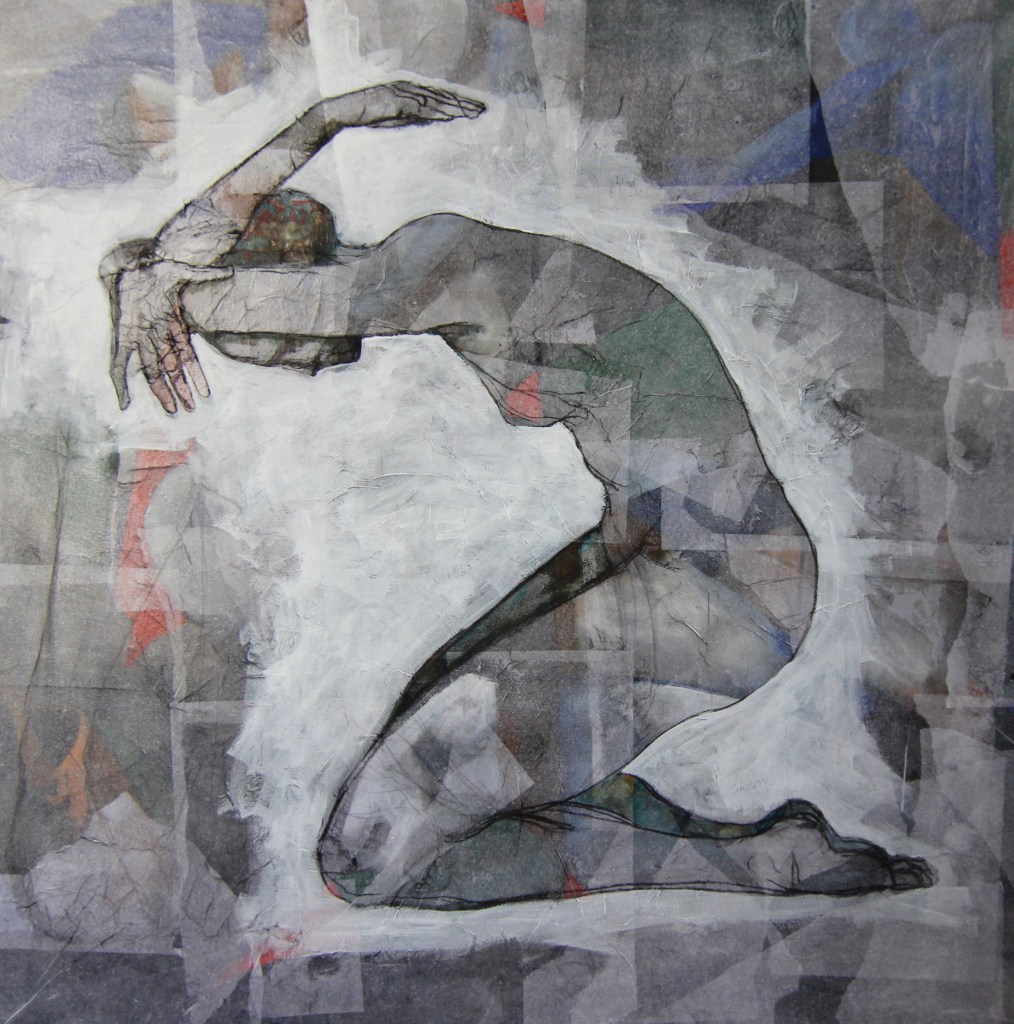
I’ve posted this painting more than any other in my stacks.

Some paintings serve as markers for new directions. This painting is one of those. What came before this painting was suddenly old. What came after was an exciting unknown path. Exploration and play. Big mistakes and messes followed by understanding. Materials can only be pushed so far. Bodies and shapes reveling in negative and positive space.

When I met Kerri, this painting did not have a name. I called it #7 in my yoga series. She called it “Iconic” and the name stuck. I liked the name. It seemed appropriate. An icon is a symbol. Something worthy of veneration.

Now, over ten years later, this icon, once the harbinger of the new, serves as the hallmark of what was.

I delight in this painting, Iconic. It is one of the few. And, although I am grateful for where it led me, I’ve come to realize that it no longer serves to locate me, except in a past chapter, like a yearbook photo.

Letting go. It is why I stand in my studio – I can’t even sit there of late – and look at the mess on canvas that sits untouched on my easel these many months. Somewhere, after this mishmash phase, somewhere, beyond the chaos and disorder and wiping away, there will emerge another marker. An icon. A compass.

Although I’ve written it many times in these past few months, it’s way past time that I admit – to myself – that I am, once again, in the wilderness. Someone once told me that we go to the wilderness to face our demons and find our gods. That seems a bit dramatic. Demons and gods are one and the same, like positive and negative space or comedy and tragedy. The lesson is always the same: stop taking yourself so seriously and the oppositions, the demons and gods, will stop pulling you apart.

Find a child and watch them play with paint. Do that. Do what they do. The wilderness is rich in sustenance if you know where to look.

Someday, in the midst of being lost, I’ll make an accidental mark that jolts me. I’ll turn it around, asking, “What’s this?” A new direction will emerge.

Read Kerri’s blog post about ICONIC

iconic ©️ 2010 david robinson

Enjoy Your Ride [on Merely A Thought Monday]

loop copy


Navigating a transit system can be confusing. The skill is knowing where you are relative to the end-of-the-line and which end-of-the-line is the direction you wish to travel. It’s a process of orienting. Here I am now. There is where I want to be. Inevitably, learning the system comes from of getting on the wrong train a few times.

It turns out that navigating life requires the same skill. Knowing where you are relative to where you want to be. Getting lost, getting on the wrong train is a necessary part of the process. Who hasn’t looked out their window and thought, “This isn’t where I wanted to go.” Or, “I’m not doing with my life what I wanted to do.” The real challenge, so I’ve  been told, is not in the knowing of where you want to go but in being honest enough with yourself to recognize where you are now.

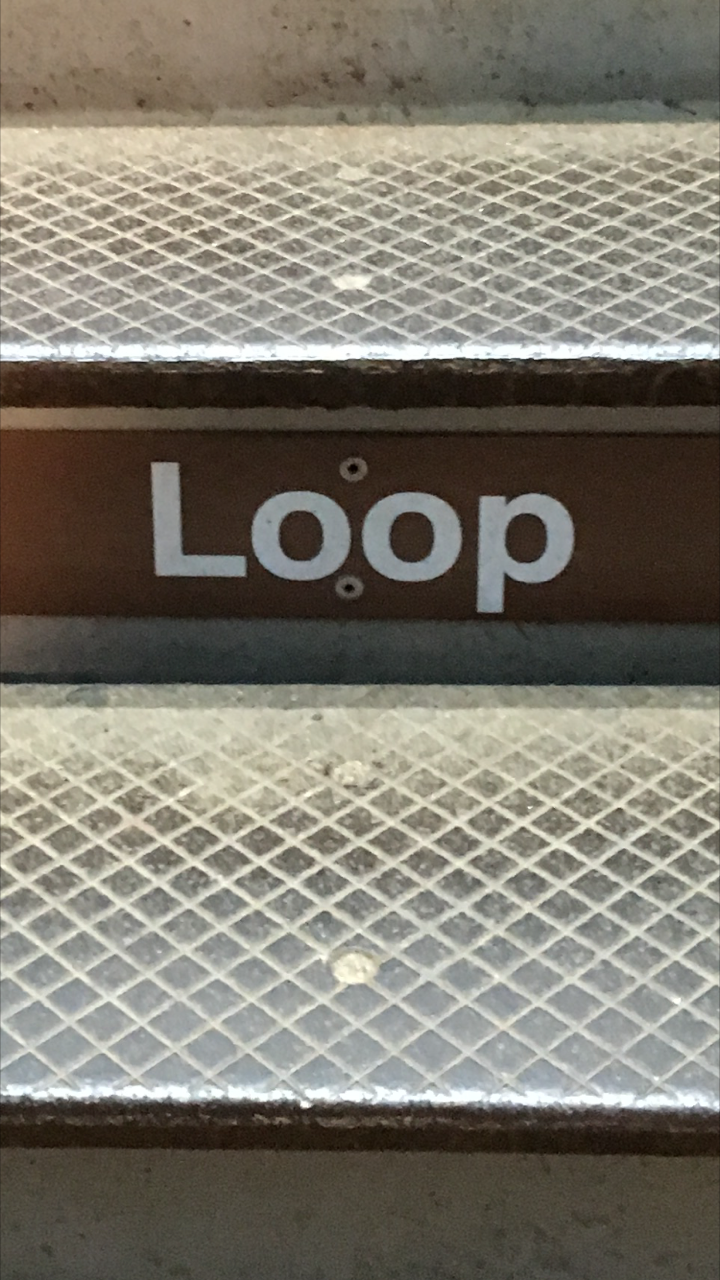
Recently, climbing the stairs to catch a train in Chicago, we saw this helpful guide. Loop. This train will take you to the downtown loop. I laughed. Transit-Life-Lesson #2: whether you recognize it our not, learning lessons in life happens in loops and not lines. They call them “life lessons” because they come back around again and again and again…. There is no wrong direction in a loop. So, I suppose, whether you know where you are going or not, it’s best to enjoy your ride. Your unique life lesson will most certainly come back around.

Of course, in any case, in every case, asking for help is always…helpful. So, if you don’t mind, please tell me again, where am I?


read Kerri’s blog post about LOOP


roger's park feet website box copy 2


Sit Down

google "Chicken Little" and this one will come up. www.homesforsaleinlascruces.com

Google “Chicken Little” and this one will come up. http://www.homesforsaleinlascruces.com

Many years ago I was feeling disoriented in my life. I told my friend Rob that I was lost in the woods and looking for my way out. He replied, “Sometimes when you are lost in the woods the best thing to do is nothing. Just sit down.” His message was clear: no one gets oriented or reoriented by spinning. Running in circles, although it might feel useful, will only make you dizzy. Sit down. Get quiet. Listen. It was great advice and at the time nearly impossible.

Orientation to life comes from getting quiet. In one of his books, Deepak Chopra wrote that an important practice on the path to success is a half hour of meditation in the morning and another half hour at the end of the day. Make a practice of getting quiet. Exercise the muscle of stillness. Listen. Clarity will ensue. That way, when the inner compass goes awry, the right tool for the job will be more readily available.

Sitting down can be hard. Stillness and disorientation are not natural bedfellows. The impulse is to action, any action. I was once in a car on a remote mountain dirt road. The road collapsed and the car slowly rolled into a gully. My friend and I spent two days trying unsuccessfully to build a road out. It was only after we gave up and sat down that we were capable of thinking things through. Disorientation generally inspires panic. Panic-driven actions, like running in circles or hauling stones to build a road, are generally comical and make for great stories after orientation is restored. We’ve all turned the wrong way down a one-way street when lost and panicked. Pulling over would have been better but much harder to do when dedicated to forcing an outcome.

Beneath Rob’s message to me was a more important lesson: let go. Let go of the need to do. Let go of the need to solve, fix, or find. The path to orientation always leads through a necessary disorientation and the disorientation comes from hanging on to old ideas, old roles, old baggage, old heroics. The cycle is perfect as hanging on necessitates letting go and letting go often means to sit down, surrender, and breathe. To sit down always affords the opportunity to see where you are as distinct from where you think you should be. To surrender is to open. To breathe is to invite in the new. No one is lost when they stop trying to be some other place.

title_pageGo here to buy hard copies (and Kindle) of my latest book: The Seer: The Mind of the Entrepreneur, Artist, Visionary, Innovator, Seeker, Learner, Leader, Creator,…You.

Go here to support my kickstarter campaign for The DSC_1196 copyLost Boy project

Return To Your Self

DSC_1914

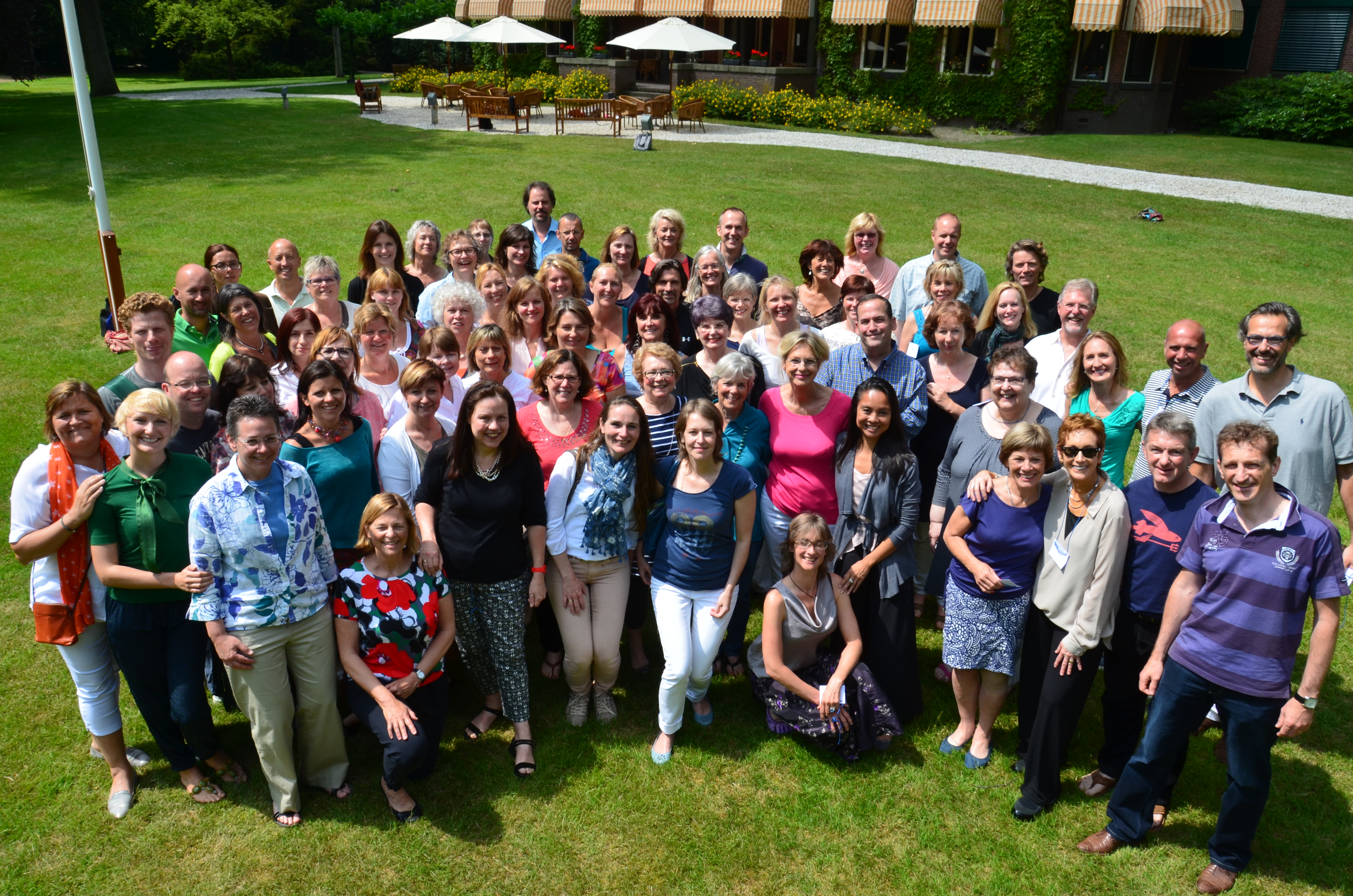
The 2014 Transformational Presence Global Summit in Vught, Holland

While in Holland I led a group through a segment of an exercise called The Dream Police. I created the exercise years ago with John Langs and Lisa Paulson – two master teachers and performing artists – while doing some work with young actors at PCPA Theatrefest. The original exercise is deeply rooted in ritual and communal transformation. The group in Holland was engaged in a more personal exploration so I only led them through the first part of the exercise.

It is surprisingly potent and I’ve learned to use it carefully. The first part of the exercise sounds simple but can be explosive: Write for 5 minutes as if, in 5 minutes, your memory will be wiped clean. All that you will know of your life, of your values, your relationships, your dreams, your identity… will be what you capture in those few moments of writing. After the writing, in a ritual act, the scribbles on the paper are left behind. Most often, people destroy the paper. They shred it. The writing is lost. The question becomes, “Who are you without your story?” It is intended to disorient so the participants might reorient to the essentials of their lives; it is a great exercise for cleaning the gunk. It can be freeing. It can be terrifying. It is always illuminating.

The reorientation process is impossible to do alone. Reorientation is communal. Until Holland I’d never left a group midway, I’d never let the exercise stop in the middle of the disorientation and had always before made sure the reorientation process was at least initiated. IN Holland, the exercise was interrupted. The disoriented community fragmented. Some left the exercise feeling liberated. Others were angry. Some were confused or frightened. All left by themselves. Disorientation makes lonely introverts of us all. Disorientation is an individual sport.

The ritual of coming back to yourself is always a ritual of returning to the community. Clarity is a boon that requires sharing with others. To come back to yourself is to come back to relationship. No one walks this earth alone. No one is capable of saying “This is me,” without the presence and assistance of others. The process can be volcanic. It can be quiet and intense. It always requires another question: “Will you tell me what you see?”

24 hours later we completed the exercise. The individuals returned. They gathered, reoriented and a new form of the community was born. I knew all was well when the newly reformed community asked, “What do we do now?” and the only available answer was, “We don’t know – but let’s find out together.”

Go here to get my latest book, The Seer: The Mind of the Entrepreneur, Artist, Visionary, title_pageSeeker, Learner, Leader, Creator…You.

Or, go here for hard copies.