Stroll With Alexander [David’s blog on DR Thursday]

20 knew we needed a get-away. He suggested a stroll through Milwaukee’s Third Ward. Knowing it was our favorite, he offered to treat us to a bowl of gumbo and a glass of wine at The Public Market. It was a successful temptation. We chose a beautiful day and drove into the city.

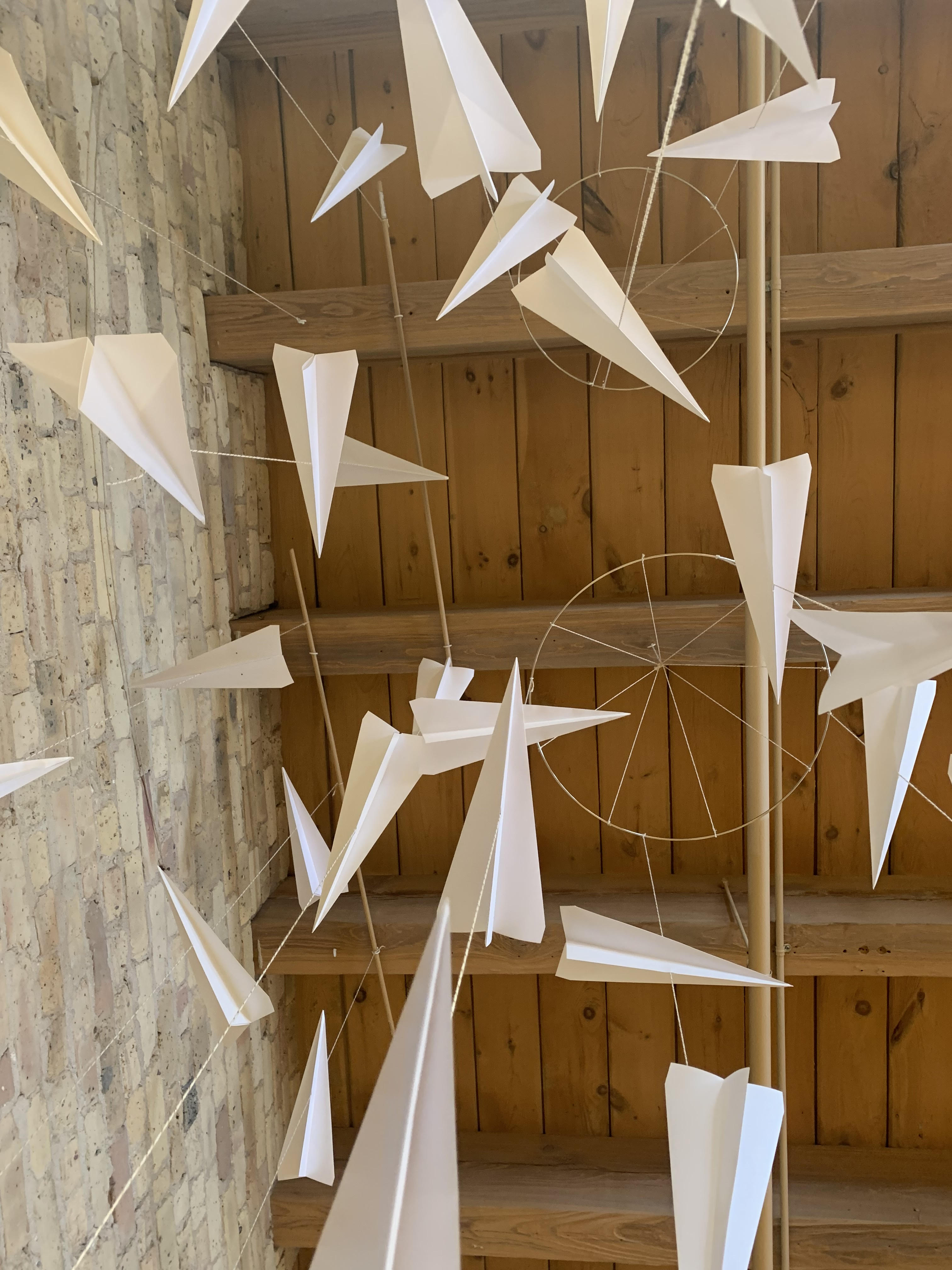
Among the many gifts that day as we strolled in and out of shops was the very present spirit of Alexander Calder. Almost every shop we entered featured a mobile or some variation of sculpture suspended from the ceiling. Paper planes, vibrant lemons in tidy lines like a Sunny-Roman-legion on parade, colorful shapes and orbs delicately balanced and dancing in the air, casting shadows. All paying homage to the art work of Calder. My bet is that few of the shopkeepers knew the origin, the ancestry of their twirling displays.

Calder’s mobiles were radical when he made them. He changed our understanding of sculpture and opened a new world of possibilities. Nearly 50 years after his death, his innovation is commonplace. Incorporation into the norm is the hallmark of profound innovation. Computers are ubiquitous but when they first hit the scene they were revolutionary. Electric light, the telephone, automobiles, televisions, cameras, elevators, air conditioning…They change us. They change our expectation.

So, too, the work of artists. The Impressionists shocked and appalled their contemporaries when they initially showed their paintings. They did not know that they were Impressionists. They were reacting to the latest innovation-of-their-day known as the camera – a device that could easily record reality, important events, make portraits of royals… the job of painters – so they either had to explore new avenues of painting or become irrelevant. To our eyes, 150 years later, their work is anything but progressive or shocking. It is everywhere.

Artist not only change what we see, they change how we see. They challenge us to see what we do not yet see.

A-I is currently stirring our dust and is already being incorporated into the daily grind. The pace of change compresses the distance between the moment of profundity and incorporation into the everyday. The realities of the pace-of-change are, like the camera, changing the nature of what it means to make art.

It’s good to remind ourselves that it hasn’t always been this way. What’s twirling over my head is clever and is the ripple of a revolution. It’s why I loved my stroll with Alexander Calder through the Third Ward. 20 didn’t know it, but he gave me so much more than a getaway, a bowl of gumbo and a glass of wine.
a page from an old sketchbook

visit my gallery site

read Kerri’s blog about MOBILES

support. like. share. subscribe. comment…thank you.

Play Well [David’s blog on Not So Flawed Wednesday]

“It takes a very long time to become young.” ~ Pablo Picasso

Early in our collaboration, when my plan seemed too fun-loving for our corporate clients, it struck fear in the heart of my business partner. I was fond of telling her, “Everyone really wants to play.”

And, I believed it. I believe it still. Everyone really wants to play. The challenge of stimulating entrepreneurship or innovation or creativity is never about opening minds; it is to scale the fortress walls we erect around our light hearts. The same is true with change initiatives and diversity-equity-inclusion. The heart is the target and playfulness is the path.

In general, the epicenter of what ails us is that we take ourselves too seriously. The cure: play. When the mask of seriousness falls, there’s nothing left to do but play well with others.

I am reminded of the cure every time we assemble at the cabin with The Up North Gang. The overriding intention of our gatherings is to take nothing seriously. To play. We eat too much. We snack with abandon. We adventure. We make space for fun and eschew all serious pursuits. We laugh. Spirits are lifted. Eyes and hearts open. Ideas and imagination flow like a raging river, so warm, safe and impish are our companions.

Play is an action but it is also the fruit of an environment. People cannot play if they do not feel safe. Another truism I learned during my walk in the organizational wastelands: environment creates behavior. So many serious faces; so much fear of being seen “as”… There’s nothing like a safe space to foster a hotbed of creativity.

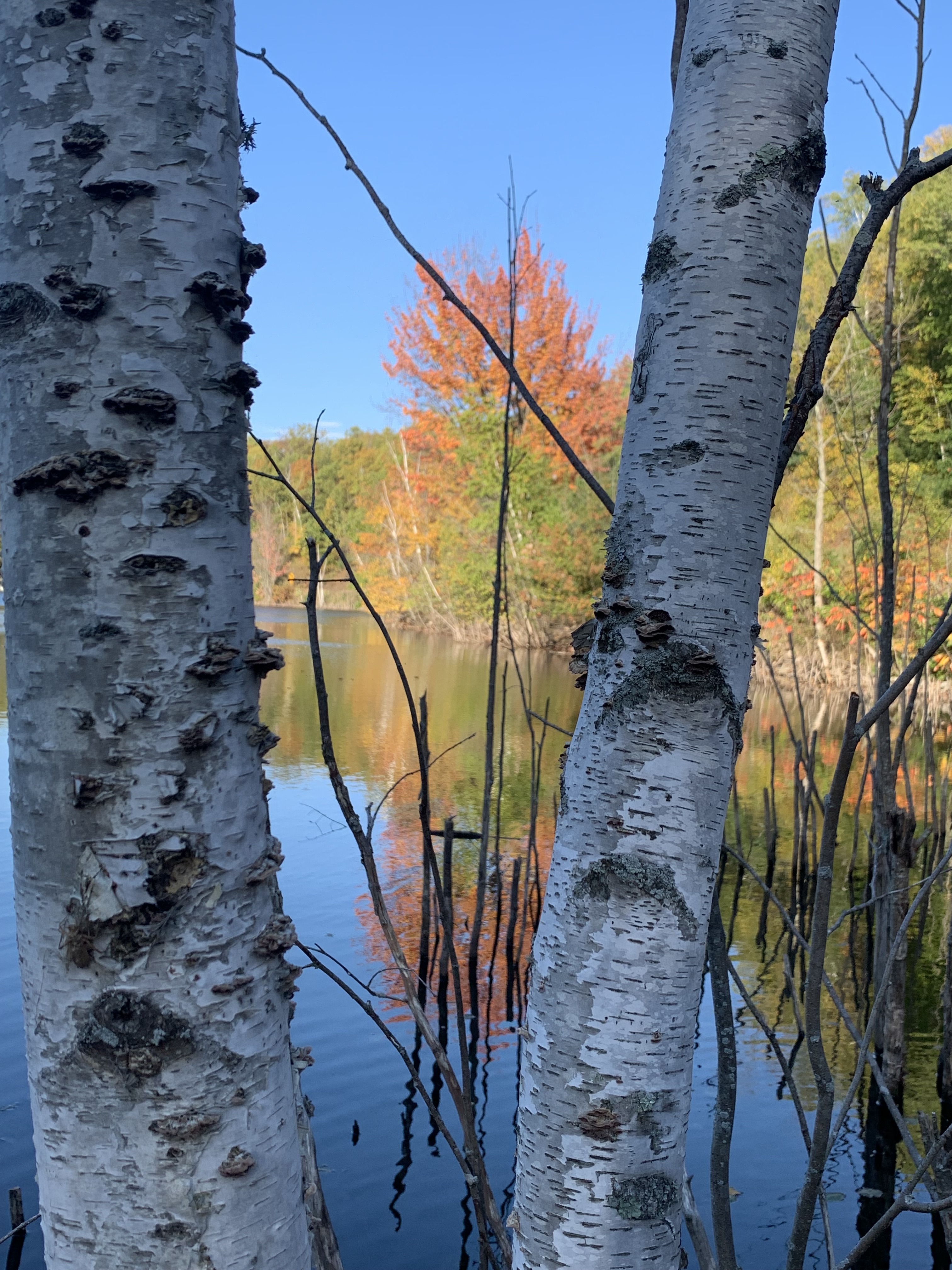
A warm autumn day, a blue-blue sky, the leaves vibrant with fall color. A quiet mind. An open heart. A great relief. I realized that over these many months Kerri and I have not felt safe, swimming as we are on the bottom of Maslow’s Hierarchy. I was suddenly and profoundly overwhelmed by the lightness in my heart, the ease in my being, the great gift of our Up North Gang.

A gentle reminder that the path forward is rarely found by squeezing together synapses and figuring-it-out in-the-mind. The path becomes clear when illuminated by the lively spirit of play. Heart-paths become visible. I smiled at all that I know and too often forget. Everyone really wants to play.

read Kerri’s blogpost about AUTUMN UP NORTH

like. support. comment. share. many thanks.

buymeacoffee is a “tip jar” where you can support the artists you appreciate.

Both/And [on KS Friday]

“When you are sorrowful look again in your heart, and you shall see that in truth you are weeping for that which has been your delight.” ~ Kahlil Gibran

Dwight sent a book to me: From Strength to Strength by Arthur C. Brooks. Several months ago at dinner we talked about how to make this next chapter of life the best chapter. As is my practice lately, I am reading it slowly, taking my time. I used to read like a hungry man eats; I gobbled information. Now I savor. I take one bite at a time and taste all of it. Someday soon we will talk about what I am discovering in the book. I’m only a few chapters in and already I’m rethinking my choices, considering different paths moving forward.

Pondering my next steps has also been an exercise of looking at where I’ve been. A lyric from Dan Fogelberg just ran through my mind [The Last Nail, by Dan Fogelberg]:

I left a trail of footprints deep in the snow
I swore one day, I would retrace them
But when I turned around, I found that the wind had erased them
Now I’ll never replace them

With distance it’s easy to see that some of the worst choices I’ve made in my life have also been the best choices I’ve made in my life. I can see that my desperation brought innovation. I can see the prison I made of my judgments and the hard truths necessary to unlock my cell door. I can see I needed a broken heart to arrive at an open heart.

With distance, I’m beginning to understand that no single experience lives in isolation. No day is either “good” or “bad.” No single period of my life defines the worth or wealth of my time on earth. No title, like “artist,” can wrap its fingers around the totality of my time. I am all of those things and none of those things.

On Monday, we interred Beaky’s ashes. She is with Pa in the national cemetery. We sang a song and then an attendant closed the niche. A journey’s end. Later that day I jumped off the back of a couch into a pile of pillows with a two year old, laughing, wiggling our toes. This wild-child is in full discovery mode, everything an adventure. A journey’s inception.

This life is achingly beautiful, each and every moment.

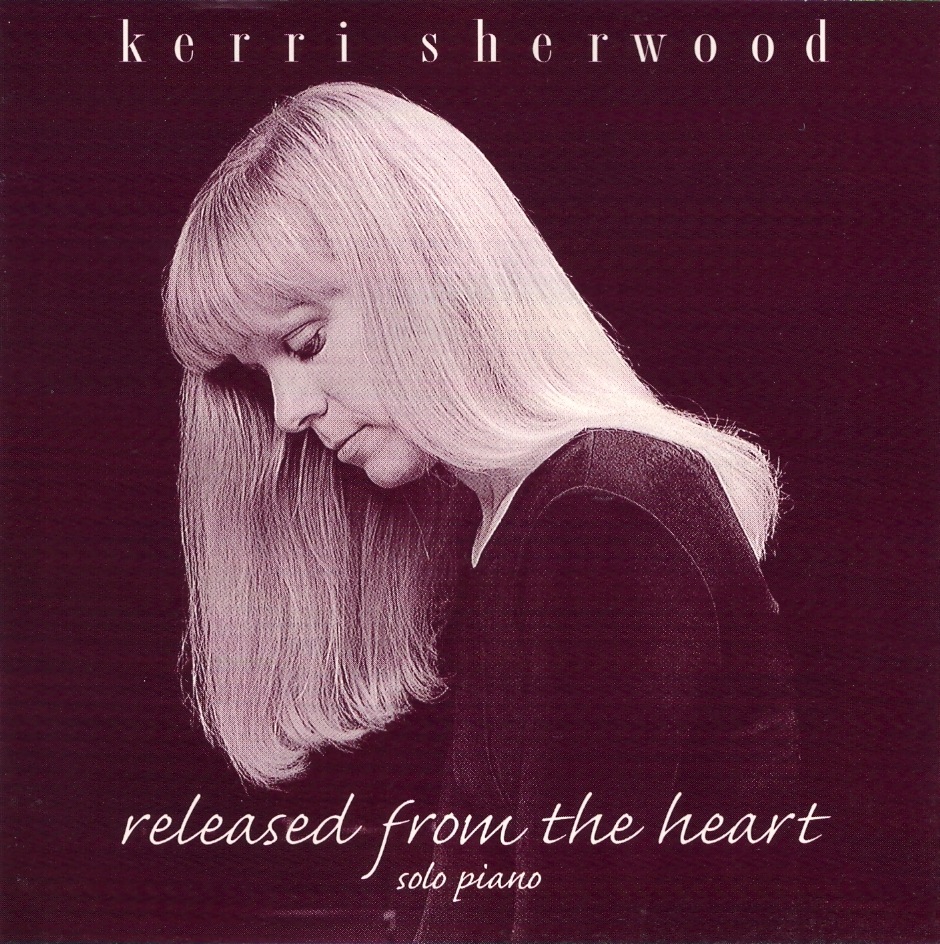
The entire album: Released From The Heart © 1995 Kerri Sherwood

Kerri’s albums are available on iTunes and streaming on Pandora

read Kerri’s blogpost about HEART DIVOTS

Make Space [on DR Thursday]

I’ve read that a too-busy mind can’t solve problems. To see solutions, beyond quick fixes, requires some open thought space. There’s plenty of research supporting this notion. It’s the reason most epiphanies happen in the shower or while taking a drive. The mind loosens its grip long enough for a new idea to rush in.

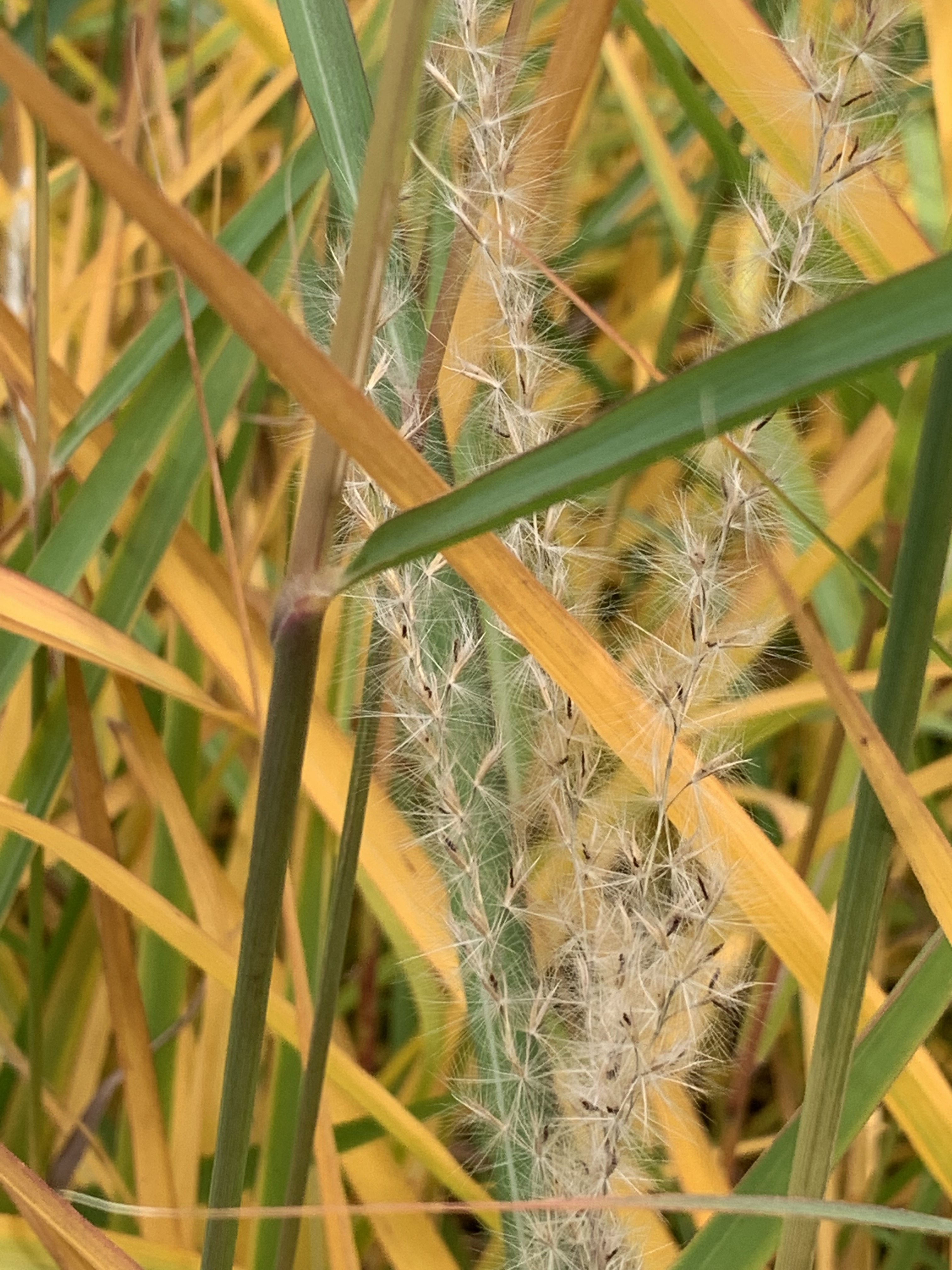
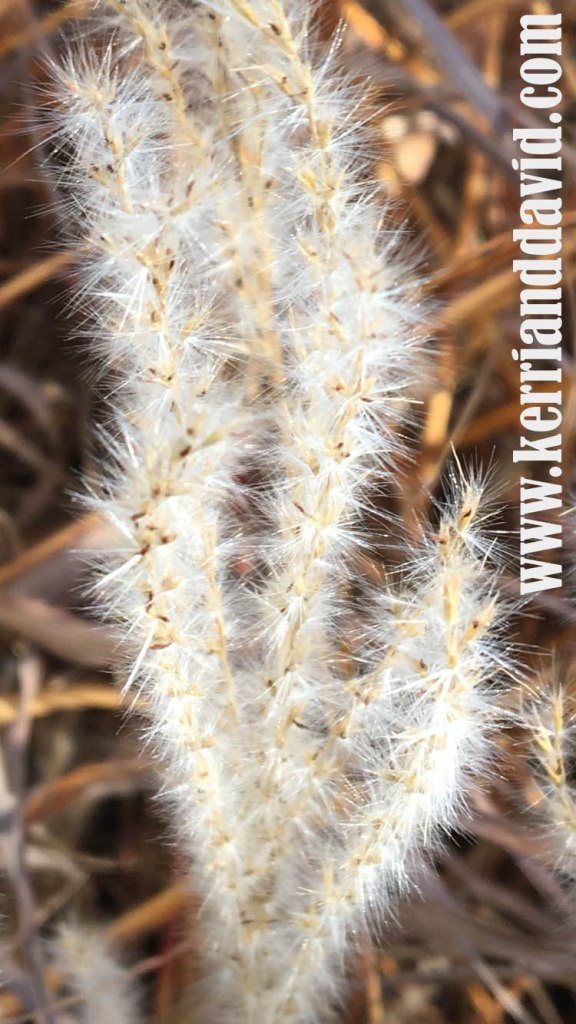
Lately, when my brain is in a twist, I take a few moments and visit the switchgrasses in our front yard. They are electric with color. This year, they are showing shades of pink, yellow and orange that they’ve never before revealed. The white plumes dance above the color, moving with the breezes. It not only takes my breath away but I’m finding it impossible to knit my brow and hard-squeeze synapses into sense-making while watching the dance.

I’ve cleared the boxes and bags from my studio. There are still multiple canvases stacked willy-nilly against the wall, it needs a good sweeping, but I can already feel the space breathing. I can feel myself breathing. As it turns out my studio has been a reflection of my too full mind. Clutter keeps the juices in check.

Last night we watched a movie. The main character, an equestrian, was having a hard time returning to competition. She was trying too hard. She was trying to be perfect and her mind and heart were locked up, in opposition. The horse felt her discord and could not move freely. “Forget about winning,” her dad told her. “Go have fun and remember why you loved to ride in the first place.” Sage advice when a good heart is being drowned out by a noisy mind.

An open studio. The grasses tickling my mind into chuckling relaxation. Space. Who knows what new idea is waiting to rush in!

read Kerri’s blogpost about GRASSES

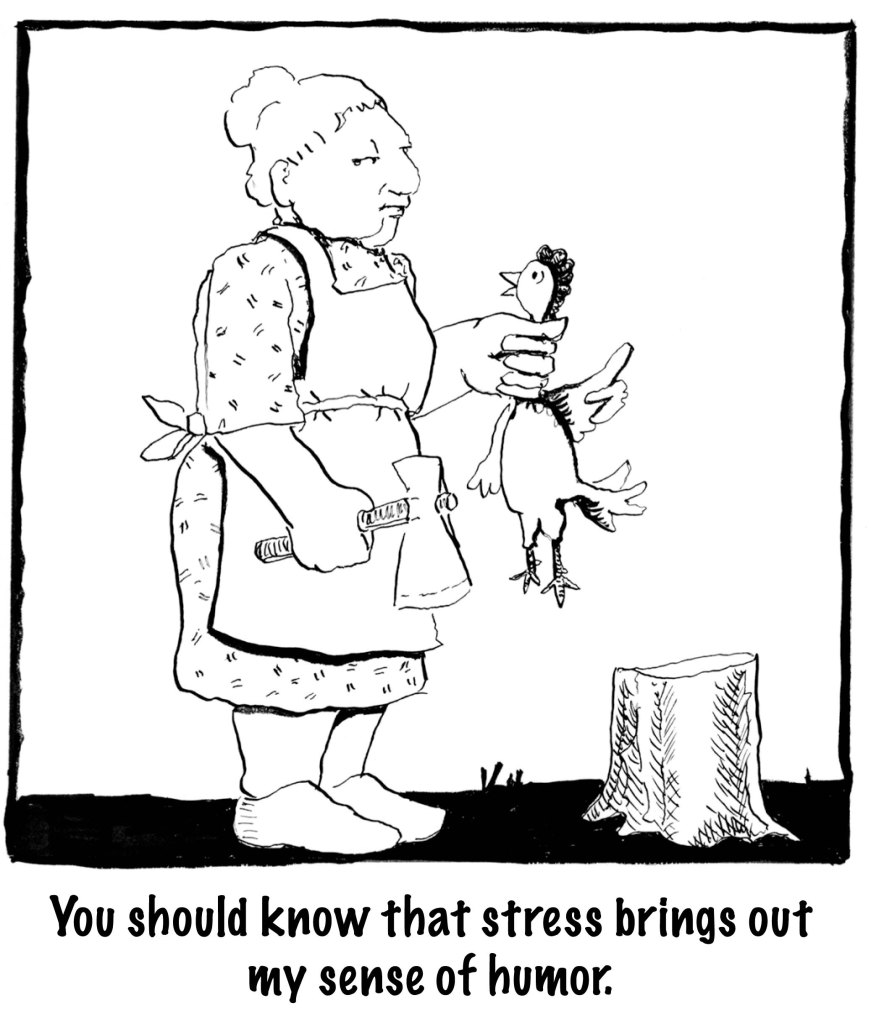
flawed cartoon © david robinson, kerri sherwood, john kruse

Teach The Full Story [on Merely A Thought Monday]

Viewed from space, the earth is round.

That simple fact has led some truly dedicated reality-deniers to the startling conclusion that the earth is flat. They argue that it’s absurd to think that half the population of the earth lives upside-down. Of course, no one has yet been able to prove that there is a top or bottom to the universe so it’s anyone’s guess which hemisphere of the earth is right-side-up and which is up-side-down. Be careful on those vacation cruises not to sail too close to the edge.

The Republican party in these un-united-united-states have become the political equivalent of flat-earthers. Cherry-picked half-data spun by a dedicated-nonsense-media into a Flat Stanley reality. Two-dimensional thinking in a three-dimensional world. It’s a problem. It’s a scary problem. The good ship USA is on course to meet the edge while the captains on the bridge wrestle for control of the steering wheel.

What is the steering wheel? The story we tell ourselves about ourselves. Our history. The Manifest Destiny story is meeting the realities of demographics. The party of white-dominance is in a panic to maintain its story of supremacy. They’d rather run us over the edge than let this richly diverse nation fulfill its promise. Fulling the promise begins with telling the full story. In Florida, the governor has literally banned the schools from telling the full history of this nation.

In other times, more clear-headed times, these laws would be acknowledged as authoritarianism. In our times, it’s marketed as the Republican response to “woke-ness.” In other words, education is the enemy. Stick your head in the sand. Hear-no-evil-see-no-evil. Proclaim the earth is flat or be prosecuted.

It was inevitable. The rhetoric of “All men are created equal” would someday need to reconcile the reality of a system built on the institution of slavery. Our forefathers wrote about it as the single greatest threat to the survival of our nation, this vast difference between our rhetoric and actions. In a school – capable of teaching our history – that would seem to be a very important and timely history to explore.

Systems do what they are designed to do and ours has performed as intended, elevating one group while suppressing others. It’s in our legislative record. It’s in the writing of our founders. It’s history.

For the second time this week I’m using this phrase: As I learned in school, systems are living things and will fight to the death to maintain themselves. We are watching a system – our system – fight to the death to maintain itself. In this fight, it will lie, cheat, scratch, steal, bite and squeal. It will incite fear. It will turn citizens against other citizens. It will whip up division and demonize those it brands as “other.” It will toss away all ethic and morality to maintain itself. It will make laws to protect itself. We are witness to it. We are participants in it.

The national story will maintain itself as flat, or, at long last, take a hard look at itself and change.

I was truly alarmed when I read that teachers in Florida are afraid to teach the history of the United States.

Our nation is round. Plump and full of rich diversity with a rich complex history. It is, after all, the reality of our nation, the story we are living. It is the reason for our successes – cultural crossroads have always been places of innovation. Perhaps it should be the story we at long last embrace. Perhaps, rather than muzzling our story, legislating for white-fragility, we will someday – as a nation – be proud of our iridescence and work to tell our full story rather than the flat-lie the reality-deniers are asking us to swallow.

read Kerri’s blogpost about BE

Take One More Step [on Not So Flawed Wednesday]

Tom and I spent many hours on the deck of his cabin at the ranch watching sunsets. It was during those moments of waning light that he’d reminisce about his life in education and the arts. “To this day I am in awe of what many of my students taught me about perseverance.”

The teacher as student. The lesson – both ways – was tenacity in the face of monumental difficulty. Tom climbed metaphoric mountains in a system dedicated to hurling avalanches against his progress. His was an innovator’s path. He kept climbing, I learned during our sunset talks, because his students inspired him. Some achieved their mountaintop against all odds. In many cases, the mountaintop was – to other eyes – as seemingly simple as showing up for one more day. They kept climbing so he kept climbing. Showing up for each other. A feedback loop of tacit encouragement. They kept climbing because he was present on the metaphoric mountainside every day.

His students inspired him. He inspired me. An ancestry of inspiration.

I might have imagined it. The chipmunk butted in line at the bird feeder, sending the toddler cardinal fleeing to the safety of the Adirondack chair. More birds gathered while the chipmunk gorged. In a moment of chipmunk consciousness, he turned, looked at the growing assembly of hungry beaks, turned back to the feeder and, like Santa Claus, began kicking mounds of seed to the ground. Chipmunk potlatch. Bird extravaganza. Every critter had their fill.

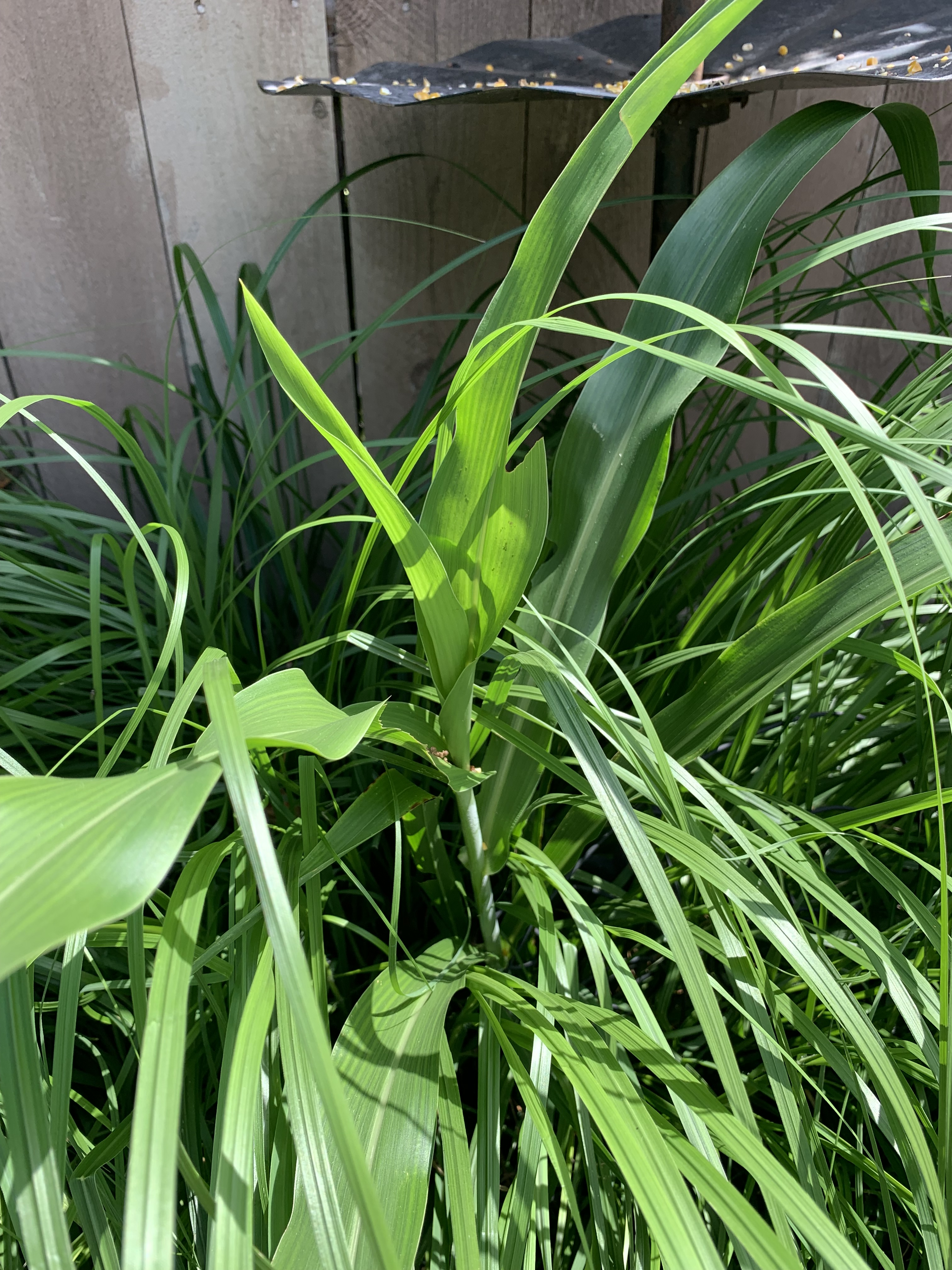
Weeks later, while weeding the garden, Kerri called across the yard: “I think we’re growing corn.” she said. I joined her at the row of dense grasses growing beneath the bird feeder. A tender stalk, against all odds, found enough sun and water to reach through the thick resistance. Nature amazes me. The impulse to life, from chipmunk-seed-toss to corn stalk pushing through impenetrable grasses.

It brought thoughts of Tom. Seeds planted. Mountains to climb. The sunset, glowing orange and pink across his face, he’d smile, “Often the secret is nothing more or less profound than taking the next step, showing up for each other one more day.”

read Kerri’s blogpost about CORN

See The Glue [on Not So Flawed Wednesday]

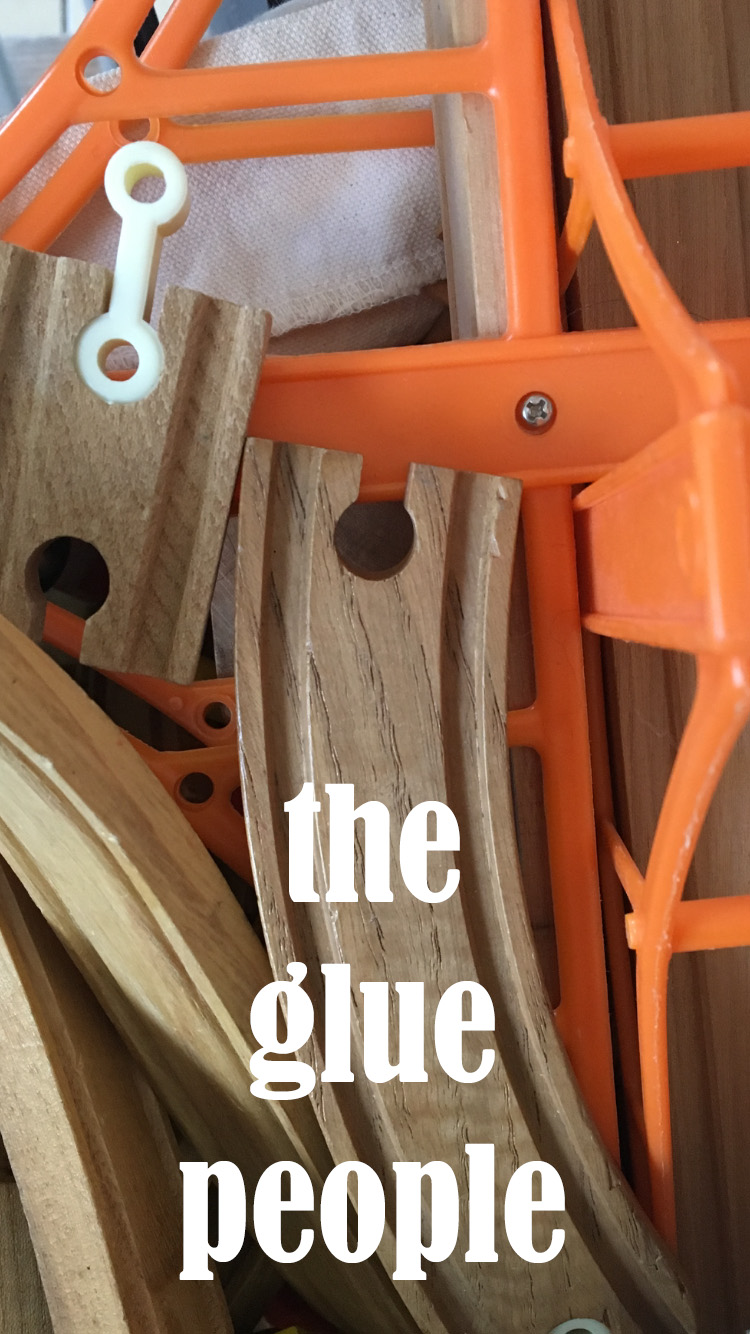
It’s a new phrase to me but I liked it immediately. I liked it because I have known some amazing people, those rare birds who keep the runaway-egos focused on the project, who naturally and seemingly without effort coalesce disparate talents into a cohesive creative team. The ‘glue people’ is a perfect description.

Glue people intuitively understand power as something that is created between people, not something wielded over people. I suspect that is the epicenter of their glue-gift: they see beyond the parts to the sweeping possibility of the whole. They know that “every man/woman for themself” is a recipe for disaster.

Despite our dedicated cowboy mythos, innovation is never the province of a single person. There may be a single visionary but the vision is never accomplished in a vacuum. Inventions, like organizations or nations, come to fruition through the efforts and skills of the many-working-as-one. Glue people generate “the-working-as-one.”

Stage managers, production managers, executive assistants, contractors…those highly overlooked people at the center of the information, who quietly make sure the work of creation happens without collision while also making certain all the parts and pieces know how much they are valued.

Meaning makers. Making value explicit. Glue people. Just try to get an idea off the runway without them.

read Kerri’s blogpost about GLUE PEOPLE

Unearth Your Modtro [on Merely A Thought Monday]

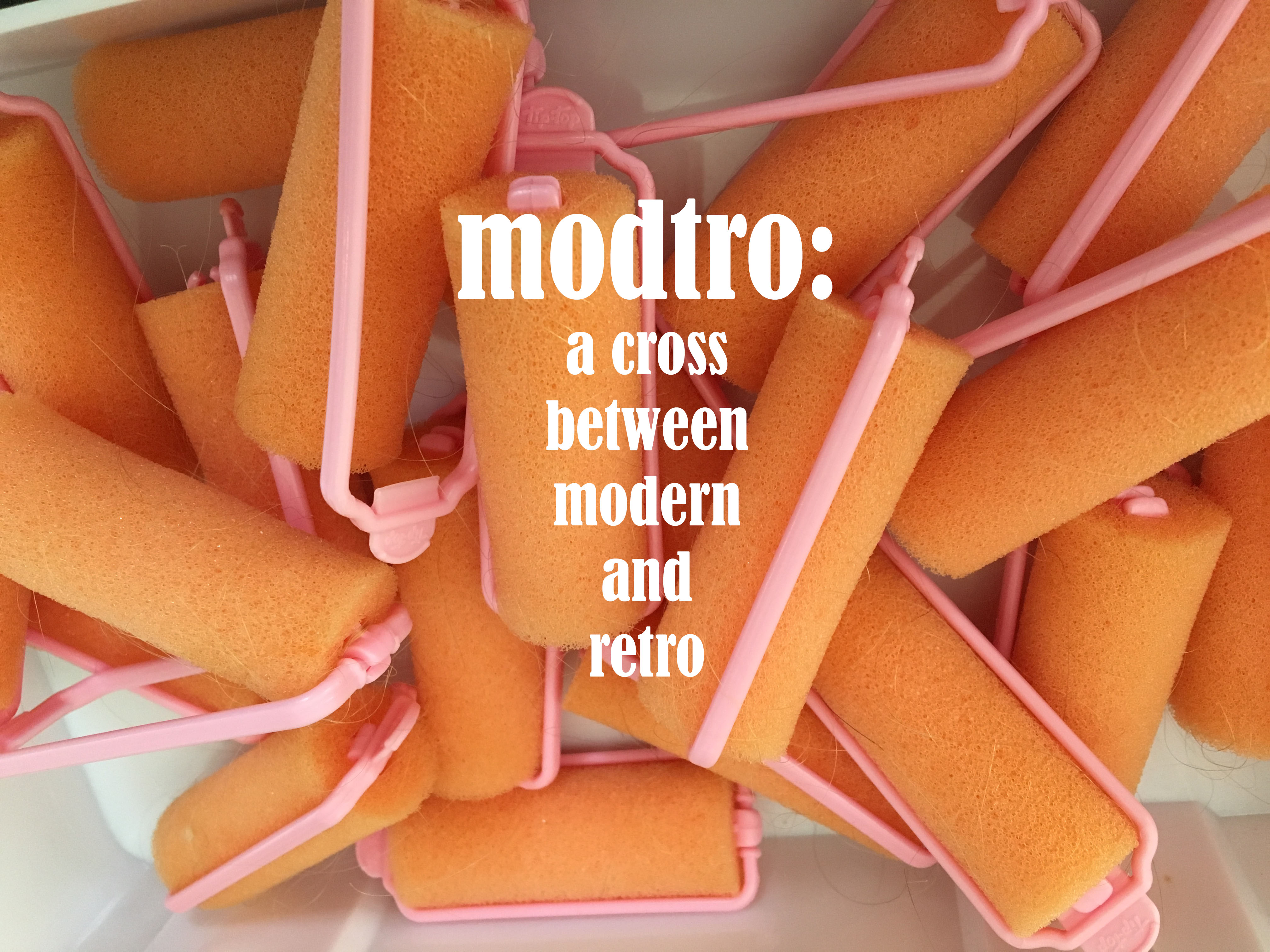
Our latest late-night binge is Bad Hikers. An adorable young couple hiking the John Muir Trail. Never have two people hiked the JMT in such modtro style. Goth meets urban chic. They are at home in their style, comfortable in their bodies, so they are both unaffected and affected at the same time. Glimmers of Mad Max on the JMT. I love it. Their spirit inspires us.

William Blake is another in the canon of artists unrecognized during his lifetime but now considered a creative titan, one of the great artists of the Romantic era. His contemporaries thought he was crazy because he was not like them. He stood out and no amount of hammering would make him fit the mold.

In the dance between the conservative and the creative impulses, the conservative will always claim the safe ground, plant their flag in “normal.” Tradition. “We’ve always done it this way.” The creative will swim to the margins, climb to the tops of the mountains where they can see more clearly. “What’s over the next horizon?” All people are a mix of both impulses, conservative and creative. We dance between the poles.

One of the first lessons I learned in art school is that, in the western tradition, every era reacts against the previous standard (I laughed when it occurred to me that our tradition is to react against our tradition – no wonder we are always at war with ourselves!) Realists rise in response to the Romantics. Impressionism reacts to Realism. And on and on. The other side of that equation is that the artists are generally tuned into societal and technological advances. Picasso’s cubism and Einstein’s theory of relativity hit the world within a few months of each other. Reactivity holds hands with innovation.

And so it goes with clothes, too. To dress as is expected. To dress as a statement. To dress as is comfortable. To find your style. To define yourself within your era. Clothes are how we publicly locate ourselves relative to the two poles. “This is me!” We shop at the same stores, we buy the same brands, all to express our individuality relative to the expectation-of-the-day. Sometimes you find your style and sometimes it finds you. And, mostly, your style changes as you do. Tie-dye puts on a suit and tie.

And so, this long and winding road brings me to a caution: do not, when you unearth the box of sponge curlers in your basement, exclaim as I did, “Oh my god! Who on earth ever used these things! Why do we have these in our house?” My laughter fizzled the moment I realized that the obvious answer was standing right next to me.

read Kerri’s blogpost about SPONGE CURLERS

Share Appreciation [on Not So Flawed Wednesday]

“I’ve got an old mule and her name is Sal
Fifteen miles on the Erie Canal”

~Low Bridge, Everybody Down, music and lyrics by Thomas Allen, 1913

She’s a donkey, not a mule, yet I couldn’t help but appreciate the collision of power sources present in this photograph. From donkey to solar.

I’ve read that the innovations of the industrial age were meant to spare humans of muscle-toil. If an engine could power it, a human didn’t have to. The innovations of the information age are meant to spare us mental and sense toil: why stress to parallel park your car if the car can do it all by itself? Why add the numbers if the spreadsheet does it for you? Why look up information if Siri or Alexa can bring it to you? What does it now mean to stay in touch? Text and facebook and tweet and email and zoom and facetime and slack and chat and…call.

Oil, coal and gas are the energy systems of the past. They are donkeys and mules standing next to renewable energy sources like wind and power. It takes time for an infrastructure to be built. It takes time for people to wrap their imaginations around a different way. Do you remember the loud resistance in the early days of the credit card proclaiming that plastic would never replace paper money? That was not so long ago. There were similar angry voices declaring the auto-mobile was a flash-in-the-pan. “Nothing will replace the horse!” Our local supermarket just installed banks of electric car charging stations. Energy systems are slowly moving away from grids: the power source and the property will (mostly) be one and the same.

Industries, like people, either adapt or die. Most retail chains that came late to online shopping are going or already gone. Many have said that they didn’t see the change coming. Or that they couldn’t imagine a world in which people bought stuff without first touching it. Cars are in vending machines. Isaac Asimov would have loved it!

Did I mention that the solar panel in the photograph senses and moves with the sun? As it turns out, the donkey does, too. Much for the same reason. Only, for the donkey, the heat of the sun feels good and I doubt the solar panel cares or feels anything. Sensing and feeling are still on opposite sides of the change-line. At least so far. There may come a day in the not-so-distant-future that the donkey and the solar panel share appreciation for the heat of the sun. The donkey will wag its tail. The solar panel will stretch and sigh. The stuff of children’s books or sci-fi. At least for now.

read Kerri’s blog post about DONKEY & SOLAR PANEL

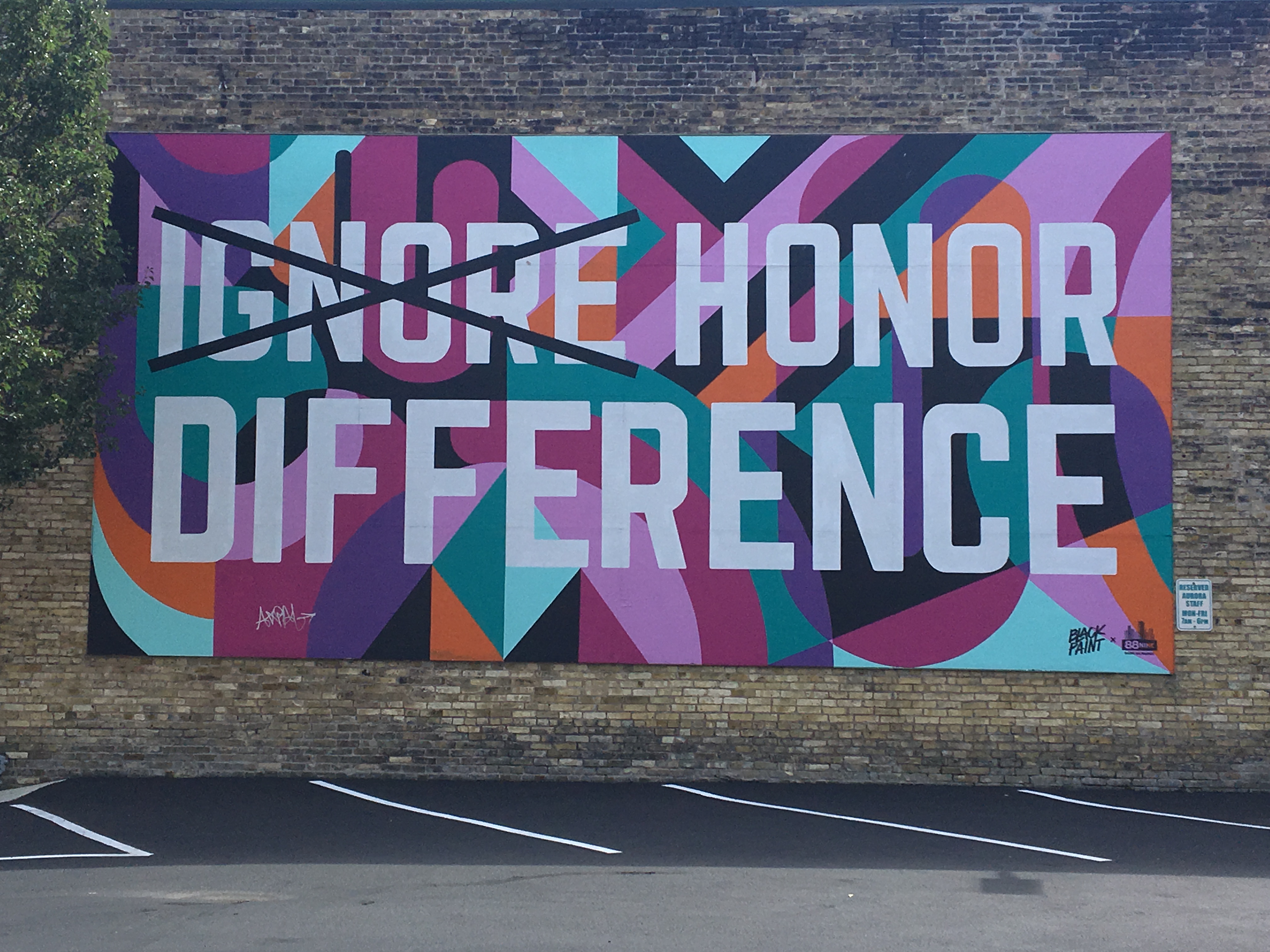
Honor Difference [on DR Thursday]

A Double Haiku:

Honor Difference.

A mural in Milwaukee.

Heart of the ideal.

Infinite palette,

Many hands, many painters,

Eyes that choose to see.

Read Kerri’s blog post about Honoring Difference

helping hands ©️ 2012 david robinson