The Abdication of Answers [David’s blog on Two Artists Tuesday]

“Truth is a pathless land.” ~ Jiddu Krishnamurti

I confess. I’ve spent an inordinate amount of my life looking for answers. Mostly, the answers I sought concerned questions like “Who am I?” or “What’s my purpose?” I sought the answers as if they actually existed. Somewhere out there. I thought I’d find it if I kept looking.

“The whole of life, from the moment you are born until the moment you die, is a process of learning.” ~ Jiddu Krishnamurti

It took a while but one of the later versions of myself quite suddenly understood that there was no answer to find. There was a life to be lived. I might arrive at answers – if I still needed answers – on check-out day. And even in that passing moment, my answers would most likely be a learning experience. A discovery.

“Freedom from the desire for an answer is essential to the understanding of a problem.” ~ Jiddu Krishnamurti

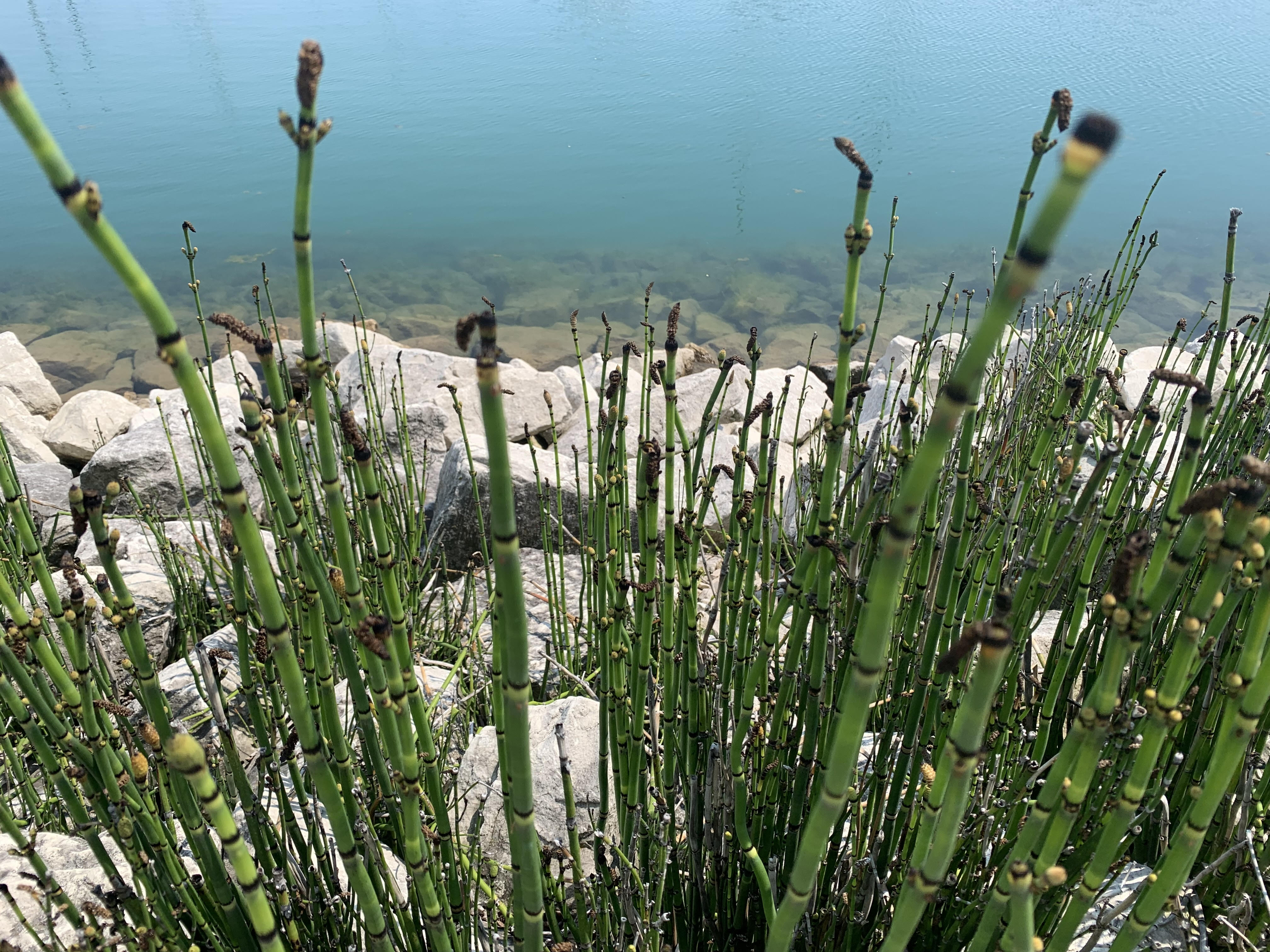
On hot humid days we walk along the shore in hopes of finding a cool breeze. Our hot-day-walks are slow, ambling. Kerri stops periodically to take a photograph: the bamboo growing beside the marina, cornflowers in the community garden, a seagull atop a light post. We talk about what matters and what does not. The quiet river running beneath our conversation is the abdication of answer-seeking. We revel in the birds splashing in the birdbath, the first sip of coffee in the morning, the smell of onion and garlic sautéing…slow walks on hot days. Noticing a kindness. Answers are nowhere to be found. Presence is everywhere.

“When I understand myself, I understand you, and out of that understanding comes love.” ~ Jiddu Krishnamurti

Lately Kerri says, “I’m not all that. We’re not all that.” There is freedom found when perspective arrives, an undeniable truth in a vast, vast universe. We are passing through. Nothing more, nothing less. How we treat each other is on the list of what matters. Do we help or hurt others in the time we share together on our passage?

read Kerri’s blogpost about BAMBOO
like. share. support. comment. subscribe…thank you.

Live Like. Reach For. [on Merely A Thought Monday]

These messages are everywhere! Marketing tags, song and book titles, posters and billboards. memes. A sentiment also found in poetry, plays, and religious texts. Live like…

Live like you were dying (title of a studio album by Tim McGraw)

Live like a monk (title of a book by Daniele Cybulskie)

Live like there’s no tomorrow (A ubiquitous quote and set up for follow-up sentiments like, “Tomorrow may never come!”)

Live like.

Live. No guarantees. Dance like no one is watching. Be here now. If I was the rain.

It’s the message human beings like to deliver to other human beings. Don’t waste your one precious life. Realize it. Consider the lilies.

So the story goes, the Buddha was asked, “What’s the biggest mistake we make in life,” His reply: “The biggest mistake is to think you have time.”

It’s as if we were trying to wake each other up. Or, wake up to each other. It’s as if we need to say, “Don’t miss it!” It’s as if we are asking, “Will you help me see it?”

These days there’s plenty of fear-mongering spinning around the word “woke.” I wonder at this collision of universal message and partisan agenda. After all, what is the opposite of “woke”? Why would anyone want to walk through life dulled or asleep? Why would anyone want to walk through life with their eyes closed, uneducated, filled with answers but empty of questions? Why would anyone want you to close your eyes and mind and heart to the fullness of life?

An amazing thing happens when near death kisses open the eyes: all the perceived divisions drop away. People throw themselves on bombs to save other people, people give up their seat on the life boat and, in those moments, skin color, sexual orientation, or politics matter not at all. In Highland Park, while the bullets were flying, decisions made in helping others to safety and the promise of one-more-day-of-life had nothing to do with division.

In the real moments, the awake moments, people reach for other people.

Perhaps that is why we are appealing to each other in beer commercials and bibles, lyrics and legislation, to wake up.

read Kerri’s blogpost about LIVE LIKE

Know Why [on Merely A Thought Monday]

I’m working with a software start-up company. Upon returning from travels I found our conversation has shifted into articulating mission and vision and purpose. None of us are keen about writing these kinds of statements but the exercise is useful and necessary. Why do we do what we do? What, exactly, do we do? In that order. Why. What.

Why? It seems as if this should be an easy answer. To support other people. To support other people in doing what they need to do.

I couldn’t help but think of our experience last week. We shared our story of breaking down in Hays, Kansas. It was late in the afternoon. It was the day before my dad’s funeral in Denver. We hobbled into the dealership. They were jammed with customers and couldn’t help us. There wasn’t a rental car to be found. It looked bleak. The dealer recommended a garage on the other side of town. Davis Automotive. We limped into their parking lot. We told our tale. They moved heaven and earth to help. Why?

It was nearing the end of their day. They, too, were jammed. Yet, they helped. They took the time. They made our problem theirs to solve. They took to heart my need to make it to my dad’s funeral. My need became their personal mission.

I returned to work with a new view on mission statements. They need not be lofty or abstract. In fact, they should be visceral. Tangible. Everyday. Support other people in doing what they need to do. Why? Because they need it. Just like I need it. Or you need it. These good mechanics fix cars. That is their “what.” Their “why”: help people get where they need to go. Help people do what they need to do.

Help people.

It’s how interconnection works. My mission is, in a real way, to make your path easier just as your mission is to make my path easier. I need mechanics because I do not have that mind or skill set. They need software designers because cars are computers and they can no longer diagnose problems without them. I am an artist, a teller-of-stories. Mechanics and software designers need my mind and skill set to remind them that, beyond their role, their mission, their job, they are human beings living a universal story. Nothing they do will matter, nothing I do will matter – ever – if it is not in service to the support of others’ growth, or need, or desire or fulfillment. I cannot be fulfilled if my work does not support you. And vice versa.

So, why are these good men and women, these software engineers and entrepreneurs creating their software? They see a real need. They see people struggling. And, like good mechanics who encounter a brokenhearted son en route to his dad’s funeral in a truck that will not run, they know exactly what to do. And, they know why.

read Kerri’s blog post about SERVICE

Tell A Good Story

The Storyteller emerges from the forest. Lucy & The Waterfox

The Storyteller emerges from the forest. Lucy & The Waterfox

Over the years I’ve tried countless marginally successful ways to define for others what I do. It would seem obvious: I am a painter. I am a writer. Oh, and a theatre artist. And a consultant. And I’ve maintained a coaching practice. I’ve worked in education, the corporate world, with non-profits, and with entrepreneurs. So, in conclusion, I do too many things.

Well, that’s not exactly true. I do one thing. I deal in story.

I speak the language of story and that is confusing in any arena. What does it mean? Such a simple word, story, and yet it can mean so many different things. For instance, a truism in effective, transformational coaching is that the story doesn’t matter. By story, coaches mean the circumstance; in transformation, in the fulfillment of potential, the details of what happened – the story – are not useful. The circumstance story usually equates to blaming or endless attempts at self-fixing. The circumstance story gets in the way of growth. It is an anchor in the sea of dysfunction.

I don’t work with circumstance stories.

By story, I mean inner monologue, the-story-you-tell-yourself-about-yourself. By story, I mean the language that we use within ourselves to articulate belief. I work with the orientation story, the personal and communal mythology. Rather than get in the way, the orientation story defines the way. It defines what we see. It defines our relationship with time, with nature, with god, with community: it is the lens through which we make meaning. I help people change their lenses. Try explaining that to a CEO!

Last year, when Skip and I shuttered our business, I also shuttered my coaching practice. I ended my corporate work. Much of it came to feel like wearing an ill-fitting shirt –or a host of ill-fitting shirts – so I decided to clean out the closet. I wanted to drop all the definitions, the old forms, to make space for the new.

Last week I decided it was time to peek into the empty closet. And, as serendipity would dictate, I happened to be reading Frank Delaney’s engaging book, The Last Storyteller. On page 99 of this fictional tale, this is what I read:

“…every legend and all mythologies exist to teach us how to run our days. In kind fashion. A loving way. But there’s no story, no matter how ancient, as important as one’s own. So if we’re to live good lives, we have to tell our own story. In a good way. A way that’s decent to ourselves.”

I threw my head back and laughed. There is no story as important as one’s own. To live a good life we have to tell our own story in a good way. And then, there was this:

“…I don’t give anybody advice. All I do is release the good thinking that’s already inside of you. You’re the one who acts on your own advice, and I have the pleasure of helping you reach those thoughts about yourself. So it’s not me helping you. It’s you helping you.”

Ask me today what I do and I will say, I write. I paint. Ask me for more detail and I’ll open the book to page 99.

[to be continued]

title_pageGo here to buy hard copies (and Kindle) of my latest book: The Seer: The Mind of the Entrepreneur, Artist, Visionary, Innovator, Seeker, Learner, Leader, Creator,…You.

All digital forms of The Seer can be found here