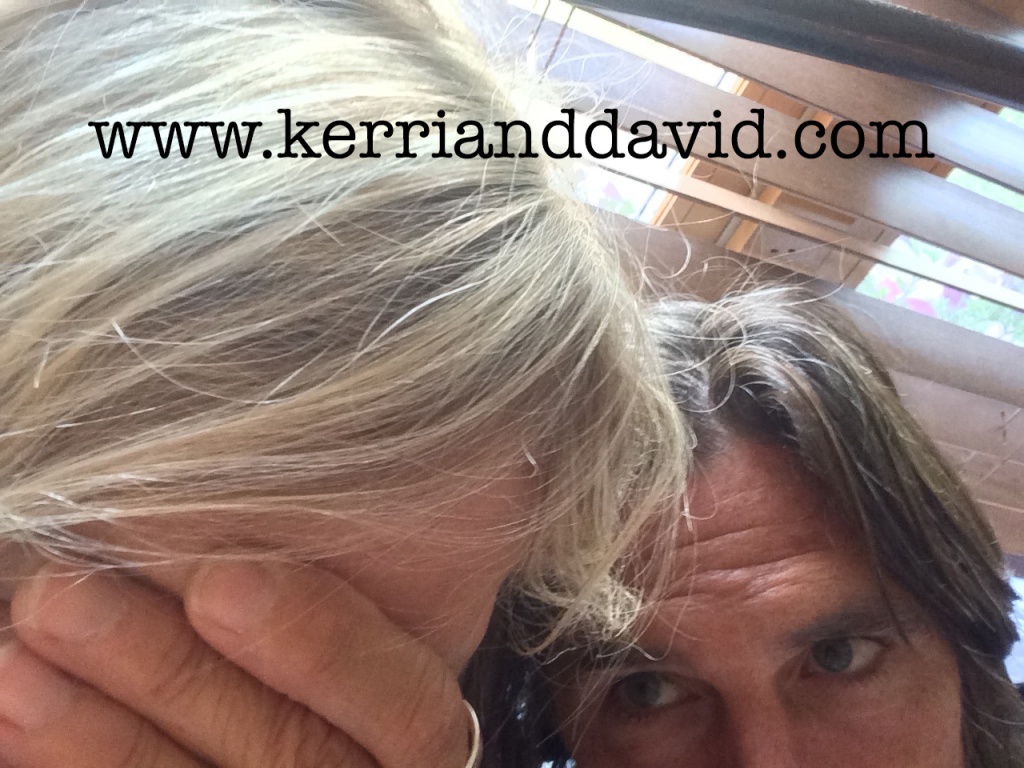
What Makes Us Classics [David’s blog on saturday morning smack-dab.]

For a little perspective: the body of her computer is a 2008. The brains are from 2012. That she has been able to keep it going for so long – and produced so much with it – is nothing short of a miracle. It is a horse-and-buggy in a freeway world.

Kerri is a child of the depression – a deep imprint left in her psyche by her parents – so she refuses to “buy new” until the old falls apart. As much as I have tried to explain that technology is not like clothes or appliances, they age differently, she maintains her stalwart determination to ride her computer until it fails. And, that day has come.

Lazarus had an easier job of coming back to life than will Kerri’s computer. But stalwart determination dictates that we must at least try to pull the spirit of her computer back from the void. It is with the same determination that she has recently managed, somehow, to publish five blog posts and one cartoon a week with her equally ancient iPad (refusing to touch my computer).

Stubborn determination. Brilliant work-arounds. Tech-death-denial, infrastructure collapse…is no obstacle. A husband who’s in awe of her perseverance, her unwavering belief in squeezing out the last drop of possibility, yet learned to hold his tongue, nod his head and support her dedication to try-try-again. That, dear ones, is what makes us classics.

read Kerri’s blogpost about CLASSICS
smack-dab © 2024 kerrianddavid.com

like. share. support. comment. subscribe…thank you!

Stack Your Nickels & Pennies [on Flawed Wednesday]

From the school of if-you-are-sitting-on-the-mountain-you-can’t-see-it comes the hot mess we call healthcare in these un-united-united-states. Insanity never looks at itself and says, “I’m insane.” Our system of healthcare – and I use the term “system” loosely, is insane. In my sordid past as an organizational consultant I facilitated an experience called reverse design: ask people to design the worst system possible. The worst product imaginable. Hilarity ensued. None of those mad-mad sessions could have concocted what we call healthcare in the richest nation on earth. It seems the money has both blinded us and made us batty.

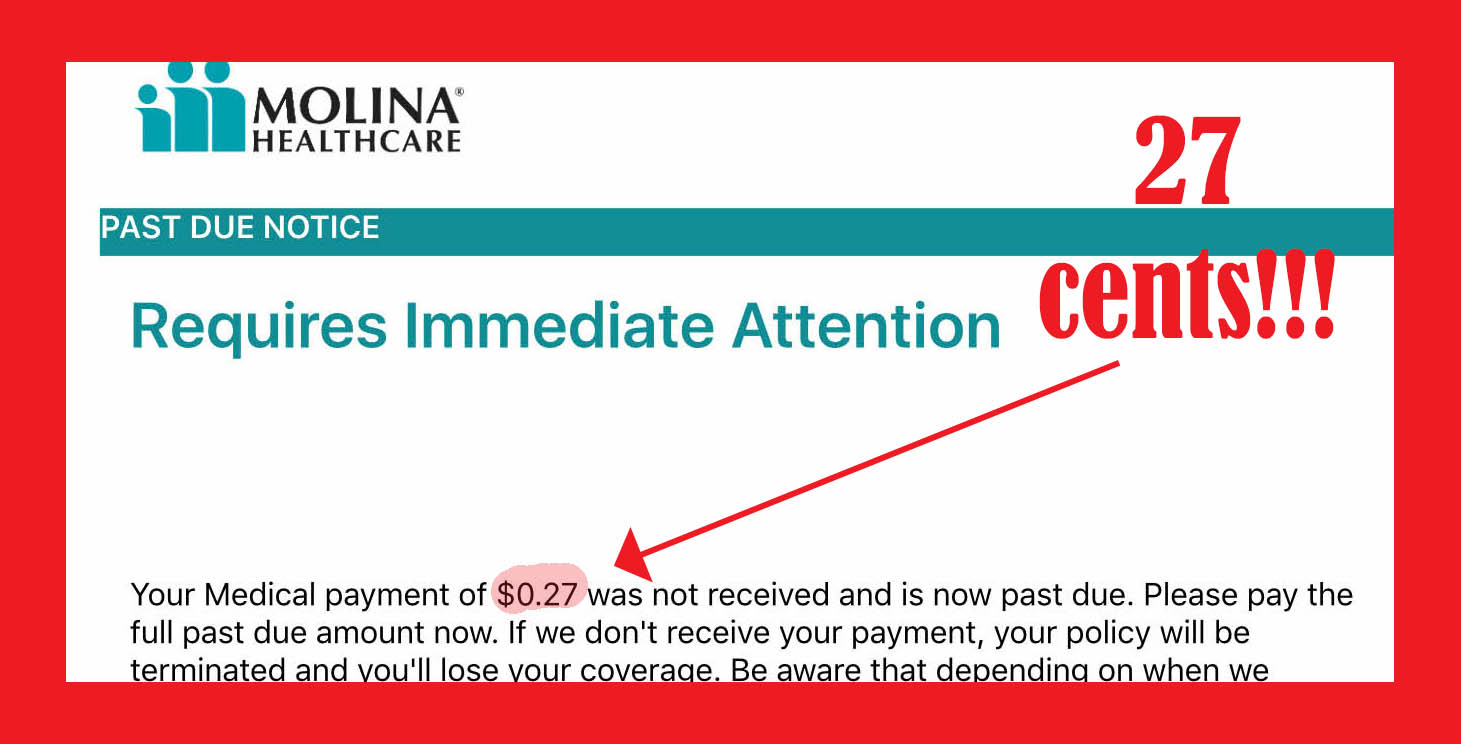
I just asked Kerri how much a postage stamp costs. “58 cents,” she grumbled, “And we got three mailings.” We finally achieved our get-out-of-jail-free card: a job with benefits. We canceled our ACA prison policy but, apparently, there was a one-day crossover in the billing cycle. I know a computer sent us the three-times-nasty-gram and spent $1.74 in postage to collect $.27. No human was involved though, having spent an inordinate amount of time on the phone with people paid to try and make sense of the nonsense, we’ve learned how numb the human mind can become when sense-making in a swamp of gobbledygook. We paid our debt online.

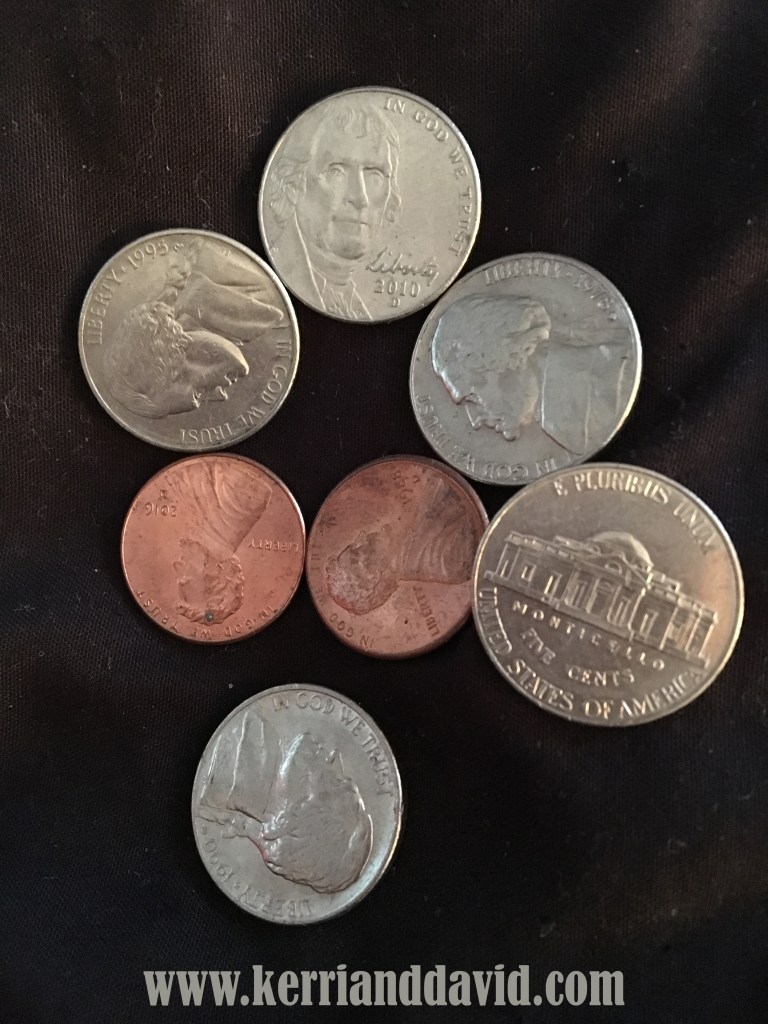
No human involved. De-human-izing. The Turing test is…a test of intelligence in a computer. Is the machine’s behavior indistinguishable from that of a human being? Hubris is a human quality that imagines the computer will become more like us while not recognizing that, in the process, we are becoming less like us. I doubt the computer will ever evolve to that point of pomposity. I suspect that the computer will someday recognize the folly of attempting to model itself after something so flawed as human intelligence. What intelligent machine would model itself on beings that seem incapable of creating a competent system for the care of its own health? No advanced intelligence would submerge its prime directive for the secondary intention of stacking nickels and pennies.

read Kerri’s blogpost about HEALTHCARE

Wander In Wonderland [on Two Artists Tuesday]

I’ve re-read his email several times. Skip’s explanation of the development of the computer. Subject/Object. Noun/Verb. Items/Action. It’s a story of cause and effect. This causes that. I’ve learned more from this single email than from my very expensive graduate degree. And, it’s sent me down the rabbit hole and I am currently in a world easily as miraculous as Alice’s Wonderland.

Does the moon cause the tides? It does if you are an English-speaker. Causation is the foundation structure of the English language. An action needs an initiator. The noun is king. He kicked. The sea rocked the boat. The moon causes tides. If you speak Mandarin, the moon and the tides are inseparable, not perceived or described as separate events but as interconnected. The same dance, differentiated forms.

Where does an action begin? A consequence end? I warned you. A rabbit hole.

Our perception of the world has everything to do with the language we use to describe it. Our creating of the world has everything to do with the language we use to imagine it. In a world where actions are separate from items, verbs from nouns, this causes that, it’s easy to believe that order is separate from disorder, cosmos is separate from earth, humans are separate from nature. Death is separate from life. Is it?

Each year that passes I’ve noticed the world of written communication includes more emojis and fewer words. Attention spans are shorter – mine, too. Tweet and text. Images carries the bulk of the message. If you could see the analytics on my blog you’d note that if I use more than 600 words, you are less likely to read what I write. We are slowly moving toward ideograms and slowly away from alphabets. Whatever will we do, what might we see, when nouns and verbs blend into image? When the eyes of dedicated separation begin to see through the eyes of interconnectivity – or, as Skip says, “When actions become central.”

It’s called a Wolf Moon, I read, because wolves are particularly loud and vocal during the first months of the year. One questioner asked if the moon causes the wolves to howl. Noun/Verb. Subject/Object.

read Kerri’s blogpost about THE WOLF MOON