A Second Glance [David’s blog on DR Thursday]

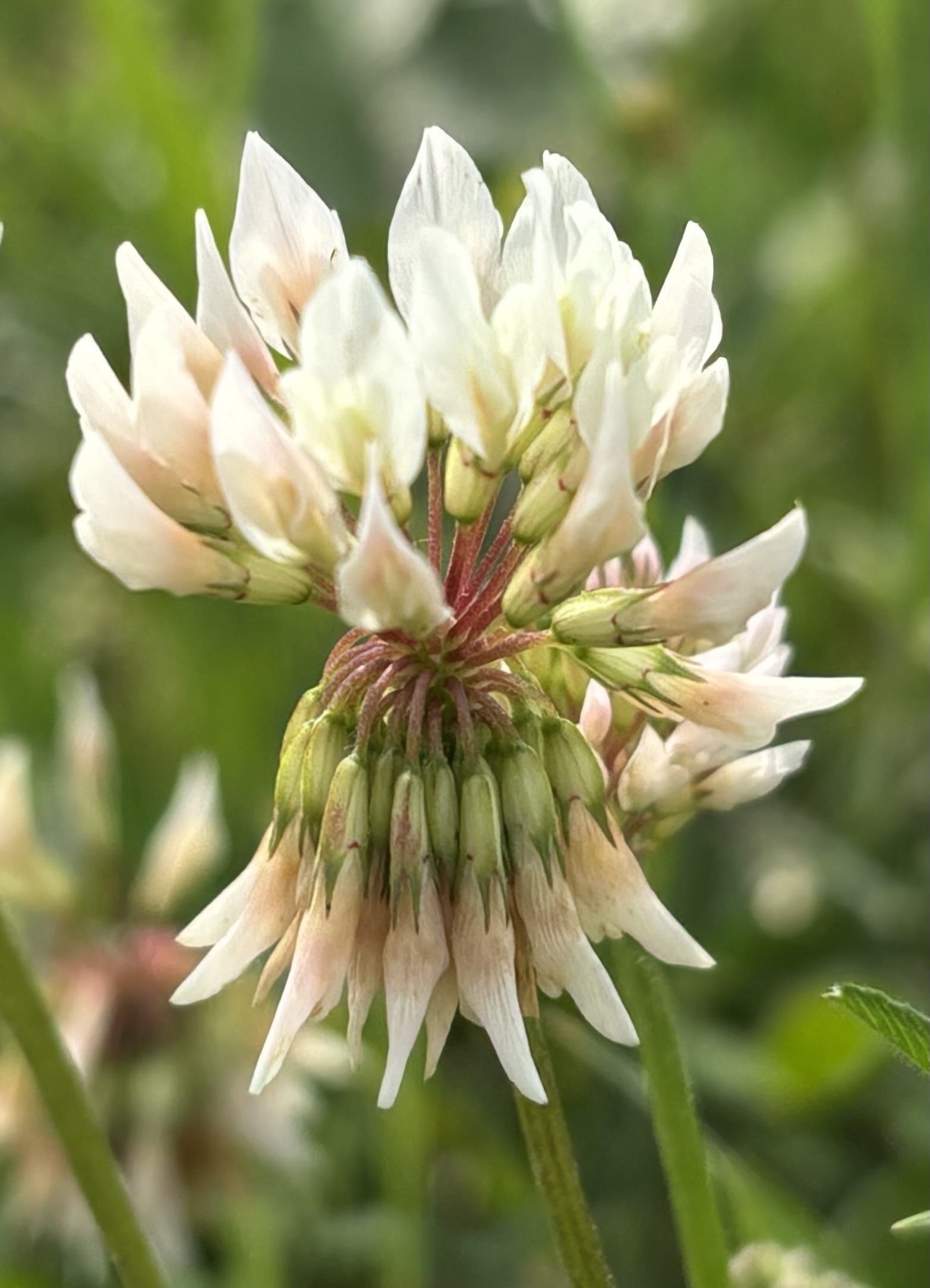
Look carefully and you will see the shadow that the dandelion cast upon the white petal.

Can you see the veining of the leaves? The watercourse way? The ridges in the petals serve the same life-giving purpose although by a subtly different, visibly beautiful design. Can you see it?

There is a small spot of purple. Can you find it? It pulls the eye. It provides the tension necessary for focus, inspiring movement of the eye.

Is the ant adventuring across the dandelion apparent at first glance? Like the spot of purple, it is there though probably not apparent at first glance.

At first glance. To the casual eye. On the face of it.

And then there is the purpose beyond the pretty. Do you see it? The petals of white, the yellow pistil attract pollinators in an attempt to perpetuate their species. The ant does not adventure for fun but for food.

Do you see the dried leaves supporting the green and white, the yellow and purple? Once green themselves, drinking the sun, they now provide sustenance to the next generation, warmth to the root.

It was the shadow of the dandelion cast that caught her attention.

It takes time to see the purpose beyond the pretty. It takes a longer second glance. Seeing – and understanding – interdependence takes more than a first glance. It requires some learning. Observation. Study.

My father used to tell me that I’d educated myself into stupidity. I did not take it personally as I knew that he was captive to the fox. He knew, as do I, that the fox is dedicated to the superficial. He was schooled by the fox to believe that looking beyond the superficial, a thing called “learning”, was a worthless thing. The fox preaches simple idiotic solutions. Build a wall. Deport without due process.

Critical thinkers and active questioners are less likely to eat the smorgasbord of drivel and easy conspiracy served up as sustenance by the fox. The fox relies on the superficial. The fox defends against a second glance. The fox talks fast, a carnival barker, enticing people into the tent with freak-show promises, bearded ladies and conjoined twins, performances guaranteed to shock the most hardy of viewer.

Every carnival barker knows that a longer second glance would shed some light on the subject. It would reveal the make-up, the spirit gummed whiskers, the hollow dumbbells of the strongman. A little study would reveal the purpose: outrage in exchange for your nickel.

The only way to keep the viewer in the tent is to escalate the outrage. Keep them solidly in their reptile brain. The only rule? Never ever provide a second glance. Prevent at all cost a deeper look. Stigmatize learning. Undermine fact. Distract. Gaslight. Blame. Assault education. Oh, and never ever pass up a chance to charge another nickel.

Look carefully and you will see the shadow…

read Kerri’s blogpost about THE SHADOW

likesharesupportcommentsubscribe…thankyou.

The Fog [David’s blog on Flawed Wednesday]

“The only thing worse than being blind is having sight but no vision.” ~ Helen Keller

A mile to the west it is 75 degrees and sunny. Here, by the lake, it is foggy and 10 degrees cooler. The inland heat meets the cool lake water and produces a layer of thick fog. Standing on our front porch we cannot see the end of the street.

It is quiet in our pocket of fog. Today I welcome the protective solitude it inspires. It provides a magical respite from the happenings of the world. Fog brings permission to unplug, some breathing space from the news of the day. Sitting on the back deck I imagine that we are on the shores of Avalon, disappearing into the mist, becoming invisible to the rest of the troubled, enraged world.

In the Arthurian legend, Avalon is a magical, mystical place. It is symbolic as a place of virtue.

Virtue requires vision. Choose any adjective that describes virtue – goodness, morality, integrity, dignity, honor… – all serve a clear ideal. A vision. A vision based on the capacity to discern between right and wrong, truth and lie, service and exploitation. A vision that follows a steadfast moral compass.

By this or any standard, our current leadership has sight but no vision. The milksop Republicans in Congress play cowboy while sacrificing themselves on an alter of greed. How else do we make sense of their dedicated impotence in the face of the worst constitutional crisis in our nation’s history? It’s a crisis that they could stop in a day if they honored their oath to the Constitution. If they did their jobs. The Republican president sells the national soul to the highest bidder, personal profit the glutton-master he and his peers serve. A fall from grace, our isle of vice is not disappearing into a fog of uncertainty, rather it reveals itself in the harsh light of moral indifference, it adorns itself in a festival blanket of foxy-lies producing angry maga-followers awash in a cultish brain fog. Sight without vision.

There is nothing mystical going on here. The unprincipled disavowal of ethics, the blatant bribery and unbridled greed, the hard right turn away from truth and democratic ideals – all happening in plain sight – renders us worse than blind.

Is it any wonder I welcome the fog and imagine myself disappearing into the quiet of the mystical island, a sanctuary symbolic of virtue?

read Kerri’s blogpost about FOG

likesharecommentsubscribesupport…thankyou.

Be-Longing [David’s blog on Two Artists Tuesday]

“Be yourself; everyone else is already taken.” ~ Oscar Wilde

I am spiraling down a rabbit hole of thought. This morning I read that many Indigenous languages have no verb form of “to be”.

It might seem like a small thing but it is not. We make sense of our world – and ourselves – through the language we use.

“To be” is a verb of separation. It is a verb of identity, placing primary emphasis on the individual, emphasizing difference rather than similarity. It places the identity-accent on “I”. A present tense of “to be” is “I am”. To be is to be alone.

“To be” fosters “be-longing“; the longing to find and express the unique self, and then “to be” accepted, paradoxically through differentiation. Our “to be” imperative requires us “to be” removed, above it all, accenting the ego, so that the highest achievement, the most celebrated “being” is the one who rises above the crowd. The one who successfully separates.

Is it no wonder that the three “great” western religions place humans atop a hierarchy, high above and removed from nature? Our notion of original sin stories us as born bad to the bone; we kick ourselves out of the garden of our own nature so we might strive “to be” better than we are.

Our language, rooted in “I am”, is incapable of storying us as belonging to nature, being a part or expression of nature. We must strive to return to the garden in order to find the tree of everlasting life.

Our language requires us to story a god living remotely in the sky. The god promises an exclusive resort called heaven if-and-only-if we elevate ourselves above our original nature. Separate to belong.

To this day I ponder a conversation I heard again and again in graduate school: people, living in a city of 1.8 million, yearning for community, discussing over and over the need to create community. How is it possible for nearly two million people to live together in a city without feeling a sense of community? It was not community they yearned for, it was belonging. Connection. An identity of inclusion.

Recently Kerri asked me, “I wonder what it would feel like if…?” I carried her question into our hike. I wonder what it would feel like if I did not story myself as separate? What would it feel like if I knew belonging as a given? Not just belonging to a community of people but intrinsically belonging to all of creation.

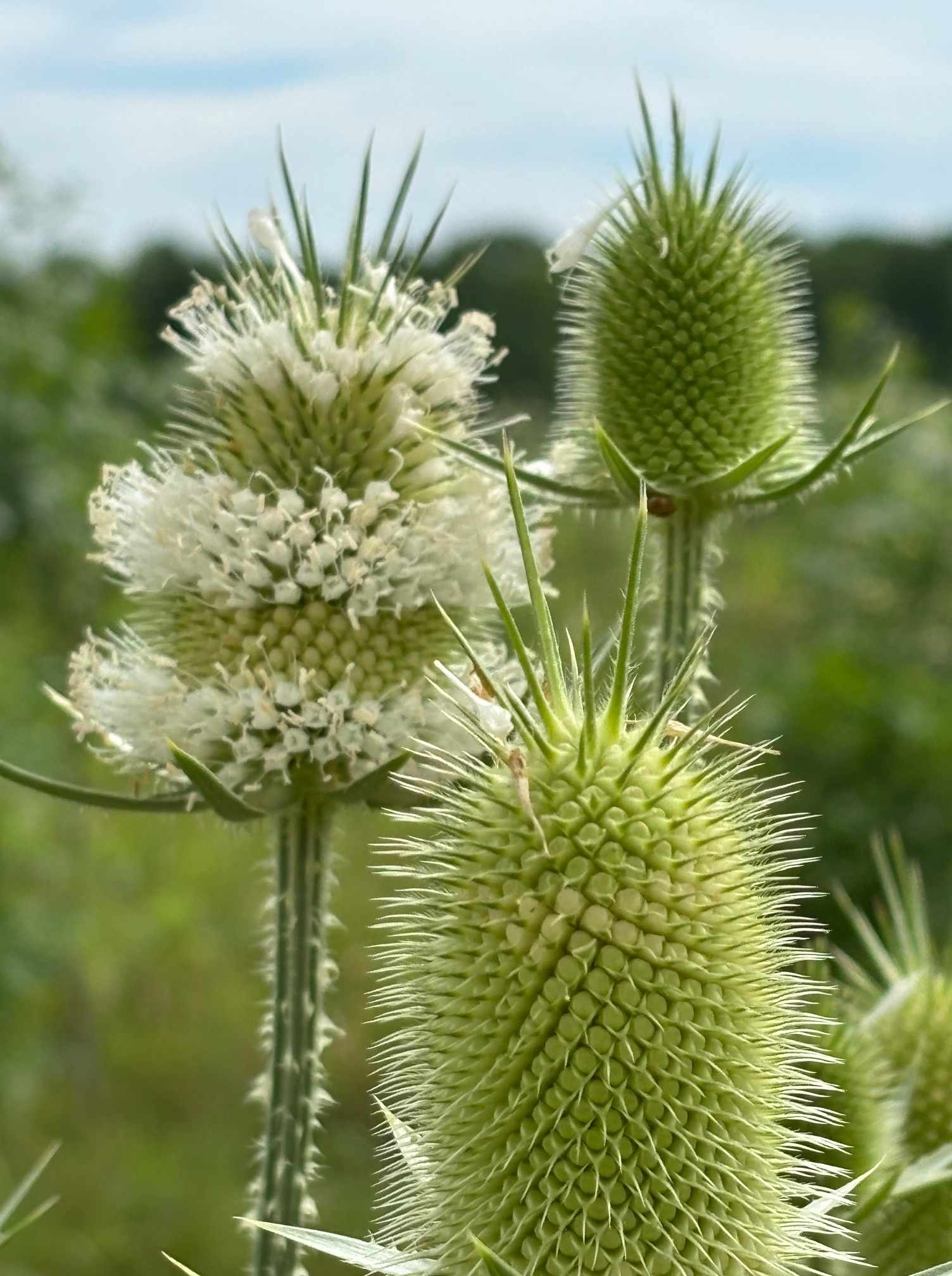
“Lookit,” she said, showing me the photograph that she’d just taken of the dandelion. “Isn’t it perfect?”

Perfect (adjective): flawless. ideal. magnificent. A word of unity. Belonging.

“Yes,” I said, aware of the story-limits of my language. I wondered what it might take for us “to be-ers” to see ourselves as perfect – as a given- to be as perfect as the dandelion.

read Kerri’s blogpost about THE DANDELION

likesharesupportcommentsubscribe…thankyou.

My Fleeting Moment [David’s blog on Merely A Thought Monday]

Alone on the trail we heard a loud pop and then a crack – and then the tree fell. We felt the thud through the soles of our feet.

There was no wind. There was no apparent cause for it to fall. We were, somehow, witness to its final moment as “tree”.

If a tree falls in the woods and someone is around to hear it, it definitely makes a sound. If not? For some reason, in that majestic moment, the quotidian philosophical question popped into my mind and it bothered me. Is human observation really the only validation for existence? Philosopher George Berkeley wrote, “To be is to be perceived.” George didn’t mean perceived by squirrels or hawks or any other critter in the woods at that moment who also heard the sound and felt the fall of the old tree. For humans, philosophers, preachers and politicians alike, human perception is the requirement granting something so grand, something so profound, as existence. How many birds nested in this grand old tree during the course of its life span? How many plants will feed on its fibers now that it has joined the earth?

Hubris is our Achilles Heel.

On our drive to the trail we were rerouted. The road was shutdown in both directions. There was a terrible crash. A car was cleaved, barely recognizable. Certainly there were witnesses to this loud final moment of a human-being pass into non-being. I’m grateful I was not one of them. I do not need to have seen or heard the crash to know that it happened.

Perhaps that is why the question bothered me: “If a tree falls in the woods and no one is around to hear it, does it make a sound?” In a single day, in the space of an hour, I was witness to a tree falling in the woods and aware of a human life ending. I heard the tree so I have no need to imagine what happened. I saw the car, the evidence of the end of human life. I can only imagine.

Horatio wrote a beautiful poem about the death of a salmon after its struggle to return to its place of origin. It’s a poem about the impossibility of life and the cycle of constant renewal. The poem offers we-the-perceivers some rare perspective on the end of life.

I wondered how I could read the days news about starvation in Gaza, brutal raids and deportations without due process…and simply turn the page. That, too, must be uniquely human. To perceive and then tune out. To look the other way, to pretend not to perceive when human beings enact horror upon other human beings. It requires a dedicated lack of imagination.

We are not above it all.

“To be is to be perceived.” Perhaps. It begs an all important follow-up question: In my fleeting moment of human perception, who – or how – do I choose to be?

read Kerri’s blogpost about TINY NAILS

likesharecommentsubscribesupport…thankyou.

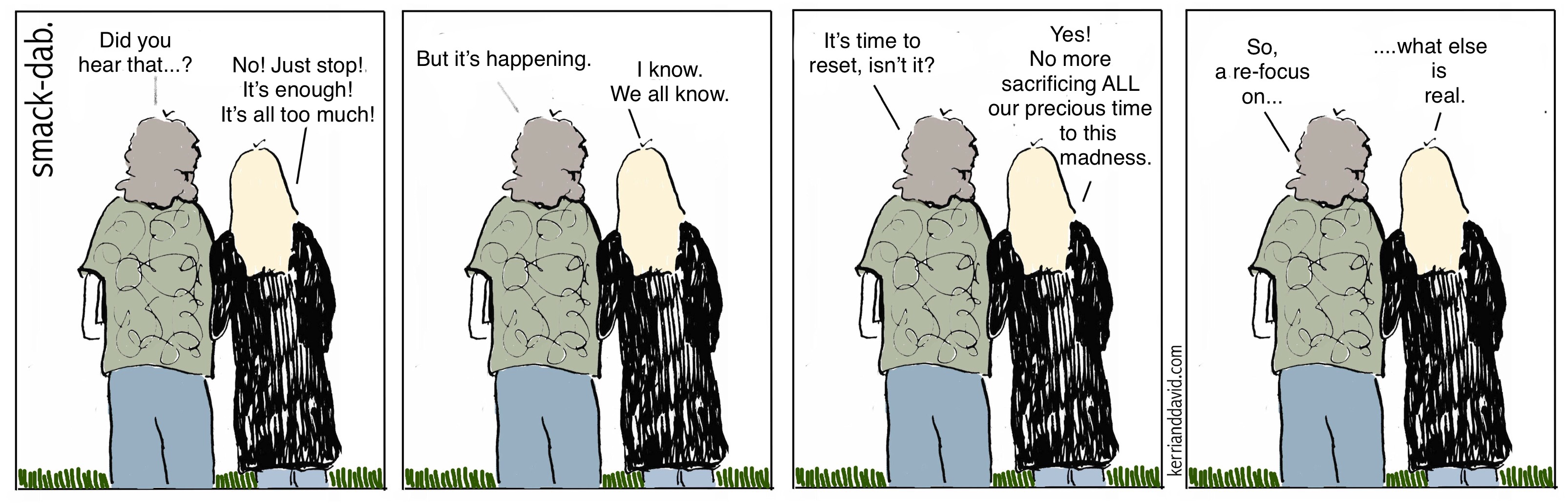
Out The Door [David’s blog on saturday morning smack-dab]

Years ago we created a single panel cartoon called At The Door. The image never changed: DogDog and BabyCat sitting at the front door, staring out into the world. Dogga, ever the idealist conversing with a hyper-cynical BabyCat. No syndicate wanted our cartoon so we let it slip quietly into the portfolio of “tried but no takers”.

Smack-Dab is a cartoon that we never intended to syndicate. It was – and is – for fun. The dirty little secret of Smack-Dab is that I’ve never drawn any of it. Kerri has always cobbled it together from earlier Chicken Marsala panels, mixing and matching images that she plucked from one of the hundreds of Chicken strips. That was, until her computer died. Her Photoshop capacity died with it and, being a child of the Depression, she refuses to replace it as long as her dinosaur iPad Mini is still chugging along.

So, Smack-Dab has unintentionally become a variation of At The Door, only instead of our over-enthusiastic dog and our deeply-distrusting cat, we’re the characters staring out into the community, a community that we more-and-more do not recognize. We see a nation that sells its soul for an airplane. A Republican Congress that stands silently by as bribery, grift, and corruption corrode the foundation of our nation. They could stop it in a moment, this Project 2025 public execution of our democracy, but they are complicit. They are now the poster-party of “penny-wise-pound-foolish;” sacrificing the greater Constitution to protect their personal interest. And that is the sickness that poisons the blood of The United States of America: personal gain smothers community service. It is the cancer that is threatening to kill our nation-body.

And we watch out the door. We find ourselves, smack-dab in the middle of middle age, smack-dab in the historical moment when our leadership failed, when morality collapsed and cowardice prevailed: a golden airplane for a bribe and a military parade to mask the shallow men and women who exchange the land of the free and the home of the brave for a few coins, a Saudi golf course, and a chance to keep their seats warm. And we-the-people, all of us, live inside of their sickness.

read Kerri’s blogpost about SICKNESS

smack-dab © 2025 kerrianddavid.com

likesharesupportcommentsubscribe…thankyou.

With Abandon [David’s blog on KS Friday]

It was my favorite paradox-quote of the week: “The discipline is free association,” he said. Horatio was describing his daily Wordle addiction and extended it to a metaphor for deeper art processes. Horatio is a poet, a writer, a painter, a filmmaker…Like all artists, he understands the necessity of left-brain discipline: technique and function. Color theory. Story structure. Yet, the ultimate discipline, the doorway to flow, is through the right-brain and requires the exercise of letting go of the left-brain-everything-you-think-you-know.

My teachers in theatre school often said on opening night, “Now, all you need do is let go and trust your work.” Let go of listening to yourself. Let go of your internal editor. Let go of self-judgement. Let go of your need to control. Open your heart. Dance the dance without inhibition. Dance the dance with abandon.

Leave your big ole brain behind.

The discipline of free association. It is a practice with layers. Like all life-practices it has no end; it has nothing at all to do with achievement. It’s a discipline like mindfulness is a discipline (a misnomer: mindfulness should be called sense-fullness). The practice becomes a way of living.

Approaching the park she stopped suddenly. I learned early in our life together that walks with Kerri are exercises in seeing. She sees a world that is mostly invisible to me because I am most often lost in my thoughts. She allows her eyes to roam without presupposition. Now, when she stops, before she shows me her photograph, I play the game of trying to see what grabbed her attention, what captured her eye. Inevitably, I am surprised by what she shows me. Her open focus is receptive. She doesn’t predict. She doesn’t seek. She responds. She sees composition beyond what she thinks-is-there. A tree. The lake. A strip of green.

She illuminates for me the extraordinary in the ordinary.

“How did you see that?” I ask.

She shrugs and says, “I don’t know. It was right there.”

To free associate one needs first to be free of preconception. To step on the stage, having done all the work and still be able to say, “Let’s see what happens.”

Kerri’s albums are available on iTunes and streaming on Pandora

read Kerri’s blogpost about THE TREE

likesharesupportcommentsubscribe…thankyou.

A Refresher [David’s blog on DR Thursday]

Jim E guided us – actors and directors – through an exercise he called The Spirit of Play. He was a master teacher. Afterward I made copious notes so I, too, might lead others to their spirit of play.

Through my time in the theatre I guided many groups through the sequence. Later, in the corporate world, finally understanding the essence beyond the progression of steps, I led lawyers, business folk, teachers, coaches, consultants…through variations of Jim’s original workshop, all meant to bring people back to themselves, back to their spirit of play. It was my north star, “People just want to play,” I assured my doubtful collaborators.

Play is an umbrella big enough to safely contain the serious stuff. The serious stuff by itself is too small a container to allow for play. The inspiration-well will always run dry if play is banished from consideration. Unfettered imagination, freedom of exploration and expression, so natural as a child, is shackled when the spirit of play is burdened by a purpose called win or lose.

I recently reminded myself that cloud gazing feels good and requires no other purpose for doing it.

Clearly needing a refresher for my own spirit of play, I went into the studio, pulled out eight canvases, mixed a bucket of paint, grabbed several big tools, scrapers and rags, and to the tunes of Jerry’s jazz band, I spattered, pulled, rolled, scraped, smeared. No thought was allowed, not goal was considered. Nothing serious was entertained. I dropped my very-important-role of “artist” and laughed and laughed.

KDot & DDot See An Owl, 24″x48″, acrylic

read Kerri’s blogpost about CLOUDS

likesharesupportcommentsubscribe…thankyou.

Follow The Hummingbird [David’s blog on Not So Flawed Wednesday]

If you want to understand the power of story – if you care to discover how every cultural story is both universal and deeply personal, take the time to read and reread and reread Martín Prechtel’s small book, The Disobedience of the Daughter of the Sun. After telling the story, he peels back the layers of understanding, the story of the daughter’s disobedience is a roadmap to an intentional life. It is connective tissue to generational wisdom:

“…that though we as listeners have the illusion that we have jumped into the story, the story has actually jumped into us and uses our lives to tell out its story.”

Sitting in our backyard, the sun lowering in the sky, the hummingbird arrived. A hummingbird is featured prominently in the The Disobedience of the Daughter of the Sun and this little visitor brought the story to my mind. Like all deep-story-roots, it is a tale as relevant to us as it is to the Indigenous people who live it – to keep the story alive.

“This is a commentary on the inevitable human problem of tribalism and the tragic results of ethnocentricity. It reminds us that a preoccupation with purity is a sign that a people have lost their real stories, lost their place in history, lost their land and relationship with nature and in an effort to be “someone” they engineer mythologies that are rationalist inventions to corroborate a pure ancestry. This same rationalism probably killed their stories and their Indigenous relationship with the land to begin with.”

Have you ever read anything that so accurately describes our struggle in these un-United States? As we witness the scrubbing of DEI initiatives, the blatant and brutal whitewashing of our nation’s history in order to engineer and perpetuate a mythology of white male purity, a made-up tale planted in the shallow barren soil of nationalist Christianity…we see the undeniable sign that we have lost our real story.

As is true of all great storytellers, Martín guides us toward hope and renewal:

“The story of their cultural loss should be their story, and from that grief they could grow a new culture. If you go back far enough, all people are mixed no matter what they say, and that is no disgrace.”

There is a path. It begins with grieving our loss. Together. And then, there is this:

“The story also says that a peoples’ attachment to their homeland and customs is necessary, wonderful, and life-giving, but should never be allowed to fuel a destructive chauvinism that excludes the rest of the world’s love for its own life and land.”

These are just a few of the lessons carried within an ancient Mayan tale. They are relevant to us today. We need only care enough to open our hearts and listen. And listen again. And then simmer in the slow opportunity that avails itself in the land beyond “problem-solving”.

The promise of our crossroads nation: to grow a new culture. Isn’t that the heart of our matter? Out of many, one.

There’s a hummingbird that can show us the way.

read Kerri’s blogpost about THE HUMMINGBIRD

likesharecommentsupportsubscribe…thankyou.

An Audacious Thing [David’s blog on Two Artists Tuesday]

I love it when the parks department rakes the beach. It reminds me of a Zen garden. Yohaku-no-bi: “The beauty of blank space.” I read that Zen gardens are meant for contemplation rather than meditation. Intentional thought rather than quieting the mind. What could be a better topic of contemplation than the beauty of blank space?

I have given much of my life to sitting before a blank canvas contemplating possibilities. Raking the sand in my garden.

Today Dwight flies to Portugal where he will embark on a pilgrimage. I love what he wrote as he prepared for his adventure: “…what audacious thing might occur to me when I let my mind get quiet?” Embracing the opportunity and the unknown!”

I flipped his words for contemplation: When I let my mind get quiet what audacious thing might occur to me?” Following a sentiment attributed to Aristotle, if “nature abhors a vacuum”, then a quiet mind is an invitation to the audacious.

A blank canvas. A quiet mind. An audacious thing. An embrace of the unknown opportunity. Beauty.

I didn’t intend it but I just wrote a haiku, a send off for Dwight using his own words:

An audacious thing:

An embrace of the unknown.

Opportunity.

Walk in quiet beauty, my friend.

read Kerri’s blogpost about THE BEACH

likesharesubscribesupportcomment…thankyou.

For As Long As It Takes [David’s blog on Merely A Thought Monday]

Dogga lays in the doorway and snoozes. When he hears me coming his little Aussie-dog tail wags. It is a siren call, impossible to pass without kneeling and giving him a pet. And, in those few moments my world becomes a better place.

During the time that my life was coming apart, suddenly without a place to live or the resources to rent another apartment, Carol showed up. I hadn’t seen her in a few years. She found me. She tossed a set of keys to me. “You’re staying with me,” she said. “As long as it takes.” In that moment, my world became a better place.

I have hundreds of those stories. They are ubiquitous and happen every day. I see them all around me when I pay attention.

“I love the sunshine on the quilt,” she said a moment ago. A tiny thing. The warmth of the spring sun a welcome visitor after the cold days of winter. In the sensual beauty of sun on the quilt and her deep appreciation of the moment, my world was made a better place.

Yesterday I read Marion Milner’s words in The Marginalian about the narrow focus of reason and the wide focus of sensation. The narrow focus, purpose-driven, is always seeking happiness in some other place. The wide focus, sensory, is always present in the moment – where happiness is found. She wrote, “I did not know that I could only get the most out of life by giving myself up to it.” Her words made my world a better place. An affirmation.

Touch is a word of the senses. Touch a life and, in return, life with touch you. Touch with simple appreciation and the world becomes a better place.

In the wide focus of the sensation there is no end, no goal, no achievement, no measurement. It is end-less.

In the narrow focus of mind our clocks would have us believe that we are in a race to a deadline. It is a dedication to ends.

In the vast field beyond purpose and gain there is wonder. It is time-less. Touch life with appreciation, with eyes or ears or fingers or taste – and life will fill you with appreciation.

Someone once told me that the world does not need healing. We do. And the healing we need is right at our fingertips. It is the sun on our faces, it is to feel the pull of the wagging tale, to kneel down and fall into a rich loving pet of appreciation. It is to open our very narrow focus, feel deeply, and toss keys to someone in need, saying, “For as long as it takes.”

read Kerri’s blogpost about HEALING THE WORLD

likesharesupportcommentsubscribe…thankyou.