Try [on DR Thursday]

The operative word in this Chicken Nugget is “try.”

To try is a verb, an action. It’s also a noun but the synonyms used in either variation are mostly the same: attempt, endeavor, make an effort.

Try. It’s such a small word but its impact is unfathomable. It is the defining line between intolerance and empathy. Empathy begins with trying to see what others see. Intolerance begins with refusing to try to see what others see.

Try. It is the epicenter of advise that every parent offers to their children. Take a crack at it. Why not put it out there. Give it your best shot. You can’t win if you don’t run the race. You’ll never know unless you try.

A verb. An action. Try. A noun. A way of being.

Try is the foundation stone of curiosity. Wanting to know, wanting to experience what is “just over there.” To see not only what others see, but why they see it.

I sometimes try to see the unbridled enthusiasm that Dogga sees in each and every moment. I try to see the world of unlimited possibilities that Dawson sees every time he touches a crayon or paint brush. I do not delude myself. My eyes are not so pure. But I try.

Imagine what we might do in this world if we only gave it a try.

read Kerri’s blog post about TRY

Live By Increments [on KS Friday]

In this case, healing is incremental. One degree at a time. Her doctor told to be patient. “Expect no more than 5 degrees a month,” he said.

After her fall, the second fall, the one on a newly-mopped-but-unmarked-wet-floor, she had a mere 6 degrees of movement in her right wrist. She showed me her range of motion and the movement was so minuscule that I had to ask, “Did you move yet?” Her stare told me that I probably could have asked a better question.

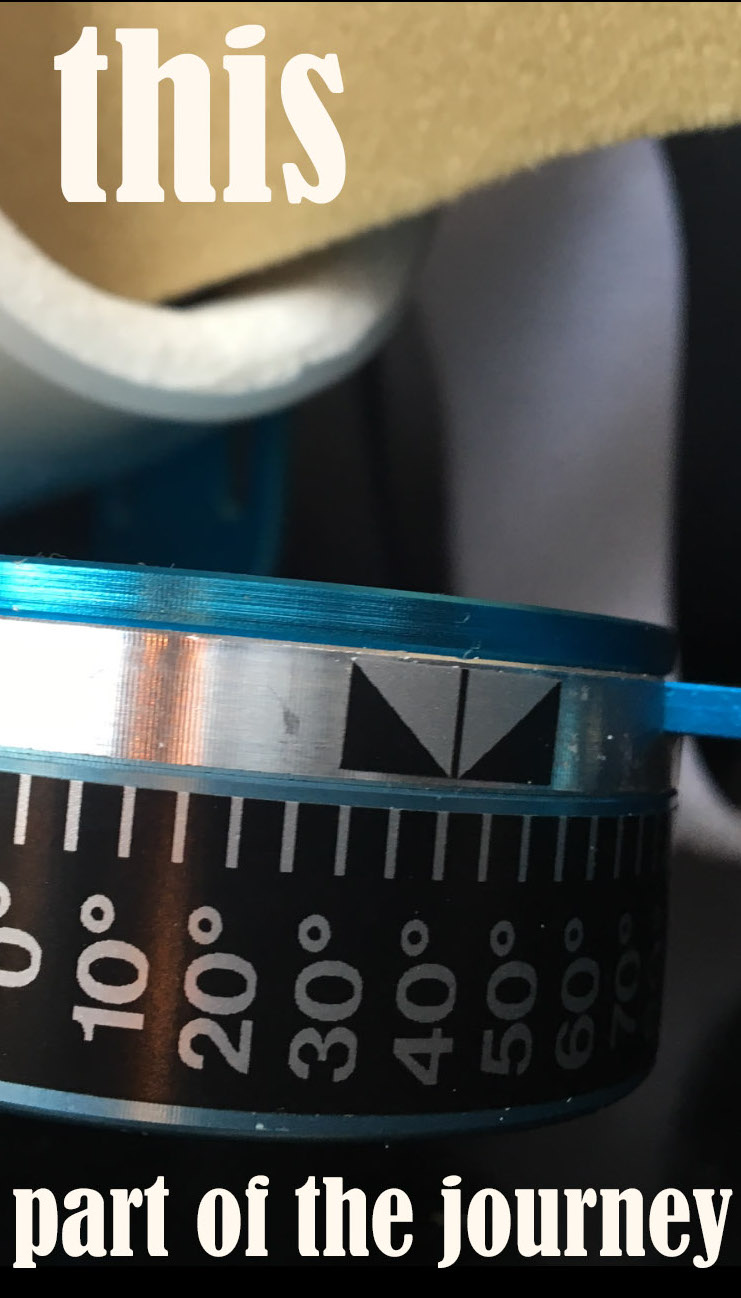
Years ago, preparing to direct a play, I did research on medieval torture devices. You’d be surprised at human ingenuity when it comes to inflicting pain. The device that Kerri uses between occupational therapy sessions to aid in the recovery of her increments looks a lot like the machines I researched so long ago. It has cranks and dials. Straps. It finds the edge of possible movement and then, with one teeny-tiny turn of the dial, stretches a fraction beyond the previous possible. Increments of possibility achieved through increments of pain. Human ingenuity cuts both ways, to the creation of promise as well as pain.

In this part of our journey, we have learned to live by increments. Our journey of a thousand miles truly begins, each and every day, with a single step. The torture device, as we lovingly call it, serves as a mechanical reminder that the greatest triumphs are often the smallest. 5 degrees a month. It’s a reminder that it is best not to rush. One tiny turn of the dial at a time. Each new increment is cause for celebration. My composer wife, in these hard-recovered-increments, steps toward her piano, toward her promise, each day, one step closer.

kerri’s albums, including THIS PART OF THE JOURNEY, are available on iTunes

read Kerri’s blog post about INCREMENTS

this part of the journey ©️ 1997, 2000 kerri sherwood

See The Verb [on Not So Flawed Wednesday]

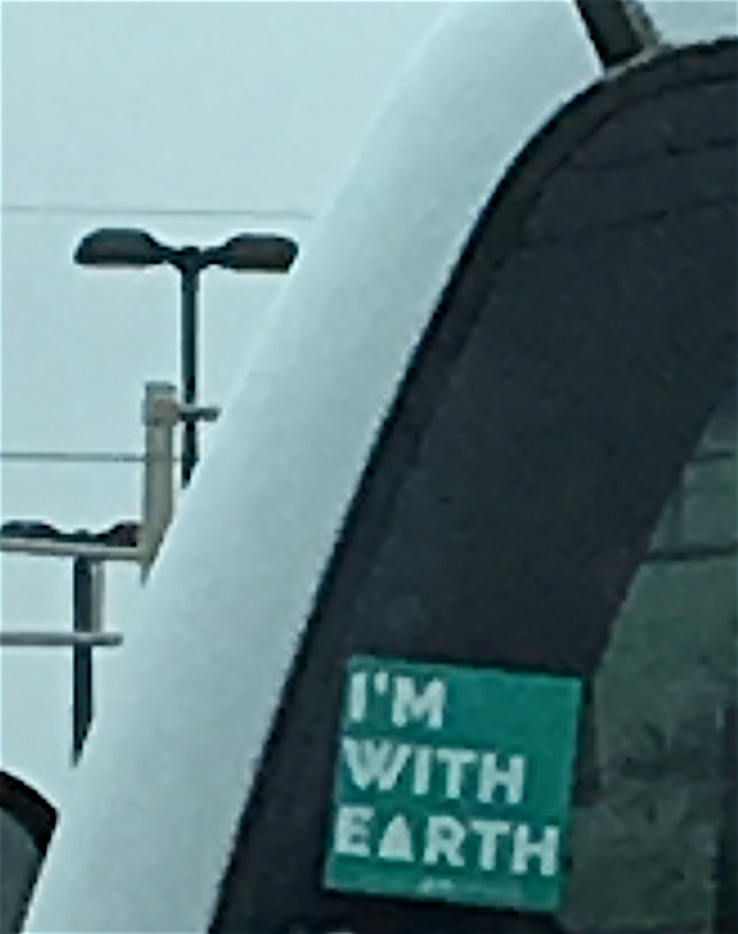
Random fact of the day: my waking thought this morning was about The Geography of Thought. No kidding. It’s a terrific book by Richard Nisbett. The subtitle is “How Asians and Westerners Think Differently…And Why.” Somewhere in the recesses of my brain I must have been pondering the bumper sticker we recently saw: I’m With Earth.*

One of the points made in the book, the one that permeated my dream state, is that different languages place different emphasis on different parts of speech. For instance, many Asian languages place emphasis on the verb. English speakers place the emphasis on the noun. In listening to mothers talk to their infant children, an English speaker will say, “Look at the red truck! Do you see the red truck?” An Asian mother will say, “Look at the red truck go!” Do you see the red truck go?”

Why does it matter where the emphasis lands in a language structure? Noun or verb?

The language we use shapes our thinking and seeing. It shapes basic worldviews. Earth as a noun or earth as a verb. Earth as a stand-alone-thing or earth as a moving interrelationship. These are vastly different worldviews.

This was my thought/image coming out of sleep: earth and sky. In a noun world, earth and sky are two distinctly different things. In a verb world, earth and sky are not separate things, they are verbs, actions, interplay of a dynamic relationship. In a noun world, I am also a distinctly different thing. In a verb world, earth, sky and I are not separate things, we are a dynamic inseparable relationship. We.

The bumper sticker is a declaration: I am with earth. It makes perfect sense in a noun world because it is also possible, in a perceptual world of separate things, to be against earth. Nature needs to be conquered, tamed. In a noun world, earth, once tamed, is a resource and resources are meant to be used. In a noun world, we are capable of believing that our actions have no impact on our environment. Action and environment are nouns, separate things.

In a verb world, what you do to the earth is what you do to yourself. No separation. In a perceptual world of relationship, of verbs, it is understood that your actions not only have impacts, your actions are impacts.

We woke to the news of yet another mass shooting. This one in Colorado. As usual, we know that our community and leadership will offer thoughts and prayers but nothing really – not really- will be done to address it. In a noun world, we protect the rights of the individual, the separate thing. In a verb world, there are no mass shootings. None. Violence done to one is violence done to all. In fact, more people are gunned down in the United States in a day than are killed by gun violence in Japan in a decade. The differing linguistic emphasis extends to differing understanding of rights and responsibilities.

Language matters. Where we focus matters. What we emphasize matters. The story we tell is determined by the language we use to tell it. I am with earth. Or, I am earth. I go to worship. I am worship. I seek purpose. I am purpose. Separation. Relationship. A whole philosophy of living reduced to a simple bumper sticker.

So, when we ask complex questions like, “Why can’t we do anything about gun violence?” or, “How is it possible that people in a pandemic refuse to wear masks to protect each other,” our answer is really very simple: our language makes it so.

Perhaps in a world of nouns a declaration is the best we can do. It is a step toward the middle way, a declaration of responsibility to the commons. Black Lives Matter. #MeToo. Stop Asian Hate. I’m With Earth.

*The “I’m with Earth” sticker is from the very cool company Gurus

read Kerri’s blog post about I’M WITH EARTH

Pace The Loss [on KS Friday]

The loss of BabyCat will be forever linked with my father’s disappearance into dementia. I was away from home, helping my mother move my father into memory care, when Kerri called about BabyCat. One loss was sudden. The other loss is glacially slow.

The pace of loss.

I read once that we don’t lose our beloveds all at once. No matter what, sudden or slow, it happens in stages, the heartbreak comes in pieces. Missing daily rituals. Holidays. Last night, as has been my practice these many years, I peeked over the couch to see if BabyCat was going to “check into the hotel” (sleep on the couch) or spend the night with us. And then I remembered.

When I saw him in Colorado, I thought I had grown accustomed to my dad not being able to recognize me. I wasn’t. The tidal wave of loss nearly knocked me off of my feet. Empty eyes.

It’s been several weeks since Kerri chose a piece of her music for our melange. Both of us have, for reasons we cannot articulate, lately eschewed using our artistry in the melange – my paintings, her compositions. I’ve sorely missed diving into her chosen piece of music when preparing our KS Friday posts. When she decided this morning to use her piece, MISSING, I was strangely relieved. A bit of normalcy returned. As I listened, I found myself lingering in the comfort of her composition, the warm yearning of her solo piano, sun through shades, the promise of spring. I closed my eyes and breathed deeply. The comforting refuge of memory evoked in Kerri’s MISSING. A sweet-bitter pathway through this forest of loss.

kerri’s albums are available on iTunes

read Kerri’s blog post about MISSING

missing/released from the heart ©️ 1995 kerri sherwood

Wiggle And Be Warm [on Not So Flawed Wednesday]

“Cuckoo, jug-jug, pu-we, to witta-woo!” ~ Thomas Nashe, Spring, Sweet Spring

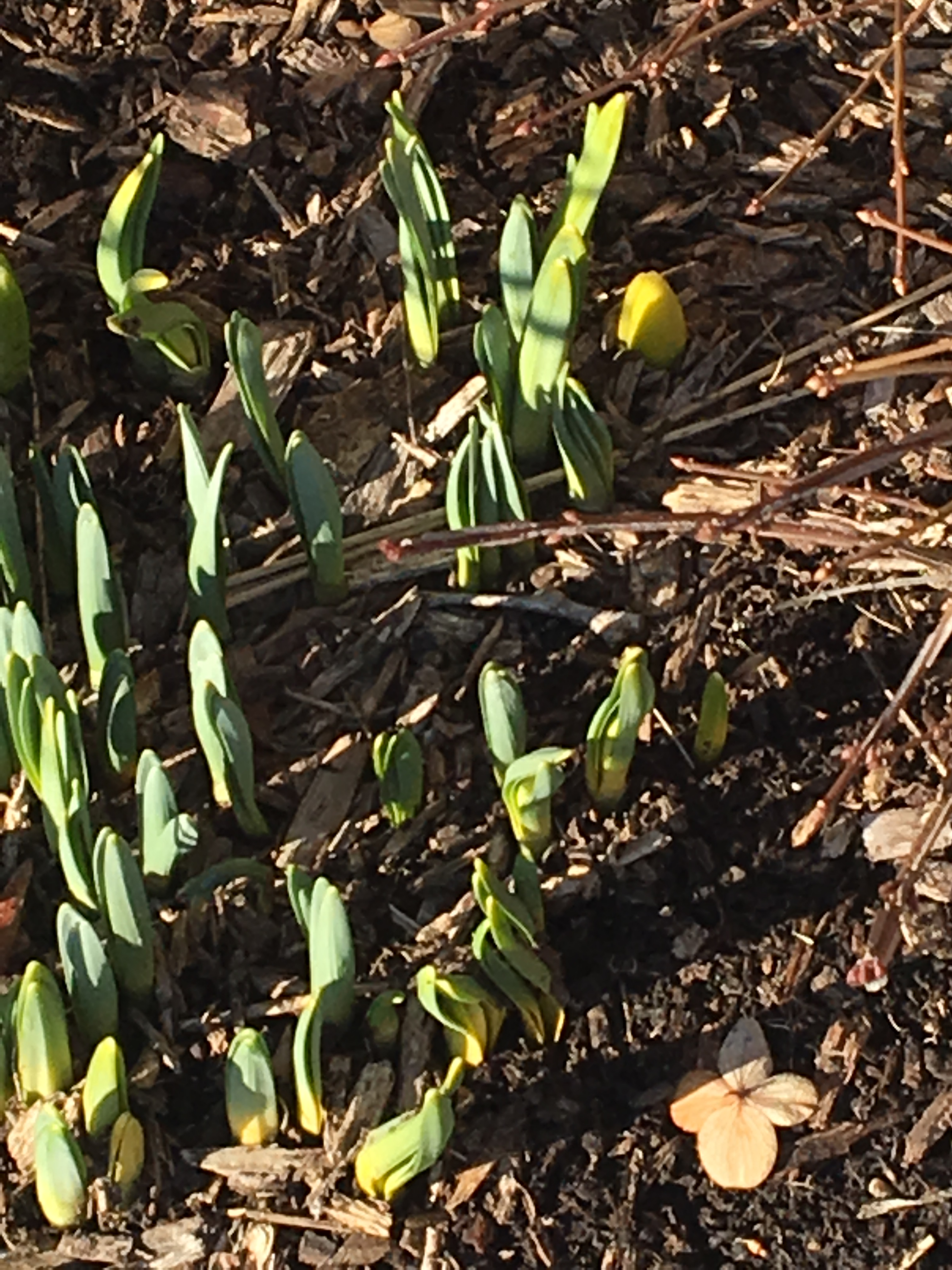
“It’s not possible,” we said in unison. For weeks, the temperatures were bitter cold. The mound of snow at the end of our driveway was as tall as I am. The sun finally emerged. We pulled on our snow pants, our heavy boots, and walked into the snow-shocked world. Rounding the corner by the dentist’s office, at the base of the south facing wall, through a patch of cold wet earth surrounded by mounds of ice and snow, tender shoots of green were breaking through, reaching for the warmth. Daffodils. Spring.

We stood staring as if slapped. It was as if we had rounded the corner and come face-to-face with alien hope, something we thought existed only in some distant future, a Hallmark promise of light in the darkest of winters. Yet, there it was, tenacious and tender, a harbinger of Persephone’s return to the sweet surface of the earth. “I have to take a picture,” Kerri whispered, as I broke into a spontaneous sun dance. Passing motorists stared at the lady climbing into the bushes and the wiggling crazy man.

I felt as if I suddenly held a precious secret. I did a slow 360 degree turn and saw only winter, winter, winter. Cold, frozen, frigid, freezing, ice damming, black ice, snow plow, sand and salt world with people puffed out and covered in too many layers to please-god-stay-warm. And, in the middle of it all, a tiny patch of promise. A force greater than despair or depression or pandemic fatigue. Life.

We stayed just long enough to make sure it wasn’t a mirage, linked arms and set course for home. Cold fingers but warm in our core.

As we trudged home, breaking trail in snow, I thought of a small piece by Ellsworth Kelly. He pasted a chunk of warm yellow on a postcard image, a Japanese print. He called it “Spring (Yellow curve).” A shock of yellow completely out of place yet transforming the entire world. I imagine, one day, he took a walk in the bitter cold and saw a shock of yellow blowing through the soil. So out of character yet so welcome. Spring. Yellow curve. “Cuckoo, jug-jug, pu-we, to witta-woo!”

read Kerri’s blog post about SPRING?

Understand That Little Is More Than Enough [on Merely A Thought Monday]

I think that maybe\ I will be surer\ of being a little nearer.\ That’s all. Eternity\ is in the understanding\ that that little is more than enough.” ~ R.S. Thomas [via Anam Cara by John O’Donohue]

And so our dear H is gone. I have written about him before, about how I learned from him how to age well. To “have a wonderful urgency to live life to the full” [John O’Donohue]. H was a study in wonderful urgency. He did not grow cranky as he grew old. He did not darken his sight with what he could no longer do. He gently pushed the edges of what he could do. He was a master of focus-placement.

I have known many people who proclaim a spiritual life. They are quick to advertise their illumination. They live to stand on the mountain top and call attention to their heights. H was not one of those. He simply lived his faith as he lived his life – without need for acknowledgment or recognition. No trumpet necessary. I suspect that his why I was drawn to him. He was simon-pure. Genuine.

“We’re afraid you’re going to take her from us,” H said to me, more warning than salutation, when I sat next to him in choir. It was my first rehearsal in my first choir and, as an avowed non-singer, I was intimidated. Kerri was the director. She’d recently asked H, at 87 years old, to rap Via Dolorosa. He’d jumped at the challenge and, as I heard the story, performed brilliantly, complete with costume and bling. He and Kerri were thick as thieves.

He guided me through that first rehearsal, laughed when I honked a bad note – which was often, and, by sweet example over time, steered me through my confusion until I found more joy than fear in singing. At the end, as he was moving into his 94th year, just before the pandemic made rehearsals impossible, it was my joy to help him find his place in the music. A perfect circle.

This morning, just before we received the news of his passing, I spent some time in the final pages of Anam Cara. The last words are a Blessing for Death and this phrase struck me: May you live compassionately and creatively and transfigure\ everything that is negative within you and about you. When the news came of his passing, I was certain it was H who’d tapped me on the shoulder and whispered, “Pay attention to this phrase.” It describes him perfectly. It encapsulates what I believe, H, without words, was trying to teach me. Through compassion and creativity, transfigure everything that is negative within you and about you. That is how to live well and age with wonderful urgency. No trumpet necessary.

read Kerri’s blog post about H

Cast A Shadow [on DR Thursday]

“The soul has no limits.” ~ Heraclitus

It was a hot summer night, humid and sticky, and the community was gathered in the outer ring of the temple. The Wayang Kulit master, shadow puppet master, was performing a play. Part ritual, part entertainment, the Balinese have not yet banished their arts from their worship. Laughter is welcome in the temple. Although the puppets are beautiful, ornate, the audience can only see the shadows they cast on the screen. It is a metaphor for life: in consciousness, we see only the shadows. We are the shadows. Our life-stories are illusion.

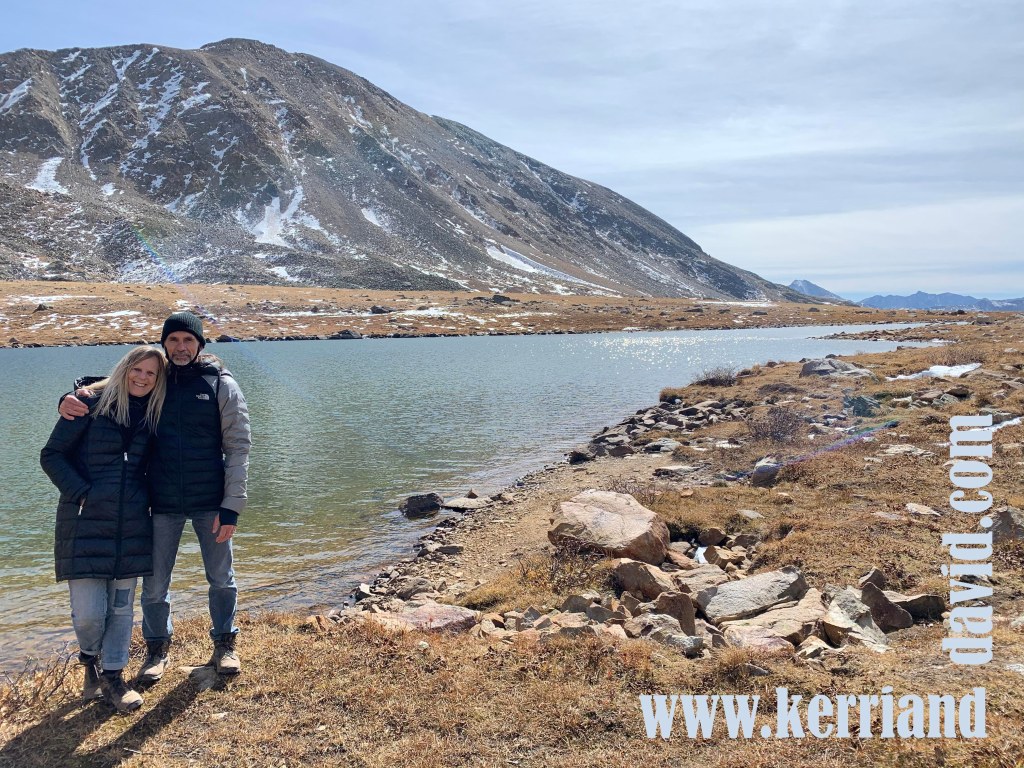
We walked in silence. Watching our shadows on the snow I thought of that hot night in Bali, of my astonishment of the skill of the master, manipulating all of the puppets, voicing all of the parts, a lamp of hot oil burning on his head – the light source to create the shadows. If that were not enough, he conducted the orchestra, seated behind him, by tapping the ground with a piece of wood wedged between his toes. He was a priest. A storyteller, not a preacher. Words and laughter swirl in the outer ring. As you progress to the inner ring, the most sacred place, language falls away, no words are spoken. No words are necessary. Kerri and I, while we walk, often occupy the inner ring. We hold hands. We listen to the sounds in the forest. We cast shadows.

Sometimes I feel far away from that hot summer night. Sometimes I sit right next to it. Our walks bring me closer to it.

It was a revelation to me to sit with people that experience no division between what is sacred and what is not. They do not worship on the weekend and then leave their holy place. To the people watching the shadow puppets, it is all sacred. It is all temple, even themselves. They know themselves as sacred. It is all holy, even to the forks and spoons in their drawer.

The separation they experience in this life – as individuals – is the shadow. Separation is the illusion. Fears and foibles are without lasting substance. The puppet master plays his rowdy tale to remind the people seated on the ground in the temple, that the truth of their existence is beyond the projection on the screen of their minds. Forms are fluid, not fixed. Souls have no limits.

read Kerri’s blog post about SHADOWS

Make Noise [on Merely A Thought Monday]

I am conflicted. I wrote a version of this post and then tossed it away. I’m trying to be less argumentative in my daily writing. And then, Toni Morrison collided with Albert Einstein:

“In times of dread, artists must never choose to remain silent… This is precisely the time when artists go to work. There is no time for despair, no place for self-pity, no need for silence, no room for fear. We speak, we write, we do language. That is how civilizations heal.” ~ Toni Morrison, No Place for Self-Pity, No Room for Fear

I am an artist. Is it argumentative, is it confrontational, to write what I see? Yes. Sometimes. Once, I saw a park service truck, on a trail, quickly backing up. The driver did not see the man in the wheelchair right behind his truck. I screamed and ran and banged on the side of truck until the driver stopped, a few inches from hitting the man in the wheelchair. Sometimes it is necessary to shout and make noise.

All of my life I’ve understood the first rule of being educated, namely, to check your sources, as simple sage advice. It’s a good idea, if you are going to anchor your identity in a narrative, to make sure that your narrative-of-choice is solidly anchored in verifiable substance. Doubt and questioning, used properly, are necessary tools of an engaged mind.

Years ago, Robert Cialdini wrote, “The world abounds with cults populated by dependent people who are led by a charismatic figure.” In other words, people are easily led and – as we have recently witnessed – with disastrous results. All that people ever need do to avoid a nasty drink of purple Kool-Aid is to check their sources. In our day and age it is almost easier to check the veracity of the story-we-are-being-fed than it is to be misled. Almost. One must first desire to be fed the truth, even if the truth challenges rabidly-held belief.

Checking takes less than a minute.

Just ask the now-jailed-and-soon-to-be-tried capitol insurrectionists claiming that they were led astray by a flimflam-president-man. The Big Lie was easy to check. It remains easy to check. Yet, none cared to check it or perhaps refused to believe what they found. Checking the lie, listening to the data, would undermine the tightly held power-narrative of an entire political party. A pathological lies requires more and more effort, more and more outrageous lies, to sustain itself. It should have been easier to check the story than it was to storm the capitol.

Now I see the first rule of being educated, the necessity of checking sources to verify fact, as a dire necessity. It is the flashing red warning signal to these de-united-united-states that there is a cliff ahead. It is no longer a sweet bit of sage advice; it is a survival imperative. Respect for the line – truth or fiction – will determine whether we as a nation unite and grow or divide and collapse.

Many years ago, Robert Cialdini also wrote,“Audiences have been successfully manipulated by those who use social evidence, even when that evidence has been openly falsified.” Openly falsified. He wrote those words decades before tweets, Fox News, and the mega-amplification of all the openly falsified big lies. His words might now serve as the sad single credo of the Republican party.

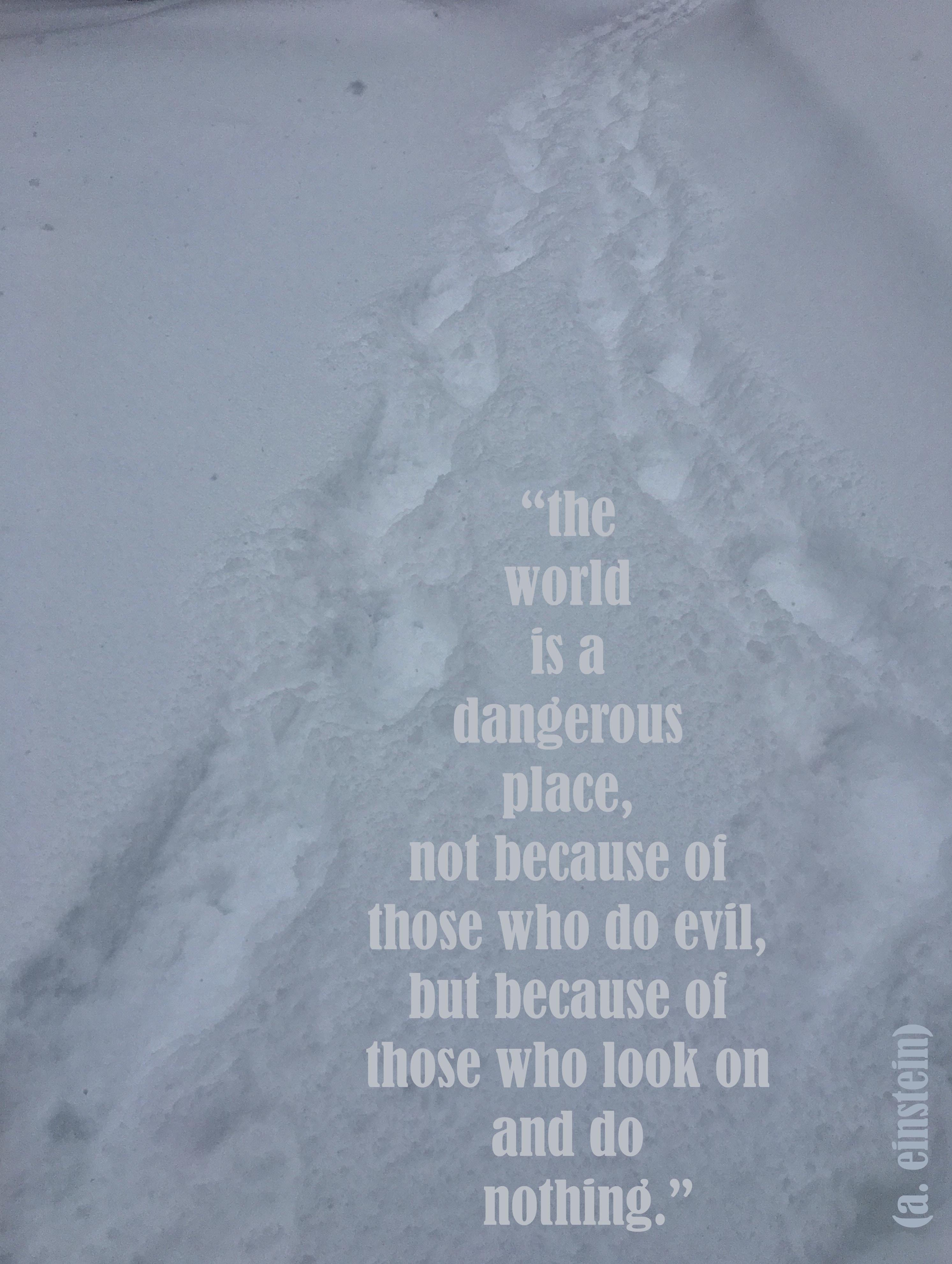
It is not shocking that a political party lies. It is most shocking how little the followers of the party care to check the sources of the enraged hype it daily swallows like so much anger-candy. Dependent people. Easily led. Believe wholeheartedly. Ever expanding lie. No facts necessary. It is far beyond Einstein’s observation of people doing nothing in the face of evil; our nation is in peril because the evil we face is an openly falsified narrative. So many of our people, so many of our leaders, know it is a lie, feed the division, and actively look the other way.

read Kerri’s blog post about DOING NOTHING

Check Your Attribution [on KS Friday]

I have just had a front row seat to a full-blown, hyper-antagonistic, years-long, classic case of attribution-bias-escalation. It was [and is] ugly. The ripples are rocking boats, eroding foundations, ending friendships. The damage is thorough and, as is always true, infinitely avoidable.

Attribution bias. Making the assumption that you KNOW why someone did or said something. Assigning your reason to their behavior.

Years ago, a red faced executive called me, the consultant, in and fumed, “She said THAT to demean me!” I paused and asked, “Do you really know why she said it? Have you asked her what was going on from her point of view?” His blank stare told me all I needed to know. He would rather demonize her, be offended by her, than communicate with her. We sat down, drank a cup of coffee and decided that, rather than fume and escalate, rather than simmer in a victim-stew, he had at his disposal a better path. Communicate rather than assume, ask questions rather than blame, poison the well, and indulge in being offended.

It always amazes me how unconscious and/or resistant folks are to challenging their attributions. How eager they are to spin hard narratives and create vicious persecutors. How invested they become at being offended or otherwise insulted en route to being ‘right.’ It is monster-creation. It provides nothing more than a reason to draw a sword.

We do it so fast. Assume we know. And, once the attribution is made, we hold onto it as if it were gospel. It is easier to believe we know-all-things than it is to step out of the yummy-victim-archetype and ask a few simple questions, confess a few honest vulnerabilities. It is easier, more tasty, to take offense than it is to give consideration. Blame provides a great reason to never ask a question. Being ‘right’ is a hard stop to all inquiry.

In the canon of unconscious bias, attribution is one of the most-oft-used routes to really effective miscommunication. It makes mountains out of molehills. It makes muck from otherwise good working relationships. It savages careers. It makes vice presidents run to the phone and call consultants. It makes councils meet in secret and vote without investigation. It makes revenge a serious pursuit of otherwise grown-up adults. It makes weak leaders run for the basement and hide. It makes new-contract-creation and other tit-for-tat flexing a less-than-fun game of control. No one wins. No questions asked. It makes a hammer the only tool in the tool kit.

A few breaths to simmer down, the suspension of a snap-assumption, an honest “can I talk to you” conversation that comes with no blame and a wee-bit of vulnerability…could make a minor miscommunication remain minor. It could save all manner of hurt feelings, ill intention, relationship destruction, HR costs, separation agreements, litigation…all unnecessary wreckage that might have been avoided with an assumption-made-conscious, an attribution challenged. A simple word or phrase can usually be explained, “You took a bullet meant for someone else, I’m sorry.” Mountains return to molehills when we are willing to turn from our hyper-active-attribution-bias (“I’m right and I know it!”) and ask, “I’m not sure what just happened here. Will you help me understand?”

read Kerri’s blog post about ESCALATION

Hold Hands And Listen [on Not So Flawed Wednesday]

These words, posed as polar opposites, come from the world of relationship advice. The recommendation is to establish clarity. Before you get into trouble, define whether your mate’s need is to be heard or to hear advice, to receive solace or solutions. Offering a solution when the need is solace is not recommended. Knowing my snap-dedication to solving-her-every-need, Kerri will often cut me off at the pass with, “I just need you to listen.” My lending-an-ear is often the only thing she really needs.

I’ve always been a good listener but it is only recently that I’ve discovered that I cannot solve anything for anyone. I cannot spare anyone the necessity of walking through their life lessons. The solving is not mine to do. The discoveries are not mine to make. This comes as a great awakening to my third-child-in-the-family-peacekeeper-identity. It also comes as a great relief. Peacekeeping, as a role assignment, is impossible. It’s akin to herding cats. It’s best to let each cat find peace in its own way. In sitting still, in surrendering the impossible task, my peace, like a magic castle, appeared.

A few years ago, a friend, sensitive to Kerri’s grief, offered her this truism-nugget: there’s only one way to go through it and that is to go through it. Trying to spare or minimize her grief would be to rob her of the depths of her love. Feel the depths. Meet the monster that lives there. Emerge transformed or at least informed. It is how we come to fully know ourselves.

We are learning to walk together with no need to solve. I am learning to hold hands and listen. The walking together, the holding of hands, is essential. The words I spin around our challenges are rarely meaningful and never as necessary as attending to the simple essential of quiet presence.

read Kerri’s blog post about COMFORT OR SOLUTIONS