Let Yourself Go

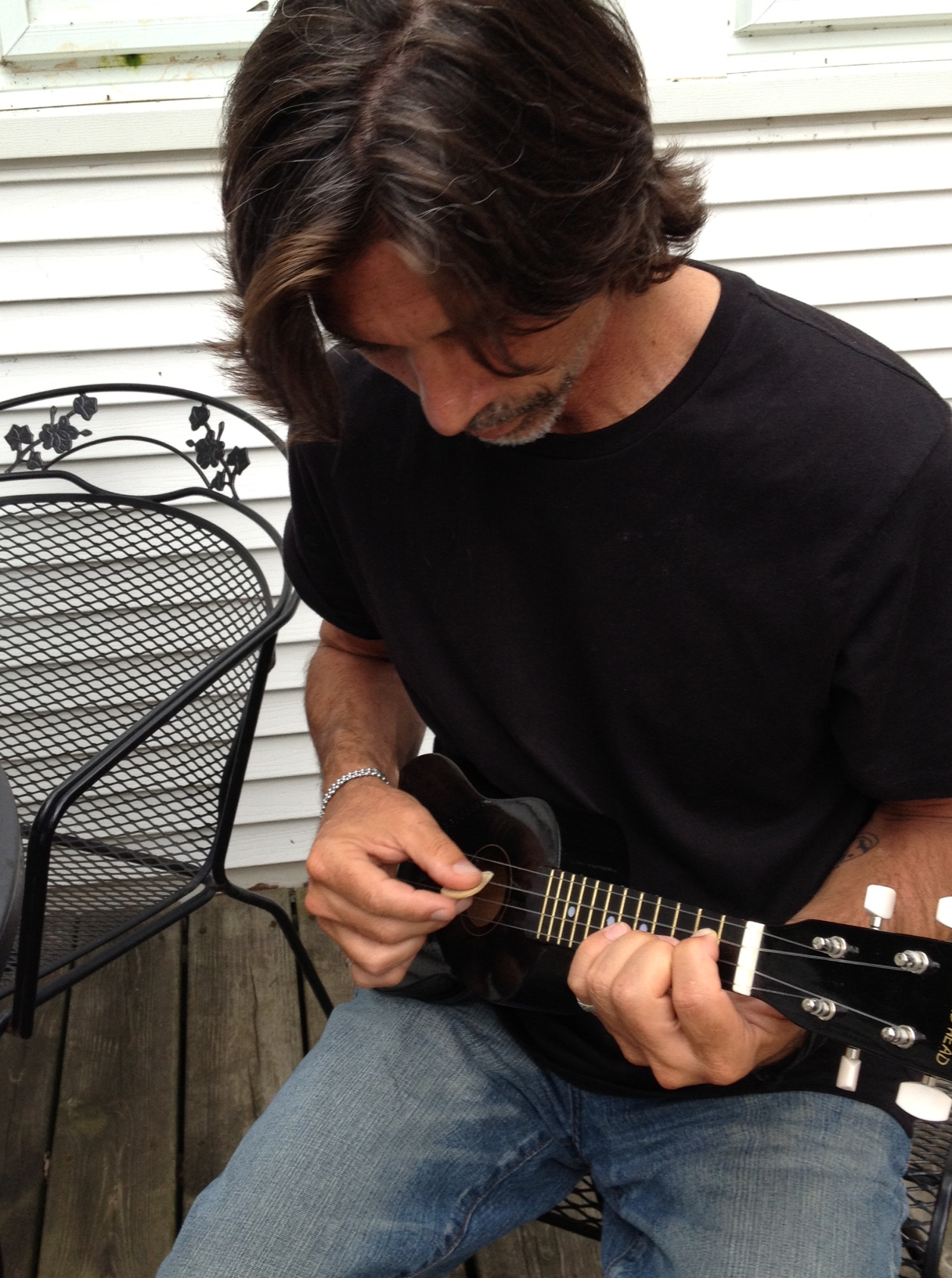
I have no idea how, but I'm making a mess of sound and will one day play the ukulele.

I have no idea how, but I’m making a mess of sound and will one day play the ukulele. Kerri says that I already am…

My meditation on the word “how” continues.

At our recent Summit in Holland, Alan and I asked the question, “What would you do if you didn’t have to know how?” It is a great question. The short answer is this: you’d figure it out. You’d try things. And if your first attempts led nowhere you’d try something else.

In this musing I have often written that “how” is something that is known at the end of the journey. We can’t answer “how” with any honesty until the story is played. Today I recognize that there are two distinctly different “hows:” 1) the explanation, “This is how I did it. This is how you do it. This is the “how” that presumes a path or a prescription. When dealing with this version of “how” I ask groups or clients to consider their life story and tell me how they got to this day in this place doing this job, etc.. The answer is mostly, “A clear path with a lot of happy accidents,” or something like, “I have no idea. I didn’t try.” Yes. Ask me how to paint a painting and I will tell you that I have no idea. I’ve painted a thousand of them and I can teach color theory or composition but I cannot tell you how to open to the muse, how to become a channel for something greater to come through. To paint a painting, to act in the play, to write the book, there is something akin to letting go. There is a divine surrender. So, how did you get to this place in your life? Divine surrender. Happy accident. Unstoppable forces.

If the first form of “how” is an explanation, the second is akin to giving permission. I have worked with a legion of blocked artists who set up studios, buy musical instruments, sign up for improv class,…, and then sit in their studio, stare at their musical instrument, and forget to go to class. When they call me, they tell me their story and always finish the telling with, “I don’t know how….” For my fee, I could say a single, simple word: start. Instead, what we usually do in our work together is find their internal permission. When they realize that their block has nothing to do with “how” and everything to do with the fear of being judged (“how” is an internal braking system meant to prevent starting), when they are ready to, as Saul would say, “Orient to their own concern,” they allow that their opinion of their work trumps all others, they give themselves permission. They start. They play.

Recently, a brilliant woman, an attendee of the Summit, a maker of incredible mandalas, sent me an email with a photo of the start of a painting. She asked for my advice. I wrote: make a mess. Paint on top of the mess. Then repeat. Today in my inbox I received her beautiful mess with a note that their would be more messes to follow. She started. She picked up a brush. She splashed some paint. She splashed some more paint in response to her first splashes. That is how art is made. That is how light bulbs were invented.

This morning I laughed when I realized the double definition of the phrase, “Let yourself go.” In common parlance, it is used as a negative, when people give up, when they stop trying to maintain their health or their appearance, “He really let himself go.” The second possible meaning is to start. To go. The next time someone is sitting in their studio and asks me the question “how,” I will respond like this: let yourself go.

Go here for my latest book. title_page

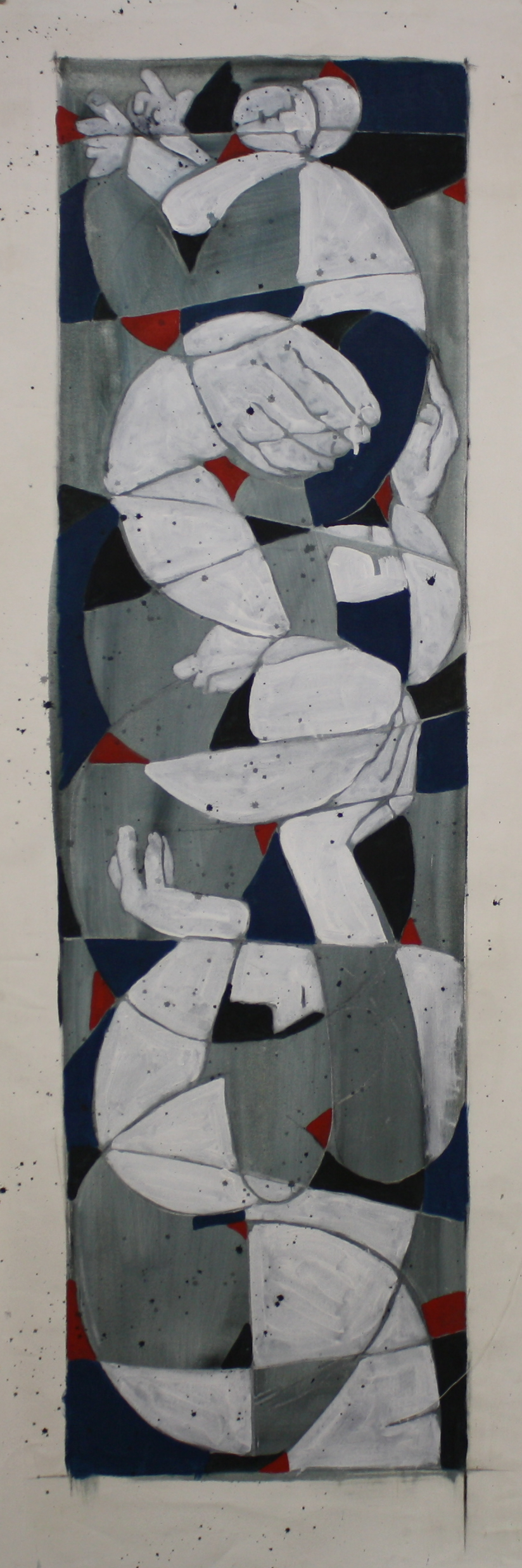
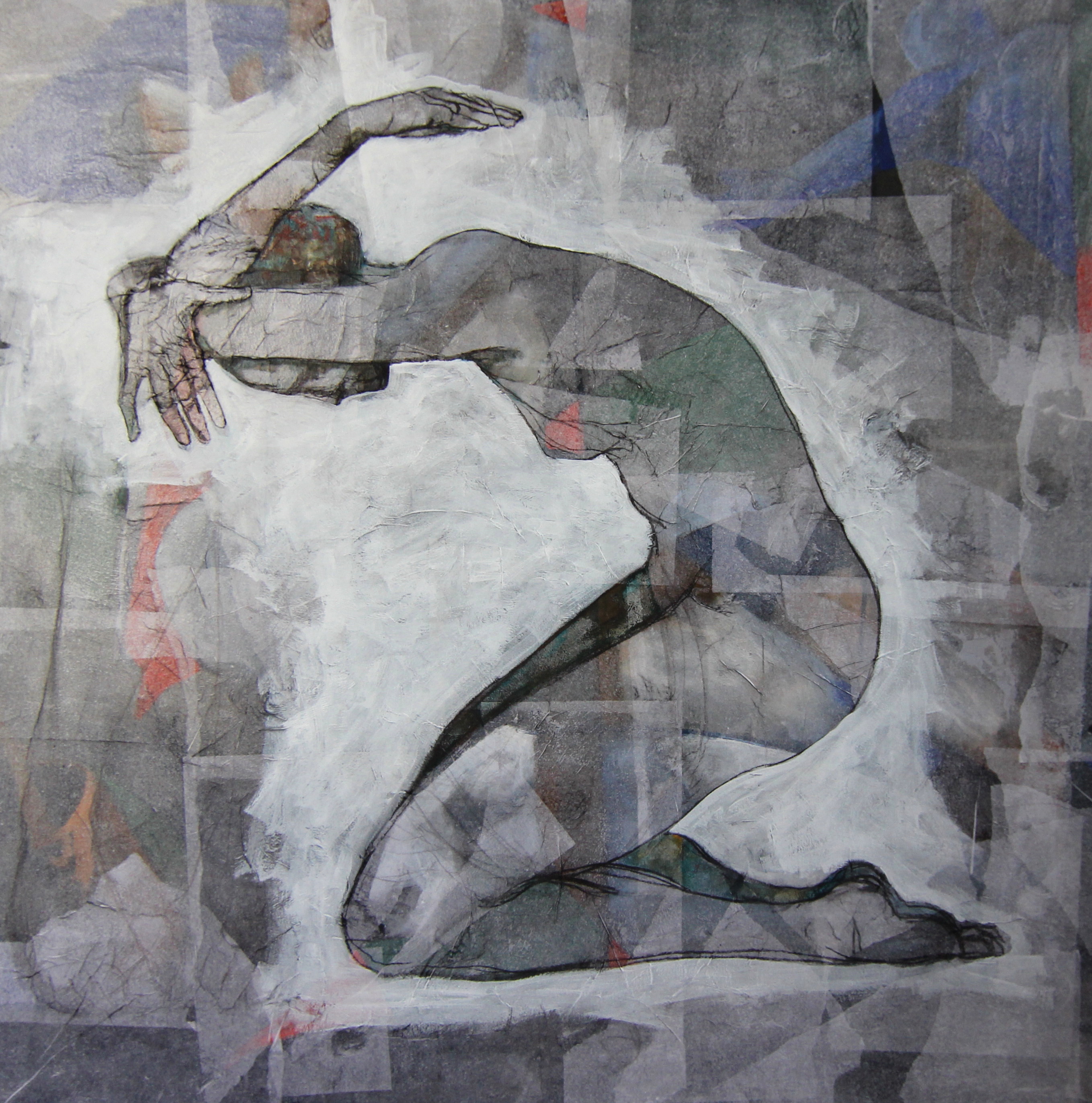
Yoga Series 7Go here for fine art prints of my yoga series (and more).

Unlearn And Step

Helping Hands.

Helping Hands.

I revisited an old journal this morning. I’ve been thinking much about power these past few days and I have a mountain of writing about power. This blog began as an exploration of personal power, the creation of power (power-with), confusing control with power (power-over), grasping power (fulfilling potential) or vampiring (drinking power from others).

Lately, I’ve been thinking that the question “how?” is a form of learned powerlessness. Most people (adults) are reticent to do something until they know how to do it. That’s backwards; no one knows how to do anything until they actually do it. Doing is a prerequisite of knowing how. As a coach I often hear the fear beneath the phrase, “But, I don’t know how…” Needing to know “how” stops all motion.

Children do not have this problem. The firewall-from-life called “how” is learned. Or, more accurately, it is installed. For instance, the other day when Craig and I walked passed the batting cages, he said, “Those things make me shudder. I totally, I have PTSD from those.” He was joking in the way that means, “I’m not joking.”  Shame is a lousy teacher. So is bullying. The message: there is a right way to do it and you better know the right way before you swing. Or else. Shame is a powerful action inhibitor. It is the tool of the powerless teacher. It develops in the student the necessity of knowing “how” prior to taking action. No one willingly steps toward shame or a bully.

The question, “How?” often functions as a form of premature cognitive commitment. It is how elephants are held captive by the weakest of strings. As infants, a strong chain is attached to one of the elephant’s legs and the other end of the chain is secured to a strong tree or stake in the ground. The young elephants pull and pull until they learn that pulling does no good. They stop testing the chain. They make a premature cognitive commitment to their restraint. They will never pull again. A simple string is all that is required to contain the elephant once it believes it has no power. The question, “How?” works just like the elephant’s premature cognitive commitment. Needing to know “how” before taking the step is a commitment to non-action. It is a belief in powerlessness.

On the other hand, to step without needing to know “how” is the equivalent of pulling on the chain. Pull, and see what happens. Transcending “how” is an act of power reclamation. The ability to step without knowing how is central to all vital artistic and, as it turns out, scientific, processes. Discovery precedes the necessity of “How?”

Go here to get my latest book, The Seer: The Mind of the Entrepreneur, Artist, Visionary, title_pageSeeker, Learner, Leader, Creator…You.

Or, go here for hard copies.

For fine art prints of my work, go here.

Embrace The Mess

circa 2011

circa 2011

I did not intend for this post to be a continuation of yesterday’s but when Amy climbed the stairs into the choir loft and said, “I don’t do change very well,” I laughed. It was word-for-word the same phrase that Kerri had just spoken.

For some reason, we’ve come to expect change to be comfortable and breezy. We expect ourselves to be paragons of reason in the face of imbalance. I find this ridiculous expectation of centered-off-centeredness to be suspiciously corporate. Apparently all change needs management and if it is not managed smoothly and without feeling or emotion then it is not well done.

Emotion is messy. Change is hard. The seed cracks before the tender shoot finds its way to the sun. The seed needs to crack in order for the new form to emerge. Hearts are broken, like seeds, to allow new forms to emerge. Even the “right” relationship is dynamic, messy, surprising, joyful, disappointing, filled with fear, the heights of elation, tenderness, quiet, and at the core is this volatile thing called love. Love burns hot during transformation; love is snuffed when excessively managed. Love is transformative when not unduly controlled.

Everyone does change well because change is the nature of our existence. Energy is always in motion. If humans are expert at anything it is change. We do change well because we can’t avoid it. What we do not do well is afford ourselves the grace of feeling the grief, the insecurity, the frustration, the anger, the joy, the exhilaration, and the dizziness that comes with change. We limit our emotional color palate when we confuse change with control. We do not allow ourselves the mess, the unpredictability, and the loss of balance that necessarily comes with this rolling vibrant transformation called life.

Amy would have been more accurate had she said, “I don’t do control very well.” I didn’t tell her the secret: no one who experiences the fullness of life does control well. In the face of her messy, volatile, change process, she wouldn’t have appreciated my counterpoint. When someone is standing in the middle of the muck it is cold comfort to tell them that they are in the right spot. So, I simply laughed, nodded my head, and said, ‘I know….”

Go here to get my latest book, The Seer: The Mind of the Entrepreneur, Artist, Visionary, title_pageSeeker, Learner, Leader, Creator…You.


Go here for fine art prints of my paintings.


State The Obvious

Sometimes it is necessary to state the obvious (to myself). Sometimes, for me, the potency of life is found in stating the obvious: children are born and children grow up. They leave home. They become parents. Parents become grandparents. Grandparents grow old and pass away. At no point do things stand still.

Or, the obvious can be stated another way: children have dreams. They pursue their dreams or run away from them. Either way, they pass through the stages of becoming – and, at some point, believe that they have actually grown into something (doctor, clerk, lawyer, teacher, vagabond, parent, athlete, etc.). They learn that their dreams are infinitely more complex than they realized. All dreams come with challenges, regrets, and discomfort. Regardless of the path, at no point do things stand still.

We want to “get there.” We desire to arrive. Usually, the misperception of arrival leads to crisis when things change. And things always change. This river of life never stands still. It is never static. It is never fixed. The moment of birth begins the progression to dying. And, depending upon what you believe, a new form always arises when old forms fall away. The new form, the new leaf, turns brilliant colors, withers, falls to the earth, becomes soil and mineral, feeds the root, and reemerges as the grape that ripens, is picked, and becomes wine.

Where is the arrival?

Even inner stillness is fluid. Try to hang on to it; grasping always disturbs the pond. Stillness is more akin to surfing than to stasis. Chaos and order are not opposite sides of a polarity; they are essential phases in a single cycle. Ripples are necessary to experience stillness. Fulfillment and emptiness are necessary to each other. One does not gain without losing. One does not live without dying.

There is no arrival. There are fluid moments of recognition, moments of presence (a word that is often mistaken for an arrival). Presence, otherwise known as consciousness, might be defined as the awareness and appreciation of each moment amidst the realization that things always change. To try and stop the river, to hold on to the moment, to try and stop time will always bring frustration. Presence describes your relationship with change.

This is the obvious thing: nothing is certain. Nothing is still. We always step into uncertainty. We always step. We are never still. Our steps are always into the unknown because no one has ever lived their moments prior to the living of them- despite what the to-do list and cubicle illusion might lead us to believe. Realize it and life is rich and mysterious. Resist it and life is rigid and rich with hardship.

Go here to get my latest book, The Seer: The Mind of the Entrepreneur, Artist, Visionary, title_pageSeeker, Learner, Leader, Creator…You.

Or, go here for a hard copy.


Take Casey’s Advice

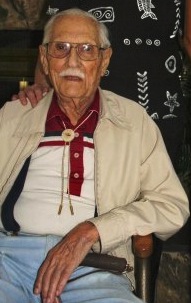
Clarence Ira Metcalf

Clarence Ira Metcalf

The other night we saw the first fireflies of the season. We were sitting by the fire pit. At first I thought the fireflies were sparks from the fire. My mind made a small u-turn when I realized the sparks were, in fact, fireflies. I laughed and clapped my hands. They are magic and I delight at their return.

They blink on. They blink off. I have always thought their light was like a life span or consciousness. We are here for a moment. We are a musical note made meaningful by the silence that surrounds us.

I thought of the first fireflies of the season when I received the news that yesterday afternoon Casey passed away. He was my grandfather. He was working on his 106th year.

Casey was born before people invented world wars. The airplane was in its infancy; it was more of a bicycle with wings than the jumbo jets we know today. He was a young man just getting started when the market crashed. He learned his trade (he fixed sewing machines) during the great depression. By the time people decided that one world war was not enough, he had a family so he fixed sewing machines for the military. He saw Pearl Harbor. Then there was the introduction of the atom bomb, a thing called television, a Korean war, a cold war, a moon landing, and a Vietnam war, and so on. Typewriters became personal computers, phones became cordless, mobile, and small enough to fit in your pocket. In fact, the phone in his pocket had more computing power than the ship that landed on the moon. I’m not sure if he had much use for the internet but he saw the revolution that it inspired.

Casey loved to fly fish. I remember sitting on the bank of a stream watching him whip his line, again and again, until he floated it to just the right spot. He carried a personal pool cue in a special case; he assembled it like an assassin in the movies assembling his rifle. He lost a leg (from the knee) in a hunting accident, and rather than treat the loss like an obstacle, he invented things like gas pedals for his car and for his bike that accommodated his hoof (his prosthetic leg was more hoof than foot. In fact, in my favorite photo of Casey, he is standing in front of a cannon using his hoof/leg as a cannon ball ram).

His garage was a goldmine of machine parts, tools and workbenches. He could fix any machine. I asked him how he learned to fix stuff and he told me that when he was young there was no such thing as a repair shop for your car. If it broke you had to figure it out for yourself.

You have to figure it out for yourself. That could have been the central mantra of Casey’s life and the best bit of knowledge that he passed on to me. He said, “You can figure out anything if you give yourself the time. It’s when people get in a hurry that they decide that they can’t do stuff.”

Go here to get my latest book, The Seer: The Mind of the Entrepreneur, Artist, Visionary, title_pageSeeker, Learner, Leader, Creator…You.

Or, go here for hard copies and Kindle.

Allow Your Wings To Dry

The cicada molting

The cicada molting

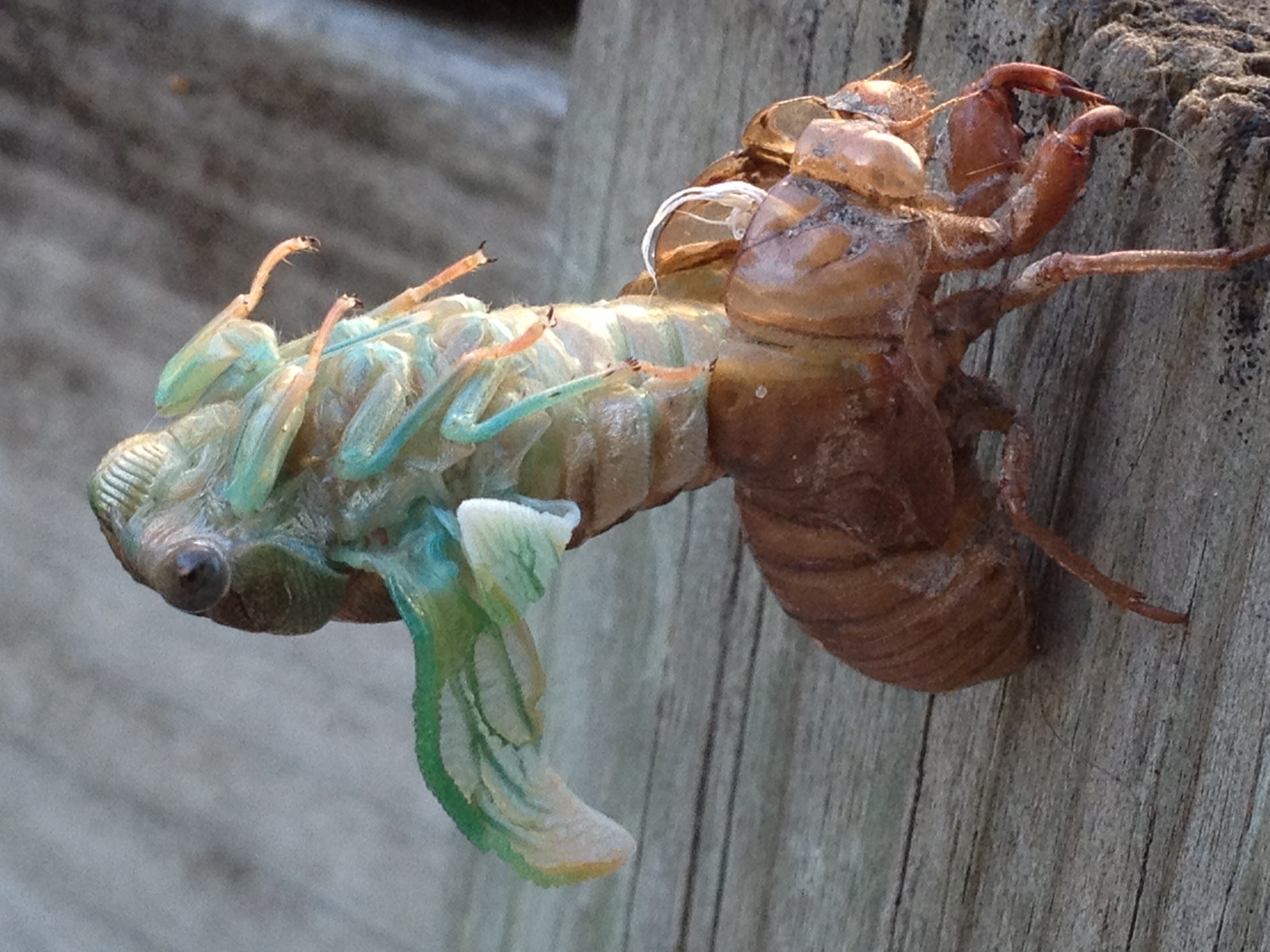
This morning, very early, sipping coffee on the deck, as I was trying to decide whether Dog-Dog would make a better purse or a pair of slippers (he woke us up very early), Kerri said, “What’s that?” Clinging to the corner post of the deck was a small thumb-sized alien. It was a cool blue green monster emerging from the splitting body of a very large red-brown scarab-esque bug. Had I not been so fascinated I would have squealed like a schoolgirl and called in Sigourney Weaver or the Air Force.

A quick Google identified the alien as a molting cicada (special note: for the next two hours we watched this miracle process. “Molting” is a word that must have been concocted by engineers or science-types; it is much too dull a word to describe the magic we witnessed. Shakespeare would never have arrived at “molting”).

photo-5A molting cicada is goldmine of metaphor and symbolism. Since I am human and believe the world revolves around me, I took the metaphors/symbols as personal messages. The most potent was the process of emerging wings. They first appeared as tiny useless rolls that unraveled. Once unfurled, the wings were fragile and useless. They flapped helplessly in the morning breeze. And then they seemed to dry and take shape. They shimmered. The cicada pulled them into its body, tested them, and crawled into the sun.

It rested. That was the reinforcement of a hard-learned message for me. Between each step, the cicada rested. Transformation is exhausting. It did not rush the process. It was not in a hurry to “get there.” It moved through a phase and rested. Each step happened as it needed to happen and rest was essential to each step. It pulled itself from the exoskeleton at just the right moment. It sat still, it rested, as its wings took form and “dried.” Once it had new form, it walked to a more protected spot and sat very still. Its body still soft and needing to harden, it rested.

I do not easily rest. I am reticent to sit still and have had to learn the necessity of rest for transformation to be possible. Rest is part of the process of moving forward. Sitting still is essential to growth. Many times in my life I have argued with school boards for the necessity of daydreaming, the importance of staring out the window. Rest your mind. Relax your heart. Sit still and breathe.

Before and After

Before and After

It is no small feat to exit a too-small-body. It is no small feat to step into uncertainty, to open yourself to new ways of being. Rest is necessary to inhabit your dreams.

Tom used to say, “The readiness is all.” He knew that transformation was possible only when the person was prepared to jump. “The inner work always leads the outer.” Getting ready to jump often looks a lot like doing nothing. Resting allows the wings to dry. Wings need to dry before they are useful. After the jump it is a good idea to sit still and get used to the new body. Stare out the window with new eyes. Discover the new daydream. Rest in the miracle of new space.

Go here to get my latest book, The Seer: The Mind of the Entrepreneur, Artist, Visionary, title_pageSeeker, Learner, Leader, Creator…You.

Or. go here (Amazon) for hard copies.

Know Your Pilgrimage

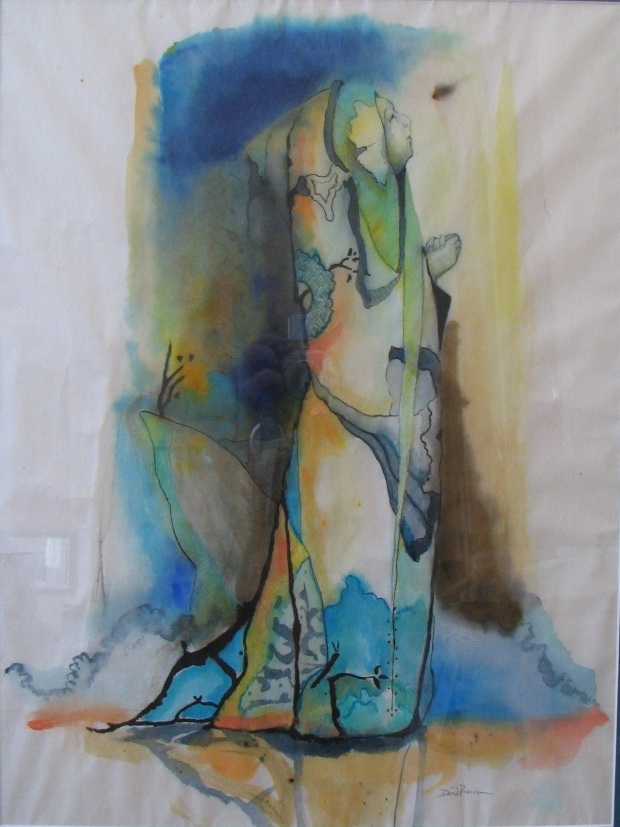
Arnie owns this one. A watercolor from days past.

Arnie owns this one. A watercolor from days past.

I keep notes and short phrases to spark thoughts for future posts. The notes are scattered everywhere: scribbled in margins of my notebooks, written on Post-it notes stuck to the wall or in a helter-skelter line running the length of the table, or cryptic messages typed at the bottom of other documents. This morning I caught sight of this prompt:

Pilgrimages are supposed to be arduous.

During facilitations I used to tell groups that people without challenges create challenges. These created challenges are called hobbies. Or, really bored people create drama: drama is a unique challenge otherwise known as gossip.

People thrive when challenged. People grow when challenged. When I was a teacher I used to love the skateboarders. They’d dedicate hours and hours of repetition, broken wrists and ankles to master a move. Every athlete and artist knows the journey to their personal Everest is fraught with challenge and impossibility. That is why they do what they do. One of the people I admire most on this planet is John Kirschenbaum. He is a master woodworker. His criteria for taking on a project: it has to include something that he does not know how to do.

The idea that a good life is safe and easy is a marketing idea meant to sell you a suburban house in a gated community that includes a hot tub. It is also a recipe for boredom and frustration. It is also a lie. A good life is not without obstacles just as a good story is driven by challenges. A good life is not safe or easy. A good life is passionate. A life well-lived has a bliss-center that is focused on fields of potential and not fears of failure. A life well-lived does not avoid challenges; it embraces them. It courts them. It celebrates them.

Pilgrimages are meant to challenge you. They make your feet ache while they open your eyes and heart. They are meant to help you recognize what matters and what does not.

Go here to get my latest book, The Seer: The Mind of the Entrepreneur, Artist, Visionary, title_pageSeeker, Learner, Leader, Creator…You.

Or, go to Amazon: The Seer, David Robinson

Give As Love

The stack of paintings sitting in my basement waiting for me to show them.

The stack of paintings sitting in my basement waiting for me to show them.

Sitting in the choir loft this morning I was at first disappointed that the stained glass window was silent. I was so full of questions – and have lately been so full of questions – and have come to look forward to hanging out in the loft, conversing with the window, while Kerri plays a service.

When I bring my questions the window always has something to say. The window offers a better set of questions or a startling reflection or a slap of insight. The window’s responses always come in the form of a message of return (return to heart, return to forgiveness, etc.). If I get quiet and ask my question, out of the peace, a conversation always ensues. Today, from my quiet, I asked my question about artistry, about my artistry, and I was met with an unusual silence. I wrinkled my brow. I wondered if my conversation with the window had come to an end or if perhaps my question was out of the scope of topics for a stained glass window.

There was a visiting pastor, an elder who’d been preaching for over 50 years. I sat up and paid attention when he began his sermon this way:

“Artists have a special gift. They help others see in a new way….”

His message was about love. Love, he told us, takes many forms and the form that love takes depends upon the unique gifts of the lover: a symphony is a gift of love, a painting is a gift of love. A plumber fixing a broken water main late into the evening is a gift of love. “What is your gift? he asked. Do you recognize it as love?

A few years ago, on New Year’s Eve, I visited a tarot woman at a bookstore in Denver. During our session she asked me a question that felt like a cold slap in the face. “You know god’s voice,” she said. “Why do you not use it?” I mumbled a lame excuse that dribbled into silence. “Why do you not use it?” she asked again.

Sitting across the table from the tarot woman, I knew without doubt that I have, my whole life, been a great servant to other people’s artistry but a lousy servant to my own. In my life I’ve been the midwife to many people’s gifts while mine have remained mostly unrealized.

The window whispered, “A painting is a gift of love. So is a play. So is a book. These are your forms of love. Your gift is a gift of love. Love is god’s voice and you know god’s voice.”

“I do know it,” I said, timid to admit it. “Don’t we all?” I asked the window.

“Access is open to all. Few actually listen,” the window replied. “Few know how to listen. Most fear their gift and plug their ears.”

To offer my gift without inhibition is how I best express love to the world? That was old and new for me at the same time. I asked the window, “How many artists need to hear that message? How many people need to hear that message?”

“You are deflecting. You deflect your gift by serving other people’s purposes before your own. These questions you ask are the wrong questions,” said the window. “Yes, of course, all people need to hear the message. But, is it your purpose to deliver the message or is it your purpose to fulfill your gift? Helping others hear their message is not yours to do. Yours is to fulfill your gift and, in that way, help others to see their gift in a new way. You need do nothing but give your gift. They will see or not without your intervention. Love by giving your gift. It is simple. Give your gift, give your love, without reservation or doubt.”

“Love can be how you listen to a friend in need,” the pastor said. Love is not about the rules or the restrictions. Even when you try to alienate love, it will always find its way back to you. It will find its way back through you.

“You know god’s voice,” the window continued. “And you know it. Return to the truth; return to your truth. The question, ‘Why do you not use it,’ no longer matters. It, too, is a deflection. Asking ‘why’ merely delays the giving. Use it. Give it. Give as love.”

Go here to get my latest book, The Seer: The Mind of the Entrepreneur, Artist, Visionary, title_pageSeeker, Learner, Leader, Creator…You.

Or, go here for hard copies.

Return To Your Self

DSC_1914

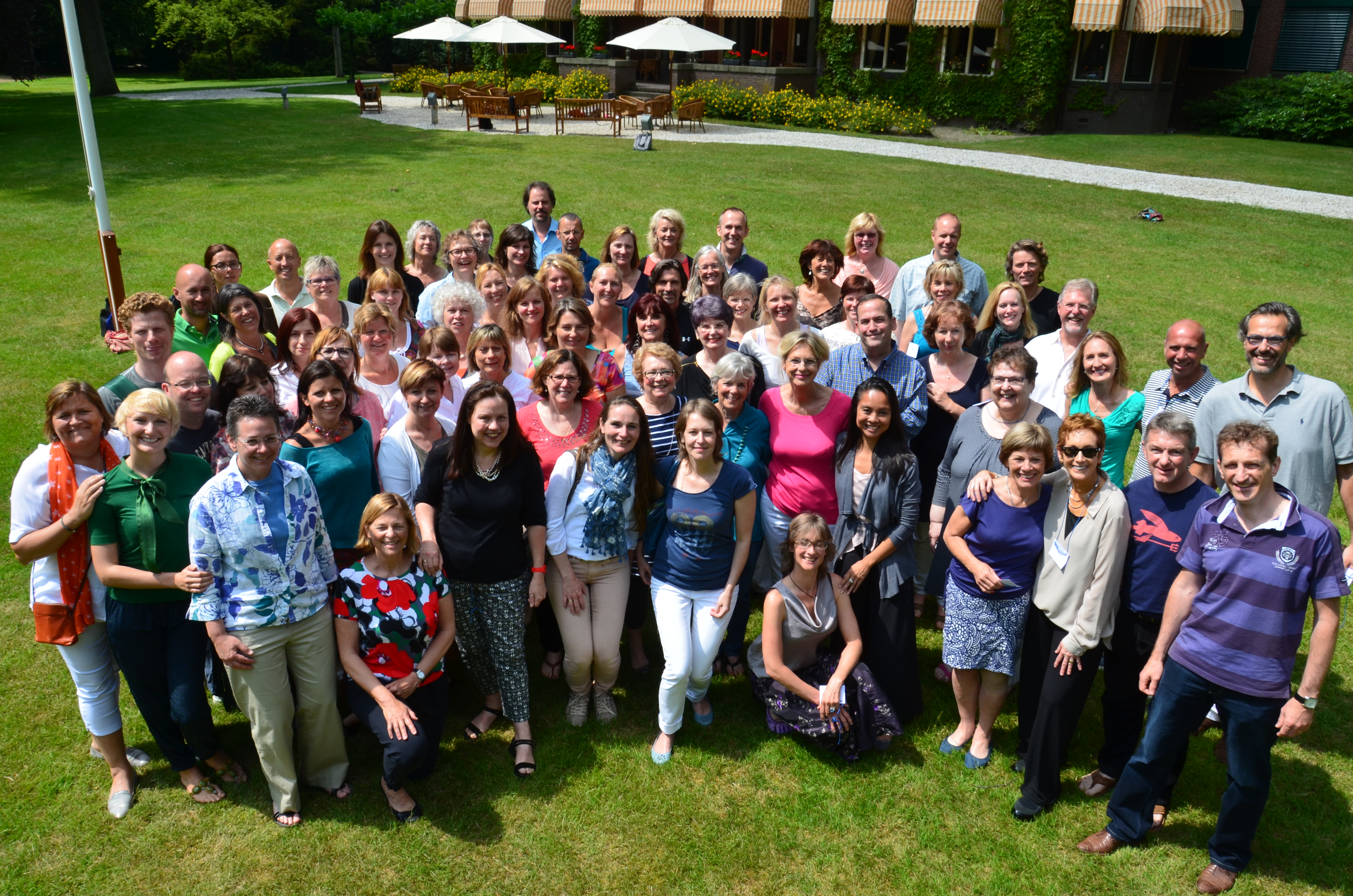
The 2014 Transformational Presence Global Summit in Vught, Holland

While in Holland I led a group through a segment of an exercise called The Dream Police. I created the exercise years ago with John Langs and Lisa Paulson – two master teachers and performing artists – while doing some work with young actors at PCPA Theatrefest. The original exercise is deeply rooted in ritual and communal transformation. The group in Holland was engaged in a more personal exploration so I only led them through the first part of the exercise.

It is surprisingly potent and I’ve learned to use it carefully. The first part of the exercise sounds simple but can be explosive: Write for 5 minutes as if, in 5 minutes, your memory will be wiped clean. All that you will know of your life, of your values, your relationships, your dreams, your identity… will be what you capture in those few moments of writing. After the writing, in a ritual act, the scribbles on the paper are left behind. Most often, people destroy the paper. They shred it. The writing is lost. The question becomes, “Who are you without your story?” It is intended to disorient so the participants might reorient to the essentials of their lives; it is a great exercise for cleaning the gunk. It can be freeing. It can be terrifying. It is always illuminating.

The reorientation process is impossible to do alone. Reorientation is communal. Until Holland I’d never left a group midway, I’d never let the exercise stop in the middle of the disorientation and had always before made sure the reorientation process was at least initiated. IN Holland, the exercise was interrupted. The disoriented community fragmented. Some left the exercise feeling liberated. Others were angry. Some were confused or frightened. All left by themselves. Disorientation makes lonely introverts of us all. Disorientation is an individual sport.

The ritual of coming back to yourself is always a ritual of returning to the community. Clarity is a boon that requires sharing with others. To come back to yourself is to come back to relationship. No one walks this earth alone. No one is capable of saying “This is me,” without the presence and assistance of others. The process can be volcanic. It can be quiet and intense. It always requires another question: “Will you tell me what you see?”

24 hours later we completed the exercise. The individuals returned. They gathered, reoriented and a new form of the community was born. I knew all was well when the newly reformed community asked, “What do we do now?” and the only available answer was, “We don’t know – but let’s find out together.”

Go here to get my latest book, The Seer: The Mind of the Entrepreneur, Artist, Visionary, title_pageSeeker, Learner, Leader, Creator…You.

Or, go here for hard copies.

Ponder The Pieces

Kerri's head exploding.

Kerri’s head exploding.

My beautiful Kerri’s head just exploded. I am currently surrounded by exploded head-bits and a dog-dog running loops around the house from the thrill of experiencing his first head explosion. Baby cat had the good sense to hide. There’s nothing for me to do but drink wine and write this post. And drink more wine.

Heads explode when the world ceases making sense. Beaky, Kerri’s mom, 93 years old, is no longer capable of crossing the room with her walker. Mobility is a problem and the source of Beaky’s despair. For months Kerri has been working to get Beaky an electronic wheelchair. Her doctor prescribed it. A physical therapist diagnosed it. A bevy of nurses recommended it. A mountain of paperwork was filled out and filed for it. Medicare did the expected and requisite thrice denial before begrudgingly approving a lesser model (apparently, Beaky looks like a reckless driver and can’t be trusted with too much speed). At long last, after hours of phone calls, pleading, cajoling and begging, the chair was ordered and scheduled for delivery. And then there was Jose. The man who measures aging bottoms to make sure the chair is a perfect fit decided that, while measuring Beaky, she was not yet ready, at 93 years of age, to have an electronic wheelchair. His reason: Beaky is too mobile.

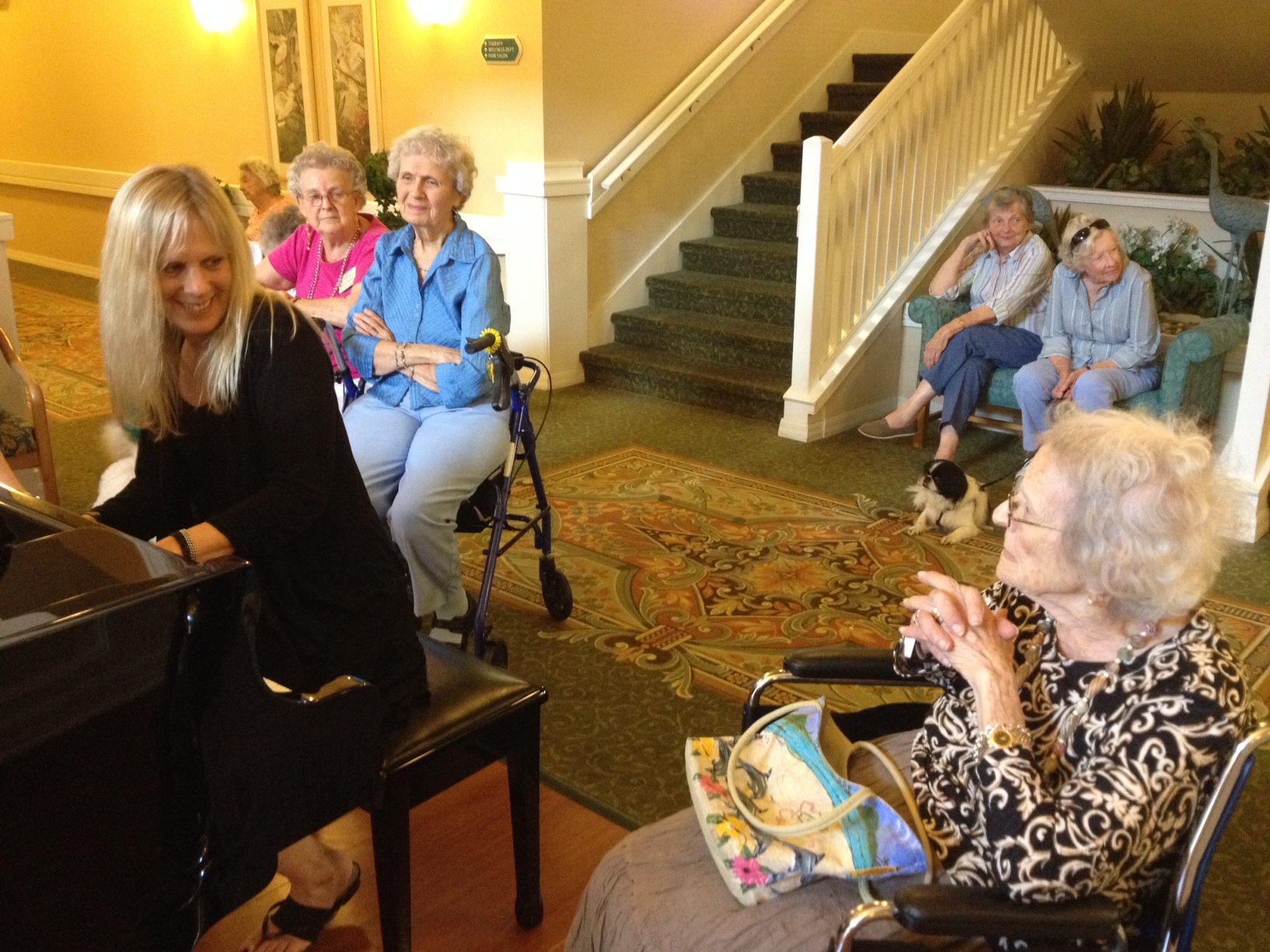
Kerri playing for her mom and the other ladies.

Kerri playing for her mom and the other ladies.

I wish I had filmed Kerri’s head explosion. I’d send it to Jose, the man with the measuring tape and the power to explode heads. As I watched the pieces of her mind drift back toward the earth I couldn’t help but remember the statistic – relative to the rest of the developed world – of how much Americans pay for their health care and how little they actually receive. Our costs are astronomical. Jose just showed me why. I wondered how many man/woman hours of work that Jose just annihilated. As Kerri said to the electric wheel chair supply company representative, every day of Beaky’s life is an extra inning or like a dog year. It is a gift. To tell this woman that it will only be a few more months before she will be approved is cruel. It need not make sense. It is merely cruel.

On another related note, today was Josh’s first day of work as a nurse in an emergency room. He wrote that he had a very good first day. The highlight was extracting a penny from a young boy’s nose. Apparently, the boy tried unsuccessfully to swallow the penny and coughed it up and into his nose. A hole in one! What are the odds of such a perfect shot? If I ever have a penny up my nose I want Josh to do the extraction. He cares for people. He is kind. Mostly, I want Jose, the man with the tape measure, to meet Josh, the man who helped a kid with a penny problem, so that Josh can explain to Jose how to recognize a person in need and what it means to serve. Service often requires dropping the tape measure and looking at the person being measured.

I suppose this is yet another tribute to Doug whose wisdom is worth repeating: “Your problem,” he said to me, “is that you want it all to make sense.” The path to happiness, according to Doug, is to cease the expectation of sense. No mother can make sense of a penny lodged up the nose of her son and Kerri will never be able to make sense of the man with the tape measure. It was her attempt at sense making that caused her head to detonate. I’ll keep that bit of information to myself until all the pieces find their way back to earth. In the meantime, let’s have more wine!

Go here to get my latest book, The Seer: The Mind of the Entrepreneur, Artist, Visionary, title_pageSeeker, Learner, Leader, Creator…You.

Or, go here for a hard copy and Kindle.