Cross The Boundary Of Elements

TODAY’S FEATURED IDEA FOR HUMANS

Cross The Boundary

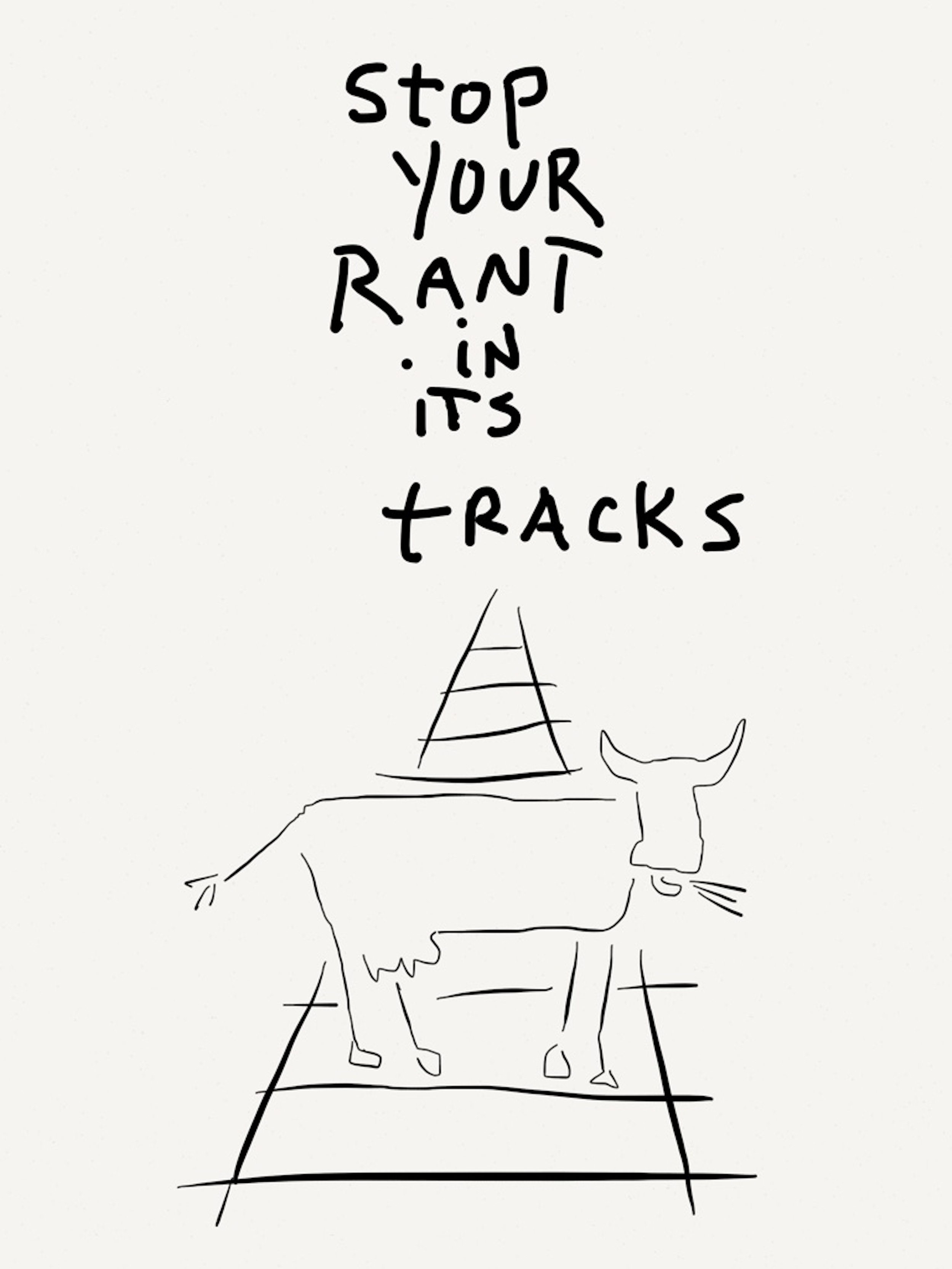
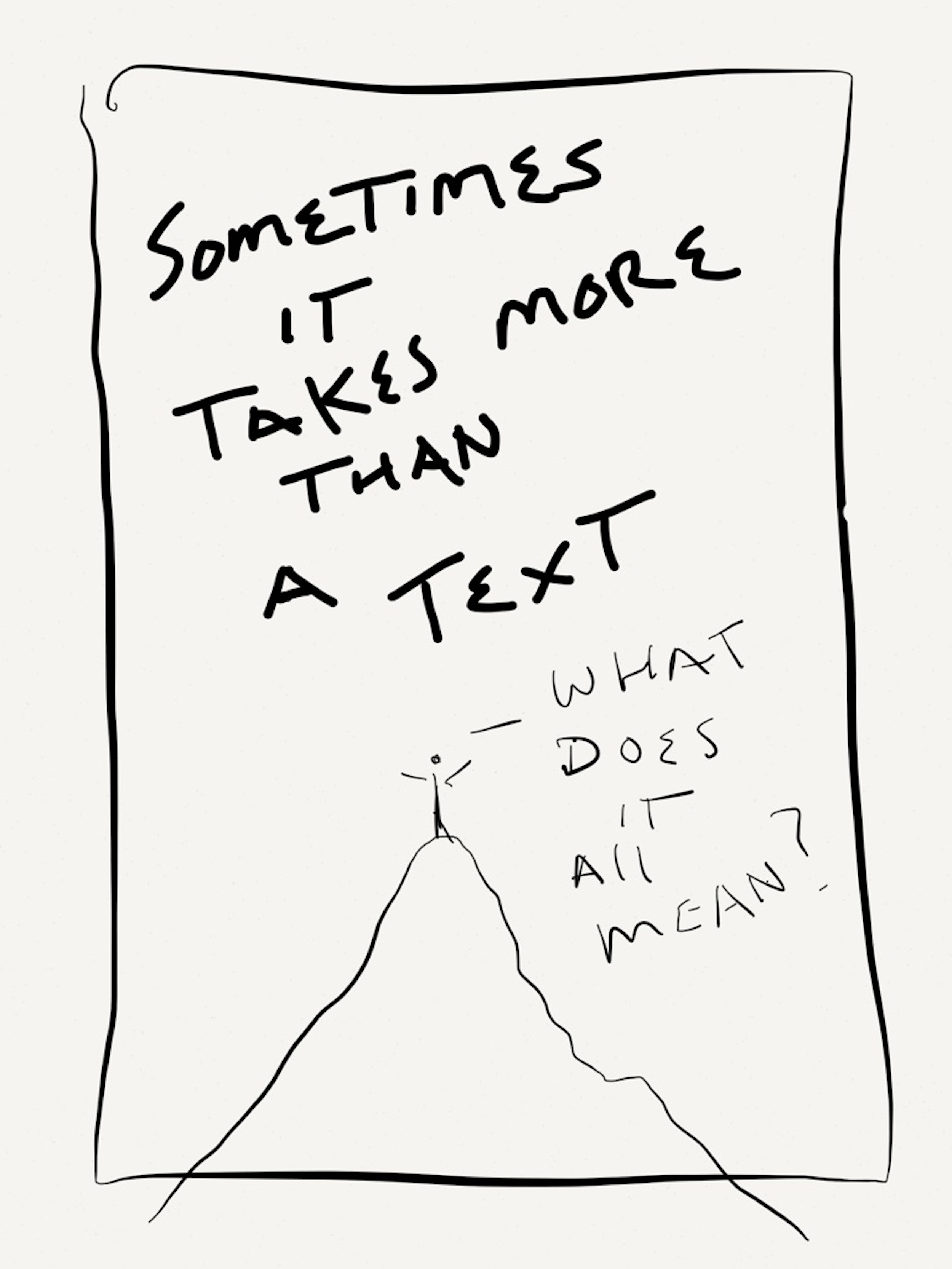
In a world of right and wrong, yours and mine, red states and blue, crossing the elements means relinquishing the idea that “I know,” or that “I’m right.” My “normal” may not be your “normal;” it’s a good bet that my perspective is not your perspective. Cross the boundary of elements and stand for a moment in other people’s shoes; swim in their element.  Reach across the known to see what they see. Find the middle way.

 FOR TODAY’S FEATURED PRINT FOR HUMANS, GO HERE.

Reverse The Direction Of The Pull

TODAY’S FEATURED IDEA FOR HUMANS

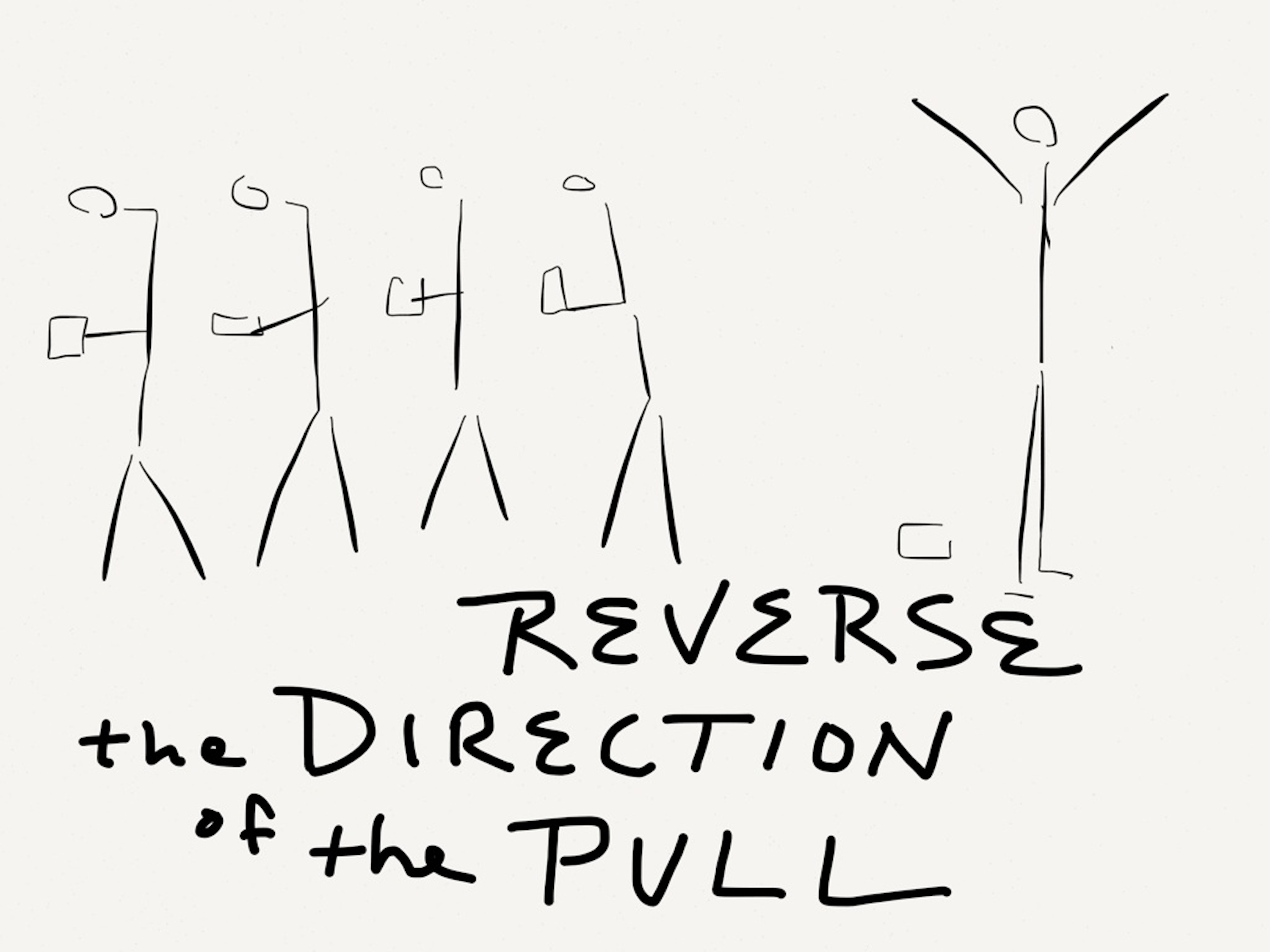
Reverse The Direction

FOR TODAY’S FEATURED IDEA FOR HUMANS, GO HERE.

Sit By The River

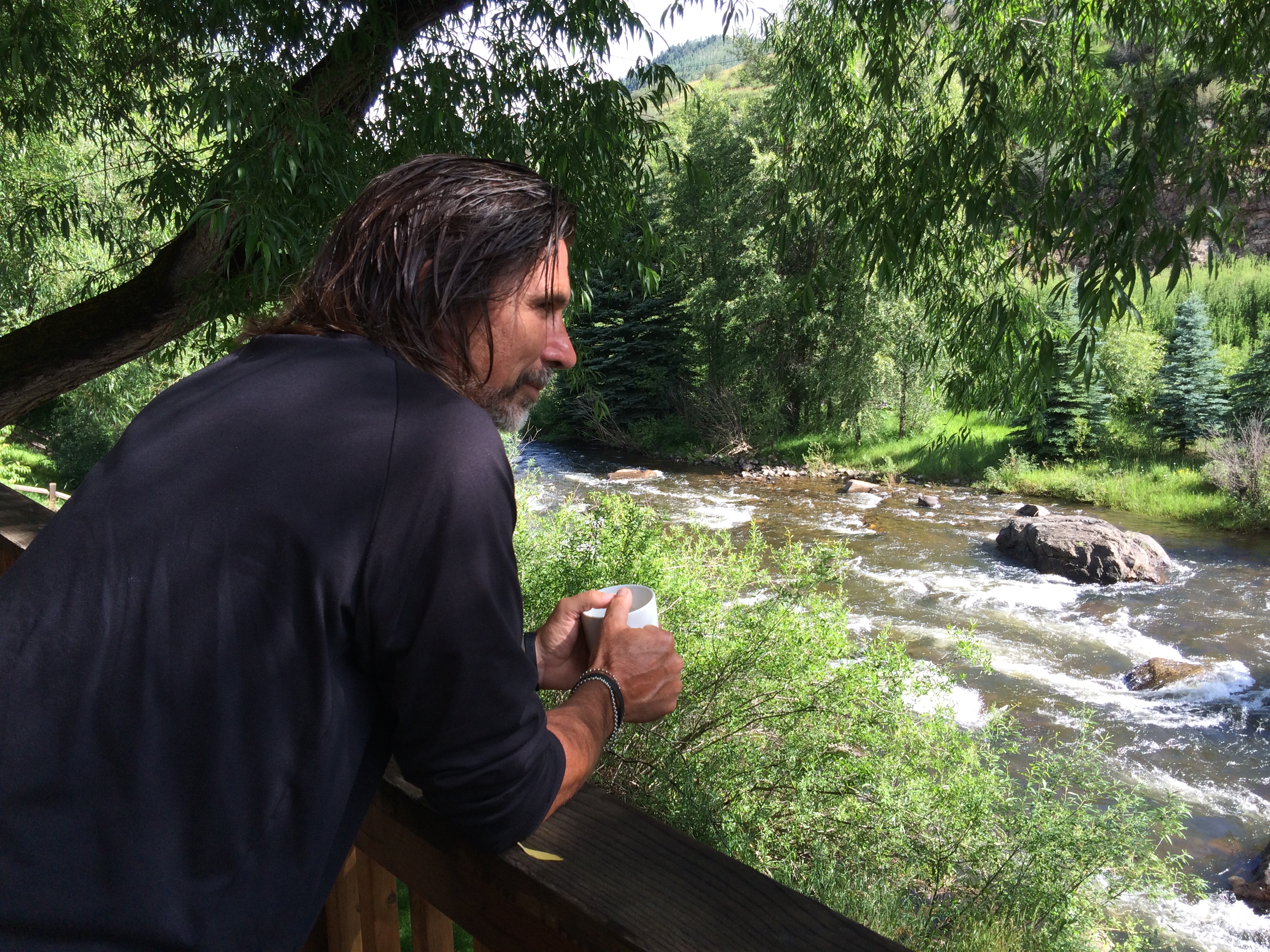
photoThe back deck of the Minturn Inn overlooks the Eagle River. We sit in the sun and are mesmerized by the sound of the rushing water. It is liquid peace. In this moment I believe that people seeking to develop a meditation practice should begin sitting by a river. The water easily carries away all thought and worry.

The river is a great giver of perspective, a great deliverer of presence.

I am struck by this power of the river – and it is a power. We easily grasp nature’s power when a tornado levels a town or an earthquake devastates a city but forget that there is a flip side, a quieter side to nature’s ominous power. There is a vast quiet. In our world peace seems nearly impossible to achieve yet in less than a minute, sitting by the river, I am steeped in peace. That is an awesome power!

I once read (somewhere) that we have a vibrant internal compass capable of ringing true from false, right from wrong. If we make a choice that is out of our integrity, the compass spins wildly out of control, setting off an unstoppable inner monologue, a great inner debate. If the choice is in alignment, the moment passes unnoticed. True north is known by the absence of spinning. Inner quiet is an affirmation. Nature – including our inner nature – doesn’t lie.

Sitting on the deck, breathing in the mist and peace of the rushing water, I know that what’s most important in this life, the real art, happens in the quiet spaces, the moments that thought cannot penetrate, the spaces that require no definition or justification. They are the moments ripe with gratitude. They are the moments dripping with appreciation. I know that all the debates and disagreements and defenses are paper tigers. I also know that this peace is not the province of the river. It is, in fact, available all the time. The river simply reminds me to hush up and listen.

Matter.

From the archive: 'Angels At The Well.'

From the archive: ‘Angels At The Well.’

Paul used to tell the acting students at the conservatory that they should never underestimate their power to impact another person’s life. In other words, their work – how they brought themselves to the stage – mattered. Simply by doing their work they had the capacity to open a mind or challenge a story. The caveat, of course, was that, in all likelihood, they would never know the impact that they had.

His lesson applies as much or more in daily life as it does on the stage. What if we lived as if we understood our power to impact others? What if we recognized that the small stuff matters? What if we didn’t need to know – but simply brought ourselves to our days knowing that our actions and attitudes mattered?

Sitting outside at a Starbucks in Wesley Chapel, Florida, a young woman Skyped into a bridal shower happening in Pennsylvania. It was her bridal shower and, because she was starting a new job, she couldn’t get the time off to fly home. So, via Skype, she checked in on the party and giggled at the celebration. Kerri and I sat at the next table listening to the conversation, the love and festivities. I watched as Kerri, stricken with the grief of her mother’s passing, change. Her heart lightened. It changed her focus. The young woman, with no knowledge, eased Kerri’s grief. Kerri ran into the store and bought the woman a gift card. “Congratulations on your wedding,” she said as she gave the card to the young woman.

In coffee-desperation we pulled off the highway in Salem, Illinois. We bumbled into the M&M Coffeehouse on Main Street. Mike, the owner is a master chef. He told us the story of love that brought him to Salem, the story of his love for making food and how he became proprietor of a coffeehouse, the story of how the community was embracing his gift and returning the love; the coffeehouse was now also a catering business. He was teaching cooking classes and volunteering his time to the monthly Elks club hamburger dinner fundraiser. The Elks were raising tons of funds since he started making the meals. “You never know where life is going to take you,” he smiled. Mike never knew the gift he gave us; he was simply being chatty with strangers. We needed a good dose of hope and encouragement to carry us the final 6 hours of our long drive home. He filled our hope-tank to the top.

Whether we know it our not, it matters. Always.


Make It So

Pasta. Meat sauce. Warm Bread. Wine.

Pasta. Arugula salad. Wine.

Tripper Dog-Dog-Dog knows the world through his nose. He sniffs everything. It is not uncommon after we finish a meal to come face-to-muzzle with a scent-curious Dog-Dog. Lately, as the objects of his sniffer, we’re given to staring into his amber eyes and offering the menu, saying something like, “Pasta. Arugula salad. Red wine,” or “English muffin. Peanut butter with black cherry jam. Banana. Coffee.” Satisfied with our description, he moves on to the next smell-enticing investigation.

I delight in our Dog-Dog food reports. They’ve become commonplace and matter of fact; “Chocolate chip cookie. Espresso.” Our reports never contain qualifiers, so, for instance, we never say, “A great chocolate chip cookie. Delicious espresso.” We provide the minimum, the noun.

Our Dog-Dog reports have rekindled an age-old fascination of mine: the power of words, specifically, the enormous power of the labels we attach to our experiences.

Language is a sword that cuts both ways. It can liberate and it can imprison. The difference is in how it is used. Language is the primary tool we use to make meaning. Big magic happens the day a person realizes that meaning is not something that is found, rather, it is something that is given and it is given the moment we apply a word-label to an experience. Nothing is good/bad, hard/easy until our label makes it so.

Applying a label to an experience is an act of creation. It is not passive. Take note of the word-judgments you apply to yourself or to others. For a week make a game of flipping them over and applying the label “beautiful” to where you usually apply a judgment. So, for instance, instead of, “I am fat,” why not say to your self, “I am beautiful.” Both are labels. One imprisons while the other liberates. The difference is a single word.

The label determines the possibilities we see (or don’t see). In a past life I used to facilitate organizational change and I came understand that my role was to help my clients ask better questions (use different language). They always came to the table with a “how” question: how do we change without feeling any discomfort? Response: what might you see if you stopped pre-labeling what you might feel as “discomfort?”

The mantra: have the experience first, make meaning second. And then, recognize the great capacity and opportunity you have to make meaning. Why not make a better meaning? Why not take a step and let it be a step merely?

Try this: do the Dog-Dog and, for one week, eliminate the qualifiers so that nothing is good or bad or right or wrong. It just is because you choose to make it so.

Dance With The Fire

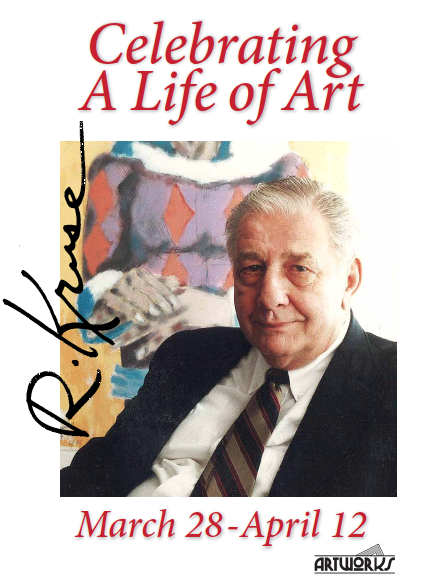
Screen Shot 2015-03-29 at 5.21.46 PMLast night was Duke’s (Richard Kruse’s) memorial art show. There was an abundance of food, wine, laughter and stories. The gallery was literally filled with his paintings, prints, and sculpture. He was prolific. His paint encrusted chair, draped with his paint spattered coat, sat empty before his easel; on the easel was a large sketch pad, a place for notes for Duke and his family. I watched people approach the chair, catching their breath before sitting to compose their thoughts in the very chair he’d occupied for decades to compose the paintings that lined the walls. The chair became sacred space, a bridge between worlds.

I did not know him but I felt an immediate kinship with his work. He was a figurative painter – as am I – and given to the mystic – as am I: he worked the figure to find the soul shining inside – as do I. It was a great treat to thumb through his sketchbook. The energy and freedom of his drawings took my breath away; this was a man who needed to make art. It was an imperative made visible. I found an even deeper kinship in his imperative.

It’s hard to explain to someone who is not filled with the fire, the inner necessity to draw, dance, make music,…. It is more than a want or desire. It can be ignored but withering is the price. If it is not honored it will consume. To someone who does not know this fire the making of art appears as an indulgence. To someone who burns with the fire, anything else is a distraction; they will construct their life patterns according to the necessity of the fire.

The myth of the suffering artist is perpetuated by non-artists. The only artists that suffer are those who ignore their gift. Most people, despite their rhetoric, fear the kind of freedom and energy evident in Duke’s sketchbook. Artists run at the unknown. They develop craft so they might relinquish control in order to dance with the fire. Too much investment in control (of self, of other, of circumstance) smothers the flame. By the stories I heard, by the power of his sketches, by the laughter his life evoked, I can only assume that Duke must have been a master of this fire-dance.


Mix Beautiful Color

photo-6This magnet-sentiment was on Jim’s refrigerator:

It’s never too late to become what you might have been.

It is particularly poignant because both Jim and I are surprised, dare I admit, disoriented, after finally producing The Lost Boy. It was over a decade in coming. I’d stopped believing that it would ever find a path to the stage and, instead, would remain a good story for dinner conversation. Now that it’s out of the box and rolling around in the world of possible-next-productions, I hear Tom’s voice ringing in my ears, “Readiness is all.” It couldn’t happen until it was ready, until I was ready.

For the past decade, coincident with the development of The Lost Boy, I have been telling stories at conferences, with symphonies, during organizational trainings, and other random stage performances. I have inadvertently learned to tell a good story (or better stated while slaughtering all grammar: to tell a story good). 5 years ago I couldn’t have performed the play as I did last week. I didn’t have the chops for it. I do now.

Years ago, after being wowed by Jim Edmondson’s performance of King Lear, I asked him what he’d learned from doing the role. He replied, “I don’t have enough colors in my paint box to do it justice. Not yet.” This giant of American theatre blew my socks off with his performance, but felt that he fell short. He couldn’t yet fulfill the demands of the role. He knew there was more to grasp and his artistic arms were not long enough. He knew he was not yet ready. No amount of accolade or sock-less fans would change what he knew: there was more to the role than he could reach. More age, more life, more skill was needed. He taught me in that moment what it meant to be an artist. The compass is internal. The capacity is ever expanding if you work at it.

I now believe that, to produce The Lost Boy, I also needed to find the right reason before readiness was available. For years I thought I had an obligation to Tom. I thought I had to finish it for him and tell his story. That was only partially true. The real obligation was to myself. I had to finish it for me – and it took a good deal of readiness for me to see that. It had to become my play. And, in becoming my play, I can now see that I have a world of color in my paint box – and a world of color that I still need to develop. That is the name of this game of mastery. There is never an end. There are just more and more beautiful colors to find and mix and share.


Choose Your Label

title_pageThe second recognition in The Seer is that your language matters. It is a curiosity to me that of the nine recognitions in the book, this recognition is the one that causes the most conversation and generates the most questions. My latest theory is the notion that the moment we tack a word onto an experience we are defining the experience; we are making a choice. Owning that we have the power to define our experiences through the way we think and talk about them means taking responsibility for our lives. Ownership of your happiness and power and thought might seem overwhelming or, as someone once said to me, “That’s pie in the sky!”

As the storyteller of your life, the language you use to tell your story matters. Try this exercise for a single day: express gratitude for everything – even if you don’t feel gratitude. Tell yourself in the middle of the traffic jam that you are grateful for the jam. And, if you are really bold and brave, take the next step and assign a reason for your gratitude: the traffic is slowing you down so you can breathe a bit amidst an otherwise hectic day. Express gratitude for everything: the meeting you will attend, waiting in the doctors office, the dishes you wash. By the end of the day, if you have been diligent in telling the story of gratitude, you might just feel it. You will certainly have no more doubt that you live life labeling your experiences. It is only a short hop from knowing you have the power to label your life to choosing the label.

Go here to buy hard copies (and Kindle) of my latest book: The Seer: The Mind of the Entrepreneur, Artist, Visionary, Innovator, Seeker, Learner, Leader, Creator,…You.

Go here for all digital forms of The Seer.

And, for fine art prints of my paintings, go hereYoga.Meditation

Ask Them To Be Kind

A black cloud moving in.

A black cloud moving in.

While driving across South Dakota, the darkest cloud I’ve ever seen rolled across the sky and consumed the light. The cloud was dense and black. It was heavy, its belly hung over the car and seemed to press us to the earth. It seemed more than cloud. It was ominous, a presence.

When we started the day we’d intended to drive through the Badlands but a prodigious rain had slowed our progress. We saw the rains marching toward us across the open land. It was both beautiful and daunting and hit us with a wave of authority. This storm meant business. We crawled through Wyoming with other back road drivers, watching the barely visible white lines to keep on the road. Motorcyclists pulled off the road and stood next to their bikes; there was no shelter to be found.

Although we lost a few hours to the storm we thought we might still make it through the Badlands before nightfall. And then the black cloud appeared and ate the last light of the day. Once many years ago I did a night dive through the wreck of a sunken ship. In the dark of night, deep in the ocean, while swimming through the bowels of the ship, it’s decks between me and the surface, I felt as if I couldn’t breathe. This blackest of clouds enveloped us like the ocean at night and I felt that same sense of pressing suffocation.

The gods of nature are not to be ignored. Once, I sat with a Balinese man who told me that, according to their belief, it was with the dark forces of nature that people need alliance. There is no hell in their paradigm so dark and evil are not bedfellows. There are forces: creation and destruction in an eternal cycle of rejuvenation. Their rituals are about making peace with the black clouds, the gods of lightning and rain. “The forces of light are already with us,” he said. “We ask the dark forces to be kind.”

Looking through the windshield at the ominous pressing cloud I whispered, “Be kind.” It was. It let us go. We heeded the warnings and left the Badlands for another day. Later that night, sipping wine from plastic hotel cups, safe in our room, we sighed and laughed at how utterly small we felt on the open plain amidst the power of the storms. With that smallness came the gift of alertness. We were fully awake, alive with moment, stripped of the illusion that humans have dominion over anything. We savored our moment, temporary, passing, and perfect.

title_pageGo here for my latest book, The Seer.

Or here for all digital downloads of The Seer.


And, here you will find fine art prints of my paintings

Canopy by David Robinson

Canopy by David Robinson

Revisit And Revise

Pidgeon Pier (Alan and David on the Sound) by David Robinson

I used this painting as the cover image for The Ground Truth. I call this painting Pigeon Pier.

With the success of my book, The Seer, I’ve been revisiting some previous manuscripts and ebooks. I have a lot of them, mostly unpublished and unseen. One of my favorites, and one that I am considering revising and releasing, is called the Ground Truth. The ground truth is a military term and denotes the difference between the truth as seen by the generals in the war room (an abstraction) and those actually doing the fighting on the ground (actuality). I gave the book the subtitle: Six Dynamic Relationships That Will Change Your Life. Marketing claims are usually brazen. The book is really about how to orient to personal truth.

As I’ve been revisiting the book, I’ve also been revisiting several of the concepts in it. One concept that has been much on my mind lately is the Hero and the Anti Hero. Here’s an excerpt from The Ground Truth defining the concept:

In a small notebook with a red cover I found a drawing. The image is horizontal on the page. On the far left I wrote the word “Hero” and scribbled a circle around it. On the far right I wrote, “Anti-Hero” and also scribbled a circle around it. The circle with the Hero and the other with the Anti-Hero are connected with a line. The drawing looks like a cartoon barbell. I must have been explaining this to someone; I can tell by how emphatically I scribbled the circles.

The Hero and The Anti Hero was a revelation that Harald shared with me a few years ago. Harald’s first language is German so he used the term Anti-Hero instead of villain or devil or “big dog yapping in my brain.” I like Anti-Hero because it is actually more appropriate than any term I might have used.

He told me that he’d spent much of his life trying to rid himself of his inner Anti-Hero. It had consumed much of his life, this powerful inner voice of self-criticism and judgment. It plagued him and the more he resisted the Anti-Hero the stronger it became. One day, exhausted by his inner turmoil he had an epiphany. He realized that the way to rid himself of this Anti-Hero was to stop expecting to be a Hero. In fact, his expectation of being a savior, being perfect, being everything to everybody was the very thing that fueled the Anti-Hero. Letting go of the Hero dissipated the power of the Anti-Hero and what was left was…human. Beautiful, flawed, funny and messy, Harald was a human no longer at war with himself.

Internal warfare causes split intentions, split intentions create internal warfare. It’s a feedback loop. As Harald discovered, trying to be the Hero in the eyes of everyone else split him into two pieces: the unreal expectation (Hero) and an ever-vigilant judge (Anti-Hero). Harald was attempting to control what he could not control: the expectations and responses of other people. His happiness was contingent upon the responses of others so he was constantly measuring his worth against others responses: The actor (Hero) and the measurer (Anti-Hero). The internal warfare was inevitable.

In the next few days I’ll write more on The Hero and the Anti Hero, and what a few years and new eyes have brought.

title_pageGo here for my latest book

Yoga Series 7Go here for fine art prints of my paintings