See The Force

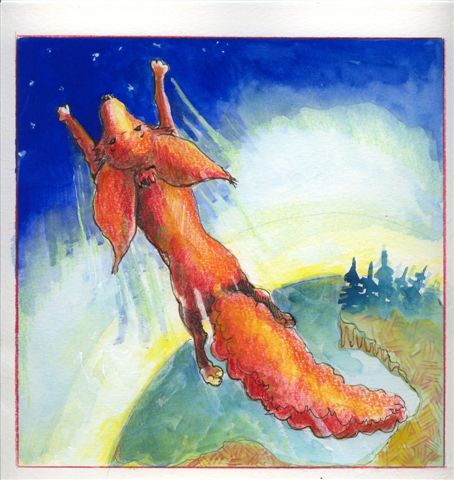
from my children's book, Peri Winkle Rabbit Was Lost

from my children’s book, Peri Winkle Rabbit Was Lost

Bill is a board member for non-profit education organization and is forming a case for changing the curriculum. He’s asked me to help him shape his argument. The students going to the organization’s classes did not fare well in the public schools. As Bill wrote, most of the students are interested in the arts and there are no arts available. He wrote that the curriculum is mostly “traditional.”

Many years ago, my mentor, Tom, told me that the alternative schools were filled with artists, so Bill’s observation is not surprising. Anyone familiar with Howard Gardner’s work will recognize the notion that people learn in different ways. Desks are torture chambers to kids who need to move or manipulate things in order to process information. I was one of those kids and I can tell you that the word “torture” is not an overstatement. Even today, sitting is unproductive time for me. I do my best thinking while I walk or while painting. Staring out a window is also highly productive: after all, the imagination is a fancy dancer.

Bill is making the same wrong assumption made by all people interested in educational reform when they first wade into the swamps of change: he’s focusing on the teaching and the teachers. If only the teachers could see the value of working experientially, engaging the students in a real pursuit instead of an abstraction, all things would be better. On the surface, that might be true. What he’s not considering are the forces in place that require teachers to default to rote exercises, compartmentalization, and standardization. In his case (and all cases), the teachers are not being reinforced (paid) to engage the students on a learning journey; they are being reinforced to raise test scores. The change he seeks is not in the teachers or the teaching. He must address the forces of compliance that teachers, just like their students, must obey. He must address the systemic assumptions that define the expectations.

This is the same conundrum that organizations face when they desire their employees to work in teams but are structured to reward individual achievement. The desire for team is in direct conflict with the systemic foundations.

As Arnie recently reminded me, 1) our system of education was not created by educators, so 2) the aim was never to educate but to standardize. These two aspects, the structure and the intention, are powerful forces to change. They now define our assumptions of what education should be. Systems are living things, and, as I learned in school, will fight to the death just like all other living things.

Bill has his work cut out for him. Changing the focus of the teachers is the easy part and can only happen when the focus of the system supports the deep human desire to learn.

Go here to get my latest book, The Seer: The Mind of the Entrepreneur, Artist, Visionary, title_pageSeeker, Learner, Leader, Creator…You.

Go here for hard copies.

Hide The Horse

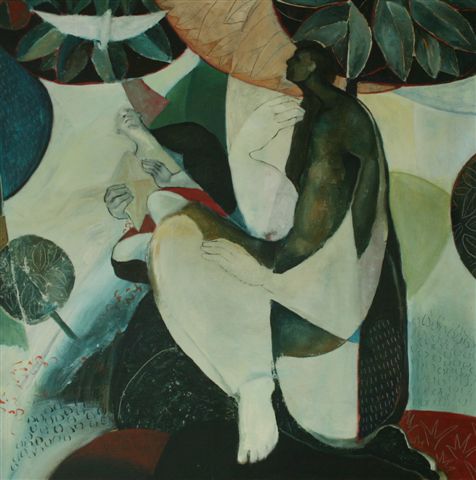
from my archives. This one is called 'Angels At The Well.'

from my archives. This one is called ‘Angels At The Well.’

I first learned this story prompt from Rick Stone at The Storywork Institute: I come from a people who (fill in the blank), and from them I learned (fill in the blank).

Rick’s story prompt was with me when I awoke this morning because I’ve lately been thinking about my grandma Sue. Kerri and I just started rehearsals on our Back To Center concert series and for some reason Grandma Sue has been present when we rehearse. She passed away several years ago and I adored her. She was small in body but big in spirit. Over the weekend my mother said of her mother, “She took everything in stride and adapted to whatever came her way.” Grandma Sue did not resist her lot in life, she made the most of it. She had fun. She created fun.

I’ve been rolling over and over in my mind a specific story about her that happened before my time on this planet. The shorthand goes like this: the glue factory was coming for an old horse that lived in the pasture next to her house. She knew the truck was coming so she hid the horse in her kitchen.

I grew up playing in her house. I know her kitchen. What makes the story miraculous to me is that 1) her kitchen was teeny and 2) you had to climb some stairs to get from the back door into her kitchen. This tiny woman managed to get an old horse through her back door, make a right hand turn, and climb some very narrow stairs. And then she “hid” it from the owner and the glue factory search team.

I do not doubt the truth of this story for a moment and if you knew my Grandma Sue you would not doubt it either. She was a champion for the underdog, a lover of the small moment, a believer in the extraordinary in the ordinary. She lived from her heart and not her need to make sense. What do you do if the sweet old horse next door is in imminent danger? Anything you can.

This morning, as I awoke, I was again thinking of my Grandma Sue and Rick Stone’s prompt came to me. I smiled because I come from a people who act on what they believe- against all odds. And from them I learned moxie and perseverance.

Go here to get my latest book, The Seer: The Mind of the Entrepreneur, Artist, Visionary, title_pageSeeker, Learner, Leader, Creator…You.

Or, Go here for hard copies.

Join A Group!

title_page“This book invites conversation,” Mary said. “I’m enjoying that others feel the same way and want to talk about it.”

I was enjoying it, too because it was my book, The Seer, that they were meeting to discuss. It was the first time since publishing The Seer that I’d participated in a conversation about it. There have been other group conversations and I’ve received some very useful emails and insightful notes, but this was the first time that I was able to attend. Since I’ve been approached to coach people using The Seer process, I was delighted with the opportunity to hear their discussion. It was the first of several calls with a people from many countries who are working their way through the 9 Recognitions (the chapters are a progressive series of recognitions).

During the call I thought about my very first art exhibit. I was young, shy and unknown so I was able to follow people through the gallery and listen to what they saw in my paintings. It was a revelation. There were as many different interpretations of my paintings as there were people in the gallery. Each person interpreted the paintings through their unique lens; they did not see what I painted, they made sense of the image through their life-narrative. They recreated the images. I loved it. It was a lesson in the power of art, seeing and was a seed for my fascination in communal narrative: where do our stories become transcendent and singular? Where does identity become cultural?

During the call I listened to what was important about the First Recognition to each caller. They had unique experiences with the concept. The First Recognition sounds simple but is capable of reorienting what you see if you take it seriously. It goes like this: you don’t have a problem, you have a pattern. “Problem-seeing” is a lens and defines a path of available actions. It defines a worldview is rooted in the notion of separation. “Pattern-seeing” is also a lens and defines a path of available action. It, too, defines a worldview but the rooting is in connectivity. The callers discussed their experiences of shifting their seeing from problem to pattern.

Mostly, I appreciated Mary’s comment because she echoed two concepts layered into the book: 1) No one creates alone. Creating, whether it is a painting or a life story, is a team sport. We need each other to make sense of this life. 2) Working with my book is like riding a bike or throwing a pot: you can’t make the shift unless you do it. To read it alone is useful and perhaps illuminating, but the real worth becomes available when you step into the actions, when you get on the metaphoric bike and fall down a few times. And, looping back to the first point, it is easier to fall with others stumbling along with you. Creating is a team sport because life is a team sport. This group inspired me and how lovely for the potency of the First Recognition to come back at me through the eyes of my readers.

Go here to get my latest book, The Seer: The Mind of the Entrepreneur, Artist, Visionary, Seeker, Learner, Leader, Creator…You.

Go here for hard copies.

Run With It

The criminal with the evidence. Tripper with Kleenex.

The criminal with the evidence. Tripper with plundered Kleenex.

Tennessee Tripper Dog-Dog-Dog is a fantastic pick pocket. I’m certain he is kin with the Artful Dodger and the other sticky-finger street boys who lift wallets and jewelry without detection. Dog-Dog’s preferred target is Kleenex. With his snout he can reach into the deepest pocket and disappear into a crowd, Kleenex in mouth, and his poor victim is none the wiser. Lately I have had a nasty cold so my pockets are prime targets for his crimes. More than once I’ve reached into my pocket, alarmed by the rising tide of an inevitable sneeze, and found that my pocket has been picked. “Dog-Dog!!” I scream (and then sneeze). He always appears with tiny bits of evidence in his whiskers.

I first noticed his pilfering when he was still more puppy than dog. He was adept at undetected napkin snatching. I knew it was a crime scene when dinner guests started looking on the floor for missing napkins and came up empty. Although publically I’d hang my head and make Tripper confess his misdeed and return his plunder, secretly I was impressed by his stealth and wondered if he would grow up to become a Ninja.

Tripper Dog-Dog does not suffer guilt. He does not question his choices. He rarely debates whether he should or should not do something. He does not mask his confusion or blunt his awe. He races across the yard in full celebration of his speed and how good it feels to run. He does not run to win, he runs to run. Were I still working with actors I’d have them study the pure intentionality of their pets. I’d have them study what undiluted commitment to action really looks like.

One of my favorite themes running through the books of Paulo Coehlo is to find your enthusiasm and follow it; there lives your treasure. Joseph Campbell famously said, “Follow your bliss.” One of the post-it notes on our Be A Ray plan wall reads: Dream big dreams. The sub note adds: Run At It. The other day we heard a man say, “At least when I die, I’ll know I took my shot and gave it my all.” I sat up and wrote his thought as two questions: What is your shot? What would it look like to give it your all?

And then, finding my pocket empty of Kleenex, I added a third question: If “it” was a Kleenex and I was Tripper, what would I do? I’d take “it” with great enthusiasm, no apology, and without doubt or question. And then I’d run with “it” just because I liked the way it feels.

Go here to get my latest book, The Seer: The Mind of the Entrepreneur, Artist, Visionary, title_pageSeeker, Learner, Leader, Creator…You.

Or, go here for hard copies.

Say “I Can.”

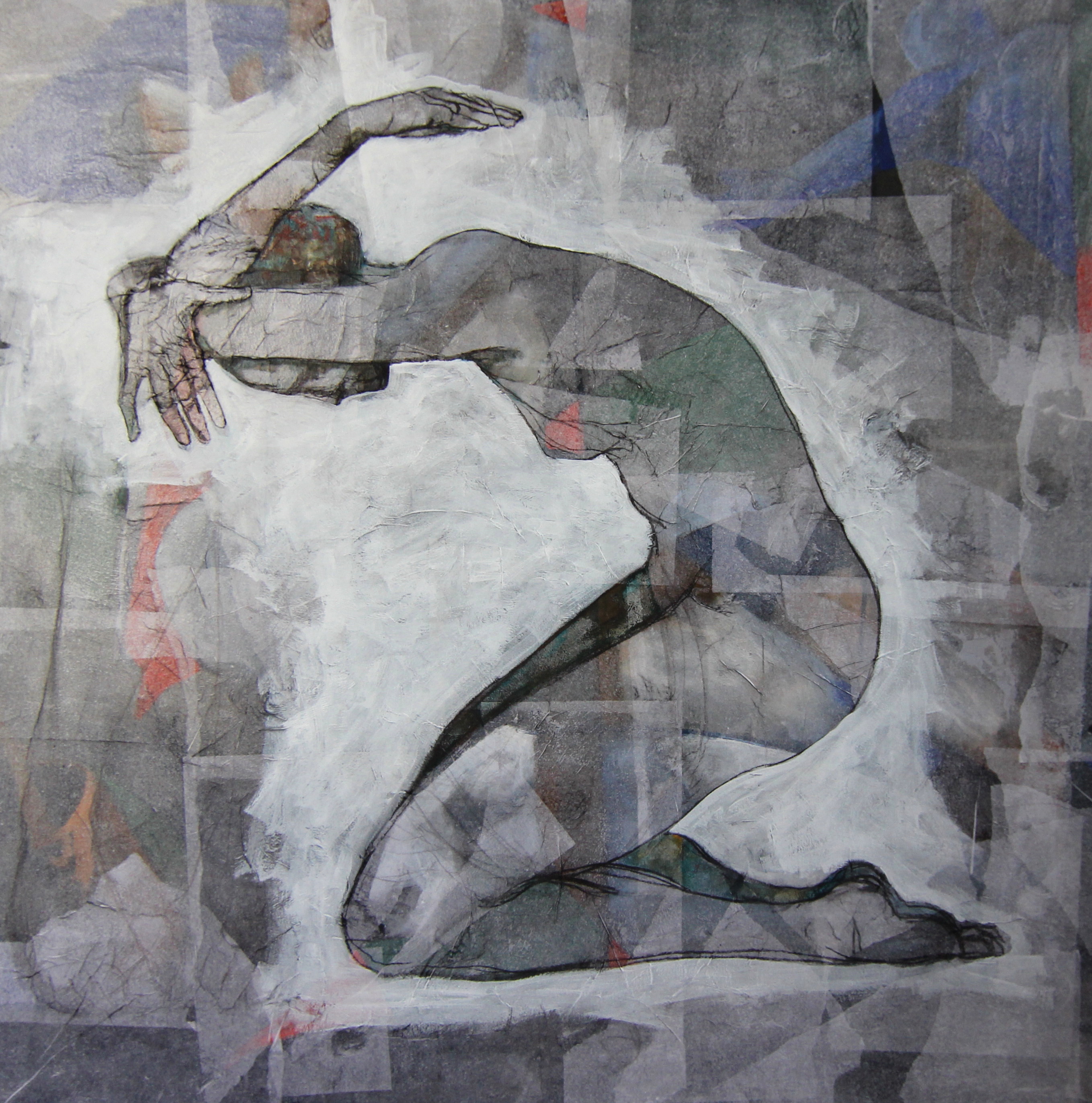
My latest addition to the Yoga series.

My latest addition to the Yoga series.

This is a bit of a confluence of thought-rivers. Two comments came across my virtual desk on the same day and collided.

1) Master Marsh sent me some wise words about a recent post concerning “can” and “can’t.” He wrote:

“There have always been plenty who will say: ‘It can’t be done.’ Ignore those. Surround yourself only with those who say: ‘It can.’ I’ve come to believe this is less about can and can’t than about the challenge of doing. And not doing is always easier.”

2) Another of my favorite readers sent this comment about a post on boundaries and choices:

I’m thinking making own-able choices is so freakin’ difficult for so many us because we were never taught/allowed to make them as children, nor are we often encouraged/allowed to do so as adults. Most of us learned at a very young age that to do as instructed – without complaint or question – meant that you were “good.” Being “good” was all tied up in stuff like being seen and not heard; accepting “Because I said so” as an explanation; being expected to abide by dictated boundaries and beliefs because of tradition or what “Other people will think.”  Operate by the rules and you are “good.” Buck that system by challenging the status quo and you are “bad.”

At first glance these might seem like two entirely different subjects. Though, as luck would have it I read them one-after-the other and I started pondering why, “not doing is always easier” and if that might not have something to do with identifying “good” with compliance and “bad” with non-compliance.

It’s a fascination of mine that in a nation that prides itself on a spirit of independence we place so much emphasis on obedience, control, and compliance. Nike sells us shoes by plucking the chord, “Just Do It!” Yet, we all know that the cowboy spirit is not welcome in grades K – 12. It’s a mixed message at best.

In the world of work, in environments heavy on control and compliance, workers can be counted on to do the minimum. Why would they show up ready to give their best when their best requires a mind-of-their-own. They, in essence, become resistant to take initiative and necessarily refuse any ownership of actions. To take ownership requires being seen and compliance is a game of invisibility. I remember a very frustrated artistic director asking me why her creative people never initiated action. She was dumbfounded when I helped her see that she was the problem. She made it a habit of negating every idea that she didn’t originate. Her staff did what all people do when punished for making offers; they stop making offers. Her “creative” team became adherents of “It can’t be done.”

No child comes to the planet with an internal line dividing “can do” and “can’t do.” Imagination makes all things possible. “Can do” and “can’t do” is learned; it marks the boundary between safe and not safe (or unseen and shamed). There is a price for domestication. “It can’t be done” is often a statement of fear and refusal to cross the line into disobedience (independence by another name). I would add a thought to Master Marsh’s comment, “not doing is always easier;” it is also true that not being seen is always easier, too. Showing up is hard. Doing is always a challenge because doing is often unpopular.

Tom used to say: “You know the value of your work by the size of the tide that rises against you.” In other words, it takes a special kind of courage to say, “this is mine to do and it matters not a whit what others think or feel about it.” It takes a special courage to say to yourself, “I’ll never know if it is possible or not until I try.”

Go here to get my latest book, The Seer: The Mind of the Entrepreneur, Artist, Visionary, title_pageSeeker, Learner, Leader, Creator…You.

Or, go here for hard copies.

Give Yourself Some Advice (2)

Finishing a painting is really about having a conversation with yourself. This one is talking!

Finishing a painting is really about having a conversation with yourself. This one is talking!

[continued from Give Yourself Some Advice]

Here’s the next bit of an email Horatio sent to me with his Advice To Myself. He wrote it following a question from a reporter about advice he’d give to emerging filmmakers. I am particularly fond of this section as many of my teachers, mentors, and guides are now passing away and I am revisiting what is mine to add to this “ancient conversation.” Here is the next section of Horatio’s advice to himself (for the full text, visit his blog at www.fidalgofilms.com):

Respect the boundaries of others; do not seek to control anyone else. You can only control your own choices.

Learn and honor with absolute integrity your own boundaries so that others may not try to control you or your work. Unfortunately, this is usually only learned through a certain amount of trial and error. 

Learning to trust is an art, and absolutely necessary. Learn to trust yourself first. Learn to trust others.

Always respect the tradition of your work, its ancient human conversation.

Connect to tradition, to all your teachers and your teachers’ teachers. Give yourself to it so that it can give to you and to your work. Honor it with rigor and doubt, with hours and hours of study and practice.

Then let your teachers go, follow the path that you understand as truth. You will know it when you see it. It will be your part of the ancient conversation. Likely, you will find that parts of one or two of your teachers have become part of you.

If you do not let your teachers go, your part of the ancient conversation will not be yours, but rather what you think other people want you to add to the conversation. That is not from you and only clogs up the conversation.

[to be continued]

Horatio asks great questions: What is the tradition that you carry forward? I follow the line of Tom and Marcia McKenzie, who learned from DeMarcus Brown, who learned from Eva Le Gallienne, who learned from…. What teachers/teaching do you need to let go?

Go here to get my latest book, The Seer: The Mind of the Entrepreneur, Artist, Visionary, title_pageSeeker, Learner, Leader, Creator…You.

Or, go here for hard copies (Amazon)


Hold A Vigil For Kermit

My studio moves into the light.

My studio moves into the light.

Life returns slowly. It is the time of year that the goddess Demeter ceases grieving because her daughter, Persephone, is allowed to return from the underworld. Demeter’s joy ignites earth’s renewal.

This morning we sat outside on the back porch, wrapped in a blanket, our chairs facing the sun, our backs to the wall so we could feel the radiant heat. We drank coffee, soaked up the sun and talked about everything and nothing at all.

We are feeling the stirring. We moved the studio from the basement into the light. A stalled project now has life and is arcing toward production. Inspiration and enthusiasm are playing chase through our creative sessions. A few days ago I found my sketchbook and spend time each day filling its pages. There are new canvases sitting on my easel.

It is the season of resurrection. We are holding vigil for our pond frog, Kermit. Although his name is common his story is extraordinary. Last summer, after we dug the pond in the backyard, Kermit suddenly appeared. All through the fall we checked on him. He looked out at us from his hiding place in the rocks or if caught him by surprise, he’d dart to the opposite side of the pond. This winter was harsh and the pond froze solid. We worried about his fate. When the pond melted, we found a seemingly lifeless Kermit on the bottom with the leaves.

Many species of frogs hibernate. In fact, we learned that certain wood frogs freeze solid to the core. When winter comes their bodies replace the water in their vital organs with a protective “anti-freeze.” All signs of life cease. The heart stops (it is frozen). All measurable electric impulses close down. When the weather warms, their core thaws, and they quite literally come back to life. If you’ve ever doubted the magic and mystery of this life, spend some time watching frogs.

We don’t know yet if Kermit is hibernating or not so we watch. A layer of ice returns to the pond each night. The temperatures are bobbing just above and way below freezing, so we wait, drink in the sun and good coffee. We watch Tripper-dog-dog-dog discover birds and bark at raindrops on the pond; this is his first-ever spring. We fill with hope and ourselves slowly revive from a long winter of hunkering down. We stretch our limbs, we thaw, we breathe.

Go here to get my latest book, The Seer: The Mind of the Entrepreneur, Artist, Visionary, title_pageSeeker, Learner, Leader, Creator…You.

Or, go here for hard copies.


Bang On Stuff

from Lucy & The Waterfox by David Robinson

from Lucy & The Waterfox by David Robinson

John said, “The real challenge is how to help people across the ‘I can’t’ line.” What a great phrase! I imagined myself drawing a line in the sand while my imaginary inner-voice shouted, “Don’t step over this line!”

“Everyone has an “I can’t” line.” John added, “The challenge is never the external stuff. It’s the stuff in our heads that stop us.” Too true!

John is a terrific drummer and extraordinary teacher. He told me that many people come to the drums from the place of, “I can’t” and his job is to hold their hand as they cross the threshold. “Of course they can,” he said, “they just need to know it.”

“How do you do it?” I asked. “How do you help them know it?”

“I have them bang on stuff and I bang on stuff with them.” He smiled.

In other words, gets them to experiment and play. When experimenting, there is no line between can or can’t. It’s a unified space called, “Let’s see!” In play, there is no need for achievement or expertise; there is only play. Bang on stuff and see what happens: it is a great definition for artistry. It is beginner’s mind.

In Austin Kleon’s latest book, Show Your Work, he suggests that we be intentional amateurs. He writes, “Amateurs are not afraid to make mistakes or look ridiculous in public. They’re in love, so they don’t hesitate to do work that others think of as silly or just plain stupid.”

If you desire to step across the “I can’t” line, embrace your inner amateur. Work for the love of your work and not the need to impress or “do it right.” Bang on stuff. Make messes. As Skip says, “Put a stake in the ground and then test it.” Pull on the chain. Walk through the door. Ask questions. Try a new technique. Invent a new technique.

In a bizarre and beautiful chapter in my life I was given a full ride scholarship for a masters degree in costuming. I’d never touched a sewing machine and was a danger to myself and others when trying to cut things with adult scissors. “Why not!” I said to myself and I went for a year. After turning in my first assignment in costume construction, the professor hugged my muslin mess to her breast and laughed, saying, “In the history of garments there have only been 7 possibilities (shirt, pants, skirt, etc.) and you have just created the 8th!” I didn’t know what I could or could not do so I did anything. It was fun. I had no “I can’t line.

John reminded me that the world’s first drum was (and is) a heart. “Everyone’s a drummer,” he said. “The day you can’t drum is the day you are dead.”

Go here to get my latest book, The Seer: The Mind of the Entrepreneur, Artist, Visionary, title_pageSeeker, Learner, Leader, Creator…You.

Go here for hard copies.


Embrace The Paradox

Mark Seely's gift to me: A Wordle of my blog

Mark Seely’s gift to me: A Wordle of my blog!

This is a landmark post: number 1000. When I started blogging I told Horatio that I feared I only had enough thought for 10 posts. He said, “If you can write 10, you can write 1000.” I wrinkled my brow in disbelief but it turns out that Horatio was right. With every step comes a new perspective. Kerri has a phrase I love: take down one tree at a time. In other words, if you can’t see where you are going, take the step that you can see; many single steps translate into miles of walking just as one post at a time can become 3 years of small thought-shares all in a row. What is a lifetime but a long series of days?

I’m writing this from a dining room table. All around me, covering the walls, are long strips of newsprint with a gathering storm of many colored post-it notes. The notes contain phrases, actions, like “Burn Your Trash,” or “Both Feet In, “ or “ Leave the Yuck Behind,” or, as you’ve already guessed, “Take Down One Tree At A Time.” They are story prompts. They are insight and idea prompts. Each prompt is associated with one of Kerri’s music compositions (she has 15 albums to date, with material enough for 3 more). They are building blocks for concert/storytelling evenings or keynote speech/performances. From the more than 60 post-it note prompts (and growing) we can combine any 9 to configure an audience-specific performance. The possibilities are endless. The viable themes are both unique and universal. Our umbrella title is Back To Center. We have a series of workshops to compliment the performances. The workshops illuminate the extraordinary moments and liberate the boundless capabilities of we mortals, we ordinary human beings. The big box is appropriately a prompt: Be A Ray!

Kerri and I are bringing our work together in a new form: Be A Ray!

Kerri and I are bringing our work together in a new form: Be A Ray!

As it turns out, I am a man of my time after all. The notion of a series of discreet component thoughts assembled to create a universal conception is taking over all of my processes – writing, painting, coaching, facilitating. It is the “many small steps making one large journey” philosophy of creation. It has taken over our world. It is contemporary: note the thought behind an App store or an Army of One. It is natural; cells do it. In the blog world it goes by the name of a “plug-in.” Build your own burger: design your car from the available components. It is the illusion of individuality in the midst of a constraint of choices. There is no arrival, just continuing process of expansive and interchanging capability. It is the Kahn Academy. Work at the pace that is appropriate to you. It is yoga: begin where you are, not where others are. It is what the old world of government process (ridiculously obscure tax codes), health care, education…the usual bureaucratic suspects and old school businesses do not understand. The world of rolling process has ascended; products and outcomes are obsolete before they hit the shelves. Story is more accurate than data (data is, after all, a type of story).

Nimble thinking requires nimble processes. Expansive living requires expansive thinking. Cathedrals are built one block at a time but the secret story of a cathedral is that it is never finished. It is always under construction, always changing, updating, repairing and modernizing. That’s the point of a sacred path. Stability, your sacred home, in this modern age is now found in motion, in a pure engagement with a moment. This is what we mean when we say, Be A Ray! Get into motion and focus your intention. Safety is never found in stasis.

Yesterday I wrote that a good life is marked by the capacity to stand solidly in the constancy of discovery. It is a paradox. Another prompt on the wall, one of my favorites, reads, “Embrace The Paradox.” Yes.

Go here to get my latest book, The Seer: The Mind of the Entrepreneur, Artist, Visionary, title_pageSeeker, Learner, Leader, Creator…You.

Or, go here for hard copies.


Dream It!

a blast from the past. A self portrait of yearning from long ago.

a blast from the past. A self portrait of yearning from long ago.

[continued from Step Into The Dot]

Standing with both feet in your life means you get rid of Plan B – or at least to put Plan A and Plan B in the right sequence. It has been a source of wonder for me why people (including myself at times) pour their energy into the back-up plan before they jump head first into their dream. Dreams rarely seem practical. Plan B always seems practical. In fact, that is the role of Plan B: lower the bar so it is easily cleared.

I’ve mentioned before how often in coaching relationships I hear the story of people diligently building their art studio but never entering it. Or, if they allow themselves to enter the creative space, they sit, frozen, unable to pick up the brush or the camera. It is dangerous to entertain the freedom that comes with dreaming. It’s as if we allow ourselves to pull back the covers, peek at the dream, to get close enough to feel the heat of it, but not close enough to ignite it into possibility. It is a special kind of pain to delay a dream. It satisfies the desire to want it but not pursue it. It affords the soothing notion of, “ I tried,” or the devastating notion of, “It wasn’t realistic.”

Kerri and I are bringing our work together in a new form: Be A Ray!

Kerri and I are bringing our work together in a new form: Be A Ray!

This is why Kerri and I are combining our performance, teaching and storytelling gifts in a palate of offers we’re calling Be A Ray! Dreams deferred cause energetic eddies; they make people swirl, putting time and energy into actions that feel good (like building a studio) but do not move the intention forward. To stop the spin is to see the pattern of deferment. It is to see the story beneath a lifetime of actions that lead everywhere but in the direction of the dream. In our vernacular, to “Ray Up!” is to stop the spin, to look squarely at the dream, and to seize the second chances. It is to claim the dream and pursue it.

Dreams need not be realized. They only need to be pursued. In fact, a proper dream pursuit is never realized just as an artist is never finished. Like every good art process, the dream changes with the pursuit. It grows and morphs until the pursuer and the dream unite. There is never an outcome, only a joining, a blending of dream and dreamer. And, this blending is the reason most people go with Plan B. Dreams can’t be controlled and neither can dreamers once unleashed. In other words, the first step in Raying Up! is to relinquish control. Pick up the brush and throw paint; let go of outcome and live in vital process. Let go of what anyone else thinks of your dream and dream it.

Go here to get my latest book, The Seer: The Mind of the Entrepreneur, Artist, Visionary, title_pageSeeker, Learner, Leader, Creator…You.

Go here for hard copies.