Choose The Lesser Chaos [on DR Thursday]

“If I choose abstraction over reality, it is because I consider it the lesser chaos.” ~ Robert Brault

And what isn’t an abstraction? Dealing with ideas rather than events? Not-the-thing-but-is referential-to-the thing?

Every word in every language is an abstraction. Every thought that zips through every brain is an abstraction. Not the thing but referential to it. The word “chair” is not a chair.

I caught myself in a sticky net. Not once, several times. I’ve tried again and again to paint “abstractions” only to whine, ‘I can’t abstract!” [insert laugh track]. A painting of something is, by definition, not the something. Picasso had a heyday playing with people’s minds around this idea, this abstraction.

After an unexplainable medical event, my doctor shrugged and said, “Sometimes there is no explanation. People like to rationalize things. They think if they can explain it, they can control it.”

Explain Pollock or Rothko. Diebenkorn’s Ocean Park series. Ellsworth Kelly.

And who wouldn’t rather spend time pondering the sense of Richard Serra than anything we read in the news?

read Kerri’s blog post about ABSTRACTION

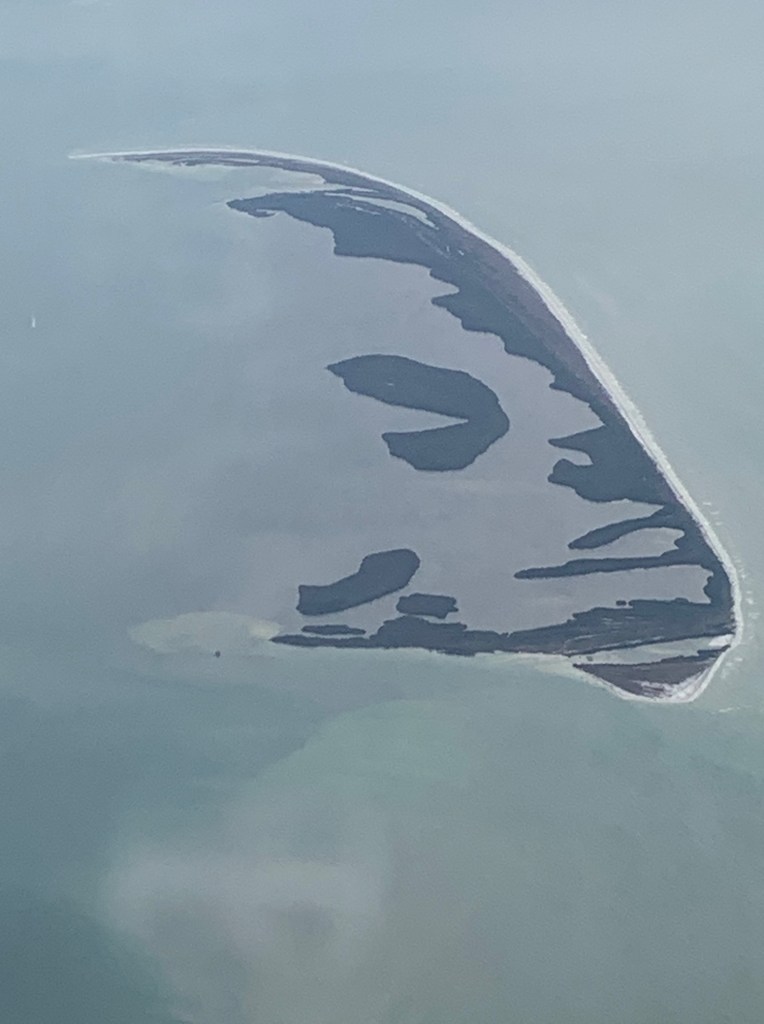
earth interrupted © 2012 david robinson

Sit In The Megaphone [on Not So Flawed Wednesday]

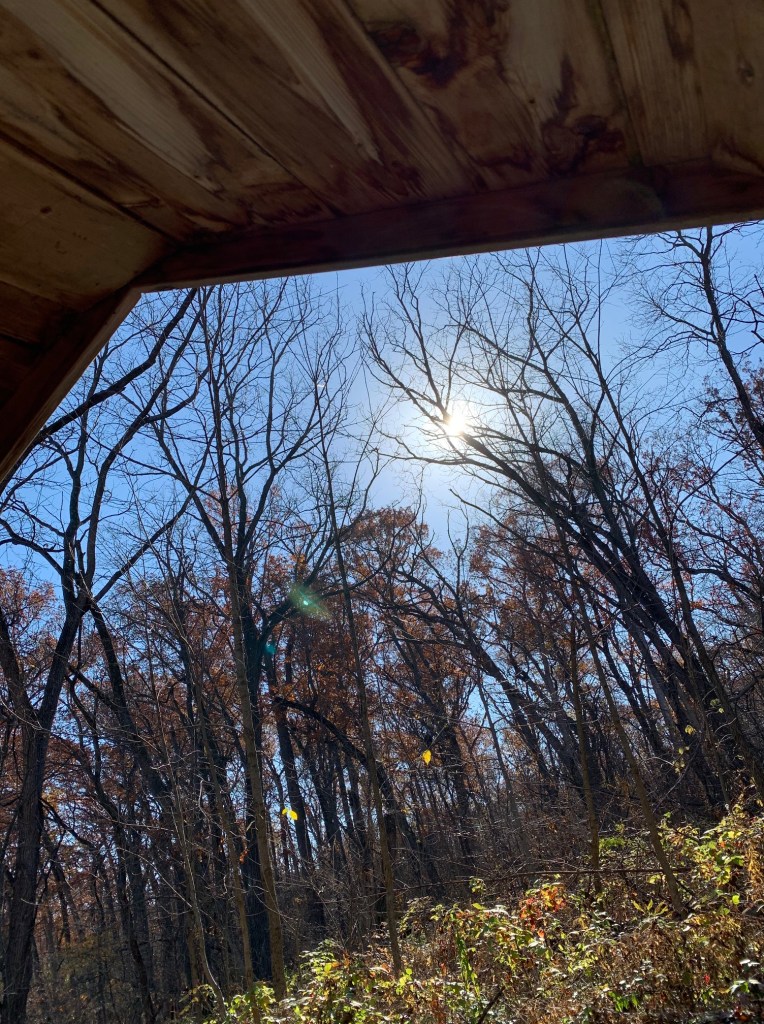
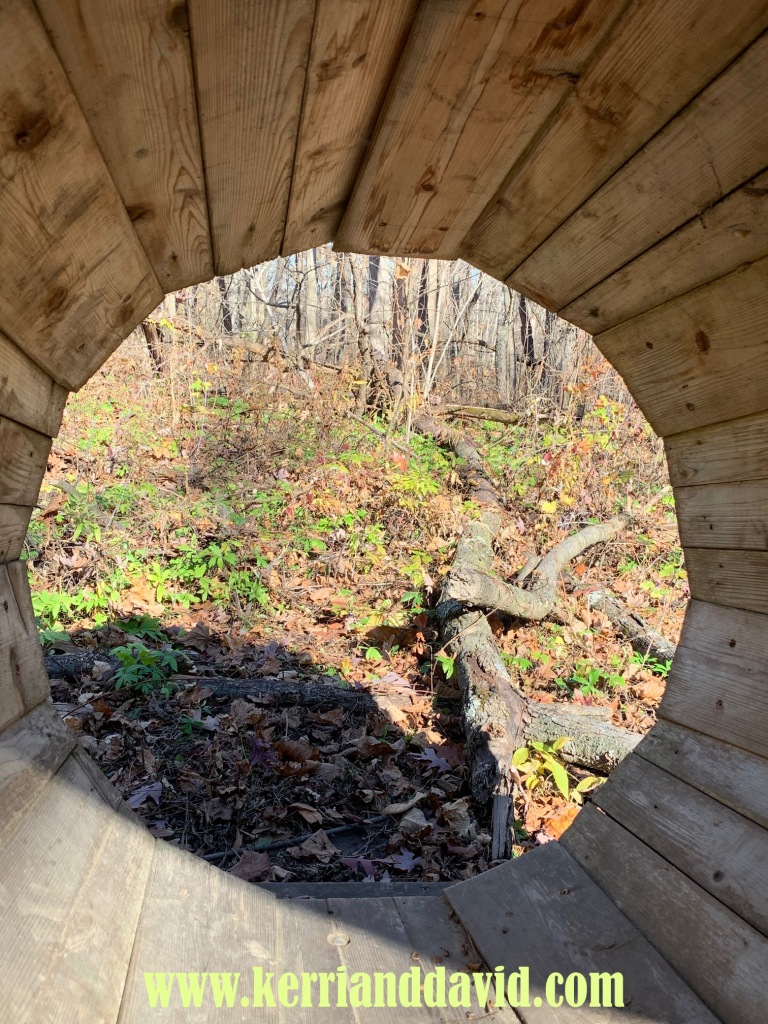
It was like crawling into a time capsule. The nature megaphone was where we remembered it. The wood weathered into light grey, we crawled inside as we once so often did.

There was a time that we walked this trail several times a week. In winter, we strapped on snowshoes and huffed our way around the green trail. Bristol Wood. It sounds like a place of elves and fairies, a place Shakespeare might set a comedy. We regularly left the difficulties of our day and disappeared into it, emerging after an hour or two refreshed.

The megaphone served as a resting spot on the trail. Like little kids in a fort, we’d crawl inside and soak up the sun. Often we’d pass a small bottle of wine and snack on broken chips from a ziplock bag. Sometimes we’d talk. Mostly we listened, closed our eyes, felt the warmth of the day.

We stopped going to Bristol Wood when the county contracted with an adventure company to build an extensive ropes course in the center of the woods. Suddenly, our sanctuary was transformed into an amusement park. That was 3 or 4 years ago.

On a lark, we drove to Bristol. It was an unseasonably sunny day, mid-week, the ropes course closed until the weekend. No one was there. We tied on our boots and stepped into the woods. We went back in time, our feet shushing through the leaves.

Our bodies knew the trail, pulled along by remembrance, we smiled at the familiar trees. Old friends. At one point we stood silent and still on the trail as the autumn leaves rained down. It seemed that Bristol was happy to see us, too.

And, then, we came upon the megaphone. “It’s still here,” she said, crawling inside. I followed, nestling into the sun, feet planted firmly on the curving side wall.

“I could fall asleep,” I said, knowing we might be risking a Rip-Van-Winkle. A deep and dreamless sleep. If we slept for a hundred years, I wondered what world we’d step back into?

As if she read my mind, she snuggled into the megaphone and said, “This world is so different than the one we knew the last time we sat in here.” True. Too true.

Our time capsule. Nature’s megaphone.

read Kerri’s blogpost about the MEGAPHONE

Recover The Reins [on Two Artists Tuesday]

“Things are not always what they seem; the first appearance deceives many; the intelligence of a few perceives what has been carefully hidden.”Phaedrus

My first question: is this the Phaedrus from Plato’s book or a quote from the guy who hung out with Socrates? Historically, they are one and the same person but one is a character and the other the person upon which the character is based. I suppose it doesn’t really matter since either way the words are sifted through time and translation.

And, either way, they are as relevant today as when they were spoken/written. They are especially relevant on this day since today we vote.

Phaedrus, the character-in-Plato’s-book, offers an analogy of the soul as a charioteer holding the reins of two horses. One horse is good and pulls toward the sacred. The other horse is bad and pulls toward material gain. The charioteer steers them to a common center. The middle way.

Things are not always what they seem. A wild teasel. A strawberry in a skeleton costume. It was my first thought when she showed me this photo. It’s appropriate to the Halloween season-just-passed and the election-day-present.

One thing is as it seems: this nation’s soul has lost the reins of the chariot, if it ever had them. The wild teasels are run amok, their pundits loudly claiming to be strawberries. Many are deceived and deceiving. Conspiracies. Angry thorns in their mouths.

The horses pull this way and that. They are quite capable of ripping the chariot in half.

Today we vote. Perhaps it is possible to see through the seeming. Perhaps we can recover the reins and bring our divided team toward a common center? A middle way?

read Kerri’s blog post about SEEMING

Not So Difficult [on Merely A Thought Monday]

Good human beings.

Since I was a child I’ve been told that Santa keeps a list. Naughty or nice? Naughty means taking from others; being mean. Nice means giving to others; being kind.

It’s not so difficult.

Tomorrow is election day in these un-united-united-states. Election officials fear for their lives. A sad statement for the sacred epicenter of a republic: the right to vote. Safely. Securely. Without intimidation.

It’s really not so difficult. Good human beings look out for each other.

The Big Lie continues to swirl around the folks on the right. Evidence is not required when filling bellies with hot air. All that bloviated gas-bagging makes people angry. Seeing nothing but red, people become easy marks. Red is the color of gullible.

Good human beings are not bullies. They play fair. They do not gerrymander or twist the rules so they win the game before playing. Good human beings bring their best ideas to the center. They offer their ideas. They consider the ideas of others. They need not always get their way. They require a safe place to freely speak and guard that space for everyone.

It really isn’t that difficult.

Naughty means consumed with self-interest. Nice means enlivened by service to something larger than self.

Naughty means hoarding all the pie. Nice means sharing slices with others.

Tomorrow we vote. To bully or be kind? It’s really not so difficult.

read Kerri’s blog post about GOOD HUMAN BEINGS

Embrace The Flaw [on Merely A Thought Monday]

Every week in our website inbox, I find an ominous message: “There are some serious flaws in your code.” No kidding. If they only knew half the stuff that runs through my mind!

The message also warns that the serious-flaws-in-my-code are making it hard for Google to find me. Suddenly, I’m not so sure having flaws in my code is a bad thing. Maybe I don’t want Google to find me. In this brave-new-world, I like the idea that my every move isn’t easily tracked and translated into data miraculously transformed into personalized advertisements.

I realize that the flaws in my data will probably mean that I am less successful than I otherwise might be. I will accumulate less “likes” and my pool of “followers” and “friends” will not reach as wide or deep as it otherwise might. I’m regularly chastised about my flawed code. My shallow success is possibly attributed to my inept working of the social net.

The goal is to gather the audience, with no regard whether or not there is anything worthwhile to say. I’d say that’s a fair summation. It’s a popularity contest sans rules or decorum. It’s the same thin philosophy that confuses a test score with learning or a banana-taped-to-the-wall as meaningful art. We are the story Jane Goodall tells: the monkey banging the garbage can is leader for a day until the pack recognizes that his noise is just that: noise. Not leadership.

I’m more than grateful that I have serious flaws in my code. I may or may not have anything worthwhile to say. That is not for me to decide. As Sam once advised me so many years ago, the quality of my friends matter. Not the number.

Google’s divining rod might have trouble finding my well but I’m comfortable knowing my well is plentiful either way.

[Happy Halloween, by-the-way]

read Kerri’s blogpost about Explore Beyond

Make Sense [on Merely A Thought Monday]

I told Kerri she was going to be fired two years before the ax fell. I needed no crystal ball and was not reading tea leaves. In my consulting life I’d seen it happen a few dozen times. When a not-for-profit organization promotes to leadership those who believe everything needs to run like a business, the people holding fast to the actual purpose and mission of the organization have to go.

It makes sense if you think about it. Profit is the purpose of a business. When profit is the purpose, the organizational structures and levers-of-power evolve according to the purpose: profit. People are expendable.

There’s a reason arts organizations, churches, educational institutions,…are called not-for-profit. They serve a different purpose. The organizational structures and levers of power evolve according to the central purpose: service. The creation of art. Learning. Health. Feeding the hungry. Helping the victims of disaster. Worship. The people, usually not well-paid, are dedicated to the deeper organizational mission. Not profit. The people are not expendable. In fact, they are the keepers of the flame. They are very hard to come by.

The quickest way to kill a service organization is to apply the power-levers of business. The purpose dies. The good people – the keepers of the organizational heart – have to be fired, whipped into compliance, silenced, or forced to leave. It’s not rocket science. That process takes a few years.

It’s sometimes hard for us to make sense of what’s happening in our nation and world yet the same principles that apply to organizations also apply to countries. The purpose of healthcare is not profit. The purpose of education was never supposed to be profit. We currently have in our vernacular phrases like “predatory lending” – people making millions from students who believe the dream is only accessible through higher education. It’s the message embedded in our mythology. The levers of business have twisted our vision. Just as prisons should never be money makers, healthcare-as-a-business obliterates the purpose. It profits a few. It crushes the many.

Apples cannot be oranges. Make sense?

What’s happening in our nation makes perfect sense. Big business, regularly bailed out or given tax breaks to the tune of billions of dollars, is protected. No questions asked. Yet, try to correct a corrupt lending scheme, a successful (highly profitable) application of business levers to education, built on the backs of working people trying to go to school, and the “it-has-to-run-like-a-business” crowd will move heaven and earth to keep profit at the center of the mission. Our education system, once the best in the world, is spiraling. Ridiculous. It’s inevitable when protecting the interests of business supersedes serving the purpose.

We may find our way through, we might return to our senses, when we stop pretending that business is somehow sacred, that the making-of-money is moral and a proper north star for all things. It is not. It is great for some things. It is devastating, senseless, for the most important things.

read Kerri’s blogpost about SENSE

Be With [on Not So Flawed Wednesday]

“When you love someone, the best thing you can offer is your presence. How can you love if you are not there?” ~ Thich Nhat Hahn

We attended the funeral rites via Zoom. It was moving. Intimate. We felt grateful to be included.

Kerri attempted to keep the ukulele band going. There was a delay in the signal so the group played gloriously out of sync, our rehearsals a hysterical cacophony. In the end it didn’t matter because we met each week and shared stories. We asked the most important question: how are you doing?

We Zoomed with friends across the country. The screen between us punctuated the distance, exaggerated the separation.

The pandemic put a new twist on the word “presence.” How do we – how did we – remain present for each other, with each other, when distancing was one of the few routes available to slow the spread of the virus? We learned both the expanse and limits of technology, sometimes giving us communication but not always the capacity for presence.

It certainly made us more intentional. Presence required scheduling time. Presence required confronting the line of can-this-be-in-person-or-not. It made us slow down and question. In the early days of Covid, Kerri and I had a heated debate en route to Colorado to see my parents: do we wear masks or not? After a few moments the masks came off. We needed to be present. Fully.

“Presence” and “going slow” hold hands. One cannot walk without the other. A slow walk will invite presence. An intention to be more present invites slowing down.

When I returned from Bali I was different. Changed. I understood the necessity of going slow, of being in my life rather than racing through it.

The pandemic years have been equally as profound. Like everyone, we lost jobs, lost identities, lost connections, lost security. Every possible pattern of life was disrupted. Isolation brought a new level, a different understanding of going slow. A two-dimensional and three-dimensional understanding of presence.

We are emerging as different people. I feel it. I can see it. I cannot place words on how we are different. I simply know that we are not in such a hurry anymore. We are much more intentional. We draw deeper lines in the sand.

There are people we want to see. There are people we need to see, beyond a Zoom or a phone call. To sit in the same room, laugh. To hold hands. To go slow. To be “with.”

read Kerri’s blogpost about GOING SLOW

Lose The Plan [on Not So Flawed Wednesday]

Plans are maps of territories that do not yet exist.

Working in a software start-up, Skip has taught me a new phrase: infinite regress. The next step is determined by the last step and there is both no end to the steps and no way of knowing a destination because there are so many possibilities. Every step is a plot twist. The Plan would go wrong on a daily basis – an hourly basis – if the expectation to follow it was rigid.

In infinite regress there is no arrival. There are decisions. There are choices. The plan is to take another step.

Taking another step is a good plan! Live another day.

Think of the stress reduction if plans were held lightly, in cupped hands. It’s great to have a destination in mind. It’s not so good to step over the treasure-of-the-moment en route to some imagined gain. Some idea of control or fortress-safety.

Today, as an exercise in reality, every step I take I intend to yell, “Plot Twist!” Kerri will quickly put an end to my yelling, so I’ll transform my exercise into a mental experience. I’ll keep it to myself. That’s the plan, anyway. A mental experience. Hey! It’s an infinite regress.

read Kerri’s blogpost about PLOT TWIST.

Learn How To Use It [on KS Friday]

The young man came to our house to bid on a job. He is days away from becoming a new dad. We talked about becoming a parent, his hopes, dreams, and his fears. He and his wife have decided to homeschool their son; the very real possibility of his child being shot in a classroom was a major factor in their decision.

Having spent much of my life working in and with public schools, it broke my heart. Kerri and I acknowledged that, were we new parents, we’d probably make the same choice. “Every man/woman for him/her self” is winning the day over “I am my brother/sister’s keeper.”

Who hasn’t seen the video of a mother teaching her son what to do in the event of an active shooter at school? She purchased a bullet-proof backpack to help keep her child safe. Who hasn’t heard the description of what the bullet from an assault rifle does to the body of a child?

About the budding new democracy called The United States of America, Alexis de Tocqueville wrote, “There are many men of principle in both parties in America, but there is no party of principle.” He also wrote, “The American Republic will endure until the day Congress discovers that it can bribe the public with the public’s money.” And so it is.

As I’ve previously written, as a child in school, our safety drills were about atom bombs. Outside threats. This generation, this young artisan, about to become a new dad, knows his son will have to drill against an internal threat. A country that refuses to protect its children and opts, instead, to protect its gun lobby, its money.

“Nothing is more wonderful than the art of being free, but nothing is harder to learn how to use than freedom.” ~ Alexis de Tocqueville.

Freedom is an art form. A practice. It’s an ideal that a community practices and creates together. No one does it alone. And, therein, lies our problem. Every man/woman for him/herself is not freedom. It is chaos. Anarchy. It has our children ducking under desks and carrying bulletproof backpacks. Or, avoiding school altogether.

Kerri’s albums are available on iTunes or streaming on Pandora

read Kerri’s blogpost about LIGHT IN THE DARK

transience/right now © 2010 kerri sherwood

Dowse Your Data [on Merely A Thought Monday]

My favorite question of the week: What is the science behind divining?

I admit to laughing out loud when I read the question. In a world run amok with science-deniers and rabid propagandists, we might as well answer the question with a qualifier: it depends on what you decide to believe. Or, answer a question with a question: do you really want to know what the science says?

Since belief-divining is all the rage these days, the best available advice for adherents of critical thought is, “Don’t waste your breath.”

I took a peek at ‘dowsing’ in wikipedia. Divining is generally attributed to “ideomotor phenomena.” A psychological response. An accidental movement. Science reports dowsing is projection.

What is the science behind love? What is the love behind science? A moment ago Kerri frowned when I told her she was the sole-object of my ideometric phenomena. She’s learned not to ask and has developed a keen ability to move on from my thoughts to thoughts with more substance.

Science doesn’t prove. Science hypothesizes, gathers data, and then reports findings. Science is objective. It is both rooted in data and is open-minded. New data always come in. It takes an open mind to successfully roll with the theory of relativity. It takes an open mind to open to the data. Excessive carbon in the air is heating the planet. We are simultaneously cutting down the earth’s lungs to make room for more cattle production.

What’s your hypothesis of our recent spate of 1000 year storms year after year? Science is offering a fairly clear picture.

What’s the science behind divination? The science of seeing into the future? Projection?

I was delighted when I stumbled on an NPR story about U.K. Water Companies Sometimes Use Dowsing Rods. The companies admitted to the use of divination but were quick to add, that it’s not a company-wide policy. And then reinforced their disclaimer with the only disclaimer that we universally and wholeheartedly accept: it doesn’t cost money. If it cost money, we’d take it seriously. Like pet rocks. Or reality tv.

Deloitte (using scientific methods) reports the cost of climate change to the U.S.A. economy will be 14.5 trillion dollars over the next 50 years. We can expect to lose 900,000 jobs each year. Ideometric phenomena? Scientific divination? Data-dowsing?

For adherents of critical thought, it occurs to me to update the best available advice with another question: How much time do we have to waste?

read Kerri’s blog post on Y