Honor The Split

after hurricane Katrina I was invited to write an illustrate a children's book. There is only one copy: the original went to a child displaced by the storm. This is the first plate. The book is called 'Peri Winkle Rabbit Was Lost.'

After hurricane Katrina I was invited to write and illustrate a children’s book. There is only one copy: the original went to a child displaced by the storm. This is the first plate. The book is called ‘Peri Winkle Rabbit Was Lost.’

Another of the revelations that tumbled through my mind yesterday concerned “splits.” I’ve written often about split intentions, a concept that the fabulous Viv McWaters encapsulated for me when she offered the Chinese proverb: Chase two rabbits and both will get away. Much of my organizational, educational and creative coaching life has been in service to clients who come to me when they have split their intention and are watching both their rabbits escape. I helped them unify their intention and, therefore, clarify their pursuit.

The dark side of the moon that I rarely talk about (and that came clear to me yesterday) is the necessity of a split intention at certain points in a process that make growth possible. The best example is the split that happens within a caterpillar’s body once it cocoons. The encoding for “butterfly” activates, the caterpillar’s body reads it as a cancer, and a battle ensues. A split occurs: to remain a caterpillar or to become a butterfly. Old systems do not easily let go so the caterpillar’s body fights and nearly defeats the inner butterfly intention. However, the resistance makes the butterfly code grow stronger and it fights back. This back-and-forth inner debate progresses until finally the caterpillar’s body collapses into mush (in story cycles, this “mush phase” is the step into the unknown). The mush slowly takes on a new shape and a new identity emerges. The final necessary battle is the newly formed butterfly’s struggle to exit the cocoon. Help a butterfly out of the cocoon and you will kill it; the final struggle is necessary for the wings to grow strong.

This necessary split plays out in humans, too. All change (all stories) begin when the main character (you) are knocked off balance by an event or an inner imperative. This is the moment of a necessary split intention: do I stay or do I go. After being knocked off balance we do the same thing that the caterpillar’s body does: we run to safety and grab onto what we know. We fight off the necessity of change, denying the imperative, grasping for the feeling of security we no longer possess. This is a necessary phase! This debate, running to the safety of home and hiding – and then walking to the edge of our known world and staring at the horizon – and running back home again, creates heat. It gets energy moving. This back and forth, this inner split intention is necessary. It makes the imperative grow impossible to ignore. It is the process necessary for the main character (you) to understand that what was once secure is now suffocating. The discomfort of the unknown becomes more attractive than the safety of the known because of this inner split, this tug-of-war. When, like the caterpillars body, everything goes to mush and there is no way to go back, the only way forward is to step into the present moment without form or identity. Letting go of the known, stepping into the unknown, is the beginning of reunifying the split. Stepping into the unknown is a commitment to a single rabbit to chase.

The split creates the heat necessary for change. At the right moment in every life story, just as in the caterpillar’s transformation, a split intention is essential. To rush through this phase is just as devastating as trying to help the butterfly out of the cocoon. Trying to eliminate the discomfort too soon is a sure way to stay split and ultimately kill the transformation.

Go here to get my latest book, The Seer: The Mind of the Entrepreneur, Artist, Visionary, title_pageSeeker, Learner, Leader, Creator…You.

Or, go here for hard copies (Amazon)

Open To Belief

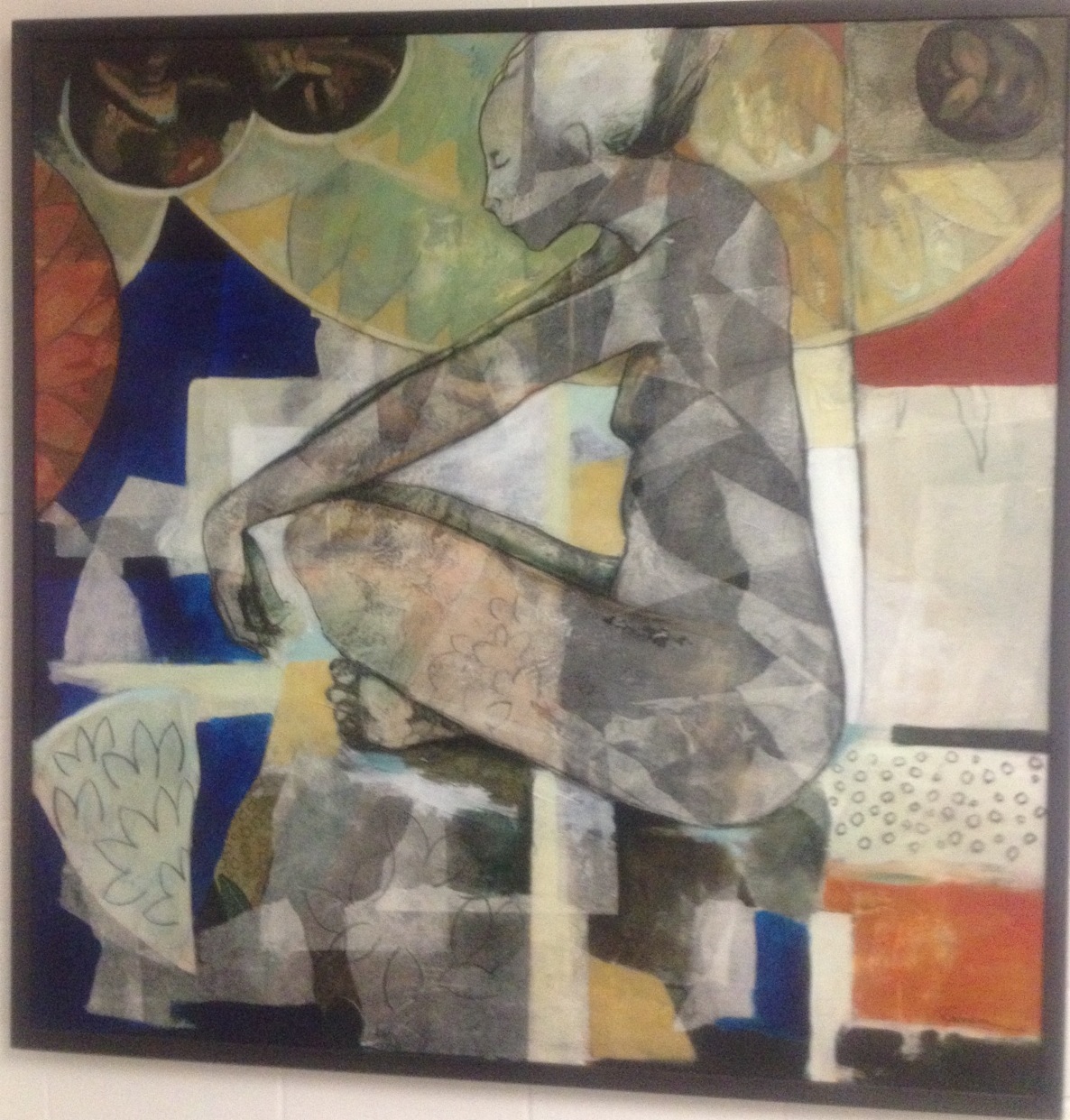
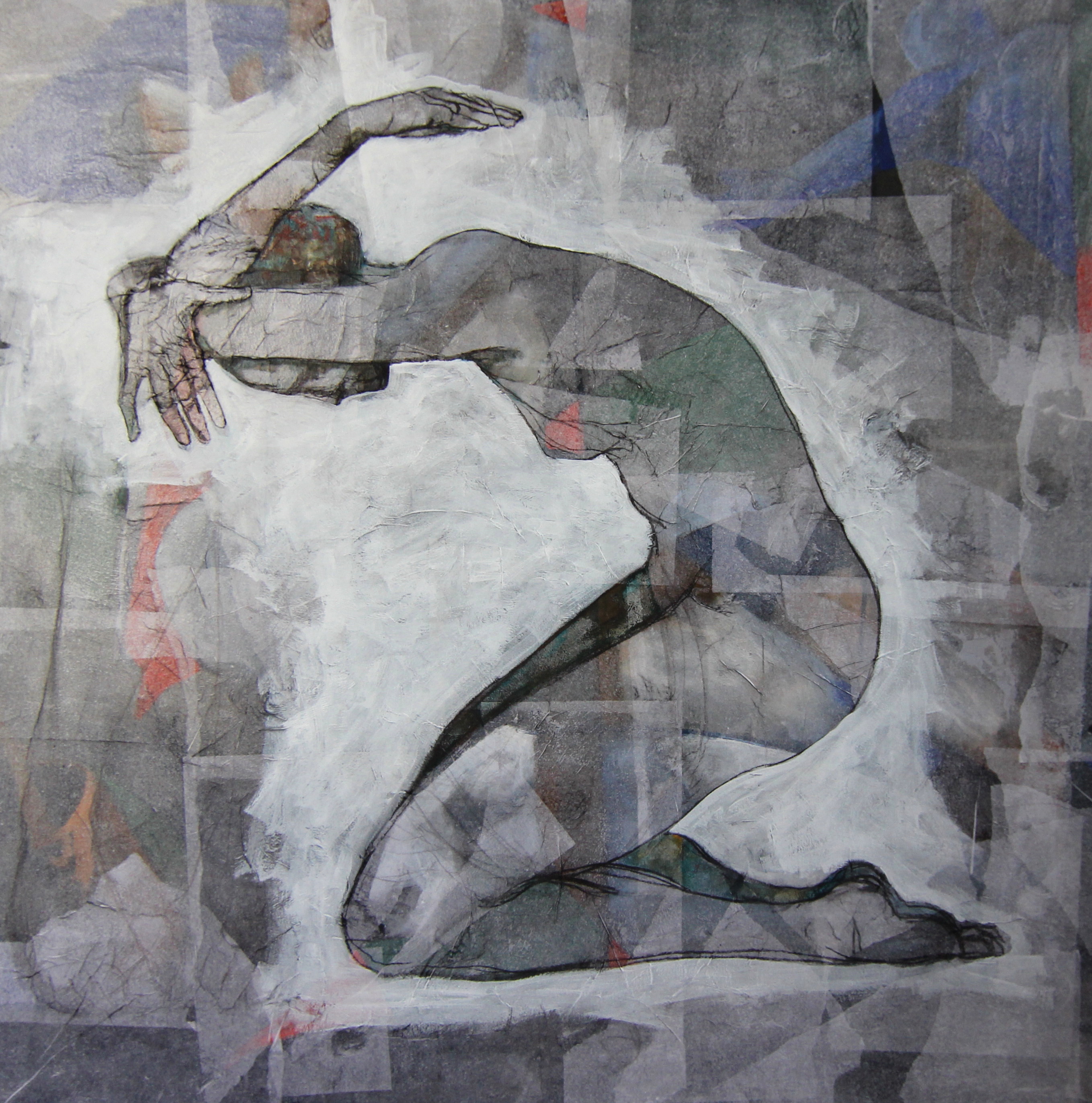
another from the Yoga series by David Robinson

another from the Yoga series by David Robinson

I’m having one of those days ripe with revelations and have been scrambling to capture the insight ripples before they rush down my thought river, around the bend, and out of mind.

One of the ripples has to do with the “As if….” The “As if…” is a tool for actors, self-growth seekers, and human beings in general. For an actor, to act “As if…” opens the door to belief in a character. For the seeker of self-growth, to act “As if…” opens the door to belief in his or her capacities, as if they were a character in the play of their own lives. The “As if” serves as a bridge into a possible future when belief is hard to come by.

When I was younger, a favorite “As if” mantra imparted to me by adults was, “To dress for the job I wanted, not the job I was applying for.” In other words, dress as if I already had the job I wanted. In my case it was lousy advice because donning pants and shirts spattered with paint was not the ladder climbing attire they wanted me to embrace. For me, the elders needed a different premise beneath their “As if” advice. There was no ladder in my paradigm. Dressing for any job felt like self-betrayal on my way to soul death. Of course, years later, having lost my mind, I actually put on a suit and lace-up shoes to coach my first executive client.  He laughed heartily as I writhed in my new suit. He advised me to show up as I am, not as what I thought he wanted me to be. Great advice! His quote, “You are an unmade bed and need to own it. It’s why I hired you – because you are different.” As if!

I’ve understood for years that people perform themselves. “As if” can be a kick-starter for a belief-filled performance. It is an illusion-seed that, when watered and tended, grows into the identity you wish to inhabit. In other words, perform the person you want to become and not the one you currently believe yourself to be. Invoke “As if…” and sooner or later you may start to believe in your performance. Sooner or later you may become who you imagine yourself to be.  The roles we play are not fixed identities and much more fluid than we pretend! Becoming who you imagine yourself to be is called growth and requires a wee bit of acting.

One of my favorite lessons from the theatre is that character (the role you play, like Hamlet or Juliet) is not something you pretend, it is found in how you do what you do. Characters in plays want something; how they go about getting what they want reveals who they are. So, when building a character, swim upstream.  The character will reveal itself through you (the actor) if you identify and take action: craft how he or she does what they do. Young actors have to transcend the notion that acting is pretending. It is not. Action and pretense are two different things. A musician does not pretend to play music and an actor does not pretend to play a character. An actor pursues intentions. An actor acts (thus, the moniker). Actions are the notes an actor plays. Hamlet is the consummate student. He seeks truth. He tests hypotheses. How he goes about seeking and testing determines what we see as a character.

The same might be said of you and me. A human being pursues intentions. We take actions everyday and so, perform ourselves. How we go about our pursuit reveals what we believe. When we have little belief and big, big fear, we have the option of acting “As if…” It’s a loop. “As if…” leads to belief and belief leads to “As if…” Life off the stage is just like life on the stage: it is a cycle of belief and dis-belief. “As if…” is an ongoing growth process. Imagination knows no outcome.

In a recent workshop, after remembering a favorite childhood game, a man in the workshop said, “My imagination opened me to my belief.” Yes. That’s it exactly!

Go here to get my latest book, The Seer: The Mind of the Entrepreneur, Artist, Visionary, title_pageSeeker, Learner, Leader, Creator…You.

Go here for hard copies (Amazon)

Serve Life

Untitled by David Robinson

Untitled by David Robinson

I’m writing language for a website. In the past my website reinventions felt like an exercise of the same old cereal in a new marketing box. This time it’s different. I am a new cereal and I’m not certain that I want a box. It makes a difficult task of telling people what I do when I’m fully invested in container resistance. As I wrangled deep into the night with clever but remarkably meaningless marketing language, I had two mini-epiphanies:

1) Last year, unlike the captain of the Titanic, I sailed my ship directly at an iceberg so that it would sink. I sank the ship with all of the fine china, the gold bars and diamonds in the safe, the furniture, the clothes and fine food. It all went to the bottom of the ocean. I wanted off the ship so why would I now build for myself a new ship? I didn’t bob around in my raft in the vast ocean spearing tuna and catching rainwater so that I might someday step back on to the bridge and do it all over again. What, exactly, am I building?

2) I have tried my whole life to squeeze myself into too small of a box (as, I suspect, all of you have, too). I have worn the jacket of coach, of facilitator, of teacher, of director, of actor and waiter and painter. I am none of these and all of these. I have made websites complete with testimonials and classes, nice pictures and e-books, workshops and retreats. The process of building a site is a two-agenda process: first, locate yourself in space and time for other people so that they might find you and, second, orient yourself toward other people’s concern so they might know why they should seek you. In other words, 1) this is where I am and, 2) this is what I provide. The pronoun is “I.”

What, exactly, do I provide? I am not a plumber or a pizza maker. Every marketing person I’ve ever known has advised me to brand myself. Brand myself as what? Brands are made up. A year ago on New Year’s eve, tarot woman told me that she didn’t see a career for me. Rather, she saw lots of expression. “Brand that!” I thought to myself. Last night I reasoned, “I am not a brand.” Neither can I reduce what I do to a pithy phrase or clever visual. That’s precisely why I sought an iceberg and sank the ship!

I’m an artist (a painter and performer) and I write. I like to write a lot. At the center of all that I do is…disruption or change or spirituality or transformation, words that sound great but what do they mean on the concrete, day-to-day experience of living. I deal in heart, intuition, and soul. Great. I hold people’s hands and walk with them into their dreams. I dive with them into their past so they might let go of their story and sit solidly in their present. I help them unbuckle the weight belt of their story so they might surface for air. Brand that.

To ask, “What do I provide?” is to ask the wrong question. This question will always lead to too tight boxes.

Joe sent me some links: short films of Stephen Jenkinson (The Meaning of Death and Making Humans). Stephen Jenkinson says that humans are made, not born. He speaks eloquently about the necessity of dying to our childhood – which means recognizing that our short lives are limited. That’s the recognition necessary to grow up. We can only really fulfill our gifts when we understand the necessity to serve life, not our life. We end. Life continues. Martin Prechtel writes of his community’s male passage rituals; young men learn that they can only serve their community when they recognize their mortality. The passage ritual is meant to bring them to the realization that they are finite. Only then can they understand the imperative to serve something greater than themselves: life. Tonight in the Taize service, Pastor Tom read a passage about losing yourself to find yourself. It is the same concept wrapped in biblical clothes.

Here’s what I want to say on my site: when you are willing to stop trying to save your life and ready to start giving it, call me. No box necessary.

Go here to get my latest book, The Seer: The Mind of the Entrepreneur, Artist, Visionary, title_pageSeeker, Learner, Leader, Creator…You.

Go here for hard copies (amazon)

Hear Your Words

[continued from EAT WELL]

Craig originally wrote a post about the boxes people construct around themselves and the alternative choice of creating a stage.  After his post he challenge me to enter the fray and muck about with boxes and stage and I’ve been pleasantly surprised at how much I have to say – I’ve followed the thread for a few days and will probably keep following it for a few more. It’s a rich exploration!

Yesterday I mentioned that I had the opportunity to work with Skip’s Human Centered Design class at the Illinois Institute of Technology in Chicago. I tossed the group into several exercises and experiences designed to help them understand how people story themselves. Specifically, we took a look at language as the building block of perception. We captured on video portions of my time with the students so rather than write about it, here’s clip from the day. [Note: the real riches start about 2:30 minutes in but I thought the students questions might be of use to set the stage so I left it in the cut. They’d just completed an exercise of misnaming things]. Let me know if you find some juicy bits about the boxes we build around ourselves and our attempts to “step outside of the box.”

[to be continued]

Go here to get my latest book, The Seer: The Mind of the Entrepreneur, Artist, Visionary, title_pageSeeker, Learner, Leader, Creator…You.

Go here for hard copies (it’s Amazon…)

Update Your Model

InfinityI laughed when I read this phrase on Skip’s Power Point presentation:

“All models are false. However, some are useful.” Alan Kay

I spent years of my life reading books built upon the thought models of thinkers, consultants, physicists, mathematicians, artists, business people and spiritual thinkers. None of the models was true. Many contradicted other models. Models are only useful if they help us make sense of our days on this planet.

Culture is a thought model. Travel to another culture and you’ll spend some time being disoriented because you will have entered a different model for sense making. For instance, some cultures/models place the accent on the individual and others place it on the group. I come from a culture that celebrates the individual and my world was rocked in a culture that celebrates the group; the model was so different that I could not sense make anything and fell head long into “not knowing.” While stumbling about unable to make sense of the world, I saw my own cultural model for what it is: a useful model – not truth.

Art, in most of Western culture, is considered important if it breaks or disturbs the model. In most Eastern cultures art is considered important if it supports the model.  Neither is truth. Neither is right. Both are useful for sense making if you understand the model.

Language is a model. It is very useful model, wouldn’t you agree? Wade Davis is sounding an important alarm that is going mostly unnoticed: we are losing languages faster than species are going extinct. Each language lost is more than a lost collection of words; a language lost is an entire world lost. It is a mythology lost. A language lost is a way of seeing and engaging with the mystery that is lost. What is useful and unknowable (un-see-able) to other languages/models is lost forever.

Religion is a model. Science creates and constantly revises its models. Religion could learn a thing or two from science (and vice versa). Maps are models. For a terrific book on mind models, get Charles Hampden-Turner’s, Maps Of The Mind.

A study of history is a study of models that served as sense makers for a time but collapsed under the weight of updates. For instance, no explorer ever sailed off the edge of the world despite the unassailable model of the day. It turns out that the sun does not rotate around the earth though many people were hushed and crushed for going against the model of their day. Newton showed us that space and time were fixed and Einstein showed us that space and time are not only fluid but connected.

We get into trouble when we confuse our models with truth. No model is true. No model is right. This applies especially to the models that we carry within us: the mind models that lead us to believe that, “I can’t do it…” are false. My favorite model that is mistaken for truth shows up like this: “I’m not creative.” That is a model that is both false and not very useful. What might you need to do to reconsider your model and accept an update?

Go here to get my latest book, The Seer: The Mind of the Entrepreneur, Artist, Visionary, title_pageSeeker, Learner, Leader, Creator…You.

Go here for hard copies

Where’s Your Safety?

from my Yoga series

from my Yoga series

Bill said, “People must make time to smell the roses.”

We were talking about the stories, specifically the stories we tell that become self-made prisons. “It’s never made any sense to me!” he laughed, “I’ve never been able to work for anyone because the whole mindset seems like madness. For instance, I just talked to a man who believes he must work at his job for three more years so he might have a better retirement. He hates his job!”  He added, “I have a dear friend that sat down after a game of tennis and died of a brain aneurism. We never know, do we?” His question was actually a statement and I nodded my head in agreement. It’s never made any sense to me to give away this day of life for an idea of life in the future.

“Why do you think people do that?” he asked. Social norms. Expectations. Fear. Stability. There are many reasons. There are many good reasons. We have to feel safe. I used to tell groups that a child can’t play unless he or she feels safe. To the man holding on for retirement, trading today for a possible tomorrow makes him feel safe and a safety story is a necessity in a culture that has forgotten community. Without a tribe, people must fen for themselves and the sacrifice they make is their autonomy. It’s a paradox. It’s a story.

Bill and I tell a different story. I’m a terrible employee. I have too many ideas. I like to change things. I do my best work late at night or very early in the morning. The middle of the day, the normal working hours, are down time. Fog time. I feel safe by breaking patterns and changing rhythms. I feel safe when I don’t know what is coming. I value presence and feeling alive much more than retirement. I do not know what retirement means because my job has never been a thing that I do. To retire means to die. I’ll certainly do that someday but I see no reason to save up for it.

My story, my path is no better or worse than the man who gives up his today for tomorrow. We both create our idea of security and live from a set of assumptions that define a good life. We both make sense – we make it. Sense is not found like happiness is not found. Both ensue.

Bill looked at me and said, “Maybe asking why people give away today for tomorrow is not the right question. Maybe the right question is, ‘Do they know that they are making a choice?”

Go here to get my latest book, The Seer: The Mind of the Entrepreneur, Artist, Visionary, title_pageSeeker, Learner, Leader, Creator…You.

Go here for hard copies

Make Sense

'John's Secret' by David Robinson

‘John’s Secret’ by David Robinson

Several years ago, decades in fact, G was driving his car. A young boy sprinted into the street in front of his car and was killed. To this day, G holds himself responsible. Even though it was an accident, he cannot forgive himself for the death of the young boy. He blames himself. Forgiveness is beyond his reach.

This terrible accident has become the defining moment of his life. Rather, his search for understanding why it happened and his refusal of forgiveness has shaped his existence.

He is a kind man. He is generous. He is devout. He is very old, walks with a cane, moves slowly, cares for his ailing wife, always smiles, He is generous with his time and his resources even though his resources are very, very limited. He sings. He prays. He listens. He asks, “Why?”

“What if I had left the house a minute later? What if I had left minute sooner? What if I’d decided to stay home? How could I have been the instrument of that young boy’s death? What could I have done…?” He suffers because, for him, there can be no absolution.

What do you do when there is no answer to the question, “Why?” What do you understand about your life and the forces of the universe when there is no sense to be made? What do we do when the experiences of our lives betray the sense that we’ve already made?

We do what we always do. We do what is most human: we make sense. We create order so we might not have to experience the chaos. We make statements in the form of questions: “What kind of God would let this happen?” or, “Why me?” There are so many things that we cannot control so somewhere there must be a bigger picture, a greater intention, a man behind the curtain, a reason why. We say to ourselves, “There must be a right path, a rule, a law, a design that we must follow.” It is something to ponder: why is our greatest horror to be out-of-control? What if we danced with the mystery rather than tried to contain it?

“To understand” is a form of the control illusion. Do you believe you need to know how to do something before you do it? You don’t but without the control-illusion of “how” you’d come face to face with the reality that process is chaos. Chaos is uncomfortable. Things happen. Order is something that is made after the fact. “There must be a way!” “There must be a reason!” There is always a way but you won’t know it until you walk the path and turn around to see it. There is always a reason, but you create it. It is not given. Order feels good.

And, it is necessary. Giving order to our chaos, telling a story, is what makes us human. If you could boil my work in the world down to a single phrase, it would be this: we have experiences first and then we make meaning, not the other way around.

We make meaning, we contain to infinite, through the stories we tell. The choreography of the human dance happens between the poles of “no sense to be made of the mystery,” and “the need to understand why.” G is making sense of his life. I am making sense of my life. As are you and everyone you meet today.

[to be continued]

Go here to get my latest book, The Seer: The Mind of the Entrepreneur, Artist, Visionary, title_pageSeeker, Learner, Leader, Creator…You.

 Go here for hard copies

What Is Your Location?

Yoga Series 7I painted this last year. For many months I’d been bored with my paintings – a sure sign of a coming growth phase – and was experimenting with new surfaces and techniques. This is the painting where all the experimentation came together. It landed and I was no longer wandering through an experimental geography but had found my new artistic location.

Just as I now locate myself within this arena, we are constantly locating ourselves in our lives. We physically locate ourselves in space (where do you like to sit when you go to the movies?) and we metaphorically locate ourselves, too. “Comfort zone” is a term of location, as is “preference,” as is “community.” “Safety” is a term of location. “Role” and “mine-to-do” are statements of location. What is yours to do? How do you know?

Some locations are given, others are chosen, and most are patterned. What we believe is possible to achieve is most often a pattern location. Children achieve according to how they are patterned; if you’ve never had an adult in your life attend college then you will most likely believe that college is out of your sphere. Economics are identity.

Once I led a group of students from the international center at their high school to the theatre where we were meant to rehearse a play. When we arrived at the theatre I walked through the front doors and the students stopped as if they’d hit a glass wall. They did! When I went back outside I asked what was wrong, a young woman from Cambodia said, “We don’t belong in there.” They’d learned that the theatre was for citizens; it was not for them. They could not imagine themselves there. I had to help them enter the building and locate themselves as “belonging.”

What you can or cannot imagine is a statement of location. Can you see yourself succeed? Can you see yourself painting a painting? Can you see yourself walking on the beach at sunset? How do you locate yourself? What do you imagine is possible?

Go here to get my latest book, The Seer: The Mind of the Entrepreneur, Artist, Visionary, Seeker, Learner, Leader, Creator…You.title_page


Listen To The Lake

I’m learning the many moods of Lake Michigan. It seems that each day it has an entirely different character. One day it is angry and steely grey with waves crashing against the shore like an ocean. One day it is as still as a Zen meditation. Regardless of the Lake’s mood, I am drawn to the shore to engage with it. Today I closed my eyes to feel the autumn sun radiate off the surface. “Don’t get used to this,” it whispered, gentle waves lapping the shore. “I know better,” I replied and smiled. The Lake is fickle. So am I.

With each new mood comes a dramatically different color palette that ranges through greens to turquoise to the deep purples. Sometimes the color is soothing, sometimes it is electrifying, and sometimes it is an assault. I’ve come to believe that the Lake’s color functions like a mask: it sometimes reveals the Lake’s mood and sometimes obscures it. Sometimes the Lake invites people to play and sometimes like the witch in a children’s book coerces people into a trap. The Lake teaches both faith and wariness.

Standing by the Lake I am reminded of something that I read many years ago. We are mostly monotheistic so we carry the expectation that we, like our god, have a single identity and are plagued by many moods. That is not true the world over. Cultures (like the ancient Greeks) that worship many gods have no such expectation. They allow that they have as many identities as the gods they worship. Their gods are forces of nature and they recognize that those forces are alive and expressing through them. The wind, the thunder, the quaking earth, the changing seasons, the rain, the fertile fields,…, are forces personified. Their moods, their emotions, are akin to being possessed by a god-spirit. Love is a possession. Inspiration is a visit with a Muse. They need to pay attention to their relationship with these forces (they have a relationship with these forces), to stay in the good graces of the fickle gods.

I’ve decided that the Lake is one of the old gods and I need to pay attention to my relationship with it. I like the notion that it has the power to inspire me, possess me, frustrate me, and fill me with laughter. I know its sister, the north wind, has the power to refresh me or chill me to the bone and, of course, the driver of the sun chariot graces me with warmth and music.

For a humorous look at the wonderful world of innovation and new ventures, check out my new comic strip Fl!p and the gang at Fl!p Comics.

Step Into The Dot

Kerri and I have a shorthand phrase for moving forward in life, carrying the lessons while leaving the yuck-story behind. We way, “Step into the dot.” Identity is a funny thing. People tote all of their past experiences with them, which means they tote their interpretations and patterns, too. “I can” or “I can’t” are statements of carrying past experiences forward into the future.

I used to guide an exercise called The Dream Police. The idea is that in five minutes your memory will be erased. On a piece of paper, capture the important stuff that you need to know about yourself. People most often write about their children or moments of epiphany. Some write names and phone numbers of loved ones with the idea that they will be able to make a call and re-learn who they are. We orient according to the past. In all the years I’ve led the exercise, only one person has written her dream life. She wrote about her triumphs and successes. She made it all up. In debriefing she said, “If my memory is going to be erased I get the chance to be anything I want to be. Why not tell myself that I am living a full and vibrant life. Why not be who I want to be instead of who I am.”

Too often we define our lives according to the yuck. We carry forward the reason “why I can’t” instead of standing in the field of possibility that is present in each moment. We can’t see the field of possibility through the lens of the past.

In his book, Aleph, Paulo Coehlo writes about a choice every person has the capacity to make: we can choose to orient our lives according to the past, according to what has been. Or, we can choose to orient our lives according to our soul. The past has little relevance when we orient according to our soul. The soul knows no past. It is like a puppy that is ready to play. The soul is in the present moment playing with possibility. Another word for “playing with possibility” is “creating.”

The opportunity is to orient to the present, not what has been. There is great power available when the past does not dictate the future. Rather, the present is ever-present, always new, always unknown, always learning itself. In the present moment, nothing is “known.” And, what specifically is unknown is…you. To orient to your soul is to step into the dot.

[to be continued]

For a humorous look at the wonderful world of innovation and new ventures, check out my new comic strip Fl!p and the gang at Fl!p Comics.