Sit Down

google "Chicken Little" and this one will come up. www.homesforsaleinlascruces.com

Google “Chicken Little” and this one will come up. http://www.homesforsaleinlascruces.com

Many years ago I was feeling disoriented in my life. I told my friend Rob that I was lost in the woods and looking for my way out. He replied, “Sometimes when you are lost in the woods the best thing to do is nothing. Just sit down.” His message was clear: no one gets oriented or reoriented by spinning. Running in circles, although it might feel useful, will only make you dizzy. Sit down. Get quiet. Listen. It was great advice and at the time nearly impossible.

Orientation to life comes from getting quiet. In one of his books, Deepak Chopra wrote that an important practice on the path to success is a half hour of meditation in the morning and another half hour at the end of the day. Make a practice of getting quiet. Exercise the muscle of stillness. Listen. Clarity will ensue. That way, when the inner compass goes awry, the right tool for the job will be more readily available.

Sitting down can be hard. Stillness and disorientation are not natural bedfellows. The impulse is to action, any action. I was once in a car on a remote mountain dirt road. The road collapsed and the car slowly rolled into a gully. My friend and I spent two days trying unsuccessfully to build a road out. It was only after we gave up and sat down that we were capable of thinking things through. Disorientation generally inspires panic. Panic-driven actions, like running in circles or hauling stones to build a road, are generally comical and make for great stories after orientation is restored. We’ve all turned the wrong way down a one-way street when lost and panicked. Pulling over would have been better but much harder to do when dedicated to forcing an outcome.

Beneath Rob’s message to me was a more important lesson: let go. Let go of the need to do. Let go of the need to solve, fix, or find. The path to orientation always leads through a necessary disorientation and the disorientation comes from hanging on to old ideas, old roles, old baggage, old heroics. The cycle is perfect as hanging on necessitates letting go and letting go often means to sit down, surrender, and breathe. To sit down always affords the opportunity to see where you are as distinct from where you think you should be. To surrender is to open. To breathe is to invite in the new. No one is lost when they stop trying to be some other place.

title_pageGo here to buy hard copies (and Kindle) of my latest book: The Seer: The Mind of the Entrepreneur, Artist, Visionary, Innovator, Seeker, Learner, Leader, Creator,…You.

Go here to support my kickstarter campaign for The DSC_1196 copyLost Boy project
Ask, “Now What?”

photo-1On one of the many Post-It notes that line our idea wall is written, “Say ‘I Don’t Know.” It is especially relevant today as a few days ago, in a fit of spontaneous remodeling, we tore the five-decade-old laminate off the countertops. After the moment of deconstruction we looked at each other, shrugged our shoulders, and asked “Now what?”

I delight in moments like this for two reasons: 1) the first action (tearing off the laminate) always comes from years of wanting change but seeing only obstacles. In what feels like a spontaneous moment, the focus shifts from the obstacle to the action. 2) When the focus shifts only a single step is visible and that step is always some variation of, “I don’t know but I’m going for it anyway!” Second steps are generally invisible until there is a committed action, until there is a first step taken.

These two steps together are a good working definition for the creative process. Shift your focus from the obstacle to the only action you can see. Take the action. Repeat until the action takes hold of you.

The first step generally feels like deconstruction. It feels like breaking things or breaking out of things (like a focus on obstacles). A committed step into, “I don’t know” creates motion and motion begets motion. Rip off the old laminate without a plan and a plan will emerge. Or a mess will emerge followed by a new plan.

title_pageGo here to buy hard copies (and Kindle) of my latest book: The Seer: The Mind of the Entrepreneur, Artist, Visionary, Innovator, Seeker, Learner, Leader, Creator,…You.

Go here for all digital forms of The Seer.

Or, go here for fine art prints of my paintings (and other stuff, too)

Eve, by David Robinson

Eve, by David Robinson

Welcome The Bump

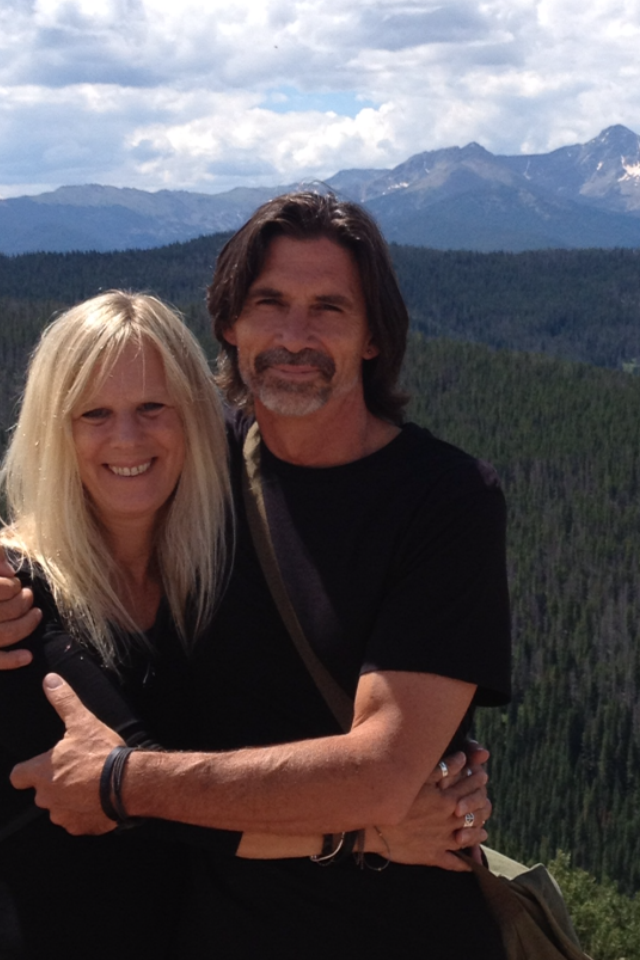
With Kerri on the top of a mountain

With Kerri on the top of a mountain in Colorado.

Just beyond Vail, Colorado there is a tiny two street town called Minturn. It began as a mining town when people were rushing for gold but these days it survives as a place for tourists. It is radically different than its founding fathers intended. We stayed there for a few days of rest and recuperation after our two-week double loop through Middle America.

The double loop through America was nowhere in the plan a month ago. Things just seemed to pop up. A death. Kerri’s daughter stumbled into a new job that necessitated an immediate move. Plans changed. Our intentions for the month went out the window. All of the artistry went on hold. We quickly packed the car and hit the road.

Just as plans change it is also true that change is rarely planned. I’ve yet to meet a person who doesn’t resist change (despite their rhetoric). Change requires a step into the unknown and that’s precisely the point: real change comes when we simply don’t know. Most of us like to know where we are going before we step. Change finds its way through the cracks that happen when patterns are disrupted, when things just seem to pop up, when we have no idea what the next step is. Change happens when we are making it up as we go. Change is a creative act, a tap dance on the event horizon.

Last week we drove to Colorado from Wisconsin through Iowa and Nebraska to attend my grandfather’s funeral. After the service we drove to Columbia, Missouri, crossing the full expanse of Kansas, to deliver some treasures from Beaky (Kerri’s mom) to Wendy (Kerri’s niece). Since we were driving to Denver, why not go home via Missouri? We returned home long enough to wash our clothes, pet the dog, and repack the car and head to Minneapolis. We packed up Kerri’s daughter and moved her to Vail via South Dakota with a sharp turn through Nebraska before arriving again in Colorado. After a rest in Minturn, a few hikes, some time with wine sitting on a porch, and a few precious nights with my parents, yesterday we returned to Wisconsin through Wyoming, South Dakota, and Minnesota.

It was a tap dance. Change found its way in as our patterns disappeared in the spontaneity of the double loop. We arrived home exhausted and exhilarated, with renewed eyes, a riches of profound and varied experiences, and much clearer intentions. What seemed initially like an interruption in our path was, in fact, a crack in the pattern, a necessary bump into the unknown.

title_pageGo here for my latest book

Chase Your Lion

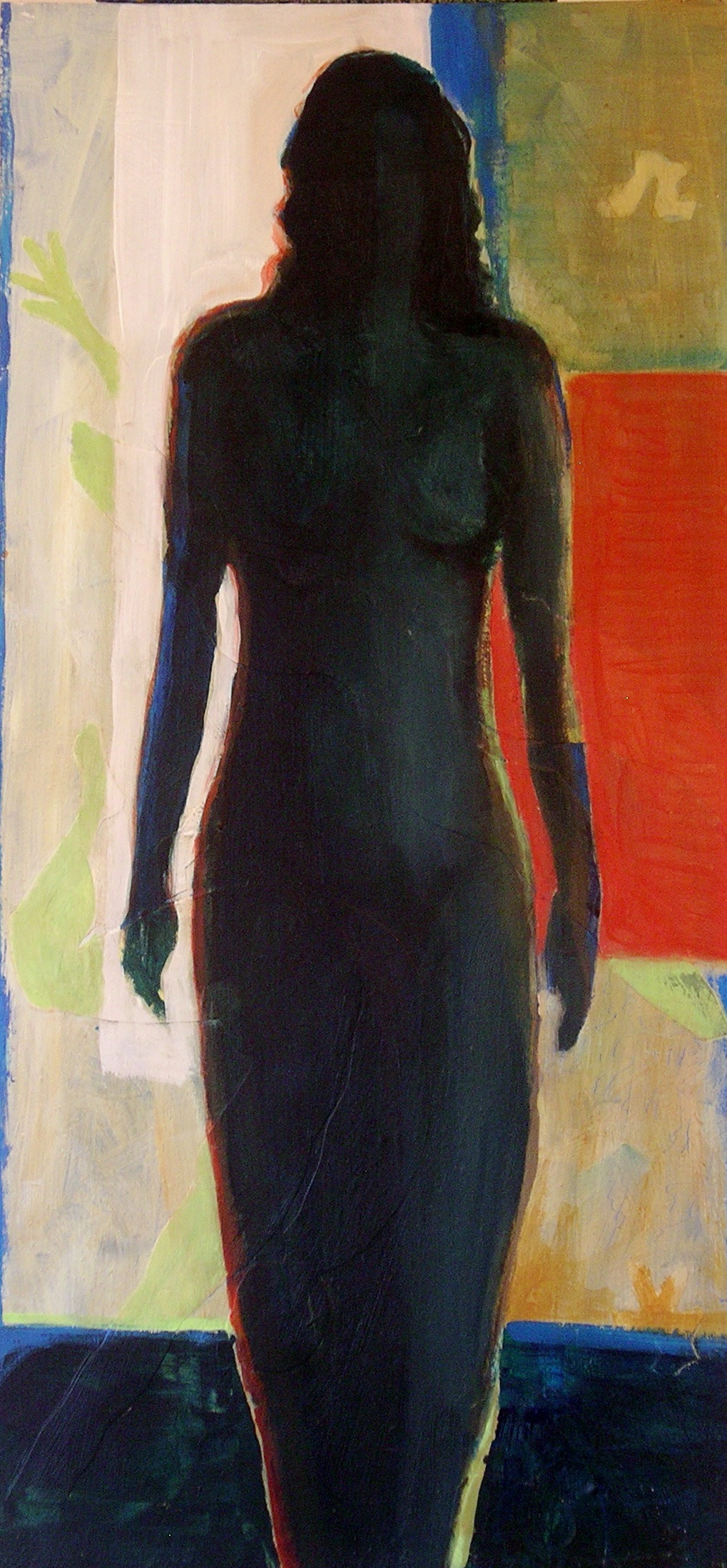
This is from the long ago archives. A sketch I call Persephone

This is from the long ago archives. A sketch I call Persephone

We were talking about fear. I’d suggested that some fears were actual and some imagined. For instance, if a lion were chasing me, fear would be my ally. It would be actual and useful. My fear would possibly save my life. It would make me run faster. On the other hand, if I feared pursuing my dream, of doing what I wanted to do in the world because of what others might think, my fear would be imagined. It would not be useful.

He said, “You don’t understand how afraid I am.”

“How afraid are you?” I asked.

He wrinkled his brow, “How can I answer that? No one can answer that.”

“Well, tell me how big is your fear?” I said. “Give it a size.”

“I can’t do that!”

“Sure you can,” I said.

“How do you quantify fear? How does anyone quantify fear?”

“Oh, quantifying fear is easy.” I said. “You simply count all the things you don’t do because of your fear. Those things are quantifiable. Count all the life experiences that you are willing to lose by holding onto your fear.”

He was silent for a moment. Then asked, “Like what?”

“Most people lose access to their lives. They let go of their dreams. They tell themselves that they don’t know how or that they were not meant to do what they want to do. How much life are you willing to miss by telling yourself the story that you are afraid? Count the days, the moments, that you stop yourself. Those moments are actual. Those days are quantifiable.”

He was angry, so I added, “Dreams are not lions.”


title_pageGo here for my latest book


Or, go here for fine art prints of my paintingsThe Poet

Let Yourself Go

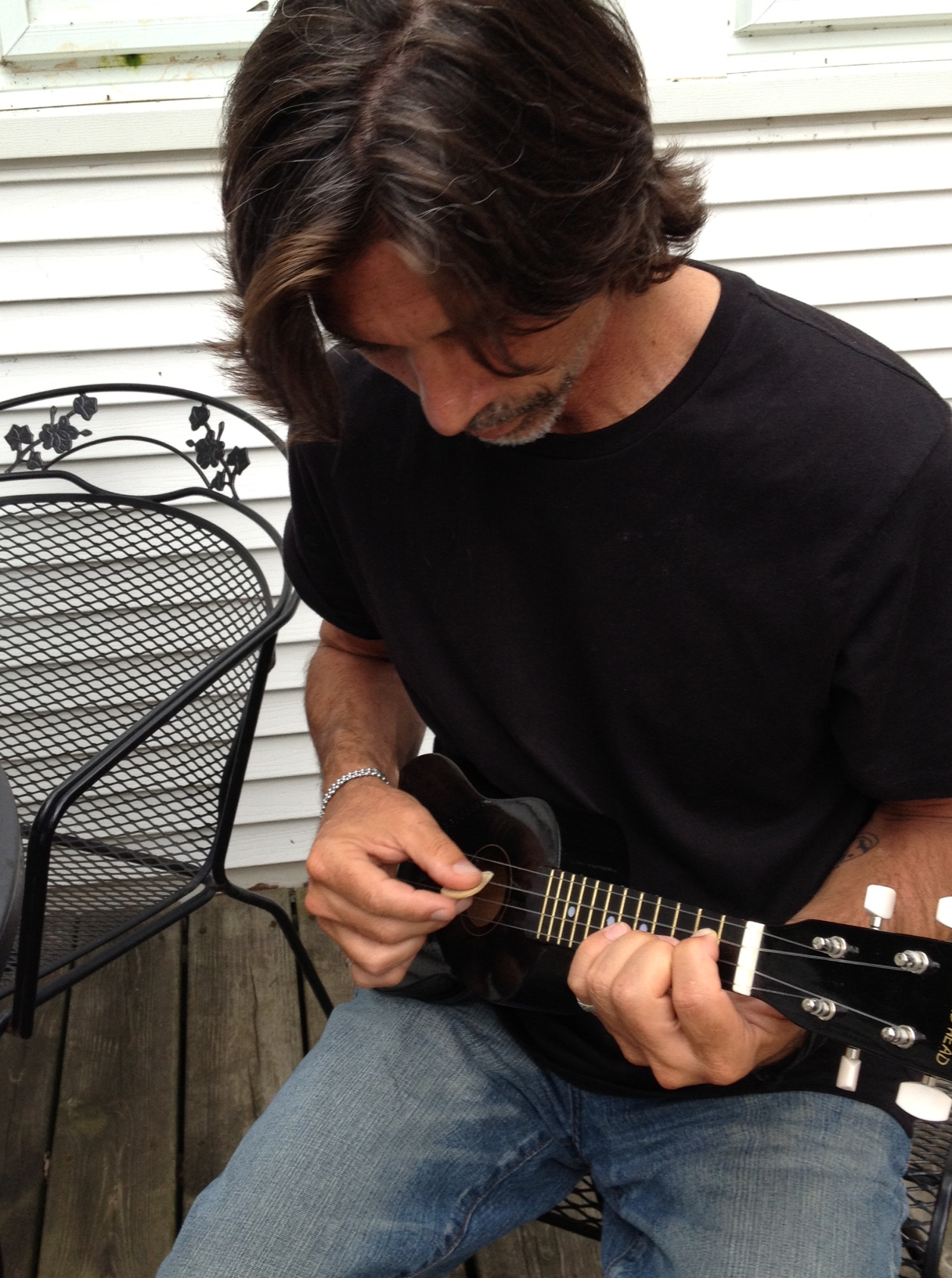
I have no idea how, but I'm making a mess of sound and will one day play the ukulele.

I have no idea how, but I’m making a mess of sound and will one day play the ukulele. Kerri says that I already am…

My meditation on the word “how” continues.

At our recent Summit in Holland, Alan and I asked the question, “What would you do if you didn’t have to know how?” It is a great question. The short answer is this: you’d figure it out. You’d try things. And if your first attempts led nowhere you’d try something else.

In this musing I have often written that “how” is something that is known at the end of the journey. We can’t answer “how” with any honesty until the story is played. Today I recognize that there are two distinctly different “hows:” 1) the explanation, “This is how I did it. This is how you do it. This is the “how” that presumes a path or a prescription. When dealing with this version of “how” I ask groups or clients to consider their life story and tell me how they got to this day in this place doing this job, etc.. The answer is mostly, “A clear path with a lot of happy accidents,” or something like, “I have no idea. I didn’t try.” Yes. Ask me how to paint a painting and I will tell you that I have no idea. I’ve painted a thousand of them and I can teach color theory or composition but I cannot tell you how to open to the muse, how to become a channel for something greater to come through. To paint a painting, to act in the play, to write the book, there is something akin to letting go. There is a divine surrender. So, how did you get to this place in your life? Divine surrender. Happy accident. Unstoppable forces.

If the first form of “how” is an explanation, the second is akin to giving permission. I have worked with a legion of blocked artists who set up studios, buy musical instruments, sign up for improv class,…, and then sit in their studio, stare at their musical instrument, and forget to go to class. When they call me, they tell me their story and always finish the telling with, “I don’t know how….” For my fee, I could say a single, simple word: start. Instead, what we usually do in our work together is find their internal permission. When they realize that their block has nothing to do with “how” and everything to do with the fear of being judged (“how” is an internal braking system meant to prevent starting), when they are ready to, as Saul would say, “Orient to their own concern,” they allow that their opinion of their work trumps all others, they give themselves permission. They start. They play.

Recently, a brilliant woman, an attendee of the Summit, a maker of incredible mandalas, sent me an email with a photo of the start of a painting. She asked for my advice. I wrote: make a mess. Paint on top of the mess. Then repeat. Today in my inbox I received her beautiful mess with a note that their would be more messes to follow. She started. She picked up a brush. She splashed some paint. She splashed some more paint in response to her first splashes. That is how art is made. That is how light bulbs were invented.

This morning I laughed when I realized the double definition of the phrase, “Let yourself go.” In common parlance, it is used as a negative, when people give up, when they stop trying to maintain their health or their appearance, “He really let himself go.” The second possible meaning is to start. To go. The next time someone is sitting in their studio and asks me the question “how,” I will respond like this: let yourself go.

Go here for my latest book. title_page

Yoga Series 7Go here for fine art prints of my yoga series (and more).

Unlearn And Step

Helping Hands.

Helping Hands.

I revisited an old journal this morning. I’ve been thinking much about power these past few days and I have a mountain of writing about power. This blog began as an exploration of personal power, the creation of power (power-with), confusing control with power (power-over), grasping power (fulfilling potential) or vampiring (drinking power from others).

Lately, I’ve been thinking that the question “how?” is a form of learned powerlessness. Most people (adults) are reticent to do something until they know how to do it. That’s backwards; no one knows how to do anything until they actually do it. Doing is a prerequisite of knowing how. As a coach I often hear the fear beneath the phrase, “But, I don’t know how…” Needing to know “how” stops all motion.

Children do not have this problem. The firewall-from-life called “how” is learned. Or, more accurately, it is installed. For instance, the other day when Craig and I walked passed the batting cages, he said, “Those things make me shudder. I totally, I have PTSD from those.” He was joking in the way that means, “I’m not joking.”  Shame is a lousy teacher. So is bullying. The message: there is a right way to do it and you better know the right way before you swing. Or else. Shame is a powerful action inhibitor. It is the tool of the powerless teacher. It develops in the student the necessity of knowing “how” prior to taking action. No one willingly steps toward shame or a bully.

The question, “How?” often functions as a form of premature cognitive commitment. It is how elephants are held captive by the weakest of strings. As infants, a strong chain is attached to one of the elephant’s legs and the other end of the chain is secured to a strong tree or stake in the ground. The young elephants pull and pull until they learn that pulling does no good. They stop testing the chain. They make a premature cognitive commitment to their restraint. They will never pull again. A simple string is all that is required to contain the elephant once it believes it has no power. The question, “How?” works just like the elephant’s premature cognitive commitment. Needing to know “how” before taking the step is a commitment to non-action. It is a belief in powerlessness.

On the other hand, to step without needing to know “how” is the equivalent of pulling on the chain. Pull, and see what happens. Transcending “how” is an act of power reclamation. The ability to step without knowing how is central to all vital artistic and, as it turns out, scientific, processes. Discovery precedes the necessity of “How?”

Go here to get my latest book, The Seer: The Mind of the Entrepreneur, Artist, Visionary, title_pageSeeker, Learner, Leader, Creator…You.

Or, go here for hard copies.

For fine art prints of my work, go here.

Embrace The Mess

circa 2011

circa 2011

I did not intend for this post to be a continuation of yesterday’s but when Amy climbed the stairs into the choir loft and said, “I don’t do change very well,” I laughed. It was word-for-word the same phrase that Kerri had just spoken.

For some reason, we’ve come to expect change to be comfortable and breezy. We expect ourselves to be paragons of reason in the face of imbalance. I find this ridiculous expectation of centered-off-centeredness to be suspiciously corporate. Apparently all change needs management and if it is not managed smoothly and without feeling or emotion then it is not well done.

Emotion is messy. Change is hard. The seed cracks before the tender shoot finds its way to the sun. The seed needs to crack in order for the new form to emerge. Hearts are broken, like seeds, to allow new forms to emerge. Even the “right” relationship is dynamic, messy, surprising, joyful, disappointing, filled with fear, the heights of elation, tenderness, quiet, and at the core is this volatile thing called love. Love burns hot during transformation; love is snuffed when excessively managed. Love is transformative when not unduly controlled.

Everyone does change well because change is the nature of our existence. Energy is always in motion. If humans are expert at anything it is change. We do change well because we can’t avoid it. What we do not do well is afford ourselves the grace of feeling the grief, the insecurity, the frustration, the anger, the joy, the exhilaration, and the dizziness that comes with change. We limit our emotional color palate when we confuse change with control. We do not allow ourselves the mess, the unpredictability, and the loss of balance that necessarily comes with this rolling vibrant transformation called life.

Amy would have been more accurate had she said, “I don’t do control very well.” I didn’t tell her the secret: no one who experiences the fullness of life does control well. In the face of her messy, volatile, change process, she wouldn’t have appreciated my counterpoint. When someone is standing in the middle of the muck it is cold comfort to tell them that they are in the right spot. So, I simply laughed, nodded my head, and said, ‘I know….”

Go here to get my latest book, The Seer: The Mind of the Entrepreneur, Artist, Visionary, title_pageSeeker, Learner, Leader, Creator…You.


Go here for fine art prints of my paintings.


Give As Love

The stack of paintings sitting in my basement waiting for me to show them.

The stack of paintings sitting in my basement waiting for me to show them.

Sitting in the choir loft this morning I was at first disappointed that the stained glass window was silent. I was so full of questions – and have lately been so full of questions – and have come to look forward to hanging out in the loft, conversing with the window, while Kerri plays a service.

When I bring my questions the window always has something to say. The window offers a better set of questions or a startling reflection or a slap of insight. The window’s responses always come in the form of a message of return (return to heart, return to forgiveness, etc.). If I get quiet and ask my question, out of the peace, a conversation always ensues. Today, from my quiet, I asked my question about artistry, about my artistry, and I was met with an unusual silence. I wrinkled my brow. I wondered if my conversation with the window had come to an end or if perhaps my question was out of the scope of topics for a stained glass window.

There was a visiting pastor, an elder who’d been preaching for over 50 years. I sat up and paid attention when he began his sermon this way:

“Artists have a special gift. They help others see in a new way….”

His message was about love. Love, he told us, takes many forms and the form that love takes depends upon the unique gifts of the lover: a symphony is a gift of love, a painting is a gift of love. A plumber fixing a broken water main late into the evening is a gift of love. “What is your gift? he asked. Do you recognize it as love?

A few years ago, on New Year’s Eve, I visited a tarot woman at a bookstore in Denver. During our session she asked me a question that felt like a cold slap in the face. “You know god’s voice,” she said. “Why do you not use it?” I mumbled a lame excuse that dribbled into silence. “Why do you not use it?” she asked again.

Sitting across the table from the tarot woman, I knew without doubt that I have, my whole life, been a great servant to other people’s artistry but a lousy servant to my own. In my life I’ve been the midwife to many people’s gifts while mine have remained mostly unrealized.

The window whispered, “A painting is a gift of love. So is a play. So is a book. These are your forms of love. Your gift is a gift of love. Love is god’s voice and you know god’s voice.”

“I do know it,” I said, timid to admit it. “Don’t we all?” I asked the window.

“Access is open to all. Few actually listen,” the window replied. “Few know how to listen. Most fear their gift and plug their ears.”

To offer my gift without inhibition is how I best express love to the world? That was old and new for me at the same time. I asked the window, “How many artists need to hear that message? How many people need to hear that message?”

“You are deflecting. You deflect your gift by serving other people’s purposes before your own. These questions you ask are the wrong questions,” said the window. “Yes, of course, all people need to hear the message. But, is it your purpose to deliver the message or is it your purpose to fulfill your gift? Helping others hear their message is not yours to do. Yours is to fulfill your gift and, in that way, help others to see their gift in a new way. You need do nothing but give your gift. They will see or not without your intervention. Love by giving your gift. It is simple. Give your gift, give your love, without reservation or doubt.”

“Love can be how you listen to a friend in need,” the pastor said. Love is not about the rules or the restrictions. Even when you try to alienate love, it will always find its way back to you. It will find its way back through you.

“You know god’s voice,” the window continued. “And you know it. Return to the truth; return to your truth. The question, ‘Why do you not use it,’ no longer matters. It, too, is a deflection. Asking ‘why’ merely delays the giving. Use it. Give it. Give as love.”

Go here to get my latest book, The Seer: The Mind of the Entrepreneur, Artist, Visionary, title_pageSeeker, Learner, Leader, Creator…You.

Or, go here for hard copies.

Give Time.

Here's a watercolor study for a larger painting that has yet to happen.

Here’s a watercolor study for a larger painting that has yet to happen.

She said, “I can’t do it because it takes too much time.” I didn’t respond. I didn’t validate her inability to do what she said she desired to do. I waited. “There’s only so much time in a day!” she exclaimed.

“That true. That will always be true,” I responded. I didn’t say it but I’ve noticed that it is usually the things we say that we desire to do that get short shrift. Spaciousness takes time. So does relationship. So does physical health, mental health and a spiritual practice. It all takes time. I’ve coached a legion of people who’ve set up art spaces in their homes and then avoided them like the plague. Their excuse for establishing the physical location but fleeing from what they might do in it: it takes too much time.

She was silent and I could tell that she was caught in her web of justifications. She was swirling in a reasoning-eddy called, “I have no choice.”

“Listen to the language you use,” I said, seeing her distress. She wrinkled her brow.

“Everything takes your time. It’s like life is a pickpocket stealing your precious time and you never have enough. You are divided against yourself. Who decides where your time goes if not you? You lack because you pretend that you have no control over your time. Choose to do it or choose not to do it. It’s in your language.”

She was quiet for a moment and then said, “It seems too easy to just change the way I talk about things.”

I smiled. “I know but imagine who you might be if, instead of life taking all your time, you started talking about where you choose to give your time. If life takes your time, then you are a victim. If you own where you give your time, then you are a creator. The actions of your day might look the same but who you are within them will be radically different. A whole world of possibilities would become visible if you realized that no one else is in control of your time. Where do you choose to give your time?”

Go here to get my latest book, The Seer: The Mind of the Entrepreneur, Artist, Visionary, title_pageSeeker, Learner, Leader, Creator…You.

Or, go here for hard copies and Kindle.


Share A Poem

An old painting from my archives. This is "Hermes."

An old painting from my archives. This is “Hermes.”

One day, out of the blue, Doug came out of his office, stood at the door to my office and asked me to follow him. Doug was a bull in a china shop, gruff on the best of days, and his request was more of a command than an invitation. He’d spent his early life in the military, did two tours in Vietnam, and a piece of him was still fighting that war; the rigor, structure and discipline he’d acquired as a soldier was still saving his life. I’d worked with him long enough to know that he was soft to the center. Doug was a big heart wrapped in pit bull clothes.

I followed him back to his office and he asked me to close the door, a sign that usually meant battle was to ensue. I closed the door and sat opposite his desk, curious that the lights were off. The dim room was illuminated by a single thin window partially obscured by a bookcase. He sat. He took a deep breath and looked around as if he was worried that others might be listening, and said, “I want to show you something.” He took another breath, slid open the bottom desk drawer, and pulled out a book so worn and deteriorated that it was barely recognizable as a book. I knew immediately what it was and caught me breath. “I want you to see this,” he said. I gently held the tattered brittle pages and read the first poem in the book and, as I read it, Doug recited it. Tears came to my eyes.

I’d heard the story of the book many times. Doug told the story when he was in pain, when one of his students was self-destructing or when he was once again standing at the edge of his own personal abyss, a place that was never far away. He told me the story each time he was trying to find a shred of humanity in his very dark world.

When Doug was on his way to his first tour in Vietnam, he was not yet 18 years old, he was angry and alcoholic, and for reasons he could never explain, he stopped in an airport bookshop and bought a book of The World’s 100 Greatest Poets. When telling the story, Doug would say, “I’d never read a poem. I hated poetry! I was nearly illiterate! But I bought that book and stuffed it in my bag.” He told me that the guys in his platoon teased him the first night he brought out the book of poetry and read it. Initially he read the poems aloud to bother his mates. They’d shout and throw stuff at him. Every night he read poems aloud. Soon, after the horrors of the day, after the fears of being killed or having killed, they asked him to read poems to them. They had favorites. They made requests. They talked about what the poems meant. They asked him to find a good poem to send to their loved ones at home. Over the year, Doug learned to recite by heart each one of those poems.

Doug told me that poetry saved his life. The book saved his humanity. That day in his office we spent nearly an hour reading poems to each other; each poem had a story, a memory. He told me that people don’t understand the reason for art, the necessity of poetry. “It’s not a luxury,” he roared, “it’s the goddamn center.” He carefully placed the book back in the drawer and pushed it closed. I thanked him for sharing it and he waved me off. The moment had passed; he closed the drawer on his sharing, too. It was too much.

That day was nearly twenty years ago.

Doug Durham

Doug Durham

Jim sent me news that Doug passed away this week. The last time I saw Doug he showed up at my apartment in Seattle just as he’d showed up at my office door: out of the blue. He sat in my living room for fifteen minutes, fidgeting, unable to sit still. “I just wanted to see you!” he trumpeted. “I wanted you to see that things are good with me!” He was deciding whether or not to open that metaphoric desk drawer. He had something to share or say but had not yet decided whether it was the right time. He had cancer even then but was on top of it.

“Well!” he announced, standing, “it was good to see you.” I asked him what he wasn’t saying and he gave me the “be careful” look. He wasn’t ready and I knew better than to push him. “Stay in touch.” I said, as he climbed into his big red truck. “You know better than that!” he smiled, waved, and drove away.

Go here to get my latest book, The Seer: The Mind of the Entrepreneur, Artist, Visionary, title_pageSeeker, Learner, Leader, Creator…You.

Or, Go here for hard copies.