Stop Your Rant In Its Track

TODAY’S FEATURED THOUGHT FOR HUMANS

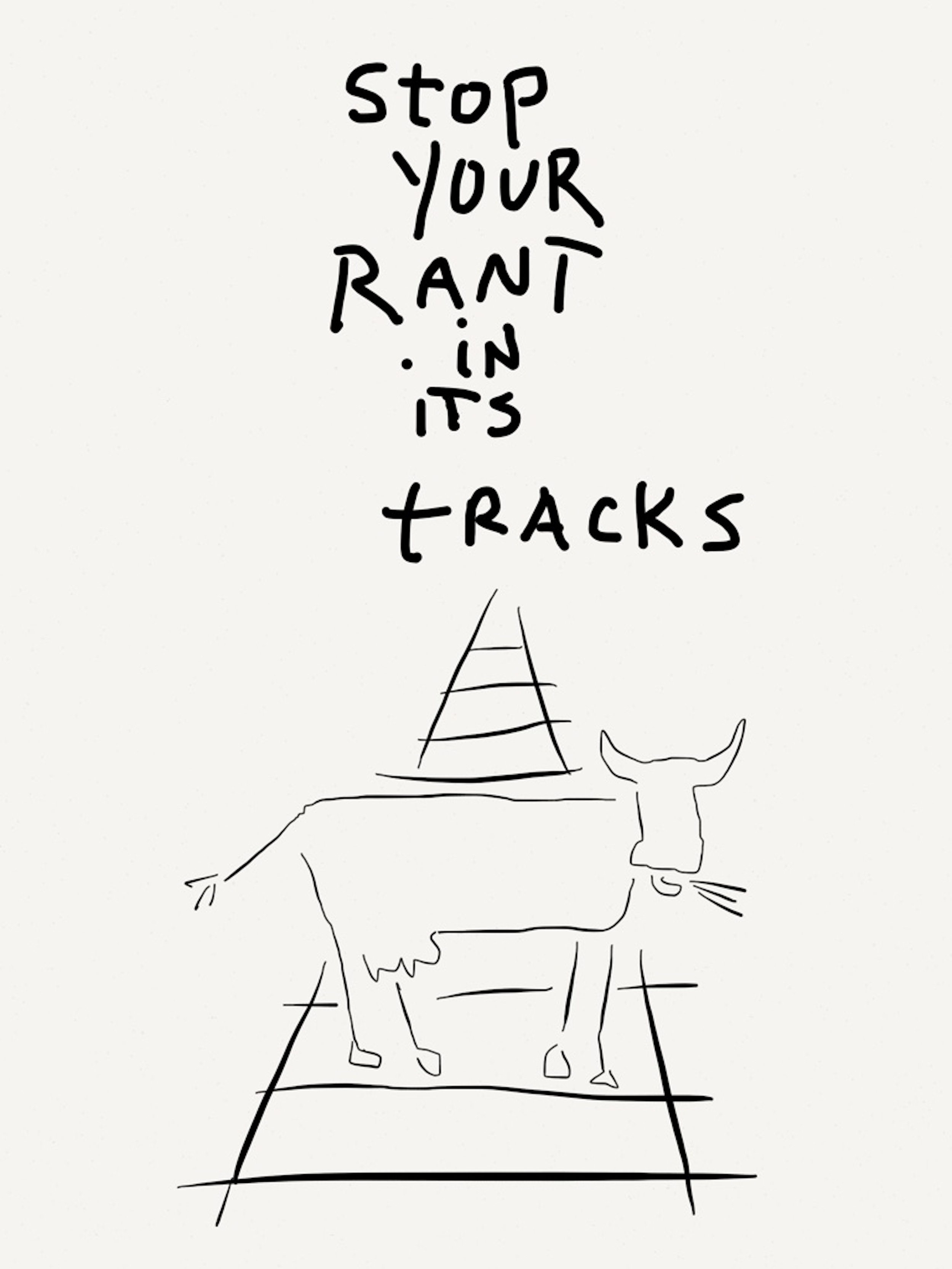
Stop your rant in its track

I come from a long line of ranters and am famous for ranting. Through a life of ranting I’ve learned that rants are mostly a useless exercise. They serve as a pressure release, which is say, energy that is misdirected. Miracles happen when misdirected energy is focused and released toward an intention. Rants are essentially an admission of helplessness, a scream of, “Why is this happening to me?” Redirected, the energy becomes a focused stream of, “I am going to make this happen.”

FOR TODAY’S FEATURED ENCOURAGEMENT FOR HUMANS, GO HERE.

Sometimes It Takes More Than A Text

TODAY’S FEATURED IDEA FOR HUMANS

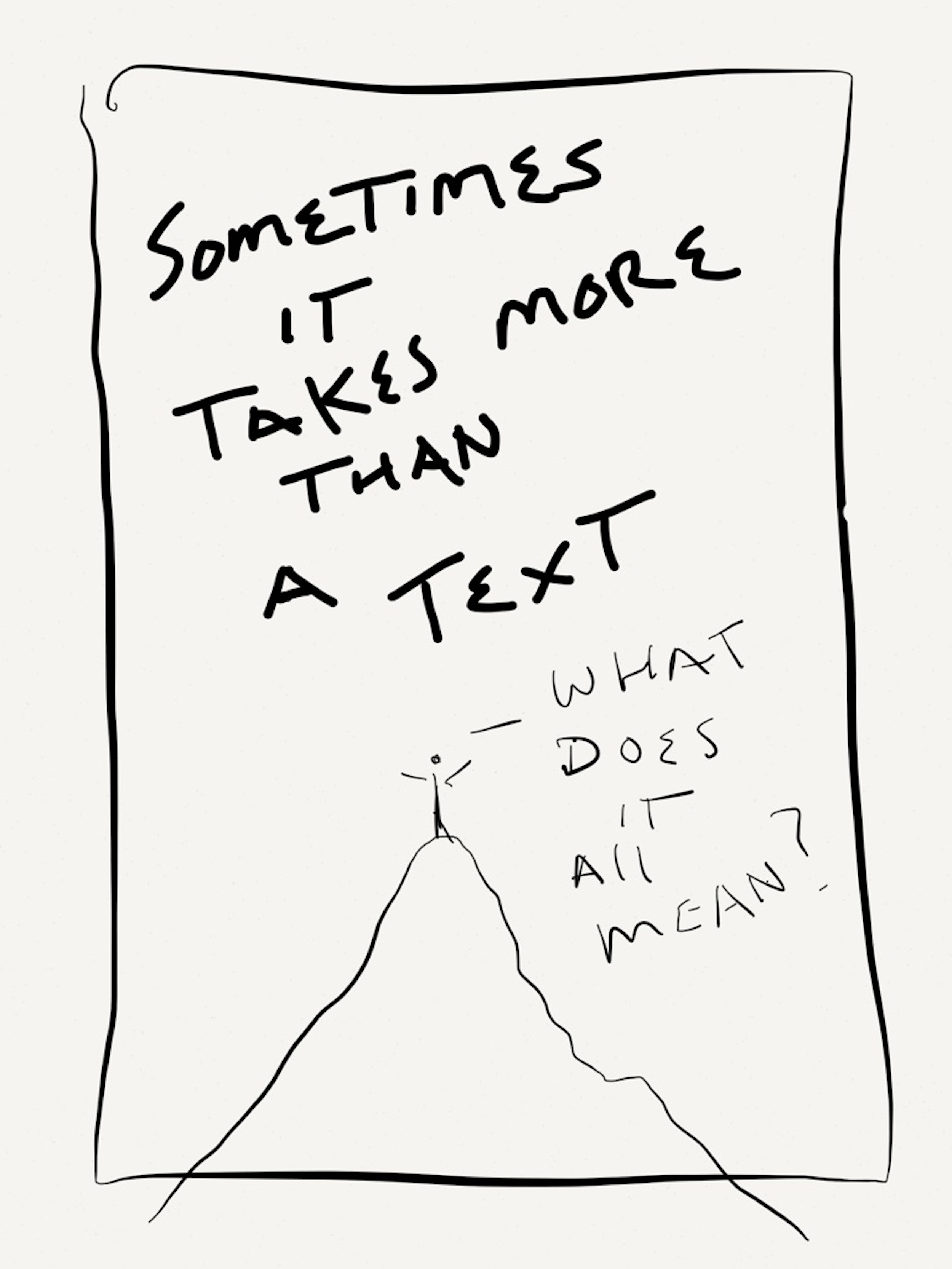
Sometimes It takes more than a text

In a recent post I wrote that we are often slaves to brevity. We want quick and easy answers to life’s big questions. Peter Block wrote that, in 30 years of consulting with businesses, he was routinely asked “How” but never asked “Why.” Relationship is at the heart of almost every big question (like leadership, management, marriage, self-love, the sacred,…) and, in relationship, there is no shorthand.

FOR TODAY’S FEATURED PRINT FOR HUMANS, GO HERE.

Cross The Boundary Of Elements

TODAY’S FEATURED IDEA FOR HUMANS

Cross The Boundary

In a world of right and wrong, yours and mine, red states and blue, crossing the elements means relinquishing the idea that “I know,” or that “I’m right.” My “normal” may not be your “normal;” it’s a good bet that my perspective is not your perspective. Cross the boundary of elements and stand for a moment in other people’s shoes; swim in their element.  Reach across the known to see what they see. Find the middle way.

 FOR TODAY’S FEATURED PRINT FOR HUMANS, GO HERE.

Get Back On And Ride

Guess what. I'm doing it.

Guess what? I’m doing it.

It is universally true that we must fail to learn. In fact, as absolutes and paradoxes go, the single universal lesson that we must learn is that there is no such thing as failure. To unlearn is, in fact, also to learn. Everything is a step forward when failure is out of the equation. I fell off my bike more than once before I learned to balance and ride. I made some terrifically ugly colors as I learned to paint. That is the nature of learning.

Over the past decade I’ve tried more than once to produce my play, The Lost Boy. And, like learning to ride a bike, I’ve fallen off with each attempt. The latest tumble came with a failed Kickstarter attempt. Sitting on the curb, my metaphoric bike akimbo, I asked, “What is it about this play?” It will not leave me alone and yet it has been more than difficult to produce. And, as it does, the learning followed the fall. And there is nothing to be done but get back up and ride.

And, as is also true, when you decide that you are going to do something, the way opens (note: that does not mean that there are no challenges). When we didn’t meet our Kickstarter goal, I had the option to let it go forever or, I had to decide that I was going to produce this play with bake sales, lemonade stands, or any other whacky idea that would get me to opening night. This play will not leave me alone and, as I learned in the fall, I will not leave it alone. The decision was already made and I needed the failed campaign to see it.

And the way opened. The University of the Pacific decided to donate the theatre and to help with some marketing through alumni networks. I laughed when, given their generous donation, I made my new budget. The amount I need (bare bones) to get to opening night is almost identical to the amount pledged in the failed campaign. So, taking what I’ve learned, I’ve mounted a new campaign and asked the previous pledgers to pledge again. And, since I adore paradoxes and don’t really believe in absolutes, I’m passing this link out in every way possible. Nothing is for sure – except that I will do this play in February in California.

The lesson, of course, is to ask for help and ask again (something I was not good at doing in the first campaign). The other lesson is this: a play that will not let you go is worth doing and it is worth doing whatever it takes to give it life. So help me give it life. Here’s the new Kickstarter campaign. Please support it if you can by pledging or passing the link out through your networks.

I don’t mind falling off my bike again because now I know that I will simply dust myself off and get back on to ride. Join me in California in February for the world premiere of The Lost Boy.

title_pageGo here to buy hard copies (and Kindle) of my latest book: The Seer: The Mind of the Entrepreneur, Artist, Visionary, Innovator, Seeker, Learner, Leader, Creator,…You.

Guess what. I'm doing it.

And, in case you missed it, here’s the link to the new The Lost Boy Kickstarter campaign

Bring Your Boon

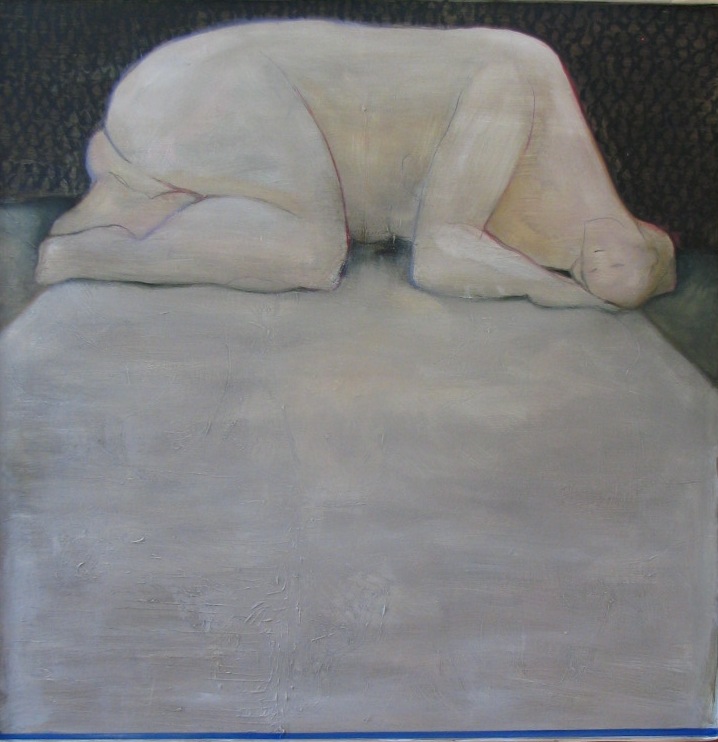
This painting is called Icarus.

This painting is called Icarus.

During my call with Skip I used the word, “boon.” He scribbled a note saying, “You’ve not used that word before.” The word came up because he’s been overrun by well meaning advice-givers that think he needs to know about the hero’s cycle. Skip said, (and it’s true) that he’s forgotten more about the hero’s cycle than most people will ever know. “I’m a business guy so they think I can’t possibly know about it!” he exclaimed. “If another person tells me about the hero’s cycle I’m going to explode.”

My thought for him was to pay attention to why so many people are coming up with the same response when they hear about his work. What’s evoking the common response: have you heard about the hero’s cycle? I always pay attention when a book title repeatedly drops into my world (I get the book) or when a place or a metaphor seems to pop up everywhere. What’s there that I may be overlooking? What is hammering Skip that he may not see? That’s what sparked the word, “boon.”

When the hero (and we are all heroes in our personal story) emerges from the ordeal of change, when they escape the belly of the whale, they are transformed. They know something that they didn’t before understand. This is the boon. They have a new gift or insight that will, in turn transform the community. Personal change is communal change. They are one and the same thing.

There is a small catch when dealing with boons: communities (like individuals) talk a lot about the need for change but mostly resist it. When you are the bringer of the gift, the carrier of the insight, often you are not welcome when you share it. New insights are dangerous to the status quo. History is resplendent with visionaries banished for sharing the boon of their transformation or bringing to the community the gold that they need but are incapable of recognizing.

Skip has arrived back to the world with a boon. He sailed to the edge and has returned with strange knowledge and a unique perspective. His insight contradicts common models of business. His boon describes motion, a flow, which is hard to see when the landscape is dominated by bottom lines and outcomes. His community mistakenly thinks he needs to go on a hero’s journey when, in fact, he is just returning. His hands are full of gold that they cannot see.

The best we can do is share what we hold. How it is received is out of our hands. If it is received at all is not in our control. Vincent Van Gogh died having sold one single painting – and that to his brother. The glory of his life – and the lives of all visionaries – is that he kept painting regardless of whether the world might someday see the boon, or not. It didn’t (and doesn’t) matter. Bringing the boon home is all that is required.

title_pageGo here for my latest book, The Seer

Go here for Fine Art prints of my paintingsYoga.Meditation

Pick Up Your Ordinary

From Kerri and my travels: a photo essay about what our feet have seen

From Kerri and my travels: a photo essay about what our feet have seen

I continue to process all of the amazing events and experiences from the past few weeks working abroad. They have jiggled loose an old thought-bubble and I’ve been pondering it since it bobbed to the surface.

The old thought-bubble is a tenet that comes from improvisational theatre: put down your clever and pick up your ordinary. I’ve used this tenet in any number of facilitations and coaching relationships. The basic idea is this: any attempt at being clever actually diminishes personal power and inhibits the capacity to be present. Trying to be clever focuses the eye inside and robs a performer or presenter of the only thing that really matters: relationship in the moment.

Dig a bit deeper and the real wealth of the tenet shows itself. We rarely recognize our true gift because we think everyone possesses it. We miss our unique gift because we think it’s ordinary. We mistake our gift for something common and therefore not of great value. In truth, what we brand as ordinary (how we see the world) is our most unique, most potent and powerful gift. So, to put down your clever and pick up your ordinary is to value your unique point of view. It is to honor yourself and how you see the world and also affords you the capacity to be seen as you are, not as you think you need to be seen. To pick up your ordinary is to become accessible.

Trying to be clever is actually an attempt at trying to be something we are not – or someone we are not. It is to hide, put on a mask, or pretend.

Ordinary reveals; clever obscures. Ordinary facilitates flow. Clever needs to control. Attempts at being clever are manufactured moments. Experts need to be clever, they need to whip up a straw man and call it substance. Clever is always an ego need – in fact, clever is nothing more than a plea for approval. It is a thirst for adulation. Clever needs center stage. Ordinary shares the stage. Clever needs to claim territory. Ordinary expands horizons. Ordinary is accessible. Clever is protected, aloof, and closed.

All of this is old news. It was in the old thought-bubble. Just behind it came a few new little trailer bubbles. Clever is oriented on what it gets (adoration, attention, acclamation). Ordinary is oriented according to what it brings: a unique point of view in service to a relationship. Ordinary is a form of potlatch: give what you have; give away your wealth as the road to increase. Clever comes from a universe of lack. Ordinary comes from an abundant life. It is a paradox. Unique is found in the ordinary. New vision comes when we cease trying to say something new and simply offer our unique, one-of-a-kind perspective. The beauty is in what we see.

title_pageGo here to get my latest book, The Seer: The Mind of the Entrepreneur, Artist, Visionary, Seeker, Learner, Leader, Creator…You.

Or, go here for hard copies and Kindle.

Locate Your Self

title_pageHere’s a short excerpt from my book, The Seer, dealing with the dance between investments, limitations, and the roles we play in life. This conversation is a kind of coaching session and is happening via online chat:

Me:…All week I’ve asked myself, “why?” Why the dramatic shift in experience from role to role? I’m a bit shocked to realize that I play many, many roles each day. In each role I want something and what I want is different depending upon the people I am with. I realized that my roles are not about me in isolation – and what do I mean by that? I mean that I define my role by how I define the relationship I am in at the moment. For instance, in my workshop, I assumed the role of “guide” and I wanted to lead the young people to some new insights that might help them create their businesses. In my conversation with my parents, in the role of “son,” I wanted them to be pleased with my work. I wanted to share and I wanted their approval. So, my role is defined by relationship and in each different relationship I tell a specific story based on what I want or need. I’ve “cast” myself in these little mini-stories. Or to use your term, “role” is the way I “locate” myself in the story.

Virgil: And how does this knowledge help you with your questions about business?

Me: The first thing that occurs to me is that I have the capacity to locate myself in a different way if I don’t like the role I’m playing. I can change how I locate myself. Also, there is a dance with the words “limitation” and “investment.” I took notes all week and realized that I was using the verb “to invest” over and over again to describe my experience of different roles. So, for instance, during my dinner with my friend Bruce I invested in helping him. I wanted Bruce to know that I cared about his challenges. Then, I watched Bruce invest in being the wine expert. It was his way of caring for me and demonstrating his expertise. I began to see my investments as keys to discerning my limitations. In some roles I’ve invested in the idea that I can’t do something or that I’m not good at something. In some roles I diminish myself; my limitations are investments in being small.

Virgil: Just a caution: as you explore further the dance between investment and limitation, remember to practice suspending your judgment. Remember: you are having experiences first so you can see how you make meaning and begin to choose how you make meaning.

Me: Thank you. It’s a good reminder. I was beating myself up every time I     realized I was investing in being small.

Virgil: We tell ourselves stories. We locate ourselves within the stories. In fact, that is the next recognition: you locate yourself within your story. We do it physically (like your description of choosing the table in the restaurant); we do it through the roles we assume – specifically our assumptions of how we need to play our roles, what is ours to do, etc. Locating is simply a way of establishing comfort. We sort to the known. If you judge how you locate yourself, you miss the opportunity to change how you locate yourself.

Me: Right. Judgment blinds me to the choices I am making.

Virgil: Judgment is always a version of the “things are happening to me” story. In fact, judgment is a way of locating: it is the warning signal when we step too close to discomfort. When I judge myself and say, “I’m an idiot,” I’m actually locating myself, pulling myself back into my comfort zone. When I judge others, “They are idiots,” I’m locating myself in a higher status position. The action of diminishing “them” elevates me back into a comfortable status position. Thus, suspending your judgments removes the easy step back to comfort and allows you to stand in “not knowing” and see what is there beyond what you think is there.

Go here to get my latest book, The Seer: The Mind of the Entrepreneur, Artist, Visionary, Seeker, Learner, Leader, Creator…You.

Or, go here for hard copies.

Choose Your Path

A watercolor I call, "House On Fire." It's an unusual piece for me...

A watercolor I call, “House On Fire.” It’s an unusual piece for me…

I am still unpacking from my move. My sketchbooks and journals have been bound in plastic wrap since I hauled them across the country and then brought them into the house from the Budget truck in October. I cut the wrap this morning because I was looking for a sketch to give as a gift and during my hunt I found an old work journal. It was a gold mine!

I’m preparing to facilitate a workshop on The Art of Team and the notes I found were from a team I worked with a few years ago. This organization had a history of abusive leadership. There was a serious lack of trust within the group. It was a classic case of “everyone else is to blame and nothing is my fault.” Everything was territory that needed to be guarded and protected, especially personal value. Their individual worth as human beings was always in question.

Here are notes from our world-class conversation. This is what the team discovered as it waded into the swamp of its dysfunction:

The path of power splits, there is a fork in the road of power:

One path leads to the creation of power with others.

The other path leads to power over others; a path of taking from others.

The fork is defined by where each individual seeks their worth:

Seeking your worth based on others responses will take you down the path of needing power over others.

Finding your worth within yourself will open your way to creating power with others.

Here’s the point: it is impossible to change the group dynamic and create a cohesive team until you change yourself. Every dysfunction in a team can be traced back to this root.

In this sense, people never have problems, they have patterns (This is the first recognition from my book, The Seer):

Seeking your worth from others is a pattern.

Finding your worth within yourself is a pattern.

Seeking your worth from others patterns you to orient according to what you get from others.

Finding your worth within yourself patterns you to orient according to what you bring to others.

If you desire a functional team, cease seeking to solve your problem (seeking your worth in others eyes) and begin establishing a new pattern (find your worth within yourself).

Go here to get my latest book, The Seer: The Mind of the Entrepreneur, Artist, Visionary, title_pageSeeker, Learner, Leader, Creator…You.

Or, go here for hard copies.


Serve

A painting from my archives. This one  sold in 2007.

A painting from my archives. This one was 4′ x 4′ and sold in 2007.

Jim asked a world-class question: When did customer service become a firewall against serving customers? If you’ve had to call about a mistake on a bill or to try to get some support from your insurance provider you’ll appreciate his question. How many buttons do you have to push to get to a person? How many levels of supervisor do you need to ascend to get to the person who has the authority to serve you?

What does it meant to serve?

Quinn once told me that the world was ruined with the advent of the salad bar. He was far sighted (and funny) and recognized that it might at first be attractive to build a salad your own way but the trade-off, the loss, would be much greater than the free-will-illusion that the salad bar provided. Service would become equated with efficiency; it would become a cost saving strategy. Quinn suggested that the “salad bar concept” would forever redefine the essential relationship of the business; it would reduce the word “customer” to something consumable for the business. In other words, it would no longer matter whether or not a customer was happy because there would always be someone else to sidle up to the salad bar. In a salad bar world, the word “service” would forever be subject to a strange ongoing cost/benefit analysis. The society would shift the emphasis from service to others to service to self. Do you remember, after the introduction of the ATM, having to pay a fee to your bank if you needed to talk to a teller? Serve yourself. Save time. Do you remember when the airlines started charging travelers for bringing luggage? Or recall the introduction of extra fees for extra legroom? It may seem as if we have product choice but Quinn would tell us that we are forever standing at a salad bar.

What does it mean to serve others?

Martin Prechtel writes that transcending self-interest to put your life in service to the greater communal interest is called maturity. In order for the community to thrive, to grow and renew, the members must be oriented toward serving something greater than their own individual need. Without this necessity of service the society descends to the bottom of Maslow’s hierarchy.

What does it mean to serve something greater than you own self-interest?

I’m preparing to go over seas and do a workshop on “team,” so I’m asking many questions of people who are trying to facilitate teams in organizations. “What’s the greatest challenge you face?” I ask. The response is universal: trying to get employees invested in something other than their own personal gain. In my mind I can hear Quinn laughing; he’d call this  salad-bar-blowback. When customers become consumable, employees also become consumable. The essential relationship in business, the one it has with its customers, is merely a reflection of the relationship it has within itself. Vested action is not something that can be manufactured. One must care in order to be invested. Vested action is the blossom of service to others.

Go here to get my latest book, The Seer: The Mind of the Entrepreneur, Artist, Visionary, title_pageSeeker, Learner, Leader, Creator…You.

Or, go here for hard copies.

Be A Team

can you see the team boosting the child? I have many of these and will soon begin intentionally pursuing this form

can you see the team boosting the child? I have many of these and will soon begin intentionally pursuing this form

Many years ago Judy gave me a book by African writer Malidoma Some. He wrote that, in the village where he grew up, there were no locks on the doors. In fact, there were no doors. The people of the community respected the possessions and privacy of others. Locks were not necessary. The community cared for the health of its members so its members cared for the health of the community. From his point of view, a society that needs locks on the doors is a sick society. Locks are sign of communal breakdown.

I’ve been thinking much about sickness and the need for locks as I prepare to do a workshop for organizations about effective teams. I’ve done too many of these workshops not to recognize that the need to build teams is a sure sign of an unhealthy community. In Malidoma Some’s community, people were aware of and acted from a consideration of the health of the whole. Loyalty begets loyalty. “Acting for the good of the whole” is a great working definition for a team. It’s all you need to know to nurture great teams: make sure everyone in the organization, from the top to the bottom, is caring for the health of all the members. Make sure the choices are made for the good of the whole.

An organization that needs to team build is like a society that needs locks: most organizational systems support a philosophy of “every man and woman for themselves” while the executive suite needs cooperation and compliance to get the job done. No amount of team building can transcend compensation for individual merit. Once, a CEO asked me, “How do I get them to do what I want them to do?”

The short answer: you don’t.

A healthy team, just like a healthy community, requires no leveraging to act. It requires no policing. A team is a not a “thing.” A team is a relationship and just like a sports team or a theatre troupe, everyone needs to feel safe to really bring their game. They have to know the team cares for them as much as they care for the team. Many years ago, while sitting in a jury pool, the judge asked us, “Why do people resent being called to serve?” A lovely older woman raised her hand and replied, “The government offices are inaccessible and unhelpful when I need information or support. Why should I be happy to serve a system that wants nothing to do with me until it needs my money or someone to sit on a jury.” The rest of the jury pool applauded. When loyalty is a two-way street, teams form naturally. When loyalty is a given, people quite naturally offer their service to something greater than themselves.

There are a few other elementary things necessary for the relationship known as, “team,” like a common story (a common center) and a clear intention, but they are not possible when the metaphoric doors need locks. “Team” is something we are, not something we build or do.

Go here to get my latest book, The Seer: The Mind of the Entrepreneur, Artist, Visionary, title_pageSeeker, Learner, Leader, Creator…You.

Or, go here for hard copies.