Say “I Can.”

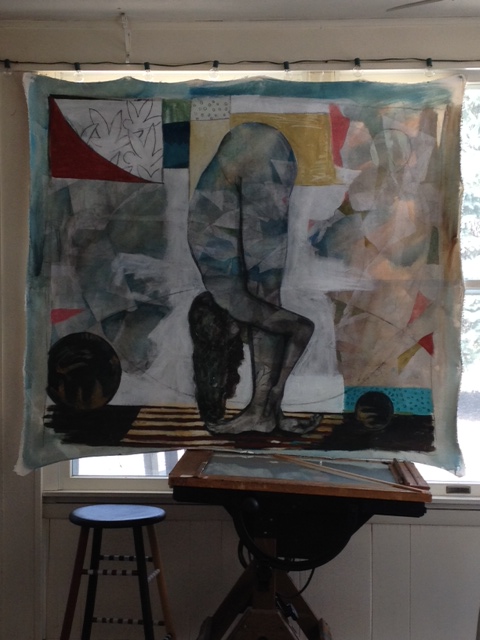
My latest addition to the Yoga series.

My latest addition to the Yoga series.

This is a bit of a confluence of thought-rivers. Two comments came across my virtual desk on the same day and collided.

1) Master Marsh sent me some wise words about a recent post concerning “can” and “can’t.” He wrote:

“There have always been plenty who will say: ‘It can’t be done.’ Ignore those. Surround yourself only with those who say: ‘It can.’ I’ve come to believe this is less about can and can’t than about the challenge of doing. And not doing is always easier.”

2) Another of my favorite readers sent this comment about a post on boundaries and choices:

I’m thinking making own-able choices is so freakin’ difficult for so many us because we were never taught/allowed to make them as children, nor are we often encouraged/allowed to do so as adults. Most of us learned at a very young age that to do as instructed – without complaint or question – meant that you were “good.” Being “good” was all tied up in stuff like being seen and not heard; accepting “Because I said so” as an explanation; being expected to abide by dictated boundaries and beliefs because of tradition or what “Other people will think.”  Operate by the rules and you are “good.” Buck that system by challenging the status quo and you are “bad.”

At first glance these might seem like two entirely different subjects. Though, as luck would have it I read them one-after-the other and I started pondering why, “not doing is always easier” and if that might not have something to do with identifying “good” with compliance and “bad” with non-compliance.

It’s a fascination of mine that in a nation that prides itself on a spirit of independence we place so much emphasis on obedience, control, and compliance. Nike sells us shoes by plucking the chord, “Just Do It!” Yet, we all know that the cowboy spirit is not welcome in grades K – 12. It’s a mixed message at best.

In the world of work, in environments heavy on control and compliance, workers can be counted on to do the minimum. Why would they show up ready to give their best when their best requires a mind-of-their-own. They, in essence, become resistant to take initiative and necessarily refuse any ownership of actions. To take ownership requires being seen and compliance is a game of invisibility. I remember a very frustrated artistic director asking me why her creative people never initiated action. She was dumbfounded when I helped her see that she was the problem. She made it a habit of negating every idea that she didn’t originate. Her staff did what all people do when punished for making offers; they stop making offers. Her “creative” team became adherents of “It can’t be done.”

No child comes to the planet with an internal line dividing “can do” and “can’t do.” Imagination makes all things possible. “Can do” and “can’t do” is learned; it marks the boundary between safe and not safe (or unseen and shamed). There is a price for domestication. “It can’t be done” is often a statement of fear and refusal to cross the line into disobedience (independence by another name). I would add a thought to Master Marsh’s comment, “not doing is always easier;” it is also true that not being seen is always easier, too. Showing up is hard. Doing is always a challenge because doing is often unpopular.

Tom used to say: “You know the value of your work by the size of the tide that rises against you.” In other words, it takes a special kind of courage to say, “this is mine to do and it matters not a whit what others think or feel about it.” It takes a special courage to say to yourself, “I’ll never know if it is possible or not until I try.”

Go here to get my latest book, The Seer: The Mind of the Entrepreneur, Artist, Visionary, title_pageSeeker, Learner, Leader, Creator…You.

Or, go here for hard copies.

Give Yourself Some Advice (3)

A younger version of myself rehearsing for The Creatures of Prometheus. The tats are fake!

A younger version of me rehearsing for The Creatures of Prometheus with The Portland Chamber Orchestra. The tattoos are fake!

[continued from GIVE YOURSELF SOME ADVICE (2)]

Here’s the third and final section of Horatio’s Advice To Myself. He sent it to me in an email last week. Horatio is one of my dear companions in art and artistry and I was so moved by his words that I asked him if I might post his thoughts. Were I still teaching young artists, this would be required reading:

Do not make work that attempts to control others. That is only advertising or propaganda and sustains no one. Make work that connects to others. That is sustaining. 

Do not make work that exalts yourself alone. That separates you from others.

Walking is good for you. Eating and sleeping are good for you. Loving is good for you. All those things sustain and heal you. Make your work like those other things. That kind of work is good for you, and for everyone.

Bragging is not good for you, or for anyone.

Never work in order to be famous or get rich. Never confuse your work with either one of those false goals, even though either or both may come your way.

Fame and riches are burdens and require a whole set of tools and abilities not at all related to the work that may have brought you fame and riches. No one but a very small minority of the rich and famous and a few visionary souls who are not rich or famous understand this. It may be the greatest false idol of human self-fulfillment of all time.

Time is the only asset that really matters. Value and prioritize it. You also need enough food and shelter, which usually means money. But enough is enough. That’s all that matters.

Having enough money for food and shelter is a necessity of doing good work. You have no choice but to figure something out. There are many paths. 

You will make bad choices. Learn from them. Forgive yourself so you can make other choices. Keep pursuing the real work.

You will waste effort and time. You will do work you don’t like. Everyone does. Try again.

All good work contains a discovery, something necessary for human life, even if it’s only that you need to drink water. 

All good work shows how we are all human, both you and your audience, that you connect, that you are the same.

All good work shows that it matters that we are all the same.

[to learn more about Horatio’s films or to read the complete Advice, visit www.Fidalgofilms.com]

Go here to get my latest book, The Seer: The Mind of the Entrepreneur, Artist, Visionary, title_pageSeeker, Learner, Leader, Creator…You.

Go here for hard copies.


Give Yourself Some Advice (2)

Finishing a painting is really about having a conversation with yourself. This one is talking!

Finishing a painting is really about having a conversation with yourself. This one is talking!

[continued from Give Yourself Some Advice]

Here’s the next bit of an email Horatio sent to me with his Advice To Myself. He wrote it following a question from a reporter about advice he’d give to emerging filmmakers. I am particularly fond of this section as many of my teachers, mentors, and guides are now passing away and I am revisiting what is mine to add to this “ancient conversation.” Here is the next section of Horatio’s advice to himself (for the full text, visit his blog at www.fidalgofilms.com):

Respect the boundaries of others; do not seek to control anyone else. You can only control your own choices.

Learn and honor with absolute integrity your own boundaries so that others may not try to control you or your work. Unfortunately, this is usually only learned through a certain amount of trial and error. 

Learning to trust is an art, and absolutely necessary. Learn to trust yourself first. Learn to trust others.

Always respect the tradition of your work, its ancient human conversation.

Connect to tradition, to all your teachers and your teachers’ teachers. Give yourself to it so that it can give to you and to your work. Honor it with rigor and doubt, with hours and hours of study and practice.

Then let your teachers go, follow the path that you understand as truth. You will know it when you see it. It will be your part of the ancient conversation. Likely, you will find that parts of one or two of your teachers have become part of you.

If you do not let your teachers go, your part of the ancient conversation will not be yours, but rather what you think other people want you to add to the conversation. That is not from you and only clogs up the conversation.

[to be continued]

Horatio asks great questions: What is the tradition that you carry forward? I follow the line of Tom and Marcia McKenzie, who learned from DeMarcus Brown, who learned from Eva Le Gallienne, who learned from…. What teachers/teaching do you need to let go?

Go here to get my latest book, The Seer: The Mind of the Entrepreneur, Artist, Visionary, title_pageSeeker, Learner, Leader, Creator…You.

Or, go here for hard copies (Amazon)


Give Yourself Some Advice

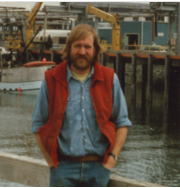
Horatio as a young man

Horatio as a young man

A few days ago I received an email from Horatio. He is an amazing filmmaker and gifted visual artist. We’ve wiled hours and days away talking about art and acting. He’s a treasure. His email was advice that he wrote to himself, the artist (what a great idea!) and with his permission, over the next three days, I will share it in segments. If you are impatient and want to read ahead, visit his blog or take a gander at his work at www.fidalgofilms.com. Here’s his email with the first portion of his Advice To Myself:

The evening after screening The Bath at Taos Shortz Film Festival in March, 2014, a very adept interviewer with the wonderful name Tamara Stackpoole (straight from Downton Abbey or Jane Austen?) asked if I had any advice to emerging filmmakers. My answer, as I recall:

“Let your teachers go. Just tell your own truth. Learn the craft – setup and payoff, three-act structure, and so on – and learn it well. But then let it go and tell your own truth, your vision. You’ll know it when you see it.”

When I woke the next morning, I realized that I had a lot more to say, and that it amounted to advice to myself. It follows:

You only can control yourself, which means your choices. You cannot control anything else.

Choose ethically, you will regret anything else.

The foundation of ethics is to respect others. Treat others as you wish to be treated. Be humble. Pride is the foundation of all the deadly sins, according to Dante and his mentor Virgil.

Your work is the essential ingredient of your life, an expression of your choices, your ethics. 

Connection to others is the essential mechanism of ethics.

A reciprocal connection of human to human (parent/child, student/teacher, artist/audience, friend/friend, or lover/lover) is the basic means to give yourself to others and to receive from them, to further yourself and others.

You will always be learning and practicing that kind of connection. You will never be finished. 

[to be continued]

Prompted by Horatio’s inspiration, I’ve started writing my version of Advice To Myself. It’s a great exercise and amounts to yanking the blankets on what matters to you. It begs the question: what will be your legacy? What might you write to yourself?

Go here to get my latest book, The Seer: The Mind of the Entrepreneur, Artist, Visionary, title_pageSeeker, Learner, Leader, Creator…You.

Or, go here for hard copies.

Let Owl Guide You

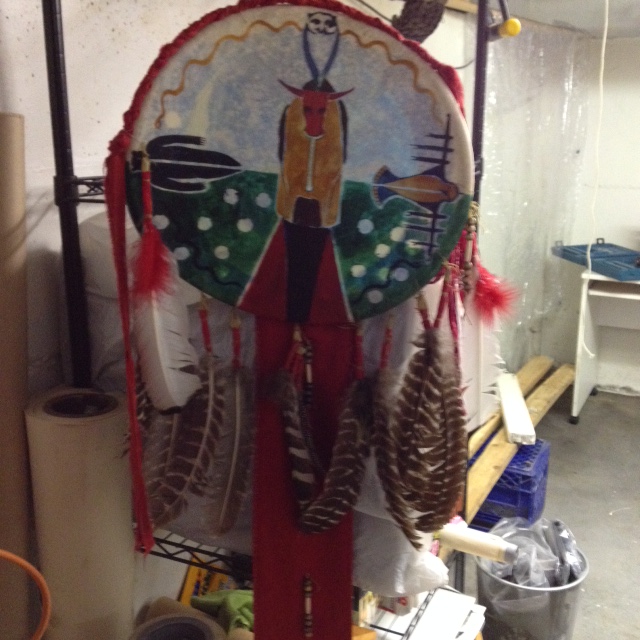
With the guidance of an elder, I made this medicine shield years ago.

With the guidance of an elder, I made this medicine shield years ago.

“Your vision will become clear only when you can look into your own heart. . . . Who looks outside, dreams; who looks inside, awakes.” Carl Jung

For a few disconcerting moments, I thought the crows had followed me across the country. You will remember that while living in Seattle, I was plagued by crows. They swooped me on a daily basis, picking me out of crowds for a sneak attack. I came to the conclusion that they were trying to wake me up. According to Crow Medicine, crows are an omen of change. When crows are around, something special is about to happen, consciousness is about to change and dis-ease will be dispelled. Since we can only connect the dots backward I can now say with great confidence that I took the medicine and it worked. They hammered me on the head for months before I stepped into the void and allowed new forms to emerge. Needless to say, I have a love-hate relationship with crows.

Yesterday afternoon our backyard was a festival of crows frantically barking. It brought back visceral memories and I went on high alert. As it turns out, the crows were focused on our owl and not me. I haven’t heard the owl since autumn and had forgotten that we have an owl in the backyard. I was happy that the owl was back. The crows were not happy as owls are great nest robbers and also, if hassled excessively, will make a dinner of an adult crow.

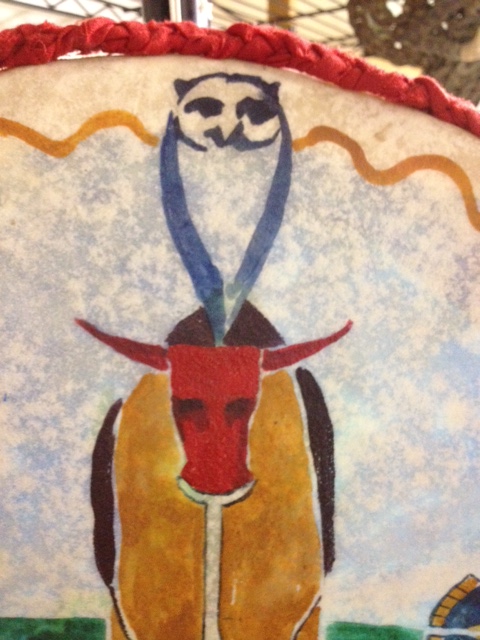
A detail from my shield. Owls have been with me for a long time. The owl is the top symbol.

A detail from my shield. Owls have been with me for a long time. The owl is the top symbol.

Last fall I googled Owl Medicine when the owl hooted above my head almost every night. I learned that, as a totem, Owls have great intuition. They follow their instincts. They see clearly (meaning they cannot be deceived). Owls see what others cannot. For instance, Owls see into the inner life of others; generally, they know more about a person’s inner life than that person knows about him or her self. This is why people do not sit next to me at parties! Also, owls are fierce warriors if something dear to it is threatened.

What a fantastic collision of bird archetypes for the crows and the owl to return to my world at the same moment. The owl was mostly indifferent to the incessant crow barking and attacks. There was no contest. In the evening the owl flew away to hunt and I wondered if there might be one less crow barking in the morning.

Both owl and crow are harbingers of change. They both speak to a comfortable relationship with the unknown and an attraction to the mysteries of life. I laughed when I re-read the symbols as I’ve lately been preaching through my book, The Seer (owls and crows are both seers) to cultivate “not knowing” as a necessary step on the path to health and creative vibrancy. In the practice of “not knowing,” one learns to see.

Later in the night, while driving back from Chicago, Kerri and I were talking about the extraordinary and meteoric changes in our lives this past year. She encapsulated my crow and owl commentary when she said, “We make plans according to what we know. It’s what we don’t know that changes us.” Her thought reminded me of another Carl Jung quote. He famously wrote that, “Religion is a defense against a religious experience.” Just so, a life plan is often a defense against a vital life. Adventure and discovery are never in the direction of the known. When you pay attention to the symbolic crow hitting you on the head you can also rest assured that when you step into the void there will always be an owl waiting to guide you.

title_pageGo here to get my latest book, The Seer: The Mind of the Entrepreneur, Artist, Visionary, Seeker, Learner, Leader, Creator…You.

Or, go here for hard copies (Amazon…Kindle version available here, too)


Return To Life

Tripper-dog-dog-dog listens to birds

Tripper-dog-dog-dog listens to birds

I’m writing this from the choir loft. It’s gorgeous outside and I wonder what I’m doing inside on such a beautiful morning. Kerri is playing the organ for an early morning service. I’ve decided – just this moment – that the organ is an instrument for the dark days of winter. It is heavy and fills your belly like good hearty stew. Birdsong is the music of spring.

Before coming here this morning I was hanging out in the back yard with Tripper-dog-dog-dog. We were watching birds. We were listening to their worship service. He is mystified by them. They are a relatively recent discovery for him. He cocks his head sideways as he stares at them as if to say, “What the heck!” Then he looks to me to see if I’m having the same revelation. I say, “Pretty incredible, huh!” He nods in agreement (no exaggeration. really. no really).

My conversation with the stained glass window continues. The three panels of the window are, of course, the nativity on the left, the crucifixion on the right, and the resurrection in the center panel. It is the largest image. The focal point. The return to life is the center and perhaps this is the meta-point of my window conversation. Many years ago in a class on ritual and life cycles, the instructor said that each one of us would die and be reborn 12 times in the course of our lives. These mini deaths and rebirths were preparation for the main event. Energy does not die, it changes form.

The window is a perfect cycle of the seasons. Throughout the winter the window and I have been talking about the return to life. We’ve talked about birth and rebirth. We’ve talked about pilgrimages. Every life is a pilgrimage. There are long stretches of walking, rich with discovery, sometimes with achy legs and exhaustion. There are days of rest. There are arrivals and departures. Sometimes the weather is fair and sometimes not. The bad weather days make better stories; protagonists need obstacles to move things forward. Flow rarely requires lengthy recounting. Sunrise and sunset are, of course, our daily birth and death cycle, a solar pilgrimage!

Birth and rebirth is the mirror image of death and resurrection and, of course, this is the season of things coming back to life. Both are progressions, movement through the cycle of life. This cycle, punctuated by my first Wisconsin winter, is especially pronounced for me. Three weeks ago we were knee deep in snow. I can see and feel the return of life, the warmth of the sun’s return.

One year ago I was wandering, in the exhaustion phase of my pilgrimage, dropping the old knapsack; it was too heavy to carry any longer. I enacted and presided over one of my mini deaths. This morning I breathed in the cool air and watched the worship of birds. Nests are being built and I am enjoying the sweetness of life’s return.

Go here to get my latest book, The Seer: The Mind of the Entrepreneur, Artist, Visionary, title_pageSeeker, Learner, Leader, Creator…You.

Or, go here for hard copies.

Hold A Vigil For Kermit

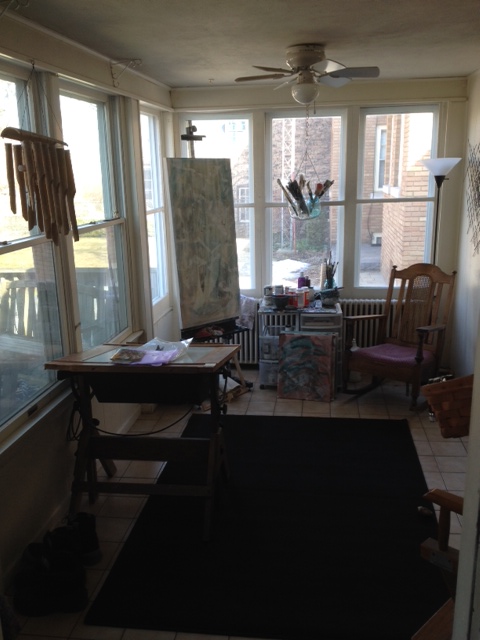
My studio moves into the light.

My studio moves into the light.

Life returns slowly. It is the time of year that the goddess Demeter ceases grieving because her daughter, Persephone, is allowed to return from the underworld. Demeter’s joy ignites earth’s renewal.

This morning we sat outside on the back porch, wrapped in a blanket, our chairs facing the sun, our backs to the wall so we could feel the radiant heat. We drank coffee, soaked up the sun and talked about everything and nothing at all.

We are feeling the stirring. We moved the studio from the basement into the light. A stalled project now has life and is arcing toward production. Inspiration and enthusiasm are playing chase through our creative sessions. A few days ago I found my sketchbook and spend time each day filling its pages. There are new canvases sitting on my easel.

It is the season of resurrection. We are holding vigil for our pond frog, Kermit. Although his name is common his story is extraordinary. Last summer, after we dug the pond in the backyard, Kermit suddenly appeared. All through the fall we checked on him. He looked out at us from his hiding place in the rocks or if caught him by surprise, he’d dart to the opposite side of the pond. This winter was harsh and the pond froze solid. We worried about his fate. When the pond melted, we found a seemingly lifeless Kermit on the bottom with the leaves.

Many species of frogs hibernate. In fact, we learned that certain wood frogs freeze solid to the core. When winter comes their bodies replace the water in their vital organs with a protective “anti-freeze.” All signs of life cease. The heart stops (it is frozen). All measurable electric impulses close down. When the weather warms, their core thaws, and they quite literally come back to life. If you’ve ever doubted the magic and mystery of this life, spend some time watching frogs.

We don’t know yet if Kermit is hibernating or not so we watch. A layer of ice returns to the pond each night. The temperatures are bobbing just above and way below freezing, so we wait, drink in the sun and good coffee. We watch Tripper-dog-dog-dog discover birds and bark at raindrops on the pond; this is his first-ever spring. We fill with hope and ourselves slowly revive from a long winter of hunkering down. We stretch our limbs, we thaw, we breathe.

Go here to get my latest book, The Seer: The Mind of the Entrepreneur, Artist, Visionary, title_pageSeeker, Learner, Leader, Creator…You.

Or, go here for hard copies.


Love Yourself Better

this one is from the archives. I painted this 10 years ago.

this one is from the archives. I painted this 10 years ago.

He said, “The current goal is to love myself better.” And then he added, “Not so much a goal but something that needs teaching from our own mind.” His statement begs a great question, an ages old question: Can the mind teach itself? Really, the question is can the mind see itself clearly enough to teach itself?  Or, the question within the question: Can the mind teach itself to love itself? I scribbled the questions in my notebook and beneath them I wrote, “Is love teachable? Is love reachable through the mind, especially self-love?

We’d been chatting for a while and had covered a lot of territory, from Monte Blanc pens to typewriters to soap use around the world, clean water, the difference between good and bad scotch, the shapes of the 50 states and how they might influence personal identity and we’d somehow wandered into the epicenter: self-love.

His statement nailed the universal dilemma perfectly. It was a declaration of separation. The self watching and wanting more for the self. The separation is in the language: to love myself better. I don’t know anyone who hasn’t made this statement. Which part of the self will better love the other part of the self? Which part of the mind will teach the other to love?

It is where myth meets the everyday. Every human being who has walked the earth has wrangled with separation and the yearning for self-love (re-connection to self, unity). The human journey is a walk from separation (birth, if you want to take it literally) to reunification (death). The story lives in mythologies the world round. If we were still willing to read our mythologies (religions) metaphorically, we’d see it. For instance, being expelled from the Garden of Eden for eating from the tree of knowledge is the story the ancients told of the experience of separation. The inevitable bite of apple from the tree of knowledge brought duality consciousness: male/female, us/them, mine/yours, haves/have-nots, me/you. Separation. The rest of the story, not often told, is how, through out the rest of our lives, we seek the Garden where there lives a second tree: the tree of everlasting life (unity). We journey from knowledge (separation) to everlasting life (reconnection). The death need not be literal. To die to the self is necessary to experience the SELF.

Here’s the great paradox: loving another person is an act of self-love. The path to self-love is found when we serve something bigger than our selves. Think about it: the movement is always from separation to joining, from isolation to connectivity. The obvious question is, “Connectivity to what?”

Self-love is not found when the mind teaches the mind but when the mind gets out of the way of the heart. The love is always there. Love is never missing. Self-love reveals itself when the definition of self grows beyond our own skin. According to our latest neurological science, we experience ourselves as separate because we dull ourselves to our fundamental connectedness to others. In other words, we cultivate a story of isolation and then set about the real work of our lives: to see beyond what we think.

And then he said, “You know what else I just realized?”

“What’s that?” I asked.

“I just landed myself in a blog post.”

Yep.

Go here to get my latest book, The Seer: The Mind of the Entrepreneur, Artist, Visionary, title_pageSeeker, Learner, Leader, Creator…You.

Or, go here for hard copies.

Bang On Stuff

from Lucy & The Waterfox by David Robinson

from Lucy & The Waterfox by David Robinson

John said, “The real challenge is how to help people across the ‘I can’t’ line.” What a great phrase! I imagined myself drawing a line in the sand while my imaginary inner-voice shouted, “Don’t step over this line!”

“Everyone has an “I can’t” line.” John added, “The challenge is never the external stuff. It’s the stuff in our heads that stop us.” Too true!

John is a terrific drummer and extraordinary teacher. He told me that many people come to the drums from the place of, “I can’t” and his job is to hold their hand as they cross the threshold. “Of course they can,” he said, “they just need to know it.”

“How do you do it?” I asked. “How do you help them know it?”

“I have them bang on stuff and I bang on stuff with them.” He smiled.

In other words, gets them to experiment and play. When experimenting, there is no line between can or can’t. It’s a unified space called, “Let’s see!” In play, there is no need for achievement or expertise; there is only play. Bang on stuff and see what happens: it is a great definition for artistry. It is beginner’s mind.

In Austin Kleon’s latest book, Show Your Work, he suggests that we be intentional amateurs. He writes, “Amateurs are not afraid to make mistakes or look ridiculous in public. They’re in love, so they don’t hesitate to do work that others think of as silly or just plain stupid.”

If you desire to step across the “I can’t” line, embrace your inner amateur. Work for the love of your work and not the need to impress or “do it right.” Bang on stuff. Make messes. As Skip says, “Put a stake in the ground and then test it.” Pull on the chain. Walk through the door. Ask questions. Try a new technique. Invent a new technique.

In a bizarre and beautiful chapter in my life I was given a full ride scholarship for a masters degree in costuming. I’d never touched a sewing machine and was a danger to myself and others when trying to cut things with adult scissors. “Why not!” I said to myself and I went for a year. After turning in my first assignment in costume construction, the professor hugged my muslin mess to her breast and laughed, saying, “In the history of garments there have only been 7 possibilities (shirt, pants, skirt, etc.) and you have just created the 8th!” I didn’t know what I could or could not do so I did anything. It was fun. I had no “I can’t line.

John reminded me that the world’s first drum was (and is) a heart. “Everyone’s a drummer,” he said. “The day you can’t drum is the day you are dead.”

Go here to get my latest book, The Seer: The Mind of the Entrepreneur, Artist, Visionary, title_pageSeeker, Learner, Leader, Creator…You.

Go here for hard copies.


Be A Team

can you see the team boosting the child? I have many of these and will soon begin intentionally pursuing this form

can you see the team boosting the child? I have many of these and will soon begin intentionally pursuing this form

Many years ago Judy gave me a book by African writer Malidoma Some. He wrote that, in the village where he grew up, there were no locks on the doors. In fact, there were no doors. The people of the community respected the possessions and privacy of others. Locks were not necessary. The community cared for the health of its members so its members cared for the health of the community. From his point of view, a society that needs locks on the doors is a sick society. Locks are sign of communal breakdown.

I’ve been thinking much about sickness and the need for locks as I prepare to do a workshop for organizations about effective teams. I’ve done too many of these workshops not to recognize that the need to build teams is a sure sign of an unhealthy community. In Malidoma Some’s community, people were aware of and acted from a consideration of the health of the whole. Loyalty begets loyalty. “Acting for the good of the whole” is a great working definition for a team. It’s all you need to know to nurture great teams: make sure everyone in the organization, from the top to the bottom, is caring for the health of all the members. Make sure the choices are made for the good of the whole.

An organization that needs to team build is like a society that needs locks: most organizational systems support a philosophy of “every man and woman for themselves” while the executive suite needs cooperation and compliance to get the job done. No amount of team building can transcend compensation for individual merit. Once, a CEO asked me, “How do I get them to do what I want them to do?”

The short answer: you don’t.

A healthy team, just like a healthy community, requires no leveraging to act. It requires no policing. A team is a not a “thing.” A team is a relationship and just like a sports team or a theatre troupe, everyone needs to feel safe to really bring their game. They have to know the team cares for them as much as they care for the team. Many years ago, while sitting in a jury pool, the judge asked us, “Why do people resent being called to serve?” A lovely older woman raised her hand and replied, “The government offices are inaccessible and unhelpful when I need information or support. Why should I be happy to serve a system that wants nothing to do with me until it needs my money or someone to sit on a jury.” The rest of the jury pool applauded. When loyalty is a two-way street, teams form naturally. When loyalty is a given, people quite naturally offer their service to something greater than themselves.

There are a few other elementary things necessary for the relationship known as, “team,” like a common story (a common center) and a clear intention, but they are not possible when the metaphoric doors need locks. “Team” is something we are, not something we build or do.

Go here to get my latest book, The Seer: The Mind of the Entrepreneur, Artist, Visionary, title_pageSeeker, Learner, Leader, Creator…You.

Or, go here for hard copies.