Fall Into Peace [David’s blog on DR Thursday]

20 calls me The Tetris Master because I can pack a lifetime of odd-shaped accumulation into the smallest moving van. I have an innate understanding of space. In other words, I am spatial; I feel space.

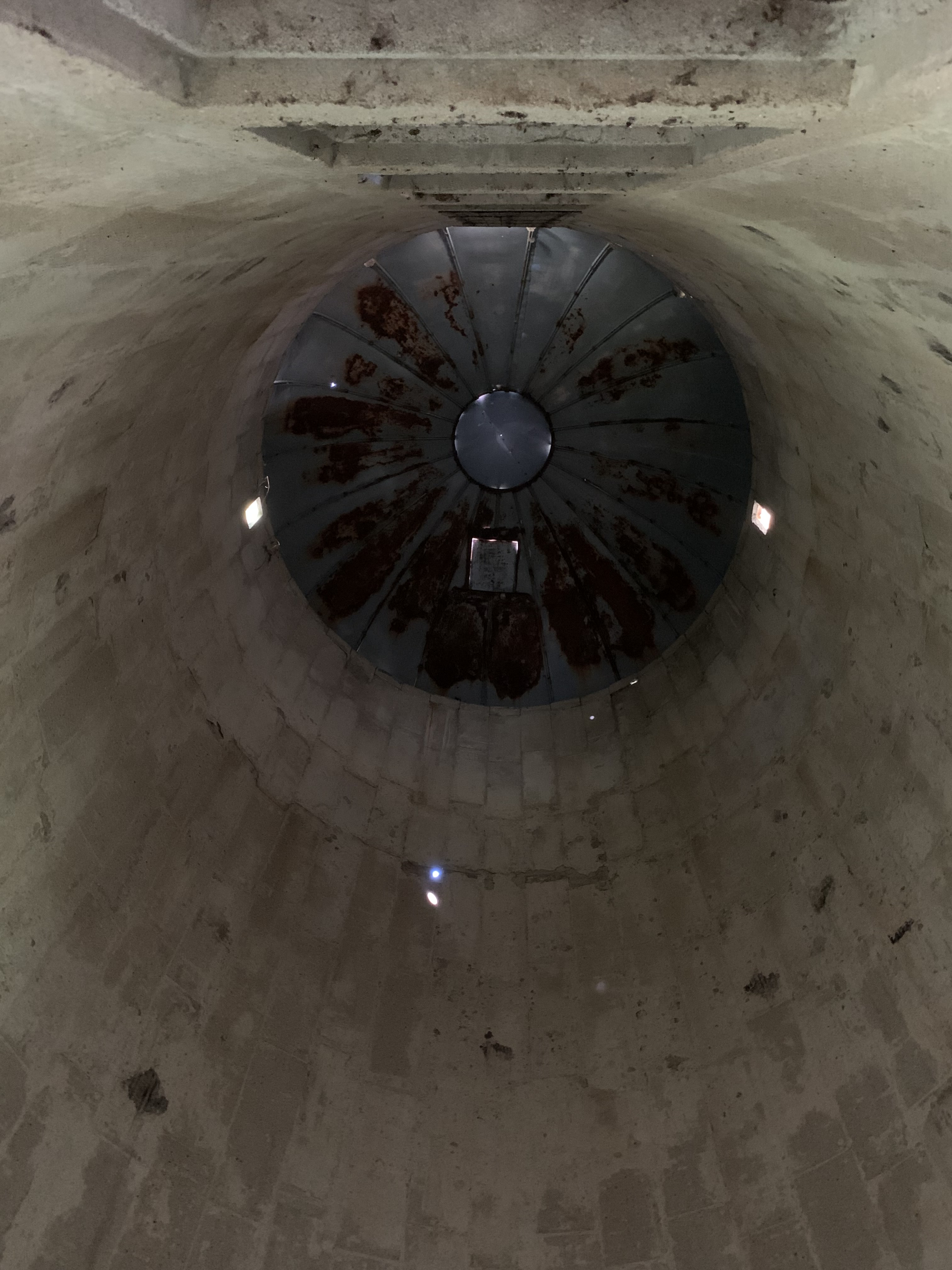
The first time I stepped into the silo I felt an immediate sense of peace. It was like a little round chapel with a soaring ceiling. Cool air on a hot day. The chair placed at the center of the circle was inviting but I knew I better not sit there. I’d want to stay. I’d fall into the peace. There were too many people moving through the barn. Falling into peace, like falling into a deep meditation, is internal and best done in private.

The silo reminded me of the faerie circle. Barney showed me where it was and told me, “This is your place.” He was right. I sat in the center of the circle of trees and was immediately transported.

It had been years since we visited the gardens and I’d forgotten about the silo. When we entered the barn to look at the antiques, soaps, and clothes on display, I felt the rush of remembrance. Stepping into the cool air, the carpet and single chair were just as I remembered. So was the peace of the circle.

There were less people so I lingered for a moment or two. “Someday I’m going to sit in that chair,” I said to no one listening. I smiled at the notion: and wouldn’t this world be better if we all had a place, a space, like a magnet, that pulled us into our peace?
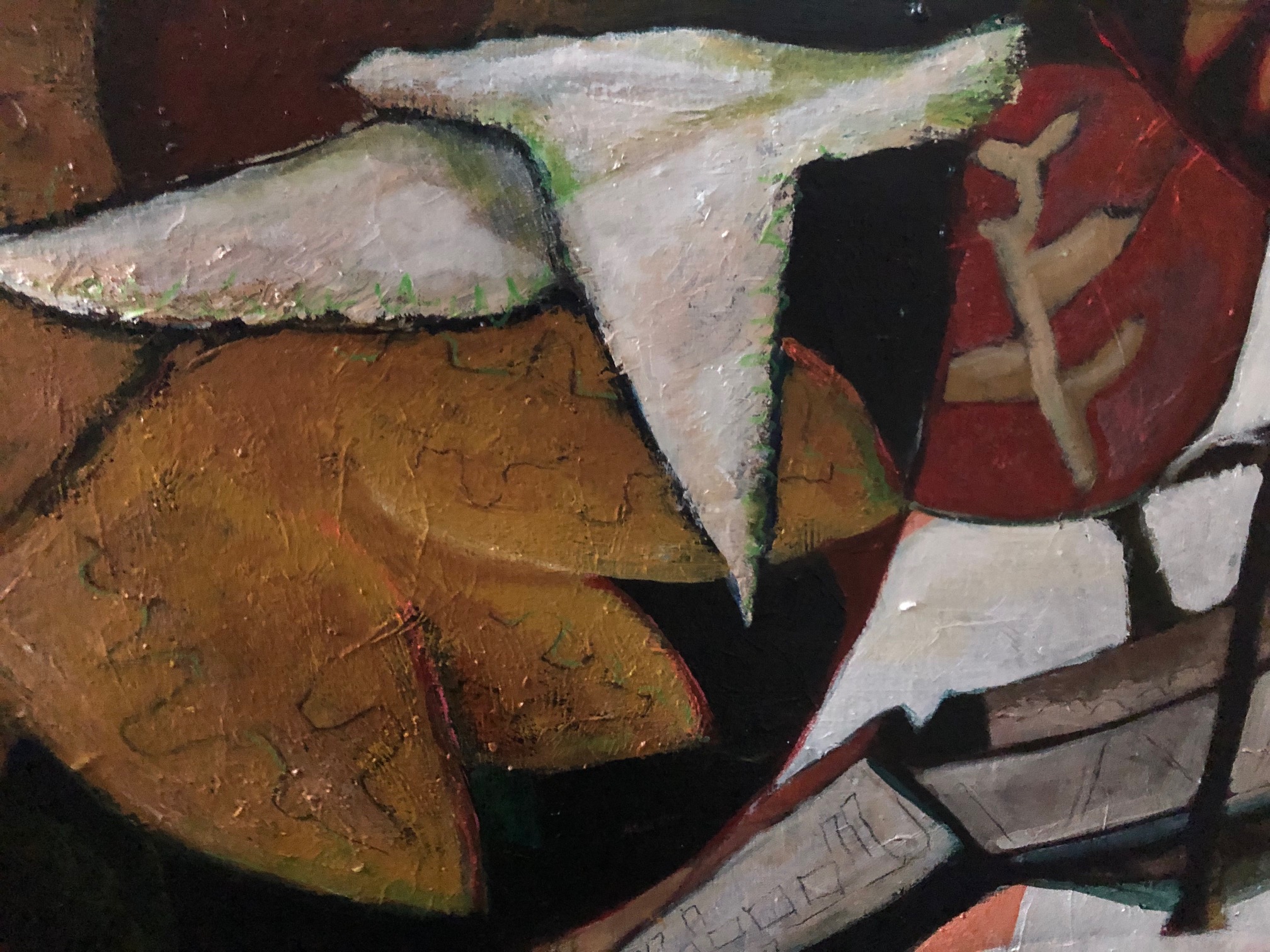
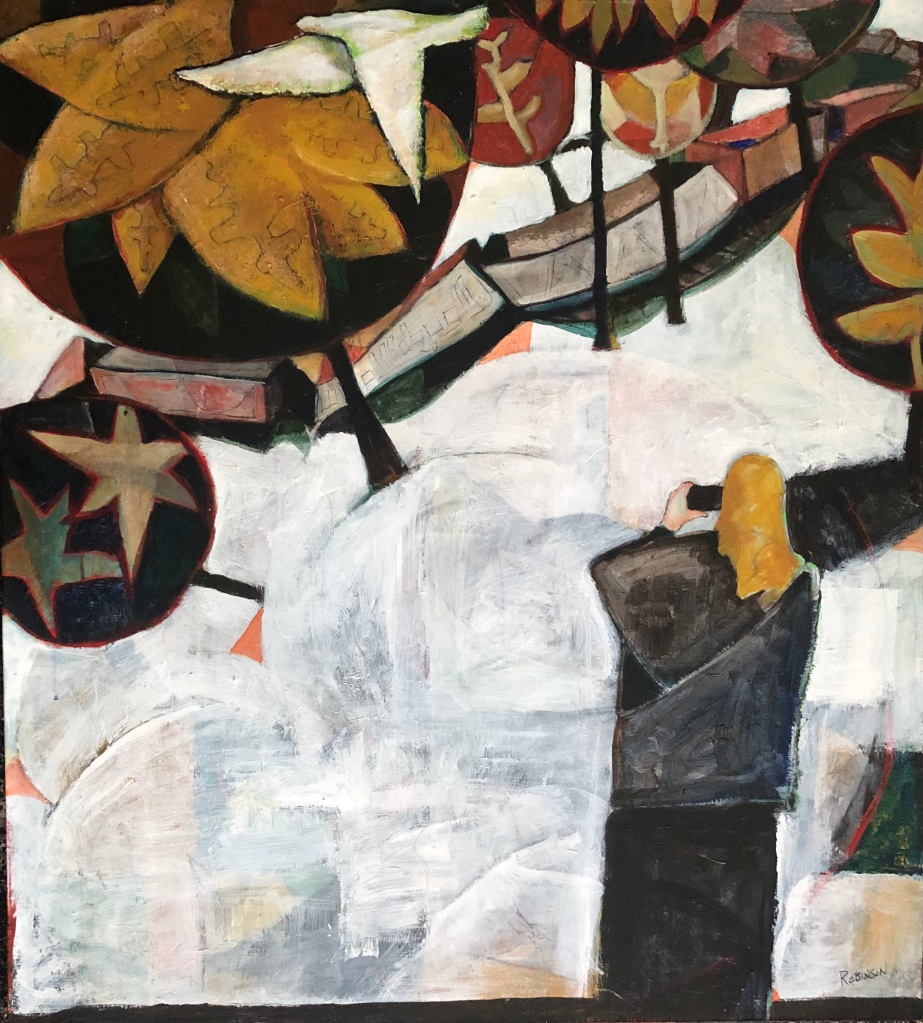
i’ve yet to get a descent photo of this painting but this will serve-the-turn for now

read Kerri’s blogpost about THE SILO

like. share. support. comment. we appreciate all of it.

Call It Realism [on Not So Flawed Wednesday]

This garlic could have been painted by Jan Vermeer. To my eye it looks like the work of a Dutch master, an artist more concerned with realism than the ideal.

Art that reveals the beauty in the ordinary. For a few weeks in my surly youth I studied with a realist painter. I was wowed by his technique but could not yet grasp his dedication to capturing the everyday. Only later did I come to understand that his art was not about the technique but about bringing attention to the experience of the everyday. He rejected the aloof and desired to pull art down from the pedestal so it might reflect the lives of the “common people.” He believed that people needed to literally see themselves in the paintings to have access to the painting. They needed to see their hardship and toil as well as the objects that surrounded them.

Bertolt Brecht believed the opposite. In order for people to have access to the deeper messages of a play, they needed to be removed from their circumstance. So, in his way of thinking, people are more capable of seeing themselves in a piece of science fiction than in a reality-mirror.

David is working on a re-imagining of Pirandello’s play, Six Characters In Search of an Author. One of the questions of the play is, “Who is telling your story?” And, how are they telling it. I reread the play and was struck by how relevant it is to our times.

The beauty in the ordinary. The turmoils and struggles of the everyday. Ours is a time of tumultuous story tug-of-war. I wonder, in a hundred years, what historians will write about our time. I wonder what aspect of artistry – if any – will be considered “realism.” As defined by Vermeer and Pirandello, it’s to reach across a social line, from the privileged to the working class. For Brecht it is spatial: step out to look in.

One thing is constant, while reaching across time and artificial boundary, it is always the role of the artist to help their community ask the questions: Who is telling my story? Whose story am I telling? What is the story that we are telling?

I imagine those someday-historians will write tomes on our messy struggle to sort out what is “real” and what is not.

read Kerri’s blogpost about GARLIC

