

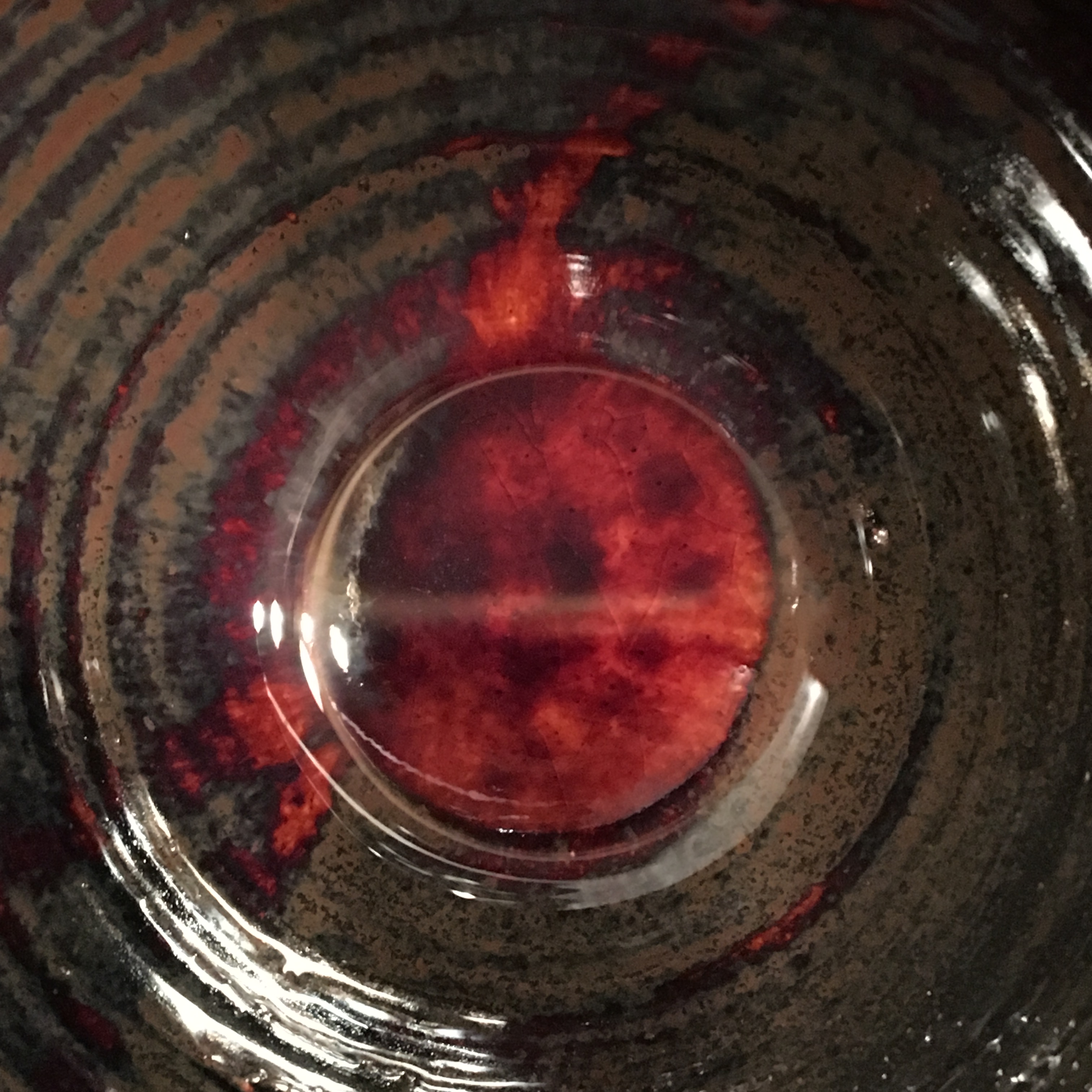
I suppose most people would first notice the beautiful glaze and transfer pattern on the outside of the cups. We were caught by the beautiful color, the glaze on the inside at the very bottom. Gorgeous. Simple.
The cups were a wedding present from Kerri’s good friend and long-time collaborator, Heidi. Together, they toured the country. Heidi telling the story of her breast cancer journey. Kerri performing her compositions written for the cause of cancer research and celebration of life. I was not in the picture when they were doing their good work but I can hear in their stories the potency, the absolute epicenter of the power of art, their art: inspiring, encouraging, healing, up-lifting spirits.
It is the same spirit that Rachel Stevens, the potter of the cups, imbued in her work. It’s why we were immediately captivated. The free flow of her artistry lifted our spirits. A perfect talisman for our union, a reminder of my favorite day of life – our wedding.
We brought out the cups for our wine. I love the delicate weight and textures, the feel when I hold them in my hand. Before pouring, I gazed again at the inside color and had a minor revelation, the kind that will simmer over the next few months:
I’m sitting in a quiet space with my artistry. The imperative to create remains as strong as it has ever been, but it is the time to journey into the root. Early in my life I created for myself, for the pure pleasure of the presence it provided. The gift of solitude. Another kind of union. Later, the root required a reaching out, a branching relationship with others, to light the dark path, ask the unanswered question, explore the uncharted territory. Yet another kind of union. The cycle is coming back around; I am returning to the pure pleasure of creating. The root. Now, there can be – there is – no other reason.
Simple. Gorgeous.
read Kerri’s blogpost about THE CUPS
like. share. comment. support. thank you.

Filed under: Art, Creativity, Flawed Wednesday, Gratitude, Metaphor | Tagged: artistry, breast cancer, cancer research, celebration of life, composition, creating, cycle, david robinson, davidrobinsoncreative.com, flow, free flow, glaze, healing, Kerri Sherwood, kerri sherwood itunes, kerrianddavid.com, kerrisherwood.com, life cycle, marriage, performance, pleasure, potterpotter, presence, pure pleasure, Rachel Stevens, root, sanctuary, solitude, story, studio melange, the melange, the power of art, union | 3 Comments »




 The Direction of Intention