On This Day, Ask [David’s blog on Merely A Thought Monday]

Conscience (noun): an inner feeling or voice viewed as acting as a guide to the rightness or wrongness of one’s behavior.

This day that we call Memorial Day began as a way to honor and remember the Union soldiers that died in the Civil War. Theirs was a just cause: the end of slavery. The preservation of a nation. Originally, this day was known as Decoration Day. Now it is an observance of all military personnel who died serving – and preserving – the conscience of the nation.

It is important to remember on this day – especially on this day – that the men and women we commemorate, each and every one – swore an oath to “support and defend the Constitution of The United States” against all enemies foreign and domestic. They gave their lives honoring their oath and defending the Constitution.

Today, current members of the military face an untenable conflict. In their oath they have also sworn to obey the orders of the President of the United States. Currently, their oath is to a man who has no interest in supporting or defending the Constitution. He is actively destroying it.

Today, we face an untenable situation. We cannot in good faith both decorate service member’s graves and subscribe to the actions of the current administration. We cannot in good faith whisper words of hallowed remembrance and keep silent while these fallen men and women are being betrayed by a Republican Congress that actively dismantles the Constitution – at the behest of a Republican President that is, himself, a draft dodger, a man who regularly debases service members and ridicules their sacrifice. We make hypocrites of ourselves if we do not defend the sacrifice made by these men and women interred in our cemeteries.

When will our consciences grow?

Our Civil War was fought ostensibly to put an end to horrific human suffering. It was a war fought for the conscience of our nation. That is why we began the tradition of decorating the graves of Civil War veterans – so that we wouldn’t forget them or the cause that they gave their lives to defend.

They knew what was right. We know what is right. We also know what is wrong. So does the Republican Congress, even as they betray their oath.

Standing graveside we must ask why so many who have sworn a similar oath to The Constitution follow the lead of a man who has no conscience, a man who lacks the still small voice. A child-man who cannot see beyond an-eye-for-an-eye. A man who threatens to turn the rifles of the servicemen and servicewomen that he commands upon the citizens of the nation in order to achieve his objective of demolishing democracy as outlined in The Constitution.

What will our service members do in that moment? Will they serve or betray their oath to the Constitution? Will they serve a President who asks them to betray all they stand for, who commands them to ignore their still small voice while he moves to silence the voice of the people and the conscience of the nation?

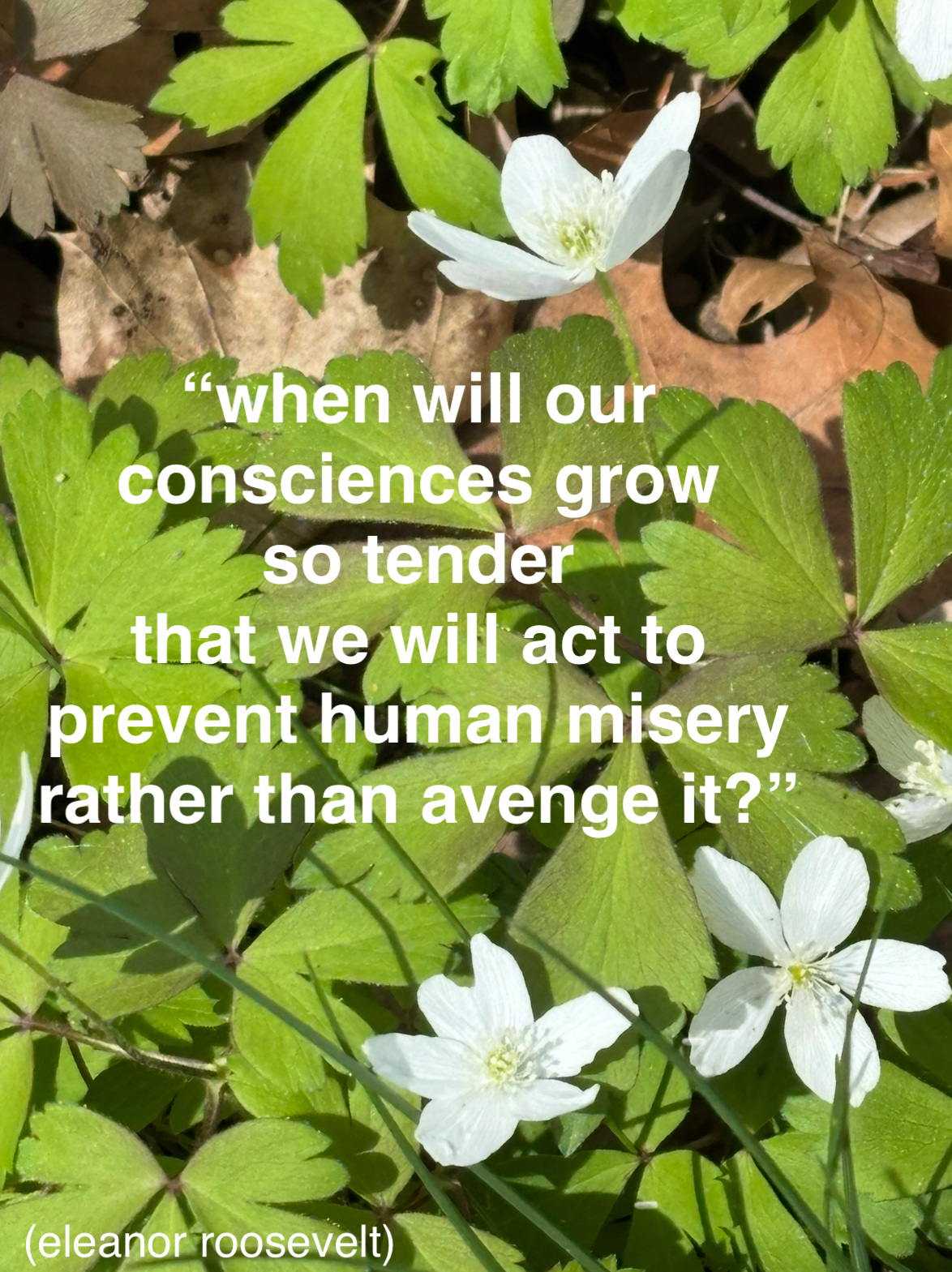
What will it take for our consciences to grow so tender that we will act to prevent human misery rather than avenge it?” ~ Eleanor Roosevelt

It’s important for us to ask on this day – especially this day – what will it take for us to act, to defend our Constitution, to honor in more than whispered words the sacrifice of those who died defending the conscience of our nation?

read Kerri’s blogpost on this MEMORIAL DAY

likesharesupportcommentsubscribe…thankyou.

Let’s Get On With It [on Not So Flawed Wednesday]

It was a national campaign of the US Department of Homeland Security. If you see something, say something. The enemy is here. It is us. We pulled it from an episode of Grace & Frankie. Old folks have hair that grows in places it ought naught. Frankie plucks a hair from Grace’s chin. “How long has that been there?” Grace exclaims. “Frankie, if you see something, say something!”

Yesterday, I had a collision of experiences at the courthouse during my jury pool swim. First, I read an article in The Atlantic, by Tom Nichols, Afghanistan Is Your Fault. He wrote, “The soldiers who served overseas in those first years of major operations soon felt forgotten. ‘“America’s not at war” was a common refrain among the troops. “We’re at war. America’s at the mall.”’

He continued, “A serious people—the kind of people we once were—would have made serious choices, long before this current debacle was upon them. They would today be trying to learn something from nearly 2,500 dead service members and many more wounded. They would be grimly assessing risk and preparing both overseas and at home for the reality of a terrorist nation making its way back onto the international map.

Instead, we’re bickering about masks. We’re holding super-spreader events. We’re complaining and finger-pointing about who ruined our fall plans.

Next, I was among the many chosen for voir dire (the jury selection process). I was in the last group selected so the odds of my serving on the jury were slim. I sat in the courtroom and watched an amazing moment unfold. The judge said something that all Americans should hear. It aligned perfectly with Tom Nichols’ thoughts. A potential juror, a young man, claimed serving on a one-day trial would create hardship. He’d miss a day of work. The judge questioned him to get more context and then sat back, considered for a moment, and said this:

“Democracy is hard work. When I was young, there were three things that we had to do: pay taxes, honor the draft if called, and serve on a jury if called. All of those things create hardship. Taxes aren’t easy. The draft changed the lives of thousands of young people. Serving on a jury interrupts life. It creates hardship. Giving of yourself to the common good means serving something greater than yourself. It is an interruption. Today, there are only two of those things because there is no draft. My point is, giving of yourself to make this gorgeous system work is not easy. It is hard work. It creates hardship to ensure that our system, the oldest democracy in the world, thrives and survives for the next generation.”

America is at the mall. Meanwhile, democracy is hard work.

For a serious people, there is a center to our commons and, keeping it alive, takes a bit of self-reflection and sacrifice. Giving of yourself to the common good means serving something greater than yourself.

Divided we fall. It is a cliche’ but could not be more relevant.

The enemy is here. It is us. Bickering about the lesser while the greater slips from our fingers. “If you see something, say something” is predicated on an assumption: we are in service to something greater than ourselves. We are on the same team with a common, shared interest.

The judge sat back in his chair after his lecture and asked the young man, “Are you less capable of handling hardship than anyone else in this room?”

“No, sir,” the young man sat back in his chair, resigned.

“Good!” the judge exclaimed. “Now, let’s get on with it.”

read Kerri’s blog post about SEE SOMETHING, SAY SOMETHING

Witness The Generosity [on Merely A Thought Monday]

You know the ritual is over when the sacrifice is made. Sometimes the sacrifice is literal, an offering of thanks to the greater powers. A life given for life received. It’s the elemental story cycle with gratitude as the final act.

Sometimes the sacrifice is unconscious and, therefore…unconscious. Unseen. Not felt.

In the weeks before the holiday, the delivery trucks were ubiquitous, zipping this way and that. The deliverers-of-packages worked overtime to ensure all good things arrived on time. We tracked the good people hauling our packages to remote destinations, a luxury of the modern world. As I stroll down my street this week I see, post-holiday, the garbage collectors are working overtime, mechanical arms groaning and methodical, clearing the mountain of debris, boxes, empty bottles (I contributed my share), wrapping paper and remnants of our ritual. Our offering of thanks to the greater powers leaves a mighty litter trail.

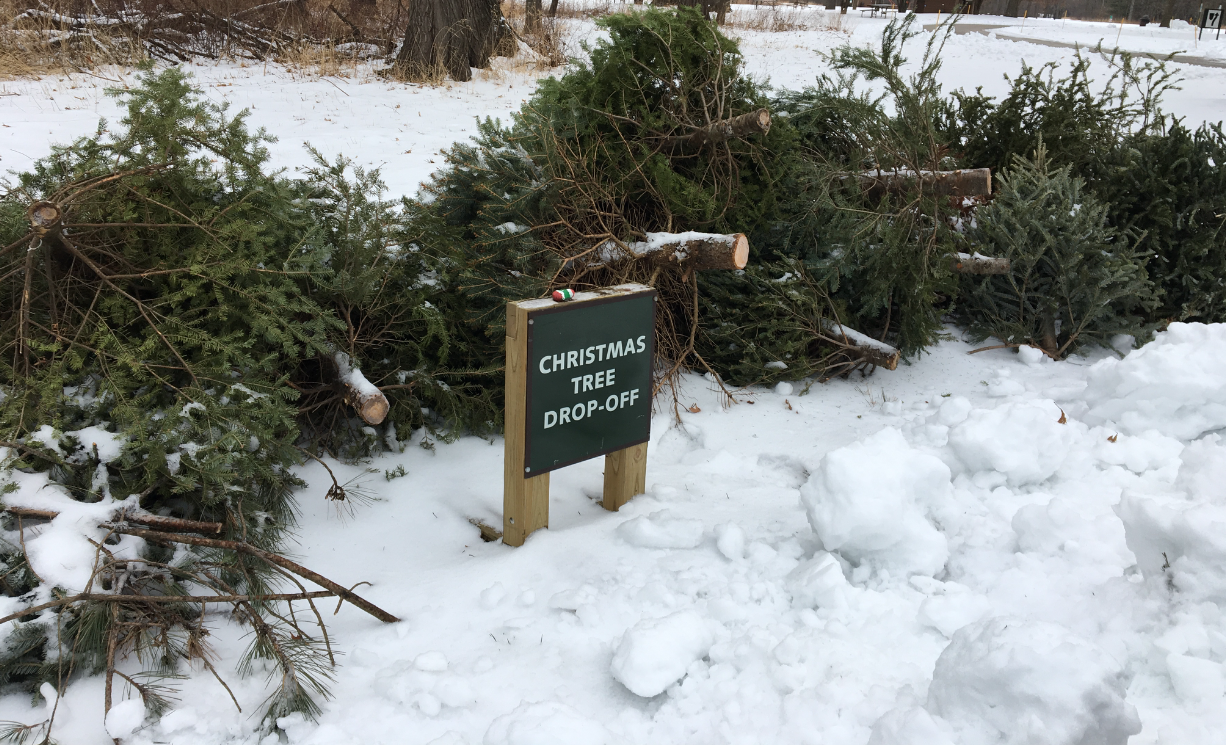
The day after Christmas, at the mouth of the lot where we park to hike our trail, the discarded trees were already stacking up. Kerri speculated that the people who enjoyed the trees must certainly be going on travels. Why else would they discard their trees so fast? “Or,” she speculated, “maybe they’ve had them up since the first of November. Maybe they are ready to move on.”

The sacrifice is too easy. It’s piled on the curb. It’s hauled away.

Despite how this reads, it is more meditation than criticism. This holiday season was one of my favorite precisely because we could take nothing for granted. 2020 was brutal for us as it was for many. With our patterns blown to bits, with our security nowhere to be found, our community fragmenting, with no easy choices, we were – and are – conscious of every single step. We are grateful for every moment of heat in the house, for every kindness that has come our way, for every small kindness we’ve been able to offer. We imbue our meals with a deep thankfulness that we did not a scant one year ago.

Why is it that gratitude is so easy when everything else is hard – and why is gratitude merely lip-service when everything is easy? It is, I suspect, why our congress can’t move to help a struggling populace; they have it too easy to identify with the people they represent. We are too easily taken to the curb, to readily swept away.

It has been my role in this lifetime to walk the margins and look inward at the mechanics of my community. To see. It’s the role of the artist to see the patterns, the shapes and colors of their culture and reflect them back, to make conscious what is too easily ignored. To bring the heart, the eye and the mind to the ugly as well as the beautiful.

By the backdoor of our house are bags we’re filling with crackers and peanut butter, socks and sweatshirts. The bags are for the army of people appearing on our streets with signs that read “Homeless” or “Hungry.” It’s not that I am a fan of hard times, I am not, but I’m grateful for what these times are evoking in me – in us. It’s waking us up, helping us reach to others rather than push them away. It’s moving us to see and wildly appreciate our simple abundance.

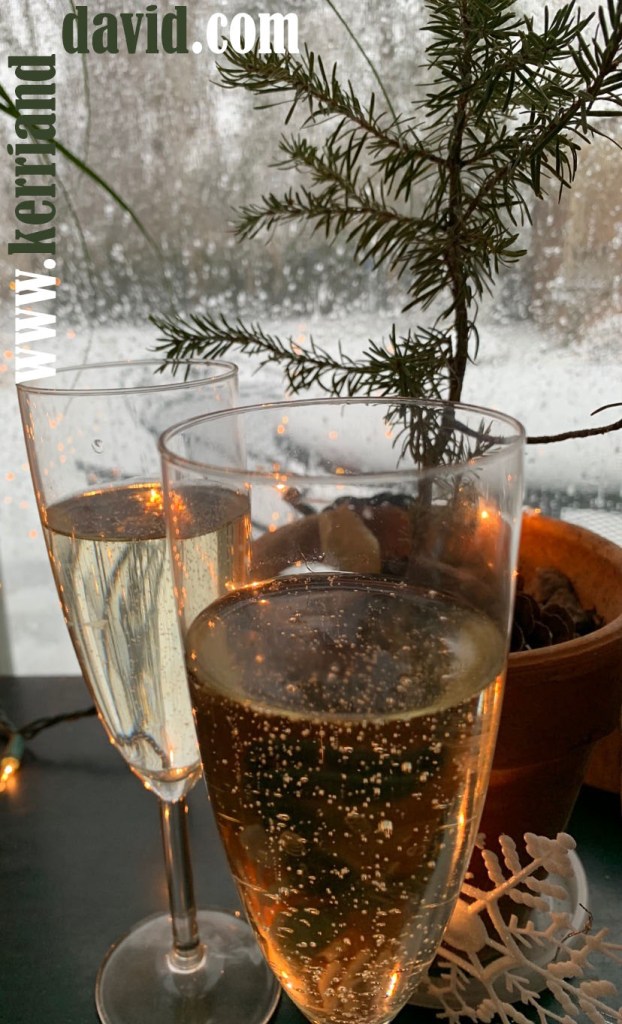
In the early days of this new year, with the glitter all but swept up, the champagne bottles hauled away, I am moved to tears at the acts of generosity I’m experiencing and also seeing pop up all around me. The holiday is over, the sacrifices made, but the generosity-of-spirit continues. It’s rising in hard times. It’s there. It’s everywhere, if you care to see it.

read Kerri’s blog post about DISCARDS

Find The Deeper Impulse [on Two Artists Tuesday]

stop sign quarter copy

See a penny, pick it up. All that day you’ll have good luck. 

I saw a penny in the parking lot of the UPS store and, wanting to have a full day of good luck, I swooped down and picked it up. Kerri, horrified, said, “What are you thinking? Put that down!” I was marched back to the truck and slathered myself with hand sanitizer.

My penny swoop debacle in the parking lot of the UPS store is how I mark the beginning of the pandemic. It was the first time that the danger of a simple action, touching what someone else had touched, penetrated. The penny dropped [sorry – I couldn’t help myself]. It was early in this experience called pandemic, before masks, before social distancing. Wash your hands. Don’t touch your face. And, above all, leave the good luck penny on the pavement.

And it seems like years since I touched that penny.

My penny swoop was an impulse. Kerri asked me what I was thinking but I wasn’t thinking. I was riding on the instinct train. The child-rhyme ignited my luck desire and I went in for the grab. And, isn’t that the real hardship of this pandemic? Quashing the impulse to hug your friends, to walk toward your neighbor to say hello, to let the kids play together, to stop in the store and chat with acquaintances? 20 stands outside  his mother’s assisted living apartment; she stands on the balcony and they shout to each other. Each day I watch Kerri override the deep-mother-instinct to run and find her children, all-grown-up-and-moved-away.

It’s unnatural, this veto of instinct. And, it is what makes us human. It is natural to run from danger and yet doctors and nurses everyday walk into hospitals during this pandemic. They walk into exposure. First responders, police and fire people, everyday put the public safety above their own. It is what lifts us into our humanity; placing the needs of others above our own. It is what we celebrate, what we admire. What we claim as our highest ideal. People giving of themselves for the benefit of others.

We call that sacrifice. We call it service. We call it sacred. We  call it grace and generosity. We go to houses of worship and proclaim it. We make movies about it. Frodo must destroy the ring of power for the benefit of all. Otherwise, he twists in his selfish personal power lust and becomes like Gollum. This tale is universal for a reason.

And, I suspect that I am wrong. The survival instinct has a deeper nature. Soldiers talk about it just as first responders do: in the moment of real danger there is not a question about throwing themselves on top of their companion, sacrificing self to save the other. It, too, is an impulse. A purer survival instinct. It is not an override.  It is, when all else is stripped away, what we are.

“Compassion is the basis of morality.” ~ Arthur Schopenhauer


read Kerri’s blog post about PICKING UP SPARE CHANGE


neighborhood cheers website box copy


ComfortNow Framed copy


Change Your Focus

a watercolor from 2003, House On Fire

a watercolor from 2003, House On Fire

Life can change in an instant. There are collective moments. There are personal moments. For years, my dad kept articles about the conspiracy theories swirling around the Kennedy assassination. It was the moment that marked the end of things as he knew it. Life would never be the same. For many years I shared his fascination because my first memory is an image from John F. Kennedy’s funeral which we watched on black and white television: a soldier leading a horse with empty boots reversed in the stirrups. I suspect that the image was potent for me because it was potent for the adults caring for me as they watched the funeral of the president.

Many years later, on a beautiful September morning in 2001, I sat in front of another television set and watched the Twin Towers fall. I thought, “Life will never be the same.”

With the recent anniversary of that day, on another beautiful September morning, Kerri and I read aloud to each other a book, 102 MINUTES: The Untold Story of the Fight To Survive Inside the Twin Towers. I was surprised by my reaction to the book. It felt a return to the place where we got lost. Like my dad, I missed the innocence that vanished in a single day (doesn’t each generation experience this loss? I imagine my grandfather yearned for a world before the atom bomb).

Throughout the reading, two potent and related metaphors would not let me go. First, a two-part metaphor for what I believe ails our nation. With a hyper focus on profitability, many long standing high rise safety precautions were minimized in the Towers. Less escape stairs meant more rentable space. Structural fire prevention measures are costly so they were either written out of the code or ignored. No one believed these twin Titanics could fail and when they did, the greatly reduced escape routes were either severed by the planes that hit them or were inadequate to accommodate the evacuation of the buildings. Additionally, communication between the police and fire departments was broken – they had the capacity but lacked the will. They did not use their updated systems because they were fighting over who would be in control. Their polarization crippled them on the day that they most needed to communicate.

So, the metaphor. One of the themes of my life (and, therefore, this blog) is the importance and necessity of a conscious placement of focus. Where you focus matters. Focus is a creative act. Our hyper focus on profitability took down the world’s economy in 2008. We’ve deregulated our financial institutions, removing all the safety precautions so that we might, as my pals in the financials services once told me, “Print money from nothing.” And the structure weakens. The wealth of the nation is in the hands of a shrinking few even though, as I learned in Economics 101, a healthy capitalist system is built upon a healthy middle class. No one believes this Titanic can sink. Communication between those who are supposed to be looking out for our safety, The House, The Congress, etc., are famously polarized. They have the capacity but lack the will and do not exercise their communication in the fight over who will be in control. In the meantime, we need them to communicate; waiting until the Tower falls will be too late to start. Our focus is on the wrong stuff.

 A sketch working out some details for House On Fire

A sketch working out some details for House On Fire

Which, brings me to metaphor number 2. This is the metaphor that cures us. The other story of those 102 Minutes is a story of kindness. People reaching for other people. When the disaster struck, the gap between custodian and CEO disappeared. The social divisions were irrelevant. People helped people simply because they needed it. They recognized that they were living a common story, a shared story, not the story of division that predominated a single moment before the planes struck the buildings. Everything changed in a moment. Or, perhaps everything became clear. People died to help other people. Their focus changed.