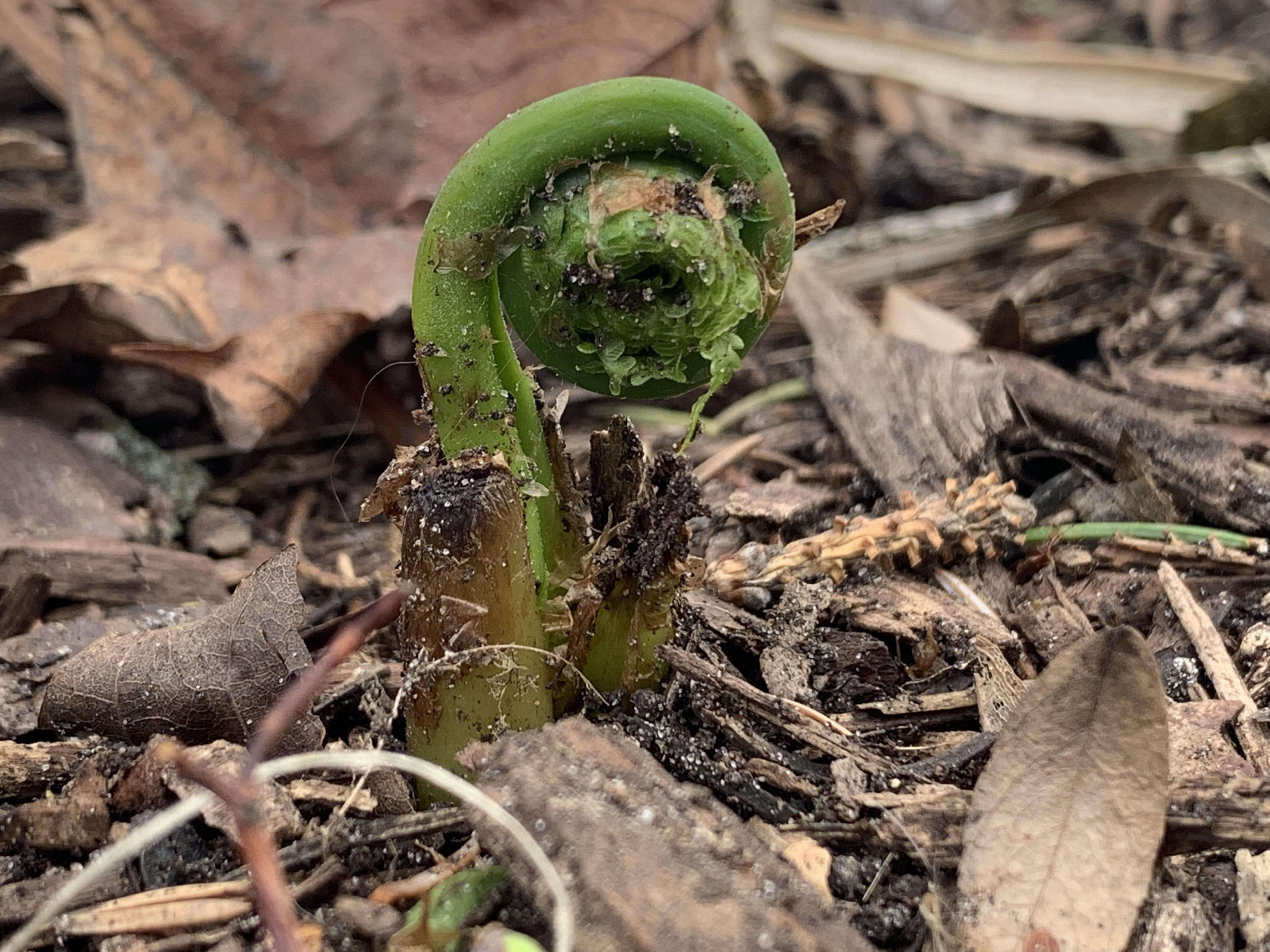
Unfurl [David’s blog on Two Artists Tuesday]

I’m proud of her. Twice this week Kerri has fact-checked friends on FB who posted articles riddled with misinformation meant to rile. It took her less than a minute each time. In posting a link to the fact-check, she wrote, “Please check your information before you pass it on. xo”

It seems like such a small thing but it’s lately apparent that it’s becoming everything:

We forget that democracy is not a thing. It is an idea. It is an action rather than a noun. We forget that our democracy is young. Very, very young.

It worries me when I hear politicians making laws placing limits on the discussion of ideas at school. It worries me when I read that parents want teachers to teach “only the facts”. In today’s bubble-discourse it is a valid question to ask, “Whose facts?” Discerning between fact and fiction requires minds and hearts capable of questioning, capable of challenging the “facts” they are being fed. The notion of the purpose of education as a feeder-of-facts is nothing less than a sign of moral and mental decay. This is especially true in our great age of information with its ever-present shadow of rampant misinformation.

Democracies collapse when ideas and ideals are no longer debated, when winning-at-any-cost overshadows compromise, when respect for divergent points of view is overrun by intolerance. Healthy democracies are an ongoing tug-of-war; creative tension generated by a lively and respectful exchange of perspectives. This requires a system of education that nurtures these qualities and capacities.

Democracies collapse when they aim for an end result rather than steward a living process.

The point of education in a democracy is to consciously and carefully unfurl young minds so they might become active questioners, expansive thinkers, participating citizens in an ongoing experiment in a complex system called democracy, capable of stewarding their communities forward through an ever-changing world toward the promises inherent in the IDEA: equality, inclusion, governance by the people, for the people.

I would hope that we become capable of grokking governance-by-the-people which necessitates a people educated in ideas, reinforced in their curiosity and capacity to question, to converse and debate complex issues, capable of discerning ruinous power-over-agendas from the central idea enlivening their budding democracy: power with.

read Kerri’s blogpost about FERNS
like. share. support. subscribe. comment. many thanks.

Creative Think [on Merely A Thought Monday]

The truth is that I could talk with MM all day. Our calls are few and far between but it always feels as if we’re picking up a conversation from yesterday. His perspective on life is vast, deeply rooted like an oak tree, yet simple enough to play on a banjo. As per usual, he left me with a head-full-of-thoughts-to-think.

One of the thought-rocks he dropped on my head was this: we’ve lost touch with our connection to the humanities. And, we’ve lost that connection, not by accident, but through reckless intention. Years ago I was wide-eyed with disbelief when the local school system stripped history and the humanities from their course offerings to make more room for STEM; science, technology, engineering and math. “Short-sighted and fundamentally stupid,” I said to no one listening. Art was long gone. Music was nowhere to be found.

It’s hard to measure the real worth of the humanities on a test so it was sailed off the edge-of-the-curriculum-world. What , exactly, is the value of kindness, the worth of considering others, the merit of empathy and understanding interconnectivity? How important is it to know where you come from? The origin and cycles of knowledge and the grand mistakes of the past? What might be your intellectual lineage, your moral ancestry? How important is it to consider opposing ideas, to recognize there are many ways of seeing a single event? What happened the last time an out-of-control authoritarian impulse attempted to quash a diversity of opinion? How worthwhile might it be to understand that democracy is nothing more or less than an idea about how humans might create community together? It is not a given. It is not a fact. It is an ongoing relationship. The province of the humanities.

The operative word is “together.”

I laughed aloud the day after my call with MM. Two articles crossed my screen. Because I’m searching for jobs I’m paying attention to articles like The Ten Most Important Skills For Workers. You’ll not be surprised to learn that analytical thinking currently tops the chart but the king is about to be unseated by a new/old champion: creative thinking. Also rising in the top ten are “curiosity and lifelong learning” and “motivation and self-awareness” Of course, “unmotivated and unconscious” have probably never topped the list of desirable skills…though most factory work – and varieties of corporate work – generally produce those qualities in previously motivated human beings.

[I take a moment of silence to recount the multiple times I have, in my life, been told I was un-hire-able because I was too creative. “You’ll see how to improve things and want to make changes,” a manager famously told me. “My job,” he said, “is to keep that from happening. To maintain the status quo.” In another famous jaw-dropping moment, a potential employer told me I was not an attractive hire because I was educated so, “I would want things.”]. A cautionary tale to all those who currently fear exposure to ideas and the other purported horrors of the humanities and a fully educated mind.

Educated = curious = questioning. It’s simple.

Listen to Sir Ken Robinson ask a still-relevant question about whether or not our schools kill creativity. Killing creativity is the same as killing the humanities. Killing our humanity.

Ultimately the horse race between the analytical and the creative is itself symptom of the schooled ignorance. They are not really separate things. The right brain and left brain are only detached for the sake of study and discourse. They are ends of a spectrum and one cannot exist without the other. Like science and art: both are concerned with dancing to the beating heart and movement of the universe. They are two ways of walking at the yet-unknown. They are not oppositional.

Another quote from MM roared into my mind: if you ignore 100,000 years of human evolution, you might-could just miss the fundamentals.

It’s consilience. The unity of knowledge. The whole system. Heart and brain and gut. That’s the loop that MM and I regularly travel. We circle out and return once again to E.O. Wilson.

“One day we’ll figure it out,” posits MM. It’s another reason I adore our conversations: with his tongue firmly planted in his cheek, he is, all the same, infinitely hope-full.

read Kerri’s blogpost about CREATIVE THINKING

like? share? comment? coffee? (QR or link) all are greatly appreciated.

Take A Wrong Turn [on Not So Flawed Wednesday]

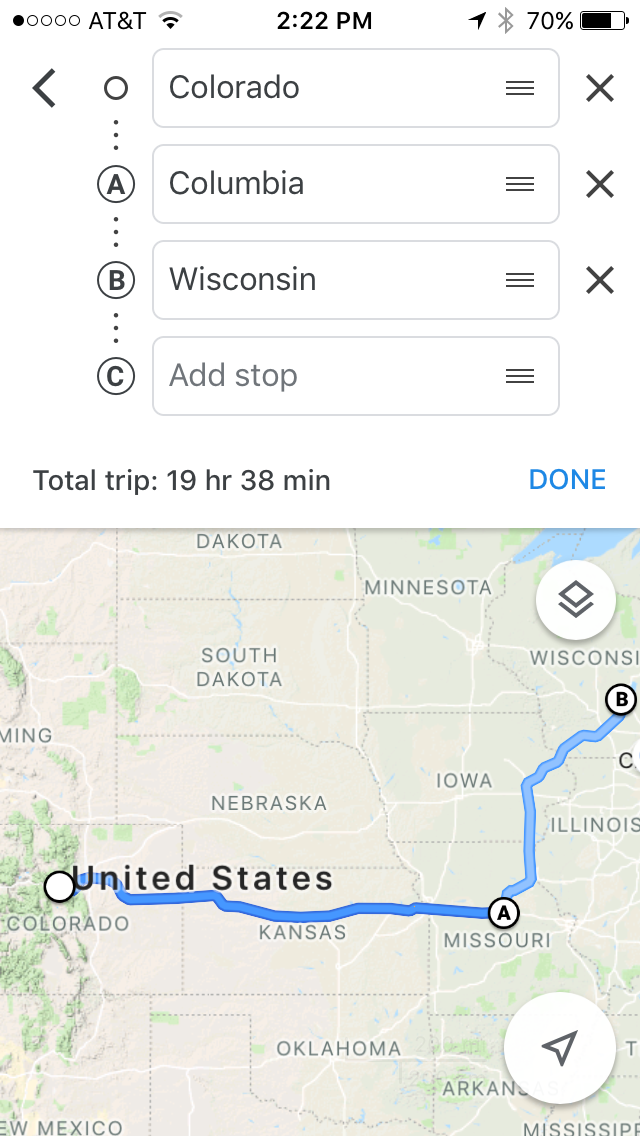
CO to WI copy

As a wanderer, I am sometimes envious of those rare people in my life who have always seemed to know their destination and have appeared to walk a clear path to it. They have lived life according to a road map. Director, doctor, producer. Sometimes I want the comfort of a straight line but then I come to my senses. I remember that straight lines do not occur in nature.

I am given to taking side roads. Exploration trips. As Master Marsh once asked, “Why do you need to take a run at every cliff that you see?” Curiosity makes for a more colorful path than the taupe-existence of ‘knowing.’ It is more honest, too.

When I was a teacher it always irritated me when the adults placed enormous pressure on their students to “know where they were going.” Over-serious adults pretending that life required hard, unflappable predetermination. “The decisions you make today will impact you the rest of your life!”  Well…when is that not true? Tom used to roll his eyes and mutter, “Why is it that adults feel the need to threaten young people with advice that they could not, when young, take themselves?”

Things change. Hurricanes come. Minds go. We age. We discover ourselves or, as Kerri likes to say, “We become more of who we are.” It is comfortable to believe in our powers of control but it’s rarely our destiny that we actually command. The Greeks wrote more than a few good plays about the I-control-my-destiny-confusion. So did Shakespeare.

It is nice to have a map. It is great to have an intended target. It is worth mentioning to young people and old that life is not found in the target but in the walk toward it. Targets change. And, how rewarding would it be, when young, if all of the old walkers admitted that their paths were rarely straight, known, or easy. In fact, when I hear the tales and tell my own, it is the unseen forces, the happenstance, the wrong turn, the accidental bumping-into that gave the walk its riches.


read Kerri’s blog post about MAPS


big red & little baby scion website box copy