Choose The Lesser Chaos [on DR Thursday]

“If I choose abstraction over reality, it is because I consider it the lesser chaos.” ~ Robert Brault

And what isn’t an abstraction? Dealing with ideas rather than events? Not-the-thing-but-is referential-to-the thing?

Every word in every language is an abstraction. Every thought that zips through every brain is an abstraction. Not the thing but referential to it. The word “chair” is not a chair.

I caught myself in a sticky net. Not once, several times. I’ve tried again and again to paint “abstractions” only to whine, ‘I can’t abstract!” [insert laugh track]. A painting of something is, by definition, not the something. Picasso had a heyday playing with people’s minds around this idea, this abstraction.

After an unexplainable medical event, my doctor shrugged and said, “Sometimes there is no explanation. People like to rationalize things. They think if they can explain it, they can control it.”

Explain Pollock or Rothko. Diebenkorn’s Ocean Park series. Ellsworth Kelly.

And who wouldn’t rather spend time pondering the sense of Richard Serra than anything we read in the news?

read Kerri’s blog post about ABSTRACTION

earth interrupted © 2012 david robinson

Use A Bag [on DR Thursday]

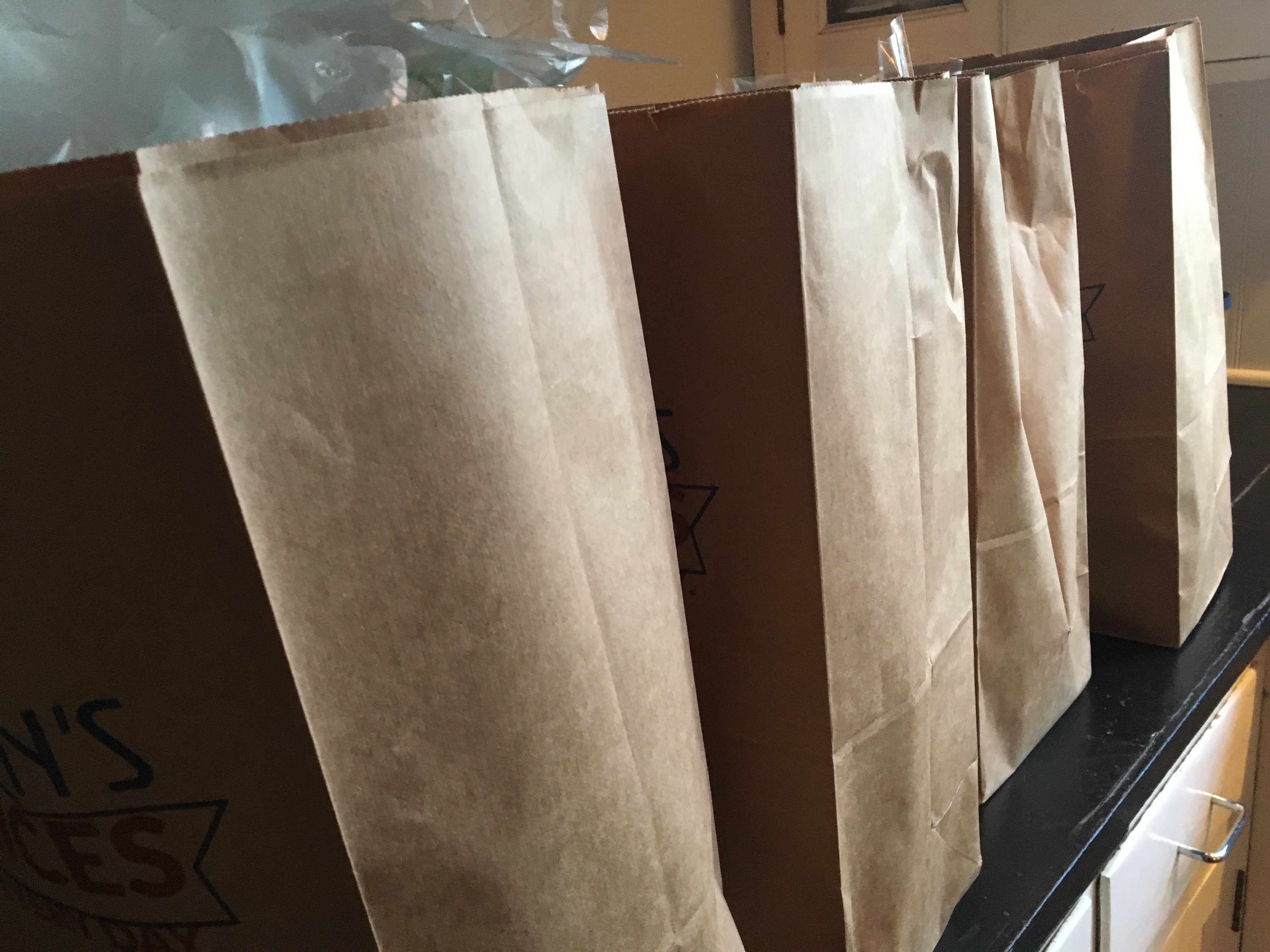
To Chris Crites, grocery shopping day is a feast. To Chris, these sacks are more than functional. They are more than ordinary shopping bags. These bags are canvas. They are opportunities for art. They are surfaces meant for brilliant mugshots. The underbelly of society made beautiful on brown paper sacks.

I’m not sure if it was Chris or the other artists in my Seattle pod that prompted me to experiment. One of my forays into “where will this take me” required paper sacks. Lots of paper sacks, torn to bits and pasted on a canvas. I drew and painted on top of the bits.

I forgot about my experiment until I met Kerri and one day unrolled all the canvas to show her what was in the pile. She cooed at my paper bag experiment. “This should be a series,” she said. “It should be called Earth Interrupted.” And, so it was.

I have (mostly) been a painter of people. I’ve learned that art – and theatre – for me are a means and not an end. In other words, I don’t paint because I want to master the craft of painting or make brilliant paintings. I paint to study people. I paint because it is a meditative space. I paint because I lose myself and enter someplace bigger. I paint because it helps me “to see.”

I completed six additions to the Earth Interrupted series and then stopped. I lost my way. That’s always been my experience when I abstract- when I leave the figure and mess with texture and shape. I know I’m not finished with it. Getting lost is part of the process.

Unloading the groceries last week brought me up short. I felt like Chris Crites. So much possibility sitting on the counter. So much material begging to be transformed.

Earth Interrupted I, mixed media, 48x53IN

read Kerri’s blog post about BAGS

earth interrupted I © 2012 david robinson

Listen To Claude [on Two Artists Tuesday]

In his 60’s, the famous Impressionist painter Claude Monet went blind. Cataracts were removed, restored his sight, but also changed his capacity to see color. He painted in blues because he couldn’t perceive red and yellow. He was not fond of the paintings that he produced. He painted what he could see. Historians, on the other hand, credit his blue paintings as an important link to abstract painting.

We never really know the impact of our actions or our work.

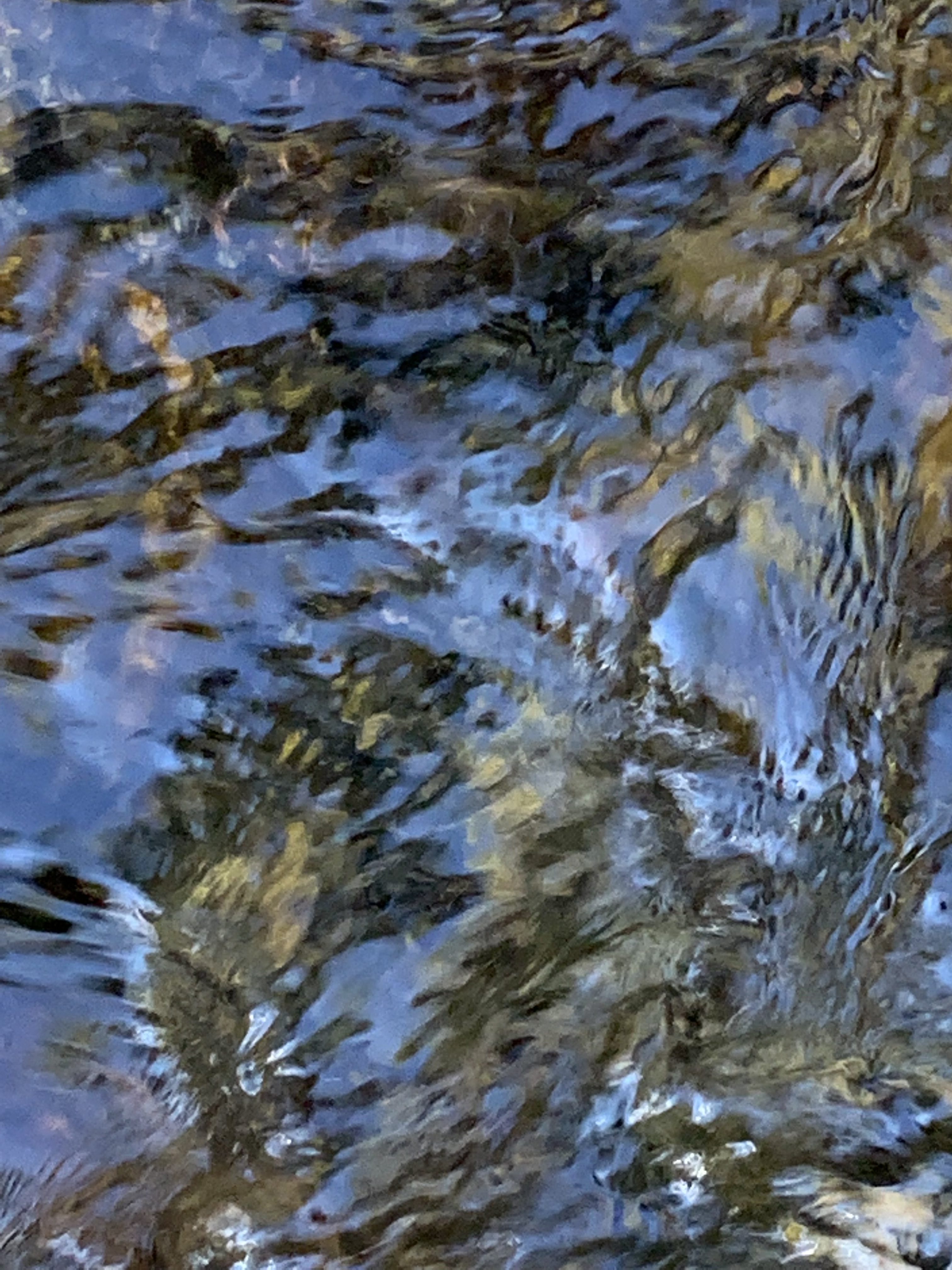
The path paralleled a stream. As we walked up the mountain, she stopped often and took photographs. The sun on the water was enticing so she aimed her camera at the stream. “Look!” she said, showing me. “These look like abstract paintings!”

“They look like Monet,” I said. “Gorgeous.”

Whether they know it or not, artists are always having conversations with their artistic ancestors. I was amused at the idea that Kerri and Claude were having a chat. The world of a master painter, living before ubiquitous photography, meets they eyes of one who sees and quickly captures.

I was also amused that, through Kerri’s picture, Claude and I were having an exchange. “I love your blues,” I say. Claude responds, “Ah, but it’s the reds and yellows that make the blue so vibrant. Contrast principle,” he winks.

Excited, she returned to the stream to take more photos.

I turned my face to the sun. I breathed in the mountain air, the aspen leaves fluttering. I have not finished a painting since the pandemic began. “I feel empty,” I say to Claude.

“We paint what we see, ” Claude whispered. “Sometimes we simply cannot see.”

“Yes,” I said, “I am blind. But my cataracts are not in my eyes.”

“No,” Claude replied. “You are not blind, you see well enough. You’ve closed your eyes.”

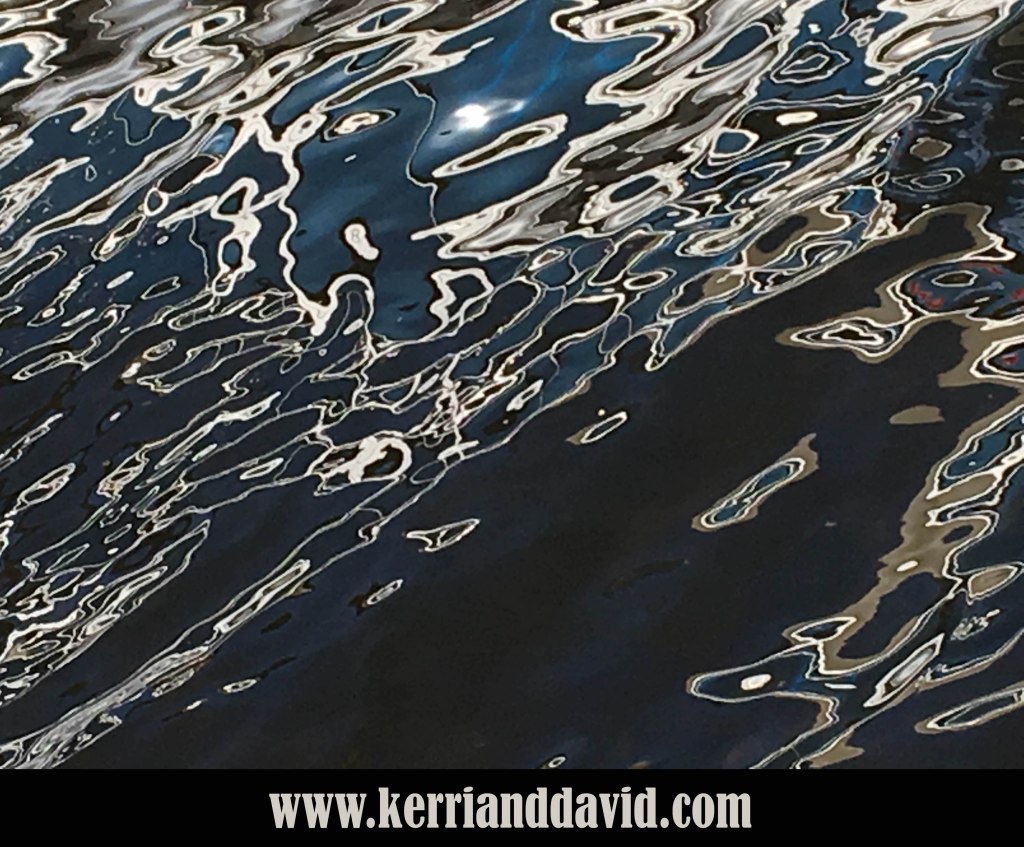
“Lookit!” Kerri smiled, “These are so cool!” She shows me more water close-ups, a symphony in orange, blue and gold.

“Don’t worry,” Claude smiled. “When you are ready, you’ll open your eyes again. You’ll see a whole new world. New colors and shapes. More than blue.”

“You think so?” I ask.

“Isn’t it beautiful!” Kerri glowed.

“Do you see?” he smiled and faded into the photograph.

“Yes,” I laughed and nodded, “It’s really beautiful.”

read Kerri’s blog post about MONET WATER

images of water © 2021 kerri sherwood