Hear The Calling Voice

photo

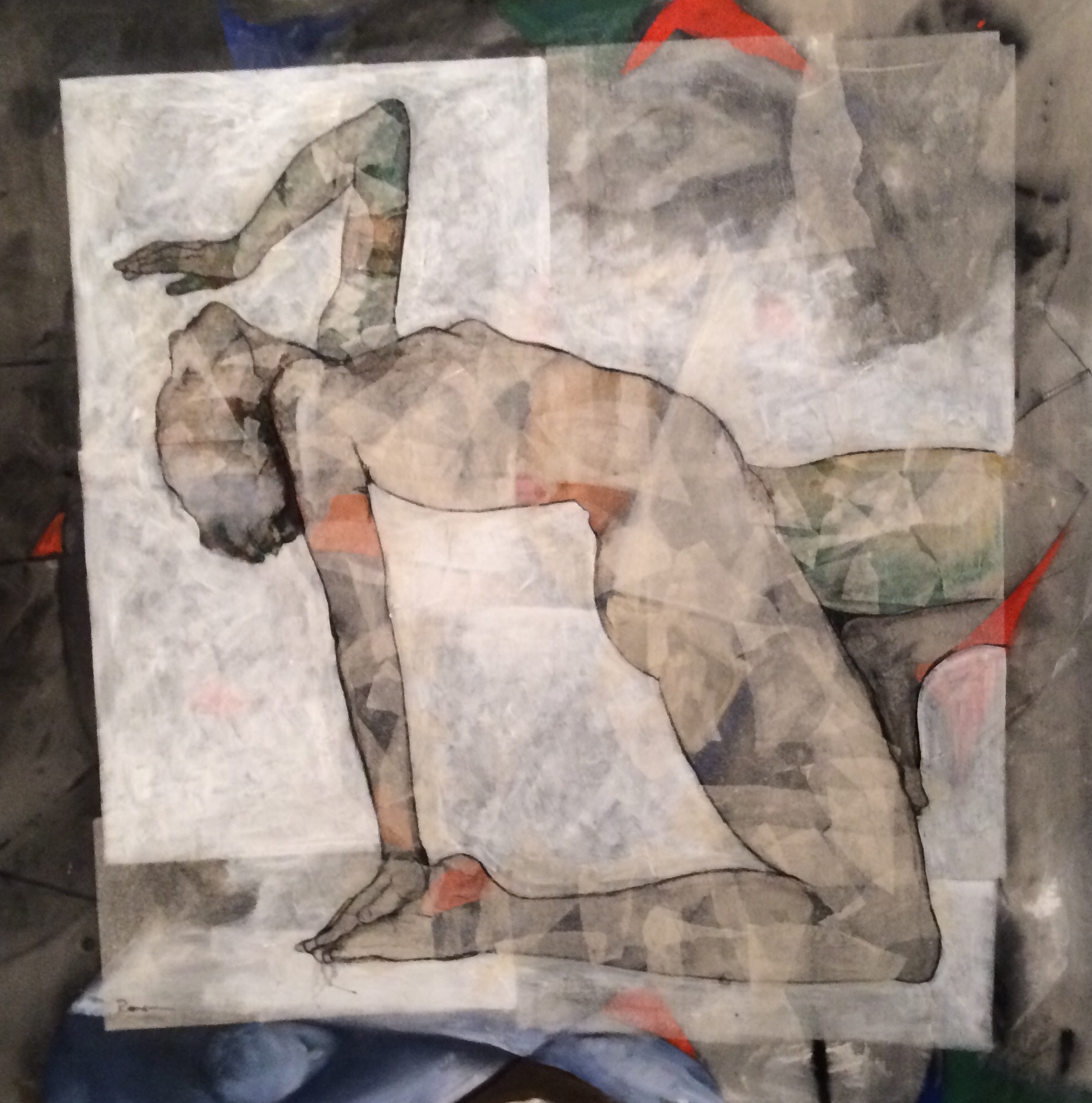
next steps to my latest painting. it’s coming along!

“Maybe that means that the voice we should listen to most as we choose a vocation is the voice that we might think we should listen to least, and that is the voice of our own gladness….I believe that if it is a thing that makes us truly glad, then it is a good thing and it is our thing and it is the calling voice that we were made to answer with our lives.” ~ Frederick Buechner, Secrets In The Dark

This week I received an email from a long lost friend, a man I haven’t seen in over 25 years. Although we have yet to talk, his email contact has already sparked within me a life review. What have I done in all of these years? Who have I become in the quarter century since last I saw my friend? He wrote a brief three sentence overview of career advancement and family highlights (graduations and retirements). In attempting a reply, I found it impossible to encapsulate my path as there has been nothing linear, logical, or similar in my steps. I’ve walked a much different road. My inner imperative roars rather than whispers.

My life has been a source of great concern for my parents. Security has never been high on my list of occupational criteria. The day that I graduated from college my mother asked in all seriousness, with the love and concern that can only come from of a worried mother, “Now that you’ve gotten the theatre thing out of your blood, what are you going to do with your life?” She could see (before I did) my attraction to edges and my need to run at them and jump. She understood my need to question the rules, challenge assumptions, and live on the margins so I might better see and understand the happenings in the main stream. She saw and for a while feared the call of the art within me.

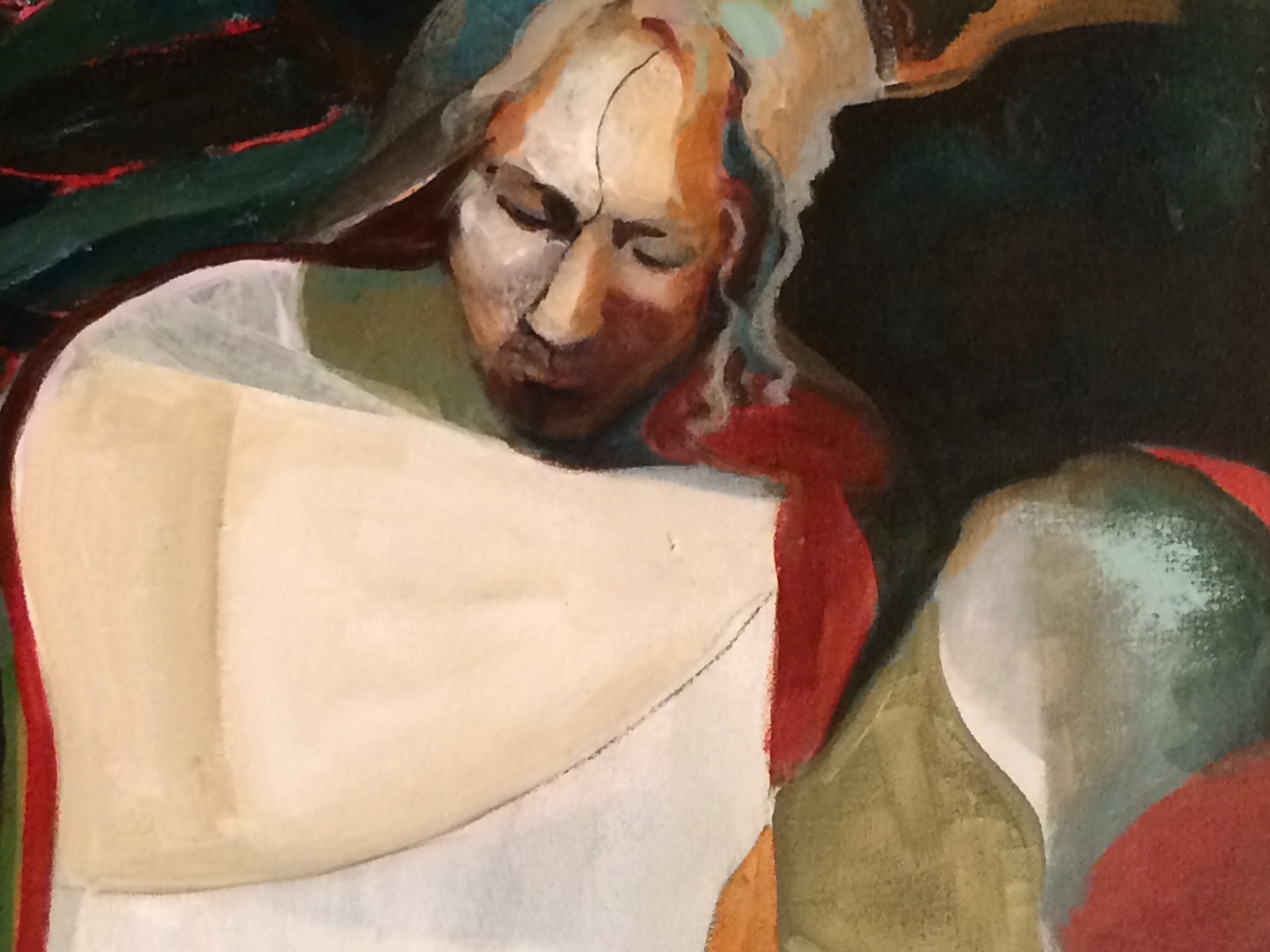
a close-up

a close-up

Judy once told me that she never wanted to be too comfortable because she intended to live life, not protect herself from it; she didn’t want to become complacent in this gorgeous life. Security is low on her list, too. She’s my go-to person when I lose the voice of gladness in the static and clamor of ‘should-do.’ She cuts through the noise, “Can you hear the birds, feel the sun on your face?”

When we were students in college, Roger asked me to read Herman Hesse’s book, Narcissus and Goldmund. He told me that he would most likely live the life of Narcissus and I would follow Goldmund’s route. Narcissus is a priest and teacher seeking God in the rituals of the institution. Goldmund finds illumination through the mess and random experiences of his life. One seeks God through order. The other finds God in chaos. Both are following their call, their voice of gladness. My path has, as Roger predicted, mirrored Goldmund’s. The voice, the call of gladness is clear to me on the inside while the path is nearly unrecognizable from the outside perspective.
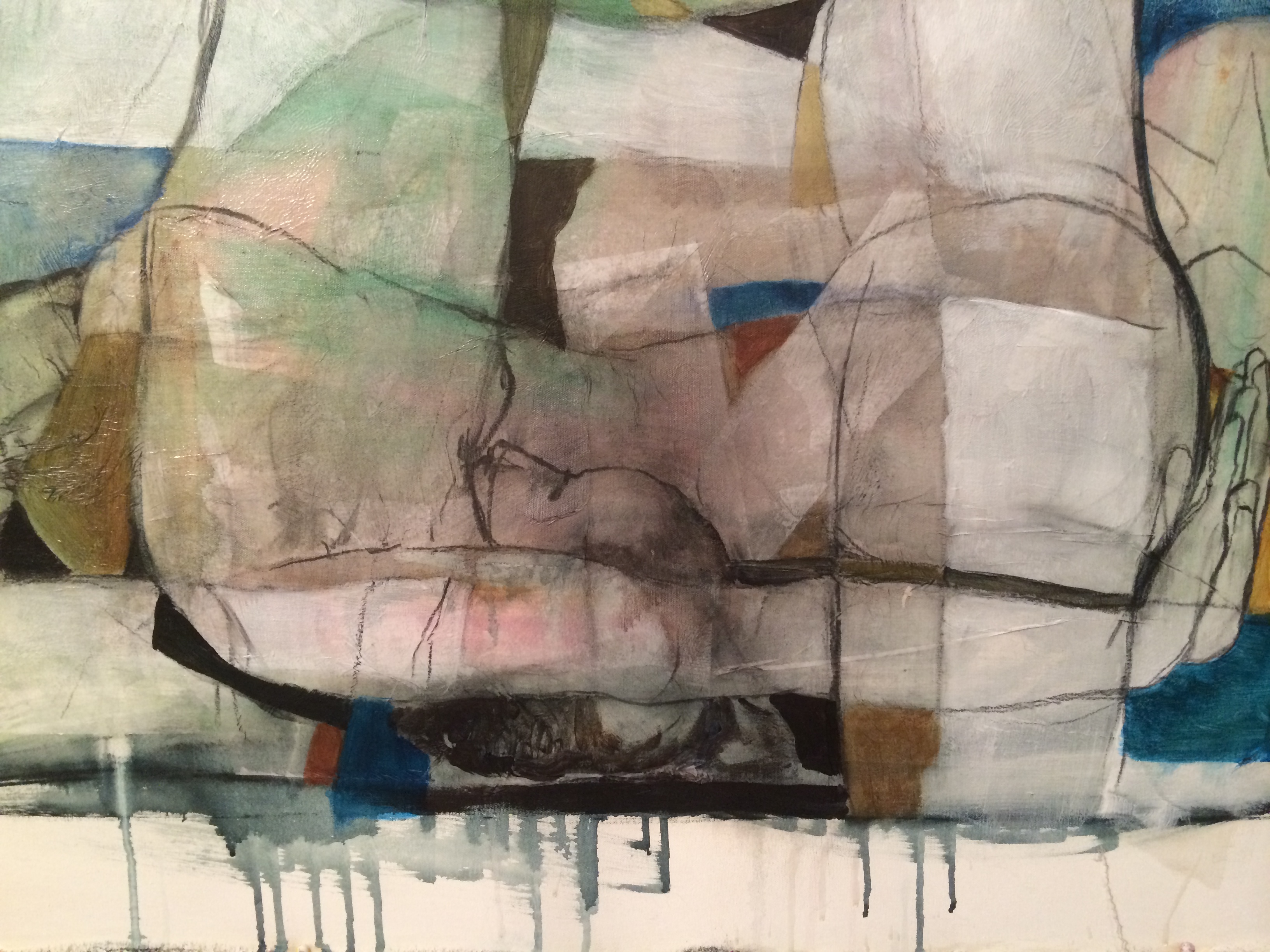
another close-up

another close-up

So, what to tell my friend when we speak? Like all artists, I have answered the calling voice with my life.

Feel The Thunder

An untitled  watercolor I did years ago

an untitled watercolor from the archives

I am sitting alone in the back room of a coffeehouse. The room is dark because the day is dark with rain. It is hot and very humid. The building shakes with thunder and the voices in the front room drop to a whisper. I imagine the voice of the thunder inspires awe or at least a library-esque respect. After the rumble subsides, the volume is restored. People laugh again and talk in a tumble over each other until the next rumble quiets them.

I came to work. Good coffeehouses have always been productive places for me though today I’m distracted by the thunder. Like the other patrons, the angry sky has me on alert. It is nearly impossible to focus on my thoughts when the sky has so much to say. The truth is, I want to listen to it. I want it to stop all motion, to interrupt all the little things I deem important. I want to pay attention to what it has to say.

I remember listening to a recorded lecture of Joseph Campbell. He said that the voice of the thunder was probably humanity’s first experience of the godhead. In other words, when the sky talked, people listened. Long before the weather channel replaced the oracle, connectivity between human action and the elements was assumed. Our actions mattered. The gods communicated their pleasure or displeasure with us via sunshine or tsunami. Calm seas and good sailing were signs of approval. It is a marvel in the age of humanity blowing a hole in the ozone, pouring tons of carbon into the atmosphere, having created a Texas size floating trash site in the ocean, exhausting aquifers, etc., that we can in all seriousness debate whether or not we are having an impact. I wonder if in the age of the weather channel as oracle we have so disconnected from “our nature” (our connectivity) that the debate is less about impact and really about whether or not we matter at all. If we do not recognize that our actions have impact, that the smallest action ripples through the lives of others, how can we possibly expect our existence to matter? Mattering requires the understanding and experience of connectivity.

When was the last time that you felt connected to the bigger whole? In the end of the day, mattering (spirituality by another name) is a very practical thing. It is to feel connected. When was the last time you stopped and listened to the thunder? When was the last time you felt its rumble in your chest, or noticed how quiet you became when it spoke?

Meet The Fire

a work in progress. this one is slow going!

a work in progress. this one is slow going!

In order for the phoenix to rise it must first burst into flames and be reduced to ash. Every rebirth requires a death. I imagine the phoenix does not relish the flame but after a few cycles it recognizes the necessity of the fire.

The same image (metaphor) is everywhere: the caterpillar must first cocoon and then be reduced to mush before the impossible happens. The leaves must fall from the tree before the root can replenish, revitalize, and do the impossible: bring forth new life.

The healers in Bali assured me that a wound is necessary to open the door to the gift – and each had suffered a devastating wound or loss en route to fulfilling their healing power. The journey through the wound was necessary to turn on the power. The heroes cycle, the belly of the whale, the quest through the wasteland, finding joyful participation in the sorrows of the world; growth is a fiery, difficult business.

In my life I’ve worked with many, many people in all manner of change and transformation processes. It is surprisingly common for people to want their phoenix without experiencing the flame. It took me a while to realize that people (organizations and otherwise) were hiring me under the guise of helping them transform but in truth they really wanted me to help them circumvent the fire.

People go to great lengths to avoid the flame. No one willingly seeks the wound and no one transforms without it. No one in their right mind jumps out of bed in the morning ready to jump into the abyss and yet the adventure is impossible without it. If a full rich experience of living is the aim of our limited time on this earth, then the fire is necessary. The fire is part of the ride.

Fire avoidance is what dulls an otherwise vital life. Comfort is certainly a worthy aspiration but as the only aspiration it deadens, it limits the life-color-palette to taupe. The trick, as all the stories teach us, is never to avoid the fire, to protect yourself from it, but to be alive in it, to know what it is to be reduced to ashes and know somewhere deep inside that the phoenix will always rise just as spring will always come.

Seek Solitude

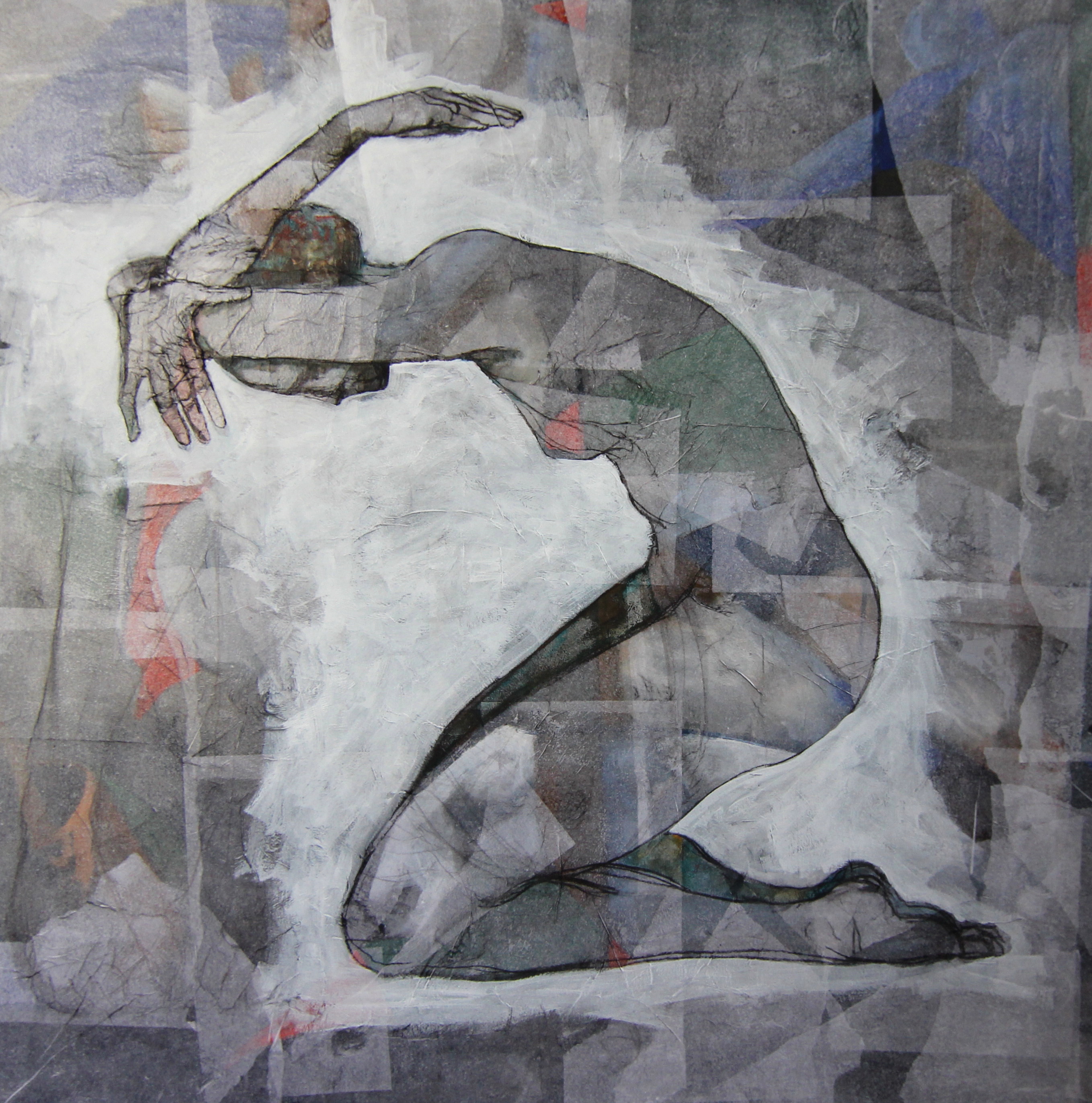
from my Yoga series of paintings

from my Yoga series of paintings

It is easier to sail many thousands of miles through cold and storm and cannibals, in a government ship, with five hundred men and boys to assist one, than it is to explore the private sea, the Atlantic and Pacific Ocean of one’s being alone. ~Henry David Thoreau, Walden

I remember watching a documentary of the painter Lucien Freud. He said he couldn’t understand why anyone would choose to be a painter because the choice meant living a solitary life. His comment struck me as odd because, for me, solitude was necessary for the muse to come through. I often yearned for solitude. I always looked forward to my time with the muse.

More than twenty years ago, for a period of time, I was painting exclusively. I had an abundance of solitude. Each evening my dear friend Albert would show up at my door, force me out of the studio and take me to a coffeehouse. He told me that he feared my isolation, that without human contact and conversation, I might twist. His fear, although probably valid, also struck me as odd.

A solitary life can be quiet, prayerful; it can be full. A solitary life can also be lonely and empty. The difference, of course, is in the presence of a relationship. Most painters that I know, most artists, feel as if they are a “channel to something bigger.” Something comes through and it is in the solitary moments that the channel opens. It is in the solitary moments that the relationship becomes available. The relationship with the muse can be full, rich, and three-dimensional. I imagine monks, nuns and ascetics of all spiritual traditions know this relationship, too. Solitary need not be lonely just as, paradoxically, the loneliest place on earth can be in the middle of city teeming with people.

The exploration of the private sea, the Atlantic and Pacific Ocean of one’s being is the province of the artist. The relationship with “something bigger,” with the muse, is the seed from which all art forms grow. The seed is visible in the adornments found in pyramids, in the harp of Orpheus, and in the paintings of Marc Chagall. It is present when children with gusto run their fingers through paint or dance all alone in the grass just because it feels good.


Take The Time

Yoga Series 7When the world says, Give Up, Hope whispers, Try one more time.

I am updating my website though I am no longer permitting myself to call it an update. To update implies (to me) something periodic. This thing requires constant attention. As it turns out, websites never sleep. Rather than an update I now think of it as a scheduled feeding. Our cat, Baby Cat (were he human he’d be a sumo wrestler or a bouncer at a biker bar), is the only creature alive that requires more feeding than my website. Baby Cat is much more vocal about his scheduled feedings so I’m mentally linking my Baby Cat and website feedings.

My current website feeding, let’s call it an appetizer, involves paintings. I’m including an archive that reaches back a decade or more. There are paintings that go back further in time (much further) and I will post my archeology as I continue the feeding. The remarkable thing about including an archive is that it has provided the opportunity for a life-in-art review. And, I don’t recognize the guy that did some of those paintings. I recall applying paint to canvas but the overall experience is akin to remembering a past-life. They are at the same time “me” and “not me.” A few years ago I went to a Picasso retrospective at The Seattle Art Museum and wondered if the man at 90 years old liked or appreciated the work he did at 20 years old. Like all great painters he grew simpler with age, he said more with less. With age, he had less to say so he was at once both free and precise (a great definition of artistry).

In my life-in-art review I’ve been most interested in the work that happened during transitional periods. For instance, shortly after I moved to Seattle (sixteen years ago) I took most of my existing paintings to a local beach and, over three consecutive nights, burned them. It was my version of a forest fire, a spontaneous conflagration that stripped my internal landscape bare. What followed was a slow revitalization. Renewal. I remember the faces of the people who helped carry my paintings to the fire. They thought I was engaged in a fiery self-sabotage. I knew otherwise. My work had become sterile and heavy. Hope was calling and I needed to drop some dead wood, shed an old skin,… (fill in your favorite analogy). It was hard, messy, scary, and, for me, necessary.

A few years ago I followed Barney and Skip around the Benziger Winery. They were giving me lessons in biodynamics. The lesson over and over again: it’s about the health of the soil. The health of the vine is an expression of the health of the soil; excellent wine cannot be pushed. It takes time. It takes attention to the whole system. Art follows the same principles.


Place No Blame

a detail of my painting, "John's Secret."

a detail of my painting, “John’s Secret.”

I’ve been thinking a lot about forgiveness. Earlier today, Kerri read an article to me and the author, someone with terminal cancer, wrote that blame is a waste of energy. Life is too precious to waste on blaming. Forgive and move on.

My meditation on forgiveness has inadvertently become a meditation on blame. As it turns out, forgiveness and blame are often dance partners.

My favorite phrase of this week: Blame, no matter where you place it, does no good. To me, the crucial concept within the phrase is this: blame requires placement. Although it might feel otherwise, blame is not a passive act. We place it. We aim it. It is a way of making meaning of things that don’t feel good. I’ve written that blame is like sugar; it is addictive. It is choice wearing the mask of it-happened-to-me. Oddly, as an active choice, blame actually inhibits action and as an inhibitor it does no good either for the placer-of-the–blame or the recipient. It stops motion. It is an energy eddy. It is destructive both ways.

Forgiveness is also not a passive act. Forgiveness takes more effort because forgiveness is an unmasked choice. It, too, requires placement and aim. It is also a way of making meaning of something that doesn’t feel good. But, unlike blame, forgiveness does great good for both the giver-of-forgiveness and the recipient. It creates motion. It is generative both ways.

Release The Edge

photo-4

Usually, there is a lake….

Hope begins in the dark, the stubborn hope that if you just show up and try to do the right thing, the dawn will come. You wait and watch and work: you dont give up. ~ Anne Lamott

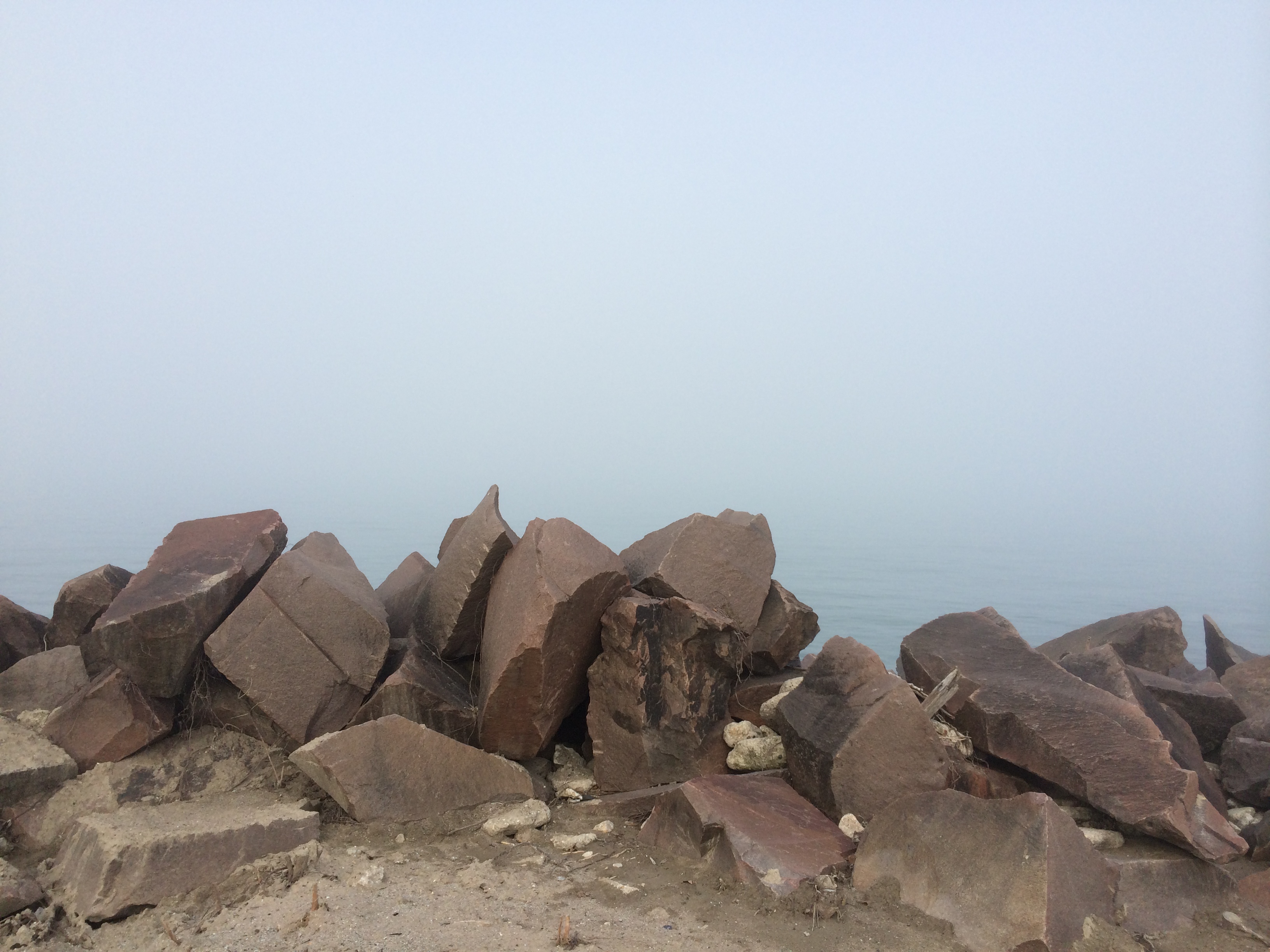
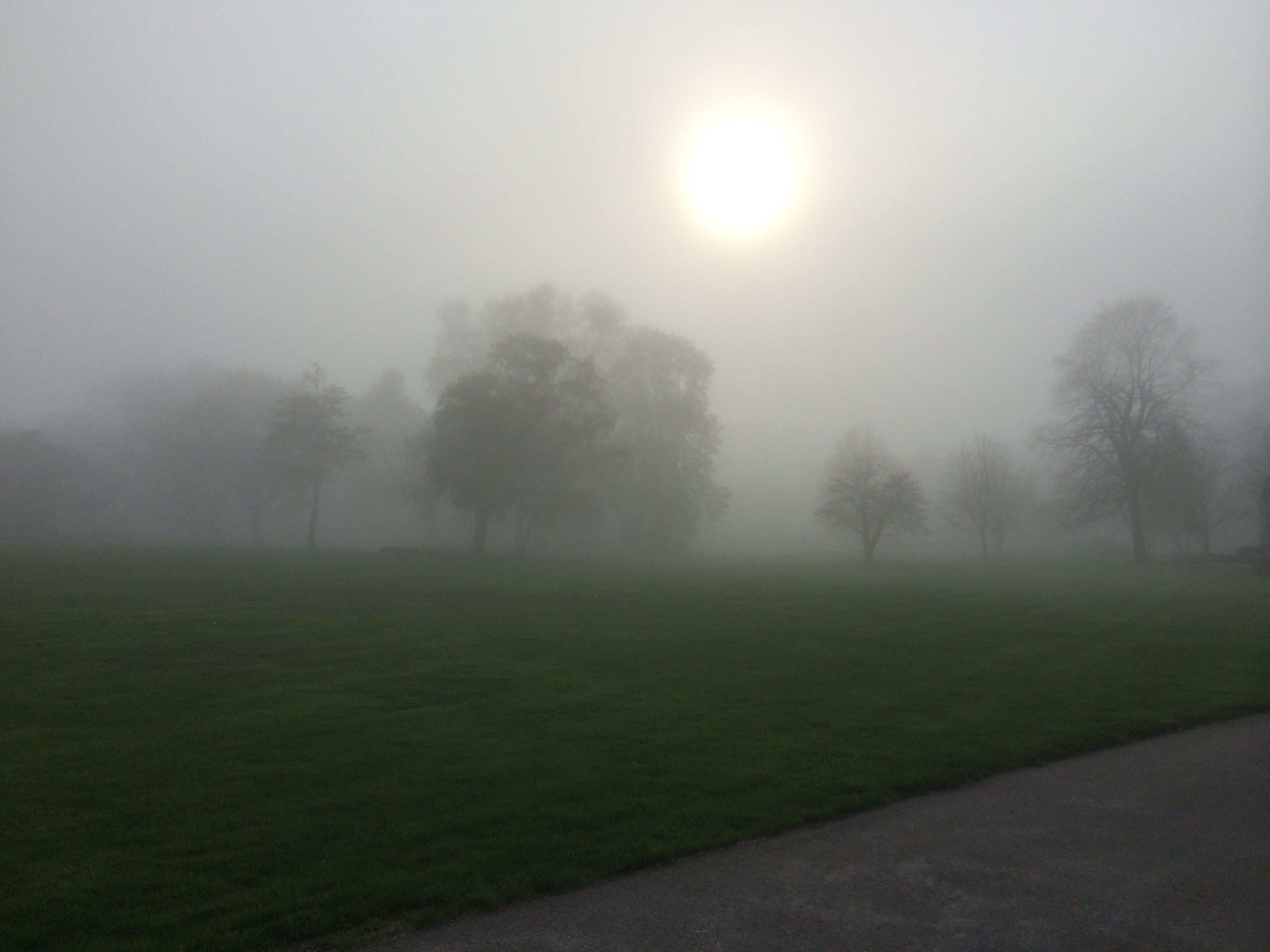
Sometimes the fog hangs heavy all day along the shore of the lake. The sun tries in vain to penetrate the fog so the air glows. When, in combination with the fog, the lake is still, like it was today, it becomes invisible, inaudible; the lake disappears. Standing on the great rock barriers, staring into the void, it feels as if you have arrived at the edge of the world.

photo-5

looking the other direction

All of my life I have been fascinated by edges. What is the line between wild and tame? Most good stories require a stride beyond the boundary, a movement into territories unknown. And, at the end of the story, what was once known becomes unfamiliar. Every ending is a beginning. What is the line that distinguishes the known from the other place? A good dose of reason will assure us that most things can be understood but a walk through a spring meadow or a night spent gazing into the stars will remind us that understanding is illusive or at best illusionary. What do we understand?

Once, working with a group of teachers, we had a terrific discussion about beginnings. Where does a story or a life begin? There is always an easy answer, “Once upon a time,” a birth date, when two people meet, the day the crisis arrived on the doorstep. In fact there is always a multitude of easy answers, of possible beginnings, and none of them are definitive. Which beginning point is the beginning point? At what moment did success arrive? Or, when did failure begin? Does my life begin with my parents or their parents or…? Edges are esoteric!

There is a long tradition in the arts of Dances with Death. Paintings, dances, compositions, plays,…; Hamlet ponders life as he holds poor Yorick’s skull. It passes all too quickly. Most spiritual traditions carry the notion that life cannot be understood, valued, or fully appreciated without first grasping that this life-ride is limited. Living a good life, a fully appreciated life, demands a nod to the edge. It’s the ultimate paradox.

I’ve courted a bundle of trouble in my life because I rarely see the black-and-white of things. Where is the line between hope and hopeless? What wall delineates faith-full and faith-less? Like happiness, edges are made, not found. Ask a physicist if it is a particle or a wave and they will uniformly answer, “It depends upon where you place your focus.” Even in the era when people believed there was a hard edge to the world and finding it meant falling off, sailors supplied their ships and sailed toward the horizon to find it.

 Icarus reached for the sun.

Icarus

Make No Sense

these hands will change

these hands will change

The woodpecker hammered high atop the ancient television antenna. He seemed not to be bothered by his lack of progress, beak on metal. At first I thought it made no sense and then it occurred to me that progress was not the goal. Perhaps the woodpecker hammered for the pure pleasure of the sound of it. It need not make sense. This woodpecker was an artist to his or her core!

Yesterday was a “no-power-tools” day. No sharp objects were allowed. No walking near ledges permitted. I was distracted; tired to the core. Late in the day we drove 45 minutes to a bakery called ‘Simple’ in Lake Geneva. They make the world’s best flourless chocolate cake. “This makes no sense,” Kerri said as we stepped out of the bakery with our cake. We laughed and ate a slice in the car; pure pleasure before driving home.

Every time the neighbors let their dogs out, Tripper Dog-Dog-Dog runs a frenetic figure eight in the backyard, over and over and over. He exhausts himself. He is having some exotic shepherd fantasy or perhaps he cannot contain his delight. It makes no sense for him to run a trench in our backyard for dogs he’s never even seen. He runs for the pleasure of it.

We sat in the sun this morning drinking coffee. The sky was cloudless, the air was cold but the sun was warm. We leaned against the house, saying little, feeling the warmth seep into our bones. We both knew that on this day we would do nothing. There would be no visible progress toward any defined goal. The wheels of society would have to grind on without us. We needed most to stop, to sit, to stare, to laugh at the Dog-Dog.

photo-2I started a painting a few weeks ago. It is a figure falling through space. Something has been wrong all along and sitting in the sun I figured it out. The hands are all wrong. Rather than reaching for something to grasp they ought to be letting go.


Matter.

From the archive: 'Angels At The Well.'

From the archive: ‘Angels At The Well.’

Paul used to tell the acting students at the conservatory that they should never underestimate their power to impact another person’s life. In other words, their work – how they brought themselves to the stage – mattered. Simply by doing their work they had the capacity to open a mind or challenge a story. The caveat, of course, was that, in all likelihood, they would never know the impact that they had.

His lesson applies as much or more in daily life as it does on the stage. What if we lived as if we understood our power to impact others? What if we recognized that the small stuff matters? What if we didn’t need to know – but simply brought ourselves to our days knowing that our actions and attitudes mattered?

Sitting outside at a Starbucks in Wesley Chapel, Florida, a young woman Skyped into a bridal shower happening in Pennsylvania. It was her bridal shower and, because she was starting a new job, she couldn’t get the time off to fly home. So, via Skype, she checked in on the party and giggled at the celebration. Kerri and I sat at the next table listening to the conversation, the love and festivities. I watched as Kerri, stricken with the grief of her mother’s passing, change. Her heart lightened. It changed her focus. The young woman, with no knowledge, eased Kerri’s grief. Kerri ran into the store and bought the woman a gift card. “Congratulations on your wedding,” she said as she gave the card to the young woman.

In coffee-desperation we pulled off the highway in Salem, Illinois. We bumbled into the M&M Coffeehouse on Main Street. Mike, the owner is a master chef. He told us the story of love that brought him to Salem, the story of his love for making food and how he became proprietor of a coffeehouse, the story of how the community was embracing his gift and returning the love; the coffeehouse was now also a catering business. He was teaching cooking classes and volunteering his time to the monthly Elks club hamburger dinner fundraiser. The Elks were raising tons of funds since he started making the meals. “You never know where life is going to take you,” he smiled. Mike never knew the gift he gave us; he was simply being chatty with strangers. We needed a good dose of hope and encouragement to carry us the final 6 hours of our long drive home. He filled our hope-tank to the top.

Whether we know it our not, it matters. Always.


Be Kind To Each Other

Eating a celery stick loaded with peanut butter, Kerri paused and asked, “If there is going to be celery on this earth, why does it have to have strings?”

“That,” I said, “is an existential question and, so, an answer is above my pay grade.” She gave me THAT look and crunched another bite, saying, “Too many strings!”

When I stop and think about it, most of the questions I have are existential and, therefore, unanswerable.

On the drive to Florida I passed the time by reading billboards. Fast food, Strip clubs, lawyers encouraging me to get what’s owed to me, all interspersed between fiery messages warning that “Hell is real,” or that “The path to Heaven is straight and narrow.” I smiled when it occurred to me the billboard messages were a smorgasbord of easy answers. In this life we are peppered with advertisements, a litany of easy answers to the things we are supposed to lack.

This drive to Florida is different from all the others. In the past, we made the drive to visit Beaky. This time we are driving to say goodbye. So, I am seeing everything through a very different lens. Easy answers are attractive when pretending that life’s questions are not tough.

My billboard reminiscing reminds me to beware of the easy answer. Gaps are not easily filled. Meaning is never found on a prescribed path. Sustenance is not available at the drive-through. These things are glaringly obvious when someone you love dies. Life is made rich through the questions that have no answer.

It’s human to want an explanation. It is human to want to know why. On the roadside in Illinois, having just received the news, Kerri asked if I thought Beaky knew we were coming. Somewhere in Tennessee, Kerri asked if I thought Beaky in her final moment was scared. In Alabama, she asked what happened, why so fast, and why now?

photo-1After a visit with Beaky, when we were taking our leave, she always said two things. The first was “Be kind to each other.” That might at first sound like a billboard sentiment except that Beaky knew that kindness was not an easy answer to anything. Blame is easy. Judgment is easy. Kindness, extended to the self and to all others, is a constant practice, a way of life. Being kind in all situations, Beaky knew, was not easy and that was precisely the point.

The second was a family tradition of sorts. It was always the last phrase exchanged when taking leave of her: “Bye for now.” She was ever hopeful and that, too, was a practice – a life choice – and not an easy answer. It was a focus of the eye, an orientation to life.

So, from Beaky, I learned two practices : Be ever hopeful. Be ever kind. Beaky, bye for now.