Honor The Split

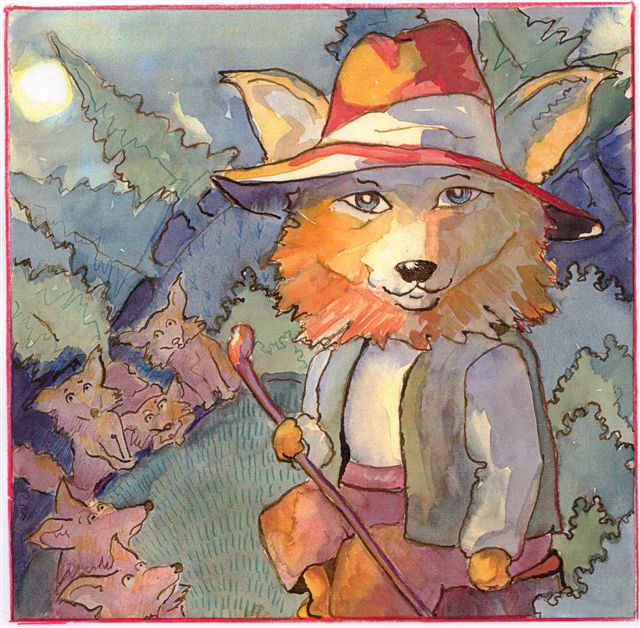
after hurricane Katrina I was invited to write an illustrate a children's book. There is only one copy: the original went to a child displaced by the storm. This is the first plate. The book is called 'Peri Winkle Rabbit Was Lost.'

After hurricane Katrina I was invited to write and illustrate a children’s book. There is only one copy: the original went to a child displaced by the storm. This is the first plate. The book is called ‘Peri Winkle Rabbit Was Lost.’

Another of the revelations that tumbled through my mind yesterday concerned “splits.” I’ve written often about split intentions, a concept that the fabulous Viv McWaters encapsulated for me when she offered the Chinese proverb: Chase two rabbits and both will get away. Much of my organizational, educational and creative coaching life has been in service to clients who come to me when they have split their intention and are watching both their rabbits escape. I helped them unify their intention and, therefore, clarify their pursuit.

The dark side of the moon that I rarely talk about (and that came clear to me yesterday) is the necessity of a split intention at certain points in a process that make growth possible. The best example is the split that happens within a caterpillar’s body once it cocoons. The encoding for “butterfly” activates, the caterpillar’s body reads it as a cancer, and a battle ensues. A split occurs: to remain a caterpillar or to become a butterfly. Old systems do not easily let go so the caterpillar’s body fights and nearly defeats the inner butterfly intention. However, the resistance makes the butterfly code grow stronger and it fights back. This back-and-forth inner debate progresses until finally the caterpillar’s body collapses into mush (in story cycles, this “mush phase” is the step into the unknown). The mush slowly takes on a new shape and a new identity emerges. The final necessary battle is the newly formed butterfly’s struggle to exit the cocoon. Help a butterfly out of the cocoon and you will kill it; the final struggle is necessary for the wings to grow strong.

This necessary split plays out in humans, too. All change (all stories) begin when the main character (you) are knocked off balance by an event or an inner imperative. This is the moment of a necessary split intention: do I stay or do I go. After being knocked off balance we do the same thing that the caterpillar’s body does: we run to safety and grab onto what we know. We fight off the necessity of change, denying the imperative, grasping for the feeling of security we no longer possess. This is a necessary phase! This debate, running to the safety of home and hiding – and then walking to the edge of our known world and staring at the horizon – and running back home again, creates heat. It gets energy moving. This back and forth, this inner split intention is necessary. It makes the imperative grow impossible to ignore. It is the process necessary for the main character (you) to understand that what was once secure is now suffocating. The discomfort of the unknown becomes more attractive than the safety of the known because of this inner split, this tug-of-war. When, like the caterpillars body, everything goes to mush and there is no way to go back, the only way forward is to step into the present moment without form or identity. Letting go of the known, stepping into the unknown, is the beginning of reunifying the split. Stepping into the unknown is a commitment to a single rabbit to chase.

The split creates the heat necessary for change. At the right moment in every life story, just as in the caterpillar’s transformation, a split intention is essential. To rush through this phase is just as devastating as trying to help the butterfly out of the cocoon. Trying to eliminate the discomfort too soon is a sure way to stay split and ultimately kill the transformation.

Go here to get my latest book, The Seer: The Mind of the Entrepreneur, Artist, Visionary, title_pageSeeker, Learner, Leader, Creator…You.

Or, go here for hard copies (Amazon)

Open To Belief

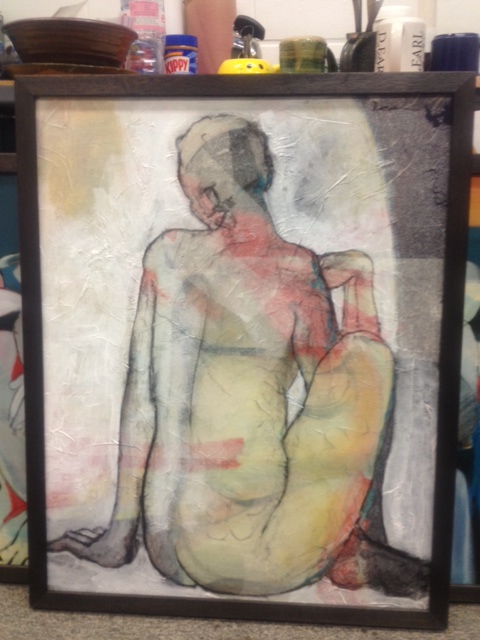
another from the Yoga series by David Robinson

another from the Yoga series by David Robinson

I’m having one of those days ripe with revelations and have been scrambling to capture the insight ripples before they rush down my thought river, around the bend, and out of mind.

One of the ripples has to do with the “As if….” The “As if…” is a tool for actors, self-growth seekers, and human beings in general. For an actor, to act “As if…” opens the door to belief in a character. For the seeker of self-growth, to act “As if…” opens the door to belief in his or her capacities, as if they were a character in the play of their own lives. The “As if” serves as a bridge into a possible future when belief is hard to come by.

When I was younger, a favorite “As if” mantra imparted to me by adults was, “To dress for the job I wanted, not the job I was applying for.” In other words, dress as if I already had the job I wanted. In my case it was lousy advice because donning pants and shirts spattered with paint was not the ladder climbing attire they wanted me to embrace. For me, the elders needed a different premise beneath their “As if” advice. There was no ladder in my paradigm. Dressing for any job felt like self-betrayal on my way to soul death. Of course, years later, having lost my mind, I actually put on a suit and lace-up shoes to coach my first executive client.  He laughed heartily as I writhed in my new suit. He advised me to show up as I am, not as what I thought he wanted me to be. Great advice! His quote, “You are an unmade bed and need to own it. It’s why I hired you – because you are different.” As if!

I’ve understood for years that people perform themselves. “As if” can be a kick-starter for a belief-filled performance. It is an illusion-seed that, when watered and tended, grows into the identity you wish to inhabit. In other words, perform the person you want to become and not the one you currently believe yourself to be. Invoke “As if…” and sooner or later you may start to believe in your performance. Sooner or later you may become who you imagine yourself to be.  The roles we play are not fixed identities and much more fluid than we pretend! Becoming who you imagine yourself to be is called growth and requires a wee bit of acting.

One of my favorite lessons from the theatre is that character (the role you play, like Hamlet or Juliet) is not something you pretend, it is found in how you do what you do. Characters in plays want something; how they go about getting what they want reveals who they are. So, when building a character, swim upstream.  The character will reveal itself through you (the actor) if you identify and take action: craft how he or she does what they do. Young actors have to transcend the notion that acting is pretending. It is not. Action and pretense are two different things. A musician does not pretend to play music and an actor does not pretend to play a character. An actor pursues intentions. An actor acts (thus, the moniker). Actions are the notes an actor plays. Hamlet is the consummate student. He seeks truth. He tests hypotheses. How he goes about seeking and testing determines what we see as a character.

The same might be said of you and me. A human being pursues intentions. We take actions everyday and so, perform ourselves. How we go about our pursuit reveals what we believe. When we have little belief and big, big fear, we have the option of acting “As if…” It’s a loop. “As if…” leads to belief and belief leads to “As if…” Life off the stage is just like life on the stage: it is a cycle of belief and dis-belief. “As if…” is an ongoing growth process. Imagination knows no outcome.

In a recent workshop, after remembering a favorite childhood game, a man in the workshop said, “My imagination opened me to my belief.” Yes. That’s it exactly!

Go here to get my latest book, The Seer: The Mind of the Entrepreneur, Artist, Visionary, title_pageSeeker, Learner, Leader, Creator…You.

Go here for hard copies (Amazon)

Serve Life

Untitled by David Robinson

Untitled by David Robinson

I’m writing language for a website. In the past my website reinventions felt like an exercise of the same old cereal in a new marketing box. This time it’s different. I am a new cereal and I’m not certain that I want a box. It makes a difficult task of telling people what I do when I’m fully invested in container resistance. As I wrangled deep into the night with clever but remarkably meaningless marketing language, I had two mini-epiphanies:

1) Last year, unlike the captain of the Titanic, I sailed my ship directly at an iceberg so that it would sink. I sank the ship with all of the fine china, the gold bars and diamonds in the safe, the furniture, the clothes and fine food. It all went to the bottom of the ocean. I wanted off the ship so why would I now build for myself a new ship? I didn’t bob around in my raft in the vast ocean spearing tuna and catching rainwater so that I might someday step back on to the bridge and do it all over again. What, exactly, am I building?

2) I have tried my whole life to squeeze myself into too small of a box (as, I suspect, all of you have, too). I have worn the jacket of coach, of facilitator, of teacher, of director, of actor and waiter and painter. I am none of these and all of these. I have made websites complete with testimonials and classes, nice pictures and e-books, workshops and retreats. The process of building a site is a two-agenda process: first, locate yourself in space and time for other people so that they might find you and, second, orient yourself toward other people’s concern so they might know why they should seek you. In other words, 1) this is where I am and, 2) this is what I provide. The pronoun is “I.”

What, exactly, do I provide? I am not a plumber or a pizza maker. Every marketing person I’ve ever known has advised me to brand myself. Brand myself as what? Brands are made up. A year ago on New Year’s eve, tarot woman told me that she didn’t see a career for me. Rather, she saw lots of expression. “Brand that!” I thought to myself. Last night I reasoned, “I am not a brand.” Neither can I reduce what I do to a pithy phrase or clever visual. That’s precisely why I sought an iceberg and sank the ship!

I’m an artist (a painter and performer) and I write. I like to write a lot. At the center of all that I do is…disruption or change or spirituality or transformation, words that sound great but what do they mean on the concrete, day-to-day experience of living. I deal in heart, intuition, and soul. Great. I hold people’s hands and walk with them into their dreams. I dive with them into their past so they might let go of their story and sit solidly in their present. I help them unbuckle the weight belt of their story so they might surface for air. Brand that.

To ask, “What do I provide?” is to ask the wrong question. This question will always lead to too tight boxes.

Joe sent me some links: short films of Stephen Jenkinson (The Meaning of Death and Making Humans). Stephen Jenkinson says that humans are made, not born. He speaks eloquently about the necessity of dying to our childhood – which means recognizing that our short lives are limited. That’s the recognition necessary to grow up. We can only really fulfill our gifts when we understand the necessity to serve life, not our life. We end. Life continues. Martin Prechtel writes of his community’s male passage rituals; young men learn that they can only serve their community when they recognize their mortality. The passage ritual is meant to bring them to the realization that they are finite. Only then can they understand the imperative to serve something greater than themselves: life. Tonight in the Taize service, Pastor Tom read a passage about losing yourself to find yourself. It is the same concept wrapped in biblical clothes.

Here’s what I want to say on my site: when you are willing to stop trying to save your life and ready to start giving it, call me. No box necessary.

Go here to get my latest book, The Seer: The Mind of the Entrepreneur, Artist, Visionary, title_pageSeeker, Learner, Leader, Creator…You.

Go here for hard copies (amazon)

Listen To The Window

'Dancing In The Front Yard' by David Robinson

‘Dancing In The Front Yard’ by David Robinson

I am having an ongoing conversation with a stained glass window. Perhaps it sounds odd but I sit in the choir loft, across the sanctuary from it, and I listen. Without fail a thought always jumps into my head. Sometimes it’s a feeling and if I continue to listen, if I ask questions, breathe and get quiet, great insight follows. My conversations may be the fodder for my next book.

Here’s what I heard today: Stories can be the heaviest thing on earth to carry.

“Tell me more,” I prompted, staring at the red robe that serves as the visual focal point of the window.

After a few moments I heard: So many stories are fear-based. Fear stories are the centerpiece of angst and depression. They are monumental. If you pay attention you can see the weight of the story that people carry. Closed hearts and furrowed brows, burdened shoulders and bad backs: these are bodies struggling under the weight of the story they carry. Stories of shame are heaviest of all.

There was silence but I know enough to sit still, breathe, and listen. After a few moments, the stained glass window continued: No one need carry the burden. Every story can be set down. A story can be left behind.

“Why do we choose to carry the weight?” I asked.

I heard almost immediately: Everyone has experiences that inform the arc of their lifetime. Sometimes it is a wound. Sometimes it is a loss. The story is often the account of “something happening to me.” It forms the great helplessness. It is the victim story. People confuse their life with the story they tell of their life. They think they need the story to know who they are. Without the story they would have to own their choices. Both feet in! They would have to start living. People are life, not the story they tell of life.

“People tell stories. It’s what they do!” I responded.

The light poured in through the window. The clouds must have shifted across the sky. I imagined the window was chuckling at me as I heard: Stories can be the lightest thing on earth to carry….

Go here to get my latest book, The Seer: The Mind of the Entrepreneur, Artist, Visionary, title_pageSeeker, Learner, Leader, Creator…You.

Go here for hard copies (it’s Amazon;-)

Look Beyond The Box

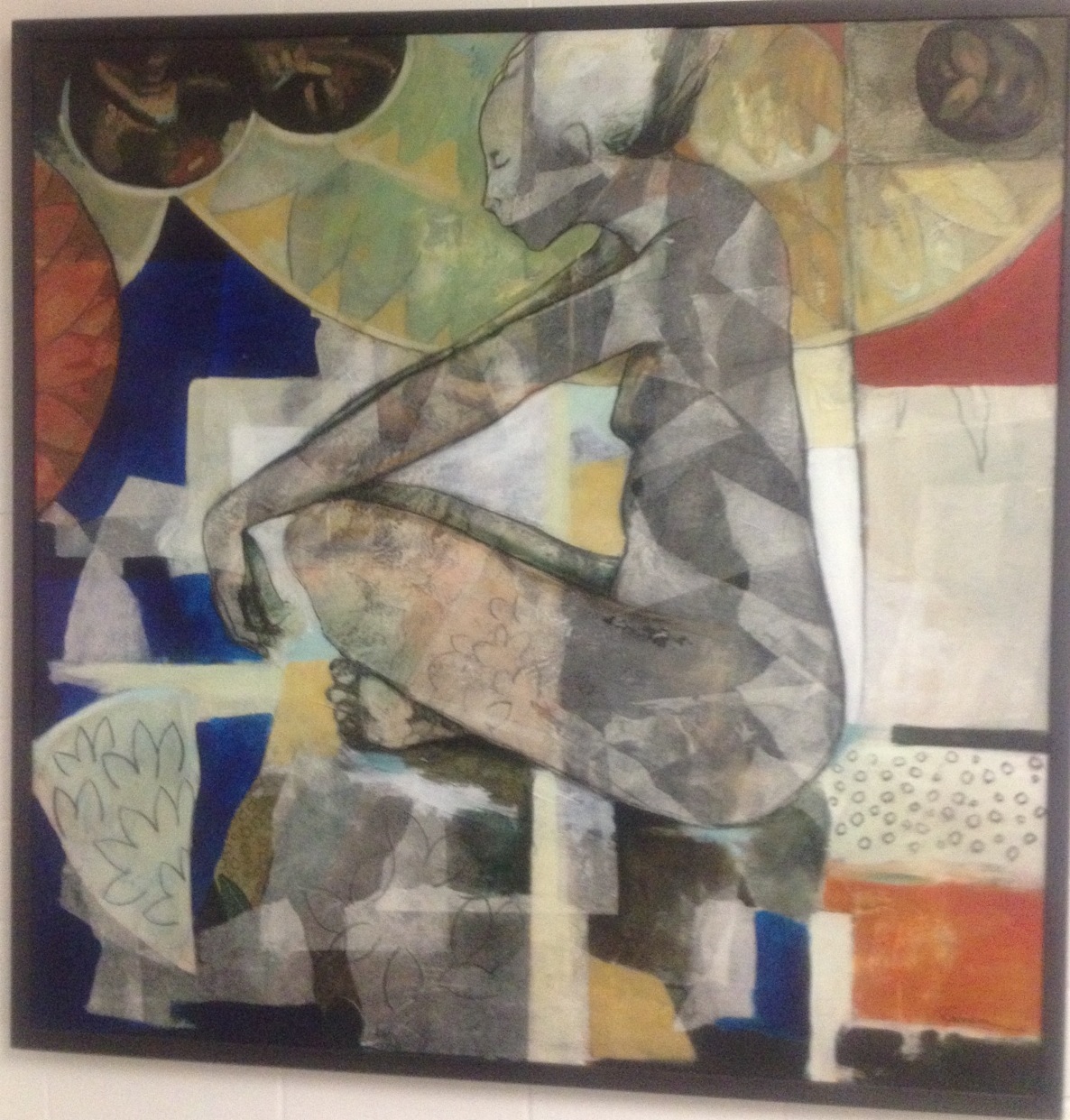
one of my paintings (untitled) from the Yoga series

one of my paintings (untitled) from the Yoga series

[continued from SEE THE BOX]

Craig’s question is bigger than a single post can accommodate. He’s both reflecting and asking several questions about the boxes people construct around themselves, about building personal “stages” and what becomes visible to us when we open ourselves to life without editor or inhibition. He’s asking deep river questions about the assumptions we make when we look at others through the lens of our own experience. He asked about what I see from my stage and when did I know to create my stage. And, here’s the kicker question, “When was the last time you stepped up and saw something you didn’t know was there?”

I want to start with the last question first because I believe it colors all of the other questions. At this point in my life, there isn’t a day that passes that I don’t see something surprising or new. I know that sounds like a superficial dodge until you consider that it wasn’t always the case. Like everyone else, I was schooled in a long series of mistaken notions: 1) that people need to know where they are going before they go there, 2) people need to know what they are doing before they do it, 3) knowing is something that happens in the head, and 4) that truth is singular and knowable; believers in right/wrong paradigms are especially fond of this point.

It took a few years (okay, decades) to realize that “knowing” is a process and not an arrival platform and, therefore, no body knows. People build boxes around themselves because they think they must know what is unknowable. People build boxes around themselves because they think they must look a certain way or think what others want them to think. People build boxes around themselves in an attempt to control what they can never control. No one really knows where they are going (well, everyone knows where they are going but dying is an existential question – a topic for another post). No one knows what tomorrow will bring. As Marshall McLuhan wrote, people step into the future with their eyes in the rearview mirror. We make sense of today through yesterday’s eyes so we can only “know” what happened, not what will happen. The day before September 11, 2001 people walked into airports to greet their friends and relatives at the gate. And then, the very next day, like millions of people, I sat in front of a television and watched a plane fly into the World Trade Center. That day I understood that what I thought I knew was basically useless.

Each of us has, at one time or another, had a personal September 11th. People learn. They grow. They have experiences and then make meaning of their experiences. People change. Life is a moving target. At one point in my life I started my own school within a school. It was experiential and filled with filmmaking and theatre and performance art. At the beginning of that era of my life I thought I would run that school until I the day I died. Three years later, I was done with my exploration in education and I surrendered my cushy tenured position and ran for the air of uncertainty. People story themselves according to inner imperatives through lenses of past experiences. The idea that we are primarily rational and reasonable is…not rational or reasonable.

At some point, when you cease thinking you know stuff, your eyes open. You see beyond what you think. Everything is surprising beyond the dull-wit of thinking. Thinking (a language-based activity) will always be an abstraction. Put a word on something and you delude yourself into thinking that you “know” what it is. This is especially heinous when applied to other people. People build boxes around themselves because of the words placed on them or the words they place on themselves.

Mostly, people build stages for the exact same reason. Saying, “I’m not going to be influenced by others; I’m going to act independent of others” is also a delusion constructed from notions of “knowing” or trying to determine how others will see you. Most stages are constructed from the desire to control. Sometimes the biggest box looks like a stage.

When you no longer need to know anything, you see surprising things everywhere you look.

[to be continued]

Go here to get my latest book, The Seer: The Mind of the Entrepreneur, Artist, Visionary, title_pageSeeker, Learner, Leader, Creator…You.

Go here for hard copies (it’s Amazon, don’t be afraid;-)


See The Box

‘The Box’ by Kerri Sherwood from her album Blueprint for My Soul Craig sent me a link and a challenge. The link was to his recent blog post, Break Down The Box. It’s about how people build boxes around themselves. “Instead of building a box that may later require extra work to remove,” he writes, “I suggest building a stage.” What a great image! His challenge to me was to apply it to my writing. He texted, “It’s relevant to your general topics.”

My question back to Craig was about the word “apply.” Is he challenging me to write about boxes and stages? Is he challenging me to build a stage and stand on it? Both? His challenge came on a day that I said aloud to myself and the universe, “I’m feeling boxed!” His timing was impeccable.

Self Cut outWe’ve not finished our correspondence so I don’t yet know what he means by applying it to my writing. To stall I will write what I know about boxes:

1) Everyone has one. Don Miguel Ruiz writes that we come into this earth as free, uninhibited spirits and then the adults around us begin impressing rules and random philosophy upon us. They teach us constraint and we comply. We are a pack animal, after all, and must operate within the greater needs of the community. That’s why there are traffic lights and a proper fork to use when eating a salad. Our greatest need is to belong; The GAP, Old Navy, or Abercrombie & Fitch could not exist otherwise. The need to belong is the driver behind box building. It’s a paradox. Somewhere amidst all of the compliance we begin to assume that we are no good or start making comparisons to others or create standards of perfection that are impossible to inhabit. So, we build a box called, “should be”. The paradox is that, in order to belong, our action is to hide.

2) Growth comes from constraints. No box is built without the need to deconstruct it. That is the opportunity of the box. Joseph Campbell would call box deconstruction The Heroes Journey. In the great mythologies of the world there is a tension between The Right Hand path (what society expects you to do) and The Left Hand path (following your bliss). Both are necessary and, in the end, we all must find the middle way between the two paths. The middle way is known in mythological terms as The Holy Grail. Bliss always needs the participation of others. We are pack animals and need the pack to know where we fit.

3) Constraint is necessary for creative fulfillment. School boards around the nation have the misguided notion that art is the absence of rule and/or discipline. It must be a requirement of school board participation to attend the symphony without recognizing that the musicians on stage have given their lives to discipline and constraint. It might come as a surprise to most people but artists outstrip the military in rule adherence and rigid discipline. The disconcerting aspect for the school board is that the rules and discipline of the artist are self-imposed. They are inner imperatives. Artists do not need a drill sergeant. They need constraints to push against, boundaries to overcome, rules to challenge, and patterns to disrupt. Watch a kid on a skateboard try to learn a new skill (oh, yes – they are artists, too). They might break their arm in the process but the break will just fuel the need to improve.

4) No one sees clearly their box. To return to a Don Miguel Ruiz-ism, we are the stars of our own movie and can never know the movie of another person (and they can never know our movie). The paradox is, of course, as the star of your movie you never get to see your life from any meaningful perspective until lots of time affords you some distance. Even then, you’ll interpret your movie through the lens of having lived it. If you have an inner monologue, you are center stage of your movie and your movie is your box.  Here’s the beautiful thing about movies/boxes: they all come with flaws and the flaws are almost always the location of the opportunities. As I recently learned, the Amish intentionally place a small flaw in every quilt because they believe that the flaw is what lets the spirit in. The same might be said of boxes.

I’ve been privileged in my life to work with and direct a bevy of actors and most had to learn to stand on a stage. In fact, the stage frightens most of the really good ones. They understand the power of being seen, the responsibility that comes with visibility. It is simply this: be present without the need to control the thoughts or emotions of another. Be present with them. Offer them a story without the self-protection of trying to control what they see. All stories are maps out of boxes. Or, more to the point, stories are maps out of one layer of box to a lesser layer of box. So:

5) Boxes are like onions. A stage is merely a layer.

Go here to get my latest book, The Seer: The Mind of the Entrepreneur, Artist, Visionary, title_pageSeeker, Learner, Leader, Creator…You

Go here for hard copies or Kindle

Stalk The Story

title_pageLast year I wrote a book and only recently got around to publishing it. One of the many benefits of waiting several months to publish is that I forgot what I wrote so, in preparing to publish, I got to read my book as if someone else wrote it. I got to discover my own book!

Now that the book is out in the world I’m receiving lots of requests to talk about it or coach to it. The requests are driving me to read it again and again – only through a different set of eyes each time. The question I’m asking myself is this: What is teachable beyond the obvious? I end each chapter with exercises and ideas but the real teachable moments happen within the story (just like life!). Here’s a “for instance” tidbit from the book:

When a story stalks you through your lifetime you inevitably learn some things about stories; you unwittingly stalk them, too. One of the first things I learned was that the word “beginning” is arbitrary. An end is always a beginning. A beginning is always an end. What we call a beginning or the middle or an end is really a simple matter of our point of view. It depends on what we see.

We rarely recognize the teachable moments in our lives. They seem so distant or have become so wrapped in justification that we don’t recognize them as opportunities for learning. A teachable moment is often embedded in the story that stalks you. In the book I weave the story of Parcival through the main narrative because Parcival gives his voice away. The main character of my book gives his voice away. He invests in the idea of what he should be and, so, loses sight of who he really is. He betrays himself. I’ve yet to meet a person who hasn’t given their voice away or lived from an image (a “should-do”) instead of honoring their “I-want-to-do.”  A moment of self-betrayal is a story that will stalk you all of your life. It will follow you until you reclaim your voice. And, the capacity to reclaim voice comes from a lifetime spent stalking the moment of self-betrayal. It’s a life story loop.

What are the stories that stalk you? The answer to this might not seem immediately apparent but if you take a moment and reflect you’ll likely come up with a moment (or several) that has shaped or continues to shape your life.

A moment of betrayal and a moment of reclamation might make a tight little beginning-middle-end story or might represent two beginnings or two ends, depending on how you decide to see it. Wounds are often opportunities for growth. Triumphs are often the beginning of a new chapter. We grow. We learn. We story and re-story ourselves. We give pieces away and reclaim them later. What’s important is that we learn to see our dance, capture the moment, and grow.

Go here to get my latest book, The Seer: The Mind of the Entrepreneur, Artist, Visionary, title_pageSeeker, Learner, Leader, Creator…You.

Go here to get hard copies


Where’s Your Safety?

from my Yoga series

from my Yoga series

Bill said, “People must make time to smell the roses.”

We were talking about the stories, specifically the stories we tell that become self-made prisons. “It’s never made any sense to me!” he laughed, “I’ve never been able to work for anyone because the whole mindset seems like madness. For instance, I just talked to a man who believes he must work at his job for three more years so he might have a better retirement. He hates his job!”  He added, “I have a dear friend that sat down after a game of tennis and died of a brain aneurism. We never know, do we?” His question was actually a statement and I nodded my head in agreement. It’s never made any sense to me to give away this day of life for an idea of life in the future.

“Why do you think people do that?” he asked. Social norms. Expectations. Fear. Stability. There are many reasons. There are many good reasons. We have to feel safe. I used to tell groups that a child can’t play unless he or she feels safe. To the man holding on for retirement, trading today for a possible tomorrow makes him feel safe and a safety story is a necessity in a culture that has forgotten community. Without a tribe, people must fen for themselves and the sacrifice they make is their autonomy. It’s a paradox. It’s a story.

Bill and I tell a different story. I’m a terrible employee. I have too many ideas. I like to change things. I do my best work late at night or very early in the morning. The middle of the day, the normal working hours, are down time. Fog time. I feel safe by breaking patterns and changing rhythms. I feel safe when I don’t know what is coming. I value presence and feeling alive much more than retirement. I do not know what retirement means because my job has never been a thing that I do. To retire means to die. I’ll certainly do that someday but I see no reason to save up for it.

My story, my path is no better or worse than the man who gives up his today for tomorrow. We both create our idea of security and live from a set of assumptions that define a good life. We both make sense – we make it. Sense is not found like happiness is not found. Both ensue.

Bill looked at me and said, “Maybe asking why people give away today for tomorrow is not the right question. Maybe the right question is, ‘Do they know that they are making a choice?”

Go here to get my latest book, The Seer: The Mind of the Entrepreneur, Artist, Visionary, title_pageSeeker, Learner, Leader, Creator…You.

Go here for hard copies

Make Sense

'John's Secret' by David Robinson

‘John’s Secret’ by David Robinson

Several years ago, decades in fact, G was driving his car. A young boy sprinted into the street in front of his car and was killed. To this day, G holds himself responsible. Even though it was an accident, he cannot forgive himself for the death of the young boy. He blames himself. Forgiveness is beyond his reach.

This terrible accident has become the defining moment of his life. Rather, his search for understanding why it happened and his refusal of forgiveness has shaped his existence.

He is a kind man. He is generous. He is devout. He is very old, walks with a cane, moves slowly, cares for his ailing wife, always smiles, He is generous with his time and his resources even though his resources are very, very limited. He sings. He prays. He listens. He asks, “Why?”

“What if I had left the house a minute later? What if I had left minute sooner? What if I’d decided to stay home? How could I have been the instrument of that young boy’s death? What could I have done…?” He suffers because, for him, there can be no absolution.

What do you do when there is no answer to the question, “Why?” What do you understand about your life and the forces of the universe when there is no sense to be made? What do we do when the experiences of our lives betray the sense that we’ve already made?

We do what we always do. We do what is most human: we make sense. We create order so we might not have to experience the chaos. We make statements in the form of questions: “What kind of God would let this happen?” or, “Why me?” There are so many things that we cannot control so somewhere there must be a bigger picture, a greater intention, a man behind the curtain, a reason why. We say to ourselves, “There must be a right path, a rule, a law, a design that we must follow.” It is something to ponder: why is our greatest horror to be out-of-control? What if we danced with the mystery rather than tried to contain it?

“To understand” is a form of the control illusion. Do you believe you need to know how to do something before you do it? You don’t but without the control-illusion of “how” you’d come face to face with the reality that process is chaos. Chaos is uncomfortable. Things happen. Order is something that is made after the fact. “There must be a way!” “There must be a reason!” There is always a way but you won’t know it until you walk the path and turn around to see it. There is always a reason, but you create it. It is not given. Order feels good.

And, it is necessary. Giving order to our chaos, telling a story, is what makes us human. If you could boil my work in the world down to a single phrase, it would be this: we have experiences first and then we make meaning, not the other way around.

We make meaning, we contain to infinite, through the stories we tell. The choreography of the human dance happens between the poles of “no sense to be made of the mystery,” and “the need to understand why.” G is making sense of his life. I am making sense of my life. As are you and everyone you meet today.

[to be continued]

Go here to get my latest book, The Seer: The Mind of the Entrepreneur, Artist, Visionary, title_pageSeeker, Learner, Leader, Creator…You.

 Go here for hard copies

Water The Seed

Illustration 07 Illustration 08In 2004 I wrote and illustrated a children’s book, Lucy and the Waterfox. I could have sworn that Lucy was only 5 years old and was taken aback to realize that she’d been around for a decade. Time flies! I recently bought a copy of Lucy since I had nothing in the archives and I will soon release her in versions for ipad and kindle. She’s an old fox and is not available in digital form. It felt funny to buy my own book. I was delighted when she came in the mail! It was as if she was coming home.

It had been a few years since I’d read Lucy so I was taken aback (again) by the parallels in Lucy to the book I just released, The Seer. I’ve been chewing on these ideas for a long time! In The Seer there is a mysterious guide named Virgil who challenges the assumptions of the main character and helps him reorient to a healthier more powerful way of being. In Lucy, a mysterious storyteller emerges from the forest one night; his story stirs deep yearning in Lucy to own and fulfill her extraordinary capacity. Lucy, I recognized, was a seed for The Seer.

Ten years ago I was hired to tell a story in several installments at a conference of health care providers. The conference lasted 3 days and the story served as a thread that tied all the conference segments together. The story also provided a central metaphor for the participants; it served – as stories always do – as the force that forged the individuals into a community. The participants had deep, meaningful conversations because they didn’t get stuck in the superficial, literal levels of their topics. They went into the well through their metaphor and, instead of trying to fix problems they explored their choices and opened to new opportunities.

On the second night of the conference there was a talent show and the organizers approached me and asked if I would tell a simple short story. I had nothing prepared but knew I had a little ditty in my journal about a fox named Lucy. She had a gift and was hiding it because it made other foxes uncomfortable. I told her story and Lucy was such a big hit that night, I received such enthusiastic feedback, that I returned home, illustrated, and published her. The experience of publishing Lucy inspired me: I’d never before thought of myself as a writer. Publishing ideas and stories was nowhere on my personal radar.

A decade later, publishing ideas and stories is the only thing on my radar. I have so many ideas! I have so many stories to tell and more show themselves to me everyday.

I’m delighted that Lucy came home to remind me that in the decade since she was born that I have grown, too, and have a much expanded personal radar. I look forward to the day, a decade from now, that a copy of The Seer comes in the mail and I say, “Whoa. Look at that! I’ve been chewing on these ideas for a long, long time.”

Go here to get my latest book, The Seer: The Mind of the Entrepreneur, Artist, Visionary, title_pageSeeker, Learner, Leader, Creator…You.