Enter The Castle

[continued from Tell A Good Story]

Shuttering the business, closing down my coaching practice, ending all corporate work, cleaning out the metaphoric closet – created quite a void. Standing solidly in a void of my own making I found myself once again enrapt with the Parcival tale. I’ve told this story dozens of times to audiences of all sizes, in performance and in facilitation. I wove it through The Seer as the main character’s stalking story (the story that follows you throughout your life and only opens when you are ready for it). It continues to open for me, a flower with many petal layers.

title_page

The Parcival story is woven throughout The Seer

It’s a grail quest story. Because every human being is in search of his or her personal grail (their true selves), once the metaphors are understood, it is a very useful story for navigating life. At one point in the story, after years of trying to prove himself worthy and save the world from becoming a wasteland – something that he is personally responsible for causing – believing himself to be invincible, he is defeated. A “nature warrior” knocks him off his warhorse and his magic sword shatters into a thousand pieces. Parcival strips off his armor (his role) and weeps. He lets go. He shutters his business. Despite his best efforts, despite fighting every dragon and ogre, despite defeating every dark knight, the wasteland still happened.

As is true in life, in the moment of greatest defeat, the second master appears and for Parcival it is a hermit. Parcival follows the hermit back to his cave and retreats from the world. He waits impatiently for the hermit to teach him, becomes frustrated, and finally resigned to the absence of any useful lesson, all the while, each day, chopping wood for the fire, carrying water to the cave. Over time he forgets that he was ever a knight. He forgets that he felt broken. He forgets his quest. He becomes present to the moment and is no longer invested in a role or purpose. He chops wood. He carries water. He feels the sun on his face. He appreciates his moment.

And, as is true in life, that is the moment that the grail castle appears for the second time. To re-enter the grail castle, to become the grail king (or queen), we must see ourselves as we are, beyond the role we use for armor, beyond the mission we use for meaning making, beyond the things we think we need to say, or do, or be. We have to recognize that we are enough, just as we are created, sacred and beautiful and complete. We are not broken. Nothing needs to be fixed or changed or achieved. Parcival, enters the grail castle (life) in this consciousness, speaks his truth, and the wasteland, in a single moment, disappears.

[to be continued]

Go here to buy hard copies (and Kindle) of my latest book: The Seer: The Mind of the Entrepreneur, Artist, Visionary, Innovator, Seeker, Learner, Leader, Creator,…You.

Go here (Leanpub) for all digital versions

Tell A Good Story

The Storyteller emerges from the forest. Lucy & The Waterfox

The Storyteller emerges from the forest. Lucy & The Waterfox

Over the years I’ve tried countless marginally successful ways to define for others what I do. It would seem obvious: I am a painter. I am a writer. Oh, and a theatre artist. And a consultant. And I’ve maintained a coaching practice. I’ve worked in education, the corporate world, with non-profits, and with entrepreneurs. So, in conclusion, I do too many things.

Well, that’s not exactly true. I do one thing. I deal in story.

I speak the language of story and that is confusing in any arena. What does it mean? Such a simple word, story, and yet it can mean so many different things. For instance, a truism in effective, transformational coaching is that the story doesn’t matter. By story, coaches mean the circumstance; in transformation, in the fulfillment of potential, the details of what happened – the story – are not useful. The circumstance story usually equates to blaming or endless attempts at self-fixing. The circumstance story gets in the way of growth. It is an anchor in the sea of dysfunction.

I don’t work with circumstance stories.

By story, I mean inner monologue, the-story-you-tell-yourself-about-yourself. By story, I mean the language that we use within ourselves to articulate belief. I work with the orientation story, the personal and communal mythology. Rather than get in the way, the orientation story defines the way. It defines what we see. It defines our relationship with time, with nature, with god, with community: it is the lens through which we make meaning. I help people change their lenses. Try explaining that to a CEO!

Last year, when Skip and I shuttered our business, I also shuttered my coaching practice. I ended my corporate work. Much of it came to feel like wearing an ill-fitting shirt –or a host of ill-fitting shirts – so I decided to clean out the closet. I wanted to drop all the definitions, the old forms, to make space for the new.

Last week I decided it was time to peek into the empty closet. And, as serendipity would dictate, I happened to be reading Frank Delaney’s engaging book, The Last Storyteller. On page 99 of this fictional tale, this is what I read:

“…every legend and all mythologies exist to teach us how to run our days. In kind fashion. A loving way. But there’s no story, no matter how ancient, as important as one’s own. So if we’re to live good lives, we have to tell our own story. In a good way. A way that’s decent to ourselves.”

I threw my head back and laughed. There is no story as important as one’s own. To live a good life we have to tell our own story in a good way. And then, there was this:

“…I don’t give anybody advice. All I do is release the good thinking that’s already inside of you. You’re the one who acts on your own advice, and I have the pleasure of helping you reach those thoughts about yourself. So it’s not me helping you. It’s you helping you.”

Ask me today what I do and I will say, I write. I paint. Ask me for more detail and I’ll open the book to page 99.

[to be continued]

title_pageGo here to buy hard copies (and Kindle) of my latest book: The Seer: The Mind of the Entrepreneur, Artist, Visionary, Innovator, Seeker, Learner, Leader, Creator,…You.

All digital forms of The Seer can be found here

See Why

Once again, H wrote me with some good advice concerning my limping kickstarter campaign. I opened his email while taking a break from research I was doing on grants for artists. His email collided with something I’d just read (and applauded) on the Surdna Foundation grant site. Here’s his email:

Something dawned on me today when I checked your KS page. Two things, actually.

The first, you actually could make your goal. $7k days are not that uncommon on KS.

The second is that you can’t seem to stop yourself from teaching, and I think you need to for this work, just as you should in order to write and direct the play. All the “truths” and lessons of story and of art should be axed. Because they are true and obvious when we see them in action. But the statement of those truths and lessons distract and dilute that action. 

Tell why you love Tom’s legacy and The Lost Boy, why it is essential to your life’s work, and why your life’s work matters, why it has to be done… 

You have time for one more ask…..

And, here’s the bit of text that I applauded from the Surdna site:

“Art is fundamental to our collective understanding of who we are, what we believe, and how we relate to each other and our surroundings. Artists and their coconspirators weave the cultural fabric necessary for a sustainable, vibrant society.”

In 1998 I applied for and was accepted into master’s programs in both painting and theatre (directing). It was confusing for me at the time because both acceptances felt miserable, like walking into a cage. In my desire to go back to school, I wasn’t looking for technique or an answer to “how-to.” I needed to take a deep dive into “why?” So, instead of the obvious route, I jumped into a degree in organizational systems because I could bend it to my real pursuit: art as central to the identity function of a culture: art (specifically ‘story’) AS the system. As the folks as Surdna wrote: artists weave the fabric necessary for a sustainable, vibrant society. The story inside you, the story-you-tell-yourself-about-yourself, is inseparable from the story happening outside of you, the story-the-community-tells-itself-about-itself. When a society has a living, breathing mythology, they live from a single, shared story. As Joseph Campbell famously said, “Our mythology is dead.”

We orient and make meaning according to a shared narrative. So, if there is something that bugs you about the world it is most likely a reflection of something within you. If you want to change the world, you must start with your self. How do we begin to tell a different story when we imagine that our story is separate from all other stories? How do we make a better world when the story of the individual supersedes the story of the community?

Working with the shared narrative, dancing with the inner and outer story in all of its power and potential is my life’s work. Tom is one of the few people I’ve ever known who understood this dance. He is responsible for igniting the fire in a legion of artists, for guiding a multitude of lost boys onto a power path. He opened my eyes to a deeper path through the arts and life. He taught me that the Greeks believed that the telling of the epic stories was necessary for the health and wellbeing of a community. He taught me that we’ve forgotten what the Greeks knew. The story of The Lost Boy is Greek and has the power to help us remember. Tom believed in a better world and that a better world happens naturally when we tell a better story. That is why this play needs to be done.


Go here to help me make possible a $7k day:

DSC_1196 copy

Determine The Value

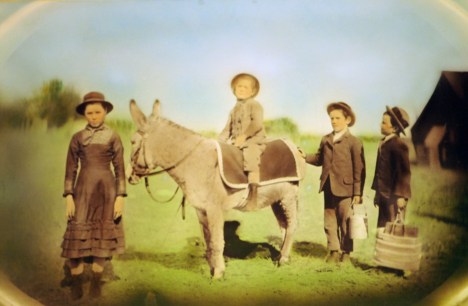
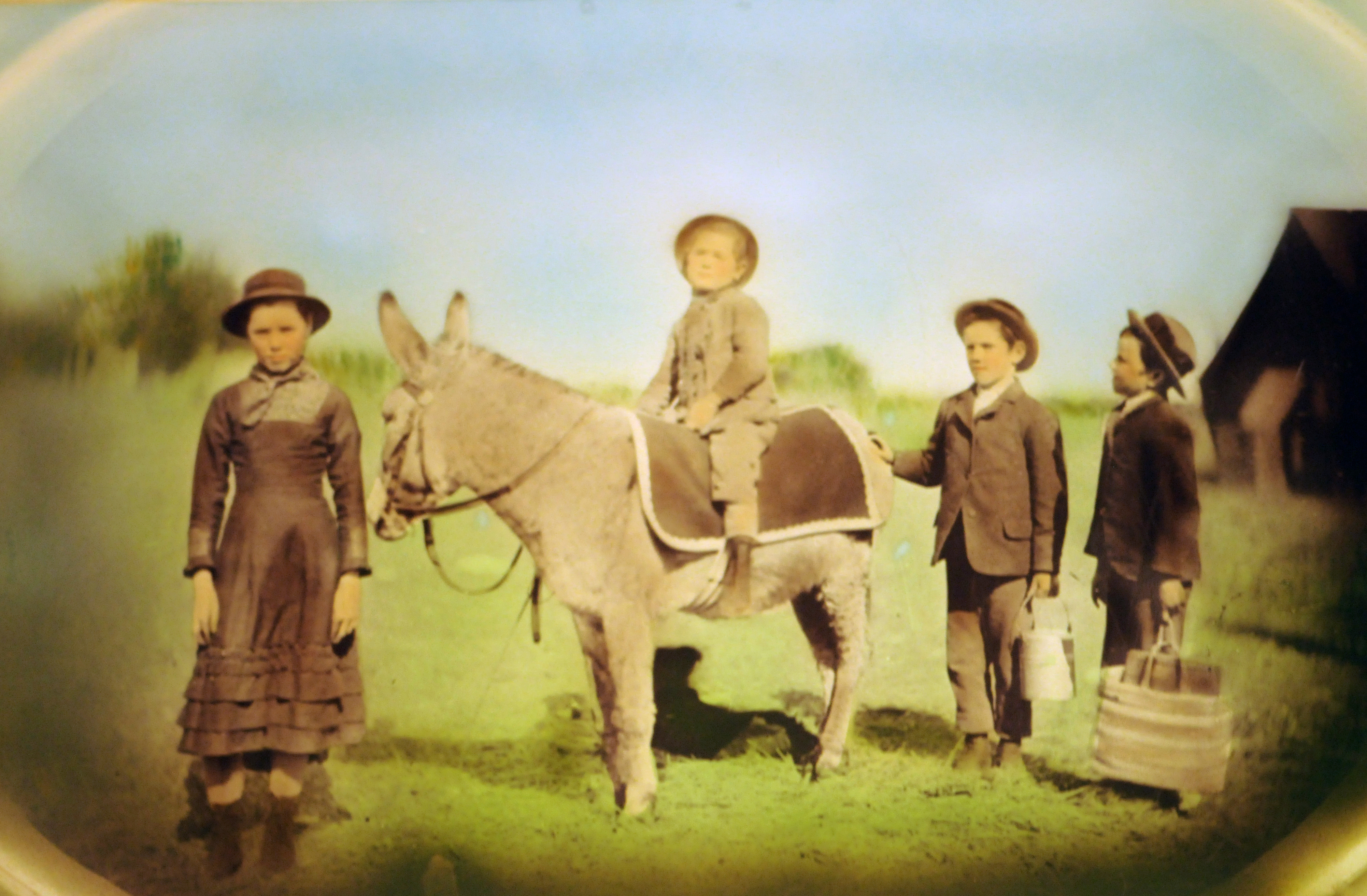
The Lost Boy (one of many) sitting on a mule.

The Lost Boy (one of many) sitting on a mule.

Last year Skip taught me that crowd sourcing sites like Kickstarter or Indiegogo were great ways to test the viability of a project or product. If an idea is valuable, people will invest in it. If not, not. If an idea is viable it will attract support.

As an artist I’ve had a wonky relationship with the valuation equation. Generally, the economics of art live outside the norms of the marketplace. For instance, I’ve run or consulted with many theatre companies; it is virtually impossible for the product of a theatre company – the live performance of a play – to pay for itself through ticket sales. Unlike other products, things like cars or bananas, arts organizations and the products they produce are made possible through grants, donations, patrons and this weird mechanism called “non-profit” status. The costs of producing the play (the art) usually outstrip the capacity of the “product” to generate a profit.

When I first met Skip he asked me a question for which I had no capacity to answer: “How can you scale up?” His question brought me to the concept confusion that lives at the very heart of the economics of art: bananas, cars, and iphones can be mass-produced. They are meant to be consumed on a grand scale. They are built to break down, to be replaced by the newest, latest, and greatest. The arts, to be living, to be vital, are rarely capable of mass consumption.

The arts serve personal (and, therefore, communal) transformation. They are not meant to break down, to be replaced by the new; they are meant to sustain, to renew from a deep irreplaceable wellspring. If the iphone, banana, or car is the fruit of the vine, the arts are the root system, that which brings nutrient to the fruit, that which holds the identity of the culture. Pluck the fruit and the vine will replace it. There will always be more. Pluck the root and you kill the plant. There is only one root. The fruit is meant for consuming. The root serves a different purpose.

Places of worship and education face the same value confusion. The sacred stuff, like art, is not consumable so how does a consumer culture determine its value? Learning is an ongoing personal process, an irreplaceable relationship with the world. Both education and worship, like a living art, are experiences rather than products. They are meant to be valued differently than a new countertop or a pair of shoes.

Some forms of art are capable, through the miracle of technology, of mass consumption: movies, music recordings, art posters and prints. Technology can do many things but it cannot replace presence. It allows us to see. It cannot replace touch. It allows us on a mass scale to see a reproduction of a painting by, let’s say, Van Gogh. We can appreciate the painting through the print. However, we cannot experience it. Nothing can replace direct experience, the personal moment of standing with the painting. A live performance is…live. It is alive, inclusive, and meant to transform through presence and participation in a shared moment. The economics of valuation confuse the greater valuation.

I am testing Skip’s notion with the viability of a project. I’ve launched a Kickstarter – my first – to fund a play. It is a heart project, personal to me and I think relevant to my community. Take a look. If it looks like it has value, you’ll know what to do.

Go here to check out my kickstarter for THE LOST BOYDSC_1196 copy


title_pageGo here to buy hard copies (and Kindle) of my latest book: The Seer: The Mind of the Entrepreneur, Artist, Visionary, Innovator, Seeker, Learner, Leader, Creator,…You.


End And Begin

Sand SpiralSome fragments of thought on common story phrases (and life):

Once upon a time. It started. The Big Bang! Movement from a single point, a center. Adventure requires a movement from center, a venture away from the known to the question. Moving from center implies imbalance and opens the possibility for a more expansive center. Here’s the paradox of moving from center: balance is everywhere and nowhere all at the same time. Every person is the center of their unique story. That will always be true: who else could star in your personal movie? Yet stories, in order to move, require imbalance. You know who you are, you lose who you are, you find who you are. Cells divide and divide again. The division is necessary for new forms to take shape. The encoding is already in there somewhere. The same is true of stories.

This is like that. Comparison. Simile. Metaphor. Analogy. It is why stories work. We compare ourselves to the protagonist. We are like him or her. Why do we tell the same stories again and again? Because we recognize ourselves in the story. Stories are like glue that binds a community. It’s why marketing works. To be more complete, you must buy this or wear that. Be like…. It’s all a story and in that way it is all made up, every category, every interpretation (see Once Upon a Time, The Big Bang, etc.).

And so the story goes. Chaos to order, order to chaos, generation to generation, winter, spring, summer, fall, winter, spring,…. This morning on our walk we watched parents take photos of their children as they returned to school. Backpacks, new clothes, and packed lunches; it’s the first day back. “Do you remember doing that for your kids?” I asked Kerri. She said, “It seems like yesterday.” It seems like yesterday when I was wearing new clothes and walking to school.

The End? An End? “The End” is definitive, singular. The Big Bang was a beginning but was it also an end? The end of one form is usually the beginning of another. Endings always lead to Once Upon A Time, don’t they? It depends upon where you stand or who’s telling the story or how you define yourself.

title_pageGo here to buy hard copies (and Kindle) of my latest book: The Seer: The Mind of the Entrepreneur, Artist, Visionary, Innovator, Seeker, Learner, Leader, Creator,…You.

Go here for all digital forms of The Seer.

Eve, by David Robinson

Eve, by David Robinson

Go here for fine art prints (and other cool stuff) of my paintings.

Choose Your Label

title_pageThe second recognition in The Seer is that your language matters. It is a curiosity to me that of the nine recognitions in the book, this recognition is the one that causes the most conversation and generates the most questions. My latest theory is the notion that the moment we tack a word onto an experience we are defining the experience; we are making a choice. Owning that we have the power to define our experiences through the way we think and talk about them means taking responsibility for our lives. Ownership of your happiness and power and thought might seem overwhelming or, as someone once said to me, “That’s pie in the sky!”

As the storyteller of your life, the language you use to tell your story matters. Try this exercise for a single day: express gratitude for everything – even if you don’t feel gratitude. Tell yourself in the middle of the traffic jam that you are grateful for the jam. And, if you are really bold and brave, take the next step and assign a reason for your gratitude: the traffic is slowing you down so you can breathe a bit amidst an otherwise hectic day. Express gratitude for everything: the meeting you will attend, waiting in the doctors office, the dishes you wash. By the end of the day, if you have been diligent in telling the story of gratitude, you might just feel it. You will certainly have no more doubt that you live life labeling your experiences. It is only a short hop from knowing you have the power to label your life to choosing the label.

Go here to buy hard copies (and Kindle) of my latest book: The Seer: The Mind of the Entrepreneur, Artist, Visionary, Innovator, Seeker, Learner, Leader, Creator,…You.

Go here for all digital forms of The Seer.

And, for fine art prints of my paintings, go hereYoga.Meditation

What’s The Story

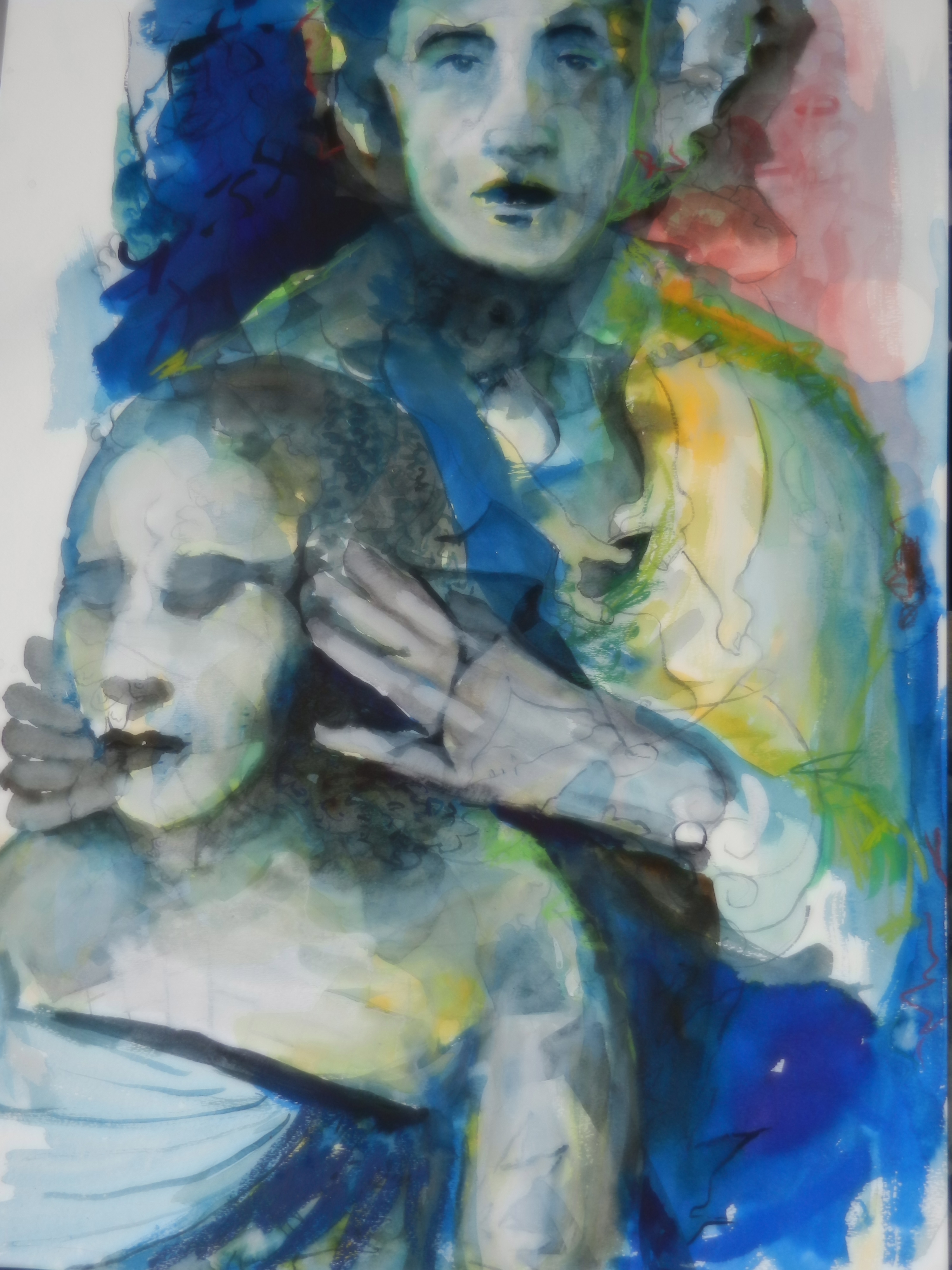
This is a very old watercolor that I called The Inner Monologue

This is a very old watercolor that I called The Inner Monologue

All the ladies were talking about how their bodies have changed with age. My body has changed, too! You’d never know it now but I used to be less than two feet tall with really pudgy knees. Kerri punched me when I offered my perspective on my body change. Apparently there is a statute of limitation for how far back in time you can go on the my-body-has-changed conversation.

When I was studying acting we were taught to write backstories for our characters. The play script was filled with clues but we learned that a character is not 3 dimensional until it has an articulated history. This was always problematic for me. I had no problem creating a backstory – that was easy – and I could justify my imagined story happenings in the script – but I couldn’t see how my imagined story led to more specific actions in the performance. If anything, the backstory got in my way. Like all young actors I got lost in the backstory, trying to “tell” it rather than pursue my clear action. Acting, like life, is about the pursuit of desire. My backstory muddied my ability to act. Acting is an art form of the present moment.

When I was teaching acting I came across the same problem. The young actors would spend hours telling me the details of their backstory which only served to diffuse their present action. They’d try to perform their history instead of pursue their current target.

The backstory was interesting but functionally useless in the present moment.

I’m finding the same challenge off the stage as I found on it. In one form or another I’ve coached a lot of people. I hear a lot of backstories. Our backstories are interesting. They do what they are meant to do: they give us identity. We spend hours and hours telling each other about our past adventures and abuses. People are storytellers, telling the story of their lives all day, everyday. Most of the storytelling concerns the past. What we did or did not do, what was done to us or justifying what we did to others. Most backstories are about limitation. Most backstories have a root in fear that show up as “reasons why I can’t” stories. Do you remember the famous Richard Bach quote? Argue for your limitations and sure enough they are yours. As interesting and informing as it is, very little of the backstory is functionally useful in the present moment. I don’t want the person I was a decade ago defining the choices I make today.

It’s become something of a mantra for me, something I find myself writing or saying a lot: The actions we need to take are usually very simple. The story we wrap around them make them difficult. What’s the story?

title_pageGo here to buy hard copies (and Kindle) of my latest book: The Seer: The Mind of the Entrepreneur, Artist, Visionary, Innovator, Seeker, Learner, Leader, Creator,…You.

Go here for fine art prints of my paintings:

This painting is called Icarus.

This painting is called Icarus.

Use Your Key

Photo by londonstreetart2

Photo by londonstreetart2

The other day I received an email from a long lost cousin. She spent some time on my website watching old interviews and contemplating my assertion that through our inner monologue we story ourselves. The idea was disturbing to her. How could she be the teller of her story and yet feel so powerless? So many things have happened to her! How could she possibly be responsible for the twists and turns of her life? She asked, “How exactly is one to find empowerment when the door is locked and the key wasn’t left under the mat….”

I’ve been slow in responding to her questions because my impulse to respond was so immediate. I wrote and then deleted, “If you do not have the key, who does?”

Her metaphor is perfect. There is door to life and it is locked. Someone else has the key.

And, to make matters more cruel, there is a mat, a tease, a place where the key should be. The mat is a constant reminder of the absence of the key. Her metaphor gives structure to a very specific story, does it not? It defines the actions of her life, the role in which she has cast herself. In such a story frame there is no access to life, there is no possibility of personal power.

I wonder what she might see if she held a different metaphor? I wonder what she might see if she recognized that she is the keeper of the metaphor and in that way the giver of meaning to her life and not the seeker of meaning? I wonder what she might experience if she saw herself as a locksmith or an opener of doors? I wonder what she might experience if she recognized that life is available on both sides of the door? Life knows no doors. Life needs no key.

Her confusion is also perfect. She has mistaken her circumstance for her story. None of us has control over our circumstances. Cancers come. Hurricanes happen. Empowerment comes when we recognize that we have infinite control over who we are within our circumstance. Empowerment is not given, it is chosen.

The Buddhists recommend joyful participation in the sorrows of the world. No one sails through life without difficulty and hardship. The difficulty and hardship are the very things that bring growth and illumination. Participate joyfully. Or, participate painfully. The sorrows of the world will always be there; how we participate is the story we choose to tell. If there is a key to life, if a key is necessary in your story, in her story, it is simply this choice.

title_pageGo here for my latest book, The Seer

Go here for fine art prints of my paintings.IMG_3185


Ask Them To Be Kind

A black cloud moving in.

A black cloud moving in.

While driving across South Dakota, the darkest cloud I’ve ever seen rolled across the sky and consumed the light. The cloud was dense and black. It was heavy, its belly hung over the car and seemed to press us to the earth. It seemed more than cloud. It was ominous, a presence.

When we started the day we’d intended to drive through the Badlands but a prodigious rain had slowed our progress. We saw the rains marching toward us across the open land. It was both beautiful and daunting and hit us with a wave of authority. This storm meant business. We crawled through Wyoming with other back road drivers, watching the barely visible white lines to keep on the road. Motorcyclists pulled off the road and stood next to their bikes; there was no shelter to be found.

Although we lost a few hours to the storm we thought we might still make it through the Badlands before nightfall. And then the black cloud appeared and ate the last light of the day. Once many years ago I did a night dive through the wreck of a sunken ship. In the dark of night, deep in the ocean, while swimming through the bowels of the ship, it’s decks between me and the surface, I felt as if I couldn’t breathe. This blackest of clouds enveloped us like the ocean at night and I felt that same sense of pressing suffocation.

The gods of nature are not to be ignored. Once, I sat with a Balinese man who told me that, according to their belief, it was with the dark forces of nature that people need alliance. There is no hell in their paradigm so dark and evil are not bedfellows. There are forces: creation and destruction in an eternal cycle of rejuvenation. Their rituals are about making peace with the black clouds, the gods of lightning and rain. “The forces of light are already with us,” he said. “We ask the dark forces to be kind.”

Looking through the windshield at the ominous pressing cloud I whispered, “Be kind.” It was. It let us go. We heeded the warnings and left the Badlands for another day. Later that night, sipping wine from plastic hotel cups, safe in our room, we sighed and laughed at how utterly small we felt on the open plain amidst the power of the storms. With that smallness came the gift of alertness. We were fully awake, alive with moment, stripped of the illusion that humans have dominion over anything. We savored our moment, temporary, passing, and perfect.

title_pageGo here for my latest book, The Seer.

Or here for all digital downloads of The Seer.


And, here you will find fine art prints of my paintings

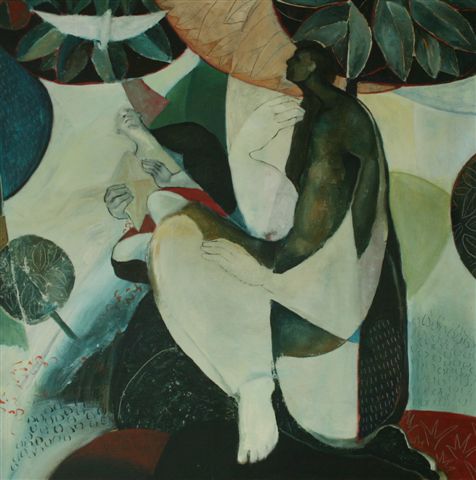
Canopy by David Robinson

Canopy by David Robinson

Look At All The Stories

My Stuff

My stuff.

It is ironic to me that I spent the previous two years divesting myself of stuff. When I moved to Kenosha last October, the truck was filled mostly with paintings, art supplies, and books. If I excluded those things, I could carry my worldly possessions on my back. And, I did for months. I now know without doubt what is essential and what is luxury. Mostly, my story is no longer entangled with my stuff. Well, in truth, there are still a few things that are sacred: the box that held DeMarcus’ brushes, a treasure or two from Bali, grandpa’s nutcracker, Bob’s tools. I gave away many useful things because of the story they held!

Since moving I’ve been helping Kerri clean out her house. Each week we take stuff to the Goodwill or place bags on the curb. She has been twenty-five years in her house and raised two children. The things we sort through have layers and layers of story. Children’s toys and books, sporting equipment, old electronics, and clothes; everything comes with a memory. More than once Kerri has held tightly to a box or shirt, saying, “I can’t get rid of this! Craig used this when….” We’ve saved many things, not for usefulness, but for story.

Several times we’ve made the trip to Florida to sort, box and store the contents of her mother’s house. Kerri spends hours each week on the phone with her mom, Beaky, as she pours over an enormous list of her possessions. Beaky is now in assisted living and will never return to her home. She wants to make sure that each item goes to the right person and that the story held in the item goes with it. In fact, the designation of recipient often has more to do with the story than the item. She is reaching into the future attempting to build a story link with the past.

A few weeks ago we walked by an open house. It was an estate sale. People were lined up out the door to go in and buy stuff cheap. The people in line were anxious and jockeying for position; they wanted to get in before all the good stuff was gone. The stories associated with the stuff died with the homeowner. The new story begins with a bargain found at an estate sale.

Last week while in Denver for my grandfather’s funeral, I crawled under Ruby’s house to pull out the boxes that Bob had stored there, mostly things they hadn’t used in years. Ruby said, “I didn’t even know that was down there!” Forgotten stories resurface.

My parents’ house is filled with the accumulated possessions of a lifetime. Their sedimentary layer of stories includes children, grandchildren, and great grandchildren. They’ve added no small amount of my grandfather’s possessions now that he has passed. The layers of story sediment compounded. “What are we going to do with all this stuff?” my dad asked. “Someone must have use for it!” He might just as well have asked, “What are we going to do with all of these stories. Someone must have use for them?”

It’s the question Tom asked when he found a trunk plastered into the walls of the family’s ranch house. The trunk contained the worldly possessions of an ancestor, a young boy named Johnny who died a century earlier. Little slips of paper written by his mother accompanied the layers of clothes and toys. “She wanted to keep his story alive,” Tom said. “What am I going to do with it?” he asked when he knew his life was on the glide path to the finish.

Someone once said to me, “You are not your stuff.” No. But we are people of commerce. We are people who identify ourselves through our stuff. We place great value in what we accumulate and what we accumulate becomes the vessel for passing on our value and our story. Look around you. Look at all the stories that surround you! Stand in your home, close your eyes, and spin around. Open your eyes and look at any object, any thing. What’s the story? What is essential? What is luxury?

title_pageGo here for my latest book

Canopy by David Robinson

Canopy by David Robinson

Go here for fine art prints of my paintings