Study Your Study

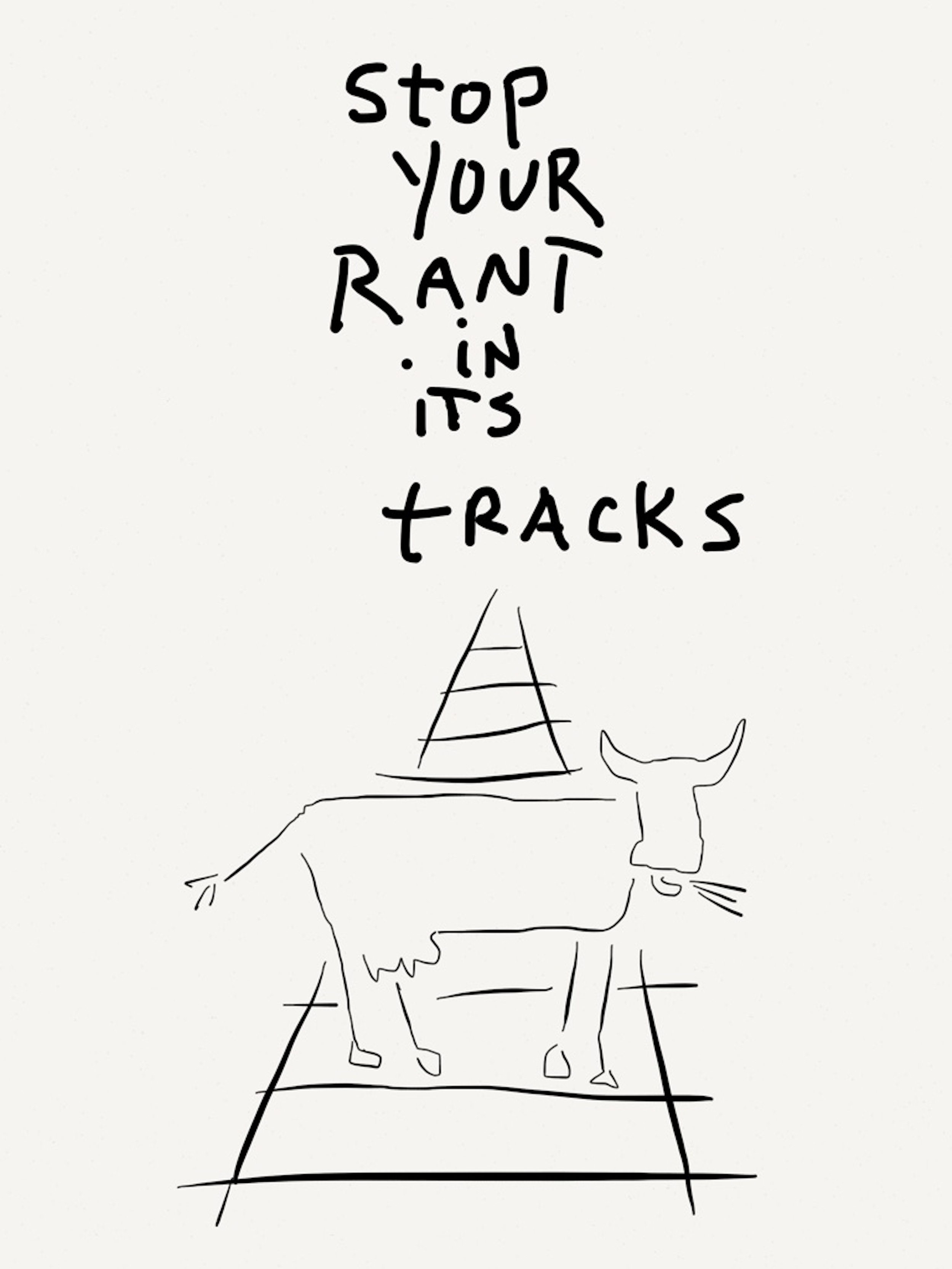
the next iteration. it's coming along now.

the next iteration. it’s coming along now.

Ontology = the study of existence.

When I was in graduate school the word “ontology” was bandied about regularly. I tossed it around a few times myself, checking it for style and elegance, prancing about to see if it suited me in my degree pursuit. It always felt a bit clumsy and left me with two questions:

1) What isn’t ontology? When I lived in Los Angeles I learned that people chose their houses relative to the direction of their commute. The rule was to find a place that afforded them the capacity to go against the commute otherwise they’d be stuck in traffic all day, everyday. It was essentially a quality-of-life consideration. Aren’t the reasons we locate ourselves, how and why we place our selves in space and time, an ontological question? Aren’t we surrounded by eternity whether we sit in traffic or by the swimming pool? When rolling ontology around my vocabulary I always wondered what was the difference between being fully aware of your existence and studying your existence. Now, that’s an ontological question! I have recently made it my ontological study to sit in the backyard drinking in the sun watching the Dog-Dog race around in delight barking at birds – and not wanting to be anywhere else, not wanting to do anything else. And, that brings me to question number 2:

the previous iteration

the previous iteration

2) Isn’t it improper for the subject of the study to be the studier? Ontology is a metaphysical study of human existence, not all of existence, and humans are conducting the study. I I were teaching this course I’d have to flunk myself for proposing such an ill constructed proposal! I’m fairly certain the birds are not interested in the greater question of their existence. Frogs and bees, disappearing from the earth at an alarming rate, might be interested in the question: What’s the real point of the study of existence if the studiers are so cavalier about existence? Where do we come from? Where are we going? Why are we here? It seems our study is the existential equivalent of a blind date that says, “Let’s talk about me!”

Are you being or are you becoming and – truly – is there ever a moment when you are not both (are you a particle or a wave)? Religion. Science. History. Art. Stars. Insects. Shadows. Waking to the sound of the morning dove. Knowing that the water of the lake is so cold that your feet will go numb in seconds – and stepping in anyway. A walk in the rain. Planting an herb garden. A warm bed on a cold night. Reaching out to a friend when you need to talk. The smell of good coffee. A song that makes you remember. Just because. Ontology?

Find The Riches

an illustration from Beaky's book, SHAYNE.

one of my illustrations from Beaky’s book, SHAYNE.

During my call with Jim I told him that my projects this year have been the most satisfying of my life. Certainly they have been the most important. And, they have also been, as I laughingly used the term, “negatively lucrative.” He didn’t yet know of Beaky’s books, of her website, of her book signing, so I sent him a few of my favorite photos from the event. Later, he sent me this text:

It is wonderful to be able to eat and pay the bills but there are for a fact things money can never buy. That famous authors obvious joy being one.

Isn’t that the truth? What price could we possibly place on joy? What price would we pay for true love? What price do we place on personal truth? What is the price tag on fulfillment?

I suspect that the great disease of our time – something future history professors and archaeologists will investigate – is that we’ve managed to place a value on our values; morality has somehow enmeshed with money, the purpose of education has somehow become the achievement of a bigger paycheck. In this never-ending political season, count the number of times and ways our candidates tell us that we must weigh our interests against our values.

What is the price of a value? What is the purpose of a value if it has a price?

All my life I’ve been told by people who love me, that, as an artist, I need to make a distinction between the work I do for food and the work I do for love. Most artists, myself included, feel their work is a kind of call. It is an imperative, a necessity. It is food. It is love. Most artists, myself included, do their work-for-love whether they are paid for it or not. They have to. I have to. It is a call. It is nourishment. There is no way in a culture that has placed a value on its values to recognize the real value of food-for-the-soul and food-from-the soul (the purpose of artists in a culture); a market cannot make sense of soul nourishment. This line of distinction, work-for-food or work-for-love, is at best a wonky value statement. It is a line that only makes sense to a people versed and rehearsed in trading their soul-requirements for a better retirement.

what is the price of joy?

what is the price of joy?

Last night I finished reading aloud to Kerri Tuesdays With Morrie. Jim’s text and Morrie’s messages are in beautiful alignment: there are, for a fact, things that money can never buy. And, those things are where the riches of this life can be found.

Ponder The Pieces

Kerri's head exploding.

Kerri’s head exploding.

My beautiful Kerri’s head just exploded. I am currently surrounded by exploded head-bits and a dog-dog running loops around the house from the thrill of experiencing his first head explosion. Baby cat had the good sense to hide. There’s nothing for me to do but drink wine and write this post. And drink more wine.

Heads explode when the world ceases making sense. Beaky, Kerri’s mom, 93 years old, is no longer capable of crossing the room with her walker. Mobility is a problem and the source of Beaky’s despair. For months Kerri has been working to get Beaky an electronic wheelchair. Her doctor prescribed it. A physical therapist diagnosed it. A bevy of nurses recommended it. A mountain of paperwork was filled out and filed for it. Medicare did the expected and requisite thrice denial before begrudgingly approving a lesser model (apparently, Beaky looks like a reckless driver and can’t be trusted with too much speed). At long last, after hours of phone calls, pleading, cajoling and begging, the chair was ordered and scheduled for delivery. And then there was Jose. The man who measures aging bottoms to make sure the chair is a perfect fit decided that, while measuring Beaky, she was not yet ready, at 93 years of age, to have an electronic wheelchair. His reason: Beaky is too mobile.

Kerri playing for her mom and the other ladies.

Kerri playing for her mom and the other ladies.

I wish I had filmed Kerri’s head explosion. I’d send it to Jose, the man with the measuring tape and the power to explode heads. As I watched the pieces of her mind drift back toward the earth I couldn’t help but remember the statistic – relative to the rest of the developed world – of how much Americans pay for their health care and how little they actually receive. Our costs are astronomical. Jose just showed me why. I wondered how many man/woman hours of work that Jose just annihilated. As Kerri said to the electric wheel chair supply company representative, every day of Beaky’s life is an extra inning or like a dog year. It is a gift. To tell this woman that it will only be a few more months before she will be approved is cruel. It need not make sense. It is merely cruel.

On another related note, today was Josh’s first day of work as a nurse in an emergency room. He wrote that he had a very good first day. The highlight was extracting a penny from a young boy’s nose. Apparently, the boy tried unsuccessfully to swallow the penny and coughed it up and into his nose. A hole in one! What are the odds of such a perfect shot? If I ever have a penny up my nose I want Josh to do the extraction. He cares for people. He is kind. Mostly, I want Jose, the man with the tape measure, to meet Josh, the man who helped a kid with a penny problem, so that Josh can explain to Jose how to recognize a person in need and what it means to serve. Service often requires dropping the tape measure and looking at the person being measured.

I suppose this is yet another tribute to Doug whose wisdom is worth repeating: “Your problem,” he said to me, “is that you want it all to make sense.” The path to happiness, according to Doug, is to cease the expectation of sense. No mother can make sense of a penny lodged up the nose of her son and Kerri will never be able to make sense of the man with the tape measure. It was her attempt at sense making that caused her head to detonate. I’ll keep that bit of information to myself until all the pieces find their way back to earth. In the meantime, let’s have more wine!

Go here to get my latest book, The Seer: The Mind of the Entrepreneur, Artist, Visionary, title_pageSeeker, Learner, Leader, Creator…You.

Or, go here for a hard copy and Kindle.


Speak Out Of Turn

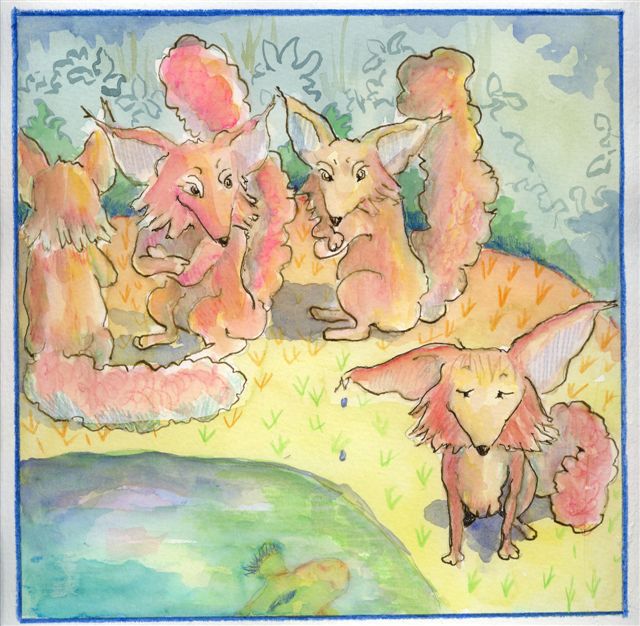
From my book, Lucy & The Waterfox. The waterfox is shunned for deviating from the norm.

From my book, Lucy & The Waterfox. The waterfox is shunned for deviating from the norm.

I’m not supposed to be writing about the system of education in America. It is a topic that I made off limits for myself because I was ranting too much. I finally allowed myself to admit what I’ve known for years but refused to accept. Our system of education is not broken and never has been; it was designed to create maximum docility and is succeeding magnificently. I decided to open the off-limits file because I just posted a question concerning education inspired by my friend and retired superintendent, Arnie Glassberg, and then this morning the same news story featuring the resignation letter of a teacher came across my screen three times. It is tragic to read and resonated with me: after a career playing in the fields of innovation and change in education, I now have a hard time driving by a public school without shuddering.

For grins I googled “origins of education in America (it was the subject of Arnie’s comment to me),” and came up with more than a few options but was struck by how many of the links topping the list concerned the reprehensible origins and intentions behind this thing we continue to call school. Several were articles, speeches, and youtube clips of John Taylor Gatto, a former New York state Teacher of the Year and most well known for his book, Dumbing Us Down. Here’s a bit from a speech he gave several years ago to a home schooling conference in Vermont:

The secret of American schooling is that it doesn’t teach the way children learn — nor is it supposed to. Schools were conceived to serve the economy and the social order rather than kids and families — that is why it is compulsory. As a consequence, the school cannot help anybody grow up, because its prime directive is to retard maturity. It does that by teaching that everything is difficult, that other people run our lives, that our neighbors are untrustworthy even dangerous. School is the first impression children get of society. Because first impressions are often the decisive ones, school imprints kids with fear, suspicion of one another, and certain addictions for life. It ambushes natural intuition, faith, and love of adventure, wiping these out in favor of a gospel of rational procedure and rational management.

Compare this quote (or read the text of his speech) with the teacher’s resignation letter making the news today. I’ve read a similar letter each spring for the past several years; a teacher – probably a great teacher – can no longer participate in the creation of docility in children and in themselves. They admit what they’ve known for years: the intention of they system they serve is the opposite of what it purports: they can no longer wipe out their natural intuition with the gospel of rational procedure (standardized tests).

John Taylor Gatto’s quote reminded me of the first few pages of one of my favorite books, Teaching As A Subversive Activity, by Neil Postman. It was published in 1969. Here’s a snippet from page 2:

In our society, as in others, we find that there are influential men at the head of important institutions who cannot afford to be found wrong, who find change inconvenient, perhaps intolerable, and who have financial or political interests they must conserve at any cost. Such men are, therefore, threatened in many respects by the theory of the democratic process and the concept of an ever-renewing society…Such men as these would prefer that the schools do little or nothing to encourage youth to question, doubt, or challenge and part of the society in which they live, especially those parts that are most vulnerable.

Retarding maturity has long term consequences: a population that is 1) incapable of the necessary self-awareness that comes with maturity cannot recognize how far it has drifted from it’s center and, 2) even if it did see the tower tipping, it is incapable of meaningful action as the conjoined twins of passivity (born of fear of speaking up) and divisiveness (do you really think the red state/blue state nonsense has no origin or implication?) have been so thoroughly thrummed into the national anthem.

To loop back a few posts to Master Marsh’s quote that keeps on giving: I’ve come to believe this is less about can and can’t than about the challenge of doing. And not doing is always easier.

Complaining is no substitute for doing. Neither is ranting, which is why education is off limits for me. I do not know what to do and have no belief that a butterfly will come from a system directed by a few small minds so hell-bent on remaining a caterpillar.

The only thing I can think to do is echo a sentiment offered by John Taylor Gatto in this short clip: the system is great at hammering the individual deviant but is incapable of handling a mass of deviants. To the teacher who resigned in frustration and all those who have, will, want to, or do not yet know they can, join hands. Become a mass and deviate. Do the thing that you’ve been so trained not to do: speak out of turn. Stop raising your hand and join hands. The kids can’t resign and they need you to, as Neil Postman writes, become a “shockproof crap detector.”

Go here to get my latest book, The Seer: The Mind of the Entrepreneur, Artist, Visionary, title_pageSeeker, Learner, Leader, Creator…You.

Go here for hard copies.

Serve Your Gift

Each night for the past 6 nights, k.dot has read to me a chapter from Deepak Chopra’s Seven Spiritual Laws of Success. I was moved last night when she read in the final chapter, the law of Dharma, guidance and advice that he’d given to his children. He taught them to meditate at four years old. He asked them not to concern themselves with making money but instead to identify what was their unique gift and how could they might best give it in service to the world.

I keep telling myself to give up educational rants. I’ve banged the drum of hope and change for years. I watched the hopeful, the dreamers, and the revolutionaries get creamed by a machine that cared more for dollars than for children. I watched Lisa slowly get pulled into the machinery and get crushed; she was brilliant. She cared for children over politics so, of course, she had to go. I might as well have led her to slaughter. We talked about it years ago, this possibility of systemic rejection. Never-the-less, I am culpable and no longer capable of looking at an educator and saying, “believe.”

Last night I found myself wanting this man, Deepak, to lead the education reform movement in these United States of America. What is the use of testing the pants off our children if the adults meant to guide them are clueless to the things that matter? Don’t you just want to scream, “Your soul is worth infinitely more than the job your will trade it for.” A score on a test means nothing if you can’t put your feet in the river and know that you are unique and divine. Owning a BMW is just as empty if you don’t know your unique gift and understand how to give it with gusto. Don’t just get through life. Live it!

If you can’t answer this question, “What is mine to do?” then the education system has failed you. If you are oriented to taking instead of giving your community is crumbling. Period.

Technology has wrought a whole new ball game and the only people who don’t know it are the policy makers pulling the levers of education. The kids know. They tolerate the system and then go pursue something meaningful.

Isn’t it a great educational north star to ask these two questions: 1) What is your unique gift? 2) How can you use it to serve the world? If these simple questions were the drivers of your education you’d spend almost no time in your life asking yourself if you mattered or if your work had meaning. You’d know. The people guiding you would value your self-direction and support you in the giving of your gift. They’d be invested in guiding you to personal power instead of controlling you.

Giving completely your gift is the path to fulfilling yourself and what is the point of education if not that? And, wouldn’t it be helpful to learn how to cultivate inner quiet while you are young? Navigating this noise world, operating from a solid center, is easy if you’ve developed the skill of deep listening. Self-direction and self-regulation are qualities of powerful people and come from listening. They are qualities that we are born with. They are ordinary. Power is ordinary. Divinity is ordinary. Losing it to the little stuff is…tragic.

[899. Join me in inspiring truly powerful people. Each day I will add a new thought, story or idea to support your quest and mine].

For a humorous look at the wonderful world of innovation and new ventures, check out my new comic strip Fl!p and the gang at Fl!p Comics.

If Not Now, When?

778. Join me in inspiring truly powerful people. Each day I will add a new thought, story or idea to support your quest and mine.

Megan-The-Brilliant sent me a text this morning. She is attending a state teachers conference. Her text said: I’m in a conference where the keynote lecture is on the importance of creativity. Novel, huh? How many times will we say this before we do something about it?

It’s a great question: How many times will we say this before we do something about it? It’s a question that generations of educators have been asking. Literally. Generations. How many times will we say this before we do something about it? Later in a phone conversations she said, “If I hear another person state the obvious I’m going to puke.” She also said, “I’ve had it.”

I’ve heard that a lot lately. The amazing educators, the fire starters, are taking their fire elsewhere. When survival is the best a teacher can do, when thriving is out of reach and dowsing fire is the aim of the system, the choice is to be dowsed or to go make creative fire where fire is welcomed. Think of this: teachers can leave in disgust but students have no choice but to be dowsed. And make no mistake, their fire is being dowsed. And, as levels of absurdity stack upon levels of absurdity, listen to the overriding complaint of businesses about new hires: where’s the self-direction? Where’s the critical thinking and capacity to innovate? Why aren’t we preparing our students for the world of work? Answer: Because we are dowsing their fire with buckets of wet tests to feed metrics that tell us nothing usable. We are patterning them to complacency.

Fire is dangerous to test makers. Educational fire is anathema when answer regurgitation is the goal.

The disjoint between what we know and what we do is vast. It is a farce. If you doubt what I’m asserting, think how ludicrous (sad) it is for a keynote speaker in the 21st century to address educators on the importance of creativity. The speech is only necessary in an arena that has stripped creativity from the system.

After the call with Megan I remembered my recent conversation with Robert. His son is just starting school and he was appalled by what his son’s teachers are being forced to do. He said, “There’s no room for creativity. I’m not talking about art or music – I’m talking about any form of creativity. It’s a wasteland.”

Join Them

718. Join me in inspiring truly powerful people. Each day I will add a new thought, story or idea to support your quest and mine.

In a spattering of revolutionary fire, teachers in hotspots across this nation are finally refusing to give the standardized tests. Students are refusing to take the tests. The authorities in each case are moving to punish the teachers and students, to get them back into compliance with the rules. These administrators, teachers and students, like most educators across this nation, know that these tests are impediments to learning. They serve the antithesis of what they purport.

Recently, I had a conversation with an administrator frustrated by the stupidity of the testing regime and the culture of control that it produces. She was angry with herself and her teachers for agreeing to participate with something that they all knew to be wrong. She was angry at the waste of time and energy but mostly at the injustice to the students. She said, “It’s killing them and making us absurd.” When I asked her why she continued to support something that she knew to be wrong she said, “We all need a paycheck. Isn’t that sad!” Yes. It is.

What should we do when we know something is wrong and ill intended? What should we do when finally the few voices, the courageous teachers and students stand up and say, “This is wrong.” If history is correct, most of us will turn away and pretend we heard nothing. History is riddled with stories of people who served atrocious causes and when asked why, said, “I was just following orders,” or, “I didn’t know.” David Neiwert tells the story of a German community adjacent to one of the Nazi death camps. Each morning, the people of the town emerged from their homes to sweep the ash from their stoops and windowsills. They watched each day as trainloads of people entered the camps. They knew that no one ever left the camps. The smoke belched ash onto their homes and heads everyday yet they were horrified when they learned what was going on just a few hundred yards from their community. They claimed to have not known.

They knew. We know. We have known for decades that the forces driving our public education have nothing to do with learning; the testing regime serves the opposite of what it pretends. Finally, some teachers and students are saying, “Enough.” Don’t look away. Join them. They need us to stop pretending that we don’t know..

Cooperate

714. Join me in inspiring truly powerful people. Each day I will add a new thought, story or idea to support your quest and mine.

During my drive from Champaign to Omaha, just after sunset, it began to snow. There was a swirling wind and in a matter of moments it was a white out. The road was mostly invisible. Cars immediately fell in line behind cars. Trucks slowed and set a careful pace. People cooperated without debate, without knowledge of the other drivers’ political affiliation, gender, race or sexual orientation. We needed each other. There was no power game or status imperative. All the silly illusions fell away. We needed each other and we did what came naturally. We cooperated.

There is a collision of two great thoughts that I appreciate. The first comes from my friend Roger, a director of plays and studier of humans; he once told me that denial was one of the strongest human impulses. The second thought comes for E.O. Wilson (I’ve rattled this off more than a few times) who said that the strongest human impulse is to belong. Combine the two thoughts and you get an amazing collision of impulses: a species called humans that need to belong to each other but deny it. This contradictory impulse makes possible The Gap or Old Navy; can you deny that you shop at a chain store to express your individuality as a way to belong? I can only imagine that the Martians are having a hey-day studying us.

And then the illusion drops, the second strongest impulse retreats and only the first remains. We need each other. We drive into a white out. The hurricane wipes our city off the map, the earthquake knocks our houses off their foundations. We pull together, put down our need to be right, and line up to help. We see our belonging. We see this thing called “”the common cause,” namely, survival.

The question, then, is obvious: do we need to wait until we’ve exhausted our fuel supply, depleted our aquifers, or warmed our globe before we suspend our denial and see this thing called “the common cause?” More and more contemporary science is finding that we have it all wrong: survival is not something achieved by the fittest; survival is a cooperative art.

Put The Buggy In The Barn

608. Join me in inspiring truly powerful people. Each day I will add a new thought, story or idea to support your quest and mine.

I’m reading a book about brain science and how it applies or might impact education. I’m finding the science and discoveries about the brain amazing and yet the application and translation to education is frustrating and sometimes mindboggling.

Marshal McLuhan wrote that we make sense of new technology through the eyes of the past. So, for instance when automobiles first came on the scene we referred to them as horseless carriages. I make sense of my smart phone as if it were simply a telephone and it is so much more than that; I do not know what to call this thing that I carry in my pocket, this thing that has more computing power than the Apollo space crafts. I am squeezing a new miracle into an old idea; I do not understand the power and capacity I already possess.

That is precisely what the authors of my book are doing (and that we are perpetuating in our national non-conversation about education) when applying their ideas to teaching and learning; they are squeezing miraculous insights into an antiquated system. They are addressing the relationship of teacher to student, content-deliverer to receiver, assuming a factory model system in which students are passive and clumped according to age groups in a room filled with rows of desks. They are not challenging the faulty assumptions that their science is revealing. They are attempting to help teachers navigate a standardized test driven system when all of their findings indicate that a standardized test driven system impedes learning.

What prevents us from challenging our assumptions, from actually creating something designed for the times in which we live? That is a rhetorical question. Our challenge is not to improve teaching or to raise standards. Our challenge is to put the buggy in the barn and buy a car. No amount of discussion, testing, debate, or application of new science will make the horse drawn carriage work better in the 21st century. The intention behind the book is to positively impact with the latest science processes of learning, yet it defines learning from a century old idea.

Jill put the question to Seth Godin and he responded with something like this: education will change when the entire community engages in a conversation about the purpose of education (not a direct quote). What is this thing we call education? What is its purpose? If it is, as I hear in our national dialogue and political rhetoric, to make better workers, then we are already lost. Actually, “to make a better workforce” is a perfect statement of a lowest common denominator system expressing its lowest common denominator intention. Design to the minimum, aim for the minimum, and we will hit the minimum every time, no brain science necessary.

What’s The Motivation?

589. Join me in inspiring truly powerful people. Each day I will add a new thought, story or idea to support your quest and mine.

Apples are not oranges and this would seem…well, obvious. But, it is not. The apples-oranges confusion is at the core (forgive the pun) of many of our most persistent challenges. For instance, we are in an endless political season and I’ve heard again and again that we need a government that runs like a business. We want efficiency, less bureaucracy, clearer process and better use of technology; if only the government ran like Netflix….

Yes. And, government is not business. The motives of government are not the same as the motives of business; to apply the language of business as the test of governance is to confuse the motives. It is to confuse the word “consumer” with the word “citizen.” One is driven by self-interest; the other is concerned with communal-interest. If government ran like a business we’d all get a pink slip and have to find another country to employ us; I understand the government is downsizing. Anyway, I like choosing the location of my cubicle and if government ran like a business I’d have to live with my assigned space. And, of course, there is this thing called democracy and I’ve yet to find a business that (honestly) embraces the notion of the voice of the people. Apples and oranges.

Education is not business. The motives of education are fundamentally different than the motives of business yet we are now applying the language of business to how we teach and learn. Children are not products and despite our wish to label them as such, there is nothing standard about children or the circumstances of the schools. Is it really the aim of our education system to produce better workers? Are we truly in that much of an imagination deficit? It is another form of the consumer-citizen confusion and this apples-oranges mess is not only limiting the possibilities we entertain it is stunting our growth.

We’ve tangled the motives. Clarity is not in the actions taken; clarity is in the intention beneath the actions taken. Why do we do what we do? We do not treat our families the same way we treat our co-workers because the context is different, the motives behind our relationships are different and yet we regularly cross wires with our institutions: the motives of health care are not business motives, the motives of prisons are not business motives, so what in us is so willing to confuse them? People are not bottom lines nor are they consumable.

Ask yourself: What’s the motivation? What’s beneath the action? Governing is a different animal than Google. Business best practices do not generate dreams; people do.